Standard toothpaste tubes often rely on harsh abrasives or high-fluoride doses that can leave sensitive teeth feeling raw. Japanese toothpaste takes a fundamentally different path, using nano-hydroxyapatite — a biomimetic compound that bonds directly to enamel — to repair microscopic damage rather than just scrubbing the surface clean.
I’m Emma — the founder and writer behind Baby Bangs. I’ve spent years analyzing the ingredient profiles, particle sizes, and clinical data behind Japanese oral care products, comparing how different formulations handle remineralization, sensitivity relief, and cavity prevention without the trade-offs common in Western pastes.
This guide breaks down the five most effective options available right now, focusing on what each formula actually does for your enamel. Read on to find the right japanese toothpaste for your specific oral care goals.
How To Choose The Best Japanese Toothpaste
Japanese toothpaste isn’t a single category — it spans everything from quasi-drug medicinals approved for cavity repair to everyday cosmetic pastes focused on whitening and fresh breath. The key is matching the active ingredients to your enamel’s needs.
Nano-Hydroxyapatite Concentration
This is the core differentiator. Higher concentrations (around 10–20% nano-hydroxyapatite by weight) deliver deeper remineralization into subsurface lesions, while lower concentrations suffice for surface maintenance. Check the ingredient list for “hydroxyapatite” or “nano-hydroxyapatite” and note its position — ingredients are listed in descending order of quantity.
Quasi-Drug vs. Cosmetic Classification
Japanese law divides toothpaste into two tiers. Quasi-drug (医薬部外品) pastes contain active ingredients approved for therapeutic effects — cavity prevention, enamel repair, gum health — and must pass clinical review. Cosmetic pastes can only clean and freshen. If you want actual remineralization, look for the quasi-drug label on the packaging.
Abrasiveness and Texture
Japanese pastes often use finer silica or calcium-based abrasives compared to Western formulas. This reduces enamel wear while still removing surface stains. Pastes with very fine particle sizes (under 5 microns) are gentler on dentin and suitable for daily use on sensitive teeth.
Quick Comparison
On smaller screens, swipe sideways to see the full table.
| Model | Category | Best For | Key Spec | Amazon |
|---|---|---|---|---|
| Apagard Tooth Polish Royal | Premium | Maximum enamel restoration | 135g tube, 4.8-star rating (800 reviews) | Amazon |
| APAGARD Premio Double Mint | Mid-Range | Daily whitening without fluoride | 100g, nano-hydroxyapatite formula | Amazon |
| SANGI APAGARD Renamel | Premium | Enamel remineralization & sensitivity relief | 120g, medical-grade nano-HA | Amazon |
| Sang APA-Gard Premio Extra Mint (2-pack) | Mid-Range | Value twin-pack for family use | 2 x 10⁵g, extra mint flavor | Amazon |
| Clinica Lion Fresh Mint (3-pack) | Premium Bundle | Deep cleaning with quasi-drug protection | 3 x 130g, quasi-drug classification | Amazon |
In‑Depth Reviews
1. Apagard Tooth Polish Royal 135g

The Apagard Tooth Polish Royal is the flagship formula in Sangi’s lineup, packing the highest concentration of nano-hydroxyapatite among the products reviewed here. Its unflavored paste is designed to maximize the remineralization effect — no mint or sweetener to distract from the active ingredient’s function. With 800 customer reviews averaging 4.8 stars, it’s the most-trusted Japanese toothpaste on the market for serious enamel work.
The 135g tube is a quasi-drug product, meaning it meets Japanese clinical standards for therapeutic cavity prevention and enamel repair. Users report noticeable filling of micro-cracks and reduced sensitivity within a few weeks. The texture is a fine, creamy paste with minimal abrasives — safe for daily use even on thin enamel.
It ships directly from Japan with tracking via JP Post, so delivery takes a bit longer, but the freshness and authenticity are guaranteed. The unflavored profile takes some adjustment if you’re used to strong mint, but the trade-off is a completely additive-free experience.
Why it’s great
- Highest nano-HA concentration for deepest remineralization
- Quasi-drug classification ensures clinical-grade efficacy
- No fluoride, SLS, or artificial sweeteners
Good to know
- Unflavored taste may feel bland at first
- Ships from Japan — longer delivery window
2. APAGARD Premio Double Mint 100g

The APAGARD Premio in Double Mint bridges the gap between therapeutic remineralization and an enjoyable brushing experience. It still uses nano-hydroxyapatite for enamel repair, but the double mint flavor makes it far more palatable for users who find the Royal’s unflavored paste too clinical. The 100g tube is a premium-type formula positioned for whitening — the n-HA particles gently polish surface stains while rebuilding lost mineral layers.
This is a fluoride-free paste, which appeals to those who want to avoid the potential downsides of fluoride ingestion while still getting active enamel protection. The fine particle size of the nano-HA ensures it can penetrate the microscopic pores in dentin and subsurface lesions, not just coat the surface. Many users report a visible difference in tooth brightness after two weeks of consistent use.
One trade-off: the concentration of nano-HA is slightly lower than the Royal formula, so it’s best suited for maintenance and light stain removal rather than repairing significant enamel damage. If your teeth are already in good shape and you want whitening plus protection, this is the sweet spot.
Why it’s great
- Double mint flavor makes daily use enjoyable
- Fluoride-free but still remineralizes with n-HA
- Effective for surface stain removal and whitening
Good to know
- Lower n-HA concentration than Royal formula
- Not ideal for deep subsurface repair
3. SANGI APAGARD Renamel 120g

The SANGI APAGARD Renamel is specifically formulated for enamel restoration and sensitivity relief. Its active ingredient is medical-grade nano-hydroxyapatite designed to replace minerals lost from the enamel surface, targeting microscopic fissures, subsurface lesions, and white spot lesions that cause tooth pain. The 120g tube delivers a dense, creamy paste that feels more substantial than standard toothpastes.
Clinical data backing this formula focuses on its ability to occlude dentinal tubules — the tiny channels in dentin that expose nerves to temperature and pressure. By sealing these tubules with n-HA, the Renamel reduces sensitivity faster than potassium nitrate-based pastes. Users with post-whitening sensitivity or gum recession report significant relief within days.
The paste is unflavored, much like the Royal, which means no added chemicals for taste. The trade-off is a slightly higher price point per gram, but for those dealing with chronic sensitivity or active enamel erosion, the targeted action justifies the investment. It ranks #1,229 in toothpaste on Amazon, a strong position given its niche focus.
Why it’s great
- Targets dentinal tubules to reduce sensitivity
- Medical-grade n-HA for deep subsurface repair
- Addresses white spot lesions and micro-cracks
Good to know
- Higher price per gram than standard pastes
- Unflavored — not for those who want strong mint
4. Sang APA-Gard Premio Extra Mint (2-pack)
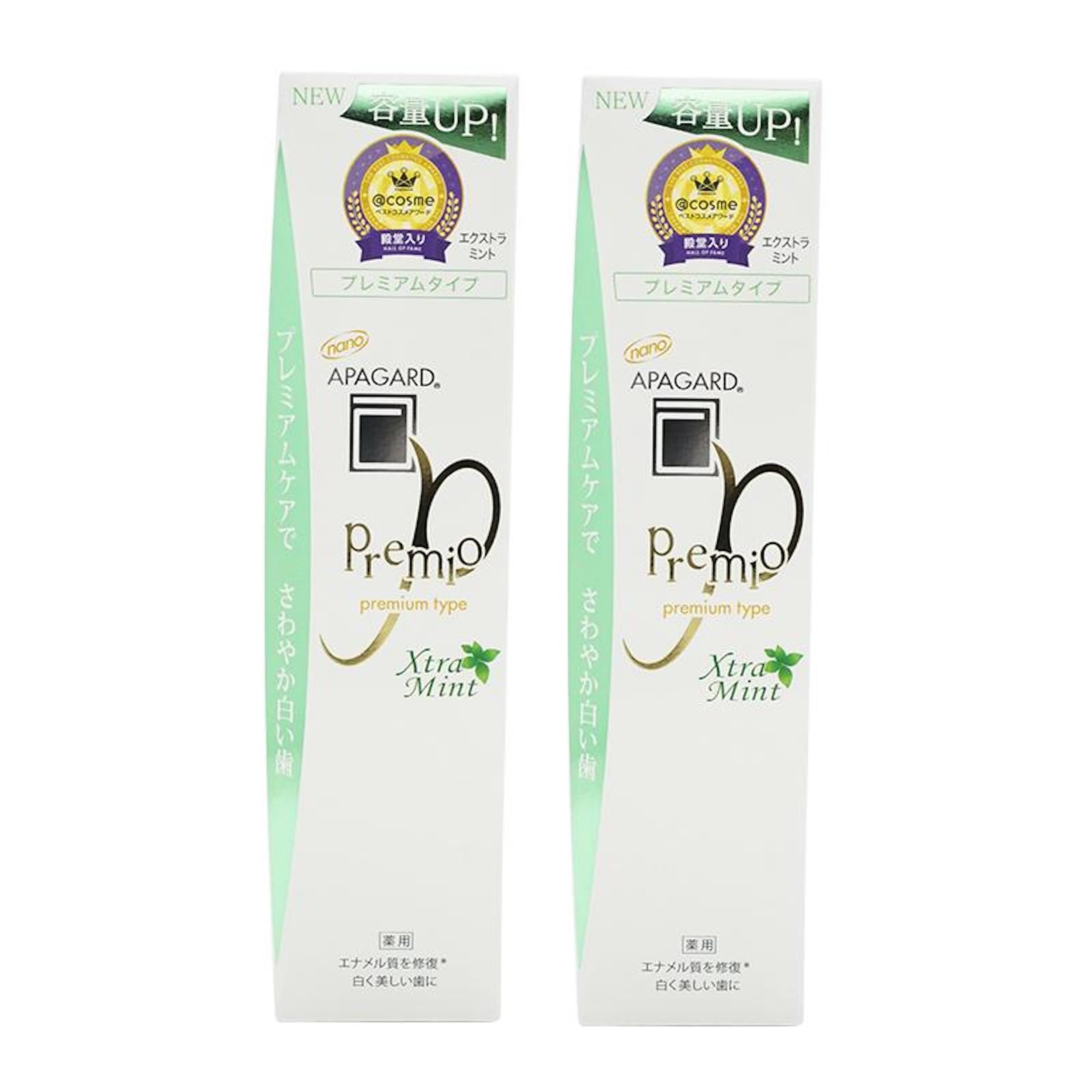
The Sang APA-Gard Premio Extra Mint set of two tubes offers the same nano-hydroxyapatite technology as the single Premio, but in a convenient twin pack that lowers the cost per tube. Each tube is 3.7oz (105g), and the extra mint flavor provides a stronger, longer-lasting freshness compared to the standard Double Mint version. This is a paste-type toothpaste, meaning it has a thicker consistency than gel-based alternatives, which helps it cling to enamel longer during brushing.
For families or couples who both want enamel protection without fluoride, this twin pack is the most efficient way to stock up. The extra mint flavor is intense enough to satisfy heavy mint users but still avoids the harsh detergents (SLS) found in many Western pastes. The formula remains fluoride-free, relying entirely on nano-HA for remineralization.
One catch: this product was first made available in May 2025, so it’s relatively new to the market. Long-term user reviews are still accumulating, but the formulation matches the established Premio line that has a strong track record. If you want a proven formula in a bulk-friendly format, this delivers.
Why it’s great
- Twin pack offers better per-tube value
- Extra mint flavor is bold and long-lasting
- Thick paste consistency for enamel adhesion
Good to know
- Newer product — limited long-term review data
- Only available as a set, not single tubes
5. Clinica Lion Fresh Mint Vertical 130g 3-pack

The Clinica Lion Fresh Mint is a completely different animal from the Apagard line — it’s a quasi-drug toothpaste from Lion Corporation, one of Japan’s oldest oral care manufacturers. Each of the three 130g tubes is classified as a quasi-drug, meaning it contains clinically approved active ingredients for cavity prevention and gum health. The fresh mint flavor is sharp and clean, with a slight cooling sensation that lasts after brushing.
Unlike the nano-hydroxyapatite formulas, Clinica Lion uses sodium monofluorophosphate as its active cavity-fighting agent, combined with a fine silica abrasive system. This makes it a better match for users who want the proven cavity protection of a low-dose fluoride approach (450 ppm F) within the Japanese quasi-drug framework. The powder form listed in specs actually refers to the toothpaste consistency — it’s a fine, dense paste, not a loose powder.
The 3-pack format is ideal for heavy users or shared households, and the tubes are vertically oriented, making them easier to squeeze completely empty. With 207 ratings averaging 4.4 stars, it’s a well-tested choice for deep cleaning and long-term cavity prevention. The main difference from the Apagard options: it relies on fluoride chemistry rather than biomimetic enamel repair, so it doesn’t actively fill subsurface lesions.
Why it’s great
- Quasi-drug classification for therapeutic cavity protection
- Sharp mint flavor with lasting cooling sensation
- Vertical tube design for efficient use
Good to know
- Uses sodium monofluorophosphate, not n-HA
- Not designed for enamel remineralization of lesions
FAQ
How does nano-hydroxyapatite compare to fluoride for cavity prevention?
Why is Japanese toothpaste often fluoride-free?
What does the quasi-drug label mean on Japanese toothpaste?
Can Japanese toothpaste help with tooth sensitivity?
Final Thoughts: The Verdict
For most users, the japanese toothpaste winner is the Apagard Tooth Polish Royal because it delivers the highest concentration of nano-hydroxyapatite in a clinically proven, quasi-drug formula that actively repairs subsurface enamel lesions without fluoride or artificial additives. If you want a more palatable daily whitening paste with the same core technology, grab the APAGARD Premio Double Mint. And for those battling chronic tooth sensitivity or enamel erosion, nothing beats the targeted action of the SANGI APAGARD Renamel.