Japanese anti-aging serums stand apart because they rely on fermentation, rice bran, and marine collagen rather than aggressive actives that can strip the barrier. At the intersection of traditional beauty rituals and modern cell biology, these formulas aim for cumulative renewal—plumping fine lines over weeks, not hours. The right pick depends on whether your skin craves hydration, brightening, or barrier repair.
I’m Emma — the founder and writer behind Baby Bangs. I spend my days analyzing ingredient lists, comparing extraction methods, and cross-referencing clinical data to determine which Japanese serums actually outperform standard drugstore options.
After evaluating five distinct Japanese serums across price tiers and ingredient philosophies, the japanese serum for anti aging that earns top marks combines gentle retinol with caviar-derived omega 3s for measurable firmness without irritation.
How To Choose The Best Japanese Serum For Anti Aging
Japanese anti-aging serums prioritize moisture retention and gradual cell turnover over instant peeling or aggressive acid exfoliation. The key is matching the serum’s dominant ingredient family—fermented rice derivatives, marine extracts, or plant oils—to your specific aging concern. Dry-prone skin benefits from ceramide-rich formulations, while dull or uneven tones respond better to vitamin C or sake-derived AHA complexes.
Ingredient sourcing and extraction method
Authentic Japanese serums often highlight the origin of their key component, such as sake lees from a specific Kyoto brewery or cherry blossom yeast selected from 1,300 strains. Look for “made in Japan” on the bottle and check whether the brand discloses its extraction process. Multi-enzymatic degradation and nanofiltration preserve peptide integrity better than standard heat-based methods.
Oxidation and packaging integrity
Vitamin C and ferulic acid degrade rapidly when exposed to light and air. Waterless formulations or airless pump bottles protect unstable actives. If a serum contains L-ascorbic acid without a sealed opaque container, its efficacy drops significantly within weeks. For a Japanese serum that stays potent longer, favor packaging that blocks visible light and uses a vacuum pump over a dropper.
Barrier compatibility
Anti-aging serums that strip the lipid barrier accelerate the very wrinkles they promise to fix. Japanese formulations tend to include moisturizing co-ingredients like Tsubaki oil, rice bran, or hyaluronic acid alongside retinol or vitamin C. If you have sensitive or reactive skin, prioritize products with fewer than six ingredients and a fragrance-free, hypoallergenic label.
Quick Comparison
On smaller screens, swipe sideways to see the full table.
| Model | Category | Best For | Key Spec | Amazon |
|---|---|---|---|---|
| Delere Caviar Glow Smoothing Serum | Retinol + Caviar | Firming & wrinkle reduction | Caviar omega 3 + niacinamide + retinol | Amazon |
| Finally 100% Organic Tsubaki Face Oil | Pure Oil Blend | Dry/sensitive skin hydration | 4 organic ingredients, no water | Amazon |
| Pure Vitamin C Serum (Korean Style) | Waterless C | Brightening & dark spots | 10.5% waterless L-ascorbic acid | Amazon |
| Kuramoto-no-Shizuku Sakura Serum | Fermented Rice | Gentle brightening & texture | Sake lees + cherry blossom yeast | Amazon |
| LABO Nano Placenta Serum | Clinic Grade | Post-procedure recovery & deep repair | Nano placenta peptides + umbilical extract | Amazon |
In‑Depth Reviews
1. Delere Caviar Glow Smoothing Serum
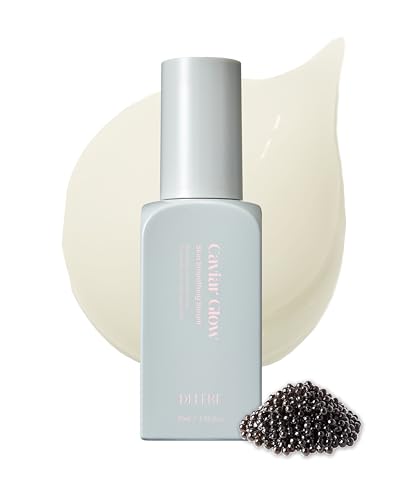
Delere blends Japanese sturgeon caviar extraction with a retinol-niacinamide duo, creating a serum that targets both surface texture and deeper elasticity. The caviar omega 3 component isn’t just marketing—omega 3s support lipid barrier function, which declines with age. At 1.7 ounces, the volume is generous for a mid-range option, and the dropper bottle allows controlled dosing.
Clinical testing referenced in the product description points to visible firming within a consistent usage window, though individual results depend on retinol tolerance. The niacinamide concentration helps offset the potential irritation from retinol, making this suitable for most skin types that have previously used retinol. The texture is lightweight and absorbs within 30 seconds.
One limitation is the lack of a truly airtight pump—the dropper introduces air with each use, which can accelerate oxidation of the retinol. Storing it in a dark cabinet extends potency. The brand’s 15-year focus on sturgeon farming adds credibility to the caviar extract sourcing.
Why it’s great
- Combines retinol with barrier-supporting caviar omega 3
- Niacinamide reduces irritation and boosts brightness
- 15 years of sourcing expertise behind the caviar ingredient
Good to know
- Dropper design exposes retinol to air
- Not fragrance-free—scent may irritate very sensitive skin
2. Finally 100% Organic Tsubaki Face Oil
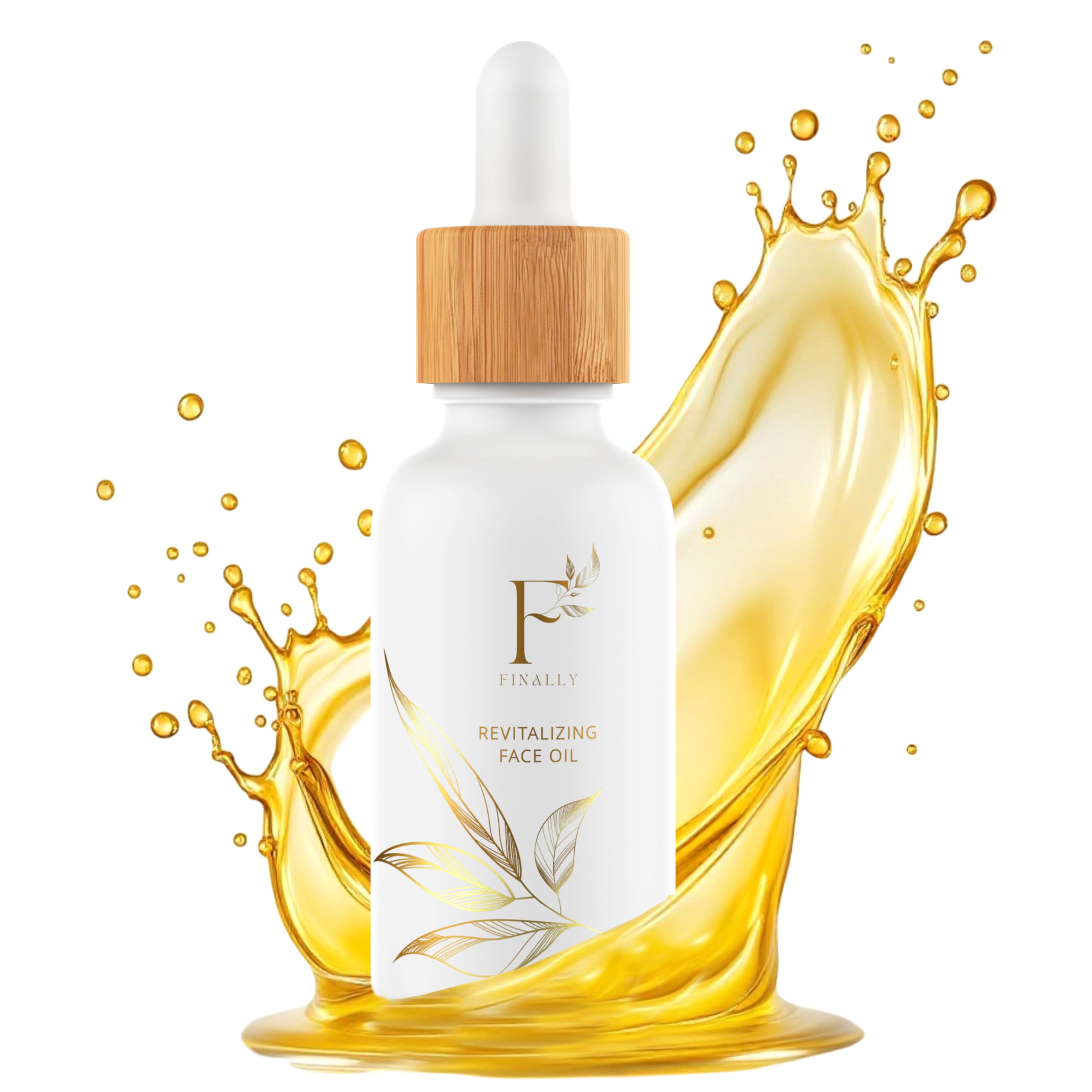
Finally’s Tsubaki oil serum strips the formulation down to four cold-pressed, unrefined oils: Japanese Tsubaki camellia, jojoba, calendula, and rice bran. This purity earned the 2025 CleanBeauty Award and CERTClean certification. Tsubaki oil contains high levels of oleic acid, closely matching the skin’s sebum profile, allowing deep penetration without a greasy film.
The fragrance-free, non-comedogenic profile makes this an excellent choice for reactive or chronically dry skin that rejects multi-ingredient anti-aging serums. The vitamin E and C from rice bran and jojoba provide antioxidant protection against photoaging, though the oil form means less direct L-ascorbic acid delivery than a water-based vitamin C serum. It replaces eye cream, moisturizer, and night serum in a single step.
The SPF 9 label is borderline negligible—rely on a separate sunscreen for meaningful UV protection. The oil is best applied to damp skin to emulsify and seal in hydration. The 4-ounce bottle is larger than typical face oils, increasing value for daily users.
Why it’s great
- Only 4 organic ingredients—minimal irritation risk
- Non-comedogenic and suitable for acne-prone types
- Multifunctional: replaces eye cream and moisturizer
Good to know
- Oil format delivers vitamin C less effectively than water-based serums
- SPF 9 is too low for standalone sun protection
3. Pure Vitamin C Serum
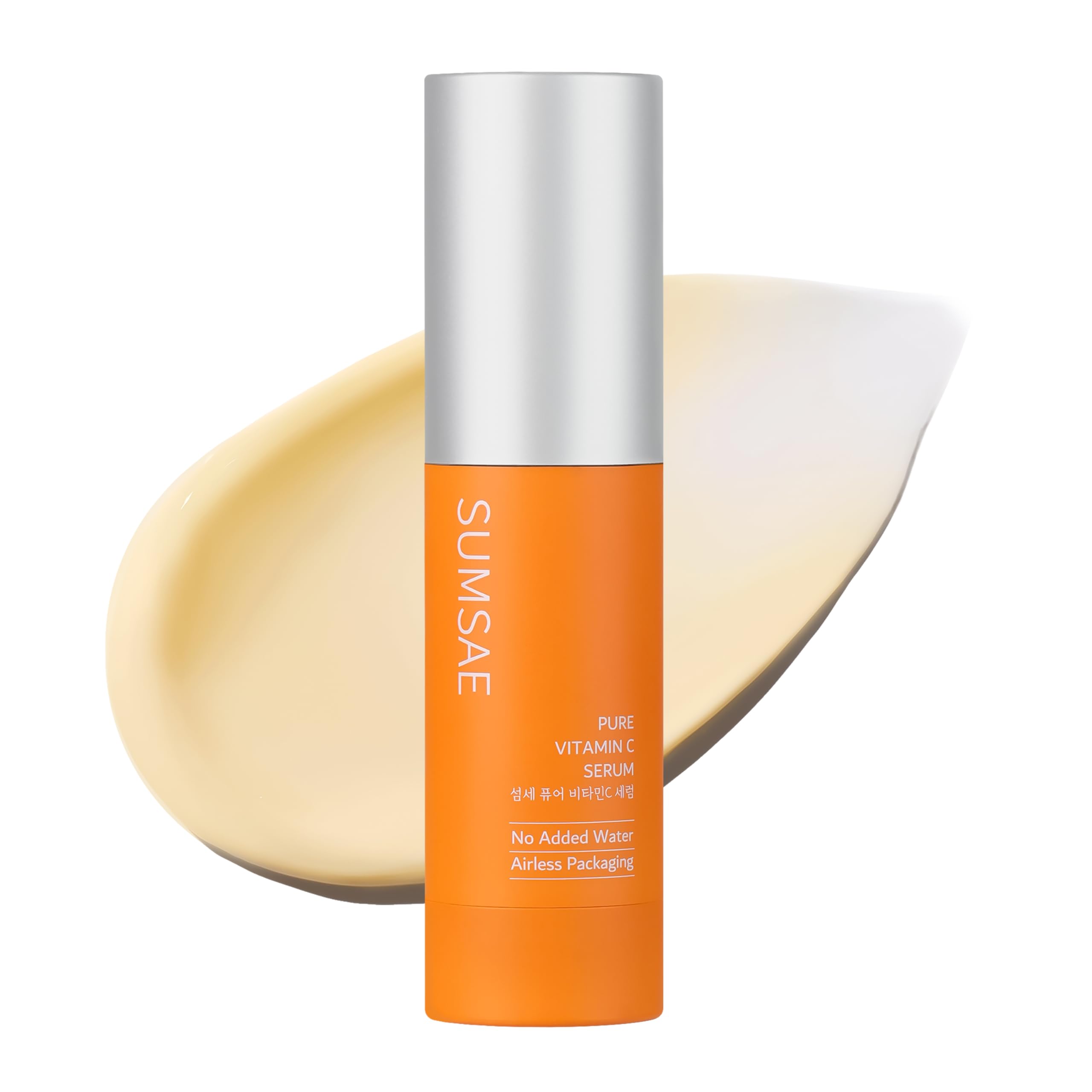
This Korean-formulated vitamin C serum uses a waterless base to prevent L-ascorbic acid oxidation—a common weakness in water-containing vitamin C serums that turn amber within weeks. The 10.5% concentration sits in the effective but non-irritating range, and the airless pump system blocks light and oxygen from degrading the formula. The 30ml bottle is compact but intentional: you use it before the vitamin loses potency.
Waterless formulations sacrifice the humectant delivery of water-based actives, meaning the serum may feel slightly thicker. However, the brightening effect for dark spots and uneven tone is faster compared to encapsulated derivatives. It layers well under moisturizer and sunscreen without pilling.
A dedicated retinol or peptide anti-aging layer is still needed alongside this serum for wrinkle reduction—vitamin C alone addresses pigmentation and collagen support but works best paired with a separate night active. The packaging design deserves credit for prioritizing stability over visual appeal.
Why it’s great
- Waterless formula preserves vitamin C stability
- Airless pump prevents oxidation from light and air
- 10.5% is potent yet gentle enough for daily use
Good to know
- Does not contain retinol or peptides for wrinkle reduction
- Thicker texture than water-based vitamin C serums
4. Kuramoto-no-Shizuku Cherry Blossom Serum
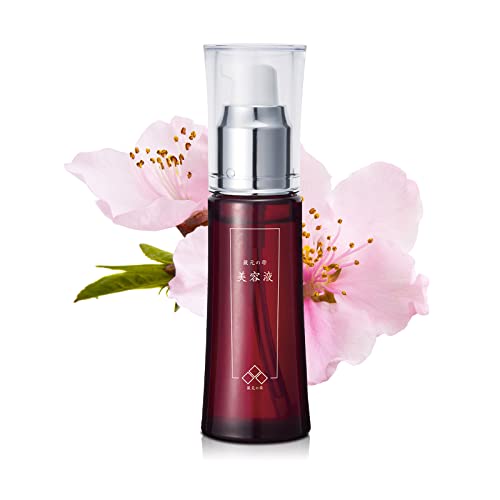
Kuramoto-no-Shizuku brings a genuinely Japanese fermentation story to the bottle. The serum uses sake lees extract from Miyako Tsuru in Kyoto and cherry blossom yeast isolated from 1,300 strains collected in Kenrokuen Garden. This is not a generic “sake” marketing claim—the specific yeast strain affects the amino acid profile, which supports skin cell renewal.
The AHA content from citric, malic, and glycolic acids provides mild chemical exfoliation, improving texture and tone over time without the strength of a dedicated peel. Rice bran, yogurt, and prune extracts add hydration and antioxidant protection. The serum is paraben-free, cruelty-free, and free of synthetic fragrances, mineral oil, and silicones.
At 1.01 ounces, the bottle is small for the price tier. The visible results are gradual—this is a maintenance serum rather than a quick-fix wrinkle eraser. It suits those who prefer a fermentation-based approach to aging over synthetic retinoids, but users seeking immediate firmness may find it too gentle.
Why it’s great
- Genuine Japanese sake lees and cherry blossom yeast
- Mild AHA exfoliation for texture improvement
- Free of synthetic additives, silicones, and fragrances
Good to know
- Small 1.01 oz bottle for the price
- Results are subtle and cumulative—not instant
5. LABO Le Revital Nano Placenta Serum

LABO Nutrition’s Nano Placenta Serum is the most technically advanced product in this lineup, using multi-enzymatic degradation and nanofiltration to preserve 99% of bioactive peptides from porcine placenta. The formula includes umbilical cord extract and sodium hyaluronate, creating a multi-pronged approach to regeneration, hydration, and barrier reinforcement. It is approved by the Japan Health Food Association and widely used in Japanese aesthetic clinics for post-laser recovery.
Clinical evaluations cited by the brand report a 96% improvement in skin condition, with 95% of users seeing visible results. The serum is fragrance-free, lightweight, and absorbs within seconds without residue. It targets fine lines, dullness, puffiness, and enlarged pores in a single product. The 4-vial pack is designed for a concentrated course rather than indefinite daily use.
The price per vial is higher than the other options, and the placenta-derived ingredients may not align with vegan or vegetarian preferences. The packaging lacks a pump system—each vial is a single-use ampoule. This makes it ideal for travel or post-procedure phases but less convenient for daily maintenance.
Why it’s great
- 99% peptide preservation via advanced nanofiltration
- Clinically referenced 96% improvement rate
- Used in Japanese clinics for post-procedure healing
Good to know
- Porcine-derived—not suitable for vegans
- Ampoule format is less practical for daily routine
FAQ
Should I use a Japanese anti-aging serum in the morning or at night?
How is sake lees different from standard glycolic acid exfoliation?
Do Japanese anti-aging serums need to be refrigerated?
Final Thoughts: The Verdict
For most users, the japanese serum for anti aging winner is the Delere Caviar Glow Smoothing Serum because it balances retinol efficacy with caviar-derived barrier support at a volume that outlasts pricier competitors. If you want a pure, fragrance-free option for reactive skin, grab the Finally Tsubaki Face Oil. And for post-procedure clinical-grade repair, nothing beats the LABO Nano Placenta Serum.