The difference between a washed-out, bitter green drink and a creamy, sweet, jade-hued ritual comes down to one thing: the quality of the stone-ground leaf inside the tin. Cheap matcha scorches the tongue; the real thing coats it in umami. The gap is measured in microns, harvest dates, and prefecture names.
I’m Emma — the founder and writer behind Baby Bangs. I’ve spent years comparing single-cultivar stone-ground powders against bulk commodity blends, sourcing documents, and freshness protocols to identify what separates a daily driver from a true ceremonial experience.
After reviewing dozens of options, these five selections represent the strongest contenders for anyone searching for the best japanese matcha powder — each chosen for a distinct use case, from traditional usucha to a modern functional latte.
How To Choose The Best Japanese Matcha Powder
Japanese matcha is not a commodity — it is a traceable agricultural product defined by cultivar, harvest season, shade duration, and grinding method. A good buyer ignores the marketing buzzwords and looks at three concrete signals: origin transparency, harvest timing, and freshness handling.
Origin and Cultivar Specificity
A label that says “from Japan” is not enough. The best producers name the prefecture (Uji, Yame, Kagoshima) and the cultivar (Okumidori, Samidori, Yabukita). Single-cultivar matcha offers a consistent, intentional flavor profile. Blends can be smooth, but a named cultivar tells you the farmer chose that leaf for a reason — typically superior umami or natural sweetness.
Harvest Date and Freshness
Matcha loses color, aroma, and L-theanine content rapidly after grinding. A product that lists a harvest month or ships direct from Japan on a monthly cycle is leagues ahead of a pouch that sat in a distributor warehouse for a year. Look for first harvest (ichibancha) spring-picked leaves — they have the highest chlorophyll and amino acid density.
Stone Ground Particle Size
True ceremonial grade matcha is stone-ground between granite wheels, not jet-milled. The resulting particle size (5-10 microns) determines how well the powder suspends in water and how creamy the mouthfeel feels. A gritty texture or a powder that settles instantly suggests a lower grind quality or a blend with filler ingredients.
Quick Comparison
On smaller screens, swipe sideways to see the full table.
| Model | Category | Best For | Key Spec | Amazon |
|---|---|---|---|---|
| FKRO Organic Okumidori | Ceremonial | Daily Usucha & Lattes | Single Cultivar Okumidori, 30g | Amazon |
| Naoki Yame Blend | Ceremonial | Straight Tea Sipping | Silver Award Winner, 40g | Amazon |
| ReviTEAlize Mushroom Blend | Functional | Adaptogenic Latte Mix | 7 Mushrooms + MCT, 30 Servings | Amazon |
| Nippon Matcha Uji Kyoto | Premium | Pure Ceremonial Ritual | Uji First Harvest, 100g Tin | Amazon |
| Jade Leaf Organic Ceremonial | Premium | High Volume Daily Use | Multi-Cultivar, 100g Tin | Amazon |
In‑Depth Reviews
1. FKRO Organic Okumidori Ceremonial Grade Matcha (30g)

The FKRO Okumidori is the quiet benchmark for daily ceremonial matcha at a mid-range investment. Grown by the Nishi family in Kagoshima — an Emperor’s Cup-winning farm — this single-cultivar Okumidori is hand-shaded for three weeks and stone-ground in batches of just 150 kilograms per year. The color upon opening the pouch is a vivid jade, not the dull olive of oxidized stock, because FKRO air-freights from Japan monthly and ships immediately rather than sitting in a climate-controlled warehouse.
The taste profile is exceptionally smooth with zero bitterness — a velvety umami that lands on the middle of the tongue and finishes with a soft, natural sweetness. It whisked easily into both traditional usucha and oat milk lattes without clumping. The 19 milligrams of L-theanine per serving paired with 80 milligrams of natural caffeine delivers precisely the calm, sustained focus that matcha drinkers chase.
Customer reviews repeatedly highlight the vibrant green color and lack of bitterness as the primary reasons for repurchasing. Multiple verified buyers noted they stopped adding sweetener entirely. The 30-gram pouch yields roughly fifteen traditional servings, which feels appropriate for a single-cultivar product at this tier — you are paying for freshness and provenance, not bulk volume.
Why it’s great
- Single-cultivar Okumidori delivers unmatched natural sweetness and zero bitterness.
- Monthly air-freight from Kagoshima ensures peak L-theanine and chlorophyll freshness.
- Dual USDA and JAS organic certification guarantees no fillers or additives.
Good to know
- 30-gram pouch provides fewer servings per dollar compared to 100-gram tins.
- Requires refrigeration after opening to preserve color and aroma for the full month.
2. Naoki Matcha Fragrant Yame Blend (40g)
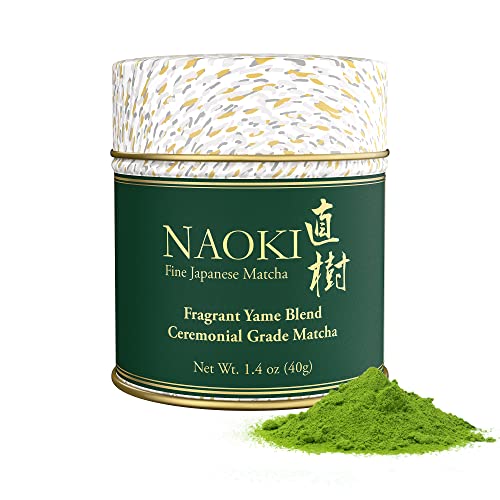
The Naoki Fragrant Yame Blend picked up a Silver award in a Japanese national tea competition — a rare distinction for a mid-range ceremonial blend. It originates from Yame in Fukuoka prefecture, a region known for its wide diurnal temperature swings that push natural sweetness into the leaf. This blend is intentionally lighter on umami compared to a single-cultivar powerhouse like the Okumidori, offering a buttery, creamy entry with a clean finish.
Naoki recommends this matcha for drinkers who have some experience with matcha and want to drink it straight — just matcha and water. The 40-gram pouch is slightly larger than the FKRO offering and the flavor profile is more approachable for someone who finds heavy umami overpowering. It whisked with minimal clumping and produced a pleasing grassy aroma with subtle sweet undertones right from opening the pouch.
Return buyers in the reviews consistently describe this as a reliable everyday matcha. One five-time reviewer noted the medium body and lack of bitterness make it easy to drink daily. Another buyer mentioned that it holds its own against larger legacy brands. The trade-off is that the lighter umami may not satisfy purists looking for that deep, savory hit, but for a balanced daily driver, it is a strong contender.
Why it’s great
- Silver award-winning blend validated by Japanese tea competition judges.
- Yame origin delivers exceptional natural sweetness with buttery, creamy notes.
- Excellent texture — finely stone-milled with minimal clumping during whisking.
Good to know
- Lighter umami profile may not satisfy drinkers seeking deep savory intensity.
- Some reviews note better options exist at this price point for advanced palates.
3. ReviTEAlize Matcha Mushroom Powder Latte Blend (30 Servings)

The ReviTEAlize blend is not a pure ceremonial matcha — it is a functional latte mix that layers organic Japanese ceremonial matcha with a seven-mushroom adaptogen complex (cordyceps, lion’s mane, reishi, shiitake, maitake, chaga, turkey tail) plus MCT oil, ashwagandha, and warming spices like turmeric, ginger, and cinnamon. If the priority is a coffee replacement that delivers steady energy without jitters, this is a purpose-built alternative.
The matcha base itself is ceremonial grade, but the addition of MCT powder and coconut milk powder changes the texture to a creamy, pre-frothed latte consistency. The spice blend tempers any potential bitterness from the fungi, and the result is a naturally sweet, sugar-free drink that mixes easily with hot water or milk. Buyers in the reviews consistently praise the steady energy — no crash, no jitters — and the fact that it is vegan, dairy-free, and keto-friendly.
The downside for purists is that the mushroom and spice flavors are present and detectable; this is not a matcha for traditional usucha. But for someone switching from coffee and wanting functional benefits beyond caffeine, the reviews suggest high satisfaction. One verified buyer called it a delicious alternative she actually looks forward to, which is the real test for any long-term habit replacement.
Why it’s great
- Seven-mushroom adaptogen complex plus MCT oil for sustained cognitive energy.
- Naturally sweet, sugar-free, and dairy-free with a creamy latte texture.
- USDA organic, GMP certified, and made in the USA in small batches.
Good to know
- Not suitable for traditional usucha or koicha preparation due to added ingredients.
- Mushroom and spice flavors are distinct and may not appeal to pure matcha drinkers.
4. Nippon Matcha Uji Kyoto Ceremonial Grade (100g Tin)
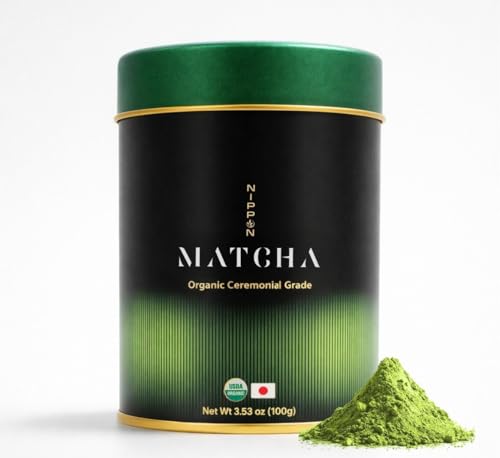
The Nippon Matcha offering is a single-origin ceremonial grade from Uji, Kyoto — Japan’s most storied matcha region — using first-harvest leaves that are traditionally shade-grown and stone-ground. The 100-gram tin is a notable value for a premium Uji product, providing roughly fifty servings at a cost that undercuts most café prices. The packaging is a sealed, light-blocking tin designed to preserve color and aroma after opening.
This matcha is positioned for drinkers who want a pure ceremonial experience without the functional additives or blends. The flavor profile is described as naturally rich in umami with mild sweetness and a clean finish — designed to be enjoyed without added sugar. The product is lab-tested for heavy metals and microbial safety, meeting California Prop 65 standards, which adds a layer of accountability for buyers concerned about contaminants in imported tea.
While the product listing is new and lacks accumulated customer reviews, the combination of Uji origin, first harvest, and third-party lab testing creates a strong initial signal of quality. The absence of specific cultivar naming means this is likely a blend of multiple cultivars from the region, which could offer consistency across batches but may lack the distinct personality of a single-cultivar product.
Why it’s great
- Premium Uji, Kyoto origin with first harvest leaves for superior umami and sweetness.
- 100-gram tin provides strong value with roughly fifty servings per container.
- Lab-tested for heavy metals and meets California Prop 65 safety standards.
Good to know
- New product with no verified customer reviews yet to confirm quality claims.
- Multi-cultivar blend rather than single-cultivar may lack unique flavor characteristics.
5. Jade Leaf Organic Ceremonial Grade Matcha (100g Tin)

Jade Leaf is arguably the most recognizable brand in the premium matcha space on Amazon, and this 100-gram tin is their largest volume ceremonial offering. Sourced from Uji and Kagoshima and certified USDA organic, this is a multi-cultivar blend (Okumidori, Kanayamidori, Sayamakaori, Samidori, Yabukita) that aims for consistency across batch rather than single-cultivar personality. The first-harvest leaves are shade-grown for up to four weeks to boost chlorophyll and L-theanine levels.
The flavor profile is approachable — mild nuttiness with umami notes, designed to work equally well in traditional usucha, iced drinks, and lattes. Each serving contains roughly 30 to 40 milligrams of caffeine and naturally occurring L-theanine, producing the calm alertness that matcha drinkers expect. The tin is value-sized: at 100 grams, it yields approximately fifty full lattes or up to 100 traditional usucha servings, which brings the per-cup cost significantly below café pricing.
Jade Leaf recommends storing this matcha in an airtight container in the refrigerator after opening and using it within 30 to 60 days for optimal taste. The multi-cultivar approach means the flavor profile is balanced and predictable, but drinkers who want the distinctive character of a single cultivar like Okumidori may find this blend too generic. Still, for volume-driven daily consumption, the consistency and certification make it a reliable choice.
Why it’s great
- 100-gram tin provides exceptional value with up to 100 traditional servings.
- First-harvest leaves from Uji and Kagoshima with up to four weeks of shade.
- USDA organic with a well-established quality control and sourcing reputation.
Good to know
- Multi-cultivar blend lacks the unique flavor personality of a single-cultivar product.
- Best results require refrigeration after opening and use within 30 to 60 days.
FAQ
How can I tell if a matcha powder is truly ceremonial grade?
Why does my matcha taste bitter and how do I fix it?
How should I store matcha powder after opening?
What is the difference between usucha and koicha preparation?
Final Thoughts: The Verdict
For most users, the best japanese matcha powder is the FKRO Organic Okumidori because it combines single-cultivar provenance, monthly air-freight freshness, and a velvety umami profile at a mid-range investment. If you prefer a lighter, award-winning daily sipping matcha, grab the Naoki Yame Blend. And for a functional coffee-alternative latte with adaptogenic benefits, nothing beats the ReviTEAlize Mushroom Blend.