Japanese face washing isn’t about aggressive scrubbing — it’s a disciplined ritual of dissolving impurities with gentle, low-foam surfactants and fermented powders that respect the skin’s acid mantle. The wrong Western-style high-pH foam can strip the barrier overnight; the right J-beauty cleanser leaves the face supple, never taut.
I’m Emma — the founder and writer behind Baby Bangs. I spend my weeks cross-referencing ingredient decks, pore-clogging indexes, and pH test strips to separate genuine J-beauty formulations from marketing fluff.
Whether you are new to J-beauty or refining a multi-step routine, this guide walks you through the top contenders for the japanese face wash space, comparing powder-to-foam converters, hyaluronic bubble cleansers, and enzymatic exfoliators side by side.
How To Choose The Best Japanese Face Wash
Selecting the right Japanese face wash means looking past the pretty packaging and scanning for three non-negotiable details: pH level, surfactant base, and format stability (powder vs. pre-dissolved foam). A cleanser that sits above a pH of 5.5 will gradually disorganize your barrier lipids. A formula built on sodium lauryl sulfate instead of amino-acid or saponified oils will over-degrease. And a liquid bottle with preservatives may irritate reactive skin, while a dry powder stays active until water hits it. Narrow your choice by skin type first: dry and sensitive skin rewards mild, hydrating foams (hyaluronic or milk-based); oily or congested skin benefits from powder enzyme cleansers that gently exfoliate without physical grit.
Surfactant Family — Sulfate-Free Amino Acid vs. Soap Base
Traditional Japanese soaps (like those from Shiseido) often use a potassium or sodium fatty-acid soap base that lathers richly but can sit at a higher pH. Modern J-beauty formulas have shifted to amino-acid surfactants (coconut-derived sodium cocoyl glycinate, potassium cocoyl glutamate) that foam gently and land near the skin’s native pH of 4.5–5.5. If your skin flushes or tightens after washing, a soap-base cleanser is likely the culprit. Look instead for “amino acid” or “acyl glutamate” near the top of the ingredient list.
Format Integrity — Powder Stability vs. Liquid Preservatives
Japanese powder cleansers like the FANCL and SRB options in this list contain zero water, which means they need no parabens or phenoxyethanol to stay stable. The user activates the powder by adding water and whipping a foam with the included net. This preserve-free approach is a major win for sensitive or allergy-prone skin. Liquid or pump foams (like the Hadalabo) are convenient for travel, but check the ingredient list for ethyl alcohol or fragrance, both common irritants in pre-formulated bubbles.
Quick Comparison
On smaller screens, swipe sideways to see the full table.
| Model | Category | Best For | Key Spec | Amazon |
|---|---|---|---|---|
| FANCL Facial Cleansing Powder | Powder-to-Foam | Preservative-free sensitive skin | Agar & Rice Starch base | Amazon |
| Hadalabo Gokujyun Foam | Bubble Foam | All-day hydration for dry skin | Hyaluronic Acid 2% | Amazon |
| SRB Rice Bran Enzyme Powder | Enzyme Exfoliator | Acne-prone & textured skin | Papaya Enzymes + Collagen | Amazon |
| Shiseido Clarifying Foam | Rich Soap Foam | Normal-to-oily balanced glow | Soap-base 125 mL tube | Amazon |
| Shiseido Extra Rich Milk | Soap-Free Milk | Very dry & barrier-compromised | Soap-free cream 125 mL | Amazon |
In‑Depth Reviews
1. FANCL Facial Cleansing Powder & Foaming Net Set
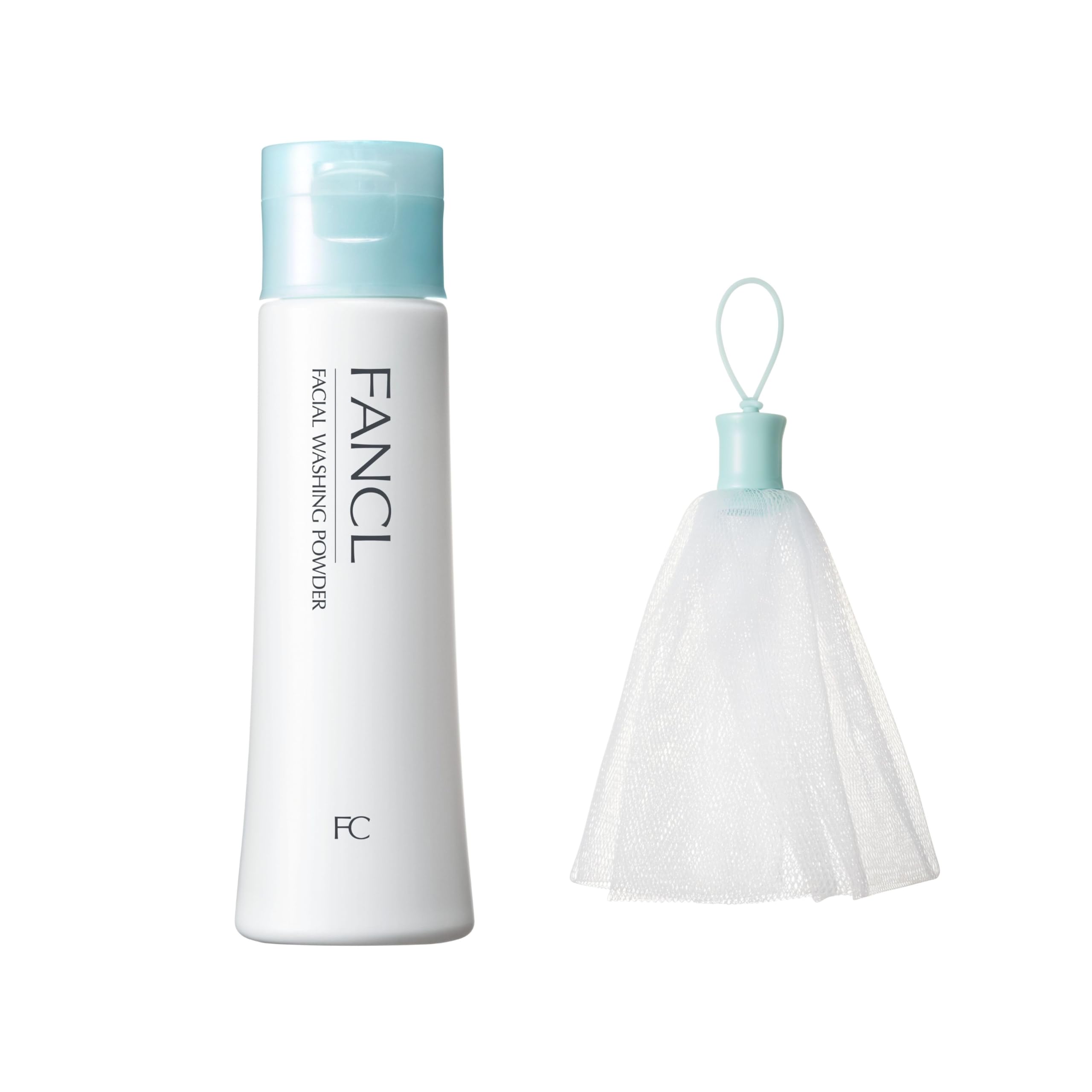
The FANCL set takes the J-beauty philosophy to its purest expression: a waterless powder that stays biologically inert until you whisk it with the included foaming net. The base uses agar and rice starch rather than soap or SLS, producing a dense, silky foam that lifts sebum without disrupting the stratum corneum. Because the formula contains zero preservatives, it’s one of the safest choices for those with contact allergies or rosacea — you simply mix fresh each use.
In practice, the ritual itself becomes a gentle reset: you moisten the net, shake a pea-size of powder into it, and pump the net between your palms until a cloud forms. The foam rinses clean without any residue, and the skin feels bouncy, not stripped. Some users note the powder is subtle in scent (nearly unscented), and the net takes a day or two to master. But for barrier integrity and minimal-ingredient purity, this is the benchmark in the category.
The 2.6 oz bottle lasts roughly 6–8 weeks with once-daily use, making it a mid-range investment per wash given the premium ingredient philosophy. If your skin reacts to anything with water in the bottle, start here.
Why it’s great
- Totally free of parabens, alcohol, and phenoxyethanol
- Luxurious foam from a simple rice-starch base
- Kit includes foaming net for optimal aeration
Good to know
- Requires the net and a bit of hand technique
- Powder can clump if stored in a humid bathroom
- Smaller bottle than liquid alternatives
2. Hadalabo Japan Gokujyun Hyaluronic Acid Moisture Bubble Foaming Cleanser (2-Pack)
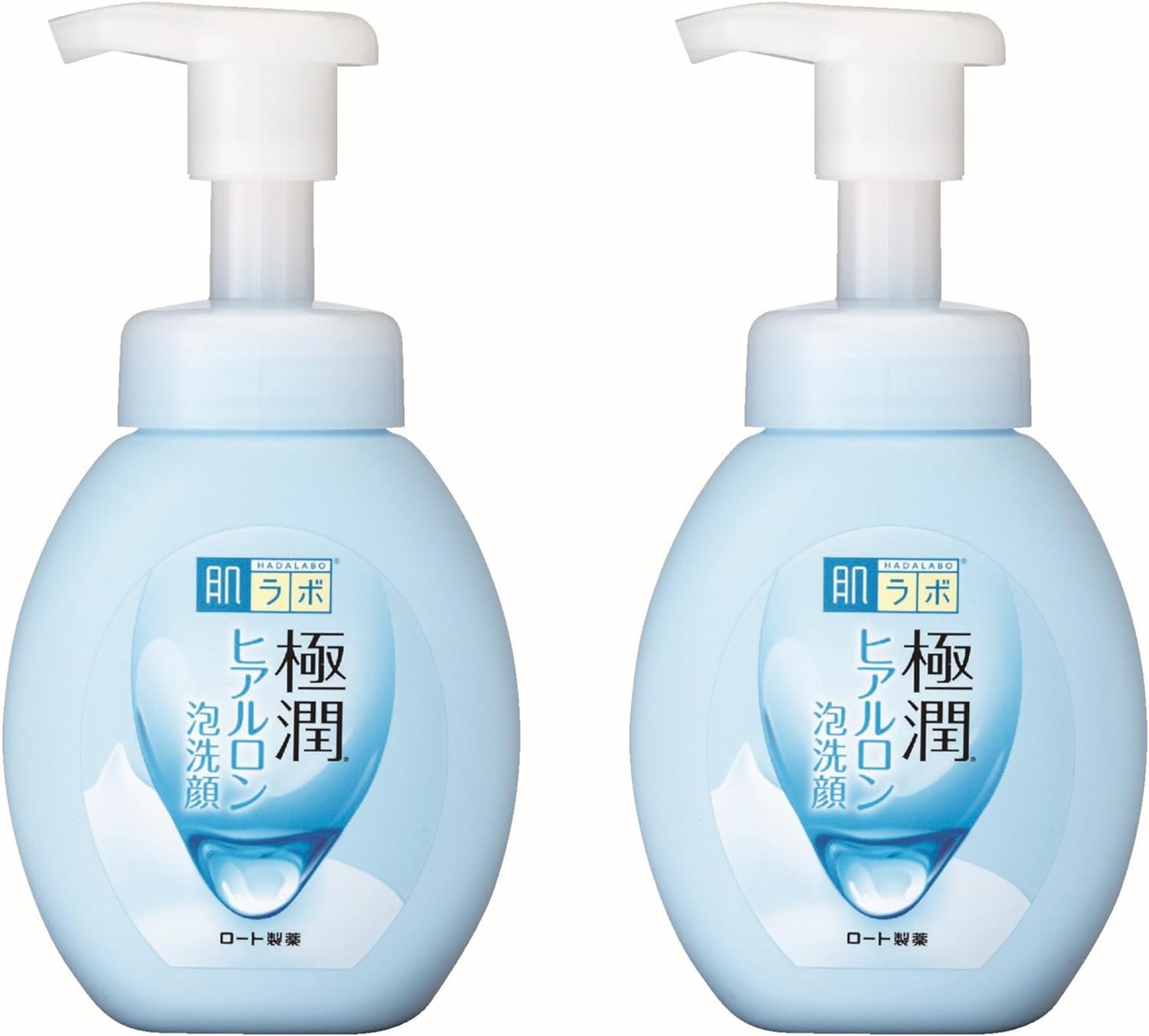
Hadalabo’s Gokujyun line is legendary in Asian beauty for its simple, effective hyaluronic acid layering, and this foaming cleanser extends that philosophy to the wash step. The pump dispenses a pre-formed airy foam that contains multiple molecular weights of hyaluronic acid and glycerin, so the cleanser hydrates as it lifts grit and light makeup. The pH hovers around 5.5, which respects the acid mantle.
For dry, dehydrated, or normal skin types, this is the most convenient entry into J-beauty: no net, no whisking, just two pumps and a gentle massage. The foam collapses quickly on the skin, which some users like because it avoids the “suffocating” feeling of clay-based cleansers. It rinses clean without residue, and the 2-pack (two 5.4 oz bottles) makes this a strong per-wash value. The one trade-off is that the foam isn’t dense enough to remove heavy waterproof makeup — you’ll want an oil cleanser first if you wear long-wear foundations or sunscreen.
Because it’s unscented and formulated without drying alcohols, it works well for reactive skin types that cannot tolerate essential oils. If you want a no-fuss, hydrating morning wash that maintains your moisture barrier, this is your pick.
Why it’s great
- Pre-aerated foam from the pump — zero prep time
- Contains 3 types of hyaluronic acid for multi-layer hydration
- Unscented and alcohol-free formula
Good to know
- Not strong enough for heavy makeup or waterproof sunscreen
- Foam collapses relatively quickly on the face
- Bottle is not refillable for the pump mechanism
3. SRB Stabilized Rice Bran Enzyme Powder Wash
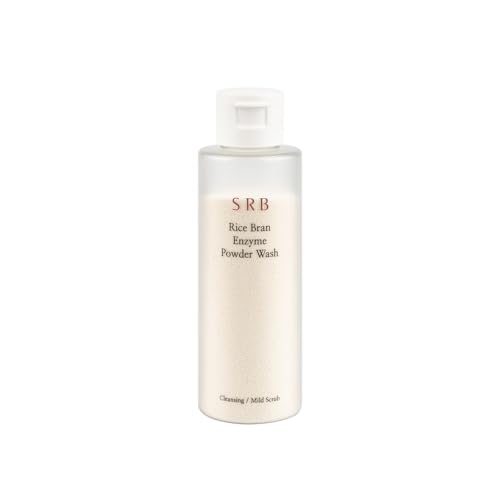
The SRB powder wash brings a Korean-inspired enzyme formulation into the Japanese powder-cleanser conversation, using stabilized rice bran and papaya enzymes to dissolve dead skin cells without physical microbeads. The pH is balanced to around 5.5–6.0, and the inclusion of collagen peptides adds a temporary plumping effect that some users notice after rinsing. The texture is finer than the FANCL powder, almost like a lightweight flour, which allows for a more customizable foam density depending on how much water you add.
This is the strongest exfoliating option in this roundup, making it ideal for congested, textured, or acne-prone skin that needs gentle daily enzymatic turnover. Users with oily T-zones report a smoother finish after the first week, and the papaya enzymes help dissolve light sebaceous filaments over time. However, the exfoliation power means it’s not suitable for use twice a day if you have a compromised barrier — once a day, or every other day, is the sweet spot for reactive skin.
The 2.46 oz container is compact and travel-friendly, and the dry format means it has a long shelf life. The trade-off for the enzyme potency is that the foam is less voluminous than the FANCL, and some users miss the dense cloud. If texture refinement is your primary goal, this powder is a clean alternative to acid toners.
Why it’s great
- Papaya enzymes dissolve dead cells without scrubbing
- Collagen infusion supports temporary skin plumpness
- Paraben-free and eco-conscious packaging
Good to know
- Not meant for twice-daily use on sensitive skin
- Foam volume is lower than rice-starch powders
- Contains fragrance of papaya (not fully unscented)
4. Shiseido Clarifying Cleansing Foam

Shiseido’s Clarifying Cleansing Foam is built on a traditional Japanese soap-base system (potassium myristate, potassium palmitate) that produces a dense, stable foam with immediate slip. This is the cleanser for people who love the tactile satisfaction of a creamy wash that feels like it actually “cleans” — the foam holds its structure through the entire wash and rinses thoroughly. The brand positions it for all skin types, but the soap base naturally raises the pH to around 7–8, which is the main distinction from the powder and enzyme options above.
For normal or combination skin that does not flush easily, this foam effectively removes excess oil and surface debris, leaving a squeaky-clean finish that works well as a second cleanser after an oil balm. Users with oily T-zones appreciate the deep-clean feel, but the high pH means it is not ideal for dry, sensitive, or barrier-damaged skin that relies on an acidic mantle. The formula does include glycerin, which mitigates some of the drying potential.
The 4.2 oz tube (125 mL) is ergonomic and lasts roughly 3 months with daily use. If you are transitioning from Western foaming cleansers and want a familiar lather with a Japanese pedigree, this is the most straightforward swap. Keep a hydrating toner handy for after the wash.
Why it’s great
- Rich, stable lather that gives a satisfying clean feel
- Works well as second-step in double-cleansing
- Trusted Shiseido formulation with glycerin
Good to know
- Soap base pH of 7–8 may disrupt sensitive barriers
- Can feel stripping for very dry or reactive skin
- Higher per-unit cost than the pump-foam options
5. Shiseido Extra Rich Cleansing Milk

Shiseido’s Extra Rich Cleansing Milk takes the opposite approach of the foam-based options — it is a soap-free, cream-type cleanser that relies on emulsifying oils and fatty alcohols to dissolve impurities without any lather. This format is deliberately designed for dry, very dry, and sensitive skin that reacts to even gentle foaming agents. The texture is a dense, balmy milk that spreads smoothly across the face and wipes or rinses off without leaving a greasy film.
For users battling winter dryness, post-retinol flaking, or barrier-weakened skin, this cleanser is the gentlest option in the roundup. The pH is near neutral (around 6), and the inclusion of squalane and glycerin means the skin feels coated, moisturized, and protected immediately after rinsing. It does not remove heavy makeup on its own — it works best as a standalone morning wash or as a second-step cleanser after an oil-based first cleanse. Some users with oily skin find the milk texture too “slippery” and prefer a foam finish.
The 4.2 oz tube is identical in size to the Clarifying Foam, but it lasts slightly longer because a dime-size amount covers the face. If your skin flushes or tightens from any foam product, switch to this milk and restore your comfort level within a week.
Why it’s great
- Zero lather — no surfactant irritation whatsoever
- Squalane and glycerin leave skin visibly hydrated
- Ideal for compromised or post-procedure skin
Good to know
- Slippery texture may not satisfy the “clean feel” preference
- Does not remove waterproof makeup alone
- Higher price per ounce than most foam cleansers
FAQ
Can I use a powder-to-foam cleanser if I have very dry skin?
Do Japanese foam cleansers remove sunscreen effectively?
Why are Japanese powder cleansers better for sensitive skin than liquid ones?
Final Thoughts: The Verdict
For most users, the japanese face wash winner is the FANCL Facial Cleansing Powder because it delivers a pure, preservative-free foam that respects every skin type without compromise. If you want built-in hydration and instant convenience, grab the Hadalabo Gokujyun Foam 2-Pack. And for targeted enzymatic texture refinement, nothing beats the SRB Rice Bran Enzyme Powder.