Iron deficiency doesn’t announce itself with a fanfare — it creeps in as fatigue, brain fog, brittle nails, and a general sense of running on empty. But picking the right supplement means navigating a minefield of stomach cramps, constipation, and poorly absorbed forms that leave you feeling worse than when you started. The difference between a smart choice and a waste of money often comes down to a single detail: the type of iron compound used.
I’m Emma — the founder and writer behind Baby Bangs. My approach to supplements blends clinical research reviews with a practical focus on ingredient forms that actually survive digestion.
After analyzing five top-rated options on metrics including iron form, dose precision, side-effect profile, and third-party testing, here is my definitive guide to the best iron supplement on the market right now.
How To Choose The Best Iron Supplement
Not all iron is created equal. The form you choose directly determines whether you get steady energy or spend your afternoon regretting that pill. Here are the three critical factors serious buyers weigh before opening their wallet.
Iron Form: Bisglycinate vs. Sulfate vs. Fumarate
Ferrous sulfate is the cheapest and most common form in budget supplements, but it’s also the most likely to provoke nausea, stomach cramping, and constipation. Ferrous bisglycinate — a chelated form where iron is bonded to the amino acid glycine — bypasses much of that irritation because it uses a different transport pathway in the gut. If you have a sensitive stomach, bisglycinate is non-negotiable.
Elemental Iron Content vs. Total Iron Weight
When a label says “65 mg iron,” that is almost always the total weight of the iron compound — not the amount of pure, absorbable elemental iron. Ferrous bisglycinate typically delivers about 20% elemental iron per milligram of compound, meaning a 325 mg capsule provides roughly 65 mg of elemental iron. Always compare the elemental iron number, because that is what your body actually uses.
Delivery Mechanism: Slow Release vs. Standard
Slow-release formulations push the iron past the stomach before it dissolves, which reduces direct irritation of the gastric lining. However, if your body struggles to absorb iron at all, slow-release can sometimes dump the dose too far downstream in the colon where absorption is weaker. Microencapsulated iron strikes a middle ground — the coating protects the stomach, but the iron still dissolves in the upper small intestine where absorption peaks.
Quick Comparison
On smaller screens, swipe sideways to see the full table.
| Model | Category | Best For | Key Spec | Amazon |
|---|---|---|---|---|
| MegaFood Blood Builder | Premium | Clinical proven gentleness | 26 mg elemental iron + B12 + folate | Amazon |
| OLLY Delightful Iron | Mid-Range | Great taste for picky users | Microencapsulated AB Fortis iron | Amazon |
| GNC Gentlesorb Iron | Mid-Range | Low dose maintenance | 18 mg iron per serving | Amazon |
| Naked Iron 65mg | Budget-Friendly | High potency on a budget | 65 mg elemental bisglycinate | Amazon |
| Slow Fe 45 mg | Premium | Nighttime slow-release dosing | 45 mg slow-release elemental iron | Amazon |
In‑Depth Reviews
1. MegaFood Blood Builder

MegaFood’s Blood Builder is the unit every other iron supplement should measure itself against — and for good reason. An eight-week clinical trial published by the company demonstrated that this formula raises iron levels without the constipation that plagues traditional ferrous sulfate supplements. The secret is the 26 mg of elemental iron derived from real food, paired with vitamin C (from organic oranges), folic acid, and vitamin B12 to support red blood cell production and improve absorption.
The texture is a smooth, unflavored tablet that dissolves quickly. You can take it on an empty stomach without the usual backlash, which is a major quality-of-life improvement for people who already feel tired and nauseous from their deficiency. The 90-count bottle lasts three months at the standard dose, making the per-serving cost competitive even at the premium price tier.
MegaFood also tests each batch for over 150 chemical substances and holds non-GMO Project verification plus vegan certification. The only catch is the lower elemental iron count — at 26 mg per tablet, those with diagnosed severe deficiency may need two tablets daily, which cuts the bottle life in half. For moderate deficiency and general maintenance, this is the most refined option available.
Why it’s great
- Clinically shown to increase iron without constipation
- Whole-food base with vitamin C for natural absorption
- Gentle enough for empty-stomach dosing
Good to know
- 26 mg elemental iron per tablet may be low for severe deficiency
- Unflavored — no taste masking for picky palates
2. OLLY Delightful Iron Chewable Tablet

OLLY turns the iron chore into something you might actually look forward to. These are chewable tablets with a bright fruit-punch flavor that masks the metallic aftertaste that turns many people off iron supplements. The real engineering win is the use of AB Fortis — a microencapsulated form of iron that coats each particle in a protective lipid layer. That coating means the iron passes through the stomach without triggering the nausea or burning sensation that standard iron causes.
Dosing is flexible. Adults can take up to 2 tablets daily for a total of roughly 28 mg of elemental iron, and pregnant or nursing women can go up to 3 tablets per day. The 60-count bottle gives you a 20- to 30-day supply depending on dose. It is gluten-free, vegan, and contains no synthetic flavors or colors.
The trade-off is the texture. Chewable tablets use binding agents that create a slightly chalky mouthfeel — the flavor covers it, but you will know you are eating a supplement. Also, the bottle life is shorter than a standard tablet format if you are taking the higher dose. Still, for anyone who gagged on horse-pill ferrous sulfate in the past, OLLY is a genuine relief.
Why it’s great
- Microencapsulated AB Fortis iron is remarkably gentle on the stomach
- Pleasant fruit-punch flavor masks metallic taste
- Flexible dosing for pregnancy and high-needs users
Good to know
- Chalky chewable texture may not suit everyone
- 60-count bottle runs out quickly at 3-tablet dose
3. GNC Gentlesorb Iron 18 mg
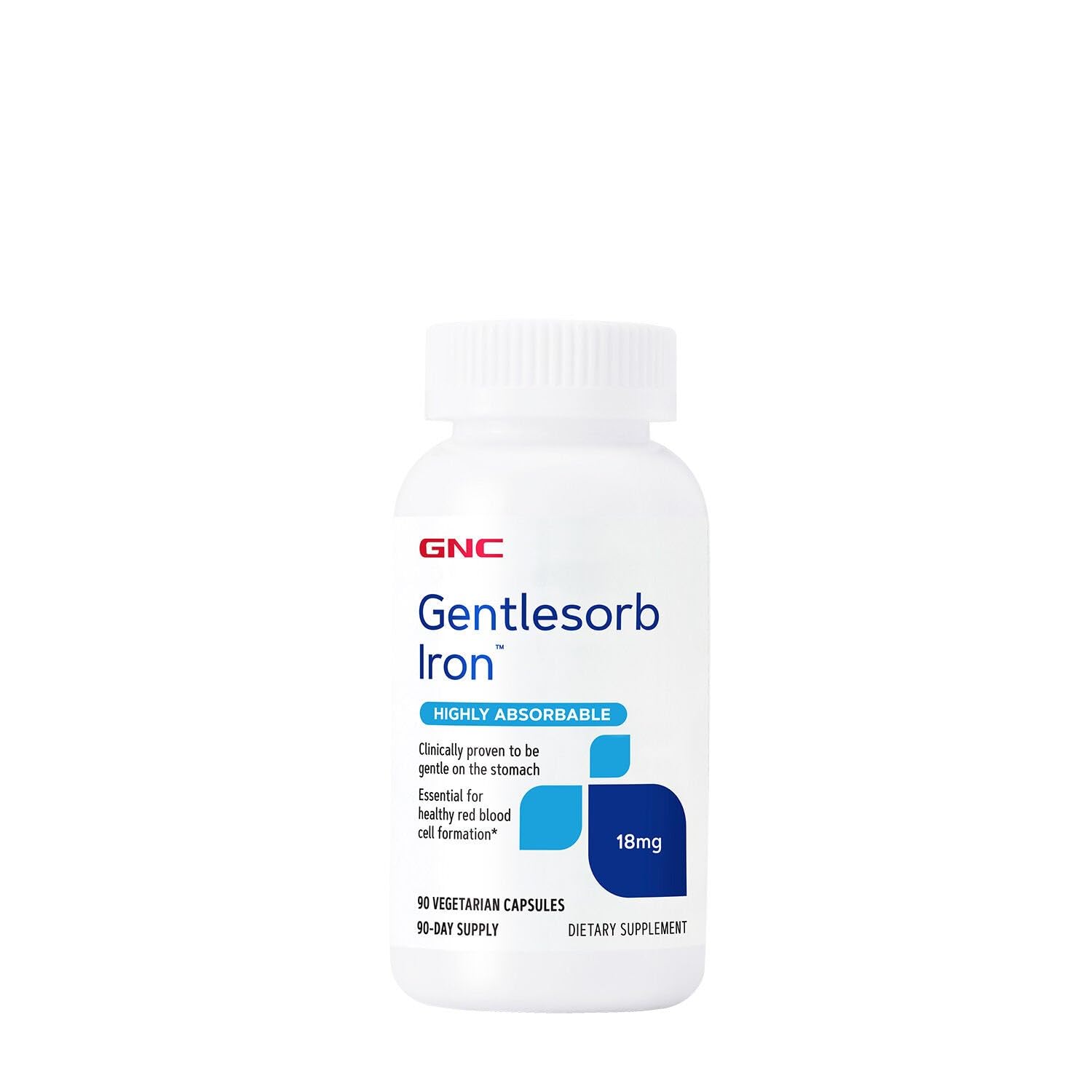
GNC’s Gentlesorb line targets a specific buyer: the person who does not want high-potency iron but needs a safe, long-term maintenance dose. At 18 mg per serving, this is the lowest elemental iron count in this roundup. That makes it appropriate for mild deficiency, general health supplementation, or for teenagers and smaller-framed adults who cannot tolerate a 45 mg or 65 mg punch.
GNC uses a proprietary “Gentlesorb” delivery system designed to minimize gastrointestinal distress. The 90-serving bottle lasts three months at the standard dose, which is an excellent value for anyone planning to stay on iron for the long haul. Being a national brand, quality control and manufacturing consistency are well above average — each batch is GMP-certified.
The downside is that if you have lab-confirmed iron deficiency anemia, 18 mg will not be enough to correct it in a reasonable timeframe. This is not a therapeutic dose for moderate-to-severe cases. It is a solid “maintainer” for people whose levels are borderline or who are following a plant-based diet and want a safety net without the risk of overload.
Why it’s great
- Low 18 mg dose is safe for long-term daily use
- 90-day supply per bottle saves on reordering
- Gentlesorb delivery reduces stomach upset
Good to know
- Too low a dose for confirmed deficiency or anemia
- Not the best value per mg of elemental iron
4. Naked Iron 65 mg Ferrous Bisglycinate

Naked Iron strips the formula down to its essentials: 65 mg of elemental iron from ferrous bisglycinate in a simple vegetable capsule with no fillers, binders, or flow agents. The bisglycinate form is the preferred choice for anyone who has experienced the violent gastrointestinal backlash of ferrous sulfate — the glycine chelate allows your body to absorb the iron via amino acid transporters rather than the mineral-specific pathway that causes irritation.
The potency is high enough to address moderate-to-severe deficiency in a single capsule, which matters for people whose ferritin levels need real correction. The 60-count bottle lasts two months at one capsule per day, placing the per-dose cost among the lowest in this comparison relative to elemental iron delivered.
The main trade-off is that minimal formula means no added vitamin C for absorption enhancement, no B vitamins, and no folic acid. You will need to pair this with a source of vitamin C (a glass of orange juice or a vitamin C tablet) to maximize uptake. Also, because the capsule contains only the raw bisglycinate powder, it has a slight iron smell when opened — harmless but worth noting.
Why it’s great
- High 65 mg elemental iron from well-tolerated bisglycinate
- No unnecessary fillers or additives
- Excellent cost per mg of elemental iron
Good to know
- No added vitamin C — must pair with a separate source
- Unflavored capsules may have a faint iron odor
5. Slow Fe High Potency Iron 45 mg
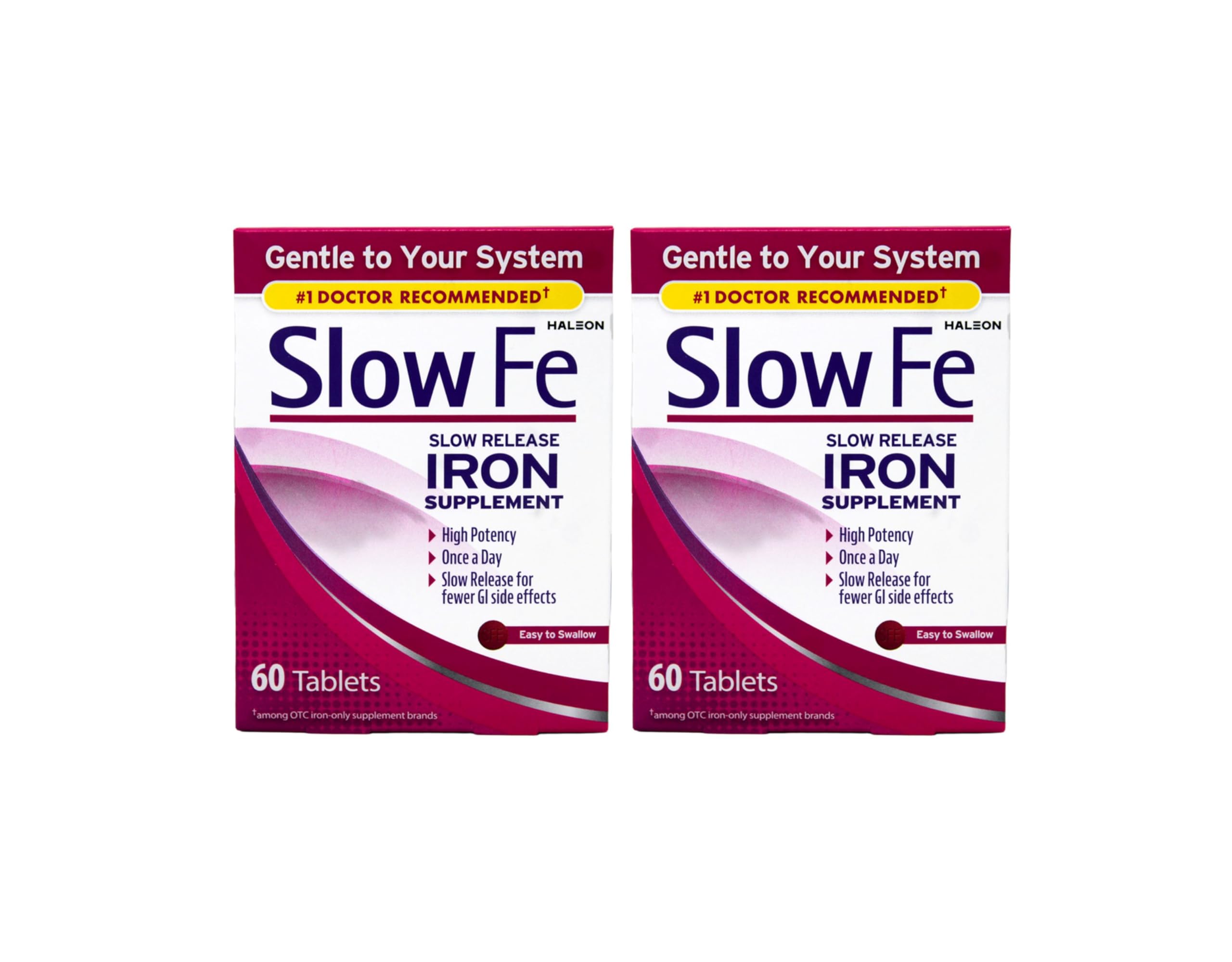
Slow Fe has been a pharmacy staple for decades, and for good reason. The 45 mg slow-release tablet uses a patented wax-matrix technology that gradually dissolves as it moves through the digestive system, minimizing the sudden iron spike that triggers nausea. This design is particularly effective for people who take their supplement at night — the slow release works through the sleep cycle without waking you with stomach discomfort.
The pack of two provides 120 tablets total, which is a four-month supply at the standard one-tablet daily dose. The elemental iron count sits at 45 mg per tablet, placing it in the mid-to-high potency range — strong enough to correct mild-to-moderate deficiency without overshooting into the “too much iron” territory that can cause oxidative stress.
The primary limitation is that slow-release technology can reduce total absorption for some individuals, because the iron is released further down the digestive tract where the gut’s iron transport proteins are less concentrated. If you have absorption issues due to conditions like celiac or Crohn’s, the slow-release format may not deliver the levels you need. For the general population with standard digestive function, this remains one of the most practical iron supplements on the shelf.
Why it’s great
- Patented slow-release matrix reduces stomach irritation
- Four-month supply from a single two-pack purchase
- Ideal for nighttime dosing without waking upset
Good to know
- Slow release may reduce total absorption in compromised guts
- Tablets are large and may be difficult to swallow for some
FAQ
Can taking an iron supplement cause constipation?
Should I take my iron supplement with food or on an empty stomach?
How long does it take for an iron supplement to raise ferritin levels?
Final Thoughts: The Verdict
For most users, the best iron supplement winner is the MegaFood Blood Builder because it combines clinical-grade gentleness, whole-food cofactors for absorption, and third-party testing all in a single tablet. If you want a chewable format with great taste and microencapsulated stomach protection, grab the OLLY Delightful Iron. And for high-potency bisglycinate at the best cost per milligram of elemental iron, nothing beats the Naked Iron 65 mg.