An internal frame pack shifts the load from your shoulders to your hips, making multi-day carries feel manageable instead of punishing. The wrong pack torques your lower back within the first mile; the right one disappears against your spine, letting you focus on the trail instead of the weight.
I’m Emma — the founder and writer behind Baby Bangs. Over the last decade I’ve measured torso lengths, compared frame sheet stiffness, and evaluated suspension systems across budget and premium brands so you don’t have to guess which internal frame pack actually carries its weight.
This guide walks through nine packs that span day hikes and week-long expeditions. Build your carry system around the best internal frame pack that matches your torso, load weight, and terrain preference, then hit the trail with confidence.
How To Choose The Best Internal Frame Pack
Internal frame packs rely on a rigid internal structure (aluminum stay, wire frame, or composite frame sheet) that transfers pack weight to your hip belt. Three factors separate a pack that feels like part of your body from one that fights you every step: torso fit, suspension geometry, and volume-to-weight ratio.
Match the Torso Length, Not the Height
A 5’10” person with a long torso needs a medium or large frame; a person of the same height with a short torso needs small. Measure from the C7 vertebra (the bony bump at the base of your neck) down to your iliac crest (top of your hip bones). A pack with an adjustable torso — like the TETON Explorer or Osprey Rook — lets you dial this fit. Fixed-torso packs (Deuter AC Lite, Kelty Asher) require accurate sizing before purchase.
Frame Stiffness Matches Load Weight
Lightweight frame sheets work for sub-25 lb loads. Single aluminum stay packs handle 30-40 lbs. Dual perimeter wire frames (Deuter, Osprey Stratos) manage 40+ lb carries without the pack sagging away from your back. A pack that flops under load forces your shoulders to compensate, leading to neck fatigue by day two.
Hip Belt Padding Length vs. Density
Hip belts shift 70-80% of the pack weight to your pelvis. The belt must wrap around your iliac crest — not sit above it. Long, wrap-around belts with dense multi-density foam (Osprey, Deuter) distribute pressure without hot spots. Short, thin belts (Mardingtop budget models) require you to crank the buckle tight, which bruises the hip bones on longer carries.
Ventilation vs. Stability Trade-Off
Mesh trampoline backs (Deuter AC Lite, Osprey Stratos) create an air gap that reduces sweat buildup. The trade-off is the load sits 2-3 inches further from your center of gravity, reducing stability on technical terrain. Flat foam back panels keep the load closer but trap heat. Choose based on climate and trail type.
Quick Comparison
On smaller screens, swipe sideways to see the full table.
| Model | Category | Best For | Key Spec | Amazon |
|---|---|---|---|---|
| Osprey Stratos 36L | Premium | Technical day hikes with heavy loads | AirSpeed trampoline back / 3.7 lbs | Amazon |
| Osprey Rook 65L | Premium | Multi-day backpacking, extended torso | LightWire alloy frame / 4.6 lbs | Amazon |
| Deuter Trail 30L | Premium | Biking & narrow-shoulder hiking | U-Frame perimeter / 3.1 lbs | Amazon |
| Kelty Asher 65L | Mid-Range | Lightweight multi-day trips | Single aluminum stay / 3.4 lbs | Amazon |
| TETON Explorer 65L | Mid-Range | Entry-level multi-day backpacking | Open-cell foam lumbar / 5.0 lbs | Amazon |
| Naturehike 65L | Mid-Range | Ultralight budget camping | Frame sheet / 2.8 lbs | Amazon |
| Mardingtop 65L+10L | Budget | Heavy budget carries, hunting | Frame system / 5.4 lbs | Amazon |
| Mardingtop 60L | Budget | Entry-level military style | Frame sheet / 4.0 lbs est | Amazon |
| Deuter AC Lite 24L | Mid-Range | Ventilated day hiking | Steel frame / 2.6 lbs | Amazon |
In‑Depth Reviews
1. Osprey Stratos 36L

The Osprey Stratos 36L delivers the category’s best balance of ventilation and load control. Its AirSpeed trampoline back panel creates a 3-inch air gap between your spine and the pack body, reducing sweat accumulation on warm climbs, while a tensioned mesh overlay prevents the load from sagging. The result is a pack that breathes without sacrificing stability on uneven terrain.
The 36-liter capacity fits a full day hike plus a light overnight kit, and the integrated rain cover adds protection without an extra purchase. Osprey’s All Mighty Guarantee covers the pack for life, which explains the higher upfront cost compared to budget alternatives. The hip belt uses multi-density foam that contours around the iliac crest rather than crushing it.
At 3.7 pounds the Stratos sits on the heavier side for its volume, and the trampoline mesh reduces internal space by about 2 liters compared to a flat-back design of the same nominal capacity. Hikers who carry under 25 pounds may prefer a lighter pack, but for anyone hauling a full overnight load on technical trails, the Stratos is the reference standard.
Why it’s great
- Best-in-class ventilation keeps your back dry on hot climbs
- Lifetime warranty protects the investment for decades
- Load lifter straps and sternum strap provide fine-tuned fit adjustments
Good to know
- Heavier than comparable 36L packs without trampoline backs
- Internal capacity feels slightly smaller than flat-back designs
- Recommended for torso lengths 16-21 inches — measure before buying
2. Osprey Rook 65L

The Rook 65L is Osprey’s value-oriented multi-day pack that does not skimp on frame rigidity. Its LightWire alloy perimeter frame transfers loads up to 45 pounds efficiently to a foam hip belt with contoured padding, making it a strong contender for week-long backpacking trips. The extended fit version accommodates torso lengths up to 22 inches, rare in this price tier.
The main compartment opens with a drawstring closure and features a floating top lid with dual pockets, allowing you to separate rain gear from your food bag. A dedicated hydration sleeve with a center back exit port works with most 3-liter reservoirs. The sleeping bag compartment has a removable divider, so you can convert the full 65 liters into one large cavity.
At 4.6 pounds the Rook is heavier than ultralight alternatives like the Kelty Asher, and the fixed torso length limits fit flexibility for shorter hikers. For hikers who prioritize load capacity and frame stiffness over minimum weight, the Rook delivers premium carry at a mid-range price.
Why it’s great
- Extended torso fit reaches 22 inches for tall hikers
- Alloy perimeter frame handles 45+ lb loads without flex
- Floating top lid and sleeping bag divider offer flexible organization
Good to know
- Heavier than ultralight packs of similar volume
- Fixed torso sizing — does not adjust down for short torsos
- Back panel ventilation is average compared to trampoline designs
3. Deuter Trail 30L

The Deuter Trail 30L uses a U-shaped wire perimeter frame that wraps around the pack body, creating a stiff exoskeleton that prevents the load from sagging or shifting. This frame design is rare in sub-35L packs, giving the Trail better load transfer than most daypacks. The narrow fit profile suits hikers with slim shoulders or smaller frames, keeping the pack from sliding sideways.
The mesh back panel features Deuter’s Aircomfort system, which uses a curved spring steel frame to pull the mesh away from your lower back. This creates significant airflow, though the frame adds some weight and reduces internal packing volume. The hip belt is lightly padded compared to larger Deuter models, appropriate for the 30L capacity and typical sub-20 lb carries.
Hikers who need a dedicated hydration sleeve will find a zippered compartment that fits up to a 3-liter bladder, and the compression straps stabilize the load well on technical descents. The lack of a frame sheet means the pack can collapse flat for storage, a plus for travel. For bikers and narrow-shouldered hikers who want a ventilated frame pack under 35L, the Trail 30L is a strong pick.
Why it’s great
- U-frame perimeter provides exceptional load stability for a 30L pack
- Narrow fit profile prevents side-slip on slim builds
- Aircomfort mesh back panel delivers ventilated comfort
Good to know
- Hip belt is lightly padded — not ideal for heavy loads
- Wire frame reduces usable internal volume
- No integrated rain cover, must buy separately
4. Kelty Asher 65L
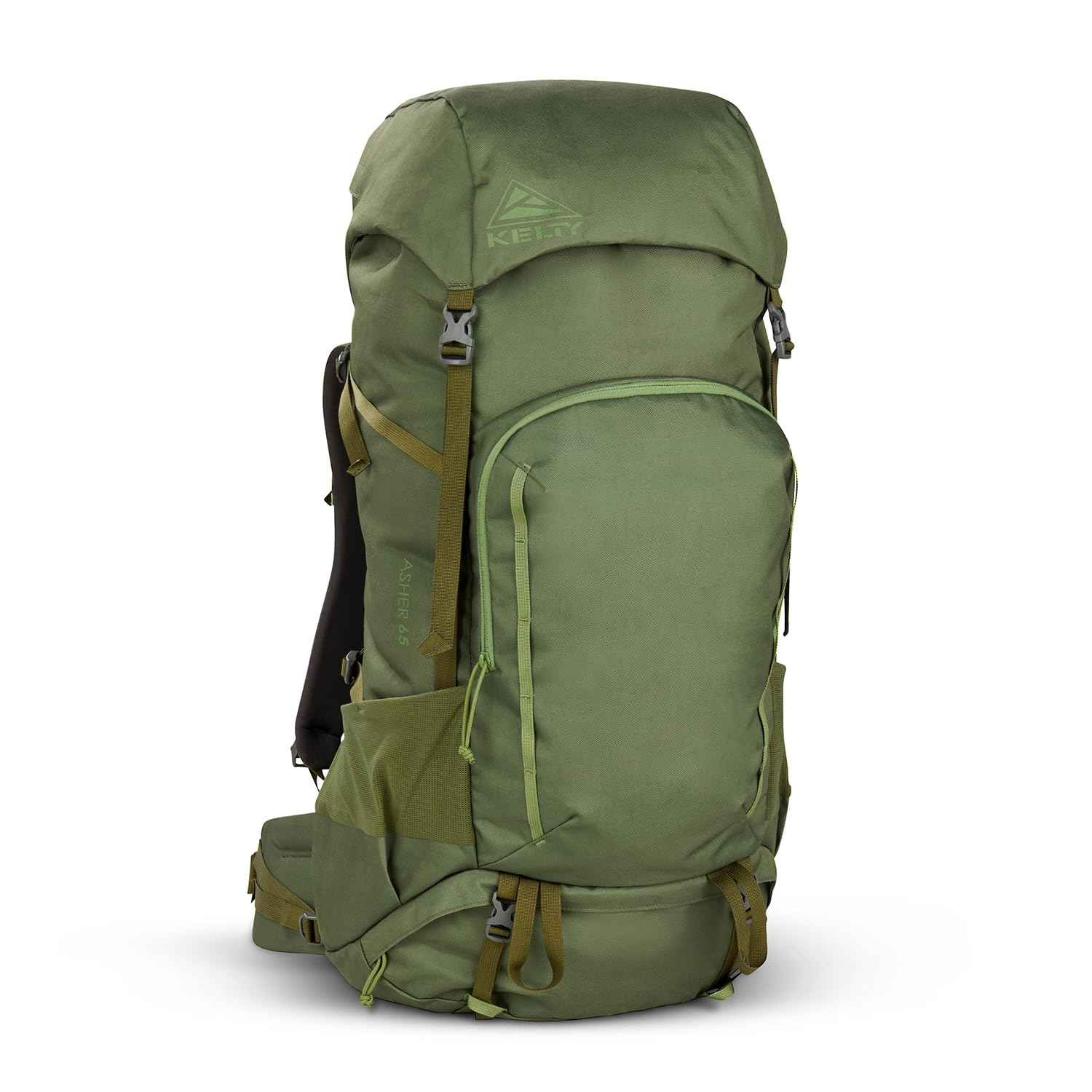
The Kelty Asher 65L strips weight without abandoning a functional internal frame. A single aluminum stay runs vertically down the center, giving the pack enough rigidity to handle 30-35 lb loads while keeping the total weight at 3.4 pounds — impressively light for a 65-liter pack. The back panel uses a foam frame sheet with perforations for airflow, a compromise between weight, cost, and ventilation.
The hip belt uses Kelty’s adjustable suspension system, which lets you move the belt up or down about 2 inches to dial in torso fit. This feature bridges the gap between fixed-torso packs and fully adjustable systems. The main compartment opens wide with a J-shaped zipper, and the sleeping bag compartment is accessible through a separate zippered divider at the bottom.
Hikers carrying above 35 pounds will notice the single stay flex under heavier loads, and the foam hip belt lacks the dense padding found on Osprey or Deuter premium packs. The back panel ventilation is adequate but not exceptional on sweaty climbs. For lightweight backpackers who want a full-size pack without the usual weight penalty, the Asher is a smart mid-range choice.
Why it’s great
- Very light for a 65L internal frame pack at 3.4 pounds
- Adjustable hip belt position improves torso fit range
- J-shaped zipper and separate sleeping bag compartment offer good organization
Good to know
- Single stay flexes under loads above 35 pounds
- Hip belt padding is less dense than premium alternatives
- Back panel ventilation is average — expect some sweat on hot days
5. TETON Explorer 65L
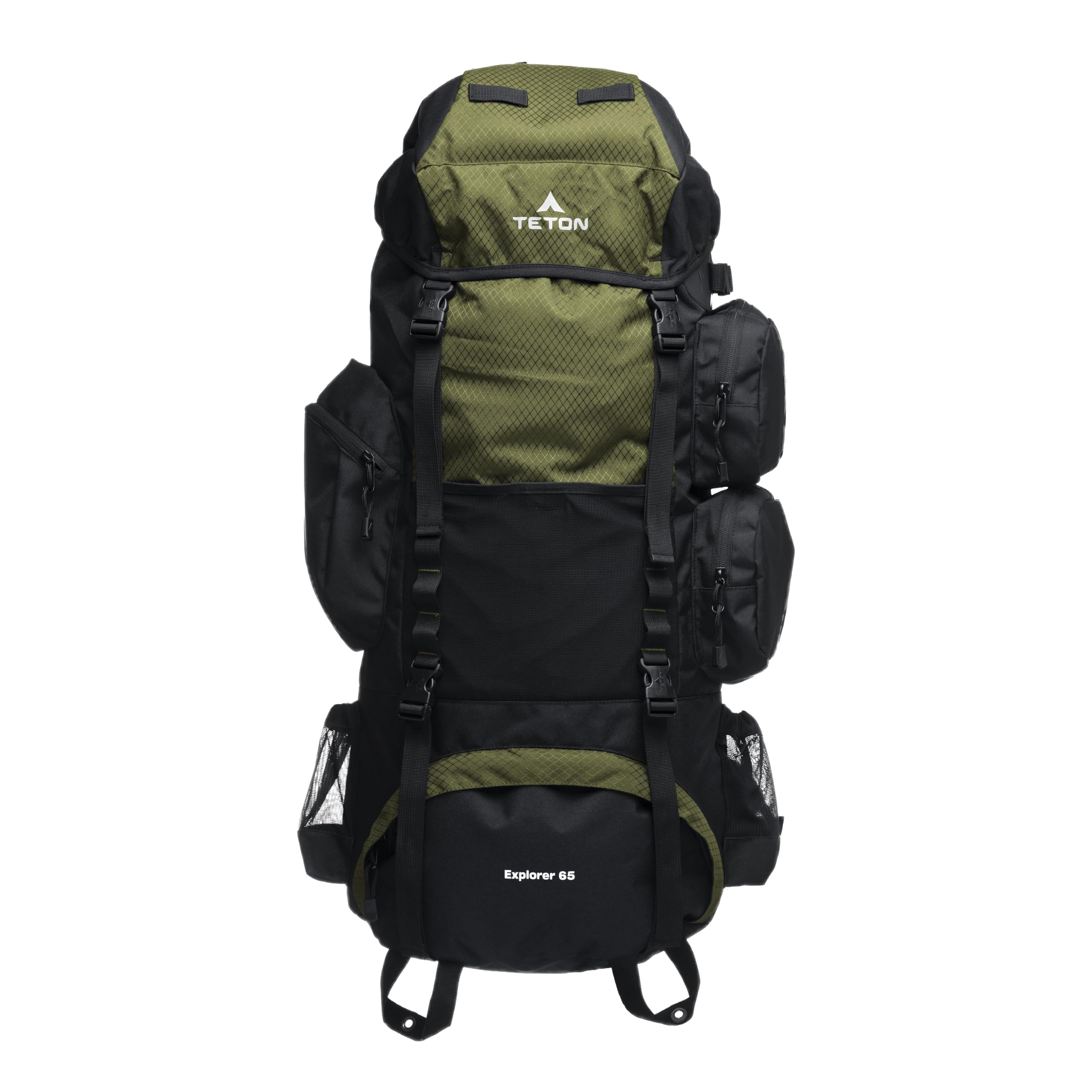
The TETON Explorer 65L is a budget-friendly entry into the internal frame category that punches above its price point. Its multi-position torso adjustment system lets you set the shoulder strap height to one of four positions, accommodating torso lengths from about 16 to 22 inches. The open-cell foam lumbar pad and molded channels provide decent airflow for a pack at this tier.
The 600D polyurethane-lined main body resists abrasion from brush and rocky campsites, and the included rainfly adds weather protection without a separate purchase. The sleeping bag compartment has a zippered divider, and the compression straps on both sides and bottom allow you to cinch down the load. The hip belt uses moderately dense foam that handles 30-35 lb carries well.
At 5 pounds the Explorer is heavy for its volume, and the frame system relies on a stamped frame sheet rather than a perimeter wire or aluminum stay, meaning it loses rigidity as loads approach 40 pounds. The included rainfly fits but the attachment loops are thin. For beginners or budget-conscious hikers who need a full-featured internal frame pack, the Explorer is a solid starting point.
Why it’s great
- Adjustable torso system fits a wide range of body sizes
- Durable 600D fabric resists trail abrasion
- Rainfly included saves money on weather protection
Good to know
- Heavy at 5 pounds compared to premium alternatives
- Frame sheet loses rigidity with heavy loads
- Rainfly attachment loops feel less robust than the pack body
6. Naturehike 65L
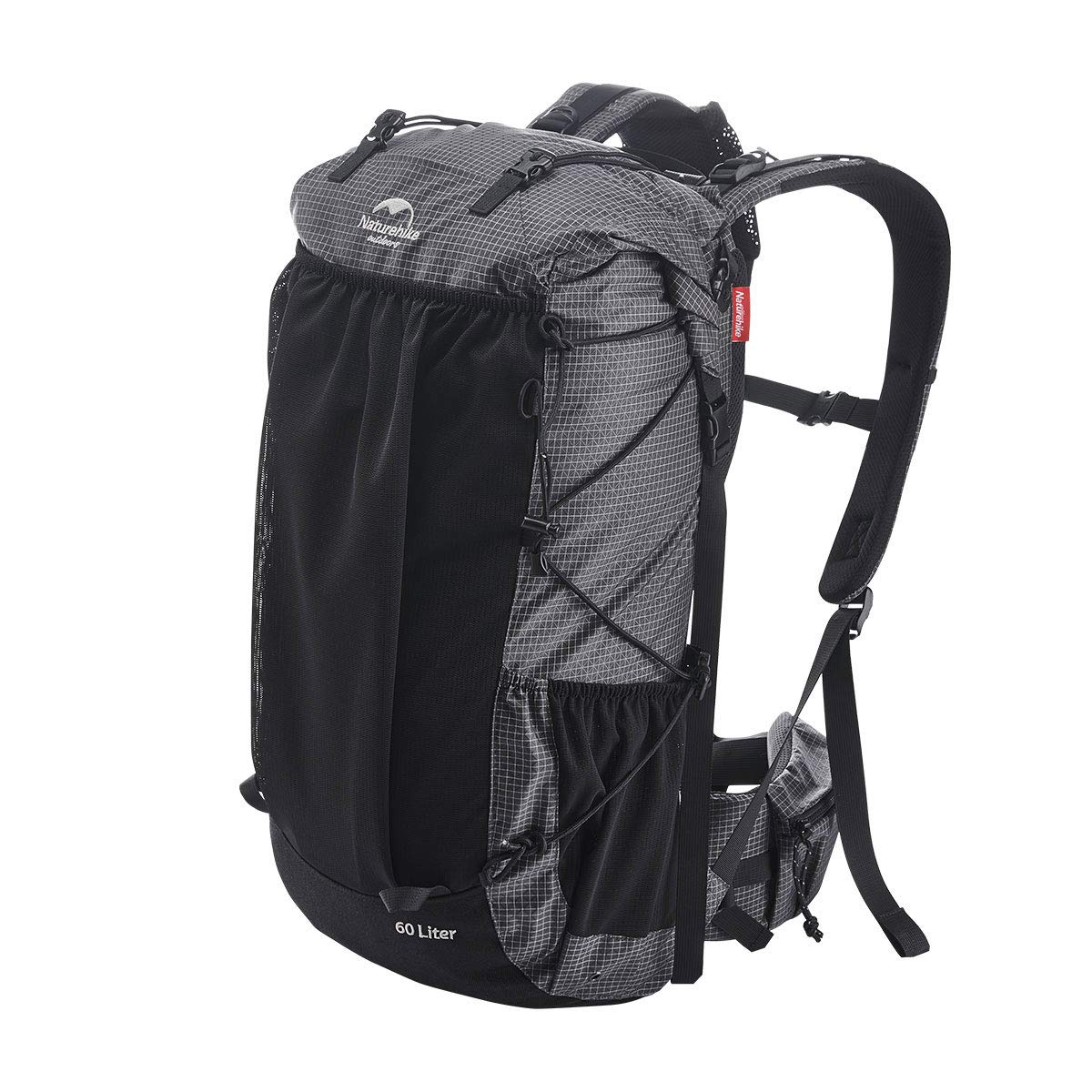
The Naturehike 65L targets ultralight backpackers who want a full-size internal frame pack under 3 pounds. A thin frame sheet embedded in the back panel provides just enough structure to transfer 20-25 lb loads to a simple foam hip belt. The pack body uses 210D nylon with a silicone coating, keeping the weight low while providing moderate water resistance.
The main compartment opens with a top-loading drawstring and includes a hydration sleeve. Compression straps help stabilize the load, though the thin frame sheet means the pack can lose shape on uneven terrain. The hip belt is minimally padded, suitable for light carries but uncomfortable above 25 pounds. The included rain cover adds weather protection when needed.
Durability is the main compromise at this weight — the 210D fabric is prone to puncture from sharp rocks or bushwhacking, and the frame sheet can delaminate over time with heavy use. The shoulder straps are thin and lack load lifter adjustments. For hikers who keep their base weight low and prioritize gram savings over ruggedness, the Naturehike 65L is a capable ultralight option.
Why it’s great
- Very light at 2.8 pounds for a 65-liter pack
- Silicone-coated 210D nylon provides moderate water resistance
- Rain cover included for wet weather protection
Good to know
- Thin frame sheet lacks rigidity for heavy loads
- 210D fabric is prone to puncture on rough terrain
- Minimally padded hip belt uncomfortable above 25 pounds
7. Mardingtop 65L+10L
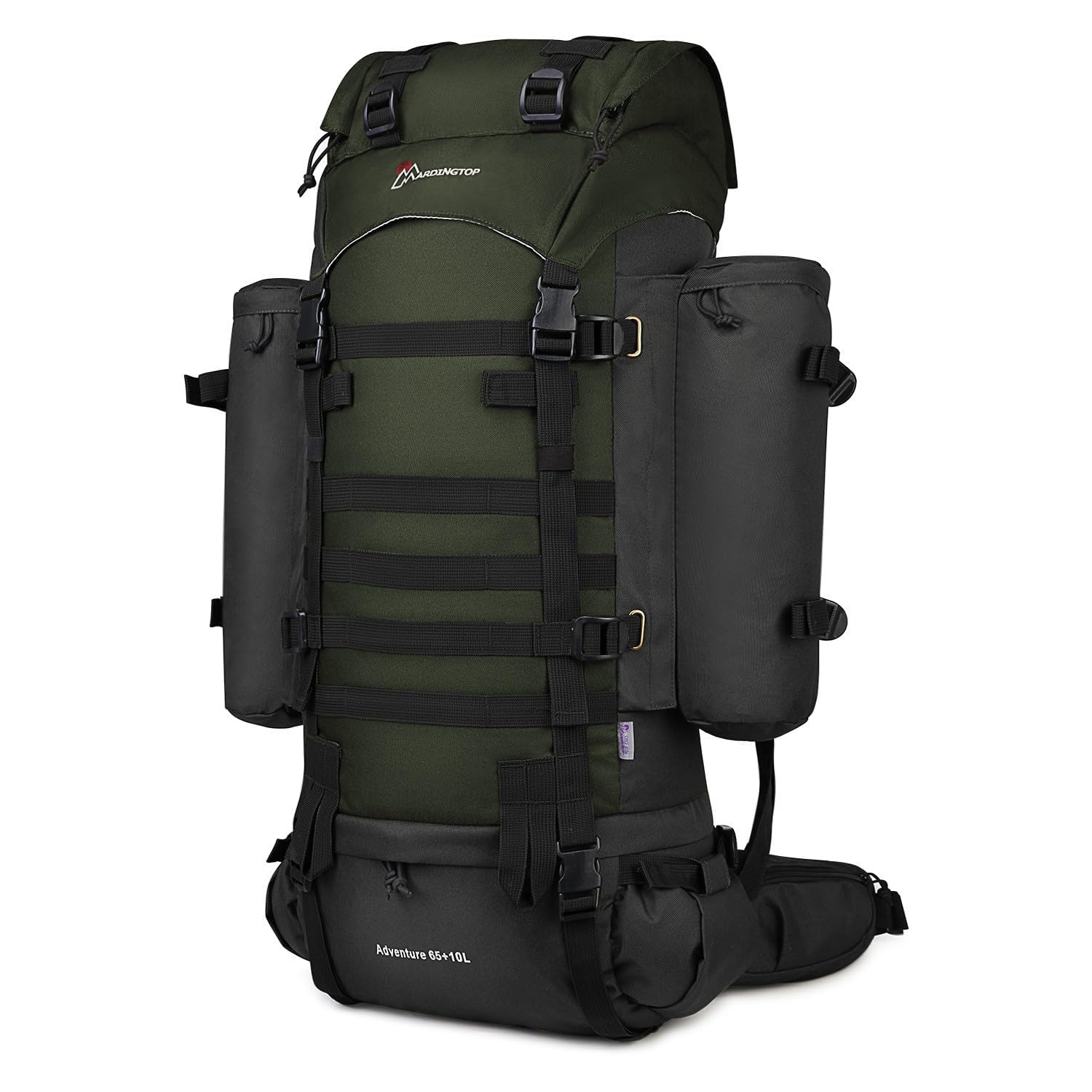
The Mardingtop 65L+10L is built for heavy budget carries, using a frame system with a combination of aluminum stays and a frame sheet to handle 40-50 lb loads. The pack features a large main compartment, multiple external pockets, and attachment points for trekking poles and ice axes. The included rain cover is stowed in a bottom pocket for easy access.
The hip belt is padded with medium-density foam and includes gear loops, making this pack popular among hunters and bushcraft users who carry bulky, heavy equipment. The 600D fabric is abrasion-resistant and can withstand thick brush. The 10-liter extension collar allows you to expand the pack when needed, though the extra capacity adds to the pack’s weight.
At 5.4 pounds, this is one of the heaviest packs in the category, and the frame system produces a bulky profile that feels cumbersome on narrow trails. The suspension lacks the refined load transfer of premium brands, meaning more weight lands on the shoulders despite the frame. For budget-conscious hikers who need a robust frame for heavy loads and can tolerate the weight, the Mardingtop delivers utility at a low entry cost.
Why it’s great
- Combined aluminum stays and frame sheet handle heavy loads
- 600D fabric is highly abrasion-resistant for rugged use
- Gear loops and ice axe attachments suit hunting and bushcraft
Good to know
- Very heavy at 5.4 pounds for a 65L pack
- Bulky profile feels cumbersome on narrow trails
- Load transfer is less refined than premium suspension systems
8. Mardingtop 60L
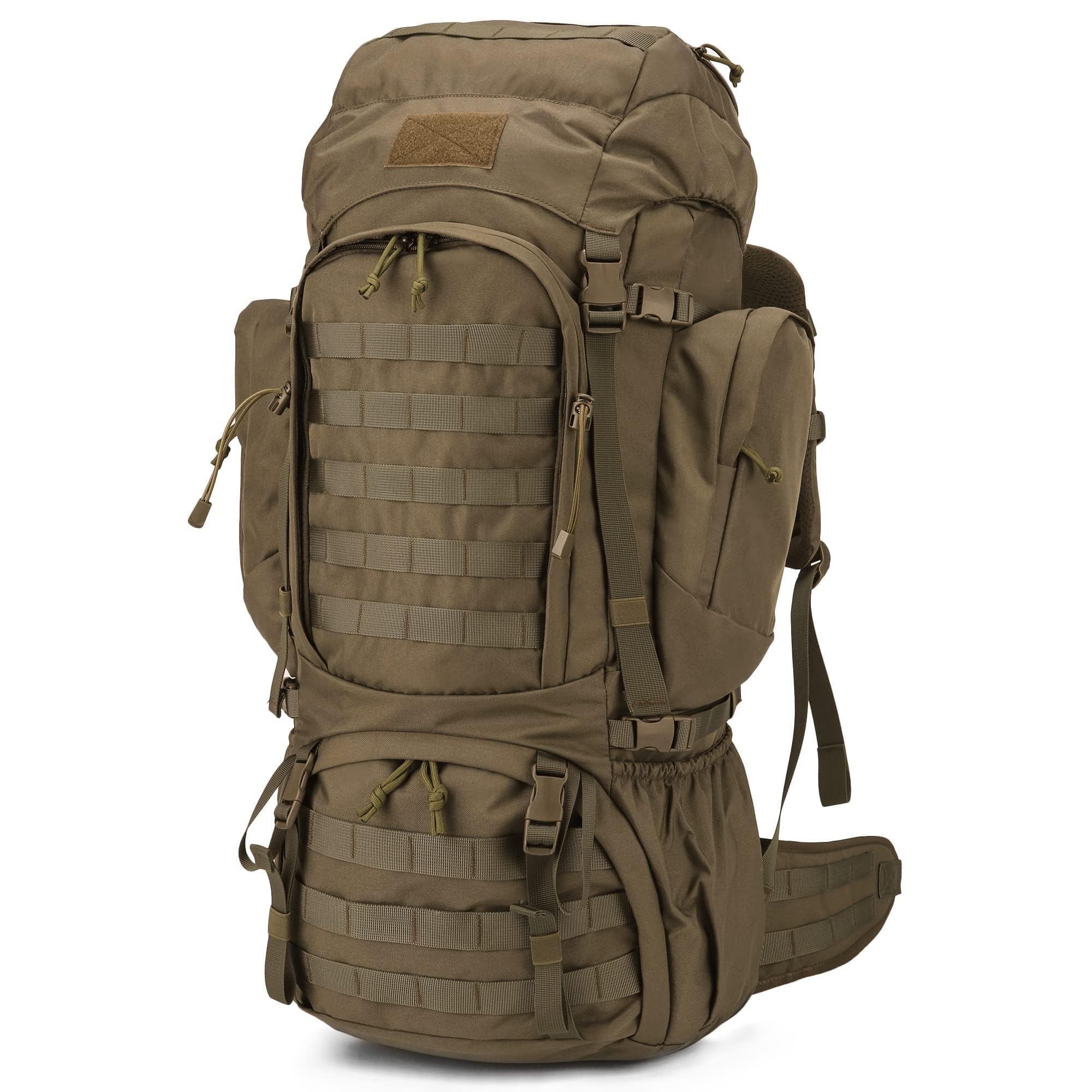
The Mardingtop 60L is a budget entry-level pack with a military aesthetic, featuring MOLLE webbing on the front and sides for attaching pouches and gear. The internal frame uses a frame sheet for structure, though the pack relies heavily on the compression straps to stabilize the load. The included rain cover is a practical addition for wet weather.
The main compartment is top-loading with a drawstring closure, and multiple zippered pockets on the front and waist belt provide easy access to small items. The shoulder straps are moderately padded, and the hip belt uses foam padding that works for loads up to 25-30 pounds. The pack weighs approximately 4 pounds, which is reasonable for the price tier.
The frame sheet offers limited rigidity under heavier loads, and the MOLLE webbing adds weight without improving carry comfort. The hip belt padding is thin compared to mid-range options, leading to pressure points on longer carries. For shooters or hikers who need a low-cost pack with a tactical look for light to moderate loads, the Mardingtop 60L covers the basics.
Why it’s great
- MOLLE webbing allows modular pouch attachment
- Rain cover included for weather protection
- Light enough for entry-level hiking at ~4 pounds
Good to know
- Frame sheet lacks rigidity for loads over 30 pounds
- Thin hip belt padding creates pressure points
- MOLLE webbing adds weight without improving carry
9. Deuter AC Lite 24L
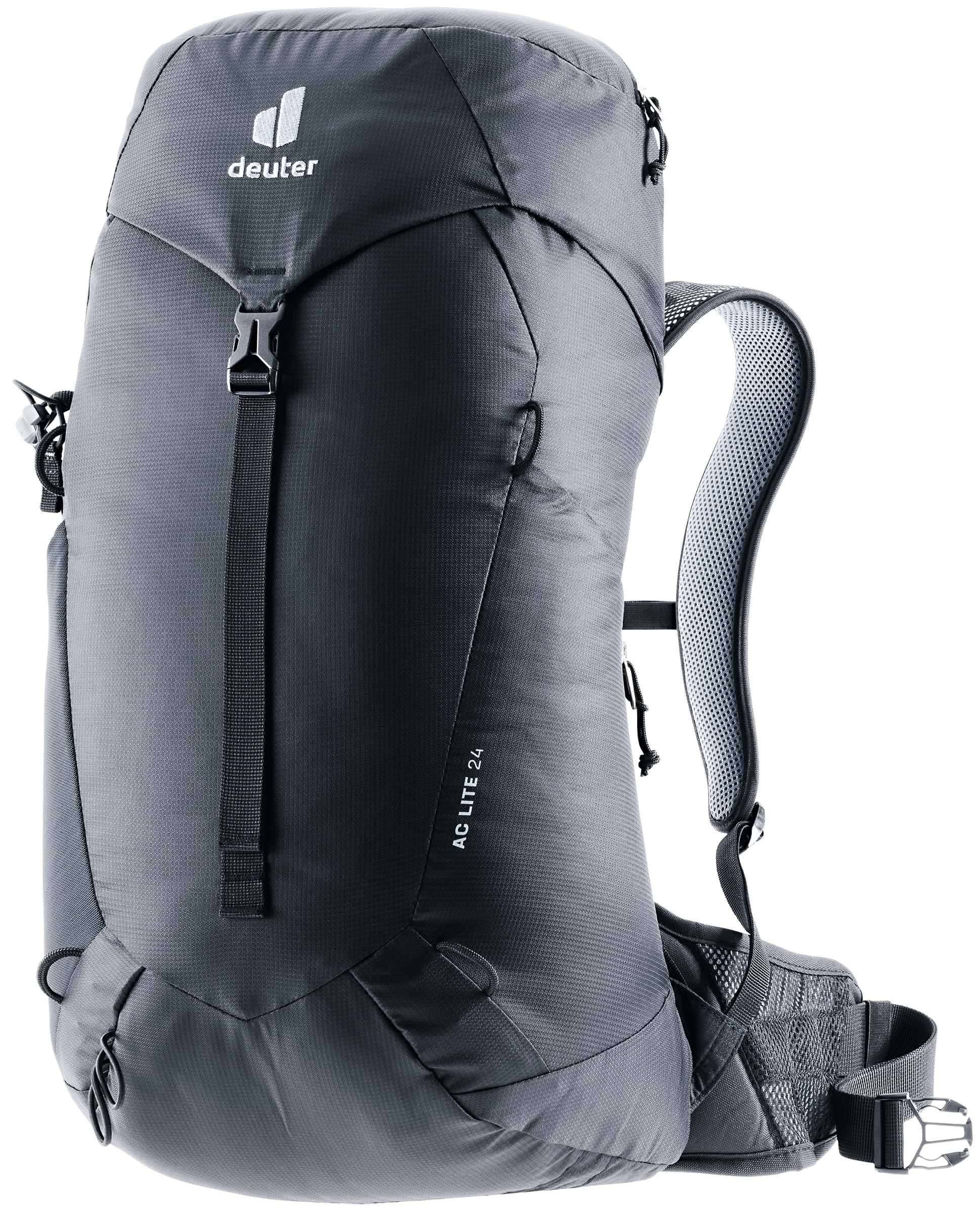
The Deuter AC Lite 24L uses a steel frame in a compact daypack format, delivering a rigid suspension system that is rare in sub-30L packs. The steel perimeter frame keeps the pack from sagging, allowing the load to sit correctly on the hip belt even when the pack is fully stuffed. The Deuter Aircomfort back system uses a spring steel frame to pull the mesh away from your back, creating excellent ventilation for hot hikes.
The 24-liter volume fits a full day hiking kit plus a 3-liter hydration reservoir, and the pack includes a zippered front pocket for quick-access items. The hip belt is lightly padded but functional for the sub-20 lb loads this pack is designed to carry. Compression straps on both sides stabilize the load and help the pack fit closer to your body.
The steel frame adds about 0.3 pounds compared to a comparable frame sheet design, but the trade-off in rigidity is worthwhile for hikers who carry a heavier day pack or hike on technical terrain. The ventilation is among the best in the daypack category, making this a strong pick for summer hiking. For day hikers who prioritize breathability and load stability, the AC Lite is a premium choice.
Why it’s great
- Steel perimeter frame provides exceptional rigidity for a daypack
- Aircomfort back system delivers outstanding ventilation
- Compression straps keep the load stable on technical terrain
Good to know
- Steel frame adds a fraction of weight over frame sheet designs
- 24L capacity limits use to day hikes only
- Hip belt padding is minimal compared to multi-day packs
FAQ
How do I measure my torso length for an internal frame pack?
What is the difference between an internal frame and an external frame pack?
Can I use a 65-liter internal frame pack for a day hike?
How do I adjust load lifter straps on an internal frame pack?
Does an internal frame pack need a rain cover?
Final Thoughts: The Verdict
For most users, the best internal frame pack winner is the Osprey Stratos 36L because the AirSpeed suspension and molded hip belt offer ventilated load control that handles everything from day hikes to light overnight trips, backed by a lifetime warranty. If you want maximum volume and a rigid perimeter frame for heavy multi-day carries, grab the Osprey Rook 65L. And for budget-friendly entry-level backpacking with adjustable torso fit, nothing beats the TETON Explorer 65L.