The line between a basic step counter and a true performance partner is drawn by the quality of its data. An intelligent watch does more than tell time or mirror phone notifications — it interprets your body’s signals, adapts to your training load, and surfaces insights that help you sleep better, recover smarter, and move with more intention. Whether you are a seasoned triathlete, a weekend trail runner, or someone who simply wants to understand why they feel drained by noon, the right watch turns raw metrics into actionable daily guidance.
I’m Emma — the founder and writer behind Baby Bangs. Over the years I have combed through hundreds of spec sheets, cross-referenced sensor accuracy studies, and analyzed user feedback across every major wearable platform to understand what separates a gimmick from a genuinely useful tool.
Finding the best intelligent watch requires weighing sensor precision, battery endurance, and ecosystem fit against your personal goals rather than simply picking the most expensive option on the shelf.
How To Choose The Best Intelligent Watch
Not every advanced feature is worth paying for. Zero in on the sensors and software that match how you actually live, train, and sleep.
Sensor Suite & Health Tracking Depth
The core hardware — optical heart rate sensor, accelerometer, gyroscope, and optional SpO2/ECG/body composition sensors — determines what your watch can measure. For serious athletes, look for multi-path or multi-LED heart rate sensors that resist motion artifacts during intervals. For general wellness, an ECG-capable watch that flags irregular rhythms adds genuine clinical value. The presence of a barometric altimeter matters for hikers and trail runners; everyone else can safely skip it.
Battery Life & Charging Speed
A watch that needs daily charging becomes a chore. Determine your tolerance: premium lifestyle watches with always-on AMOLED displays typically last 1-3 days, while sports-focused models with power-efficient operating systems can stretch 10-15 days. Fast charging (15 minutes for 8 hours of use) can rescue a daily charge scenario, but nothing beats a watch that simply lasts through a long training block without needing a top-up.
Ecosystem Lock-In vs. Cross-Platform Flexibility
Apple Watch owners are tied to iPhone; Samsung Galaxy Watches pair best with Android (and offer deeper integration with Samsung phones). Garmin and Amazfit offer wider cross-platform compatibility but may limit certain reply features on iOS. Consider whether you want seamless call-taking, message dictation, and media control — or if single-purpose health data syncing is sufficient. The answer determines whether you should look at a tightly integrated flagship or a more platform-agnostic fitness watch.
Quick Comparison
On smaller screens, swipe sideways to see the full table.
| Model | Category | Best For | Key Spec | Amazon |
|---|---|---|---|---|
| Garmin Forerunner 970 | Premium Running/Triathlon | Serious runners & triathletes | 15-day battery, AMOLED, multi-band GPS | Amazon |
| Apple Watch Ultra 3 | Premium Adventure | Outdoor athletes & safety-conscious users | 42h battery, satellite SOS, 100m water resistance | Amazon |
| Apple Watch Series 11 (46mm) | Premium Lifestyle | iPhone users wanting comprehensive health tools | ECG, SpO2, sleep apnea detection, 24h battery | Amazon |
| Samsung Galaxy Watch Ultra | Premium Android | Android users needing rugged build & LTE | Titanium case, 3-day battery, body composition sensor | Amazon |
| Apple Watch Series 11 (42mm) | Mid-Range Lifestyle | Everyday iPhone health tracking | ECG, sleep score, always-on display, 24h battery | Amazon |
| Amazfit Active Max | Budget-Friendly | Value seekers wanting long battery & offline maps | 25-day battery, 3000-nit AMOLED, 4GB storage | Amazon |
| Garmin HRM 600 | Accessory (Chest Strap) | Garmin users wanting running dynamics | HRV, step speed loss, 2-month rechargeable battery | Amazon |
In‑Depth Reviews
1. Garmin Forerunner 970

The Forerunner 970 is Garmin’s most complete running and triathlon watch to date. Its 1.4-inch AMOLED display with sapphire lens delivers crisp readability in direct sun, and the lightweight titanium bezel keeps the 47mm case comfortable for all-day wear — including sleep tracking. The built-in LED flashlight is a surprisingly practical tool for early-morning or late-night runs, and the training readiness score synthesizes sleep quality, HRV status, and recovery load into a single actionable number.
Up to 15 days in smartwatch mode and 26 hours in full GPS mode means you can complete a multi-day training block or a long ultra without scrambling for a charger. The multi-band GPS locks onto satellite signals quickly even in urban canyons, and running dynamics like vertical oscillation and ground contact time are available from the wrist (or even more precise when paired with the HRM 600 chest strap). The built-in microphone and speaker also let you take calls and use your smartphone’s voice assistant directly from the watch.
The ECG app adds clinical-grade atrial fibrillation detection for users 22 and older, and the full-color topo maps with dynamic round-trip routing help you explore unfamiliar routes with confidence. The learning curve is steeper than a general lifestyle watch, but for anyone serious about structured training, the depth of data here is unmatched in its class.
Why it’s great
- Exceptional 15-day battery life for a bright AMOLED display
- Multi-band GPS locks quickly even in challenging environments
- Comprehensive training metrics (running economy, HRV status, training readiness)
- Built-in LED flashlight and color topo maps add real outdoor utility
Good to know
- Steep learning curve compared to general-purpose smartwatches
- Running dynamics with wrist data are less accurate than a dedicated chest strap
- Premium price point reflects the advanced hardware and sapphire lens
2. Apple Watch Ultra 3
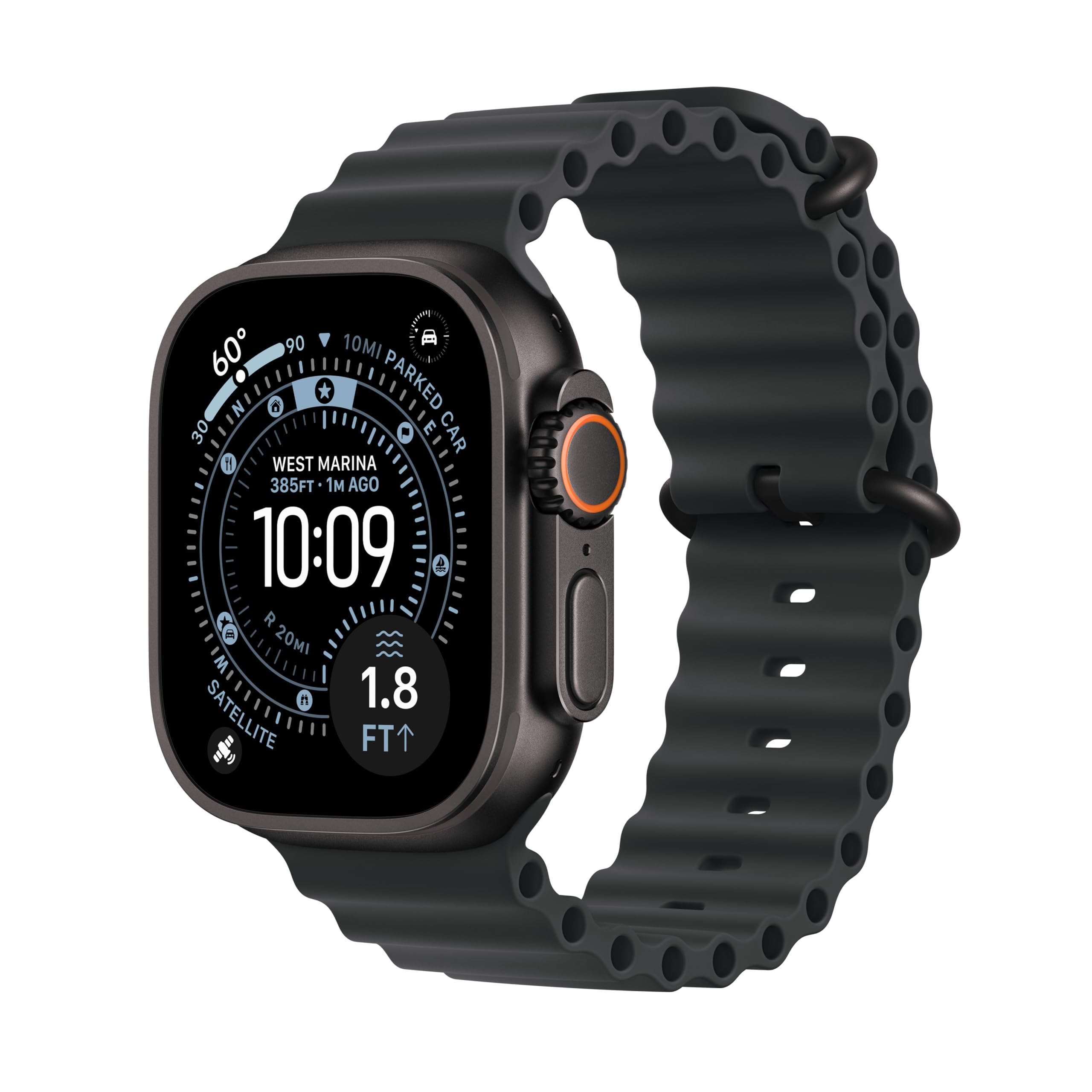
The Apple Watch Ultra 3 is built for the extreme edge of the wearable spectrum. Its 49mm titanium case and sapphire crystal display withstand 100 meters of water resistance, making it suitable for recreational scuba diving, high-speed water sports, and ocean swimming. The precision dual-frequency GPS rivals dedicated handheld units, and the customizable Action Button gives tactile control over workouts, waypoints, or the built-in flashlight without glancing at the screen.
Battery life reaches 42 hours under normal use and up to 72 hours in Low Power Mode — nearly double the standard Series 11. For runners, the Workout Buddy feature (powered by Apple Intelligence from a nearby iPhone) and training load metrics help manage intensity. The cellular model with 5G enables calls, messages, and music streaming without a phone, and the satellite communications feature lets you text emergency services when out of cellular range — a genuine safety net for backcountry explorers.
Health monitoring includes the same hypertension notifications, sleep apnea detection, sleep score, blood oxygen readings, and ECG as the Series 11, now wrapped in a case that survives far more abuse. The always-on display is exceptionally bright at wider viewing angles, and the Ocean Band (or Trail Loop) options keep the watch secure during high-motion activities. It is heavy and bulky on smaller wrists, but for adventurers who value durability and safety, it is the definitive choice.
Why it’s great
- Satellite SOS and precision dual-frequency GPS for backcountry confidence
- 100m water resistance suitable for diving and high-speed water sports
- 42-hour battery life with fast charging (8 hours use in 15 minutes)
- Customizable Action Button for one-touch workout start or flashlight
Good to know
- Large 49mm case can feel heavy on smaller wrists
- Metal bands may scratch the titanium case; silicone or fabric bands recommended
- Requires iPhone for full functionality and satellite SOS activation
3. Apple Watch Series 11 (46mm Titanium)
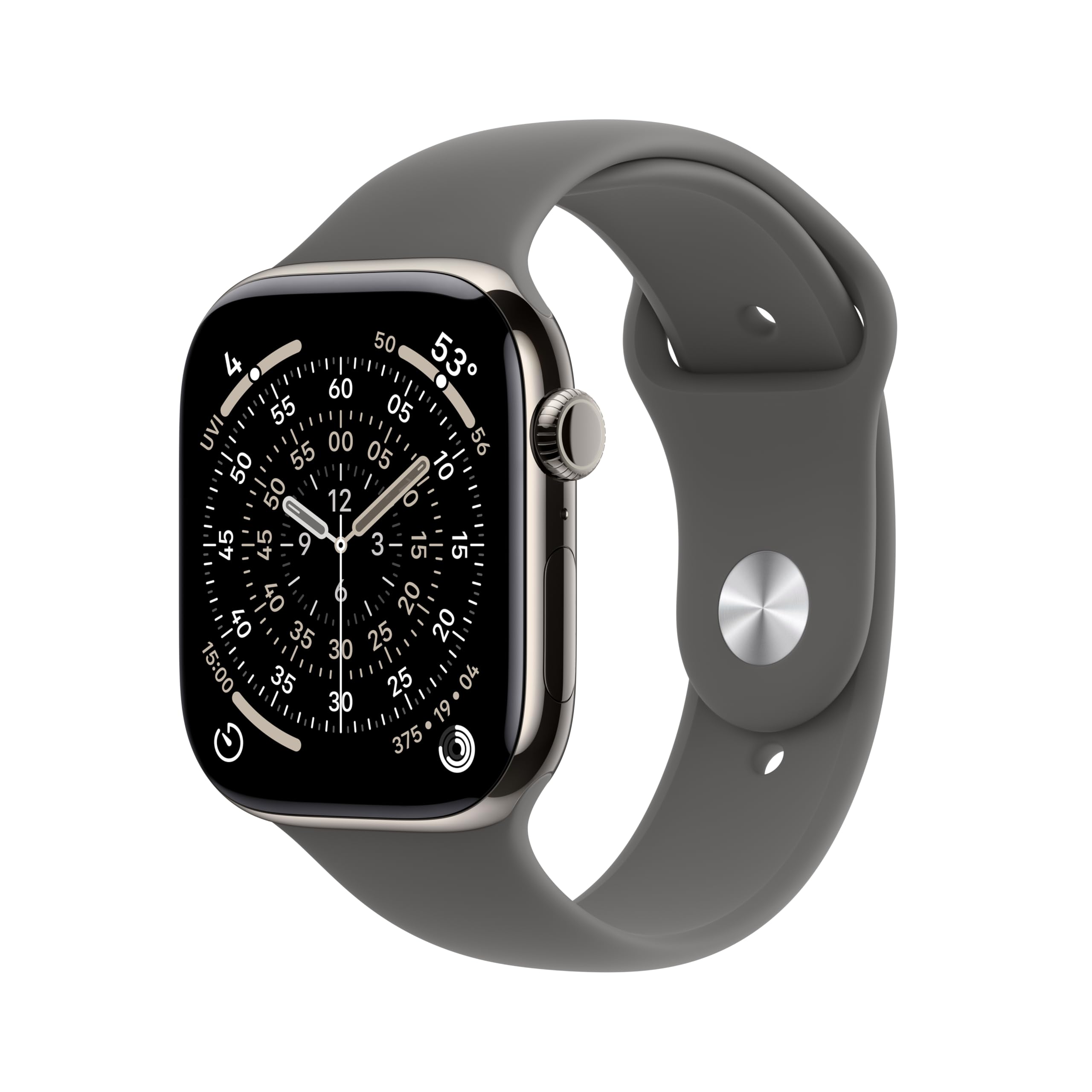
The 46mm titanium Series 11 is the sweet spot for iPhone users who prioritize comprehensive health monitoring without the bulk of the Ultra. It introduces hypertension notifications — spotting signs of chronic high blood pressure — and sleep apnea detection alongside the established ECG, high/low heart rate alerts, irregular rhythm notifications, and blood oxygen readings. The sleep score consolidates overnight metrics into a single restorative quality number, and the Vitals app surfaces overnight trends like respiratory rate and wrist temperature.
At just over an ounce, the titanium case is remarkably lightweight for a 46mm watch, making it comfortable for 24/7 wear including sleep tracking. The always-on Retina display is 2x more scratch resistant than the Series 10, and the fast charging delivers up to 8 hours of normal use in 15 minutes — enough to top up during a shower. The cellular version with 5G keeps you connected without your phone, and fall detection/crash detection add an extra safety layer for older users or solo exercisers.
Battery life is a consistent 24 hours under normal use, so daily charging is required. The workout metrics — Pacer, Heart Rate Zones, training load — are robust enough for serious runners while remaining intuitive for casual users. Three months of Apple Fitness+ are included, making this a compelling all-in-one health, fitness, and communication device for anyone already in the Apple ecosystem.
Why it’s great
- Hypertension notifications and sleep apnea detection add genuine clinical utility
- Fast charging (15 minutes for 8 hours of use) eliminates battery anxiety
- Lightweight titanium case is barely noticeable during sleep tracking
- Seamless integration with iPhone for calls, messages, and app ecosystem
Good to know
- Requires daily charging for 24-hour use
- Some features (SpO2, ECG) are manual measurements, not continuous
- White sport bands may stain from contact with denim
4. Samsung Galaxy Watch Ultra
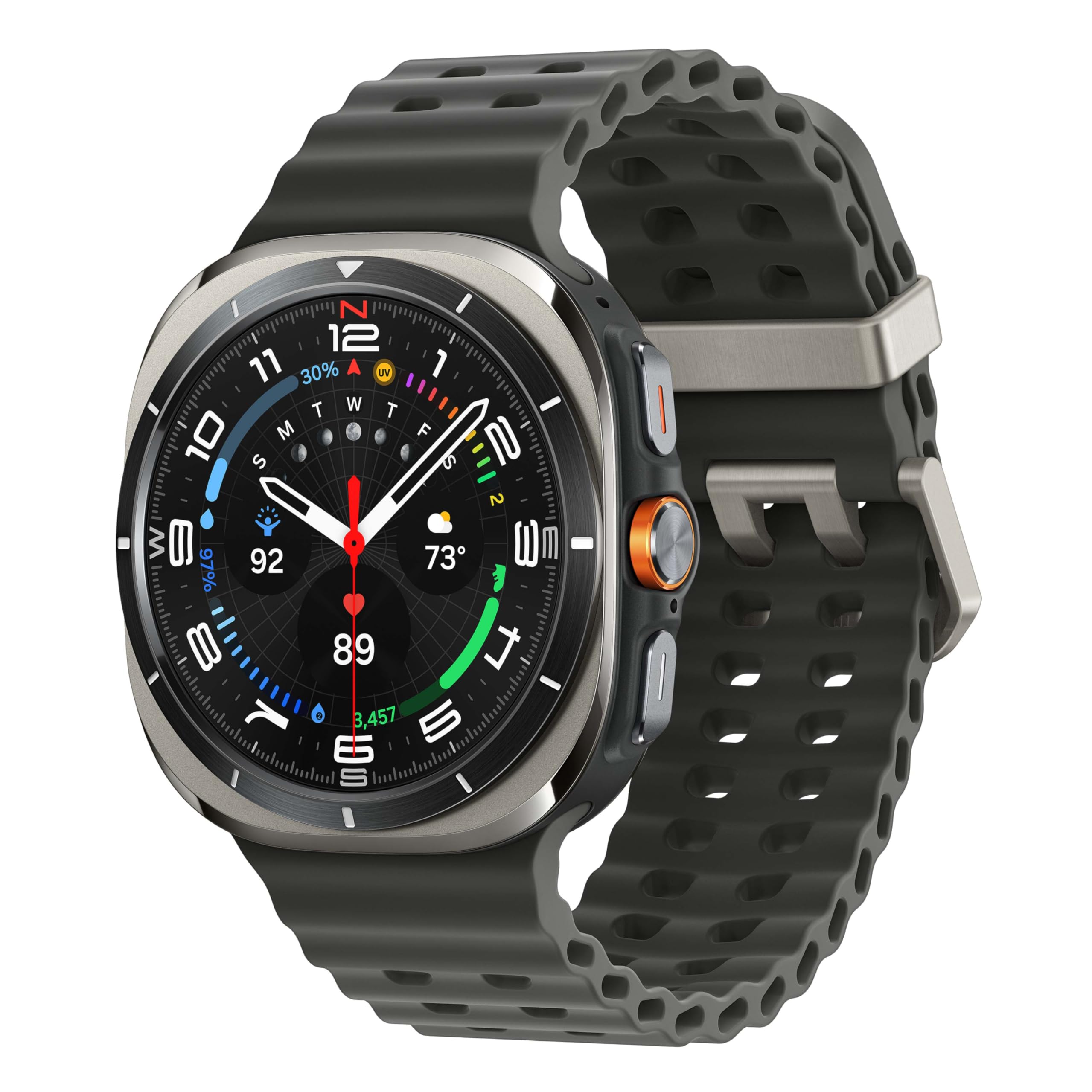
The Samsung Galaxy Watch Ultra is the most feature-dense Wear OS smartwatch available for Android users. Its 47mm titanium case and sapphire crystal are rated for 10 ATM water resistance and MIL-STD-810H durability, handling ocean swimming, dusty trails, and rainy commutes without concern. The 590 mAh battery delivers a genuine 3 days of mixed use — far longer than typical Wear OS watches — and the LTE variant means you can leave your phone behind for runs or errands.
Galaxy AI powers the Energy Score, which combines yesterday’s sleep quality, heart rate variability, and step count into a single readiness metric. Wellness Tips translate that data into actionable suggestions — hydrate more, take a rest day, or go for a walk. The heart rate tracking uses AI to filter out motion artifacts during high-intensity intervals, and the bioelectrical impedance sensor measures body composition (skeletal muscle, fat mass, BMI) directly from the wrist.
The programmable quick button can launch a workout, toggle the flashlight, or start a stopwatch, and the rotating bezel (digital on the Ultra) makes navigating Wear OS menus intuitive even with sweaty fingers. The display is exceptionally bright and readable outdoors, and the built-in speaker and mic handle calls clearly in noisy environments. It is bulky — not ideal for small wrists — and the app ecosystem is narrower than Apple’s WatchOS, but for Android power users, this is the smartwatch to beat.
Why it’s great
- 3-day battery life is outstanding for a Wear OS smartwatch
- Body composition sensor adds unique wellness tracking from the wrist
- Durable titanium case with 10 ATM water resistance
- Galaxy AI delivers personalized Energy Score and Wellness Tips
Good to know
- Large 47mm case is bulky on smaller wrists
- Health tracking depth lags behind Garmin for serious athletes
- Some AI features require Samsung phone for full functionality
5. Apple Watch Series 11 (42mm Rose Gold)
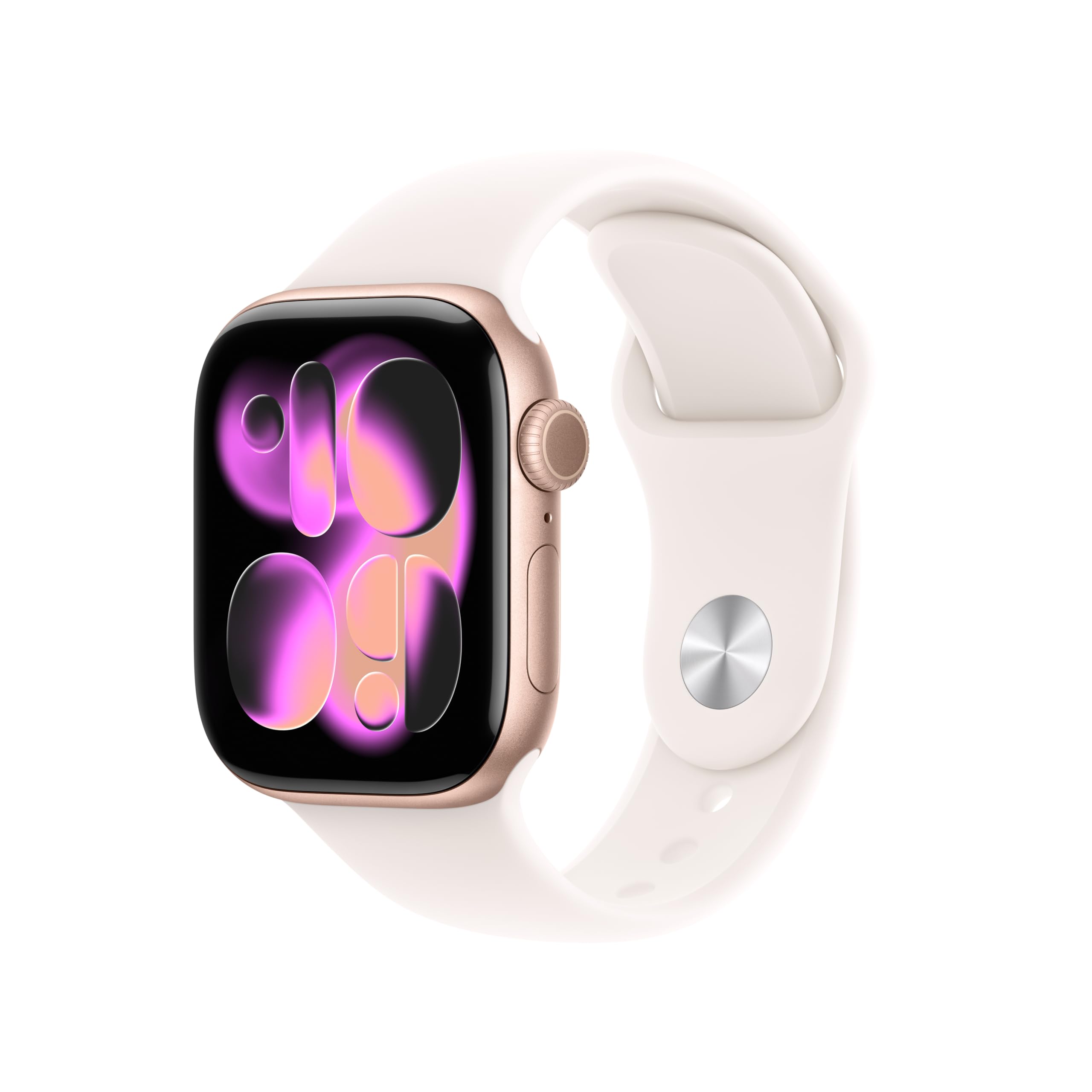
The 42mm Series 11 brings the same health sensor array — ECG, SpO2, sleep apnea detection, hypertension notifications — as its larger sibling in a more wrist-friendly footprint. The rose gold aluminum case paired with the light blush sport band is a refined look that works equally well for a workout and a dinner out. The always-on Retina display is bright enough for outdoor visibility, and the fast magnetic charger restores the battery during a morning shower.
Sleep tracking is a standout here: the sleep score consolidates overnight metrics into a single number, and the Vitals app surfaces overnight trends like respiratory rate and wrist temperature. The training load feature helps you balance workout intensity with recovery, and the three months of included Apple Fitness+ make it easy to follow guided workouts directly from the wrist. Fall detection and car crash detection add safety reassurance for users of all ages.
The 42mm case is comfortable for 24-hour wear, and the lightweight aluminum construction means you barely notice it during sleep. Battery life is 24 hours — enough to get through a full day and night with a charge while you shower. The smaller screen is less immersive for reading messages and viewing workout metrics compared to the 46mm, but for users who prioritize wrist comfort and a classic look, this is the ideal entry point into the Apple Watch ecosystem.
Why it’s great
- Full health sensor suite (ECG, SpO2, sleep apnea, hypertension) in a compact size
- Lightweight aluminum case is comfortable for 24/7 wear and sleep tracking
- Fast charging makes daily top-ups quick and convenient
- Fall and crash detection add safety for solo exercisers and older users
Good to know
- Daily charging required to maintain 24-hour battery life
- SpO2 readings require a manual request, not continuous monitoring
- Some advanced workout metrics require a compatible iPhone
6. Amazfit Active Max
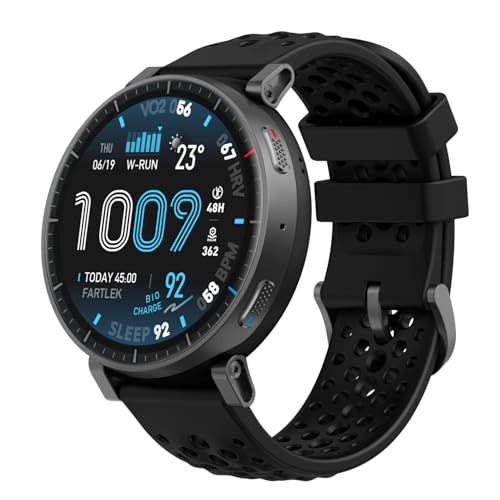
The Amazfit Active Max delivers an astonishing 25 days of battery life from a 200 mAh cell — a figure that puts every premium smartwatch on this list to shame. The 1.5-inch AMOLED display peaks at 3,000 nits, making data readable even under direct summer sunlight, which is rare at this price point. The 4GB of onboard storage supports offline music and downloaded maps, and the five satellite systems (GPS, GLONASS, Galileo, etc.) provide fast and accurate tracking on trails without needing a phone.
Zepp Coach provides AI-driven personalized running plans for distances from 3K to full marathon, and the 170+ sport modes cover everything from strength training to ski touring. BioCharge Energy Monitoring adjusts a daily score based on your workouts and stress levels, helping you decide when to push hard and when to recover. The watch also supports Bluetooth calls, Zepp Flow voice replies, and smart notifications for both Android and iPhone.
The health tracking — heart rate, SpO2, sleep stages, stress — is reliable for daily wellness but lacks the clinical precision of an Apple or Garmin ECG sensor. The silicone band is comfortable, and the 5 ATM water resistance makes it swim-ready. For users who value weeks-long battery life and a bright AMOLED screen over advanced running dynamics or ECG certification, the Active Max is an exceptional value proposition.
Why it’s great
- 25-day battery life eliminates charging anxiety entirely
- 3,000-nit AMOLED display is readable in direct sunlight
- Offline maps and 4GB music storage for phone-free workouts
- AI-driven Zepp Coach creates adaptive running plans
Good to know
- Health sensor accuracy (HR, SpO2) is good but not clinical-grade
- No ECG, sleep apnea detection, or hypertension alerts
- Zepp Coach running plans require consistent syncing with the app
7. Garmin HRM 600

The Garmin HRM 600 is not a wrist watch — it is a chest-worn heart rate monitor that pairs with compatible Garmin watches and cycling computers to unlock the most advanced running metrics in Garmin’s ecosystem. It captures step speed loss (how much you slow down when your foot hits the ground), running economy, stride length, vertical oscillation, and ground contact time balance. These metrics are critical for runners who want to understand form inefficiencies that a wrist-based sensor cannot measure.
The rechargeable battery lasts up to two months and uses the same charger as recent Garmin watch models, eliminating the moisture-corrosion issues of coin-cell designs. It stores activity data onboard, so you can record a workout without wearing a watch — useful for team sports or swim sessions — and sync it later to Garmin Connect. The strap is machine-washable and available in XS-S and M-XL sizes to accommodate different body types.
Heart rate accuracy is rock-solid across running, cycling, HIIT, and swimming, with dual Bluetooth and ANT+ connectivity ensuring a stable connection to multiple devices simultaneously. The only downsides are the premium price for a chest strap, and potential discomfort for users not accustomed to wearing a band around the chest. For Garmin users who want every possible data point about their running form, the HRM 600 is an essential addition.
Why it’s great
- Adds running economy, step speed loss, and advanced form metrics
- Rechargeable battery (2 months) with no coin-cell corrosion issues
- Stores activity data onboard for phone-free recording
- Dual Bluetooth/ANT+ connectivity for stable multi-device pairing
Good to know
- Requires a compatible Garmin watch to display running dynamics
- Chest strap may feel restrictive for some users during long sessions
- Overkill for casual athletes who only need basic heart rate tracking
FAQ
What makes an intelligent watch different from a regular smartwatch?
Can I use an intelligent watch for medical purposes like detecting atrial fibrillation?
How important is HRV for training and recovery?
Should I buy a chest strap for running if I already have a wrist watch?
Final Thoughts: The Verdict
For most users, the best intelligent watch winner is the Garmin Forerunner 970 because its 15-day battery, sapphire AMOLED display, and deep training metrics cover everything from daily wellness to triathlon race day. If you want comprehensive health monitoring and seamless iPhone integration, grab the Apple Watch Series 11 (46mm Titanium). And for adventurers who push into cell-free zones and demand rugged durability, nothing beats the Apple Watch Ultra 3.