That dull ache in your arches after a long hike or a full shift on your feet isn’t something you have to accept. The stock insoles in most walking boots are thin, flat, and offer almost no real support, leaving your feet to absorb every shock and uneven step. Swapping them out for a purpose-built insole changes the entire feel of your boot — turning a punishing day into one where your feet still have energy left at the end.
I’m Emma — the founder and writer behind Baby Bangs. I’ve spent years digging into the material science of footbeds, analyzing thousands of customer reports on arch profiles, foam densities, and heel cup depths to separate marketing claims from real performance.
This guide breaks down the five strongest contenders so you can find the best insoles for walking boots that fit your arch type and daily demands without wasting money on trial and error.
How To Choose The Best Insoles For Walking Boots
Walking boots are built for durability and ankle support, not footbed comfort. The wrong insole can turn a good boot into a source of arch cramps or heel pain. Focus on three things: arch profile, boot volume, and the type of walking you do most.
Arch Profile: Low, Medium, or High
Your arch shape determines how weight distributes across your foot. Low arches need support that prevents over-pronation (rolling inward). Medium arches are the most common and need a balanced mix of cushion and support. High arches require a thicker metatarsal pad and deeper heel cup to absorb shock and reduce pressure on the ball of the foot. Buying a neutral insole when you have high arches is the fastest path to plantar fasciitis.
Boot Volume and Insole Thickness
Premium insoles can be 4-6mm thicker than factory ones. That extra foam needs room inside the boot. If your boots are snug at the toe box or tight across the instep, a thick insole will cause heel lift or numb toes. Look for insoles with a trim-to-fit design so you can adjust the shape, and check customer reports about fit in your specific boot model. Lace-up boots almost always have more volume than slip-ons.
Activity Profile: Rucking vs. Casual Walking vs. All-Day Standing
Carrying a heavy pack or rucking demands a rigid midfoot plate and deep heel cup for stability on uneven ground. Casual walking needs softer foam to reduce fatigue. Standing on concrete all day falls in between — you want rebound cushioning without so much arch pressure that it feels like a rock under your foot. Match the insole’s stiffness to your actual daily load, not to what sounds impressive on the box.
Quick Comparison
On smaller screens, swipe sideways to see the full table.
| Model | Category | Best For | Key Spec | Amazon |
|---|---|---|---|---|
| CURREX HikePro | Premium | Heavy hiking & rucking | 3D Dynamic Arch + deep heel cup | Amazon |
| Superfeet Hike Cushion | Premium | Medium-high arches on trail | Aerospring dual comfort foam | Amazon |
| Move All Day Comfort | Premium | All-day standing & walking | X-Frame torsional support | Amazon |
| ARIAT Energy Max | Mid-Range | Work boots & 9-hour shifts | Agion anti-odor liner | Amazon |
| KEEN K-20 Outdoor Plus | Mid-Range | Budget refresh for KEEN boots | Direct replacement fit | Amazon |
In‑Depth Reviews
1. CURREX HikePro Insoles
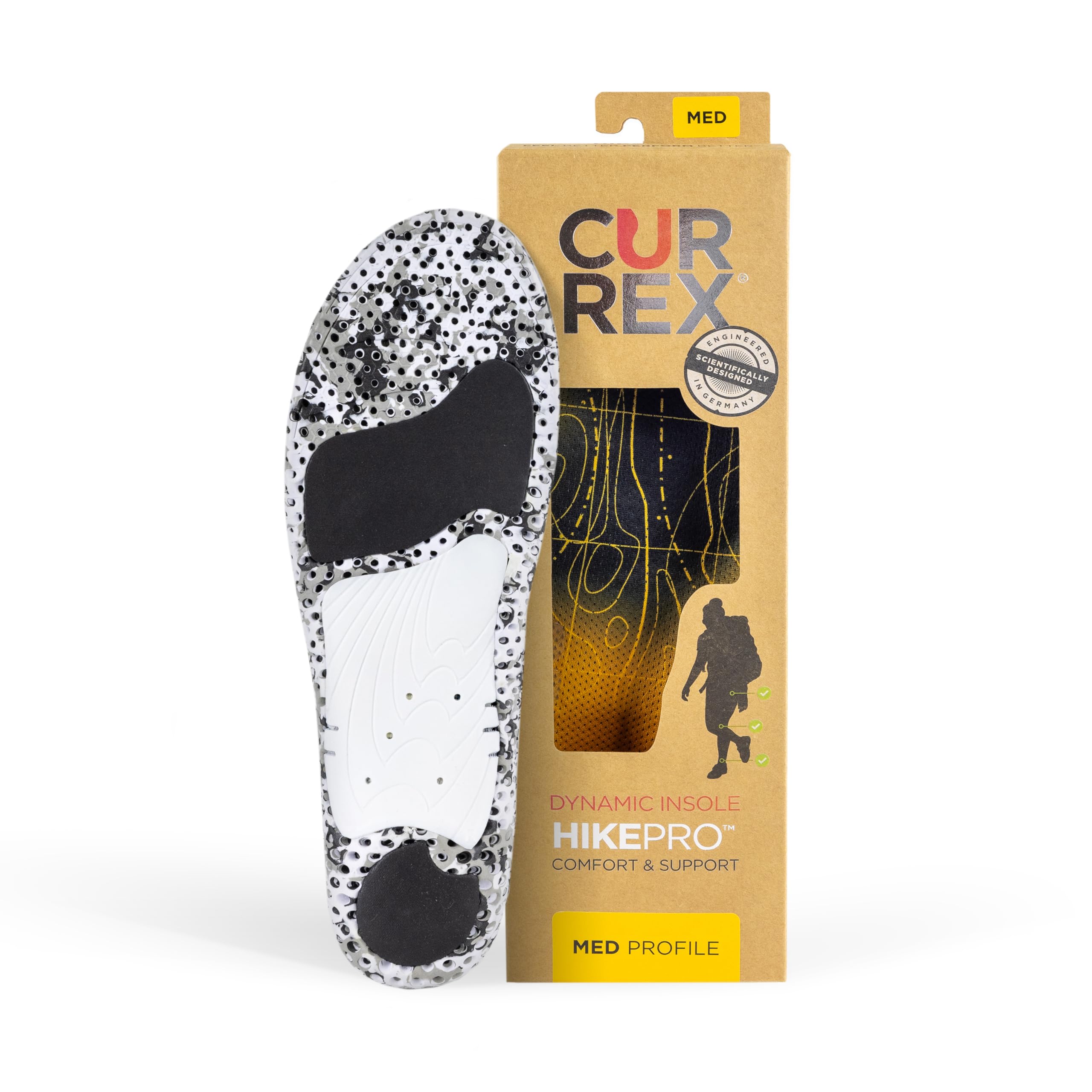
The CURREX HikePro is built for the kind of walking that involves a heavy pack, uneven terrain, and long descents. Its standout feature is the 3D Dynamic Arch Technology, which comes in low, medium, and high profiles depending on your foot type, so you’re not stuck with a one-arch-fits-all compromise. The deep decoupled heel cup locks your heel in place and prevents the insole from shifting inside the boot, which matters a lot when you’re stepping on loose rocks or angled ground.
Customer reports confirm these insoles absorb shock noticeably better than stock footbeds, with multiple users mentioning reduced knee and foot pain after rucking with 60-pound loads over several miles. The SuperGrip anti-slip surface keeps your foot from sliding forward on downhill sections, eliminating hot spots that cause blisters. The recycled EVA base with air vent technology keeps sweat from pooling, which helps prevent odor buildup on multi-day trips.
The only tradeoff is the price — this is the most expensive option in the lineup. The foam is firm rather than plush, so if you want a cloud-like feel underfoot, this isn’t it. It’s designed for stability and support, not pillow-soft comfort. For hikers, ruckers, and anyone who spends full days on rocky trails, this is the gold standard.
Why it’s great
- Available in specific arch profiles (low/medium/high)
- Deep anti-slip heel cup eliminates heel lift
- Recycled EVA with air vent reduces moisture
Good to know
- Premium price point compared to other options
- Firm feel, not plush cushioning
2. Superfeet Hike Cushion Insoles

The Superfeet Hike Cushion targets the sweet spot for hikers with medium to high arches who need a strong blend of arch support and impact protection. Its Aerospring Ascent dual comfort foam gives a plush but stable feel — thick enough to absorb shock from a 3-mile descent but not so soft that your foot sinks and loses connection with the boot. The Adaptive Comfort Technology is a flexible plate that moves with your stride rather than fighting it, promoting efficient heel-to-toe turnover.
Real-world feedback from users shows these insoles work particularly well for people dealing with plantar fasciitis or arch strain. Several reviewers with Scarpa and Merrell boots reported that the insole eliminated foot soreness after long days, and one heavy rucker mentioned knee pain that disappeared within five days of switching. The Moisturewick top cover is thin but effective — it reduces friction and helps keep feet dry on warm days without adding extra bulk.
A few users note that these insoles are quite thick — roughly a quarter inch at the heel and ball. That extra volume can make snug boots feel tight, especially slip-on styles like Blundstones or loafers. If your boots have a low-profile toe box, you may need to size up or stick with a thinner option. For lace-up hiking boots with decent volume, the thickness is a feature, not a flaw.
Why it’s great
- Plush yet supportive dual-density foam
- Adaptive plate flexes naturally with gait
- Proven relief for plantar fasciitis
Good to know
- Thickness may crowd low-volume boots
- Best for medium-high arches only
3. Move All Day Comfort Insole
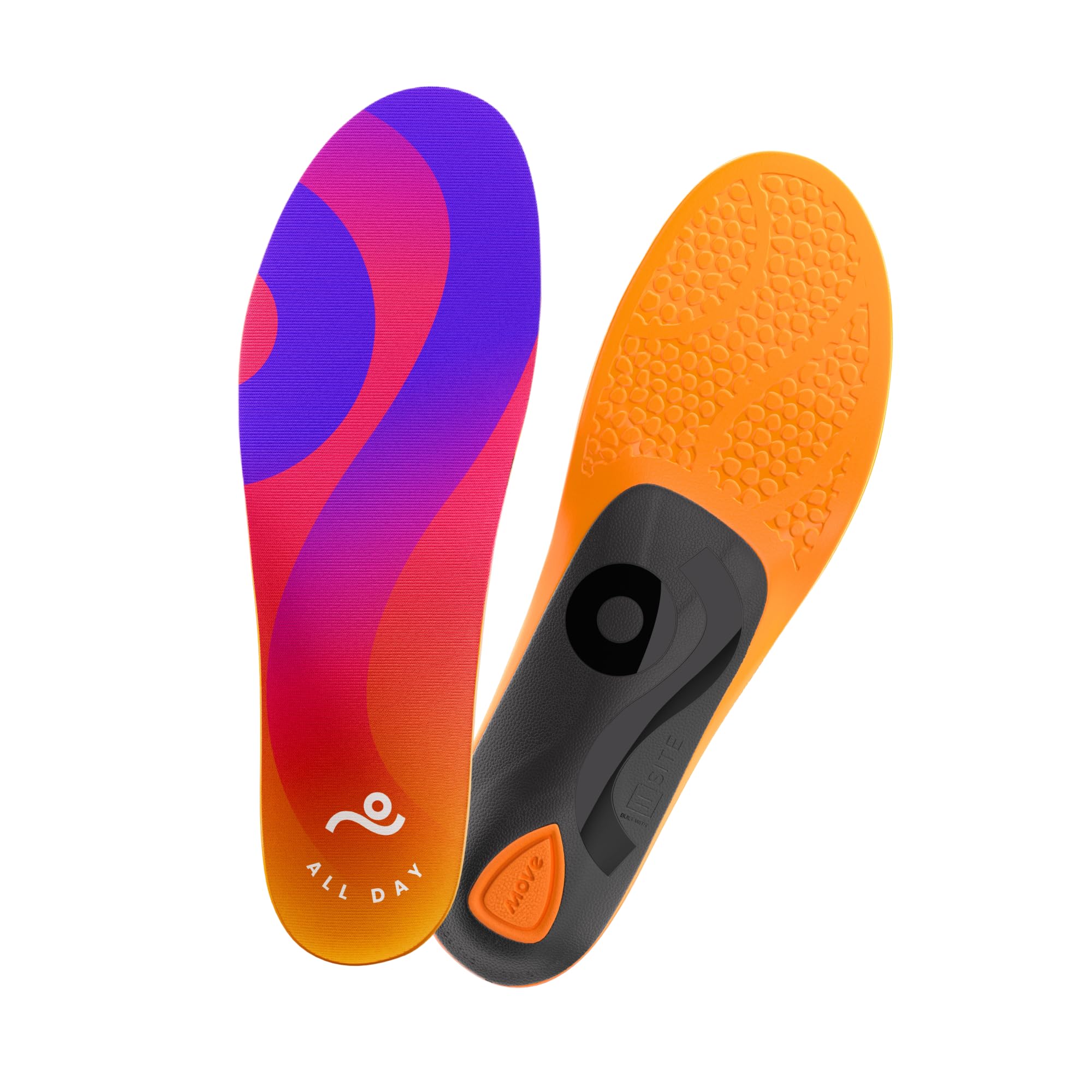
The Move All Day Comfort Insole is designed for people who spend hours on their feet — walking the dog, standing at a job site, or working retail. Its Move Recharge Foam is notably softer than most premium insoles, offering a forgiving step that feels more like a cushioned athletic shoe than a rigid orthotic. The X-Frame Torsional Support system adds a rigid midfoot plate that prevents the insole from rolling over during lateral movement, which is helpful if your walking involves twisting or turning on concrete.
Users consistently mention that these insoles transform the feel of old sneakers and work boots, with several noting that foot fatigue disappeared after a full shift. The Active Heel Technology minimizes pressure on sensitive spots, which is a big plus if you have heel spurs or metatarsalgia. The arch support is on the low side, so it’s best for flat to medium arches — people with high arches may find the support insufficient.
The main drawback is that the plush foam compresses noticeably over time. While it feels fantastic out of the box, heavy users may need to replace them more frequently than firmer options. The thickness also makes them unsuitable for low-profile shoes — they are best reserved for boots with generous volume. At this price point, the tradeoff between initial comfort and long-term durability is worth considering.
Why it’s great
- Exceptionally plush foam for standing all day
- Rigid X-Frame prevents rollover
- Active heel technology reduces pressure points
Good to know
- Arch support is low — not for high arches
- Foam compresses faster than firmer insoles
4. ARIAT Men’s Energy Max Work Insole
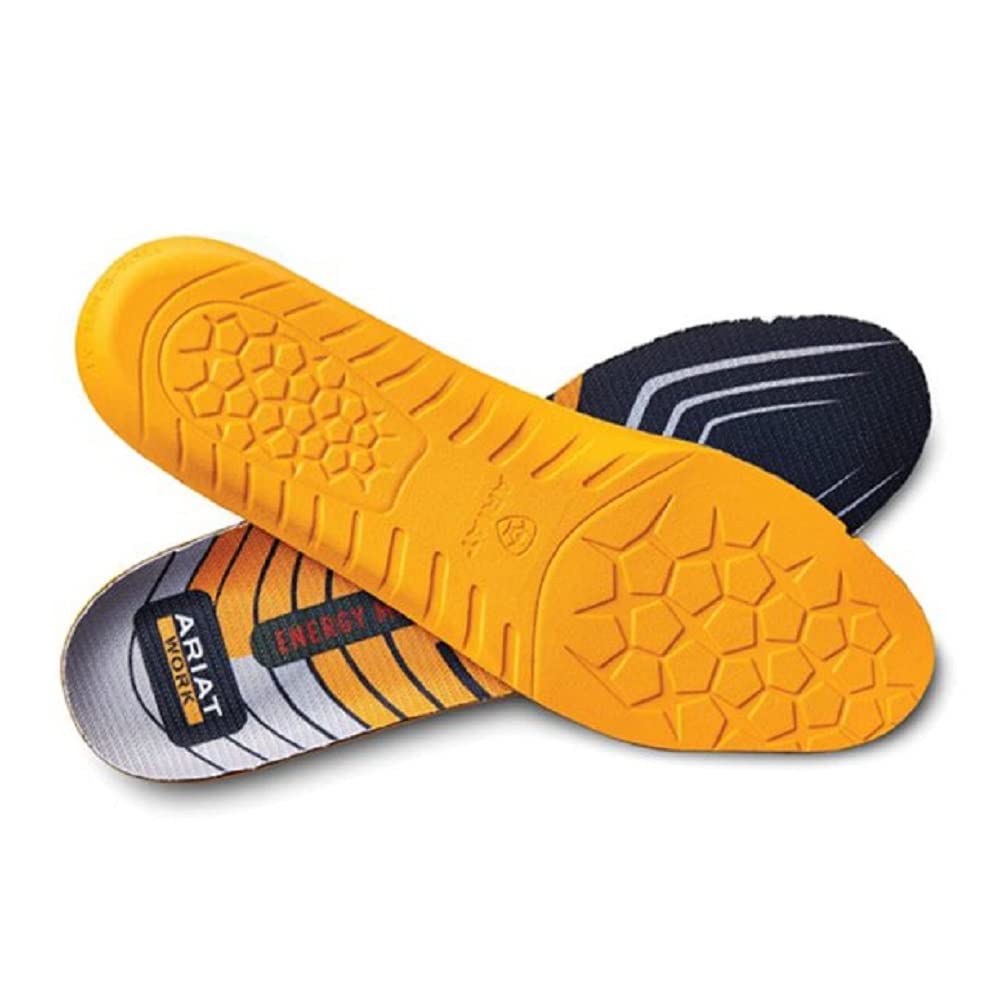
The ARIAT Energy Max is built specifically for work boots and long shifts — the kind of walking that happens on concrete, asphalt, and warehouse floors for nine hours straight. Its rebound foam layer cradles the foot while dissipating pressure evenly, and the anatomically-engineered cushioning follows the natural contours of the foot rather than relying on a generic flat bed. The open-cell foam regulates temperature, which helps when working in hot environments where feet tend to swell.
The Agion moisture-wicking liner is a practical addition — it actively fights odor and sweat buildup, a common complaint among workers who wear the same boots daily. Customers with plantars fasciitis and general back pain consistently report these insoles help them finish shifts without the usual foot ache. The sizing is straightforward for ARIAT boots — no trimming needed for most standard sizes — but the shape also fits well in other wide-toe work boots like Red Wings and Wolverines.
Some users note that the arch support is moderate, not aggressive. If you have very high arches or need strong pronation control, you may want a more structured insole. The back pain relief mentioned by multiple reviewers suggests the shock absorption is doing its job, but the foam doesn’t have the same dense feel as the CURREX or Superfeet options. For the price, it’s a solid daily driver for the working person.
Why it’s great
- Durable rebound foam for 9-hour shifts
- Agion liner keeps odor under control
- Open-cell foam prevents overheating
Good to know
- Moderate arch support, not for high arches
- Less rigid than premium hiking insoles
5. KEEN Mens K-20 Outdoor Plus Insole

The KEEN K-20 Outdoor Plus is the simplest recommendation on this list: it’s a direct replacement for the stock insole in KEEN boots that works better than the factory version. It offers a denser foam bed and a shape that matches the internal volume of KEEN footwear precisely, which means no trimming or guessing. For anyone whose KEEN boots have worn thin after a season of use, this is the fastest way to get back the original level of comfort — and often improve on it.
Customer feedback highlights two main use cases: refreshing old work boots and getting extra life out of hiking shoes. One user reported extending their boot lifespan to two years by swapping these in. The fit is true to KEEN sizing, with size Medium fitting a 9.5 perfectly. The material is easy to cut to shape if you need to fit a non-KEEN boot, and several users mention using them in other brands with good results.
The limitation is that this is not a high-tech insole with shock absorbing plates or multi-arch support. It’s a straightforward foam footbed that improves on the thin factory version but doesn’t offer the same level of tactical support as the premium options. If you are dealing with specific foot conditions like planter fasciitis or severe overpronation, you should look at the Superfeet or CURREX instead. For a simple upgrade on a budget, it gets the job done.
Why it’s great
- Perfect drop-in fit for KEEN boots
- Denser and more supportive than stock
- Affordable way to refresh worn boots
Good to know
- No specialized arch support or stability plate
- Best for budget-focused upgrades only
FAQ
Can I put hiking insoles in non-hiking walking boots?
How often should I replace insoles in walking boots?
Do I need to remove the original insole before inserting a new one?
What’s the difference between a work boot insole and a hiking boot insole?
Final Thoughts: The Verdict
For most users, the best insoles for walking boots winner is the CURREX HikePro because it delivers the best balance of arch support, heel lock, and shock absorption for the widest range of activities. If you want thicker impact cushioning for trail days, grab the Superfeet Hike Cushion. And for all-day standing on flat ground, nothing beats the Move All Day Comfort Insole.