When your foot rolls outward with every step, the arch stays rigid and the heel strikes hard — that’s supination, and it turns walking into a chain reaction of knee, hip, and lower-back strain. Standard insoles leave high-arched feet floating without contact, so the shock goes straight to the joints instead of being absorbed and redirected.
I’m Emma — the founder and writer behind Baby Bangs. I’ve spent years analyzing biomechanical foot data, from arch height ratios to heel-cup depth measurements, to match the right reinforcement to the right foot shape.
Whether you’re logging twelve-hour shifts on concrete or chasing miles on pavement, the right pair changes how your foot loads and unloads. After reviewing dozens of models, these are the best insoles for supination and high arches available right now.
How To Choose The Best Insoles For Supination And High Arches
Supinated feet distribute weight along the lateral edge of the foot, so the arch never flattens to absorb shock. The wrong insole — anything too soft or too flat — lets the foot continue rolling outward, reinforcing the faulty gait. You need a rigid support that fills the arch void and steers the foot back toward neutral.
Stability Plate vs. Foam-Only Construction
The single most important feature for supination is a structural plate — TPU, carbon fiber, or rigid polymer — embedded under the arch. This plate resists downward compression, preventing the arch from collapsing medially while simultaneously blocking the outward drift that defines supination. Simple foam insoles, no matter how thick, lack this torsional resistance and will compress unevenly under the high pressure of a rigid foot.
Heel-Cup Depth and Heel Strike Control
A shallow heel cup allows the calcaneus to shift sideways on impact, which worsens supinator motion. Look for a cup that wraps at least 8–10mm up the back and sides of the heel. This nests the heel bone securely, limiting lateral wobble and keeping the subtalar joint aligned through the gait cycle. Deep cups also improve the fit of the entire insole inside the shoe, reducing slippage.
Arch Height and Cushion Density
High-arched feet need a pronounced, unyielding midfoot bump — the insole must match the contour of the arch so the foot rests fully on the support rather than the insole edges. Firm-density foam (PORON, high-rebound EVA) works best because it maintains shape over thousands of steps. Plush memory foam, often marketed as comfortable, bottoms out under a rigid arch and loses all structural benefit within weeks.
Quick Comparison
On smaller screens, swipe sideways to see the full table.
| Model | Category | Best For | Key Spec | Amazon |
|---|---|---|---|---|
| GVIIPK Heavy Duty Orthotics | Premium | Heavy users / long shifts | 3.5cm TPU arch support | Amazon |
| Superfeet All-Purpose Green | Premium | Active / neutral-shoe fit | Deep heel cup + closed-cell foam | Amazon |
| 10 Seconds 3720 Stability | Mid-Range | Dress shoes / all-day office | Carbon-fiber stability plate | Amazon |
| VALSOLE Heavy Duty Orthotics | Mid-Range | 220+ lbs / warehouse work | High rebound + arch lock | Amazon |
| Pedag Viva High | Mid-Range | Thin fit / leather shoes | Leather top + metatarsal pad | Amazon |
| Sof Sole High Arch | Budget | Light activity / daily sneakers | Gel heel drop + deep cup | Amazon |
In‑Depth Reviews
1. GVIIPK Heavy Duty Orthotic Insoles
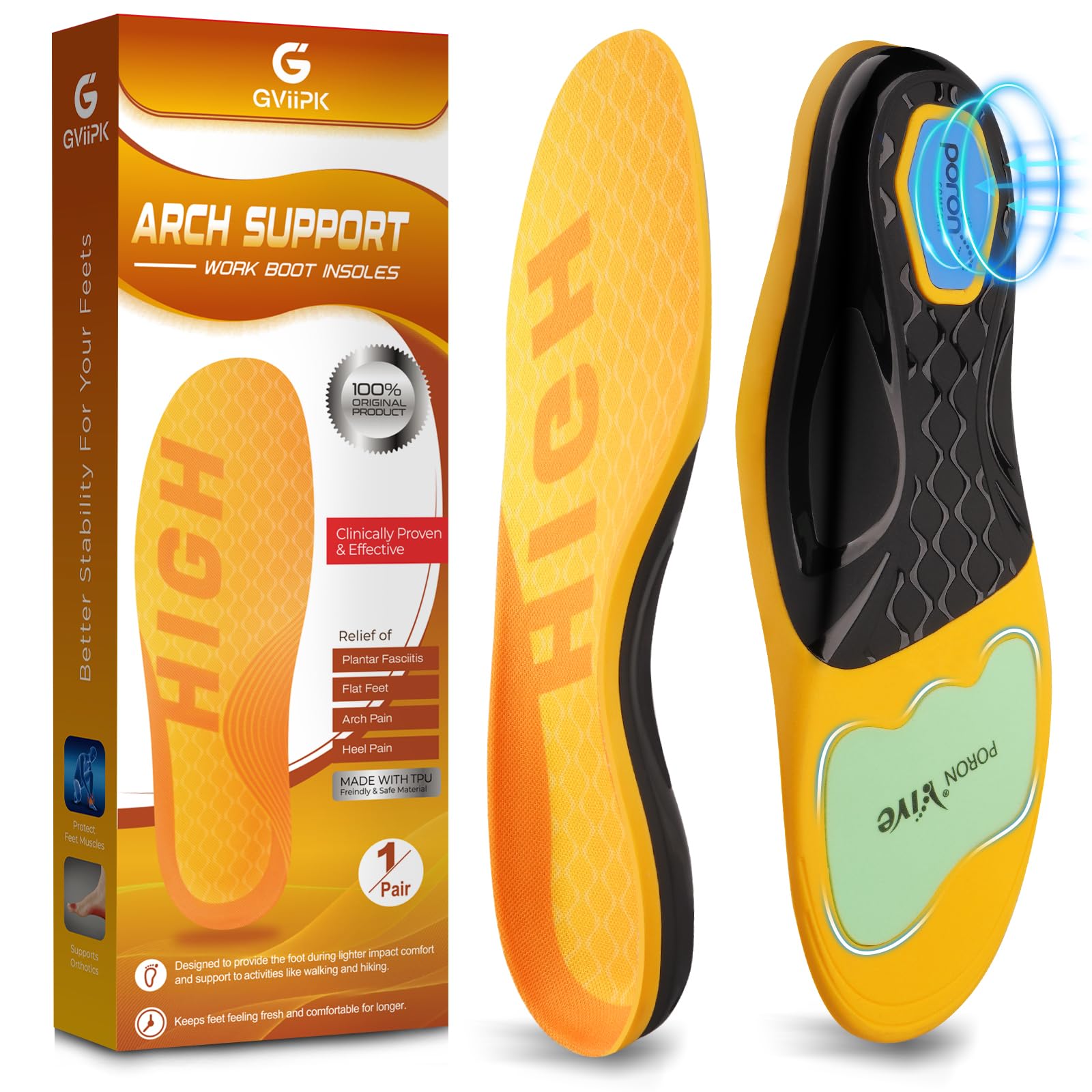
The GVIIPK insole uses a graded arch system with a 3.5cm TPU support plate — the tallest rigid lift in this roundup — paired with dual-layer PORON cushioning that absorbs 78% more shock than standard foam. For supinated, high-arched feet, the height fills the void completely and the plate prevents any lateral roll, even under 280+ pounds of sustained load. The fit is intentionally firm; you feel the support immediately at mid-stance without any squish or collapse under the arch.
Customer reviews from warehouse workers, medical staff, and athletes all highlight the immediate reduction in heel and low-back fatigue after the first full day. Some testers mention the 3.5cm height feels aggressive at first, which is exactly what supinators need to retrain the gait toward neutral. The insoles trim easily to fit most athletic, work, and casual shoes, though the deep heel cup works best in shoes with a removable factory footbed.
For anyone who stands or walks on hard surfaces for hours, this is the most structurally complete option for correcting supination while maintaining comfort across the full stride. Durability holds up for months without the arch plate warping or the foam bottoming out.
Why it’s great
- TPU plate stops outward drift at the arch
- Dual PORON layers reduce heel-strike shock significantly
- Holds structure under 280+ lbs without collapse
Good to know
- 3.5cm height feels tall in low-profile sneakers
- Requires a shoe with a removable insole for best fit
2. Superfeet All-Purpose Support High Arch Insoles (Green)
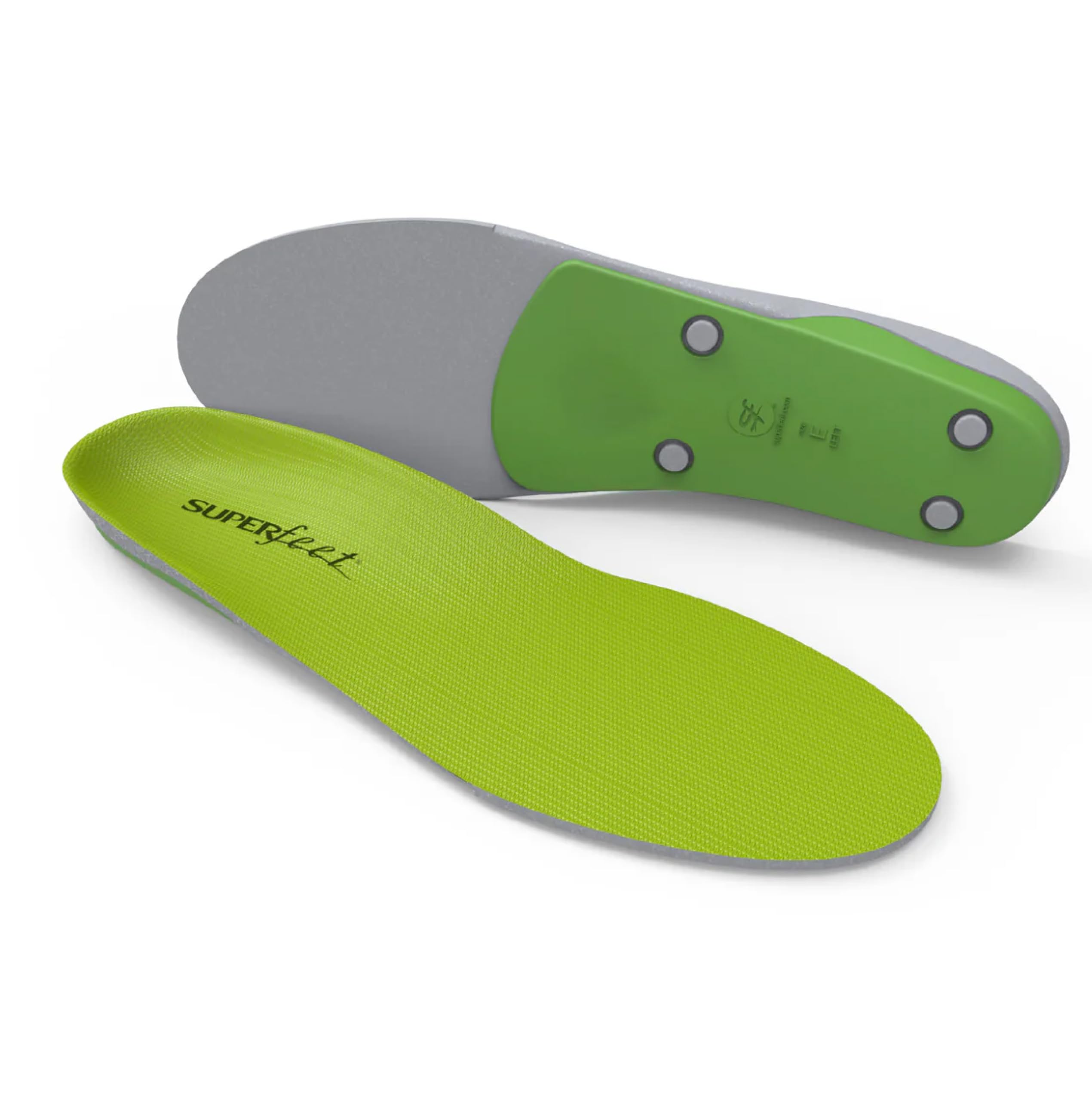
The Superfeet Green has been the benchmark for high-arch support since 2008, and the latest iteration retains the same dense closed-cell foam and sculpted heel cup that cradles the calcaneus to limit heel-slip and lateral wobble. It is designed for roomy footwear — hiking boots, running shoes, work boots — where the deep cup and tall arch can sit without crowding the toes. The heel cup rises higher than most competitors, locking the rearfoot in place and reducing the supinator’s tendency to land on the outside edge.
Testers report that the foam is very firm and requires a short break-in period — one to two hours per day for the first week — after which it molds to the foot without losing structural density. The moisture-wicking top cover keeps feet dry during long hikes or multi-shift work days. The trade-off is that the thick foam and rigid arch reduce the shoe’s natural flex; users notice less springiness in the forefoot after insertion.
For runners and hikers who need reliable arch containment mile after mile, the Superfeet Green remains the gold standard. The APMA Seal of Acceptance adds clinical confidence for those managing plantar fasciitis alongside supination.
Why it’s great
- Deep, secure heel cup prevents lateral heel drift
- Closed-cell foam retains shape for months
- Moisture-wicking top layer reduces odor
Good to know
- Requires a break-in period for dense foam
- Reduces forefoot flexibility in lightweight shoes
3. 10 Seconds 3720 Stability Insole

The 10 Seconds 3720 stands out for its carbon-fiber stability plate, which provides exceptional torsional rigidity in a slim profile that fits narrow dress shoes and loafers — a notoriously difficult category for high-arch support. The firm cushioning uses full-length PORON foam that absorbs shock without adding bulk, and the high arch height lifts the midfoot without crowding the toe box. Testers with supination report that the insole effectively redirects the foot into a neutral landing, reducing the trademark lateral heel strike.
Because the stability plate runs the full length of the arch, there is zero flex in the midfoot — exactly what a rigid, high-arched foot needs. The trade-off is that some users find the ball-of-foot area undersized in cushioning; a few testers added a small metatarsal pad for extra forefoot comfort. The insole trims to size easily, and the slim edge-to-edge fit means it slides into shoes that would reject a thicker orthotic.
For professionals who need arch support in office footwear without adding visible bulk, this is the most effective dress-shoe solution on the market. The carbon-fiber plate is virtually indestructible and maintains its shape for years.
Why it’s great
- Carbon-fiber plate gives unmatched midfoot rigidity
- Slim profile fits narrow dress shoes
- PORON foam absorbs shock without bulk
Good to know
- Ball-of-foot cushioning underwhelms some users
- Not ideal for wide or deep work boots
4. VALSOLE Heavy Duty Support Orthotics

VALSOLE designed this orthotic specifically for users over 220 pounds who need aggressive arch support that won’t compress under heavy loads. The high-arch contour is noticeably pronounced and rigid, filling the midfoot gap completely for supinated feet. Customer feedback from warehouse workers and construction trades describes immediate relief from lower-back and heel pain after the first shift, with the insoles staying in place inside work boots without shifting.
The foam is spongy yet firm — testers call it “firm enough to support, soft enough to cushion” — and the high arch lock prevents the foot from sliding forward and collapsing the arch. Some users report a slight creaking noise during the first few days as the foam settles into the shoe, but this resolves as the materials conform. The insoles fit true to size in boot-style footwear but may require sizing up in low-volume running shoes.
For heavier individuals who have struggled with budget insoles bottoming out after a week, the VALSOLE delivers lasting structural support. The easy-to-clean surface is a practical plus for gritty work environments.
Why it’s great
- Handles 220+ lbs without arch plate deformation
- provides immediate pain relief for heel and back
- Stays put in work boots without sliding
Good to know
- Slight creaking noise during initial break-in
- Not suitable for slim-profile dress shoes
5. Pedag Viva High Arch Support Insole
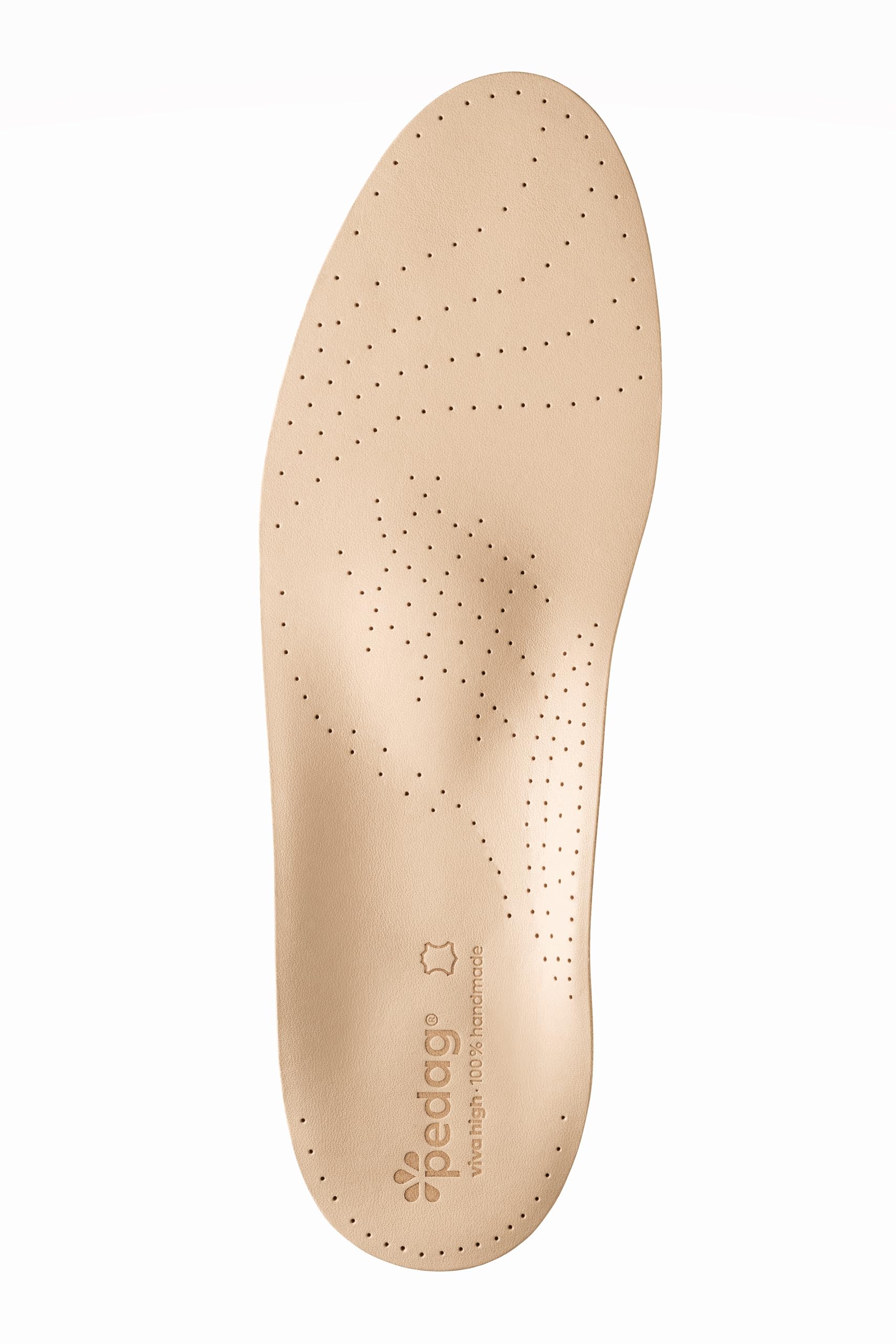
Handmade in Germany from real leather, the Pedag Viva High is the thinnest high-arch insole in this lineup, designed for loafers and casual shoes where bulk is a problem. Despite its slim profile, the arch support is pronounced and includes a metatarsal pad that lifts the transverse arch — an often overlooked feature for supinators who also experience forefoot pressure. The leather top helps the foot slide into and out of the shoe easily, reducing friction at the heel counter.
However, the support is less aggressive than the TPU or carbon-fiber options: testers with severe supination or heavy body weight (over 200 lbs) may find the arch too flexible. The leather surface also holds moisture longer than synthetic fabrics, so wearing with wool socks or rotating pairs is recommended.
For those who need high-arch support in slim footwear without sacrificing fit, the Pedag Viva High is a refined, European-crafted solution. It excels as an everyday insole for light-to-moderate activity.
Why it’s great
- Ultra-thin profile fits narrow leather shoes
- Real leather top reduces shoe-entry friction
- Metatarsal pad supports the transverse arch
Good to know
- Arch support less rigid than TPU or carbon models
- Leather top retains moisture in humid conditions
6. Sof Sole High Arch Performance Insole

The Sof Sole High Arch insole targets an entry-level price point without completely abandoning arch structure. The enhanced arch height and targeted gel drop in the heel provide moderate lift and shock absorption for casual walking and hiking. The deep heel cup helps prevent the slip that can aggravate supination, and the full-length design fits most athletic and casual shoes after trimming.
Customer reviews are strongly positive for recreational use — hikers and daily walkers report substantial comfort improvement over stock footbeds. However, a subset of users with high arches and plantar fasciitis note that the arch support lacks the rigidity needed to fully correct supination during longer or more intense activity. The foam is softer than premium competitors, which means it compresses faster under sustained load and may not last beyond a few months of heavy use.
For someone who wants an immediate upgrade from flat factory insoles without a large investment, the Sof Sole offers respectable support. It’s a sensible starting point for casual wear or secondary shoes.
Why it’s great
- Gel heel drop absorbs shock on impact
- Deep cup keeps heel stable during walks
- Budget-friendly entry into arch support
Good to know
- Softer foam compresses faster than rigid models
- Arch support insufficient for severe supination
FAQ
Should I choose firm or soft cushioning for supinated feet?
Can insoles fix supination walking patterns permanently?
Final Thoughts: The Verdict
For most users, the best insoles for supination and high arches winner is the GVIIPK Heavy Duty Orthotics because the 3.5cm TPU support plate and dual PORON cushioning provide the most complete correction for supinators who stand or walk all day. If you want a slim, work-appropriate option, grab the 10 Seconds 3720 Stability Insole with its carbon-fiber plate that slides into dress shoes. And for rugged, long-haul use in boots, nothing beats the VALSOLE Heavy Duty Support Orthotics for heavy-load durability.