That dead-weight ache across your arches after an eight-hour concrete shift isn’t just exhaustion— it’s your steel-toe boot punishing your foot’s natural shock absorbers. The rigid toe box and minimal factory foam turn every step into a hard strike, setting the stage for plantar fasciitis, heel spurs, and knee pain that doesn’t clock out when you do. Dropping a proper insole into that boot is the single highest-ROI fix for your workday mobility.
I’m Emma — the founder and writer behind Baby Bangs. I’ve spent hundreds of hours cross-referencing arch geometry, foam densities, and real-world wear reports to isolate which insoles actually survive the abuse of a steel-toe environment without pancaking into useless felt by week three.
This guide breaks down five top contenders by actual performance demands rather than marketing fluff, so you can confidently pick the best insoles for steel toe boots for your specific foot shape and shift length.
How To Choose The Best Insoles For Steel Toe Boots
Steel-toe boots already crowd your toes and add weight to each step. The factory insole is usually a thin slab of bonded foam that does little beyond keeping your foot off the boot-welt rivets. Replacing it requires balancing three things: arch support shape, heel-cup depth, and compression resistance over a full work week.
Match the Arch Profile to Your Foot
If you have flat feet and force a high-arch orthotic into your boot, you’ll get a bruising pressure point on the arch’s apex rather than support. Conversely, a neutral or low arch insole under a high-arch foot won’t engage the bone structure and leaves the foot unsupported. The “wet footprint test” gives you a clear visual: a full solid print means low arch, a distinct missing band in the middle means high arch. Choose an insole labeled for your category — the three products here split cleanly across low, medium, and high arch populations.
Heel Cup Depth Controls Slippage
A steel-toe boot has a wide heel pocket to accommodate the cap, which means your foot can slide forward with every step if the insole’s heel cup is shallow. Look for a deep U-shaped cup (at least 10mm of vertical wall) that wraps the calcaneus. Shallow cups will flatten and shift inside the boot, creating blisters on the back of the heel and reducing the stability the insole is supposed to provide.
Foam Density and Compression Set
Insoles made with low-density EVA foam (often the cheapest option) will compress to 60-70% of their original thickness after two weeks under a 200+ pound load. For steel-toe wear, you want a material like PORON, high-density polyurethane, or a dual-layer construction that uses a firm TPU chassis with a softer top layer. These maintain their structure for months and keep the arch support from collapsing mid-shift.
Quick Comparison
On smaller screens, swipe sideways to see the full table.
| Model | Category | Best For | Key Spec | Amazon |
|---|---|---|---|---|
| Psveb Professional Heavy Duty | Full-Length | Shock absorption + medium arch | Dual PORON cushioning | Amazon |
| Cloudflo High Arch Support | Full-Length | Standing all day on concrete | Rigid TPU + Ortholite | Amazon |
| Sof Sole Plantar Fascia | 3/4-Length | Trim-free fit in tight boots | Gel heel insert | Amazon |
| Welnove Heavy Duty | Full-Length | High arch / heel spur relief | Memory foam + high arch | Amazon |
| MOVE All Day Comfort | Full-Length | Maximum plush + stability | Recharge foam + X-Frame | Amazon |
In‑Depth Reviews
1. Psveb Professional Heavy Duty Support Pain Relief Orthotics
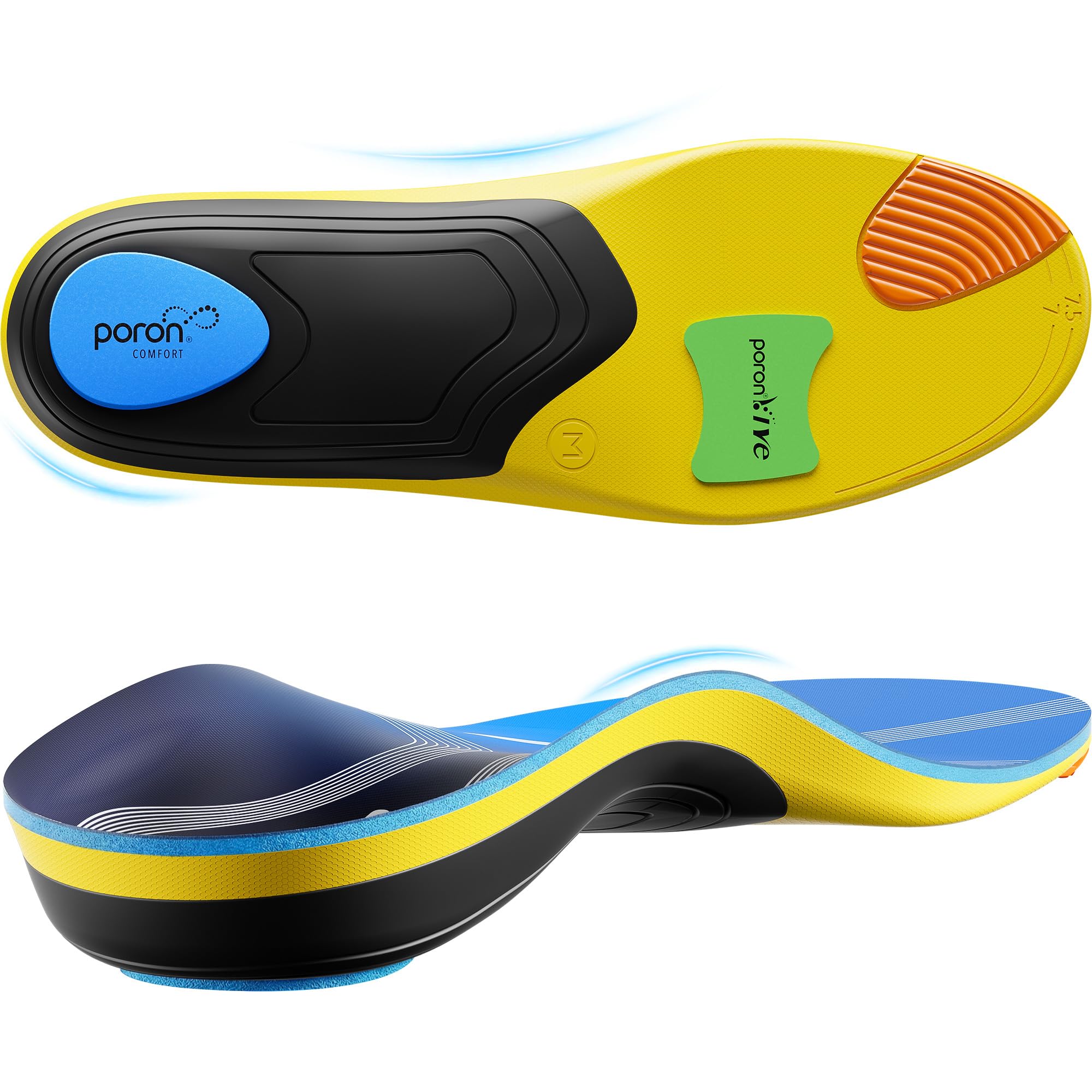
The Psveb hits the sweet spot for the majority of steel-toe wearers because it combines PORON cushioning (a high-rebound open-cell polyurethane used in premium athletic footwear) with a medium arch that suits both flat and neutral foot types. The “Golden Triangle” design spreads support across the forefoot, arch, and heel rather than concentrating pressure on one point, which prevents the hot-spot that thin orthotics cause inside a cramped boot.
Real-world reports from users over 220 pounds confirm the insoles don’t pancake after three weeks of 9-10 hour shifts on hard flooring. The deep U-shaped heel cup wraps the calcaneus effectively, reducing the lateral slip that steel-toe boots are notorious for. Several reviewers noted that the medium arch relieved both heel pain and lower back fatigue within a few days—a sign the insole is correcting gait alignment, not just padding the sole.
At around a quarter-inch thicker than standard factory foam, the Psveb fits size 10-11 boots without crowding the toe box, though you may need to loosen laces slightly if your boots are already snug. The skin-friendly top fabric wicks moisture and resists odor buildup, a practical advantage for multi-season daily wear.
Why it’s great
- PORON maintains rebound under heavy loads (220+ lbs).
- Medium arch profile fits the widest range of foot types.
- Deep heel cup prevents boot slip and blistering.
Good to know
- May require looser laces in already-tight boots.
- Not ideal for very low-volume dress shoes.
2. Cloudflo Plantar Fasciitis Insoles for Men Women
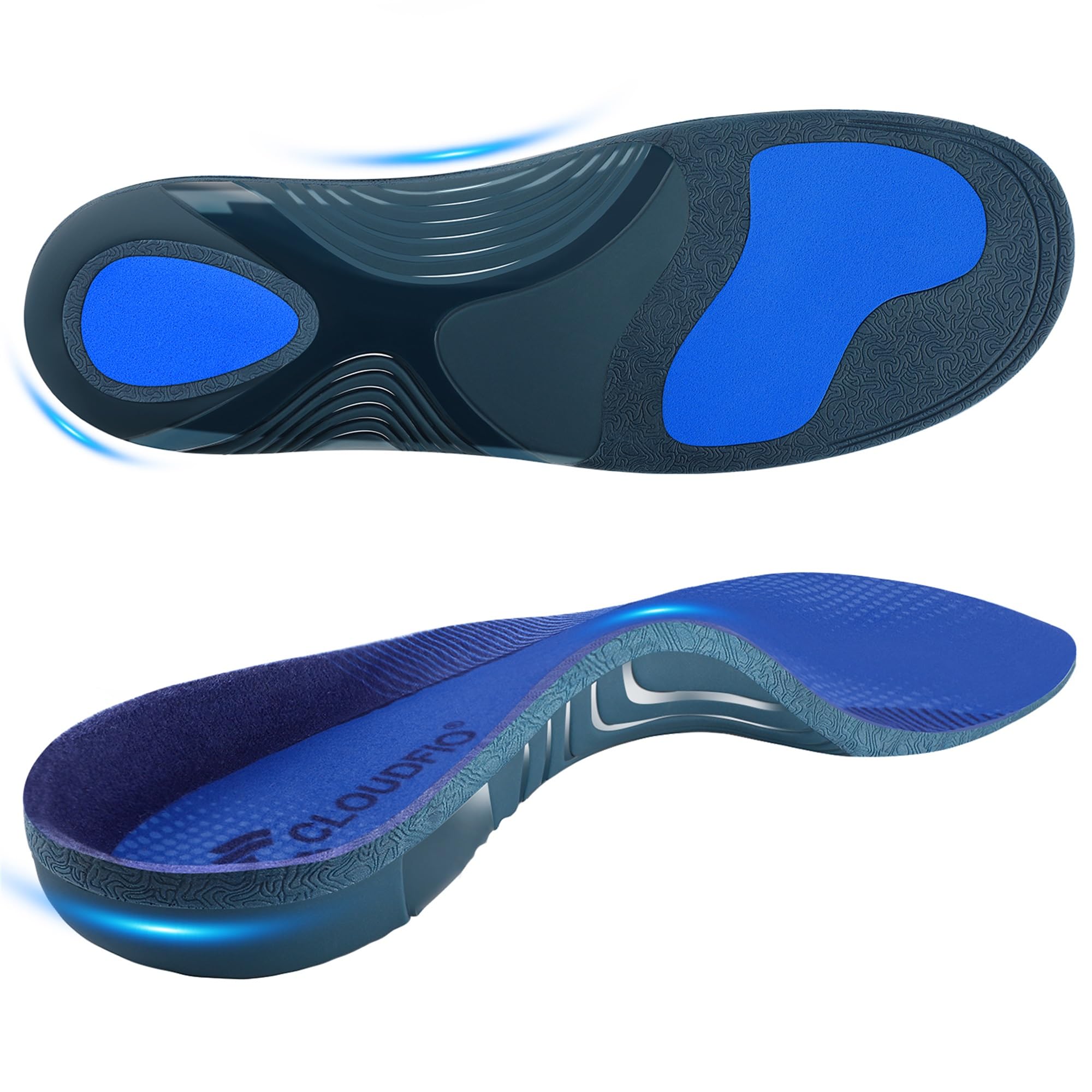
Cloudflo built this insole specifically for the “standing all day” workforce — nurses, teachers, retail associates, and anyone whose shift is spent on concrete or tile. The key engineering choice is a rigid TPU (thermoplastic polyurethane) chassis that provides structural rigidity without adding weight, paired with a thick Ortholite top layer for immediate step-in softness. This dual-density approach ensures the arch doesn’t collapse even when the PU heel pad compresses over time.
User feedback consistently calls out the “firm but not harsh” arch support. Several reviewers with plantar fasciitis reported that heel pain disappeared within a week and that they could resume walking distances they had avoided for months. The insoles are also washable, which matters when work boots accumulate grit and sweat faster than casual shoes. The deep heel cup and raised medial arch provide noticeable pronation control for flat-footed wearers.
The one compromise is a slightly heavier construction — at 10.23 ounces per pair, they add more heft than the Psveb. They also use a high-arch profile, so if you have a low-volume or very flat foot, you might feel too much pressure under the midfoot. For anyone with a neutral or high arch who stands on hard floors, this is a durable daily driver.
Why it’s great
- Rigid TPU chassis prevents arch collapse under load.
- Ortholite top layer stays soft through long shifts.
- Washable design handles boot grit and odor.
Good to know
- Heavier than average insole (10 oz per pair).
- High arch profile may not suit very flat feet.
3. Sof Sole Plantar Fascia Insoles (3/4 Length)

The Sof Sole stands out because it’s a 3/4-length insole — it stops before the toe box. This is a genuine advantage in steel-toe boots, where the wide protective cap often makes a full-length insole bunch up near the front or press against the rigid toe wall. By cutting off at the metatarsal heads, the Sof Sole avoids that fit issue entirely and still delivers targeted support where it matters most: the arch and the heel.
The “Plantar Relief Bridge” is a rigid plastic shank embedded in the midfoot that provides firm, non-compressible arch support, while a gel pad in the heel absorbs strike shock. Long-time users (some since 2014) report these insoles lasting years, not months, with the gel insert being the first component to wear out. The truncated length also means they fit a wide range of shoes without custom trimming, though you must seat the heel flush against the boot’s back wall each time you put them on.
One noted downside: the rubber circle on the heel bottom can abrade the boot’s interior lining over time. This is a minor trade-off for the durability and the fact that several podiatrists specifically recommend this design. The gel cushioning is firmer than a full foam insole, so if you prefer a plush, sinking-in feel, this may feel too hard underfoot.
Why it’s great
- 3/4 length avoids toe-box bunching in steel toes.
- Gel heel insert absorbs strike shock effectively.
- Rigid plastic arch bridge lasts years, not months.
Good to know
- Rubber heel circle may abrade boot lining.
- Firm feel — not plush like full foam insoles.
4. Welnove Work Boot Insoles Heavy Duty
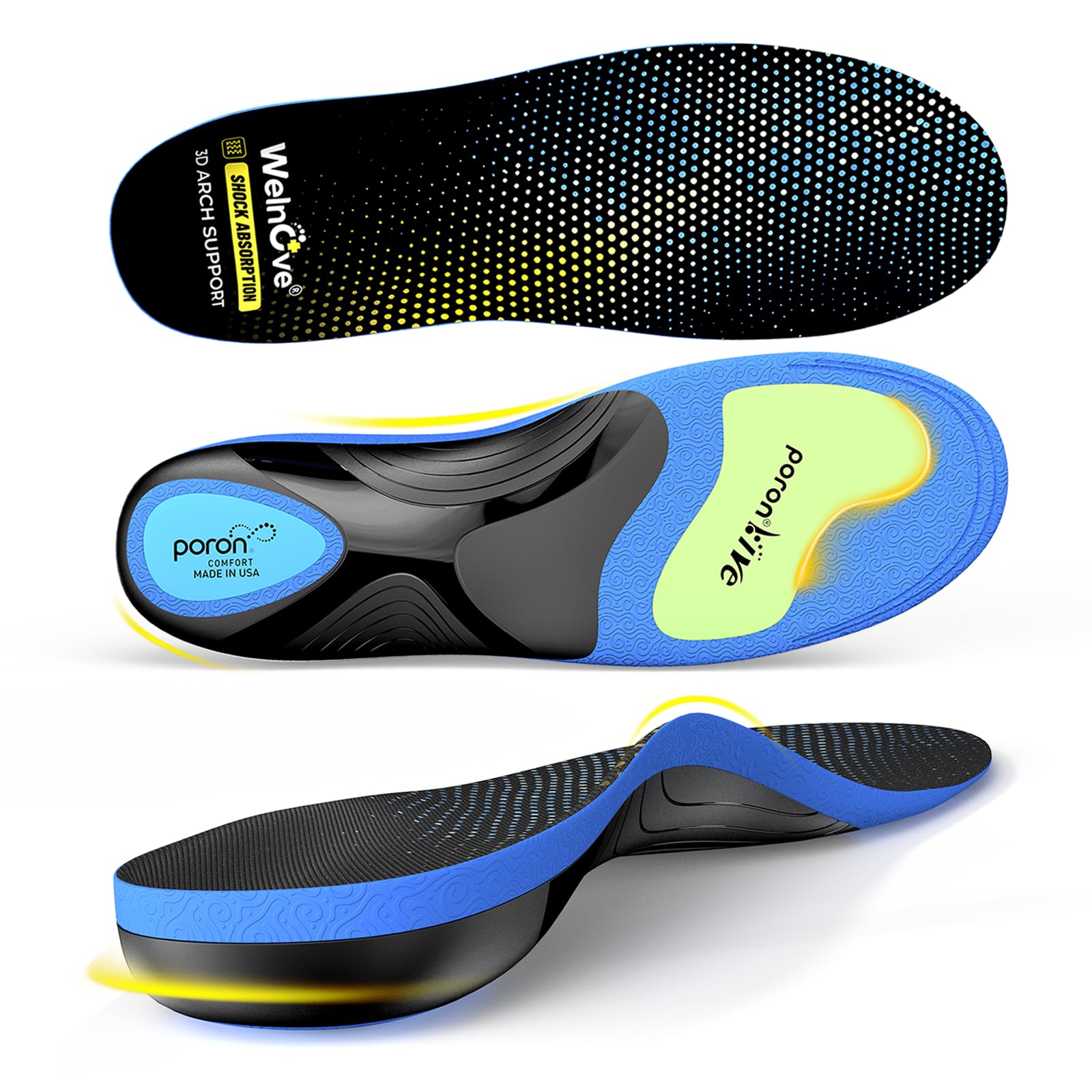
If you have a genuinely high arch (your footprint shows a narrow band or complete gap in the middle), the Welnove is calibrated for exactly that geometry. The arch support is aggressive — significantly more raised than the Psveb or Cloudflo — and it’s combined with a memory foam top layer that gradually molds to your foot’s specific contours over the first week of wear. This is beneficial for high-arch users because the foam fills the gap between the foot and the orthotic shell without creating a pressure ridge.
The manufacturer advises a break-in period of 2-5 days, starting with 3-5 hour wear increments. Users who observed this transition reported that the initial “too high” sensation settled into comfortable, all-day support. Several reviewers noted relief from heel spur pain and ankle rolling (overpronation) that other insoles had not addressed. The anti-slip bottom layer keeps the insole from sliding forward inside the boot, a common frustration with full-length inserts in loose-fitting work boots.
The memory foam, however, has a lower compression set threshold than PORON or TPU-based insoles. One user reported the support “stopped helping after two weeks,” which suggests that under very heavy loads (250+ lbs) or extreme shift length, the memory foam may lose structural integrity faster than materials designed for sustained rebound. This makes the Welnove a better fit for moderate activity levels where the foam can recover between wears.
Why it’s great
- High arch profile provides targeted support for cavus foot.
- Memory foam molds to the foot over break-in period.
- Anti-slip bottom prevents forward shift in boots.
Good to know
- Aggressive arch may feel too high for neutral feet.
- Memory foam may compress faster under very heavy loads.
5. MOVE All Day Comfort Insole
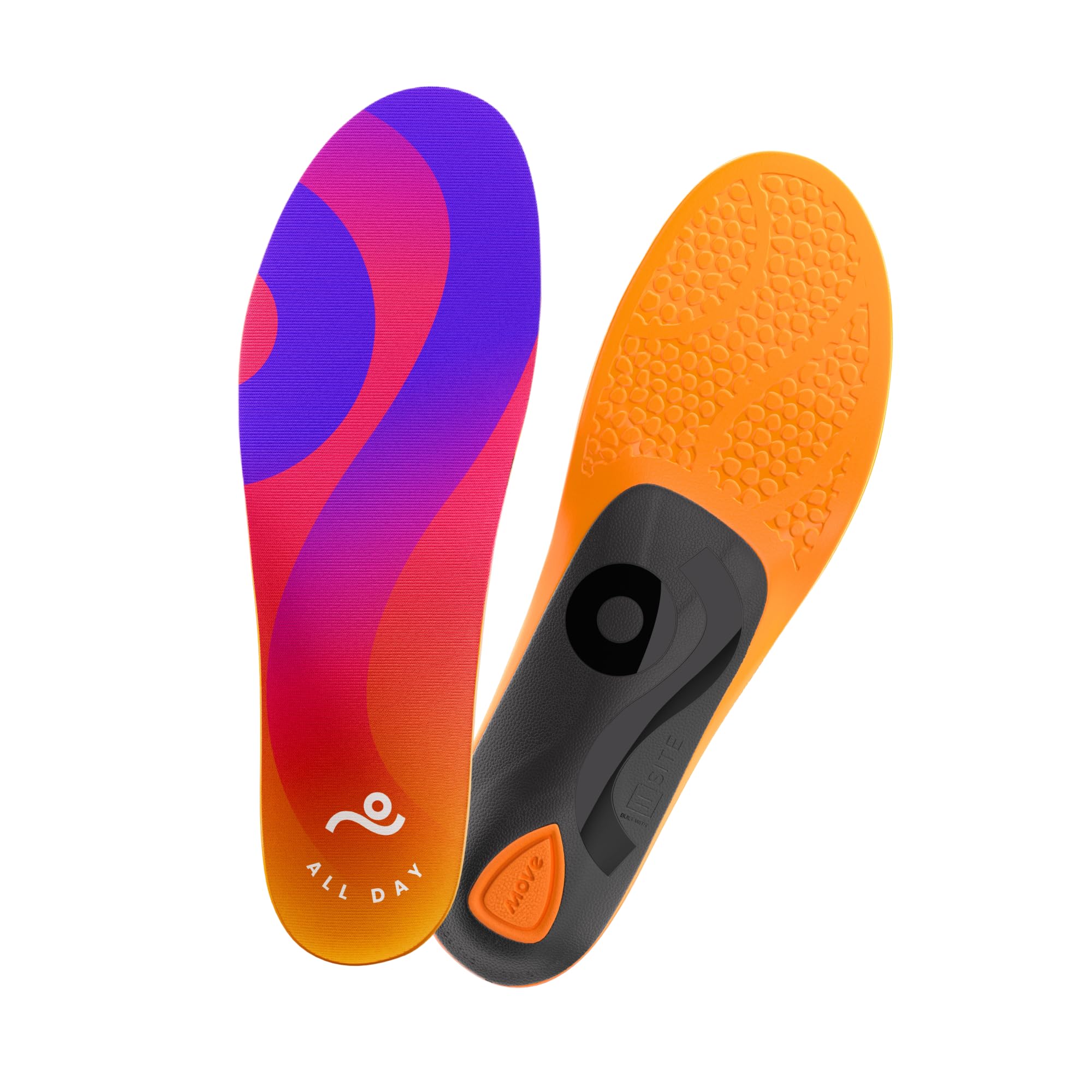
The MOVE All Day Comfort insole brings a construction philosophy borrowed from high-end athletic shoes: a rigid “X-Frame Torsional Support” midfoot plate keeps the arch stable while a proprietary Recharge Foam layer provides a noticeable bounce on heel strike. This combination is rare in the work-boot insole space, where most products sacrifice either stability (pure foam) or comfort (hard plastic orthopedic shells). The result is a premium feel that users describe as “making old boots feel like new performance shoes.”
At about 1mm thicker than standard insoles in the forefoot, the MOVE adds significant cushion without crowding the toe box. The Active Heel Technology incorporates a deep, cupped chamber that reduces pressure on the sensitive fat pad of the heel — a specific benefit for anyone with heel spur or Achilles tendonitis. The Recharge Foam is notably more resilient than standard EVA; users report it retains its thickness and bounce after months of daily wear, unlike budget options that compress into cardboard-like flatness.
The main barrier is price — this is the most expensive option in the roundup. It’s also slightly too thick for low-volume shoes, though it fits steel-toe boots without issue. If you spend 10+ hours on your feet and your budget allows a splurge on comfort, the MOVE’s combination of structure, bounce, and durability justifies the investment.
Why it’s great
- X-Frame plate provides torsional stability under load.
- Recharge Foam retains bounce long-term.
- Active Heel cavity reduces heel spur pressure.
Good to know
- Premium price point — costliest option in the guide.
- Thicker forefoot may crowd low-volume boots.
FAQ
Should I remove the factory insole before inserting a new one?
How do I know if I need a high arch or medium arch insole?
Can I use running shoe insoles in steel toe boots?
How often should I replace insoles in my work boots?
Final Thoughts: The Verdict
For most users, the best insoles for steel toe boots winner is the Psveb Professional Heavy Duty because its PORON cushioning maintains rebound under heavy loads while the medium arch profile fits the widest range of foot types. If you stand all day on concrete and need max structural rigidity, grab the Cloudflo. And for those with high arches who want memory foam comfort, the Welnove delivers targeted relief.