Standing on concrete for eight, ten, or twelve hours sends a specific kind of shock through your body — one that starts in the heel, radiates up through the knees, and settles deep in the lower back. Standard shoe insoles were never built to handle that relentless, unyielding surface. The right orthotic can absorb that ground force, support your natural arch under load, and keep you functional through an entire shift without that familiar ache creeping in by hour six.
I’m Emma — the founder and writer behind Baby Bangs. I’ve spent countless hours cross-referencing materials science reports, podiatry guidelines, and real-user fatigue data to identify which insoles actually hold up against solid concrete day after day.
This guide breaks down the seven best options currently available, focusing on the specific engineering that makes an insole effective for standing work on hard flooring. If you are shopping for insoles for standing all day on concrete, these are the designs that consistently deliver measurable relief.
How To Choose The Best Insoles For Standing All Day On Concrete
Concrete is different from carpet, tile, or asphalt. It offers virtually no natural give, meaning every step’s impact returns directly to your skeleton. The wrong insole will compress flat within weeks, leaving you standing on what is essentially a thin layer of foam over rock. Here is what actually matters when filtering through the options.
Arch Support Rigidity and Type
Your arch type dictates which insole will feel corrective versus punishing. Low arches (flat feet) need a supportive structure that prevents the arch from collapsing inward with each step. High arches require a shape that fills the natural gap and distributes pressure evenly across the foot’s mid-point. The insoles that work best for all-day standing use a rigid base material — typically a formed TPU or polypropylene shell — rather than soft foam that collapses under sustained weight. Check the product’s stated arch type (low, medium, high) and match it to your own footprint before buying.
Shock Absorption and Material Stacking
A single layer of memory foam does not cut it on concrete. Effective work insoles use a multi-layer stack: a rigid shell for structure, a dense mid-layer (PU foam or EVA) for energy return, and a targeted gel or silicone pad at the heel and forefoot for direct impact reduction. The total thickness matters too — too thin and you feel the floor, too thick and your foot sits too high inside the shoe, altering your gait and potentially causing blisters around the heel collar. Look for a stack that measures roughly 5-8 mm in total compression under your weight.
Heel Cup Depth and Stability
The heel cup is the anchor point for the entire orthotic. A deep, U-shaped cup cradles the calcaneus (heel bone) and prevents the fat pad under your heel from spreading sideways under load. This is critical on concrete because without that lateral containment, every step creates micro-instability that travels up into the ankles and knees. Shallow or soft heel cups allow the foot to rock inside the shoe over a long shift, creating fatigue that no amount of forefoot cushioning can fix.
Quick Comparison
On smaller screens, swipe sideways to see the full table.
| Model | Category | Best For | Key Spec | Amazon |
|---|---|---|---|---|
| PowerStep Pinnacle Maxx | Premium Orthotic | Maximum stability, flat feet, overpronation | Firm angled heel with deep U-cup | Amazon |
| Superfeet Work Cushion (11.5-13) | Premium Work | All-day anti-fatigue, boot compatibility | Moisture-wick cover, 12-month durability | Amazon |
| Aimesole Heavy Duty Support | Premium Cushion | Long medical shifts, heel spur relief | Gel pad at heel and forefoot | Amazon |
| Superfeet Work Cushion (9.5-11) | Premium Work | Mid-size boots, trim-to-fit versatility | All arch heights support | Amazon |
| VALSOLE Heavy Duty Support | Mid-Range Orthotic | High arches, pressure distribution | 1.4-inch arch height with rigid TPU | Amazon |
| Welnove Heavy Duty High Arch (220+ lbs) | Value Orthotic | Heavy users, plantar fasciitis relief | Memory PU foam + gel met pads | Amazon |
| Welnove Work Orthotic Medium Arch | Value Work | Budget entry, medium arch support | 3D dynamic TPU arch layer | Amazon |
In‑Depth Reviews
1. PowerStep Pinnacle Maxx Orthotic Insoles

The PowerStep Pinnacle Maxx is built around a fundamental truth: standing on concrete all day requires an insole that does not collapse under your bodyweight. This model uses a semi-rigid polypropylene shell with a pronounced, angled heel that actively controls overpronation — the inward rolling motion that worsens on hard, flat surfaces. The deep U-cup heel design locks the calcaneus in place, preventing the micro-instability that builds into knee and hip pain over a ten-hour shift. Users with flat feet and posterior tibial tendonitis report immediate relief because the arch shell does not rely on foam thickness; it relies on structural correction.
The cushioning layer uses a dual-density foam that sits above the rigid shell, meaning you get impact absorption without losing the corrective support underneath. Break-in takes about two to three days of wear, during which the shell molds slightly to your foot’s individual contour. The insole is somewhat thick — if your work boots or shoes are already snug, you may need to remove the factory insole entirely or size up half a size to accommodate the volume. Multiple users confirm this is the single most effective mass-market orthotic for severe flat feet and overpronation, outperforming insoles at twice the price point.
On the durability front, the Pinnacle Maxx holds its shape for roughly six to eight months of daily heavy use before the top foam layer begins to show compression marks. The fabric cover is moisture-wicking, which matters when your feet are enclosed in boots for extended periods. The trade-off is that this is a true orthotic — it will feel stiff for the first several hours, and users with neutral or high arches may find the arch support too aggressive. For flat-footed workers spending their days on concrete, this is the gold standard.
Why it’s great
- Rigid polypropylene shell provides genuine structural correction for overpronation
- Deep heel cup eliminates rocking and stabilizes the entire lower chain
- Dual-density foam absorbs concrete impact without sacrificing support
Good to know
- Requires a break-in period of 2-3 days of gradual wear
- Thick build may necessitate going up half a shoe size or removing factory insoles
2. Superfeet Work Cushion Insoles (Men 11.5-13)
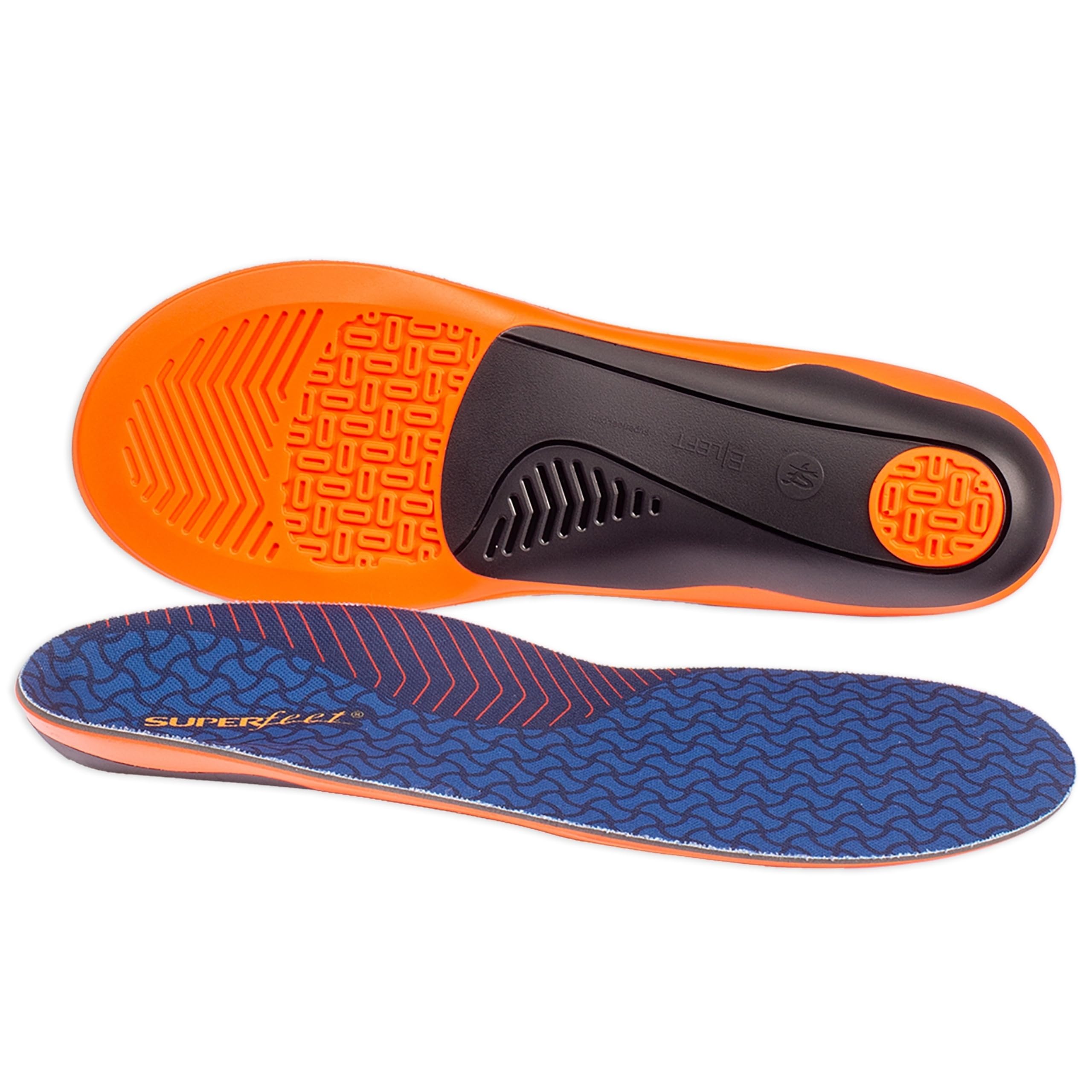
Superfeet has long been the name in work-boot orthotics, and the Work Cushion model is specifically tuned for the concrete-floor worker. The defining feature here is the “all arch heights” claim — the insole uses a graduated arch shape that adapts to low, medium, and high arches without forcing a one-size-fits-all curve. The heel cup is moderately deep and the cushioning is soft underfoot without feeling mushy, achieved through a closed-cell foam layer that resists permanent compression better than open-cell memory foams. Users consistently report that this insole eliminates lower back fatigue by the end of a 12-hour concrete shift, not just foot pain.
The trim-to-fit design requires cutting along printed guidelines to match your boot size. This is straightforward but worth noting: if you cut incorrectly, you cannot return the insole, so measure twice. The Moisturewick top cover is a real advantage for steel-toe and insulated boots where sweat buildup accelerates breakdown of lesser insoles. Users with Red Wing boots report a near-perfect fit without any trimming at all, suggesting the sizing aligns closely with work-boot standards. The durability is rated at up to 12 months, and real-world reviews from two-year users confirm the foam rebounds well beyond the first year.
However, some users with very high arches find the arch support too mild. The Work Cushion leans toward the comfort end of the spectrum rather than the strict correction end. If your primary issue is flat feet with overpronation, the PowerStep above provides more structural control. For the worker whose main complaint is general fatigue and soreness at the end of a shift, the Superfeet Work Cushion is arguably the most comfortable option that still offers meaningful support. The larger size range (11.5-13) fits bigger boots commonly worn in construction and warehouse settings.
Why it’s great
- Soft-yet-supportive closed-cell foam resists flattening on concrete
- Moisture-wick top layer reduces odor in enclosed work boots
- Durable enough to retain shape for 12 months of daily use
Good to know
- Trim-to-fit design means no returns after cutting
- Mild arch support may not satisfy severe flat feet or high-arch users
3. Aimesole Heavy Duty Support Plantar Fasciitis Insoles
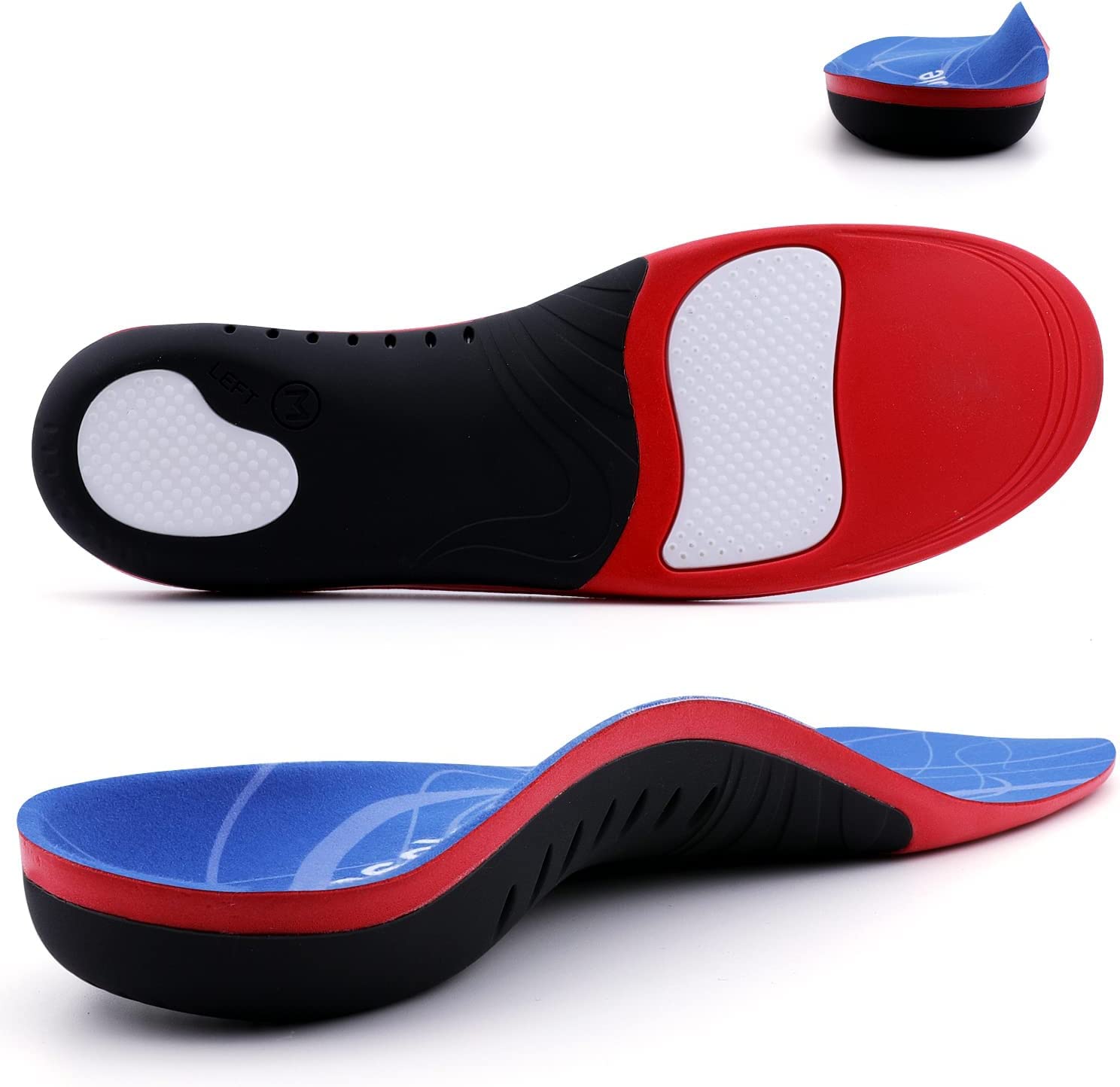
The Aimesole insole targets a specific concrete-floor pain point: the concentrated heel and forefoot impact that triggers plantar fasciitis and hairline fracture pain in medical workers standing 12-24 hour shifts. The construction uses a gel pad embedded at both the heel and the ball of the foot, sitting above a semi-rigid arch shell. The gel layer is noticeably thicker than the small gel dots found in budget insoles — it provides a distinct squish that absorbs the initial footstrike, while the shell underneath prevents the arch from collapsing under sustained load. Users who tried custom orthotics found this insole comparable at a significantly lower investment.
Durability is the main question mark here. Several users report excellent support for the first two to three weeks, after which the foam mid-layer begins to show signs of compression in the heel area. The gel pads themselves hold up well, but the surrounding foam loses its spring faster than the premium options from Superfeet or PowerStep. For a worker rotating through multiple pairs of boots, this is less of an issue. For someone relying on a single pair of footwear every day, expect the peak performance window to be roughly two months before the cushioning noticeably softens.
The fit runs slightly narrow, particularly in the forefoot area. Users with wide or extra-wide feet (4E+) report that the insole does not fill the shoe’s width, leaving a gap that can feel unstable on concrete. This insole works best in standard-width sneakers or dress shoes rather than bulky work boots. An additional quirk: the gel layer can produce an audible squeak during walking for the first few days until the insole beds into the shoe. Despite these trade-offs, workers logging extreme hours report that this insole erased their arch pain within days — a strong signal that the core design is effective.
Why it’s great
- Thick gel heel pad absorbs high-impact concrete footstrikes effectively
- Provides immediate relief for plantar fasciitis and heel spur pain
- Semi-rigid arch prevents collapse under prolonged standing weight
Good to know
- Foam mid-layer compresses faster than premium competitors
- Narrow forefoot fit may not suit wide or extra-wide shoes
4. Superfeet Work Cushion Insoles (Men 9.5-11)
This is functionally the same Superfeet Work Cushion platform as the larger size above, but sized for men’s 9.5-11 / women’s 10.5-12 boots. The core material — the closed-cell foam and Moisturewick cover — delivers identical performance on concrete. What makes this listing noteworthy is the fit feedback from users with Red Wing and Xtratuf boots: multiple reviews report that no cutting was needed at all, as the insole is pre-sized to match those specific boot lasts perfectly. For the concrete worker who wants a zero-fuss drop-in solution, this matters.
The anti-fatigue cushioning is genuinely noticeable on hard floors. Users with hip pain from flexor issues report that the insole’s moderate arch height and bouncy heel layer reduce the pelvic rotation that causes chronic tightness. The insole is not as rigid as the PowerStep, so it allows more natural foot motion during walking — some workers prefer this for tasks that involve moving across concrete rather than standing stationary. The trade-off is slightly less corrective control for severe overpronation.
Durability is a strong point here. One user reported replacing their first pair after nearly two years of heavy use, not because the insole failed, but because they wanted fresher foam. For the mid-range price, that lifespan is excellent. The trim-to-fit design works well as long as you follow the printed cut lines — boot users should note that the insole tapers narrower in the toe, so if your boots are wide, test the fit before trimming. The open-cell construction does eventually compress after a year, but at a slower rate than the gel-focused competitors.
Why it’s great
- Pre-sized fit for common work boots like Red Wing and Xtratuf without trimming
- Closed-cell foam resists compression for over a year of daily concrete use
- Bouncy heel reduces hip tension from hard-floor walking
Good to know
- Mild arch support is insufficient for severe flat feet or pronation disorders
- Trim-to-fit design requires careful cutting; no returns after modification
5. VALSOLE 220+ lbs Heavy Duty High Arch Support Insoles

The VALSOLE insole takes a different approach than the cushion-focused options — it prioritizes arch correction above all else. The 1.4-inch arch height uses a rigid TPU frame that provides aggressive support for high arches and fallen arches alike. On concrete, this means the insole keeps the foot’s mid-section from dropping, which in turn prevents the plantar fascia from stretching against the hard floor. Users with plantar fasciitis report that the pain reduction is immediate and significant, comparing this insole to a custom orthotic in terms of structural effect.
The heel pad and forefoot cushioning are built around the TPU shell rather than independent gel inserts. This integrated design means the support and cushion work together rather than independently, creating a stable platform that feels firmer than gel-based alternatives. The trade-off is that the arch itself is aggressive — some users find it positioned too far back toward the heel, causing sharp pain at the arch’s peak during the first wear. The break-in period is real: expect 3-7 days of gradual wear starting at 2-3 hours per day. Users who fail to follow the break-in protocol often rate the insole poorly because the rigid arch feels like it is digging into the foot.
Fit-wise, these insoles run true to size but sit high inside the shoe. You will almost certainly need to remove the factory insole to accommodate the volume. The sizing chart is accurate for work boots, but the lack of a trim-to-fit design means you cannot adjust the width or length. For workers whose shoes already have a removable insole, this is a straightforward swap. For shoes with a glued-in insole, the fit may be too tight. The durability of the TPU shell itself is indefinite, but the foam topping compresses after 4-6 months of daily concrete use.
Why it’s great
- Aggressive 1.4-inch arch height provides true structural correction for high arches
- Rigid TPU shell prevents arch collapse under heavy loads on concrete
- Effective immediate relief for plantar fasciitis and arch pain
Good to know
- Arch positioning may feel painful if not gradually broken in over 3-7 days
- Not trim-to-fit; cannot adjust length or width for non-standard shoe sizes
6. Welnove 220+ lbs Heavy Duty High Arch Support Insoles

Welnove’s heavy-duty model is engineered specifically for users over 220 pounds who need an insole that will not pancake under their weight on concrete. The core is a memory PU foam base with a bottom rigid TPU wrap that surrounds the heel and arch — this dual-layer approach provides the density needed to support heavier loads while still offering a forgiving feel at the foot strike. The gel heel and metatarsal pads are embedded into the foam rather than resting on top, which prevents them from sliding out of position during long shifts.
The arch support is high and firm. Users with flat feet or neutral arches may find it too pronounced, and the reviews confirm that those with already strong arches adjust better. The break-in period is consistent with other rigid orthotics: expect 2-5 days of minor pressure and discomfort as the arch molds to your foot. Users who stuck with the transition period report complete relief from plantar fasciitis pain and the ability to stand for full shifts without their usual end-of-day ache. The sizing range goes from XS to XL, accommodating larger foot sizes well.
Where this insole compromises is in the foam longevity. The memory PU layer is comfortable initially but compresses faster than the closed-cell foams used in the Superfeet or PowerStep. After three to four months of daily use, the heel area loses some of its rebound, though the TPU shell continues to provide arch support. For the price point, this is acceptable — the insole performs well during its prime window. The moisture-wicking fabric cover is effective, and the insole fits most work boots and high-volume shoes without modification.
Why it’s great
- Rigid TPU wrap supports heavy body weight without bottoming out
- Gel heel and metatarsal pads stay fixed within the foam base
- Effective plantar fasciitis relief after proper break-in period
Good to know
- Memory PU foam compresses faster than higher-end closed-cell alternatives
- High arch profile may feel uncomfortable for flat-footed or neutral-arch users
7. Welnove Work Orthotic Insoles for Plantar Fasciitis (Medium Arch)
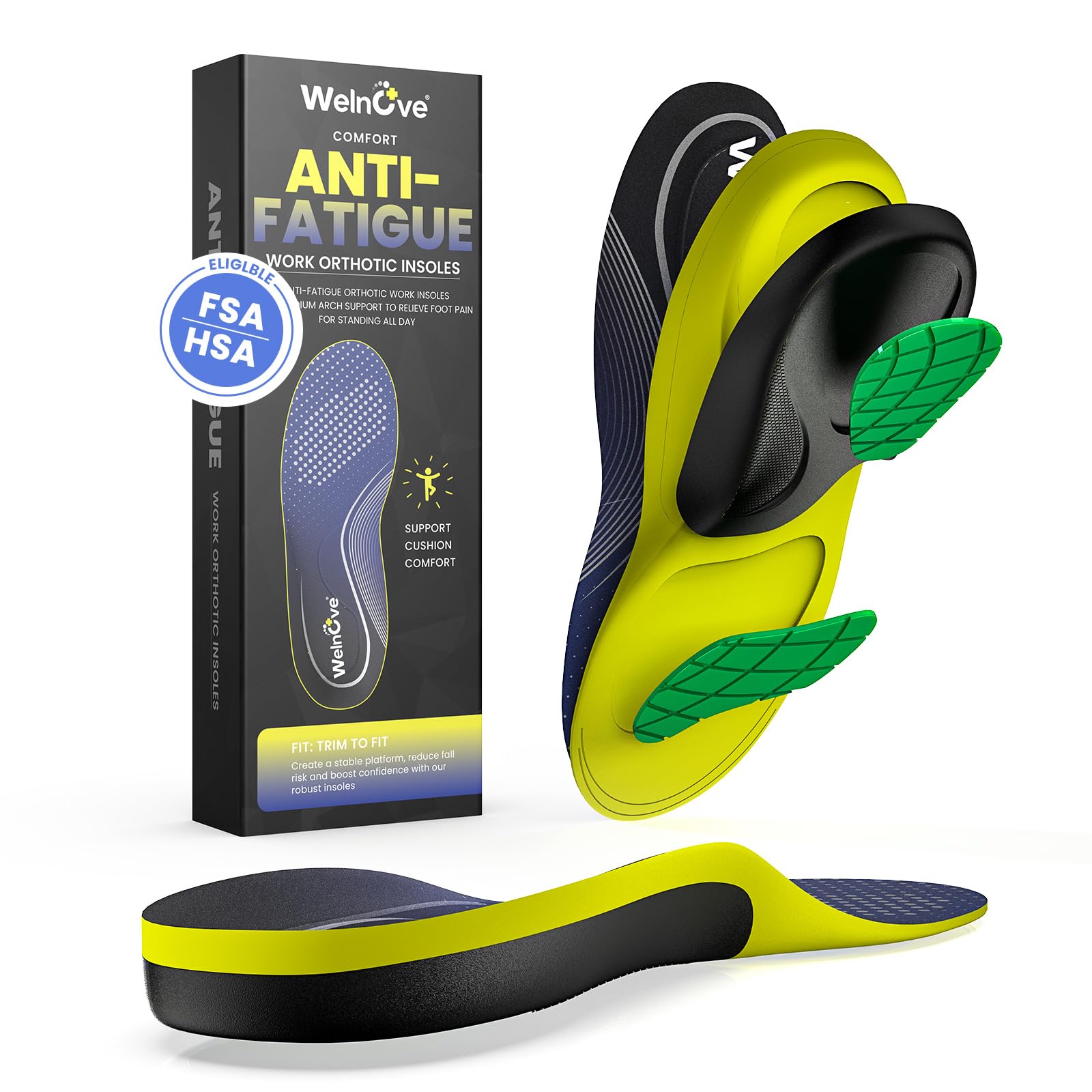
This Welnove model targets the mid-arch user at a budget-friendly entry point. The construction uses a 3D dynamic TPU arch support layer combined with a PU foam cushioning layer and shock-absorbing gel pads at the heel and ball of foot. The arch support is medium, making this a safer bet for workers who do not have extreme high or low arches and just need reliable, everyday comfort on concrete. Users report that this insole transforms unwearable work boots into all-day footwear, with one warehouse worker extending his boot tolerance from 3-4 hours to a full shift without foot burning.
The deep U-cup heel provides solid containment for the calcaneus, which helps with stability on uneven concrete surfaces. The gel pads are effective at absorbing the initial impact, though the PU foam mid-layer is noticeably thinner than the premium options. For lighter workers or those whose concrete exposure is under eight hours, this thickness is adequate. For heavier workers or longer shifts, the cushioning may feel insufficient by the end of the day. A small but important point: the packaging lists “2 pack” but this means one pair (left and right), not two pairs — a common point of confusion.
Durability is the main area where the price point shows. Several reviews note that after one month of heavy use, the insole does not provide the same level of fatigue relief as when new. The foam compresses and the gel pads lose some of their resilience. For the cost, replacement every few months is a realistic expectation. The insole also takes up significant volume inside the shoe — users with tight-fitting boots should remove the factory insole before inserting. For someone testing whether orthotic insoles help their concrete-floor pain without a major financial commitment, this is a reasonable starting point.
Why it’s great
- Medium arch support suits a wide range of users without extreme correction needs
- Deep U-cup heel provides good calcaneus stability on concrete
- Low entry point for workers new to orthotic insoles
Good to know
- PU foam compresses noticeably within the first month of heavy use
- Thick build may require removing factory insoles or sizing up
FAQ
How long does it take to break in new concrete-work insoles?
Can I use the same insoles in multiple pairs of boots?
Do I need to remove my shoe’s original insole before inserting orthotics?
Final Thoughts: The Verdict
For most users, the insoles for standing all day on concrete winner is the PowerStep Pinnacle Maxx because it combines a rigid corrective shell with dual-density cushioning that handles the unique demands of hard flooring without flattening out. If you want a softer feel with proven durability for work boots, grab the Superfeet Work Cushion. And for a budget-friendly start that still delivers real arch support, nothing beats the value of the Welnove Heavy Duty High Arch Insole.