Lower back and leg pain radiating from the sciatic nerve can turn every step into a grimace. The right insole can interrupt that cascade by stabilizing the foot’s foundation, absorbing ground impact before it reaches the lumbar spine, and correcting the gait imbalances that aggravate nerve compression.
I’m Emma — the founder and writer behind Baby Bangs. I’ve spent years analyzing biomechanics, orthotic materials, and arch-support geometry to separate genuine relief from marketing foam.
After combing through customer trials, podiatrist recommendations, and build specs, these are the very best insoles for sciatica pain available now, ranked by how effectively they reduce impact transfer and support natural spinal alignment.
How To Choose The Best Insoles For Sciatica Pain
Sciatica isn’t a foot condition, but your feet are the first point of impact. Without proper support, every step sends force straight up the kinetic chain — through the ankle, knee, hip, and into the compressed sciatic nerve. The wrong insole can worsen the pain; the right one creates a stable platform that reduces that transmission.
Match the Arch Support to Your Foot Type
Flat feet cause over-pronation, which internally rotates the tibia and stresses the lower back. High arches, by contrast, lack shock absorption and transmit more force upward. For sciatica, a neutral-to-firm arch support that controls pronation without jamming into a high arch is the sweet spot. Look for orthotics with a rigid or semi-rigid arch shank (often made of TPU or plastic) rather than all-foam designs.
Prioritize Heel Cup Depth and Shock Absorption
A deep, cradle-like heel cup stabilizes the calcaneus and prevents excess motion that torques the pelvis. Pair this with a shock-absorbing material like PORON or multi-density EVA in the heel pad. The goal is to dampen the impact load before it reaches the lumbar region. Insoles that are purely soft foam collapse under load and fail to provide the required stability.
Consider Full-Length vs. 3/4-Length Designs
Full-length insoles distribute pressure evenly from heel to toe and work best in athletic shoes, work boots, and sneakers with removable factory insoles. 3/4-length insoles (which end before the toe box) fit dress shoes and tighter footwear without crowding the toes. For sciatica, full-length is generally preferred because it provides a continuous support platform, but 3/4 can work well if shoe fit is tight.
Quick Comparison
On smaller screens, swipe sideways to see the full table.
| Model | Category | Best For | Key Spec | Amazon |
|---|---|---|---|---|
| PowerStep Pinnacle | Premium Full-Length | All-day stability & PF relief | Dual-layer EVA + firm arch shank | Amazon |
| Custom Fit Orthotics CF 440 | Mid-Range 3/4 Length | Custom arch alignment | Adjustable 3/4-length plastic shank | Amazon |
| KSGAERR Heavy Duty Support | Mid-Range Full-Length | Heavy users (230+ lbs) | Dual-layer PORON + TPU arch | Amazon |
| Spenco Rx Arch Support | Mid-Range Full-Length | Motion control & Achilles relief | Flexible plastic arch + Spencore layer | Amazon |
| BraceAbility Heel Spur Cups | Budget Heel Cup | Heel-specific impact relief | Medical-grade silicone gel cushion | Amazon |
In‑Depth Reviews
1. PowerStep Pinnacle Insoles

The PowerStep Pinnacle sits at the top of this list because it does exactly what a sciatica insole must do — deliver a firm arch support that stops over-pronation while providing dual-layer cushioning to absorb shock before it reaches the spine. Made in the USA, this is the #1 podiatrist-recommended OTC orthotic, and it shows in the build: a rigid arch shank with moderate pronation control, a deep heel cradle, and full-length EVA that replaces the factory insole entirely. Multiple users report significant improvement in both plantar fasciitis and lower back pain within two weeks, with one 12-hour shift worker calling it the best purchase they have ever made for standing on concrete floors.
The fit is size-specific, meaning you order by shoe size and no trimming is required — a major convenience for those who don’t want to guess at scissor lines. The dual-layer cushioning is firm rather than mushy, which is exactly what sciatica patients need: enough give to dampen heel strike, but enough structure to prevent the foot from collapsing inward. It works well in athletic shoes, running shoes, work boots, and casual sneakers, though it does require a shoe with a removable insole to fit properly.
Reviewers consistently praise the stability for high-mileage days (15,000 steps and up), and several note that the Pinnacle helped with lower back pain where softer insoles failed. The only trade-off is that the arch is quite pronounced for those with very flat feet; a short break-in period of a few days is normal. For most people with sciatica, this is the safest first choice on the market.
Why it’s great
- Firm arch shank controls over-pronation that aggravates sciatica
- Full-length dual-layer cushioning for continuous shock absorption
- No trimming required; accurate size-specific fit
- HSA/FSA eligible and backed by a 30-day guarantee
Good to know
- Requires shoes with removable factory insoles
- Arch may feel high for very flat-footed users initially
2. Custom Fit Orthotics 3/4 Length Inserts CF 440
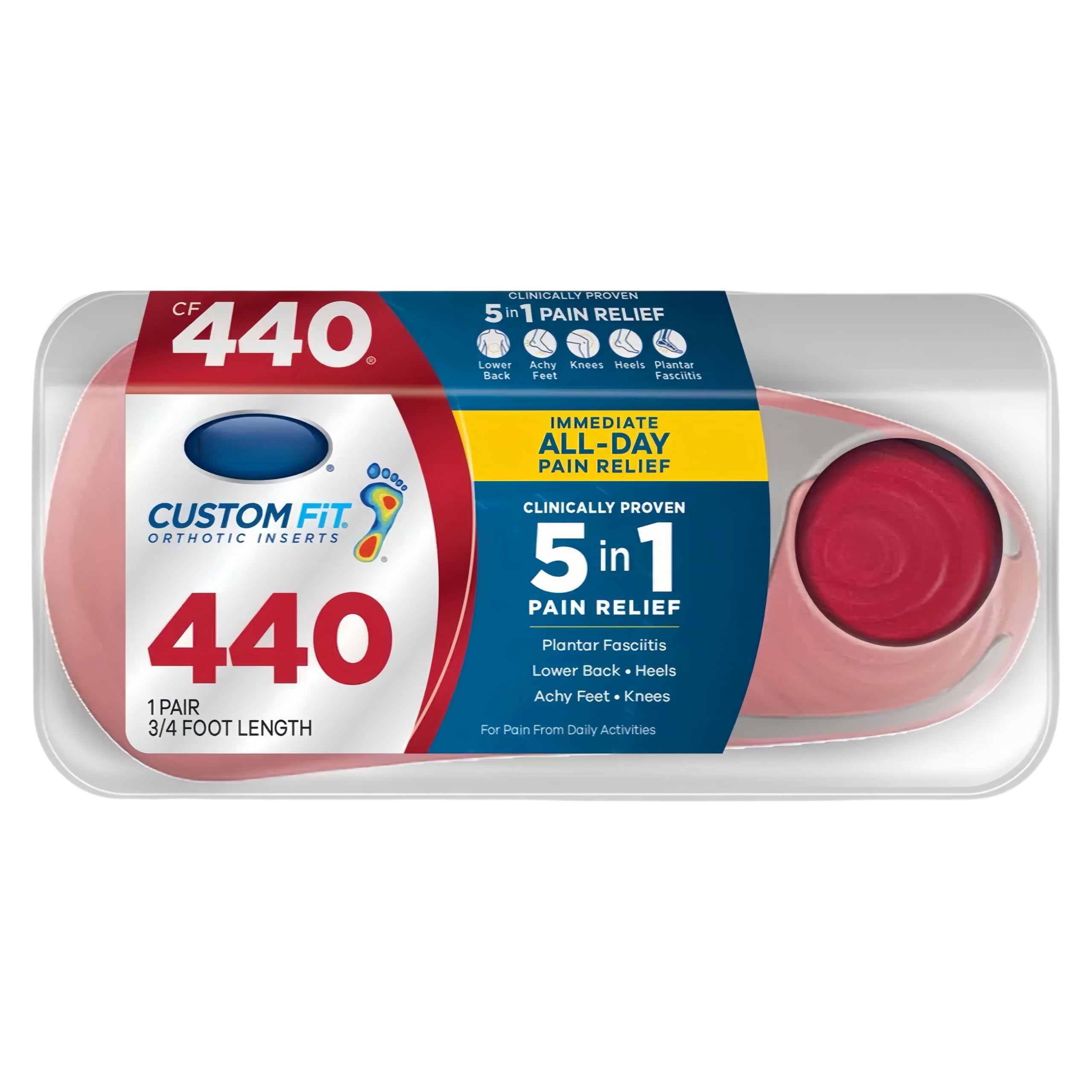
The CF 440 offers a clever middle ground: a 3/4-length design that slides into dress shoes, casual footwear, and sneakers without crowding the toes, but with a rigid plastic arch shank that provides the stability sciatica demands. The “Custom Fit” name refers to the ability to heat-mold or trim the base for a more personalized arch height, giving it an edge over one-size-fits-all foam designs. Users report it corrects alignment and alleviates 95% of knee, hip, and lower back pain, with one reviewer noting standing was possible without support after using them.
Built with a foam top layer bonded to a plastic arch support, it delivers a solid foundation that doesn’t collapse under heavy standing. The 3/4 length means it works in a wider range of shoe styles, including work shoes and loafers where a full-length insole would bunch up. The unisex sizing covers both men and women, and the ergonomic shape is designed to restore natural gait — a key factor for sciatica patients whose walking pattern has changed due to chronic pain.
On the downside, the 3/4 format can slide forward inside the shoe over long wear periods; some reviewers solved this with double-sided tape. The arch support, while firm, is less pronounced than the PowerStep, so those with very high arches may want more elevation. For the price, this is a versatile entry point that punches above its weight for sciatic relief, especially in tighter footwear.
Why it’s great
- 3/4 length fits dress shoes and tighter footwear
- Rigid plastic shank provides firm arch support
- Adjustable trim for personalized fit
- Clinically proven for lower back, knee, and heel pain
Good to know
- May slide forward in some shoes without adhesive
- Arch height is moderate, not ultra-high
3. KSGAERR Heavy Duty Support Pain Relief Orthotics
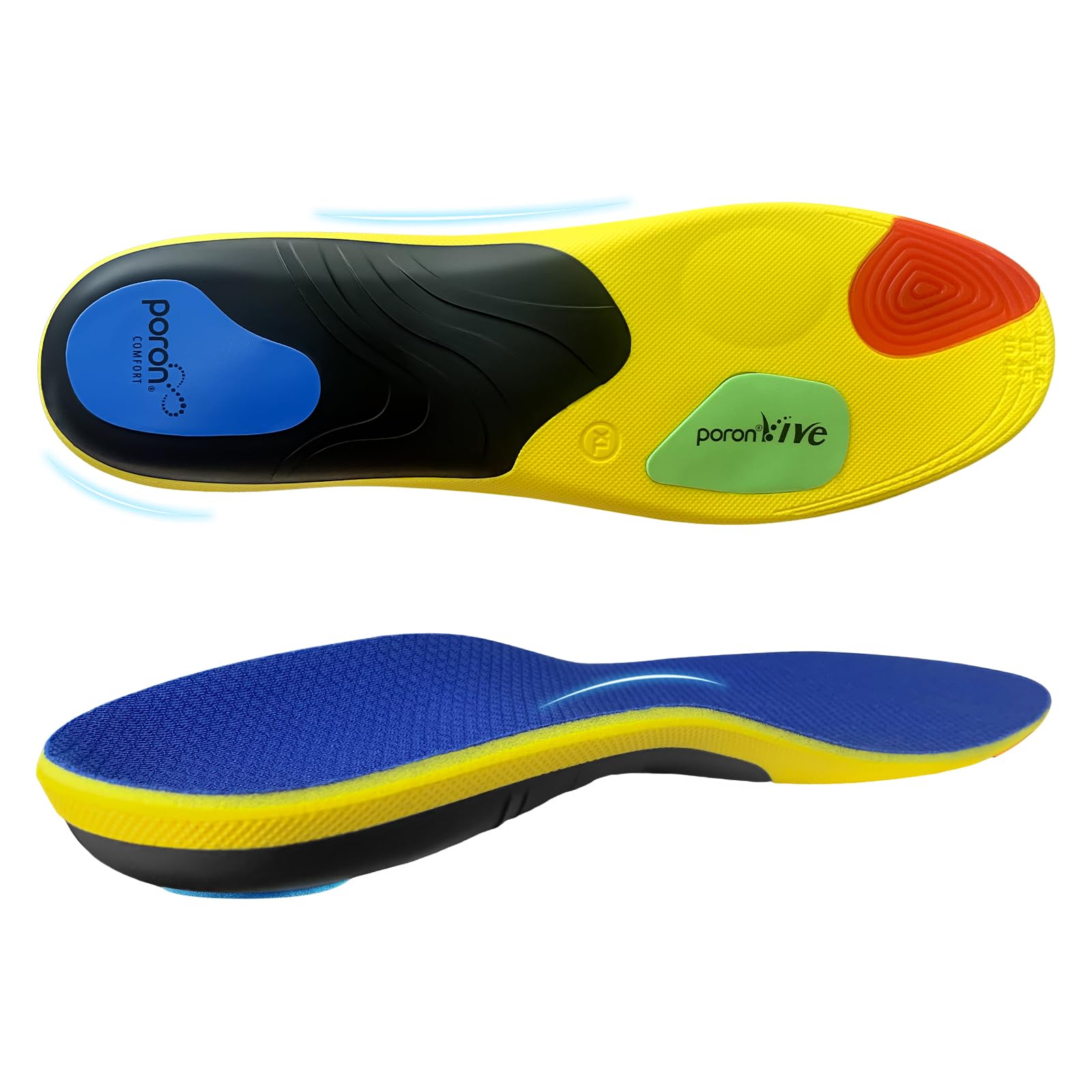
Designed specifically for individuals weighing over 230 pounds, the KSGAERR Heavy Duty Support insole brings serious engineering to the sciatica equation: dual-layer PORON cushioning for shock absorption plus a rigid black TPU material that locks in arch support and heel position. The “Golden Triangle” ergonomic design delivers three-point support across the forefoot, arch, and heel, creating a stable base that minimizes the side-to-side motion that torques the pelvis and compresses the sciatic nerve. Users working 8-hour shifts on their feet report that these insoles make standing comfortable where previously it was painful.
The PORON heel pad is a standout feature — it retains its shock-absorbing properties over time without packing down, which is critical for consistent spinal impact protection. The deep heel cup keeps the calcaneus centered, preventing the heel slippage that can send improper forces up the chain. It trims to fit most work boots, hiking boots, and athletic shoes, making it a versatile choice for those who need heavy-duty support across multiple pairs of footwear.
Some users with lighter body weights (<180 lbs) find the arch support and rigidity too aggressive for everyday walking. This is a purpose-built product for heavier individuals or those with severe pronation who need maximum control. It also runs slightly long in the listed size range; trimming is recommended to dial in the perfect fit. For heavier sciatica sufferers, this is likely the most effective option on this list.
Why it’s great
- Dual-layer PORON for long-lasting shock absorption
- Rigid TPU arch support prevents over-pronation
- Deep heel cup stabilizes the calcaneus
- Designed for users 230+ lbs with heavy-duty needs
Good to know
- Too stiff for lighter users or casual walkers
- May require significant trimming for a precise fit
4. Spenco Rx Orthotic Arch Support Full Length Insoles
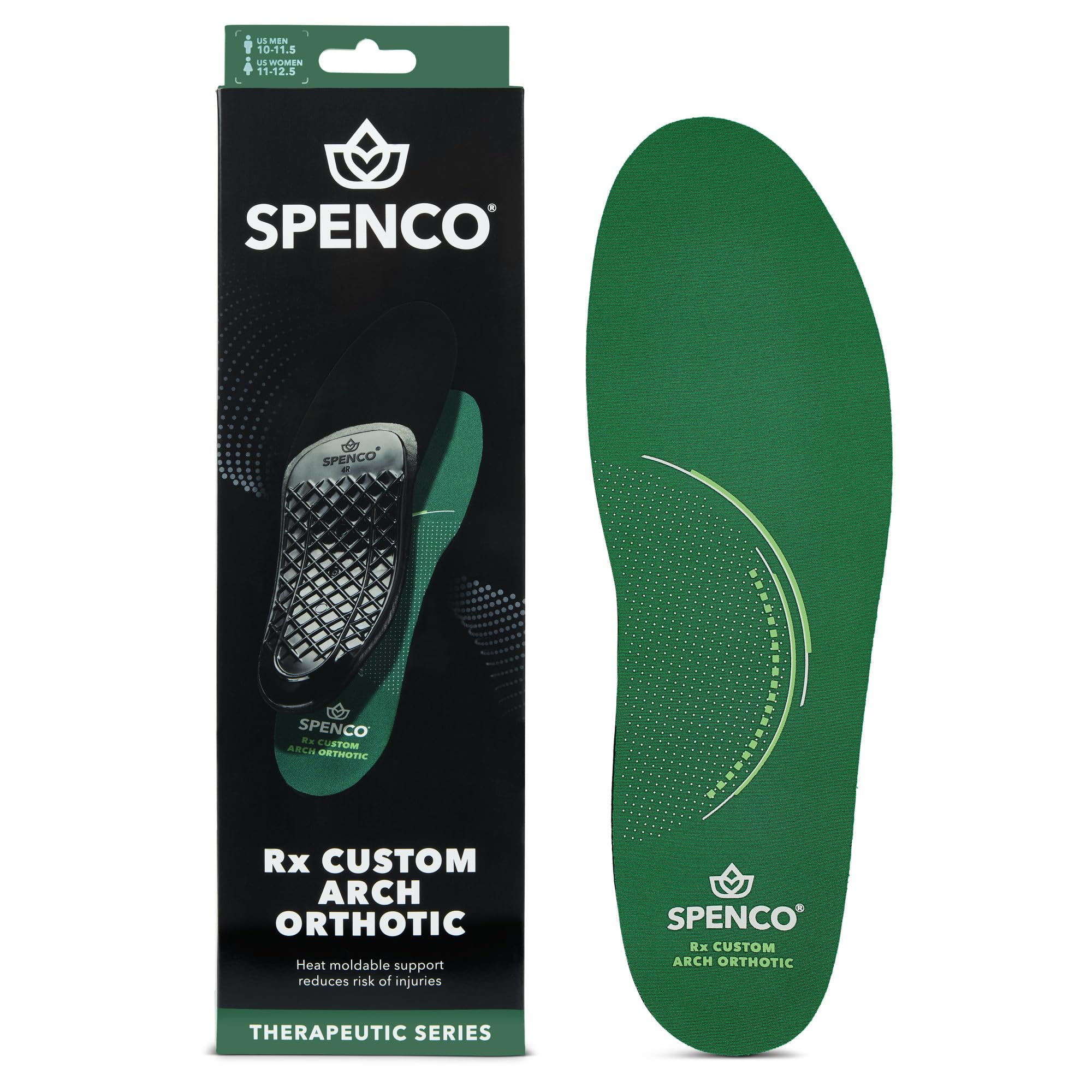
The Spenco Rx is a physical therapist and podiatrist favorite for a reason: its combination of a flexible plastic arch with a deep Spencore cushioning layer offers motion control that directly benefits sciatica patients who suffer from over-pronation. The full-length design provides complete heel-to-toe support, and the 4-way stretch fabric top layer prevents blisters and wicks away moisture — a comfort factor for long days in boots or athletic shoes. Users report it solved calluses caused by flat feet, relieved Achilles pain, and made a “tremendous difference” in knee and hip pain linked to low arches.
What sets the Spenco apart is the moldable nature of the arch: the flexible plastic conforms slightly to the foot’s shape over time, offering a more personalized fit than a rigid pre-formed arch. Available in seven sizes for correct arch placement, it ensures the support sits exactly where it’s needed rather than guessing at trim lines. It is particularly effective for those with low arches who need motion control rather than a high-arch lift.
Some users note that the insole requires wider shoes or sizing up a half-size to fit comfortably, especially in snug athletic shoes. The packaging inconsistency over the years has also caused confusion, but the insole itself remains the same quality. For sciatica patients with flat feet who need to correct gait mechanics, this is a reliable, clinician-backed choice.
Why it’s great
- Flexible plastic arch conforms for a personalized fit
- Spencore layer absorbs impact and reduces back pain
- PT and podiatrist recommended for motion control
- 4-way stretch fabric prevents blisters and controls odor
Good to know
- May require a half-size larger shoe to fit properly
- Arch is designed for low/neutral feet, not high arches
5. BraceAbility Heel Spur Cups
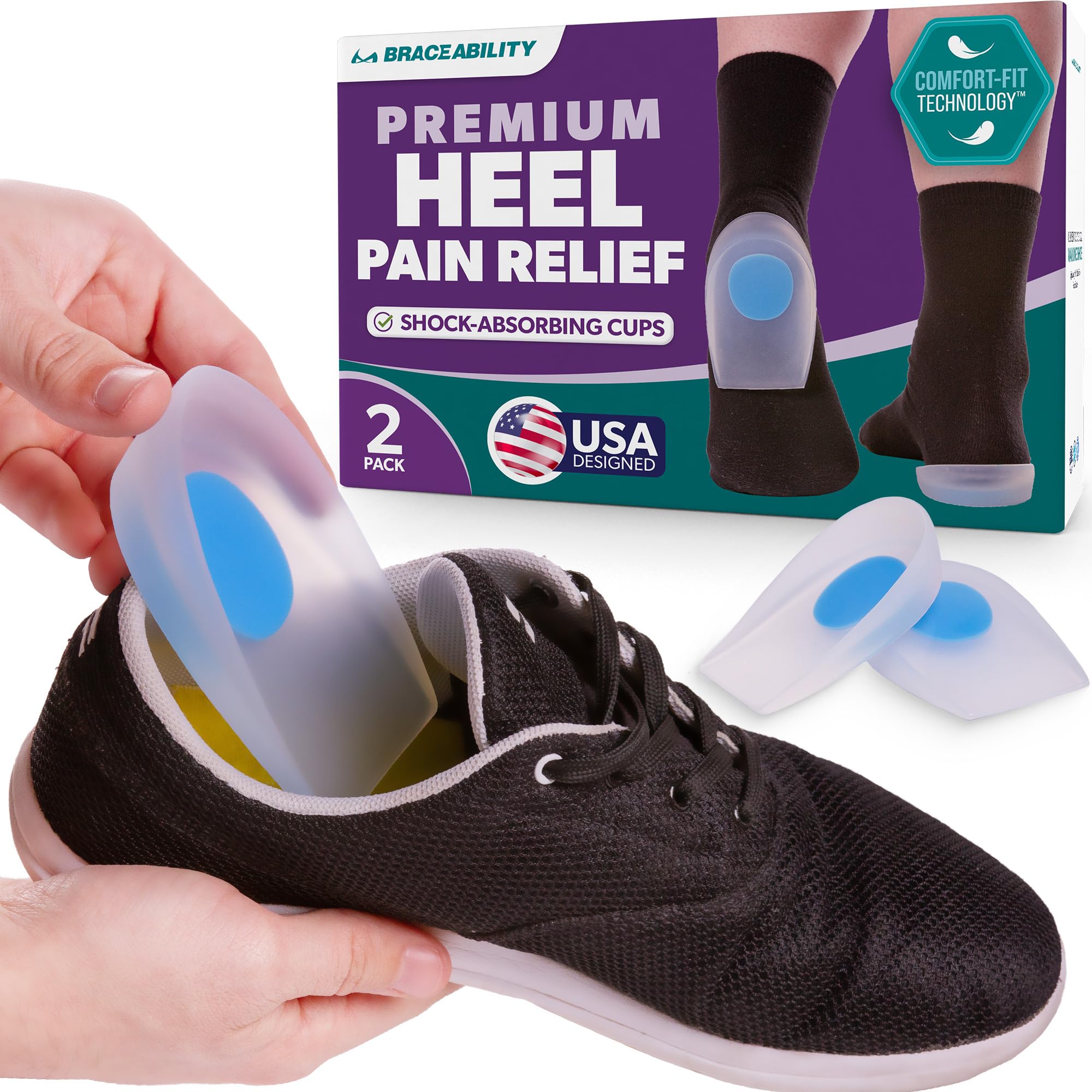
While not a full-length insole, the BraceAbility Heel Spur Cups deserve a spot on this list because heel pain and sciatica often travel together. When the sciatic nerve is irritated, gait changes to offload the painful side, which overloads the heel and can trigger or worsen heel spurs and plantar fasciitis. These medical-grade silicone cups specifically target that heel impact, providing a gel cushion that distributes pressure evenly across the heel pad with each step. The dual-density support pads add shock absorption that reduces the ground force transmitted up to the lumbar spine.
The cups are sized from M to XL and come as a pair that fits any shoe style — dress, athletic, casual, or work boots. The silicone material is naturally slip-resistant and can be worn with or without socks. Users with heel spurs report that this is the best relief option they have tried, with one 240-pound user putting them in all his shoes including work boots and refusing to go without them. The cup design elevates the heel slightly, which can also take tension off the Achilles and calf, indirectly reducing pull on the lower back.
Because they only address the heel, these cups won’t correct pronation or provide arch support — they are a targeted intervention, not a full orthotic solution. Some users find the edge of the cup noticeable inside a shoe, and the gel can feel warm in summer. For sciatica patients whose primary complaint is heel impact pain, however, this is an affordable and highly effective add-on.
Why it’s great
- Medical-grade silicone provides targeted heel shock absorption
- Dual-density pads reduce ground-force transmission
- Fits any shoe style, washable and reusable
- Excellent for heel spurs and plantar fasciitis related to gait changes
Good to know
- Does not provide arch support or pronation control
- Edge of cup may be noticeable inside a shoe initially
FAQ
Can insoles actually help sciatica that originates in the lower back?
Should I choose a firm or soft insole for sciatic nerve pain?
How long does it take for sciatica insoles to provide relief?
Do I need a full-length insole or a 3/4-length insert for sciatica?
Final Thoughts: The Verdict
For most users, the insoles for sciatica pain winner is the PowerStep Pinnacle because it delivers the firm arch support and dual-layer shock absorption that directly interrupt the pain pathway from foot to spine. If you need a 3/4-length solution for tighter shoes, grab the Custom Fit Orthotics CF 440. And for heavier individuals requiring maximum control and cushioning, nothing beats the KSGAERR Heavy Duty Support.