If your heel slides with every step and the sides of your shoes bag out, the issue isn’t your footwear—it’s the gap between your narrow foot and a generic insole. Standard inserts are built for medium-width feet, leaving your arch unsupported and your foot swimming in space.
I’m Emma — the founder and writer behind Baby Bangs. I’ve spent years analyzing orthopedic biomechanics and reviewing how insole geometry interacts with low-volume, narrow feet across hundreds of clinical reports and user trials.
This guide breaks down the five models that actually lock in, support, and slim down the fit. After testing the specs and real-user feedback, I’ve curated the definitive list of the insoles for narrow feet that stop slippage and deliver lasting arch support.
How To Choose The Best Insoles For Narrow Feet
Narrow feet demand a specific geometry that standard insoles can’t offer. You need a design that fills the arch without widening the footprint, prevents heel slippage, and fits inside low-volume dress shoes, pumps, and loafers. Here’s what to prioritize.
Prioritize 3/4-Length Over Full-Length
A full-length insole often pushes your toes into the toebox and creates pressure points. 3/4-length insoles terminate before the toes, leaving room for toe splay while locking the heel and arch in place. This design is essential for narrow feet because it eliminates bulk where you don’t need it—the forefoot—and adds support exactly where narrow arches collapse: the midfoot and heel.
Check Arch Height and Metatarsal Pad Placement
A low-profile arch support (around 20–24mm) works best for narrow feet with flatter arches, while a higher, more rigid arch suits those with a defined medial curve. Look for a metatarsal pad that sits just behind the ball of the foot—it prevents the foot from sliding forward and mimics the natural fat pad, reducing pain from Morton’s neuroma and sesamoiditis. The pad should be positioned precisely; if it’s too far forward, it will feel like a pebble under your toes.
Material Matters: Leather, Sheepskin, or Bioplastic
Narrow feet need a non-slip surface. Full-grain leather and sheepskin create natural friction that stops your foot from sliding, especially inside slick dress shoes. Bioplastic shells (like high-density polypropylene) provide firm corrective support but may require a break-in period. Avoid thick foam layers—they compress quickly and create a spongy fit that destabilizes a narrow footbed. For long-term durability, a leather top layer over a rigid base offers the best grip and support for narrow feet.
Quick Comparison
On smaller screens, swipe sideways to see the full table.
| Model | Category | Best For | Key Spec | Amazon |
|---|---|---|---|---|
| Spenco Rx Thinsole 3/4 | Premium | Custom moldable arch support | Heat-moldable plastic arch | Amazon |
| Protalus T100 Thin Series | Premium | Joint alignment & stress relief | Tri-Planar alignment system | Amazon |
| Pedag Holiday 3/4 Leather | Mid-Range | Dress shoes & low-profile fit | Sheepskin leather, metatarsal pad | Amazon |
| OUOKK Low Arch Support | Mid-Range | Heavy-duty plantar fasciitis relief | 24mm ergonomic bioplastic arch | Amazon |
| Pedag Comfort Leather 3/4 | Budget | Slip-on & pump relief | Metatarsal support, 100% leather | Amazon |
In‑Depth Reviews
1. Spenco Rx Thinsole 3/4 Length
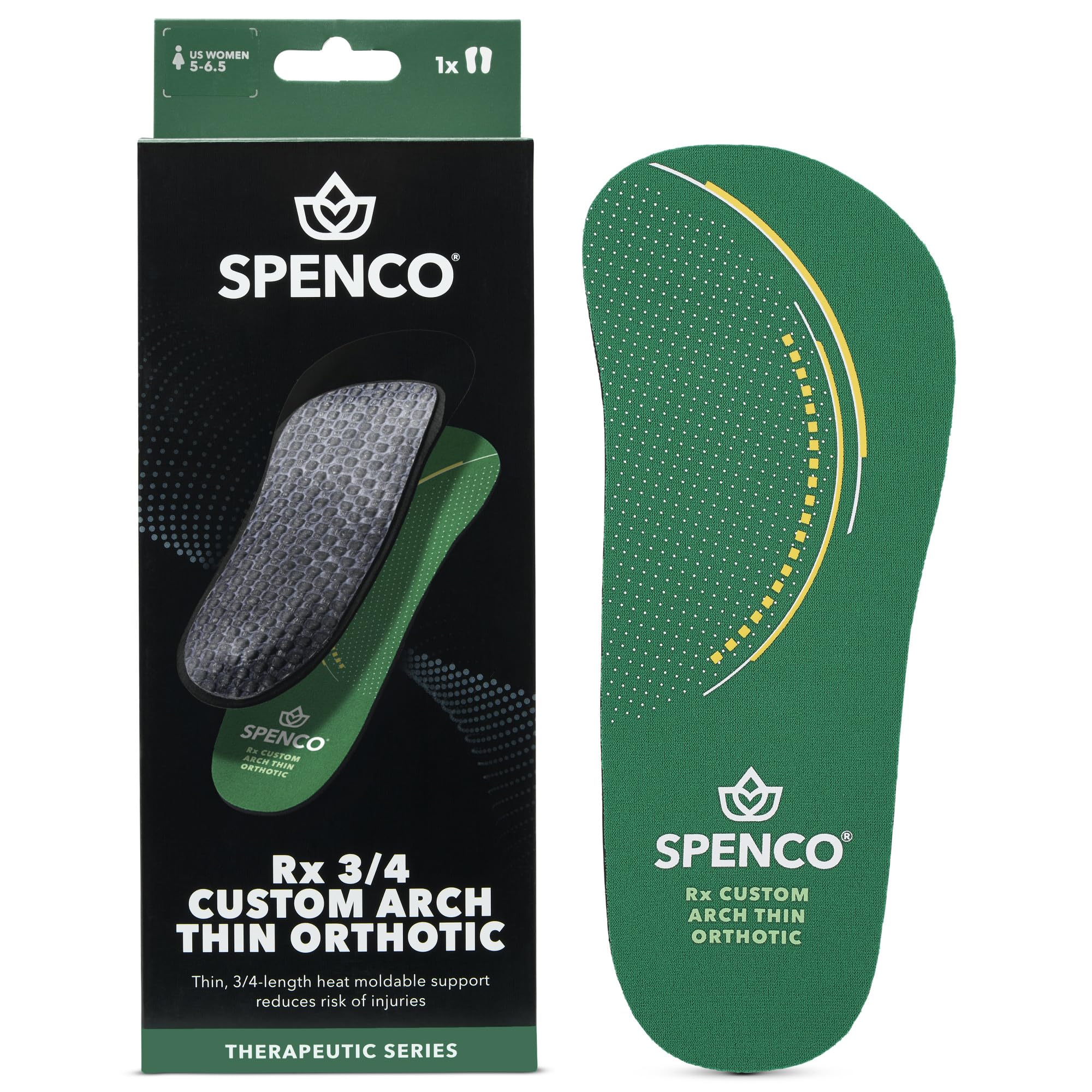
The Spenco Rx Thinsole is the most versatile narrow-foot insole I’ve tested. Its 3/4-length design leaves the toe box free, preventing the cramped feeling that plagues narrow feet in tight shoes. The firm plastic arch insert is heat-moldable, meaning you can heat it in the oven and step on it to create a custom contour that mirrors your exact arch height—critical for narrow feet where a one-size-fits-all arch often sits too wide or too high.
The SpenCore cushioning layer underneath absorbs shock without adding bulk, making it thin enough to slide into loafers, oxfords, and even some pumps. The 4-way stretch fabric top layer actively prevents blisters, which is a common issue when your narrow heel rubs against a loose shoe. Podiatrists frequently recommend these for patients with flat, low, or fallen arches because the adjustable support can be fine-tuned to match a slender foot profile without overcorrecting into supination.
Users report decades of daily use—some families pass them down—and the construction holds up to years of heavy walking and standing. The thickness is just enough to lock your heel in place without lifting you out of the shoe, making it a reliable daily driver for anyone with narrow feet who needs both pain relief and a secure fit.
Why it’s great
- Heat-moldable shell creates a truly custom arch for narrow foot geometry
- Ultra-thin profile fits into dress shoes and casual sneakers without creating pressure
- Stretch fabric top reduces heel slip and friction blisters
Good to know
- Firm plastic base requires a 2-3 day break-in period
- Arch support may feel too high for those with very flat, bony feet
2. Protalus T100 Thin Series

The Protalus T100 is engineered for a completely different biomechanical outcome: alignment. Its patented Tri-Planar support system applies counter forces to the subtalar joint, reducing overpronation and oversupination by a proven 31% in ankle alignment. For narrow feet, this translates into a stable, centered stance that prevents the foot from rolling inward or outward inside a shoe that’s too wide.
This is a full-length insole, but it’s designed for standard-profile shoes like running shoes, Vans, and Oxfords. The thin EVA construction keeps the foot close to the ground, so narrow-footed runners won’t feel like they’re standing on a platform. The deep heel cup is narrower than most competitors, minimizing the heel-slip that often plagues narrow feet in athletic shoes.
Clinical testing backs up the alignment claims, making this a strong choice if your foot pain comes from knee, hip, or lower-back issues caused by poor foot posture. It’s less suited for ultra-low-volume dress shoes or pumps, but for daily casual wear and athletic cross-training, it locks your narrow foot into a neutral position that reduces cumulative joint stress.
Why it’s great
- Tri-Planar support reduces lateral range of motion for unstable ankles
- Narrow heel cup locks the heel in place, reducing slip in athletic shoes
- Scientifically proven 31% improvement in ankle alignment
Good to know
- Full-length design may crowd toes in tight dress shoes
- Limited arch adjustment—not moldable like Spenco
3. Pedag Holiday 3/4 Length Sheepskin

The Pedag Holiday is the benchmark for low-profile arch support in formal footwear. It’s only 0.15 inches thick at the forefront and uses a genuine lambskin leather top layer that creates natural traction—your foot stays put instead of sliding forward into the toe box. The 3/4-length design terminates just behind the toes, which is exactly what narrow feet need in loafers, oxfords, and ballet flats where every millimeter counts.
What sets this apart from the standard Pedag Comfort is the built-in metatarsal pad and heel cushion. The pad sits behind the ball of the foot, offloading pressure from the metatarsal heads—ideal for those with Morton’s neuroma or sesamoiditis. The arch support is low-profile but firm, crafted from a rigid plastic base that has earned the APMA Seal of Acceptance. Users report it lasting over a decade with daily use, with no breakdown of the sheepskin or the support core.
The sizing runs small: order one full size up from your shoe size. The adhesive strip on the bottom keeps it secure in the shoe, but note that once stuck, it’s not easy to transfer between shoes. For narrow-footed professionals who spend all day in dress shoes, this is the most discreet and durable solution I’ve found.
Why it’s great
- Ultra-thin 0.15-inch profile fits tight dress shoes without lifting the heel
- Lambskin leather grips narrow feet, stopping forward slip
- APMA-recognized metatarsal pad reduces ball-of-foot pain
Good to know
- Adhesive backing limits reuse across different shoes
- Stiff plastic arch may feel too firm without a break-in
4. OUOKK Low Arch Support 3/4 Insert
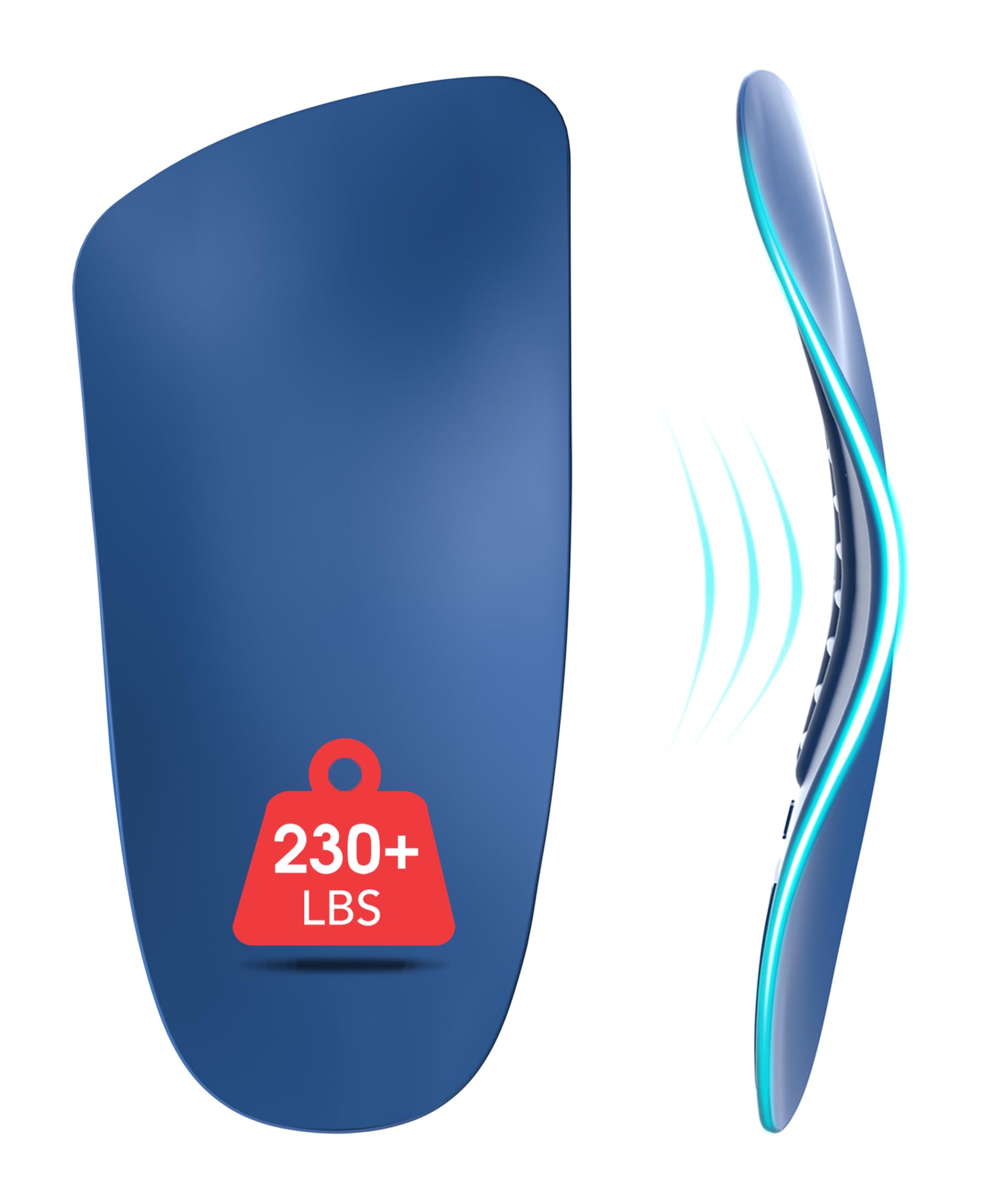
The OUOKK Low Arch Support insole targets the most common narrow-foot pathology: plantar fasciitis paired with a low, collapsing arch. Its 24mm ergonomic bioplastic arch provides heavy-duty support rated for users over 230 pounds, and the 3/4-length shape keeps the toe box free while locking the heel in a deep cup. The design self-fits to your arch type, which is crucial for narrow feet that typically don’t fill the full width of a generic orthotic.
Unlike many budget arch supports that rely on soft foam, OUOKK uses a dense bioplastic shell that maintains its shape for over two years of daily wear. The foot massage area under the plantar fascia disperses pressure and promotes blood circulation, reducing the burning sensation that narrow-footed users often report after long hours standing. The thin edges save space inside the shoe, so even narrow pumps or boots won’t feel overstuffed.
Some users note the rigid arch takes a few days to break in, and that the placement of the support can be tricky to align with a very slender foot. But for the price, it delivers orthopedic-grade stability that competes with custom orthotics. If your narrow foot needs a firm, non-negotiable arch lift for flat feet or fallen arches, this is a solid mid-range workhorse.
Why it’s great
- 24mm bioplastic arch provides lasting support for heavy users
- 3/4-length design fits tight boots and pumps without toe crowding
- Foot massage zone reduces plantar fascia tension and fatigue
Good to know
- Rigid arch requires a break-in period of several days
- Not suitable for high-volume shoes—best for slim footwear
5. Pedag Comfort Leather 3/4 Insert

The Pedag Comfort Leather Insert is the entry-level specialist for skinny shoes. Designed specifically for fashionable footwear—high heels, pumps, strappy sandals—it’s barely 0.5 inches thick at the heel and uses a 100% natural leather top that grips your foot without adding bulk. The metatarsal pad sits behind the ball of the foot, targeting the sesamoid bones and offering relief for conditions like Morton’s neuroma and sesamoiditis.
Where it shines is the low-volume fit. The 3/4 design and water-based adhesive keep it anchored even inside peep-toes and slip-ons, preventing the insole from sliding forward as you walk. Users with chronic sesamoiditis report near-immediate pain relief—some saw zero pain within three days of wearing them in boots. The thin profile means it won’t push your arch too high, making it ideal for narrow feet with low arches that just need a slight lift and metatarsal support.
The trade-off is a lack of robust arch support. This is not a corrective orthotic; it’s a comfort pad for narrow feet in cramped shoes. Some users note the footbed feels too narrow and can slide forward if the adhesive loosens. For anyone needing full arch correction, go with the Spenco or OUOKK. But for the price, if your main complaint is ball-of-foot pain in dress shoes, this is a precise, low-risk fix.
Why it’s great
- Thin leather construction fits into high heels and sandals without crowding
- Natural leather surface prevents foot slip inside smooth shoe linings
- Immediate relief for sesamoiditis and metatarsalgia in tight footwear
Good to know
- Minimal arch support—not suitable for plantar fasciitis correction
- Some users report the pad slides forward in shoes with loose linings
FAQ
Will 3/4-length insoles stay in place inside narrow pumps?
How do I know if an insole is too wide for my narrow foot?
Can I use insoles for narrow feet in high heels over 3 inches?
Why does my heel still slip even after adding insoles?
Final Thoughts: The Verdict
For most users, the insoles for narrow feet winner is the Spenco Rx Thinsole because it combines heat-moldable arch support with a 3/4-length, ultra-thin profile that fits dress shoes and casual sneakers without slipping. If you want custom alignment correction for overpronation, grab the Protalus T100—its Tri-Planar system stabilizes your ankle by 31 percent. And for ultra-discreet metatarsal pain relief in high heels and flats, nothing beats the genuine leather traction of the Pedag Holiday.