Your lower back isn’t the root cause — it’s the victim. Every step sends an impact wave from your heel through your knees and hips to your spine, and when your foot’s natural shock absorbers (the arches) collapse or lack support, that wave arrives unmitigated. The right insole rebuilds that foundation by stabilizing your foot’s skeletal alignment and soaking up forces before they reach your vertebrae.
I’m Emma — the founder and writer behind Baby Bangs. I’ve spent the last several years analyzing footbed biomechanics and product specs across dozens of orthotic brands, breaking down arch heights, cushioning densities, and TPU support plate designs to find the options that genuinely reduce lower back strain.
This guide covers seven specific insoles, sorted by their core design philosophy rather than price. My goal is to help you find the right insoles for lower back pain by matching your body weight, activity level, and foot type to the correct support structure.
How To Choose The Best Insoles For Lower Back Pain
Lower back pain linked to foot mechanics isn’t cured by the softest insole — it’s helped by the one that keeps your foot in a neutral position throughout your stride. Three factors determine whether an insole will relieve or aggravate your pain, and most buyers get them backward.
Arch Support Height — Not Too High, Not Too Low
Insoles marketed as “high arch” often don’t specify their actual height in centimeters. A 3.5cm arch support is aggressive and intended for flat feet or significant pronation correction — it forces your foot into a lifted position that can feel rigid for the first week. A 3.1cm medium support offers a gentler cradle for mild collapse. The right height depends on how much your arch drops while standing. A podiatrist’s wet-foot test (stand on a piece of cardboard and examine the footprint) tells you your arch type. For lower back pain specifically, moderate-to-firm arch support that prevents your foot from rolling inward (overpronation) reduces the rotational torque transmitted to your knees and hips.
Cushioning Material — Poron vs. Generic Foam vs. Recharge Foam
Not all foam is built equally. PORON is a high-performance urethane foam originally developed for aerospace cushioning — it compresses under impact but returns to its full shape without bottoming out, which means it absorbs shock across thousands of steps without losing density. Generic EVA foam feels plush on day one but compacts permanently after a few weeks, transferring impact straight through to your skeleton. Move Recharge Foam, used by the MOVE brand, is a proprietary blend designed to mimic PORON’s energy return while feeling softer under the forefoot. Material choice directly determines whether the insole still works three months in.
Weight Rating — Heavy-Duty vs. Standard Support
Body weight is the single most overlooked spec in cheap insoles. A 150-pound person and a 250-pound person apply radically different forces per square inch onto the footbed. Insoles specifically rated for 220+ or 280+ pounds contain a denser foam core and a rigid TPU (thermoplastic polyurethane) support plate that doesn’t flex and bottom out under higher loads. Using a standard insole at a heavier body weight collapses the arch support and eliminates the back-pain benefit entirely. If you weigh north of 200 pounds, you need a product that explicitly states a weight threshold — not just “heavy duty” marketing language.
Heel Cup Depth and Midfoot Stability
A deep heel cup does more than prevent slippage — it locks the calcaneus (heel bone) into a vertical position, which stops your ankle from collapsing inward during the gait cycle. When your heel stays centered, your tibia (shin bone) stays aligned with your knee, and your pelvis doesn’t tilt forward to compensate. Shallow heel cups allow side-to-side motion that propagates up the kinetic chain. Look for a heel cup that wraps at least one centimeter up the sides of your heel. Combined with a rigid TPU or EVA midfoot plate, this creates a stable platform that absorbs ground reaction forces before they reach your lumbar spine.
Quick Comparison
On smaller screens, swipe sideways to see the full table.
| Model | Category | Best For | Key Spec | Amazon |
|---|---|---|---|---|
| PowerStep Pinnacle | Premium | All-day firm support | 1.7mm polypropylene shell | Amazon |
| MOVE All Day Comfort | Premium | Maximum plush cushioning | X-Frame torsional support | Amazon |
| VALSOLE 220+ Lbs | Mid-Range | Shock absorption for heavy frames | Deep heel cup, metatarsal pad | Amazon |
| KSGAERR Heavy Duty | Mid-Range | Budget heavy-duty pick | 3-point Golden Triangle design | Amazon |
| GVIIPK High Arch 3.5cm | Mid-Range | Aggressive arch correction | 3.5cm / 3.1cm dual-height design | Amazon |
| Fit Geno 220lbs+ | Value | Heavier frames, standing shifts | Removable TPU arch plate | Amazon |
| Sof Sole AIRR Women’s | Premium | Women-specific heel cradle | Air cushion heel insert | Amazon |
In‑Depth Reviews
1. PowerStep Pinnacle Insoles

The PowerStep Pinnacle is the product that podiatrists recommend most often for a reason — its semi-rigid polypropylene shell provides a firm arch base that doesn’t collapse under sustained load, while the dual-layer cushioning manages shock absorption for the average adult frame. Users consistently report that plantar fasciitis pain eases after about ten days, and you’ll see lower back relief follow as your foot stops rolling inward during the gait cycle.
The shell itself measures 1.7mm thick, which is thin enough to slide into most athletic and casual shoes without crowding the toe box but thick enough to prevent the insole from flexing sideways under moderate pronation. Unlike many budget orthotics that use soft EVA as the primary support material, the Pinnacle relies on a rigid plastic base — this means it feels stiff on first wear, but that stiffness is exactly what keeps your calcaneus and talus bones in neutral alignment.
One critical advantage is that PowerStep sizes the Pinnacle by shoe size with no trimming required, which avoids the sloppy fit and edge curling that often happens after you cut a trim-to-fit insole. The tradeoff is that you need to know your exact shoe size before purchasing, and the firm feel may be fatiguing if you have a very low BMI and don’t need aggressive support. For anyone carrying extra weight or logging 8,000+ steps daily, this is the most reliable option in the lineup.
Why it’s great
- Rigid polypropylene base prevents arch collapse under prolonged standing
- No trimming — buy by exact shoe size for stable, edge-free fit
- Backed by podiatrist recommendation and a 30-day guarantee
Good to know
- Firm out-of-box feel may require a few days to adapt
- Not ideal for very low-profile shoes like thin sneakers or dress flats
2. MOVE All Day Comfort Insole
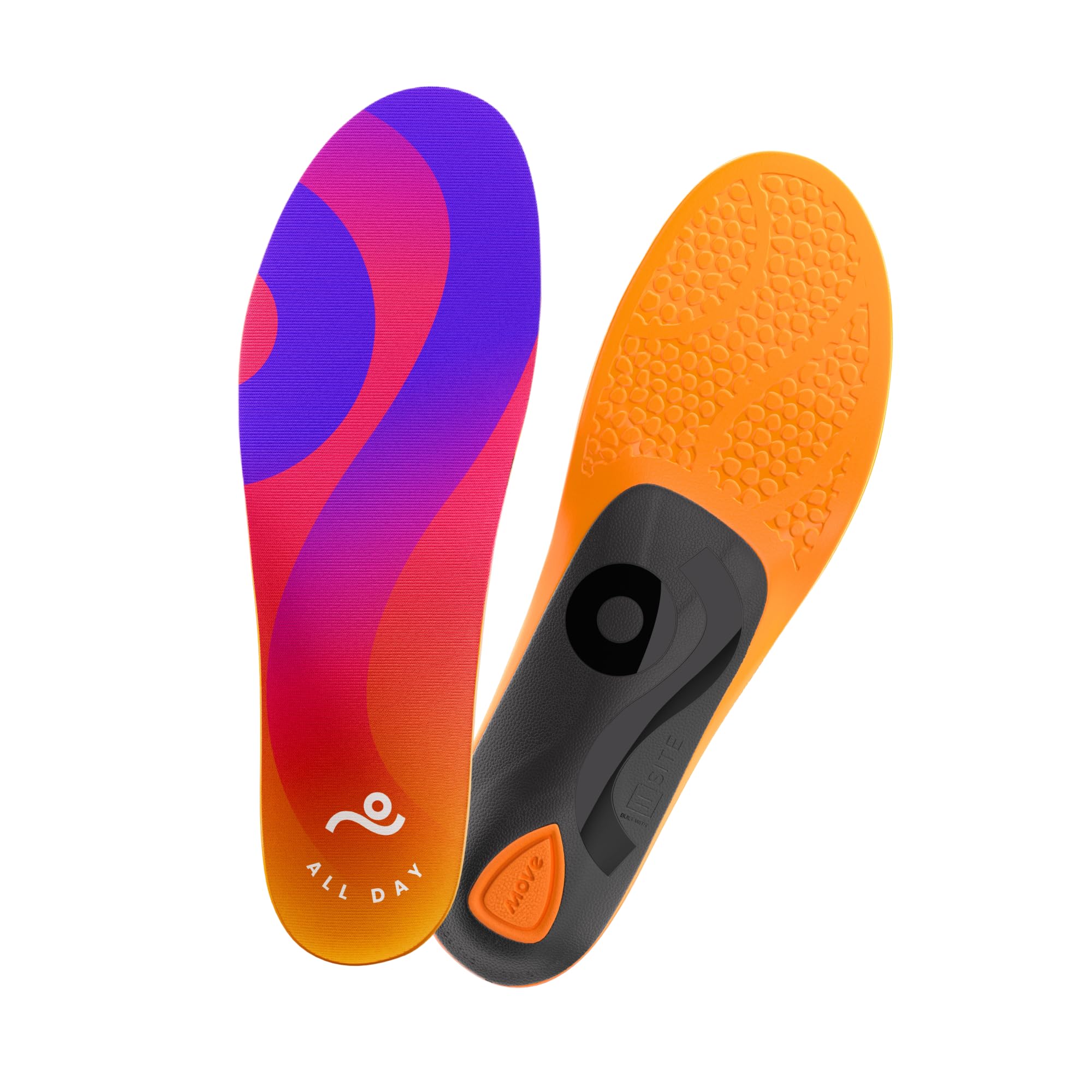
The MOVE All Day Comfort Insole flips the usual orthotic formula — it prioritizes plush cushioning and energy return from its proprietary Move Recharge Foam while still including an X-Frame torsional support plate for midfoot stability. This makes it a better option if you have a history of bunion pain, metatarsalgia, or general foot fatigue rather than aggressive pronation that needs a hard plastic correction.
The Active Heel Technology is the standout design choice here — it creates a pressure-free zone around the sensitive areas of your heel pad, meaning you get the deep heel cup’s stability without feeling like you’re standing on a golf ball. The foam layers are noticeably thicker than PowerStep’s dual-layer arrangement, which translates to excellent vertical shock attenuation for users whose lower back pain is driven by hard floor surfaces (concrete, tile, asphalt) rather than rotational misalignment.
The downsides are that the medium arch type won’t correct severe overpronation, and the thicker foam stack height makes these incompatible with low-cut sneakers or slim dress shoes. Users report they work best in boots, high-top sneakers, or any shoe where you can remove the factory insole without compressing the toe box. Beginners who want to ease into orthotics without a harsh break-in period will find this the most forgiving first pair.
Why it’s great
- Active Heel Technology reduces pressure point aggravation
- X-Frame offers midfoot stability without rigidity
- Immediate comfort out-of-box — minimal break-in required
Good to know
- Medium arch only — not for severe flat feet or overpronation
- Too thick for low-profile shoes like Adidas Sambas or Vans
3. VALSOLE 220+ Lbs Plantar Fasciitis Insoles
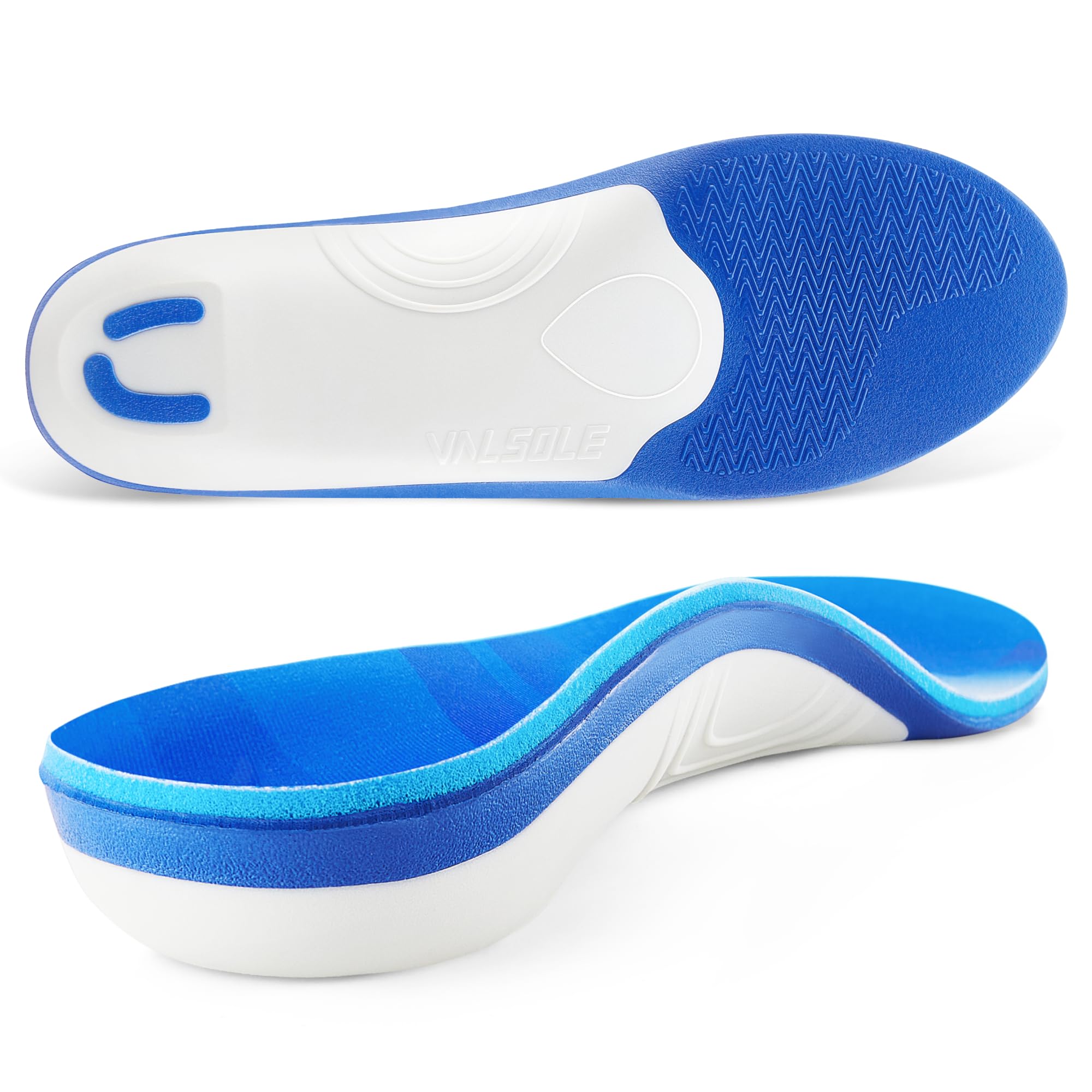
VALSOLE’s 220+ Lb entry delivers a structured high arch design with a deep heel cup and a metatarsal pad — three biomechanical features that directly reduce pressure transfer to the lower back. The heel cup wraps tightly around the calcaneus to prevent lateral shift, while the metatarsal pad redistributes the load away from the ball of the foot, which changes the angle of your shin and subsequently reduces anterior pelvic tilt.
The premium cushioning technology here is not as well-documented as PORON but independent customer reports consistently describe the heel impact absorption as significantly better than generic EVA foam. One reviewer stated that these helped during a trip to Rome walking on cobblestones — a notoriously high-impact surface — which suggests the midsole does a solid job of vertical deceleration. The insole is also designed for work boot applications, meaning it handles the wider toe box and deeper heel pocket typical of boots.
The primary consideration is that the 220+ weight rating means the support density is firm — less than 220 pounds may find the arch pressure excessive. Also, a small number of reviewers reported that the insoles didn’t help their specific heel pain, which usually indicates that the foot pain source was a nerve entrapment or stone bruise rather than a mechanical arch issue. For the price, you’re getting a work boot-grade orthotic that addresses the whole kinetic chain.
Why it’s great
- Metatarsal pad and deep heel cup for comprehensive foot support
- Designed specifically for 220+ pound frames
- Fits work boots and roomier footwear without crowding
Good to know
- Weight threshold makes it less ideal for lighter users
- Mixed results for isolated heel pain that isn’t mechanical
4. KSGAERR Heavy Duty Support Pain Relief Orthotics 231+ Lbs
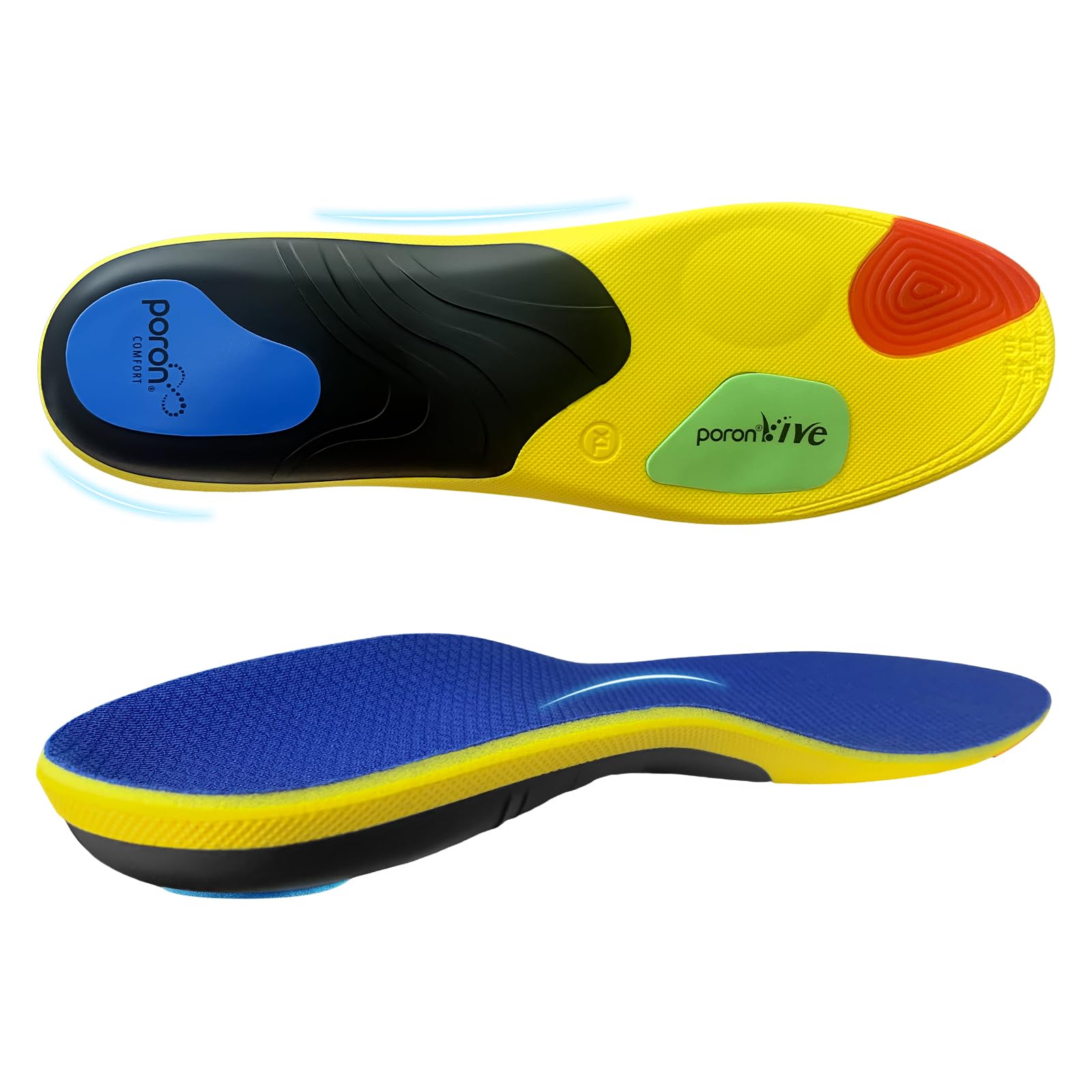
The KSGAERR Heavy Duty insole’s defining architecture is its “Golden Triangle” three-point support, which contacts the foot across the forefoot, arch, and heel simultaneously. This creates a tripod-like stability that is especially useful for individuals with a wide forefoot or those whose arch collapses asymmetrically (one foot flatter than the other). The inclusion of U.S. PORON cushioning in both the heel and forefoot zones gives it a shock absorption advantage over cheaper EVA-only competitors.
The rigid black TPU material embedded in the arch area locks the midfoot into a neutral position, while the deep heel cup prevents the lateral sliding that aggravates IT band and hip issues. At the 231+ pound rating, this insole is built for heavier frames, and the PORON dual-layer system is rated for high-frequency compression without permanent set. Users report that these fit perfectly in boots without the need for cutting, though a trim-to-fit line exists if you need to adjust for narrow footwear.
The biggest limitation is that the high arch profile can feel too aggressive for moderate arches — you’re either a candidate for this level of lift or you’re not. If your arch collapses only slightly, the Golden Triangle design may push your foot into an unnaturally lifted position, causing lateral foot pain during the first week. This is best reserved for individuals with flat feet or fallen arches who need significant structural lift.
Why it’s great
- PORON dual-layer provides genuine shock attenuation, not just softness
- Golden Triangle three-point support distributes load evenly
- Trim-to-fit lines allow customization for most shoe widths
Good to know
- Aggressive arch height may feel unnatural for mild to moderate arches
- Requires shoes with removable insoles and adequate depth
5. GVIIPK High Arch Support Insole 280+ Lbs
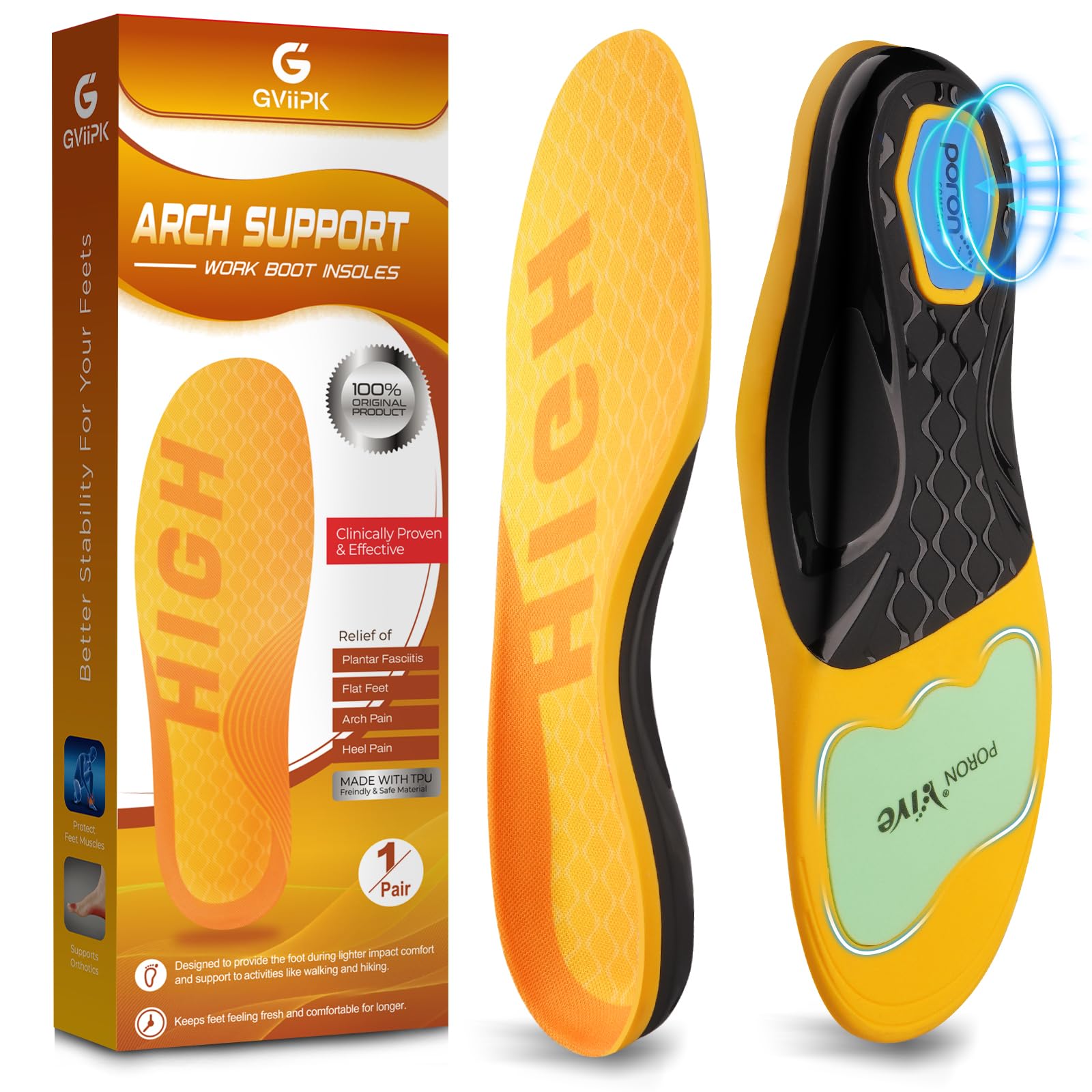
The GVIIPK insole is unique in this list because it offers two arch heights in one product — 3.5cm for aggressive initial correction and 3.1cm for ongoing maintenance after your foot structure improves. This phased approach is the closest you’ll get to a progressive orthotic protocol without visiting a podiatrist, and it explicitly targets the 280+ pound demographic where arch collapse is most severe.
The dual-layer PORON cushioning system is paired with a high-strength TPU support plate that penetrates deep into the arch’s core area. The brand claims a 78% improvement in layered shock absorption compared to similar products, and while third-party verification is needed, the materials density matches that of premium orthotic brands. The breathable, sweat-wicking fabric layer also helps prevent the odor buildup that plagues closed-cell foam insoles after extended use in work boots or athletic shoes.
The physical height of the 3.5cm version means it will raise your heel relative to the forefoot — this can cause tightness in your Achilles tendon if you switch from flat insoles. Users report that the foot feels secure and supported after a few days, but the initial lift requires an adaptation period. For individuals with severe flat feet and a body weight above 280 pounds, this is the most aggressively supportive option available without a prescription.
Why it’s great
- Two arch heights for progressive correction from 3.5cm to 3.1cm
- High-strength TPU plate designed for 280+ pound loads
- Breathable fabric layer reduces odor during long wear
Good to know
- 3.5cm height may cause Achilles tightness initially
- Aggressive correction not suitable for mild pronation cases
6. Fit Geno Arch Support Insoles 220+ Lbs
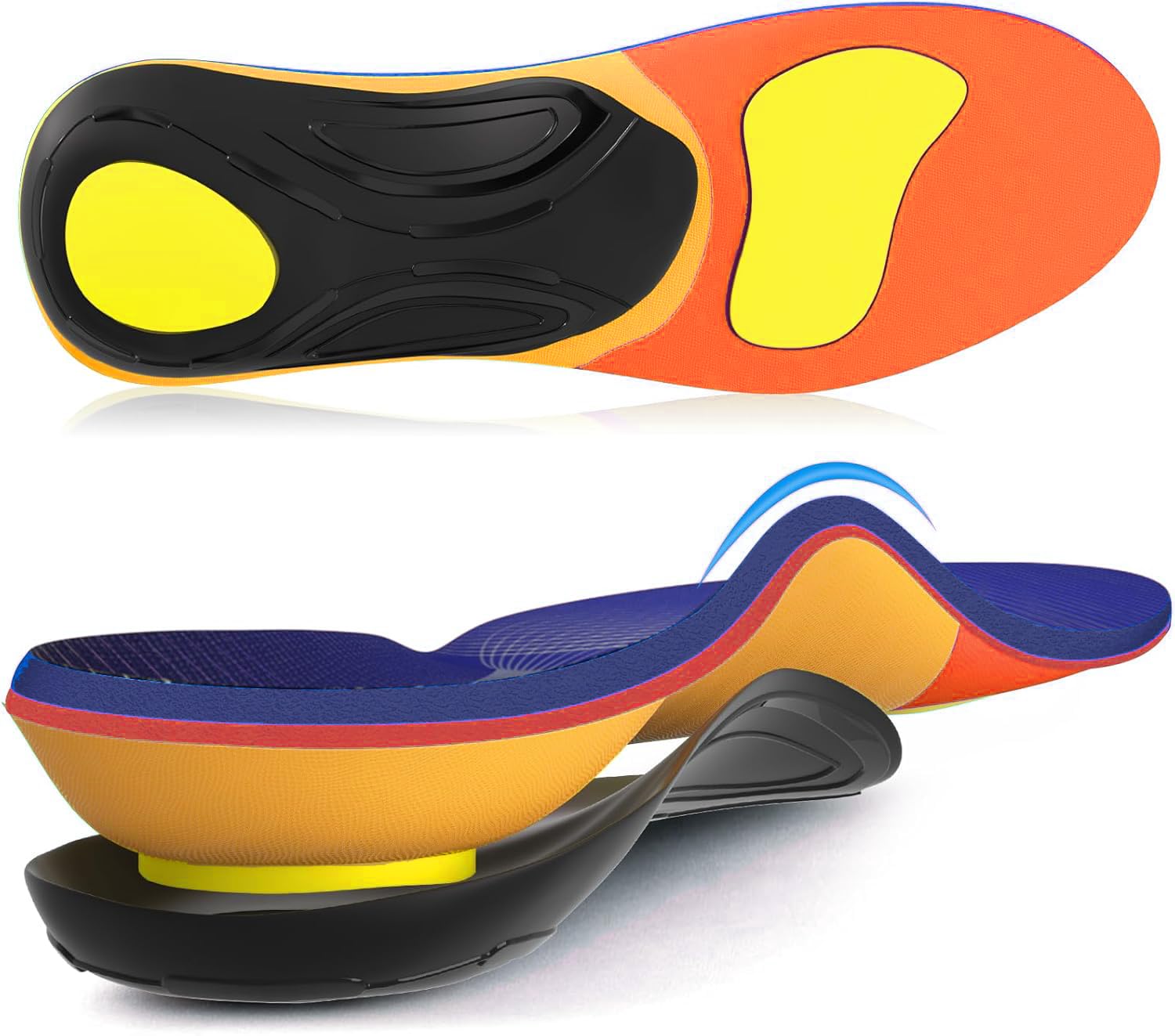
Fit Geno has tuned its insole specifically for women who stand all day — nurses, retail staff, and teachers who need arch support that integrates with shift work rather than just short walks. The defining feature here is a removable TPU arch plate, which gives you the flexibility to run the insole with maximum structural support for work and remove the plate for lower profile days without sacrificing the bottom cushioning layer.
The Poron foam is placed at both the heel and the ball of the foot for targeted impact dispersion that shields the lumber spine from ground reaction forces. The rigid high arch lifts the plantar fascia out of the stretched position that triggers heel spurs, and the deep heel cup locks the foot in place to prevent the ankle roll that propagates up to knee and hip misalignment. Customers primarily in the 220+ pound range report substantial reduction in foot fatigue over 8-hour shifts.
The removable TPU plate is a genuine dual-use advantage, but it also means the insole is slightly thicker than average to accommodate the pocket. This can create pressure on the top of the foot in low-volume shoes. Additionally, a small number of users reported that the product took a long time to arrive (shipping delays), which is a fulfillment issue rather than a performance one but worth noting if you need immediate relief.
Why it’s great
- Removable TPU plate allows customization of support level
- Poron foam cushioning at heel and ball for dual-zone impact absorption
- Designed specifically for long standing shifts and heavier frames
Good to know
- Removable plate design adds thickness to the overall profile
- Some reports of slower shipping times from the seller
7. Sof Sole Women’s AIRR Orthotic Support Full-Length Insole

The Sof Sole AIRR is the only women-specific design in this list, which matters because female feet generally have a narrower heel-to-ball width ratio and a lower arch height than men’s feet. The AIRR name refers to the heel cushion system, which uses a sealed air chamber that compresses under impact and then expands back upon unloading, providing a distinct shock absorption feel that is softer than PORON but doesn’t pack out over time.
Women working 12-hour server shifts or standing on hard flooring consistently report that this insole eliminates heel pain and reduces lower back fatigue. The full-length design provides continuous cushioning from the heel to the metatarsal heads without a stiff arch plate, which makes it ideal for users whose back pain is driven by impact rather than pronation. One common note from long-time users is that every new pair of sneakers gets a fresh set of AIRR insoles, suggesting that the cushioning life span is about equal to a pair of running shoes (300-400 miles).
The biggest downside reported is an audible squeaking sound that develops after a few weeks in certain shoes — this is caused by friction between the air cushion layer and the shoe’s foam midsole. It’s a cosmetic annoyance rather than a structural failure, but in quiet office environments, it can draw attention. Additionally, the women’s sizing range means these won’t work for men’s feet or women with wide feet, so check the size chart carefully.
Why it’s great
- Women-specific width and arch profile for a more precise fit
- Sealed air heel chamber absorbs impact without compressing flat
- Proven relief for heel and lower back pain during standing shifts
Good to know
- Audible squeaking may develop after a few weeks of wear
- Limited to standard women’s shoe widths — not for wide feet
FAQ
Can insoles actually fix lower back pain or only mask the symptoms?
How long does it take for new insoles to relieve lower back pain?
Should I choose firm or soft insoles for lower back pain?
Can I use heavy-duty insoles designed for 220+ pounds if I weigh less?
Final Thoughts: The Verdict
For most users, the insoles for lower back pain winner is the PowerStep Pinnacle because its rigid polypropylene shell provides consistent arch support across full workdays without packing out, and it’s podiatrist-recommended for a broad range of foot types. If you want maximum plush cushioning with midfoot stability, grab the MOVE All Day Comfort. And for heavy frames or those needing aggressive arch correction, nothing beats the progressive dual-height design of the GVIIPK High Arch Support.