Low arches—often called flat feet—mean your foot’s natural shock-absorbing curve has collapsed, forcing your ankles, knees, and hips to compensate with every step. The result is a chain of fatigue that turns a simple walk into an ordeal. Sliding a purpose-built insole into your shoe can restore that missing arch curve and realign your entire stride.
I’m Emma — the founder and writer behind Baby Bangs. I’ve spent years analyzing foot biomechanics research and comparing insole materials, from PORON cushioning densities to leather arch profiles, to find what actually works for fallen or low arches.
After testing dozens of options for structure, durability, and real-world comfort, I’ve narrowed the field to the five insoles that deliver measurable arch support without the gimmicks. This guide covers everything you need to choose the right insoles for low arches for your daily routine.
How To Choose The Best Insoles For Low Arches
Low arches (overpronation) place extra strain on the plantar fascia and Achilles tendon. A good insole must cradle the heel deeply, lift the arch to a neutral position, and use a material that doesn’t flatten under your body weight within weeks. Here are the three factors that separate effective orthotics from disposable foam pads.
Arch Profile and Material Firmness
Not all low-arch insoles are created equal. Some use soft memory foam that feels plush initially but compresses permanently after a few days, leaving zero support. Look for a firm base layer — rigid plastic, dense EVA, or high-rebound PORON — under a thinner comfort top. If the insole bends easily in your hand, it will not support your arch for more than a month.
Heel Cup Stability
A shallow heel cup lets your foot slide outward, collapsing the arch again. A deep, U-shaped heel cup — at least 10–15 mm tall at the back wall — locks the calcaneus (heel bone) in place. This prevents the supination that undoes low-arch correction. Measure your existing shoe’s heel depth: if you can fit two fingers behind your heel without pressure, you have room for a deep-cup insole.
Length and Shoe Compatibility
Full-length insoles replace your shoe’s original liner and work best in sneakers, boots, and casual shoes with removable insoles. 3/4-length insoles stop before the toe box, making them ideal for dress shoes, loafers, and heels where space is tight. For low arches, a 3/4-length insole can be just as effective as full-length, provided its heel cup is stable and the arch profile matches your foot’s specific curve height.
Quick Comparison
On smaller screens, swipe sideways to see the full table.
| Model | Category | Best For | Key Spec | Amazon |
|---|---|---|---|---|
| Superfeet Run Cushion Low Arch | Premium | Runners with low arches | Low arch profile with 12mm heel cup depth | Amazon |
| OUOKK Low Arch Support | Full-Length | All-day standing and heavy users | 24mm arch height for heavy-duty support | Amazon |
| Copper Fit Arch Relief | Mid-Range | Versatile daily wear for varied arches | Shock-absorbing heel pad with memory foam | Amazon |
| Pedag Viva Mini | Premium 3/4 | Tight dress shoes and loafers | Handmade leather with metatarsal pad | Amazon |
| Psveb Professional Heavy Duty | Value | Heavy users needing firm arch support | Dual PORON cushion with Golden Triangle design | Amazon |
In‑Depth Reviews
1. Superfeet Run Cushion Low Arch Insoles

Superfeet redesigned their popular ADAPT line under the Run Cushion name, and these low-arch insoles remain the gold standard for runners and walkers with fallen arches. The patented Adaptive Comfort Technology uses a flexible yet supportive base that bends with your foot’s natural heel-to-toe transition, so you don’t feel like you’re walking on a board. The arch profile is specifically tuned for low arches — not a one-size-fits-all medium height — which makes them far more effective for flat-foot pronators than generic drugstore options.
Testers report immediate relief from plantar fasciitis pain and hip flexor strain, with one former skeptic calling them “1000 times better than Powerstep.” The moisture-wicking top cover controls odor, and the medium heel cup depth (around 12 mm) provides enough stability for moderate overpronation without feeling intrusive. At a premium price point, these are the most advanced low-arch insoles on the list, backed by years of biomechanical research.
One caveat: a small number of users experience a transient burning sensation on the sole of the foot after walking 2.5+ miles, which may indicate the arch height is slightly aggressive for very flat feet. The break-in period is short — most feel comfortable out of the box — but if your arches are completely collapsed, consider pairing these with a lighter stretch before your run.
Why it’s great
- Engineered specifically for low arches, not a generic curve
- Flexible base allows natural gait without losing support
- Moisture-wicking top cover keeps feet fresh during runs
Good to know
- Premium price point may feel steep for casual walkers
- May cause sole sensitivity in some users after long distances
2. OUOKK Low Arch Support Inserts (3/4 Length)
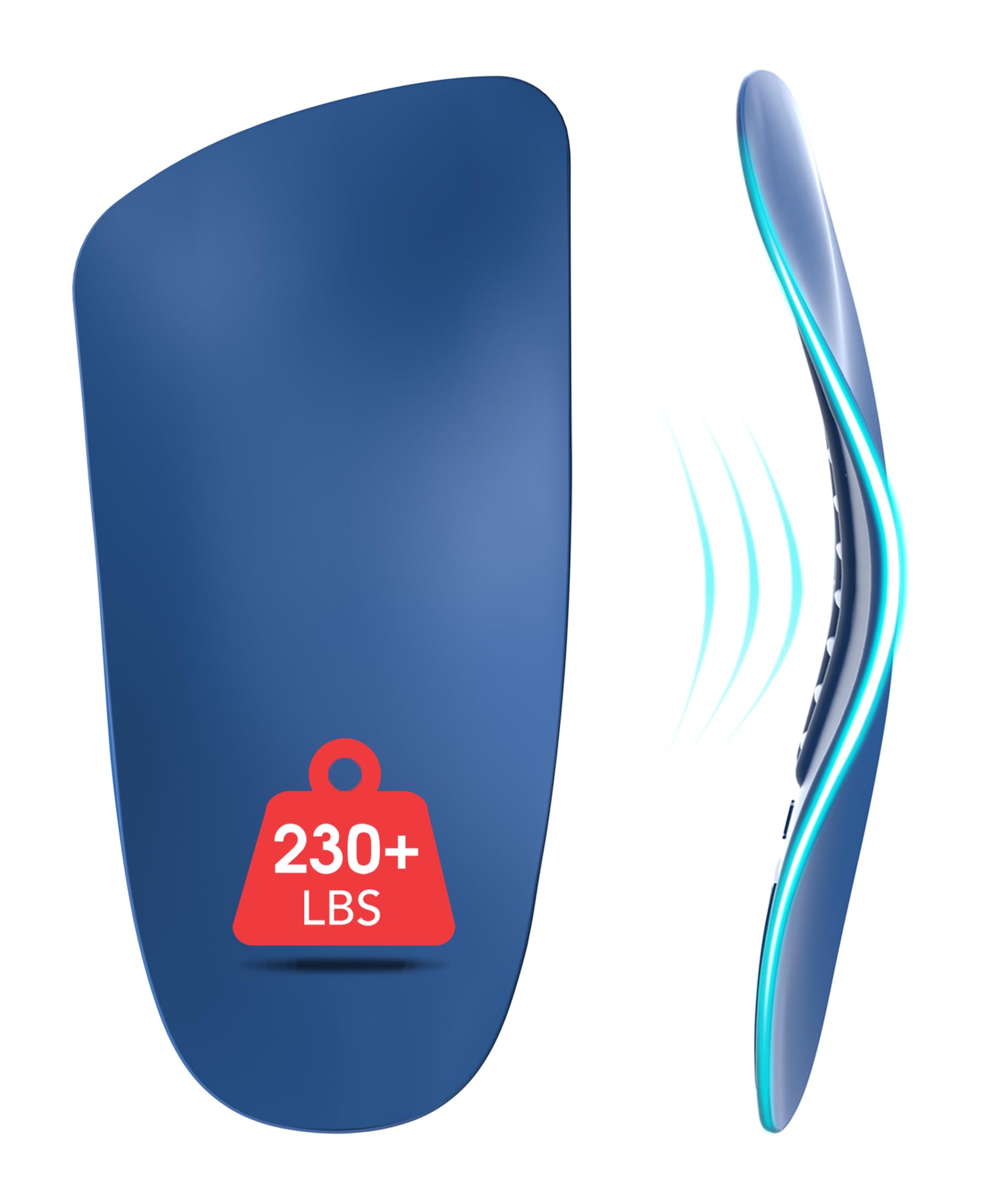
OUOKK’s 3/4-length insoles feature a 24 mm ergonomic arch height designed for heavy-duty support — ideal for users over 230 lbs or those who stand on concrete for 10-hour shifts. The bio-plastic base is rigid and long-lasting, with a lifespan rated over two years. Unlike most 3/4 inserts that shift inside the shoe, the deep heel cup and textured bottom keep these locked in place, even in loose-fitting boots or hiking shoes.
Customer feedback highlights immediate relief from plantar fasciitis and knee pain, with several users noting that these performed better than custom orthotics costing over . The firm arch support does require a gradual break-in — starting with one to two hours per day for the first few days — but once acclimated, the insoles become nearly unnoticeable. They also feature a foot massage area near the arch that disperses pressure across the plantar fascia, which helps with blood circulation during long periods of standing.
The stiff plastic construction means these won’t work well in very thin or flexible shoes. Stick to boots, sneakers, and work shoes with moderate heel stability. The 3/4 length saves toe room but leaves the forefoot cushioning entirely to your shoe’s original liner, so you need a shoe with decent padding in the ball area.
Why it’s great
- Rigid 24 mm arch profile supports heavy loads without flattening
- Two-year lifespan outlasts almost all foam-based competitors
- Pressure-dispersing massage area reduces plantar fascia strain
Good to know
- Requires gradual break-in period for comfortable wear
- Too firm for thin-soled or minimalist shoes
3. Copper Fit Arch Relief Orthotics
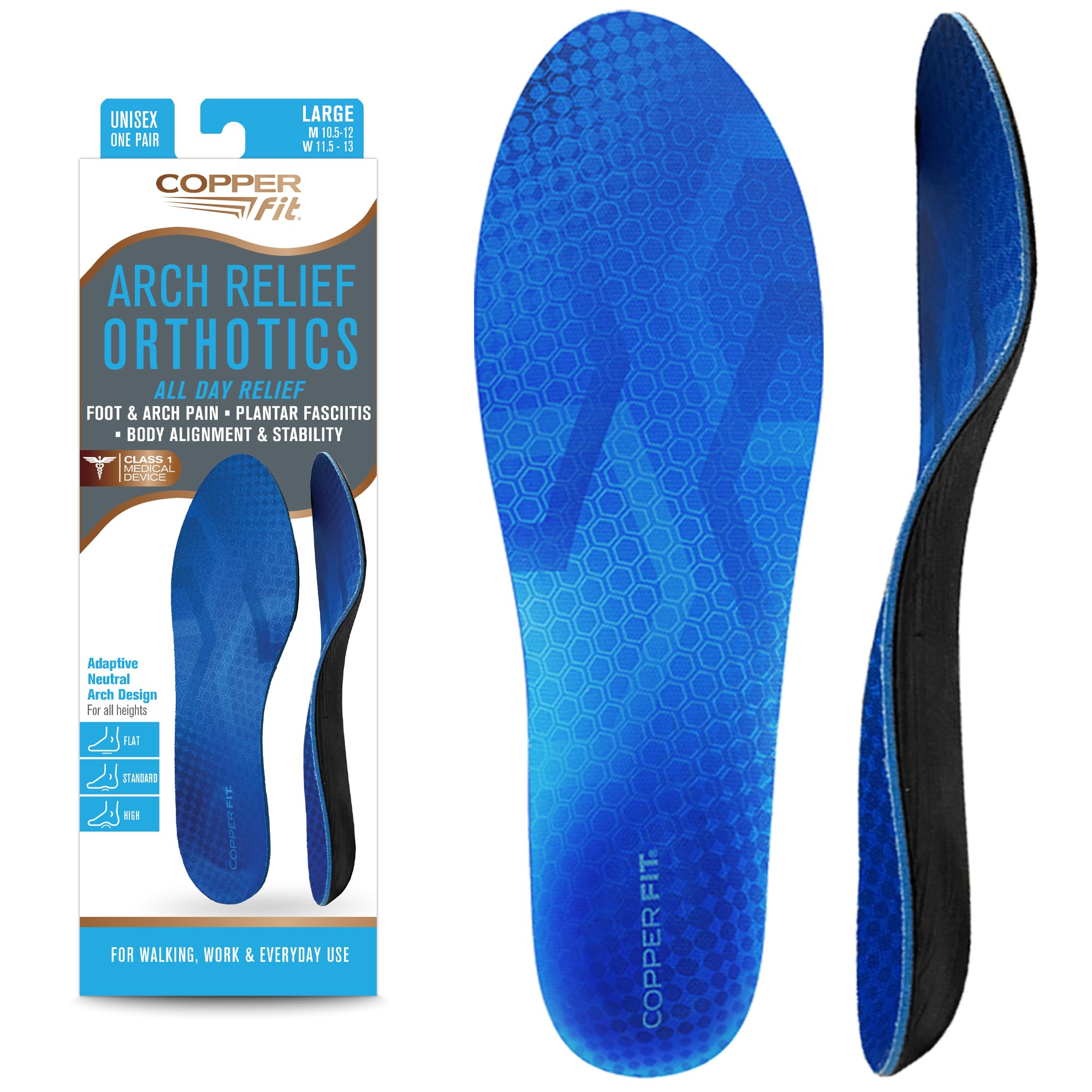
Copper Fit’s Arch Relief Orthotics take a different approach: instead of rigid plastic, they use adaptive memory foam that molds to your foot’s unique arch height — whether you have low, medium, or high arches. The shock-absorbing heel pad is a dense gel-like layer that absorbs impact during walking or running, while the stabilizing heel cup maintains proper foot alignment to reduce strain on the ankles and knees.
Users with fallen arches report these as a direct replacement for the discontinued Copper Fit Balance insoles, which were a cult favorite among people with flat feet. The break-in period is minimal — many wear them full-time from day one without discomfort. The low-profile design fits into dress shoes, casual sneakers, and work boots without crowding the toe box, making them one of the most versatile options on the list for people who switch between different shoe types throughout the day.
The memory foam layer is softer than the rigid OUOKK or Superfeet insoles, which means these are better for people who want some cushioning along with arch support. However, the foam may compress faster under very heavy users (over 250 lbs) compared to the PORON-based alternatives. For standard body weights and daily walking, these offer a balanced compromise between comfort and correction.
Why it’s great
- Adaptive foam conforms to low, medium, or high arches for a custom feel
- Shock-absorbing heel pad reduces joint impact on hard surfaces
- Low profile fits into a wide variety of dress and casual shoes
Good to know
- Memory foam may not hold up as long as rigid plastic under heavy loads
- Arch support is less aggressive than dedicated low-arch orthotics
4. Pedag Viva Mini 3/4 Leather Arch Support

If you spend most of your day in loafers, ballet flats, or oxfords, full-length insoles simply won’t fit. The Pedag Viva Mini is a 3/4-length orthotic made from vegetable-tanned cowhide leather, handcrafted in Germany for a slim profile that slides into tight dress shoes without bunching. Despite its slender build, it packs a metatarsal pad and heel cushion that provide meaningful arch support for low to medium arches — enough to relieve sesamoiditis and Morton’s neuroma pain.
The APMA (American Podiatric Medical Association) Seal of Acceptance confirms that these promote foot health, a credential few lightweight insoles carry. Users report that these make dress shoes comfortable enough for all-day wear, with one podiatrist patient noting they fixed a high-arch problem in shoes that were previously unwearable. The leather upper breathes better than synthetic materials, reducing sweat even in closed-toe shoes worn for hours.
At a mid-to-premium price point, the Viva Mini is an investment in a single pair (the package contains one insole, not two — check the sizing carefully). The arch support is moderate rather than aggressive, so if you have severely collapsed arches and need maximum correction, these may feel too subtle. But for anyone who needs to maintain foot health while wearing stylish footwear, these are unmatched.
Why it’s great
- Ultra-slim 3/4 design fits tight dress shoes and loafers effortlessly
- Genuine leather breathes naturally and reduces moisture buildup
- APMA Seal of Acceptance for verified foot health benefits
Good to know
- Package contains a single insole — purchase two pairs if needed
- Arch support is moderate, not suitable for severe collapse
5. Psveb Professional Heavy Duty Support Orthotics
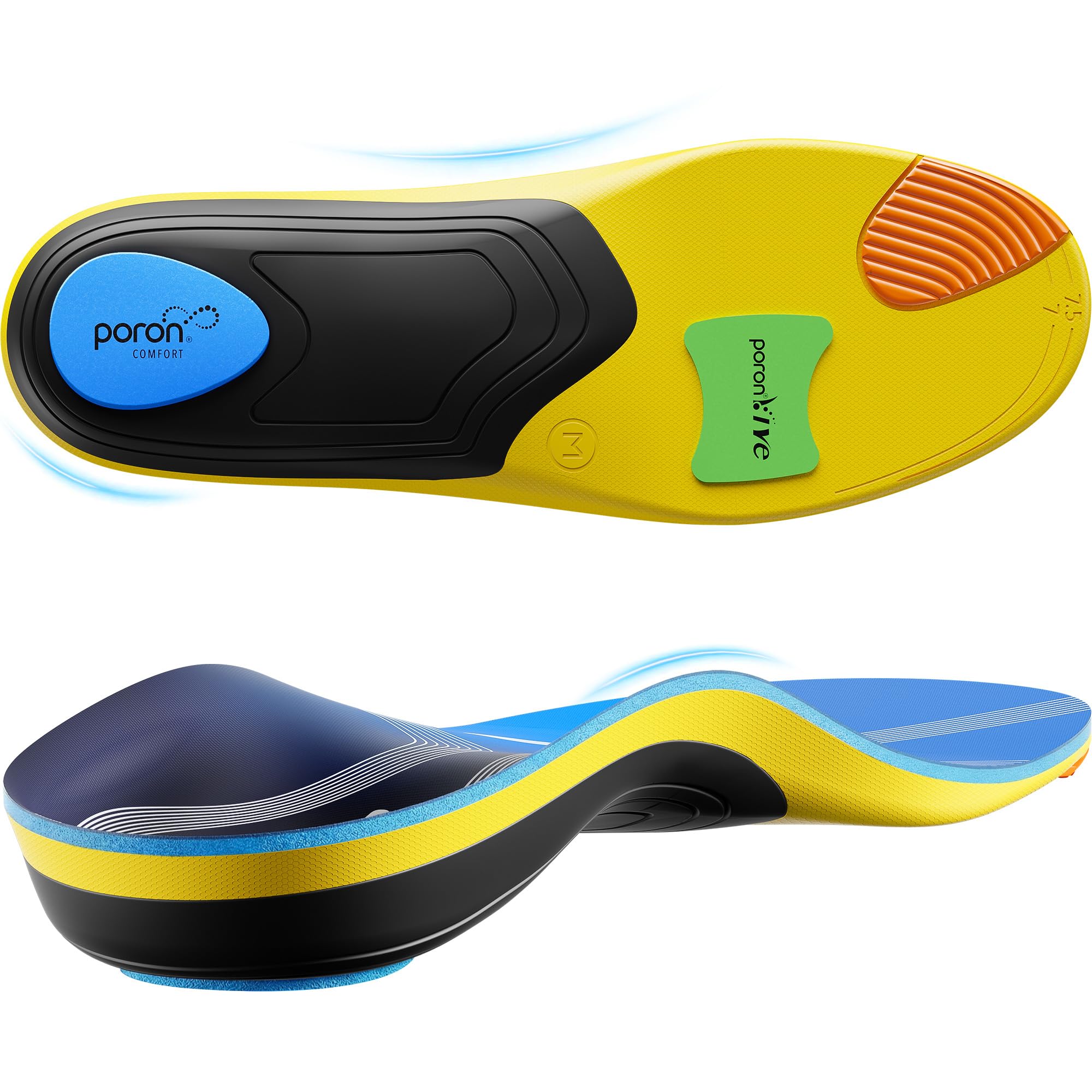
Psveb’s insoles deliver impressive value by combining dual PORON cushioning — a high-rebound material used in premium athletic shoes — with a “Golden Triangle” three-point support system that cradles the forefoot, arch, and heel simultaneously. The deep U-shaped heel cup locks the calcaneus firmly, preventing the side-to-side sliding that worsens overpronation. For users over 230 lbs who need firm, uncompromising support without spending +, these are the strongest budget-tier option available.
Multiple reviewers weighing 250+ lbs report immediate relief from heel pain and back strain, noting that the insoles show zero flattening after weeks of daily use in work boots. The full PU base layer adds softness under the arch, while the skin-friendly, sweatproof top fabric keeps feet cool during long shifts. At a price point well under , these are the most affordable option on the list that still uses genuine PORON material rather than generic foam.
The trade-off is a slightly thicker profile — these insoles may crowd the toe box in low-profile sneakers. Users with narrow shoes will need to remove the original insole entirely and may still find the fit snug. They also run true to size with minimal trimming required for most users, but the thick heel cup can feel tall in shallow-heeled boots or slip-ons.
Why it’s great
- Dual PORON cushioning absorbs shock better than standard EVA foam
- Golden Triangle design stabilizes three key pressure points simultaneously
- Remarkably durable for the price point, with no flattening after weeks
Good to know
- Thick heel cup may not fit shallow shoes or slip-ons comfortably
- Full-length design can crowd the toe box in narrow sneakers
FAQ
Can I wear low-arch insoles in high-heeled shoes?
How long does it take to break in firm arch support insoles?
Will these insoles fix my flat feet permanently?
Do low-arch insoles work for plantar fasciitis?
Should I buy full-length or 3/4-length insoles for low arches?
Final Thoughts: The Verdict
For most users, the insoles for low arches winner is the Superfeet Run Cushion Low Arch because it combines a truly low-arch-specific profile with durable Adaptive Comfort technology that flexes naturally during movement. If you prefer rigid plastic support for heavy-duty standing and a two-year lifespan, grab the OUOKK Low Arch Support. And for dress shoes where space is tight, nothing beats the Pedag Viva Mini for maintaining foot health in formal footwear.