Lateral foot pain—that sharp, burning sensation along the outside edge of your foot—rarely comes from a single cause. It can trace back to a high-arch gait that loads the fifth metatarsal, a supinated stride that never fully pronates, or simply a lifetime of standing on hard surfaces in shoes that offer zero structural support. The right orthotic changes the equation by redistributing pressure, controlling excessive rolling, and lifting the arch to take tension off the peroneal tendons.
I’m Emma — the founder and writer behind Baby Bangs. I’ve spent years analyzing foot biomechanics research and comparing how different insole materials, heel-cup depths, and arch profiles affect lateral-load distribution under real-world standing and walking conditions.
This guide breaks down five carefully selected orthotic models built for lateral pain relief. Whether you supinate, have a rigid high arch, or carry extra weight that drives pressure outward, you’ll find a fit here for your specific gait pattern with the right insoles for lateral foot pain.
How To Choose The Best Insoles For Lateral Foot Pain
Lateral foot pain is rarely a random ache. It follows predictable biomechanical patterns, and the wrong insole can actually worsen the problem by pushing your foot further outward. Here are the critical factors to weigh before you buy.
Match the Arch Profile to Your Gait
If your foot rolls outward when you walk (supination), you likely have a high or rigid arch. A low-profile, flat insole will do nothing for you. Look for a pronounced arch that lifts the midfoot and shifts pressure medially. Conversely, if your lateral pain comes from a fallen arch that collapses outward, you need a stiffer medial post and a deeper heel cup to control pronation.
Heel Cup Depth and Lateral Wall Height
A shallow heel cup allows the calcaneus to tilt laterally on impact, aggravating the peroneal tendons. The best lateral-pain insoles wrap the heel with a deep, U-shaped cup. Some premium models add a raised lateral wall or a carbon-fiber flange that physically blocks the foot from rolling over the edge.
Cushioning Density vs. Support Rigidity
Soft cushioning feels good in the store but often lacks the structural rigidity needed to control lateral motion. Dual-density builds—where a firm TPU or polypropylene shell supports the arch while a softer PORON or EVA layer absorbs shock—strike the right balance. Molded cork offers a unique semi-rigid option that conforms over time without losing shape.
Weight Capacity and Heel Compression Resistance
Heavier frames (220 lbs and above) compress standard foam insoles quickly, flattening the arch and widening the base of support. Heavy-duty models use high-density foam, thicker TPU plates, and reinforced heel cups that resist collapse under sustained load. If your daily routine includes standing shifts or high-impact activity, prioritize an insole specifically rated for your weight range.
Quick Comparison
On smaller screens, swipe sideways to see the full table.
| Model | Category | Best For | Key Spec | Amazon |
|---|---|---|---|---|
| PowerStep Pinnacle | Podiatrist Favorite | Moderate pronation with lateral strain | Dual-layer EVA with firm arch support | Amazon |
| FootScientific Arches Type 3 | Supination Specialist | High arches and supination control | Molded cork shell with EVA base | Amazon |
| Fit Geno Heavy-Duty | Long-Shift Workhorse | Heavy frames and 12-hour standing | Removable TPU arch plate | Amazon |
| Psveb PORON Orthotics | Budget Heavy-Duty | Entry-level lateral relief for heavy users | PORON foam with deep U-shaped heel cup | Amazon |
| GVIIPK Multi-Height | Arch Progression | Gradual arch correction from high to medium | 3.5cm high-support TPU plate | Amazon |
In‑Depth Reviews
1. PowerStep Pinnacle Insoles

The PowerStep Pinnacle is the most clinically validated orthotic on this list—it holds the #1 podiatrist-recommended designation and has been on the market since 2002. The arch support shape is engineered for moderate pronation, meaning it gently controls the inward roll that can manifest as lateral pain when the foot compensates. The dual-layer EVA construction provides a firm support platform that doesn’t bottom out, yet the top layer offers enough give for all-day wear.
Users averaging 8,000 to 15,000 steps daily report significant reduction in both heel pain and lateral foot fatigue within the first week. The full-length design fits athletic shoes, walking shoes, work shoes, and casual sneakers without any trimming—you simply remove the factory insole and drop these in. The sizing runs true to shoe size, and the lightweight build (only 4 ounces for the pair) means you won’t feel like you’re hauling extra weight with every step.
Where the Pinnacle excels for lateral pain specifically is in its heel-cup depth. The cup wraps the calcaneus securely and includes a slight medial post that prevents the foot from sliding outward on impact. For moderate pronators who experience lateral burning from overcompensation, this insole delivers the most reliable gait correction without the break-in stiffness of a rigid carbon-fiber orthotic.
Why it’s great
- Podiatrist-trusted design with decades of real-world data
- Dual-layer cushioning absorbs lateral shock without losing arch support
- No trimming required and fits a wide range of shoe types
Good to know
- Arch support is firm but less aggressive than rigid carbon orthotics
- Not ideal for very high arches that need supination-specific wedging
2. FootScientific Arches Type 3 – Supination/High Arch

If your lateral foot pain is driven by supination—walking on the outside edge of your foot—the FootScientific Arches Type 3 is purpose-built for your gait. The insole uses a molded cork shell that forms a semi-rigid cradle under the foot, forcing the calcaneus into neutral alignment. The cork layer slowly conforms to your unique arch shape over the first few wears while maintaining enough structural density to prevent lateral collapse under load.
Under the cork sits a stabilizing EVA foam layer that absorbs impact without softening the corrective posture. The heel cup is notably deep and features a padded foam rim that stabilizes the heel and prevents the ankle from tilting outward on heel strike. The Stay-Dry B.K. mesh top layer manages moisture and odor, which matters for all-day wear in closed shoes, and the insole fits into tennis shoes, casual shoes, and even golf shoes without trimming.
Several users report that the Type 3 was prescribed by surgeons specifically for pes cavus (high-arch) conditions that cause the foot to tilt outward. The results are consistent: reduced ankle pain, improved gait tracking, and elimination of the sharp lateral edge pain that made walking uncomfortable. The upfront investment is higher than any other option on this list, but for supinators who have tried cheaper insoles with zero results, the cork build is a lasting solution that doesn’t compress over time.
Why it’s great
- Molded cork shell provides long-lasting corrective support without bottoming out
- Deep, padded heel cup prevents outward tilt on heel strike
- Fits multiple shoe types without trimming
Good to know
- Premium price point limits buying multiple pairs for different shoes
- Break-in period of a few days as cork molds to your foot
3. Fit Geno Heavy-Duty Arch Support Insoles
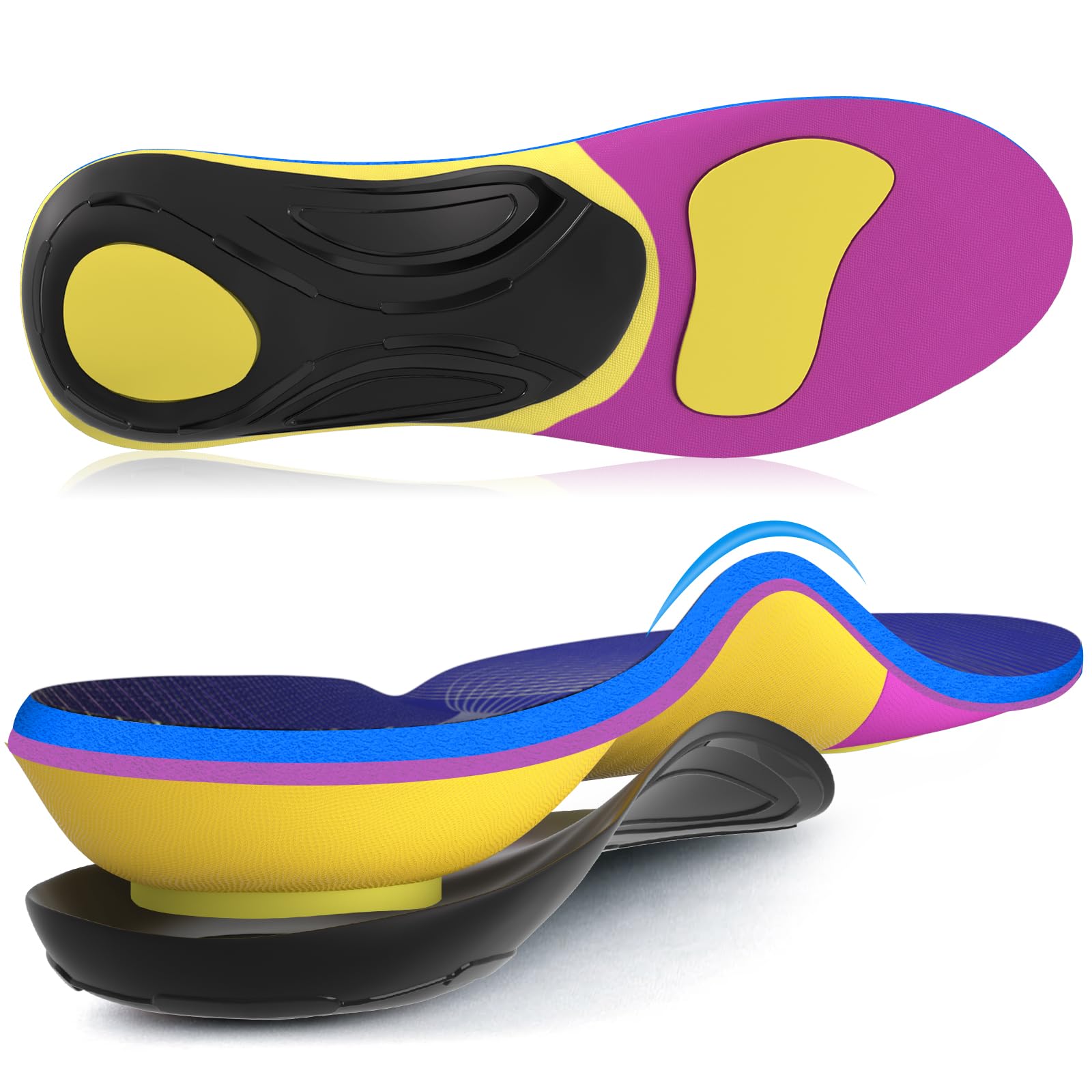
Fit Geno builds their insoles specifically for bodies over 220 lbs, which is a critical distinction for lateral pain management. Heavier frames generate more lateral thrust during the gait cycle, and standard-density foam insoles collapse under that pressure, allowing the foot to splay outward. Fit Geno addresses this with a dense high arch and a shock guard that runs the full length of the insole, keeping the foot centered over the load-bearing axis.
The key differentiator here is the removable TPU arch plate. During the initial correction phase, the rigid TPU plate locks the arch into a lifted position and prevents the midfoot from collapsing. Once the foot adapts, the plate can be removed for a lower-profile fit while still retaining the deep heel cup and PORON foam cushioning layers. This progression system is unique on this list and makes the insole suitable for both aggressive correction and long-term maintenance.
For nurses, retail workers, and others who stand 10–12 hours on concrete or tile, the Fit Geno reduces lower-back and knee impact by controlling the lateral roll that travels up the kinetic chain. Testers at 275 lbs reported immediate improvement in foot fatigue and heel pain, and the breathable top fabric keeps odor manageable through full workdays. The trim-to-fit design works well with work boots, running shoes, and cross-trainers.
Why it’s great
- Removable TPU plate allows progression from correction to maintenance
- PORON foam delivers 78% higher layered shock absorption than standard insoles
- Deep heel cup and rigid arch prevent lateral splay under heavy load
Good to know
- Trim-to-fit design may slightly reduce lateral edge support if cut too aggressively
- Thicker build may require looser lacing in low-cut shoes
4. Psveb PORON Heavy Duty Support Orthotics
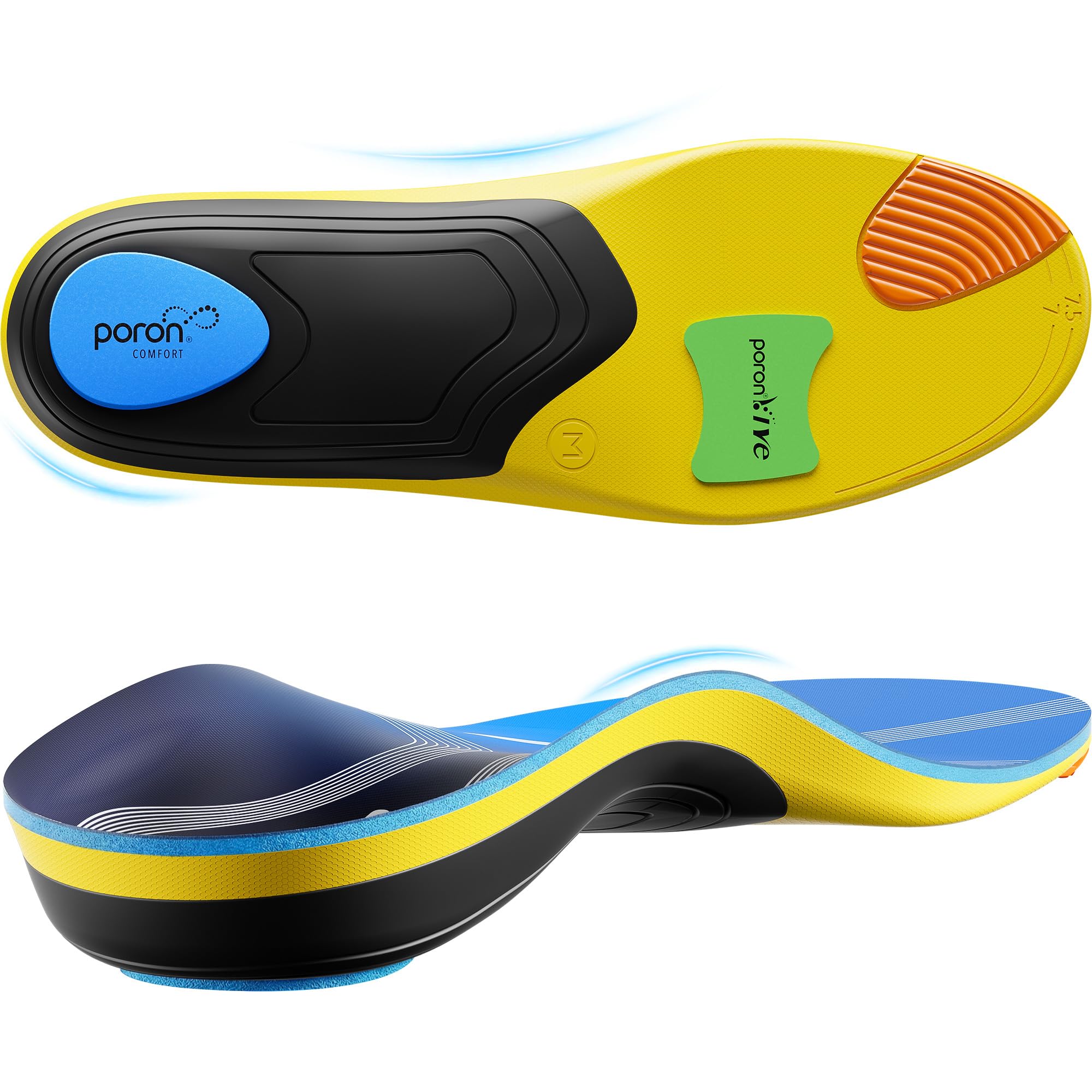
The Psveb Orthotics bring PORON cushioning—a urethane foam known for retaining 95% of its shock-absorbing properties after repeated impact—to the budget tier. The proprietary Golden Triangle design provides three-point support at the forefoot, arch, and heel, which helps evenly distribute weight so the lateral edge isn’t overloaded. For heavier users (230+ lbs), the dual-layer PORON construction resists compression better than typical EVA-only insoles at this price point.
The deep U-shaped heel cup is the standout feature for lateral pain. It wraps the heel securely and prevents the side-to-side slippage that aggravates the peroneal tendons and the cuboid bone. Users working 9–10 hour shifts on concrete floors report that the Psveb insoles reduced foot fatigue by the end of the first day, with no flattening observed after three weeks of daily wear. The skin-friendly, sweatproof top fabric keeps feet cool and dry during long workdays.
Available sizing covers both men and women, and the insoles fit comfortably in work boots, sneakers, and casual shoes. The medium arch profile is versatile—it’s supportive enough for flat feet yet not so aggressive that it forces a high arch into discomfort. For entry-level lateral pain relief with heavy-duty materials, the Psveb delivers reliable performance without the premium price tag.
Why it’s great
- PORON foam retains shock absorption significantly longer than standard EVA
- Deep U-shaped heel cup prevents lateral slippage during the gait cycle
- Excellent value for heavy-duty construction under the premium tier
Good to know
- Medium arch profile may not provide enough lift for severe supination
- Trim-to-fit sizing; less precise than pre-sized orthotics
5. GVIIPK Multi-Height Orthotic Insoles
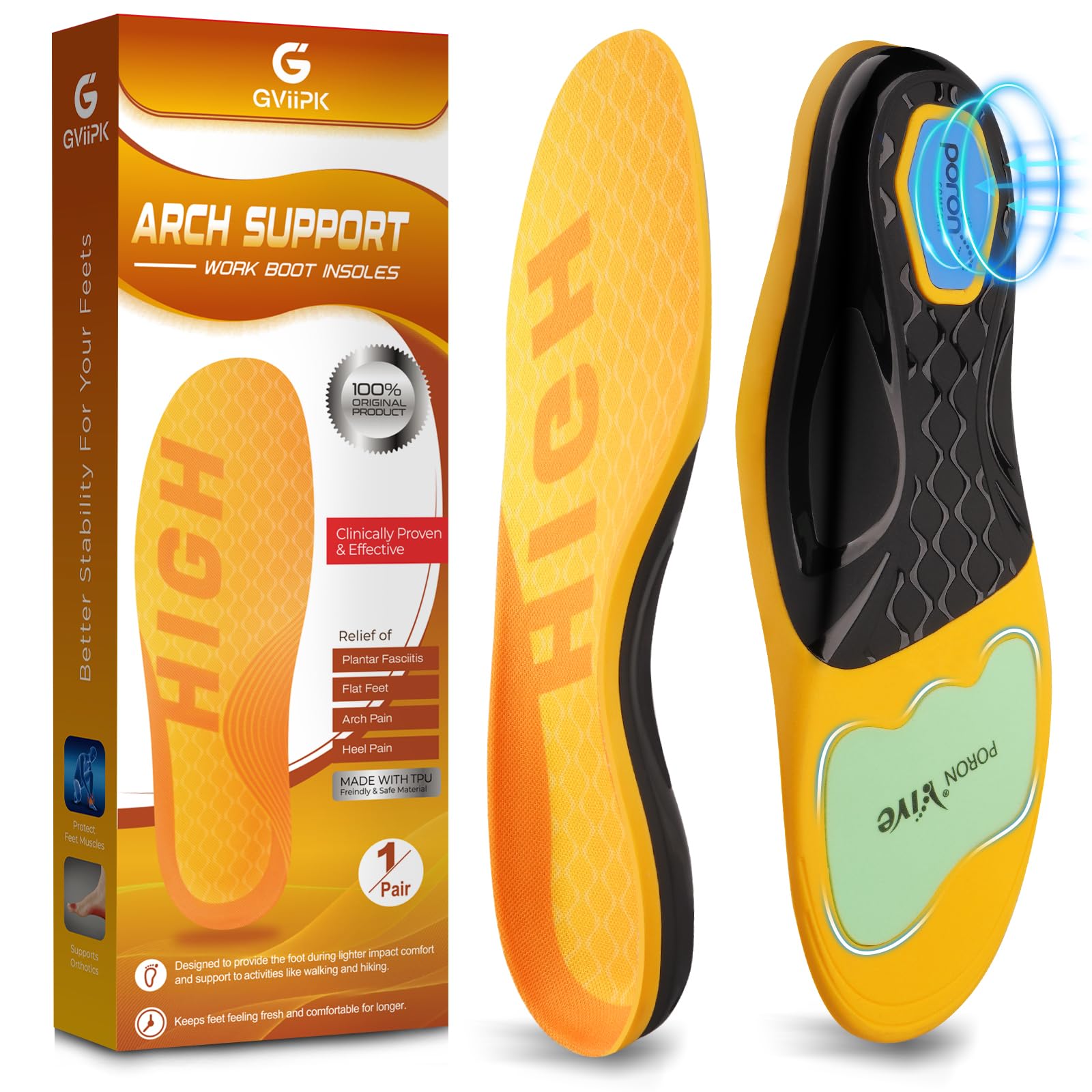
The GVIIPK insoles are unique on this list because they offer two distinct arch heights—3.5 cm for initial correction and 3.1 cm for maintenance—within a single pair. This matters for lateral foot pain because the condition often improves as the foot re-trains itself, and a static orthotic can become uncomfortable once the correction takes hold. Starting with the higher support lifts the arch aggressively, shifting weight medially and taking pressure off the peroneal tendons on the lateral side.
The high-strength TPU support plate extends deep into the arch’s core area, stabilizing the foot structure against overpronation and supination alike. The dual-layer PORON cushioning system reduces impact forces on the heel, knees, and lower back—common complaint areas for lateral-pain sufferers who compensate by altering their gait. Users report that the firm support feels stable without being bone-hard, and the insole stays in place during long shifts without shifting or curling.
The breathable, sweat-wicking fabric top layer keeps the foot dry, and the insole can be trimmed to fit athletic shoes, work boots, and casual footwear. For those whose lateral pain stems from a fallen arch that causes compensatory outward rolling during stance, the GVIIPK’s progression system offers a structured path back to neutral alignment without buying two separate orthotics.
Why it’s great
- Two arch heights (3.5 cm and 3.1 cm) allow for correction progression
- TPU plate penetrates deep into the arch for robust structural support
- Dual-layer PORON absorbs impact without sacrificing rigidity
Good to know
- High initial arch may feel aggressive for those with very flexible feet
- Thicker build may not fit low-profile dress shoes or minimalist footwear
FAQ
Can insoles actually fix lateral foot pain caused by supination?
Why does lateral foot pain get worse when I stand all day?
Should I get custom orthotics for lateral pain or can OTC insoles work?
How long does it take for new insoles to relieve lateral foot pain?
Final Thoughts: The Verdict
For most users, the insoles for lateral foot pain winner is the PowerStep Pinnacle because its dual-layer support and podiatrist-approved arch shape provide reliable relief for moderate pronation and the compensation patterns that drive lateral pain. If you supinate and walk on the outside edge of your foot, grab the FootScientific Arches Type 3 for its molded cork shell that forces the heel into neutral alignment. And for heavy frames over 220 lbs who need all-day standing support, nothing beats the Fit Geno Heavy-Duty with its removable TPU plate and PORON cushioning system.