Your knees ache before the lunch rush is over. By hour ten on that concrete kitchen floor, the pain radiates from your arches up through your lower back. The wrong insole turns a hard shift into an endurance test your body will fail by Wednesday. A thoughtfully chosen orthotic insert built for standing work transforms your shift from a survival effort into a performance you can sustain day after day.
I’m Emma — the founder and writer behind Baby Bangs. I’ve spent years analyzing biomechanical data, material compression specs, and real-world worker reviews to separate genuine support from marketing foam that collapses inside a week.
This guide ranks the seven most capable options available so you can find the right insoles for kitchen work without wasting money on inserts that promise relief but deliver only a temporary squish.
How To Choose The Best Insoles For Kitchen Work
Kitchen work punishes your feet with a specific combination of stressors: unyielding concrete or tile floors, prolonged static standing interrupted by bursts of lateral movement, and limited shoe space inside slip-resistant clogs or boots. The insoles that survive this environment share a few non-negotiable characteristics.
Material Density and Compression Resistance
Memory foam insoles feel plush in the store but bottom out within two weeks under a standing worker’s weight. Look for dense polyurethane (PU), PORON foam, or EVA blends rated for high-impact absorption. A material that resists compression set — meaning it springs back after each step — will still support your arches at the end of a double shift three months later.
Arch Support and Heel Cup Depth
A flat insole does nothing for the plantar fascia. You need a structured arch that matches your foot type: low, medium, or high. A deep heel cup (at least 10mm walls) cradles the calcaneus and prevents the fat pad from splaying sideways on hard floors. Adjustable arch systems or multi-insert kits let first-time orthotic users ease into correction without overloading the foot.
Trim-to-Fit Compatibility With Kitchen Footwear
Kitchen clogs, slip-resistant sneakers, and service boots have lower volume than hiking boots or athletic trainers. An insole that is too thick will crowd the toe box or raise the heel enough to cause blisters. Check whether the product offers clear size trim lines and note the overall thickness — anything over 5mm in the forefoot may compress the fit in low-profile shoes.
Quick Comparison
On smaller screens, swipe sideways to see the full table.
| Model | Category | Best For | Key Spec | Amazon |
|---|---|---|---|---|
| Superfeet Work Cushion (9.5-11) | Premium | All-day cushion with proven 12-month durability | Moisture-wick top cover plus trim-to-fit | Amazon |
| VALSOLE Heavy Duty Support | Premium | High arch support for heavier workers (220+ lbs) | High-density orthotic with deep heel cup | Amazon |
| Sof Sole Men’s WORK Anti-Fatigue | Mid-Range | Budget-friendly gel and foam blend for boots | Full-length gel pad with reinforced heel | Amazon |
| DWLCWY PORON Arch Support | Mid-Range | Adjustable arch for flat/neutral/high feet | Interchangeable arch inserts (PORON foam) | Amazon |
| EASYFEET Orthotic Work | Mid-Range | Thin profile for standard work shoes and clogs | Thin PU foam with metatarsal pads | Amazon |
| Orthostride Orthotic Insoles | Value | Budget-friendly full-length gel insole | PU material with gel shock-absorption layer | Amazon |
| Superfeet Work Cushion (11.5-13) | Premium | Large size range with same supportive structure | Same 12-month support, larger form factor | Amazon |
In‑Depth Reviews
1. Superfeet Work Cushion Insoles (Men 9.5-11 / Women 10.5-12)
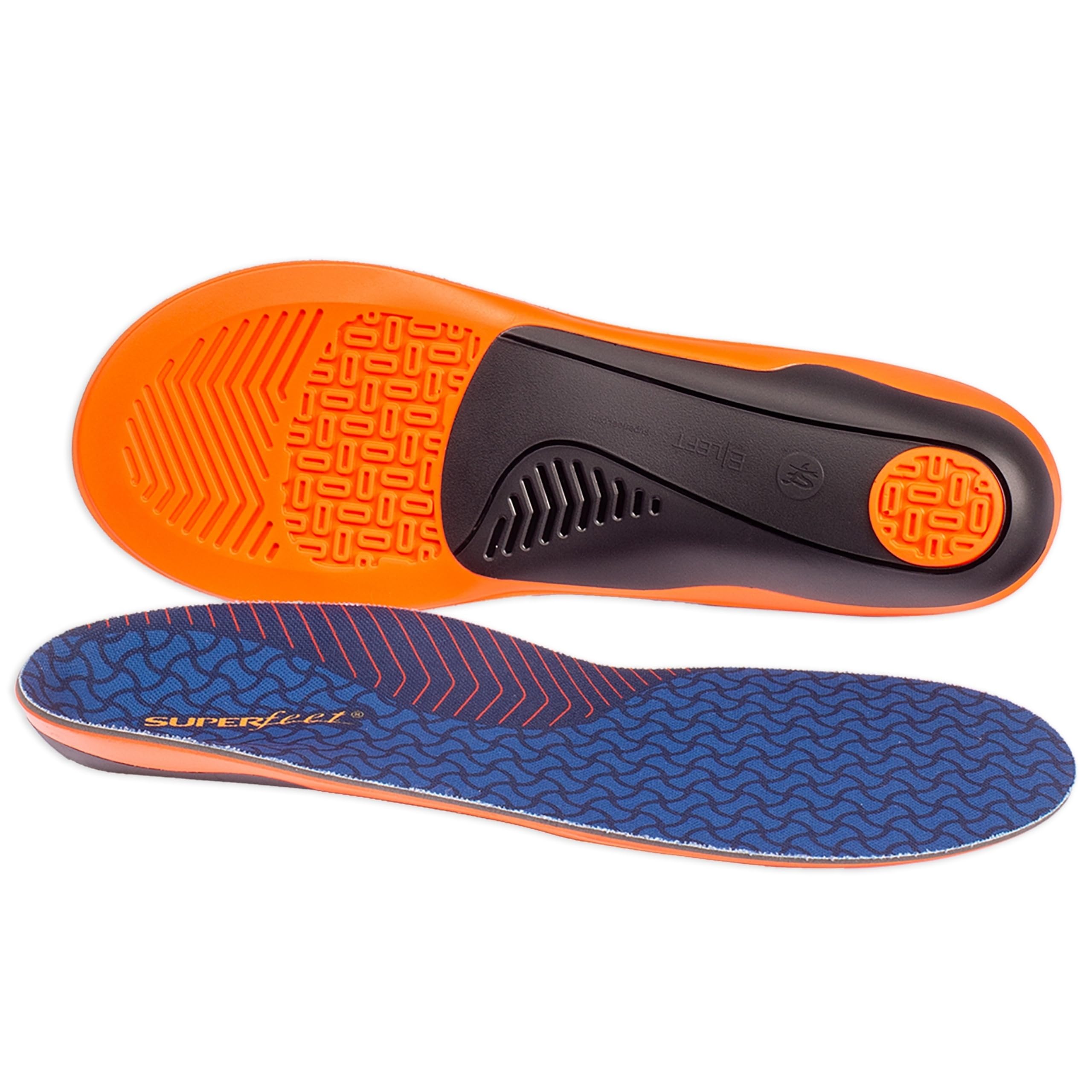
Superfeet built a reputation on dense, long-lasting orthotic foam that doesn’t go flat. The Work Cushion model uses a thick moisture-wicking top cover bonded to a structured base that supports all arch heights. Real-world users on concrete floors report zero foot pain after 12-hour shifts, and the trim-to-fit design slots neatly into Red Wing boots and roomy kitchen clogs without bulging at the sides.
The arch support feels aggressive for the first two or three shifts. That is intentional — Superfeet uses a rigid heel cup and a raised medial arch to guide the foot into correct alignment. Once your plantar fascia adapts, the pressure on your lower back and knees drops noticeably. Some users with narrow feet find the arch too pronounced, but the majority report lasting relief that cheaper foam inserts cannot match.
Superfeet claims up to 12 months of structural integrity. Customer reviews back that up: multiple users returned to buy replacements after nearly two years of heavy use, not because the foam collapsed, but because they wanted a fresh top layer. If your kitchen shifts run past 10 hours daily, this is the most reliable investment for your feet.
Why it’s great
- Clinically proven shape holds up for 12 months under daily use
- Moisture-wicking cover reduces odor in closed-toe work shoes
- Aggressive arch support eliminates lower back and hip pain after adaptation
Good to know
- Arch may feel too aggressive for flat feet during first week of use
- Higher price point than entry-level alternatives
- Trim-to-fit lines may not match all low-volume kitchen clogs perfectly
2. VALSOLE Heavy Duty Support Pain Relief Orthotics

Designed specifically for workers over 220 pounds, VALSOLE’s heavy-duty orthotic uses a high-density foam core that resists bottoming out. The arch profile is noticeably elevated — it supports high arches out of the box with no break-in period required. Warehouse workers on cement floors reported total elimination of chronic back pain after back surgery, which speaks to how effectively the deep heel cup stabilizes the entire kinetic chain.
The thickness of the insole adds measurable volume inside the shoe. Several users noted they had to loosen their laces to accommodate the extra height. If your kitchen clogs are already snug, this insole may compress the toe box. However, for workers who need aggressive correction and a platform that does not compress under heavy load, the VALSOLE delivers immediate, noticeable relief that persists through entire shifts.
The PORON-based construction provides a spongy yet firm feel that does not flatten. At this price point, the material quality rivals orthotics that cost twice as much. The only notable drawback is the trim-to-fit process: the dense foam requires sharp scissors and careful tracing to avoid a ragged edge that can irritate the foot.
Why it’s great
- Zero break-in period for high arches — immediate support
- High-density foam rated for body weights over 220 pounds
- Users report elimination of chronic back and hip pain from long shifts
Good to know
- Added thickness may crowd low-volume kitchen shoes and clogs
- Trim-to-fit process requires sharp scissors for clean cuts
- High arch profile may feel too aggressive for flat-footed users
3. Sof Sole Insoles Men’s WORK Anti-Fatigue Full-Length Comfort Shoe Inserts

Sof Sole’s WORK insole is a straightforward anti-fatigue layer that prioritizes cushion over corrective structure. A full-length gel pad sits over a firm foam base, delivering immediate softness under the heel and forefoot. Users who stand all day in flat-soled work boots praise the impact absorption — no blisters, no foot discomfort, even during long hikes or double shifts on concrete.
The trade-off is minimal arch support. This insole does not correct overpronation or cradle the plantar fascia the way a dedicated orthotic does. For kitchen workers who already have strong arches and simply need extra padding on hard floors, the Sof Sole works well. Those with flat feet or chronic plantar fasciitis will need to look for a more structured option.
The size 13 version barely fits into larger boots, and users note the overall width could be broader. The gel layer stays cool and does not turn sticky even after months of use. At this price tier, the Sof Sole offers dependable shock absorption for workers who want to upgrade their factory insoles without overcommitting to a rigid orthotic.
Why it’s great
- Immediate soft cushion from full-length gel pad
- Non-sticky gel layer works in hot kitchen environments
- Budget-friendly price for bulk purchasing multiple pairs
Good to know
- Minimal arch support does not correct flat feet or overpronation
- Size 13 barely fits larger boots; limited width options
- Gel may compress faster than high-density foam alternatives
4. DWLCWY PORON Arch Support Insoles for Standing All Day
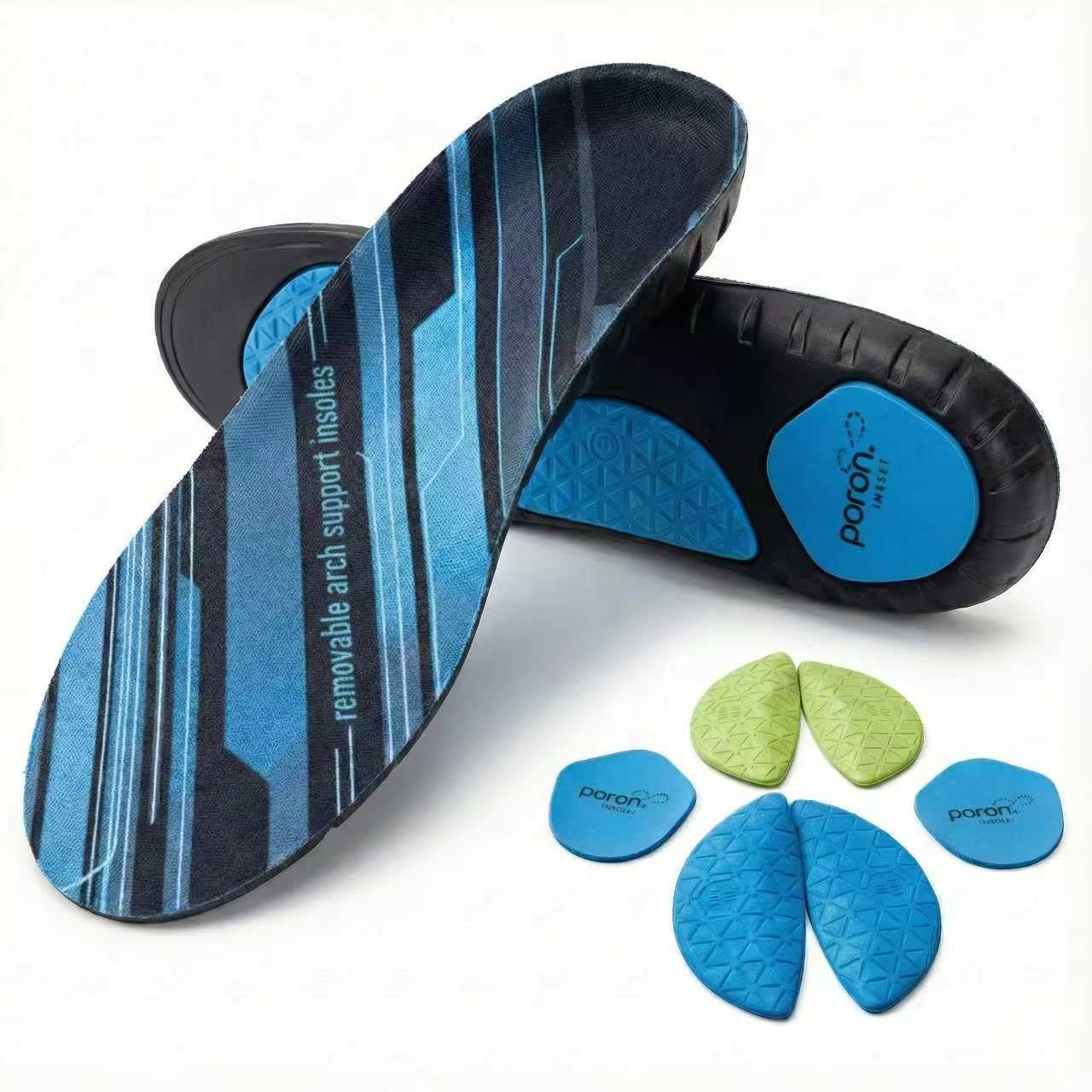
This insole solves the one-size-fits-all problem by including two interchangeable arch inserts (medium and high) inside the box. You start with the lower pad to let your feet adapt, then switch to the higher insert for stronger correction. That modular system eliminates the guesswork that causes many first-time orthotic users to buy the wrong arch height and abandon the product after a week.
The USA-made PORON foam in the heel and forefoot zones delivers resilience that cheap EVA cannot match. Real-world testers — hospital housekeeping staff on tile floors — reported that the arch support eliminated foot pain after a few days of adjustment. The deep heel cup wraps the calcaneus securely, which reduces the jarring impact of each step on concrete.
The trim-to-fit design works best in roomy sneakers and work boots. Kitchen clogs with low interior volume may feel crowded because the PORON layer adds noticeable thickness under the heel. A 3-day break-in period is genuinely necessary: jumping into full support on day one can cause arch soreness as the foot adjusts to corrected posture.
Why it’s great
- Interchangeable arch inserts fit flat, neutral, and high arches
- PORON foam resists compression better than standard EVA
- Deep heel cup stabilizes the foot on hard kitchen floors
Good to know
- 3-day break-in period is required to avoid arch soreness
- Added thickness may not fit low-volume kitchen clogs
- PORON foam retains heat more than open-cell alternatives
5. EASYFEET Orthotic Work Insoles Men Women

EASYFEET targets a specific problem: kitchen workers who need support but cannot fit a thick orthotic into their low-profile shoes or dress clogs. At roughly 3mm in the forefoot, the PU foam base slips into shoes where bulkier insoles would crowd the toe box. The design includes a metatarsal pad and a gel heel insert that absorbs ground impact without raising the heel height significantly.
Customer feedback from restaurant workers and warehouse staff highlights immediate relief from lower back pressure and arch aches. The thin profile does not sacrifice stability — the cushioning layer distributes load evenly across the foot. However, the arch support is mild compared to dedicated orthotic brands. Users with high arches or severe plantar fasciitis may find the correction insufficient over a full 12-hour shift.
EASYFEET offers a generous return policy that accepts trimmed insoles, which reduces the risk of buying the wrong size. The breathable fabric top layer helps manage moisture, a useful feature in hot kitchen environments. If you need a slim, unobtrusive insole that cushions without crowding, this is a strong mid-range contender.
Why it’s great
- Thin PU design fits low-profile clogs and dress shoes without crowding
- Metatarsal pad distributes pressure evenly across the forefoot
- Returns accepted even after trimming — low risk for first-time buyers
Good to know
- Mild arch support may not correct high arches or severe overpronation
- Gel heel insert may compress faster than high-density foam core
- Durability rated at 12 months, but some users report flattening sooner
6. Orthostride Orthotic Insoles with Gel Shock-Absorption
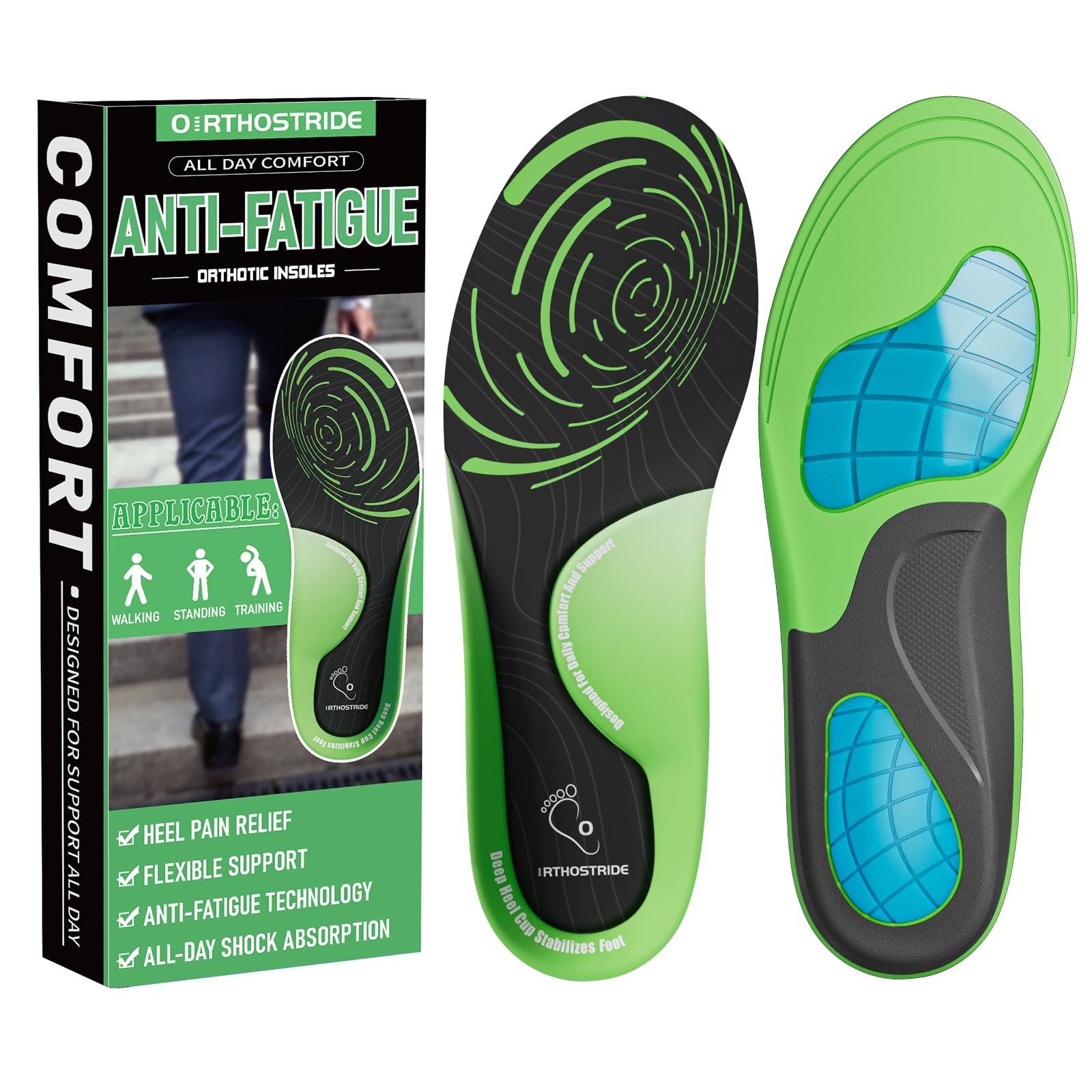
Orthostride’s insoles combine a PU material base with an embedded gel layer that extends the full length of the foot. The design focuses on broad pressure dispersal rather than targeted correction. Users with general foot fatigue from standing and walking report immediate comfort with no break-in period required — the insole feels soft and forgiving from the first step.
The arch support is moderate. It provides a gentle lift under the midfoot that helps distribute weight, but it does not compete with the structured heel cups found in PORON-based alternatives. For kitchen workers who do not suffer from diagnosed plantar fasciitis and simply need a cushioned base on hard floors, the Orthostride offers an affordable solution that outperforms the factory foam found in most budget work shoes.
The trim-to-fit lines are clearly marked and easy to follow with household scissors. At this price point, the value is strong: the gel layer adds longevity beyond what pure foam insoles deliver. The primary limitation is the lack of deep heel stabilization — workers who pronate or supinate will need a more supportive orthotic to prevent knee and hip strain.
Why it’s great
- No break-in period required — comfortable from the first wear
- Full-length gel layer provides consistent cushion across the entire foot
- Clear trim lines make fitting quick and easy for any shoe type
Good to know
- Moderate arch support lacks deep heel cup for significant pronation correction
- PU material may compress faster under heavy body weight (220+ lbs)
- Does not offer interchangeable arch heights for custom fit
7. Superfeet Work Cushion Insoles (Men 11.5-13 / Women 12.5-14)
This Superfeet variant delivers the same supportive structure as the more common size range but in a larger form factor for men’s sizes 11.5 to 13 and women’s 12.5 to 14. The core design — a dense foam base with a deep heel cup and pronounced arch — remains identical. Large-footed kitchen workers finally have access to the same quality of correction that smaller sizes have enjoyed for years.
Customer reviews from workers who stand 12 hours daily on concrete floors confirm that the cushioning eliminates foot, knee, and lower back fatigue. The trim-to-fit design may not even require cutting for boots that match the size range perfectly. One user reported that the insole fit his 10.5 Red Wing boots without any trimming at all, which suggests the template runs true to the labeled size.
The two known drawbacks are the aggressive arch feel during the first three shifts and one report of severe knee pain that resolved after discontinuing use. The knee issue appears to stem from a sudden change in foot posture rather than a defect in the insole itself. If you have very flat feet or a history of knee problems, ease into these over a week of shorter wear periods.
Why it’s great
- Large size range accommodates bigger feet without scaling down support
- Moisture-wicking top cover keeps feet dry during long hot shifts
- Some users report perfect fit without trimming in standard work boots
Good to know
- Aggressive arch requires gradual adaptation over the first week
- A small number of users report knee pain from posture change
- Premium pricing may deter budget-conscious buyers
FAQ
Can I wear these insoles in non-slip kitchen clogs without them bulging out?
How long do kitchen work insoles typically last before needing replacement?
What is the difference between anti-fatigue insoles and orthotic insoles for kitchen work?
Final Thoughts: The Verdict
For most users, the insoles for kitchen work winner is the Superfeet Work Cushion (9.5-11) because it combines proven 12-month durability with structured arch support that eliminates back and knee pain after the short break-in period. If you need a heavy-duty orthotic for higher body weight and aggressive correction, grab the VALSOLE Heavy Duty Support. And for a slim, budget-friendly cushion that fits low-profile kitchen clogs without crowding, nothing beats the EASYFEET Orthotic Work Insoles.