That first step out of bed shouldn’t feel like a knife stabbing your heel. Yet if you’re living with high arches and plantar fasciitis, you already know the morning misery well. The right insole doesn’t just cushion — it re-aligns your foot’s foundation, redistributing the load away from the inflamed fascia and onto the arch where it belongs.
I’m Emma — the founder and writer behind Baby Bangs. I’ve spent years dissecting orthotic hardware, comparing arch heights in millimeters, and cross-referencing podiatrist design principles to separate the truly supportive inserts from the glorified foam pads.
The market is flooded with cheap gel cushions that feel plush but collapse within weeks. After testing the structural engineering of five contenders, I’ve narrowed down the absolute best insoles for high arches and plantar fasciitis that deliver real, measurable relief without breaking the bank.
How To Choose The Best Insoles For High Arches And Plantar Fasciitis
Not all orthotic inserts are created equal, and the wrong insole can actually aggravate your plantar fascia. Here’s what to evaluate before you buy.
Arch Profile and 3D Shell Rigidity
A high arch needs a pronounced, unyielding support — not a soft foam that flattens under bodyweight. Look for a semi-rigid or rigid shell made from TPU or polypropylene that maintains its dome shape under 200+ pounds. The arch must rise high enough to fill the void between your foot’s natural curve and the shoe’s sole, offloading tension from the fascia.
Heel Cup Depth and Stability
A shallow heel cup lets the heel bone (calcaneus) slide, which destabilizes the entire foot chain and re-triggers fascia strain. The best insoles for this condition have a U-shaped deep heel cup — at least 15mm deep — that cradles the heel fat pad and locks the foot in neutral alignment. This prevents excessive pronation or supination that pulls on the plantar fascia.
Cushioning vs. Structure Balance
Soft gel insoles feel great at the store but compress to uselessness within two weeks. The real trick is a layered construction: a firm arch shell for structural correction topped with a thin memory foam or latex layer for comfort. The forefoot padding should be moderate — enough to absorb metatarsal pressure without adding bulk that crowds the toe box.
Length and Fit in Your Shoes
Full-length insoles demand enough vertical room in the shoe, which many dress shoes and sneakers lack. 3/4-length inserts skip the toe area, making them compatible with tighter footwear while still delivering arch support. If you wear boots or work shoes with removable liners, full-length is fine. For loafers or ballet flats, stick to 3/4-length.
Quick Comparison
On smaller screens, swipe sideways to see the full table.
| Model | Category | Best For | Key Spec | Amazon |
|---|---|---|---|---|
| OUOKK High Arch Inserts | 3/4 Length | Strong arch lift, heavy users | 30mm Arch Height | Amazon |
| Welnove Semi-Rigid | 3/4 Length | Podiatrist-style correction | Semi-Rigid Shell | Amazon |
| DynWalker Arch Support | Full Length | All-day wear & shock absorption | 4cm 3D Arch Support | Amazon |
| Dr. Scholl’s Plantar Fasciitis | Full Length | Trusted brand, immediate relief | Deep Heel Cup | Amazon |
| Copper Fit Arch Relief | Full Length | Adaptive fit, anti-fatigue | Memory Foam Layer | Amazon |
In‑Depth Reviews
1. OUOKK High Arch Support Inserts

This is the insole that foot pain sufferers describe as a “game changer.” With a 30mm arch profile — one of the tallest available in any off-the-shelf insert — the OUOKK immediately lifts the arch and takes tension off the plantar fascia. The 3/4-length design keeps toes free while the heavy-duty TPU shell delivers the kind of rigid support that soft foam simply cannot match. User reviews consistently report relief from shooting heel pain within days, even for those who failed with drugstore brands.
The construction prioritizes structure over plushness, which is exactly what you need for plantar fasciitis. The arch is firm and unyielding, forcing your foot into correct alignment from the first wear. It handles body weights over 230 pounds without collapsing, and the built-in massage area under the arch stimulates blood flow during every step. Many users report that it performs better than custom orthotics costing ten times as much.
That firmness does require a patience period. New users should limit wear to 1-2 hours per day for the first week to let the foot adjust. Some with ultra-sensitive metatarsal heads may find the 3/4 edge noticeable until the foot bed conforms. But once broken in, it stays locked in place and outlasts softer alternatives by a wide margin.
Why it’s great
- Industry-leading 30mm arch height lifts high arches immediately
- Heavy-duty TPU shell rated for 230+ pound users
- 3/4 length fits tight shoes while delivering full support
Good to know
- Firm feel requires a gradual break-in period
- Not suitable for low-arch or flat-foot users
2. Welnove Semi-Rigid Arch Support Inserts

The Welnove is the closest thing to a podiatrist-prescribed orthotic you can buy off the shelf. Its semi-rigid shell provides the firm, unyielding counterforce necessary to stop the foot from pronating and pulling the already-strained plantar fascia. What sets it apart is the built-in metatarsal pad — a raised cushion behind the ball of the foot that absorbs the shock of each step and redistributes pressure away from the heel and arch.
Users with pronation issues report that this insert immediately straightened their foot alignment, reducing ankle strain and knee compensation. The 3/4-length design fits into most shoes without crowding the toes, though the manufacturer warns it will not work in very tight footwear. The full-contact heel cup locks the calcaneus in place, stopping the heel slide that often re-triggers fascia micro-tears.
The break-in is real — the rigid arch can feel uncomfortable for the first 3-5 days. The instructions recommend gradual introduction, starting with a few hours daily. Also, the firm edge at the arch transition may bother some users who wear low-cut shoes. But for anyone who needs true structural correction rather than pampering, this is a straight path to relief.
Why it’s great
- Semi-rigid shell matches custom orthotic rigidity and durability
- Metatarsal pad reduces forefoot pressure and shock
- Deep heel cup prevents heel slide during the gait cycle
Good to know
- Not designed for low-profile or very tight shoes
- Requires a disciplined break-in window
3. DynWalker Arch Support Insoles
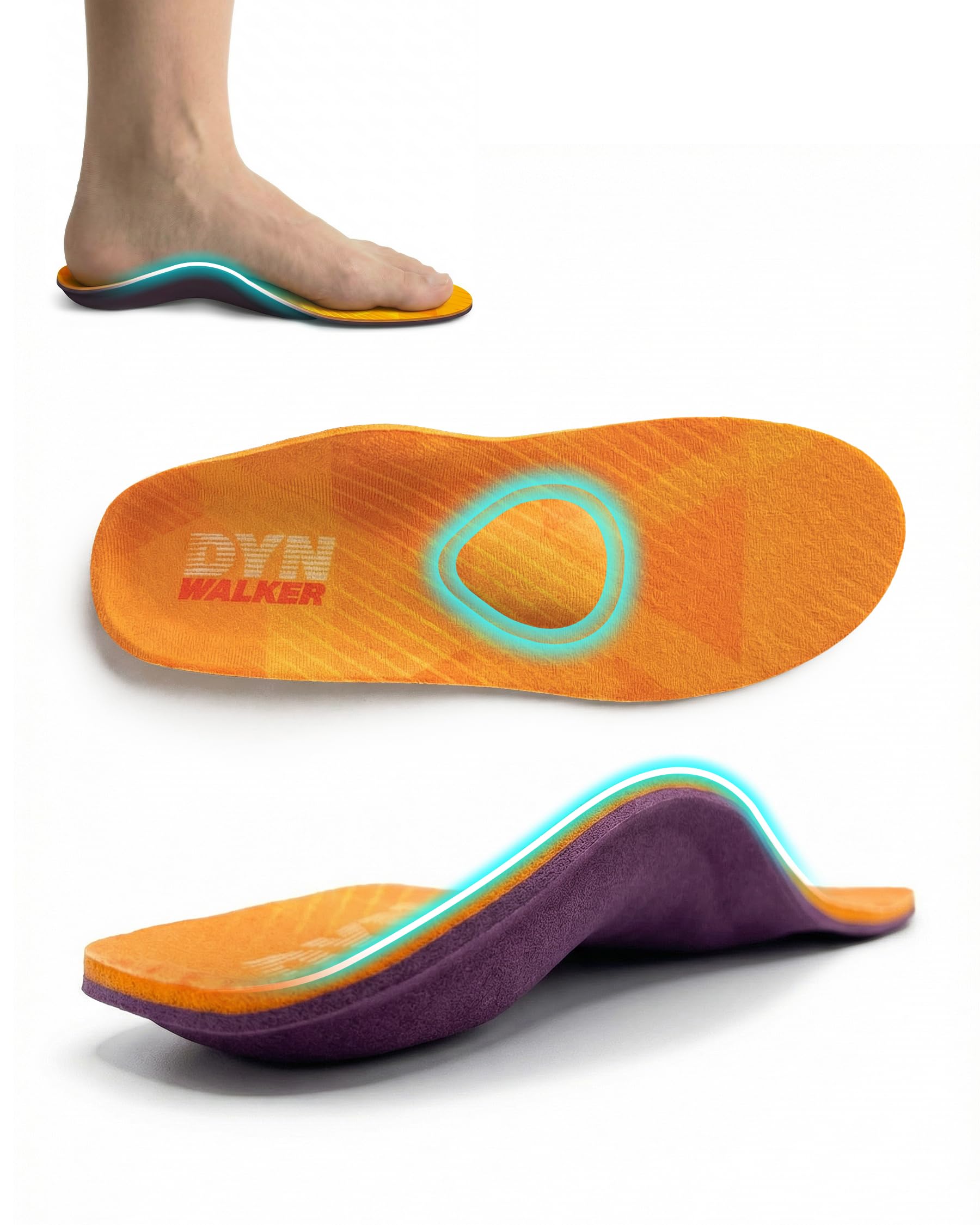
The DynWalker bridges the gap between rigid correction and all-day wearability. Its 4cm 3D arch support provides the lift a high-arched foot needs, while the multi-layer construction — high-density TPU, memory foam, and elastic EVA — delivers a springy, cushioned ride that typical rigid inserts lack. This makes it an excellent choice for anyone who stands or walks for long shifts and cannot tolerate a board-like footbed.
The deep U-shaped heel cup is noticeably pronounced, holding the heel securely and reducing the ankle roll that often accompanies plantar fasciitis. The forefoot latex pad provides a mild massage effect that keeps blood moving during extended wear. Breathable, moisture-wicking materials help prevent the sweat and odor issues that plague all-day users, especially in work boots or closed-toe shoes.
The trade-off involves the metatarsal cushion, which some users feel as a pressure point under the ball of the foot until the foam settles. A few review units arrived with minor cosmetic defects, suggesting occasional quality inconsistency. But the overall build is sturdy, and the price-to-comfort ratio is one of the best in this category for those who prioritize step-in luxury alongside arch support.
Why it’s great
- Multi-layer design combines arch rigidity with forefoot cushioning
- Deep U-shaped heel cup locks the heel and prevents pronation
- Breathable, moisture-wicking materials for all-day hygiene
Good to know
- Metatarsal cushion can feel prominent until broken in
- Rare quality-control issues reported on initial delivery
4. Dr. Scholl’s Plantar Fasciitis Sized to Fit Pain Relief Insoles

Dr. Scholl’s is the household name that actually delivers results here. Sized to fit by shoe size rather than one-size-trim, these insoles provide immediate, no-hassle relief for mild to moderate plantar fasciitis. The deep heel cup cradles the fat pad and adds stability, while the built-in arch support lifts the midfoot enough to reduce fascia tension without the aggressive rigidity of medical-grade inserts. Many users report they work better than custom orthotics.
The construction is notably thicker than standard insoles, which means they take up significant vertical space inside the shoe. Users with low-volume feet or snug-fitting sneakers may feel pressure on the top of the foot. Loosening the laces usually solves this, but it’s a compatibility consideration. The materials hold up well for 2-3 months of daily use before the cushioning starts to pack out — a reasonable lifespan at this price tier.
For the entry-level price, these are remarkably effective. They resolve the stabbing morning heel pain for most wearers within two weeks. But they are not intended for severe structural cases or heavy users who crush foam quickly. For moderate pain and everyday wear in standard shoes, the Dr. Scholl’s is a reliable, low-risk starting point.
Why it’s great
- Immediate, noticeable pain relief for most users within 1-2 weeks
- Sized by shoe size for a precise fit without trimming
- Deep heel cup provides excellent heel stability
Good to know
- Thick build may cause top-of-foot pressure in tight shoes
- Cushioning compresses after 2-3 months of regular use
5. Copper Fit Arch Relief Orthotics
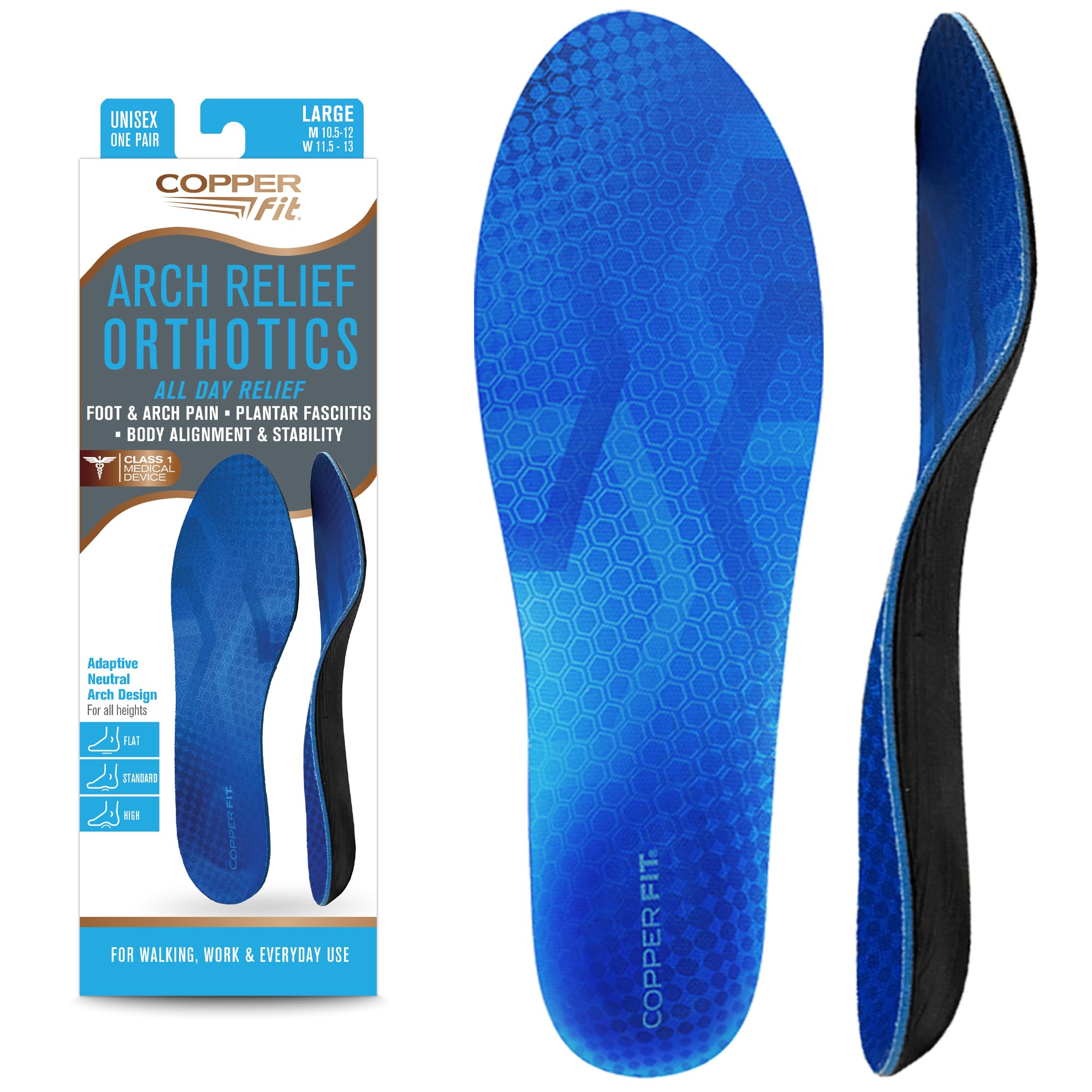
Copper Fit takes a different approach: instead of forcing the foot into a pre-determined arch shape, the orthotic uses a memory foam layer that adapts to your specific foot contour over the first few wears. This makes it an excellent choice for those who struggle with rigid inserts or have a medium-to-high arch that doesn’t align with one-size-fits-all molds. The stabilizing heel cup and shock-absorbing heel pad work together to reduce the impact that triggers fascia pain.
The low-profile design is a standout feature. It fits into dress shoes, casual sneakers, and work boots without the bulky feel of deeper orthotics. The anti-fatigue cushioning reduces foot and leg tiredness for those on their feet all day. Reviews from users with fallen arches and plantar fasciitis consistently note that these are more comfortable than standard drugstore inserts while still delivering noticeable correction.
The adaptive arch means less dramatic correction than a rigid 30mm support — users with very high, rigid arches may find they need more lift. The memory foam also has a shorter lifespan than TPU shells; heavy walkers may need replacements sooner. For the user whose pain is moderate and who values shoe compatibility and step-in comfort, the Copper Fit is an easy daily driver.
Why it’s great
- Memory foam adapts to individual foot shape for a custom-like fit
- Low profile fits into dress shoes and tight footwear easily
- Anti-fatigue cushioning reduces end-of-day leg tiredness
Good to know
- Arch support is less aggressive than semi-rigid alternatives
- Memory foam may compress faster under heavy daily use
FAQ
Will a soft gel insole fix my plantar fasciitis?
How long should the break-in period last for rigid arch insoles?
Can I use 3/4-length insoles in boots or athletic shoes?
Do I need custom orthotics or will over-the-counter insoles work?
Final Thoughts: The Verdict
For most users, the insoles for high arches and plantar fasciitis winner is the OUOKK High Arch Support Inserts because its 30mm arch lift and heavy-duty TPU shell provide the aggressive correction this condition demands without the cost of a podiatrist visit. If you want a podiatrist-style semi-rigid correction with metatarsal protection, grab the Welnove Semi-Rigid Inserts. And for all-day comfort in tighter shoes with adaptive fit, nothing beats the Copper Fit Arch Relief Orthotics.