That first step out of bed feels like a knife under your heel. Plantar fasciitis and heel spurs turn simple walking into a painful calculation. The right insole doesn’t just pad—it re-aligns your foot mechanics to offload the stressed fascia and protect the spur site.
I’m Emma — the founder and writer behind Baby Bangs. I’ve analyzed footbed materials, arch geometries, and heel cup depths across dozens of models to find the ones that deliver real structural correction, not just temporary softness.
These are the models that hold firm under bodyweight and target the specific mechanics behind your heel pain. Here are the insoles for heel spurs and plantar fasciitis that actually change how you walk.
How To Choose The Best Insoles For Heel Spurs And Plantar Fasciitis
Most people reach for the softest insole they can find, hoping comfort equals relief. For plantar fasciitis and heel spurs, the opposite is true. A rigid orthotic structure that holds its shape under your full bodyweight is what stops the plantar fascia from overstretching and protects the spur site from direct pressure.
Heel Cup Depth and Rigidity
The heel cup cradles the fat pad under your heel. A deep, rigid heel cup keeps the fat pad centered so it can absorb shock naturally, and it prevents the heel from sliding, which reduces shear stress on the spur. Shallow or soft heel cups allow the fat pad to splay out, transferring impact straight to the bone.
Arch Support Material and Profile
Arch support for plantar fasciitis must be firm enough to resist compression. TPU or carbon fiber-reinforced arch plates maintain their shape over months, while simple foam arches collapse within weeks. The arch profile should match your foot’s natural curve—too high creates pressure, too low fails to lift the fascia out of its overstretched position.
Shock Absorption in the Heel
Gel pads, Poron foam, or air chambers in the heel region absorb the initial strike. For heel spurs, this is critical—every step drives force through the spur. Look for a dedicated impact pad that sits directly under the calcaneus, not just a uniform layer of foam across the entire insole.
Quick Comparison
On smaller screens, swipe sideways to see the full table.
| Model | Category | Best For | Key Spec | Amazon |
|---|---|---|---|---|
| PowerStep Pinnacle | Premium | Podiatrist-recommended everyday wear | Dual-layer cushioning + firm arch | Amazon |
| SursilOrtho HeelComfort | Premium | Rigid orthotic heel spur relief | Calcaneal Suspension Cradle | Amazon |
| Valsole Heavy Duty | Premium | Heavy users over 220 lbs | High arch + firm heel cup | Amazon |
| Kimihome Plantar Fasciitis | Mid-Range | Carbon fiber-reinforced arch support | Carbon fiber arch plate | Amazon |
| Fit Geno Arch Support | Mid-Range | Long shifts on hard floors | Poron foam + removable TPU plate | Amazon |
| Welnove High Arch Support | Budget-Friendly | Breathable all-day comfort | TPU arch + ventilation holes | Amazon |
| Sof Sole Plantar Fascia | Budget-Friendly | 3/4 length, versatile footwear fit | Gel heel + Plantar Relief Bridge | Amazon |
In‑Depth Reviews
1. PowerStep Pinnacle Insoles

The PowerStep Pinnacle is the most referenced orthotic by podiatrists for good reason. Its semi-rigid arch shell provides the exact amount of support to lift the plantar fascia without feeling like a brick underfoot. The dual-layer cushioning system uses a firmer base layer for structure and a softer top layer for comfort, so you don’t trade support for wearability.
The deep heel cradle stabilizes the calcaneus and keeps the fat pad centered, directly reducing the impact load on heel spurs. Users report noticeable improvement within days, not weeks, because the arch profile is calibrated for moderate pronation—the most common biomechanical driver of plantar fasciitis. Made in the USA and FSA/HSA eligible, it fits athletic shoes, work boots, and casual footwear without trimming.
One caveat: the heel posting is firm. If you log over fifteen thousand steps a day on concrete, you may want a model with a dedicated gel pad beneath the heel. For the vast majority of daily wearers, this remains the gold standard for reliable, predictable relief.
Why it’s great
- #1 podiatrist-recommended orthotic for plantar fasciitis
- Dual-layer cushioning pairs structure with comfort
- FSA/HSA eligible and made in the USA
- No trimming required—order by shoe size
Good to know
- Firm heel posting may feel stiff during very high-step days
- Not ideal for shoes with non-removable factory insoles
2. SursilOrtho HeelComfort Insoles
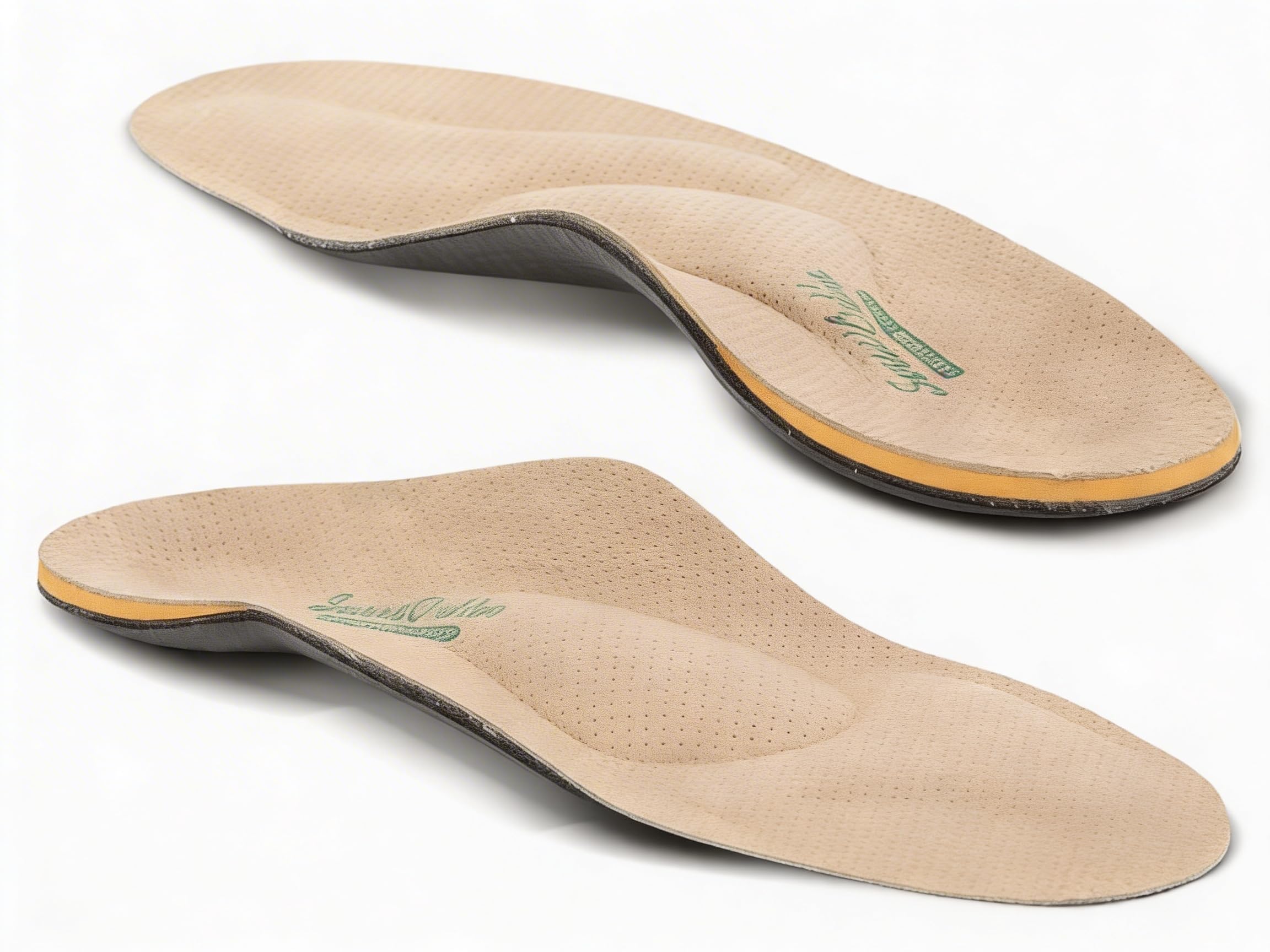
The HeelComfort insole from SursilOrtho is engineered specifically for the heel spur sufferer who has tried soft gel pads and found them useless. Its signature Calcaneal Suspension Cradle is a rigid U-shaped rim that elevates the heel’s perimeter, offloading pressure from the central spur site. A precision Poron impact pad sits beneath the calcaneus to absorb the strike that would otherwise drive through the spur.
The arch support is extra-high and rigid, designed to control overpronation and restore the foot’s natural vault. This dual action—lifting the arch while suspending the heel—is the biomechanical one-two punch that stops the plantar fascia from pulling on its attachment point. Users with high arches report instant relief because the arch profile matches their foot shape without the need for break-in.
Despite its rigid structure, the insole is ultra-thin and lightweight, fitting into dress shoes and sneakers without crowding toes. The only catch is that it is not trimmable, so accurate size selection is essential. For anyone whose heel pain is the primary complaint, this is the most targeted mechanical solution on the list.
Why it’s great
- Rigid heel cradle offloads pressure from the spur site
- Poron impact pad absorbs heel strike shock
- Extra-high arch controls overpronation effectively
- Ultra-thin profile fits most shoe types
Good to know
- Not trimmable—must select correct size
- Rigid feel requires brief adjustment period
3. VALSOLE Heavy Duty Support Orthotics

The VALSOLE Heavy Duty is built for the heavier user who finds most insoles collapse under their bodyweight within weeks. Its high arch support is reinforced with a firm heel cup that doesn’t splay out, and the shock-absorbing layer under the heel is dense enough to protect a spur site without bottoming out. Reviews from users over 220 lbs consistently report elimination of heel pain during twelve to sixteen-hour shifts.
One of the standout features is the lack of break-in period. The insole is firm but not punishing, and the arch profile sits correctly from the first wear. It fits snugly in work boots and sneakers without shifting, thanks to the rigid base that resists curling at the edges. The material composition feels OEM-grade, not like an afterthought.
The trade-off is thickness. Because the insole is built for maximum support, you will need to loosen your laces a half-size to accommodate the added volume. It also does not fit slim-profile sneakers well.
Why it’s great
- Engineered for users over 220 lbs without collapsing
- No break-in—works from the first step
- Firm heel cup and high arch stay stable all day
- Eliminates heel pain during long shifts
Good to know
- Thicker build requires lace adjustment or half-size up
- Does not fit low-profile or racing-style sneakers
4. Kimihome Plantar Fasciitis Relief Insoles

Kimihome brings carbon fiber reinforcement into an insole that costs a fraction of custom orthotics. The carbon fiber arch plate provides the stiffness needed to prevent the arch from collapsing under load—a key requirement for plantar fasciitis support. The gel padding in the heel and forefoot absorbs shock without muddying the firm structural feel of the arch.
The heel cradle is deep enough to stabilize the calcaneus, and the anti-slip top layer prevents the insole from migrating inside the shoe. Users report pain relief within 24 to 48 hours, which is remarkably fast for an orthotic device. The break-in schedule recommended by the manufacturer—three to five hours per day for the first two days—is genuinely useful for users transitioning from soft foam insoles.
The main downside reported by some users is a squeaking sound during walking, likely caused by the carbon fiber layer rubbing against the shoe bed. This is a noise issue, not a performance issue, but it is worth noting if you work in a quiet environment. For the price, the material specification and construction quality are exceptional.
Why it’s great
- Carbon fiber arch plate resists deformation long-term
- Rapid pain relief reported within 24-48 hours
- Rated for users up to 220 lbs
- Anti-slip fabric keeps insole in place
Good to know
- Some users report squeaking with certain shoe materials
- Requires a short break-in period for best results
5. Fit Geno Arch Support Plantar Fasciitis Insoles
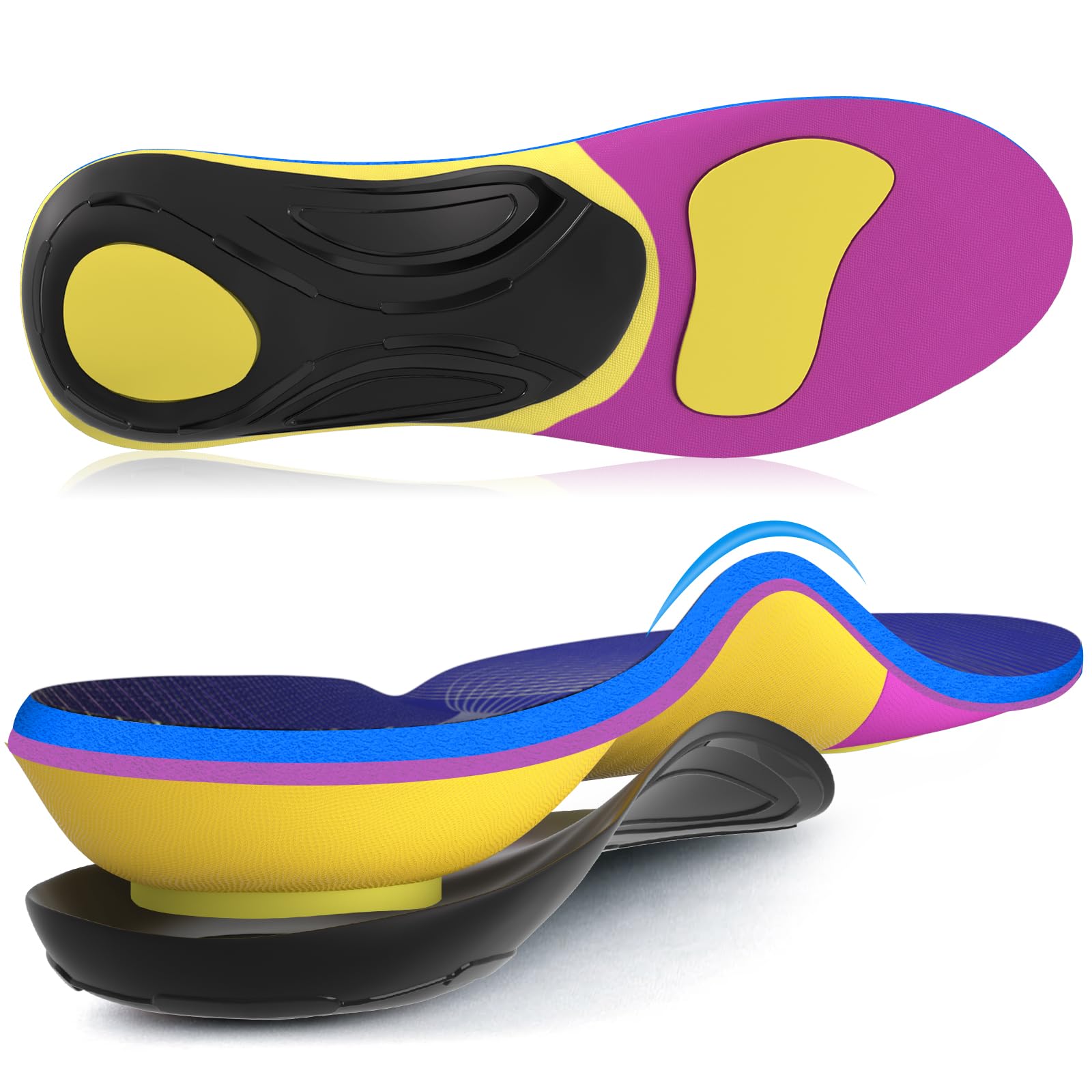
Fit Geno targets the specific needs of women who stand all day—nurses, retail workers, and teachers who cannot afford foot pain to slow them down. The insole uses a rigid high arch and deep heel cup that hold the foot in correct alignment, transferring impact away from the heel spur and distributing it across the whole footbed. The Poron foam pad under the heel and ball of foot provides premium cushioning that retains its shape under heavy use.
A unique feature is the removable TPU arch plate. If you find the arch too aggressive for certain shoes, you can pop the plate out to dial down the support level. This gives you two insoles in one—full correction for boots and a gentler profile for sneakers. The breathable fabric top layer also resists odor build-up during long shifts.
The insole is designed to be trim-to-fit, which adds flexibility for non-standard shoe widths. The main feedback is that the arch is noticeably high, and users with low arches may find it uncomfortable unless they follow the gradual break-in schedule. For standing workers who need structural support that lasts an entire shift, this is a well-thought-out solution.
Why it’s great
- Removable TPU arch plate for customizable support
- Poron foam heel pad absorbs impact without flattening
- Breathable fabric resists odor during long shifts
- Trim-to-fit design accommodates various shoe sizes
Good to know
- High arch profile may feel aggressive for low-arch users
- Requires gradual break-in for optimal comfort
6. Welnove High Arch Support Insoles
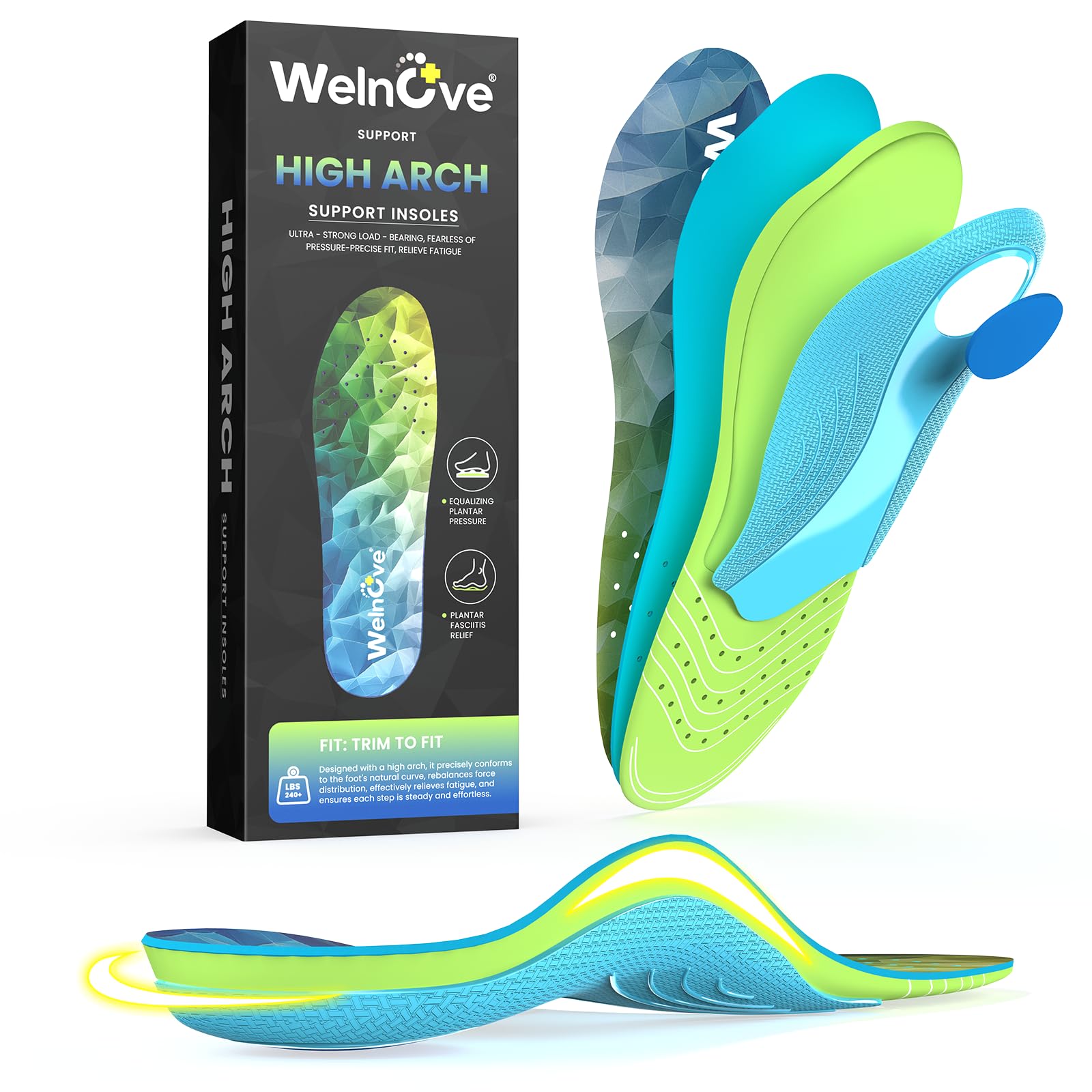
Welnove offers a budget-friendly entry point that doesn’t skip on the structural essentials. The TPU arch frame provides firm support that keeps the foot aligned, while the Ortholite foam mid-layer delivers responsive cushioning without excessive compression. Ventilation holes run through the footbed, making this one of the more breathable options for users who experience sweaty feet during long workdays.
The heel cushion is built with a high-elasticity material that absorbs shock effectively for the price tier. Users with flat feet report that the arch support lifts the foot into a more neutral position, reducing the strain on the plantar fascia. The insole is also FSA/HSA eligible, which adds practical value for those with flexible spending accounts.
At this price point, the insole uses a combination of foam layers rather than a single-piece rigid shell. This means the arch support may soften slightly over months of heavy use compared to carbon fiber or full-TPU models. For light to moderate daily wear, it delivers reliable relief at a fraction of the cost of premium orthotics.
Why it’s great
- TPU arch frame provides firm, targeted support
- Ventilation holes improve airflow and reduce moisture
- FSA/HSA eligible for added affordability
- Works well for flat feet and mild overpronation
Good to know
- Foam layers may compress faster than rigid shell models
- Best suited for light to moderate daily use
7. Sof Sole Plantar Fascia Insoles

Sof Sole takes a different approach with its 3/4 length design, which fits into shoes where full-length insoles would crowd the toe box. The Plantar Relief Bridge supports the arch, and the gel pad in the heel disperses strike force to reduce pressure on the spur. This combination makes it a practical choice for casual shoes, loafers, and some athletic footwear where a full orthotic won’t fit.
The truncated size means the insole does not extend to the toes, which allows it to slip into shoes with non-removable insoles or limited vertical space. Users report that it takes a day or two to settle into the shoe—pressing it firmly into the heel cavity ensures it sits flush and does not shift during walking. Podiatrist recommendations appear frequently in reviews, lending clinical credibility to the design.
The rubberized circle on the heel bottom can mark or wear the interior of some shoes over time, so check compatibility with your footwear material. The 3/4 format also means there is no forefoot cushioning, so if your pain extends to the ball of the foot, a full-length model would serve you better. For targeted heel and arch support in compact footwear, this is a proven solution.
Why it’s great
- 3/4 length fits shoes that can’t accommodate full insoles
- Gel heel pad disperses impact from heel spurs
- Podiatrist recommended by multiple reviewers
- FSA/HSA eligible
Good to know
- Rubber heel circle can wear interior of some shoes
- No forefoot cushioning—ball of foot pain not addressed
FAQ
Should I wear these insoles all day from the start?
What is the difference between a 3/4 length and full-length insole for heel spurs?
Will these insoles fit in my work boots or dress shoes?
Final Thoughts: The Verdict
For most users, the insoles for heel spurs and plantar fasciitis winner is the PowerStep Pinnacle because it balances podiatrist-approved arch geometry with dual-layer cushioning that works for daily wear without a break-in saga. If your primary complaint is a heel spur and you need targeted offloading, grab the SursilOrtho HeelComfort for its Calcaneal Suspension Cradle. And for heavy users who collapse standard insoles within weeks, nothing beats the VALSOLE Heavy Duty for durability and all-day structural support.