That first step out of bed in the morning shouldn’t feel like walking on broken glass. For millions dealing with plantar fasciitis, flat feet, or general foot fatigue, the right insole is the difference between a productive day and a limping misery. This guide cuts through the foam to find the inserts that actually deliver support where it matters.
I’m Emma — the founder and writer behind Baby Bangs. I’ve spent months digging through actual user reports and manufacturer specs on dozens of foot pain insoles, cross-referencing arch types, material densities, and durability claims to separate real relief from marketing fluff.
Whether you stand on concrete for ten hours or chase kids around a house, the right insert changes everything. Here is my researched, no-fluff breakdown of the best insoles for foot pain available right now.
How To Choose The Best Insoles For Foot Pain
Foot pain isn’t one-size-fits-all. The insole that cures a runner’s plantar fasciitis might feel like a brick to someone with low arches. Here are the three decisions that matter most when picking an insert for real relief.
Arch Height and Support Profile
Your arch type dictates the support curve you need. High arches require a pronounced, rigid support to cradle the midfoot and reduce strain on the heel and ball of the foot. Flat feet need a lower, more graduated profile to guide the foot into a neutral position without digging into the arch. Medium arches can often tolerate a balanced, semi-rigid support. Always check if the insole specifies its arch type — neutral, high, or firm — before buying.
Material Density and Shock Absorption
The foam layers determine how long the insole holds up under pressure. Basic EVA foam compresses quickly under heavy loads. Look for dual-density constructions: a firm base (often polypropylene or TPU) prevents collapse, while a softer top layer (memory foam or PU) absorbs impact. Materials like PORON and Ortholite are industry standards for maintaining resilience after thousands of steps.
Heel Cup Depth and Stability
A deep, U-shaped heel cup keeps the heel pad centered and prevents the foot from sliding sideways inside the shoe. This is critical for overpronation and for people who stand on hard surfaces all day. Shallow cups may work in low-profile shoes like dress loafers, but anyone dealing with heel spurs or sharp morning heel pain should prioritize a deep, rigid heel cradle.
Quick Comparison
On smaller screens, swipe sideways to see the full table.
| Model | Category | Best For | Key Spec | Amazon |
|---|---|---|---|---|
| PowerStep Bridge | Premium | All-day wear & high arches | Dual-layer memory foam with flexible TPU frame | Amazon |
| Dr. Scholl’s Plantar Fasciitis | Mid-Range | Reliable pain relief for work shifts | Firm arch support with deep heel cradle | Amazon |
| Psveb Heavy Duty Support | Mid-Range | Heavy users (230+ lbs) & hard floors | Double PORON cushioning + PU comfort layer | Amazon |
| Cloudflo DB-XL | Mid-Range | Standing all day (nurses/teachers) | TPU arch support + Ortholite foam layer | Amazon |
| Sof Sole Plantar Fascia | Budget | Snug fit in 3/4 length shoes | Gel heel insert + Plantar Relief Bridge | Amazon |
In‑Depth Reviews
1. PowerStep Bridge
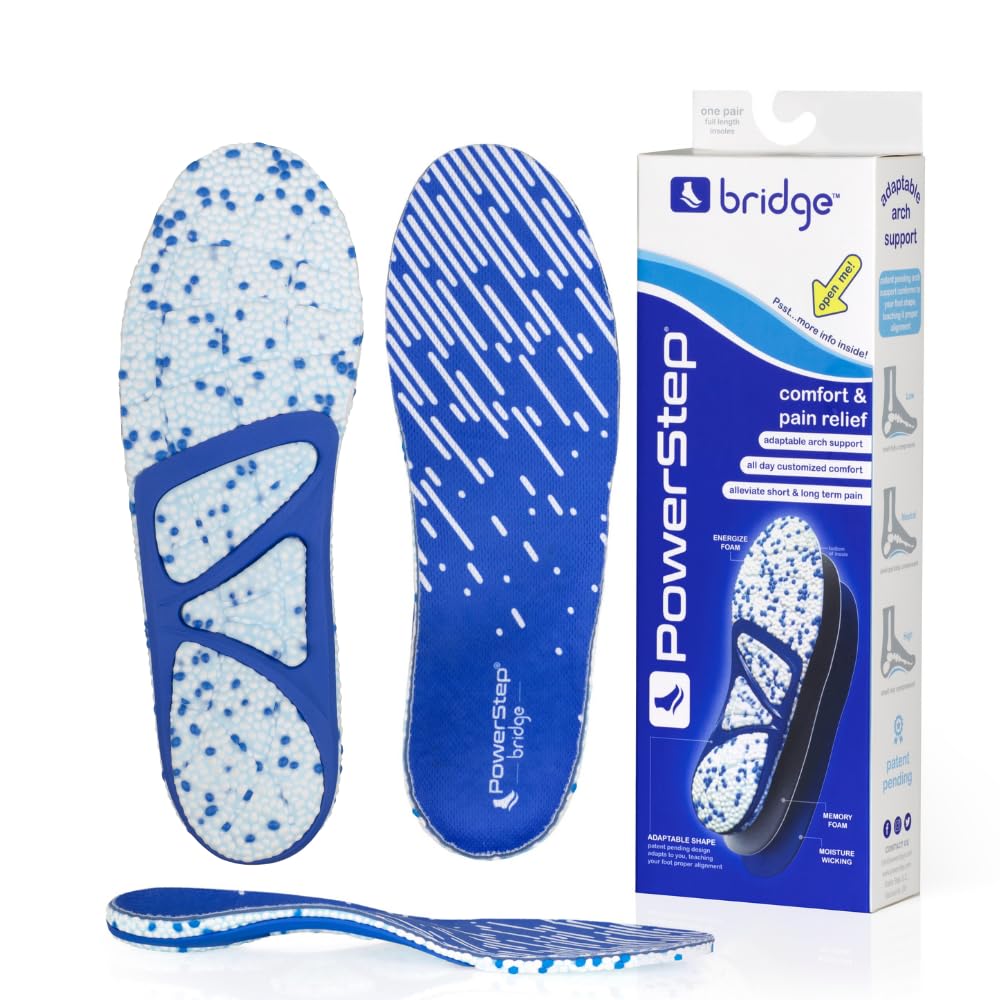
The PowerStep Bridge is the rare insole that bridges the gap between rigid orthotics and soft comfort inserts. Its flexible TPU frame provides structured arch support while the two layers of energizing memory foam deliver a cushioned, adaptive fit that doesn’t bottom out. Runners in particular praise its ability to maintain foot alignment without the punishing feel of a hard plastic shell.
Users with high arches report quick resolution of tendonitis and a noticeable improvement in overall posture. The moisture-wicking fabric also keeps feet dry during long workouts or all-day wear. One experienced runner called it the best insole he’d used in 40 years, specifically noting the smooth, forgiving ride and responsive foam.
The main durability concern comes from heavy-use scenarios — users logging 20,000+ steps a day on concrete saw the top fabric liner begin to peel at the heel after a month. This is manageable by rotating a second pair, but it’s worth noting for high-mileage users. The low-profile design fits sneakers, Crocs, and even some dress shoes without raising the foot too much.
Why it’s great
- Excellent balance of structure and flexibility for varied arch types
- Responsive memory foam with strong impact protection
- Low profile fits multiple shoe styles
Good to know
- Fabric liner may peel at heel under extreme daily mileage
- Sizing can be snug; consider going up one size for athletic shoes
2. Dr. Scholl’s Plantar Fasciitis Sized to Fit

Dr. Scholl’s has a reputation for accessible foot care, and their Plantar Fasciitis model lives up to it. The key here is the firm arch support combined with a deep heel cradle that stabilizes the heel pad and reduces the morning heel-stab sensation. Users on their feet for 8 to 12 hour shifts report significant pain reduction, often comparing it favorably to custom orthotics that cost many times more.
The “Sized to Fit” system means you match your shoe size to a specific insole length rather than trimming a universal size. This ensures the arch sits exactly where it should. Several reviewers noted that the thick construction required loosening shoelaces to avoid pressure on the top of the foot, but once adjusted, the relief was dramatic and lasting.
Durability is solid for the price bracket — most users get 2-3 months of daily wear before the foam begins to compress. For anyone new to orthotic insoles or looking for a reliable, no-fuss solution for plantar fasciitis, this is a strong entry point that doesn’t break the bank.
Why it’s great
- Immediate relief for plantar fasciitis, often within days
- Sized to fit eliminates trimming guesswork
- Firm arch support that rivals pricier custom models
Good to know
- Thick profile may feel tight in low-volume shoes
- Foam compresses after 2-3 months of heavy use
3. Psveb Heavy Duty Support Pain Relief Orthotics

Designed explicitly for users over 230 pounds, the Psveb Heavy Duty insole uses double layers of PORON — a high-performance cushioning material known for maintaining resilience under heavy loads. The “Golden Triangle” three-point support system distributes pressure across the forefoot, arch, and heel, which reviewers say translates to immediate improvement in foot fatigue and lower back pain.
Real-world feedback is remarkable: a 275-pound user with plantar fasciitis reported immediate improvement in morning pain and zero flattening after weeks of daily wear. The deep U-shaped heel cup prevents side slippage during movement, and the breathable, sweatproof top fabric keeps feet cool even during 9-10 hour shifts on concrete. Most users found they didn’t need to trim them at all for size 10-11 shoes.
The downside is bulk. These are thick insoles that work best in boots, sneakers, and work shoes with removable liners. Low-back shoes like slip-ons or loafers will feel too tight. If you need heavy-duty support for a physically demanding job and carry extra weight, this is the most resilient option on this list.
Why it’s great
- Exceptional durability and support for heavy users (230+ lbs)
- Triple-point pressure distribution reduces fatigue fast
- Deep heel cup prevents foot sliding and improves stability
Good to know
- Too thick for low-profile or dress shoes
- May require removing original shoe insole for proper fit
4. Cloudflo DB-XL Plantar Fasciitis Insoles
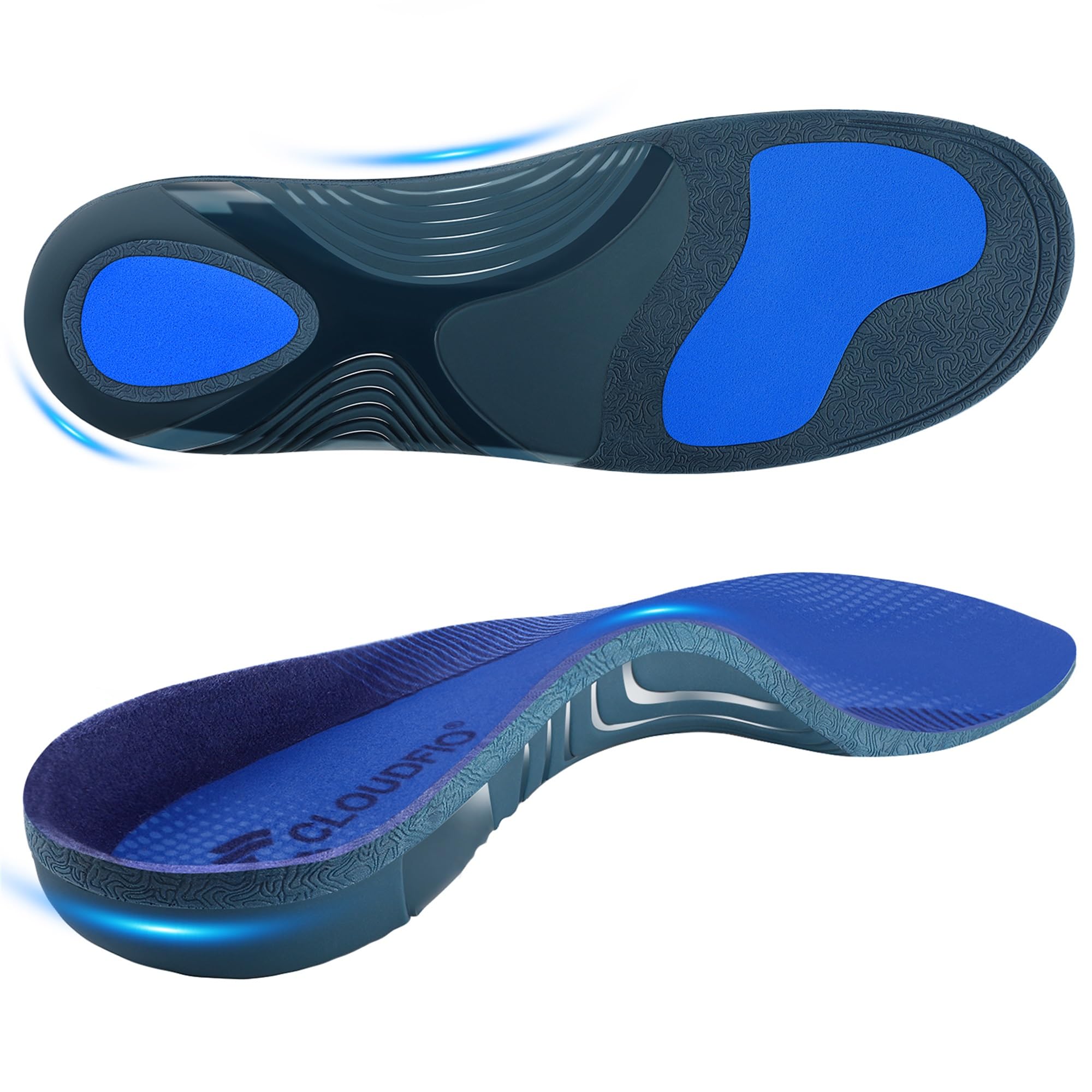
The Cloudflo DB-XL is specifically engineered for professionals who stand stationary for extended periods — nurses, teachers, retail staff, and chefs. The rigid TPU arch frame provides firm, unyielding support that prevents the arch from collapsing during long stationary periods, while the thick Ortholite foam layer delivers the cushioning needed to absorb shock on concrete floors.
User reports are surprisingly strong for a newer model. One user who had severe heel pain from standing all day on vacation reported the pain was completely gone and they could walk 4 miles again. Another noted that the arch support is firm but not aggressive, making it suitable for low to medium arches. The breathable velvet top layer also resists odor well, a practical bonus for long work days.
The trade-off is that Cloudflo’s support profile leans slightly less aggressive in the arch than some competitors — users transitioning from very rigid orthotics may find it softer than expected. However, for the specific use case of standing on hard surfaces without the need for dynamic running motion, the balance of firm support and cushioning is nearly perfect at this mid-range price point.
Why it’s great
- Designed for 10+ hour standing shifts on concrete
- Rigid TPU arch frame prevents long-term arch collapse
- Breathable, odor-resistant top fabric
Good to know
- Arch support is less aggressive than some competitors
- Best suited for low to medium arch types
5. Sof Sole Plantar Fascia 3/4 Length Insoles

The Sof Sole Plantar Fascia insole takes a different approach with its 3/4 length design, which stops just before the toe box. This makes it the best choice for shoes where a full-length insole won’t fit — think dress shoes, loafers, and some casual sneakers with limited space. The key feature is the gel pad embedded in the heel, which disperses heel strike shock and soothes heel spurs directly.
A dedicated user since 2014-2015 reports these insoles last for years, not months, and that they also resolved a long-standing back pain issue alongside plantar fasciitis relief. The “Plantar Relief Bridge” provides sturdy arch support without the bulk of full-length models, and the truncated design fits many shoes without needing trimming. Podiatrists frequently recommend this model, which speaks to its biomechanical credibility.
The trade-off is the truncated length means less forefoot cushioning — runners or those with metatarsalgia may want a full-length option. Also, some users note that the rubber circle on the underside of the gel heel can wear through the shoe’s interior lining over time, so checking for clearance is wise. For FSA/HSA eligible pain relief in a compact package, it’s a highly targeted option.
Why it’s great
- Fits shoes where full-length insoles won’t work
- Gel heel provides targeted shock absorption for spurs
- Exceptional longevity — often lasts years, not months
Good to know
- No forefoot cushioning due to 3/4 design
- Gel heel pad may wear through shoe lining over time
FAQ
How long does it take for insoles to relieve plantar fasciitis pain?
Should I buy full-length or 3/4-length insoles for foot pain?
Can I wash my foot pain insoles?
Final Thoughts: The Verdict
For most users, the best insoles for foot pain winner is the PowerStep Bridge because it combines flexible arch support with responsive memory foam, hitting the sweet spot for all-day comfort, high arches, and even light running. If you want a proven, shift-ready solution for plantar fasciitis and long work days, grab the Dr. Scholl’s Plantar Fasciitis. And for heavy users over 230 pounds standing on hard floors all day, nothing beats the durability and triple-point support of the Psveb Heavy Duty Orthotics.