Finding the right support for diabetic feet is about more than just cushioning—it’s about protecting sensitive skin from friction, hotspots, and pressure that can lead to serious complications. A well-chosen insole can mean the difference between a day spent comfortably standing and one marked by nagging pain.
I’m Emma — the founder and writer behind Baby Bangs. My research focuses on analyzing podiatric-grade materials like Plastazote and Poron, and understanding how they interact with the specific biomechanics of neuropathy-prone and swollen feet to prevent tissue breakdown.
This guide breaks down the top models built to reduce friction, redistribute pressure, and offer gentle yet stable arch support. After reviewing dozens of options, I’ve narrowed the field to the seven most reliable insoles for diabetic feet available today that prioritize both safety and all-day wear.
How To Choose The Best Insoles For Diabetic Feet
The wrong insole can create new pressure points or trap moisture, leading to skin breakdown. Selecting the right one requires looking beyond basic arch support and focusing on materials that reduce shear force and friction.
Look for a Moldable, Low-Friction Top Layer
Look for a top cover made from Plastazote or a similar closed-cell foam. Plastazote is heat-moldable—it softens with body warmth and conforms to the exact shape of your foot, which reduces those painful rubbing spots and redistributes pressure more evenly than standard EVA foam.
Prioritize Deep Heel Cups and Metatarsal Pads
A deep heel cup locks the fat pad under the heel for maximum natural shock absorption and prevents the foot from sliding side to side, reducing shear friction. A metatarsal pad offloads the ball of the foot, relieving pressure on the metatarsal heads—a common source of pain for those with neuropathy or forefoot calluses.
Avoid Memory Foam; Choose Multi-Density Cushioning
Memory foam tends to hold its compressed shape, which can create a permanent indentation that fails to support shifting pressure throughout the day. Instead, look for a multi-density construction that uses a soft top layer (like Poron) over a firmer, supportive base layer. This combo absorbs shock without bottoming out, giving you sustained protection.
Quick Comparison
On smaller screens, swipe sideways to see the full table.
| Model | Category | Best For | Key Spec | Amazon |
|---|---|---|---|---|
| Prothotic Pressure Relief | Premium | Chronic foot pain & high pressure | 25 Durometer Plastazote top layer | Amazon |
| 10 Seconds 3030 | Premium | Forefoot & metatarsal pain relief | Poron strike pads + met pad | Amazon |
| Spenco Medics Diabetics Plus | Premium | Sensitive feet & friction reduction | Polysorb foam + SpenCore heel pad | Amazon |
| New Balance Therapeutic | Mid-Range | Dual-layer soft cushioning | Hypo-allergenic top cover | Amazon |
| Dr. Scholl’s Heavy Duty Support | Mid-Range | Heavier body weight & wide feet | Shock-absorbing foam for 200+ lbs | Amazon |
| VALSOLE Heavy Duty Support | Mid-Range | High arch & plantar fasciitis relief | Reinforced high arch support | Amazon |
| Men’s Diabetic Shoes w/ 3 Insoles | Mid-Range | Edema & adjustable fit (shoes) | Double insole + air cushion system | Amazon |
In‑Depth Reviews
1. Prothotic Pressure Relief Insoles
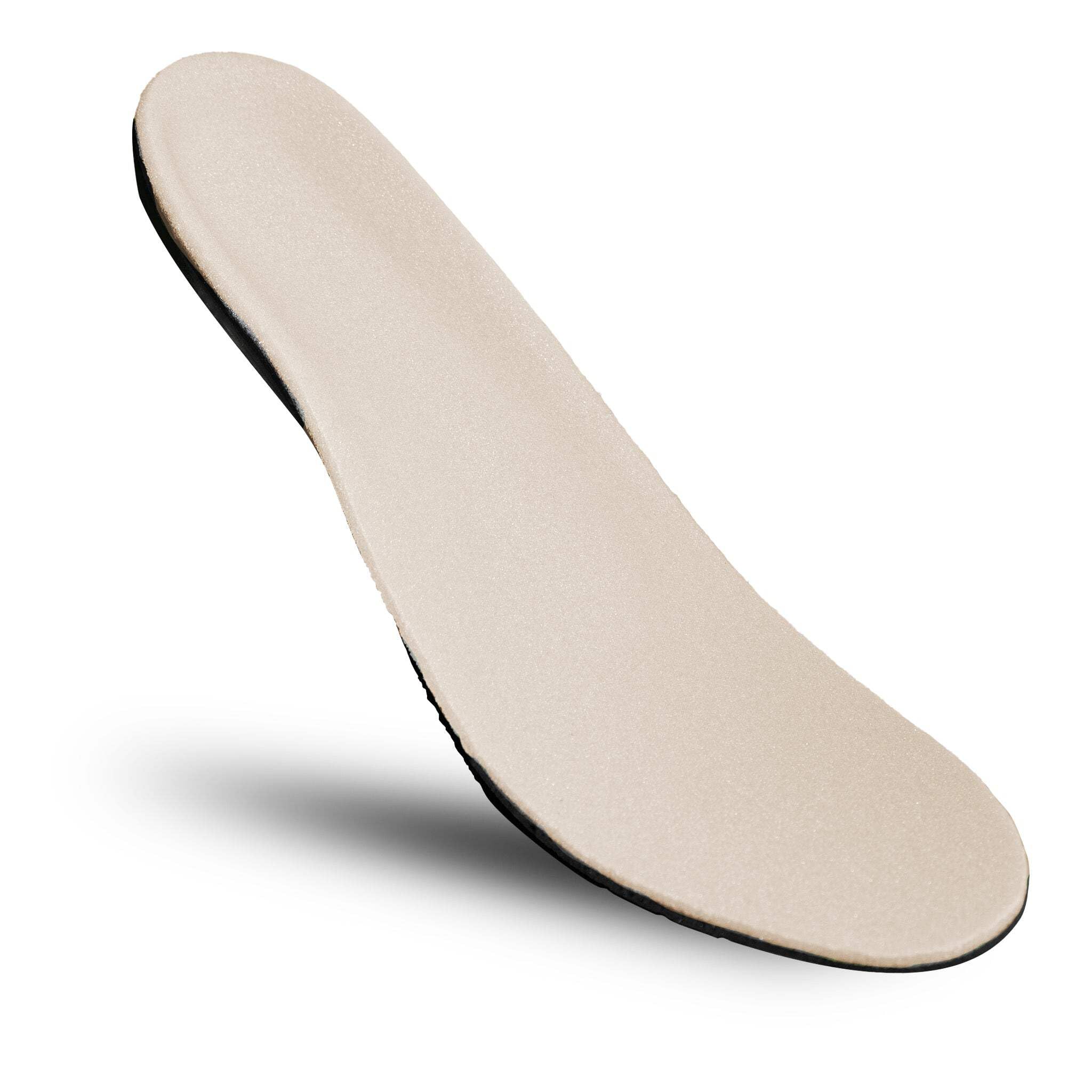
The Prothotic stands out because of its 25 Durometer Plastazote top cover—a material specifically chosen for its ability to mold to the foot under body heat, reducing the friction that leads to hotspots and ulceration. The open-cell foam breathes better than solid EVA, which helps manage moisture for sensitive skin. Underneath, a soft polyurethane bottom layer and Vy-Gel pads at the heel and forefoot provide targeted the defense against impact, making the insole feel substantial without being rigid.
Users with chronic foot deformities, neuropathy, and those who spend 12-hour shifts on concrete floors report that these insoles dramatically reduce ball-of-foot pain and heel tenderness. The metatarsal rise is a key feature here—it guards against over-pronation while offloading the metatarsal heads. Unlike a firm plastic orthotic, the Prothotic layers cushion and support together, offering a “just right” feel that doesn’t require a painful break-in period for most.
Long-term users note the insoles last about two months under heavy use (400+ lbs), which is reasonable for a consumable pressure-relief product. The primary downside is that the deep cushioning can make the shoe fit snugger, so those with roomier shoes or laced boots will find the best fit.
Why it’s great
- Plastazote molds to the foot for zero hotspot rubbing
- Vy-Gel pads at heel and forefoot for targeted shock absorption
- Metatarsal rise offloads ball-of-foot pressure effectively
Good to know
- May require a half-size-up in tighter-fitting shoes
- Foam is consumable; heavy users replace every 2-3 months
2. 10 Seconds Pressure Relief 3030 with Metatarsal Pad

If ball-of-foot pain is your primary complaint—common with metatarsalgia or Morton’s neuroma—the 10 Seconds 3030 is engineered specifically for that. Its defining feature is the large, sculpted metatarsal pad built into the Plastazote topper, which sits behind the metatarsal heads to offload pressure and redistribute it across the arch. This design is more refined than the generic bumps found on other insoles, providing precise support where the foot needs it most.
Beyond the met pad, the insole uses Poron strike pads in the forefoot and heel. Poron is a high-performance urethane foam designed to stay resilient without packing down—it absorbs 90% of impact shock, making it ideal for diabetic feet that need consistent cushioning across every step. The medium arch height offers gentle support without digging in, and the trim-to-fit sizing means adapting them to your favorite walking shoes is straightforward.
Users with metatarsalgia report that these insoles effectively eliminate the burning sensation on the ball of the foot, even during long hikes or standing shifts. The only caution is that the met pad is pronounced; those with very low or flat arches may find it sits too aggressively. Sizing on the box can also be mismatched by half a size, so measure your shoes against the insole length before trimming.
Why it’s great
- Excellent metatarsal pad for offloading forefoot pressure
- Poron foam absorbs shock without compressing over time
- Plastazote topper molds to foot contours for friction relief
Good to know
- Met pad may feel too prominent for very flat feet
- Box sizing can differ from ordered size by half a length
3. Spenco Medics Diabetics Plus Full Length Arch Support Insole
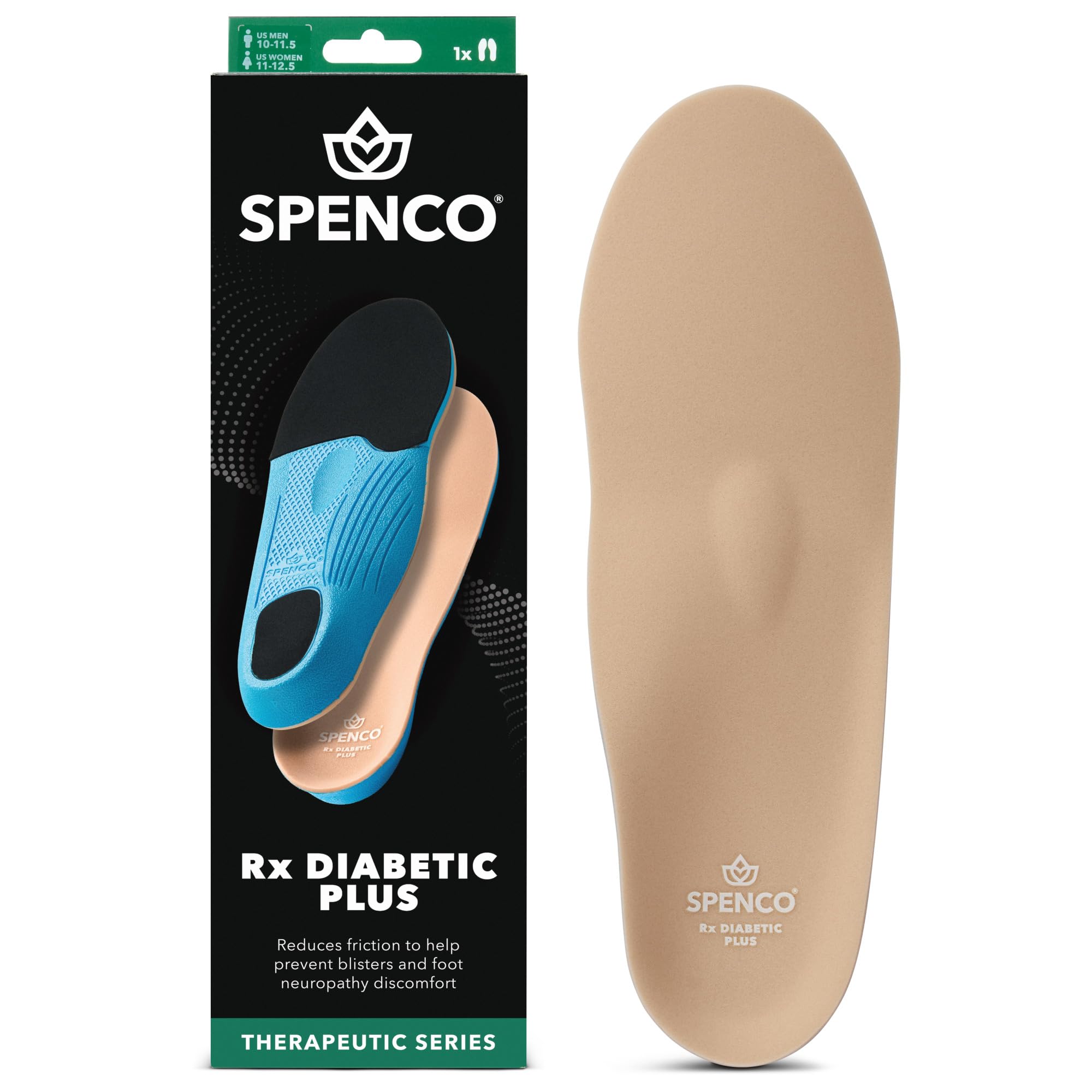
The Spenco Medics Diabetics Plus was designed with the input of podiatrists to prioritize friction reduction and gentle support for easily irritated feet. Its neoprene base and Polysorb foam mid-layer work together to absorb shear forces, while the SpenCore heel pad and a forefoot crash pad soften every step from heel strike to toe-off. The Plastazote top cover is notably soft and accommodating, reducing the risk of hot spots forming on the top of the foot.
What sets Spenco apart is its APMA Seal of Acceptance—signifying its design meets standards for diabetic foot care. The extra-deep heel cup locks the fat pad in place, preventing the side-to-side sliding that causes blistering. The metatarsal arch support is subtle but effective, easing forefoot strain without creating a pressure ridge under the ball. It’s a “set it and forget it” insole for those who need a low-irritation, full-length barrier in their shoes.
Users with wide feet (9.5W) find the fit seamless with no side-gapping. The trade-off is that the soft foam is consumable—heavy users will replace it more often than a firmer orthotic. Some also reported a raised oval along the centerline that caused discomfort, so the fit is very foot-shape dependent. For most with standard arch profiles, though, it provides a cloud-like feel that reduces daily foot fatigue.
Why it’s great
- APMA-accepted design for diabetic foot safety
- Deep heel cup locks foot in place to prevent friction
- Forefoot crash pad softens impact through toe-off
Good to know
- Soft foam is consumable; may wear faster than rigid insoles
- Centerline ridge may cause discomfort for some foot shapes
4. New Balance Therapeutic Cushion Insoles with Dual-Layer Cushioning
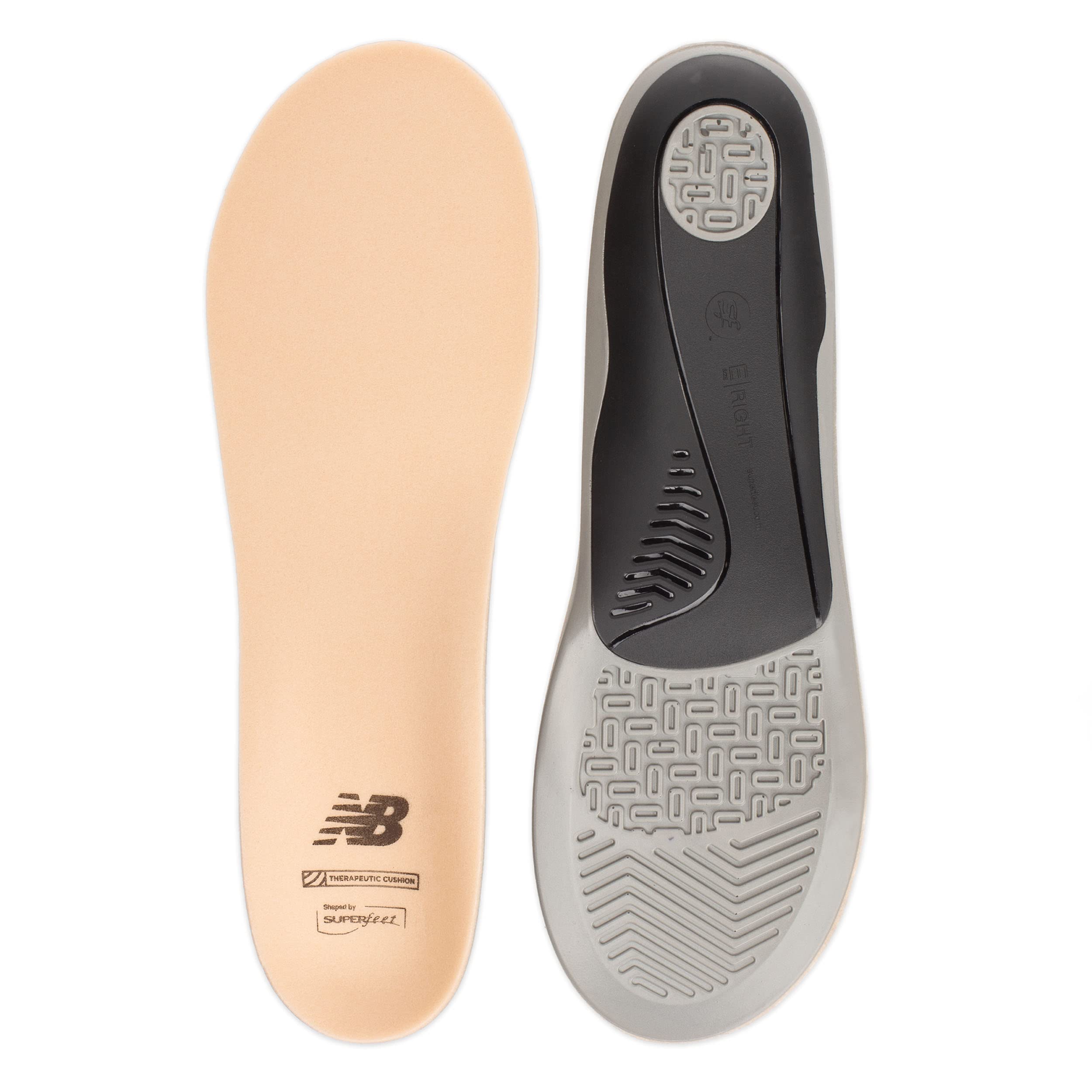
New Balance’s therapeutic range brings a hypo-allergenic top cover to the table, which is a worthwhile feature for diabetic skin that’s prone to irritation. The dual-layer cushioning system uses a super-soft top foam that conforms to the foot’s contours, while a more supportive base layer prevents the insole from bottoming out. It’s a straightforward, no-frills design that focuses on delivering consistent, soft shock absorption across the entire footbed.
The flexible construction means these insoles move naturally with the foot, which helps reduce the rigid feel some orthotics impose. The heel cushion is specially engineered to soften ground impact, making it suitable for walking and light activity. Because there’s no aggressive arch support or metatarsal bump, it works well for those who need gentle cushioning rather than structural correction—a common need for early-stage diabetic foot care.
Users report that these insoles effectively eliminate foot pain and numbness during long standing or walking shifts. The main critique is a lack of robust structural support; those with severe over-pronation or high arches may need a more sculpted design. Additionally, the softness can feel “squishy” to some who prefer a firmer platform. For daily comfort in casual or athletic shoes, though, they’re a reliable pick from a trusted brand.
Why it’s great
- Hypo-allergenic cover is safe for sensitive skin
- Dual-layer cushioning offers soft support without bottoming out
- Flexible design moves naturally with each step
Good to know
- Not enough structural support for severe over-pronation
- Soft feel may be too “squishy” for users needing firm support
5. Dr. Scholl’s Heavy Duty Support Insole Orthotics, Big & Tall
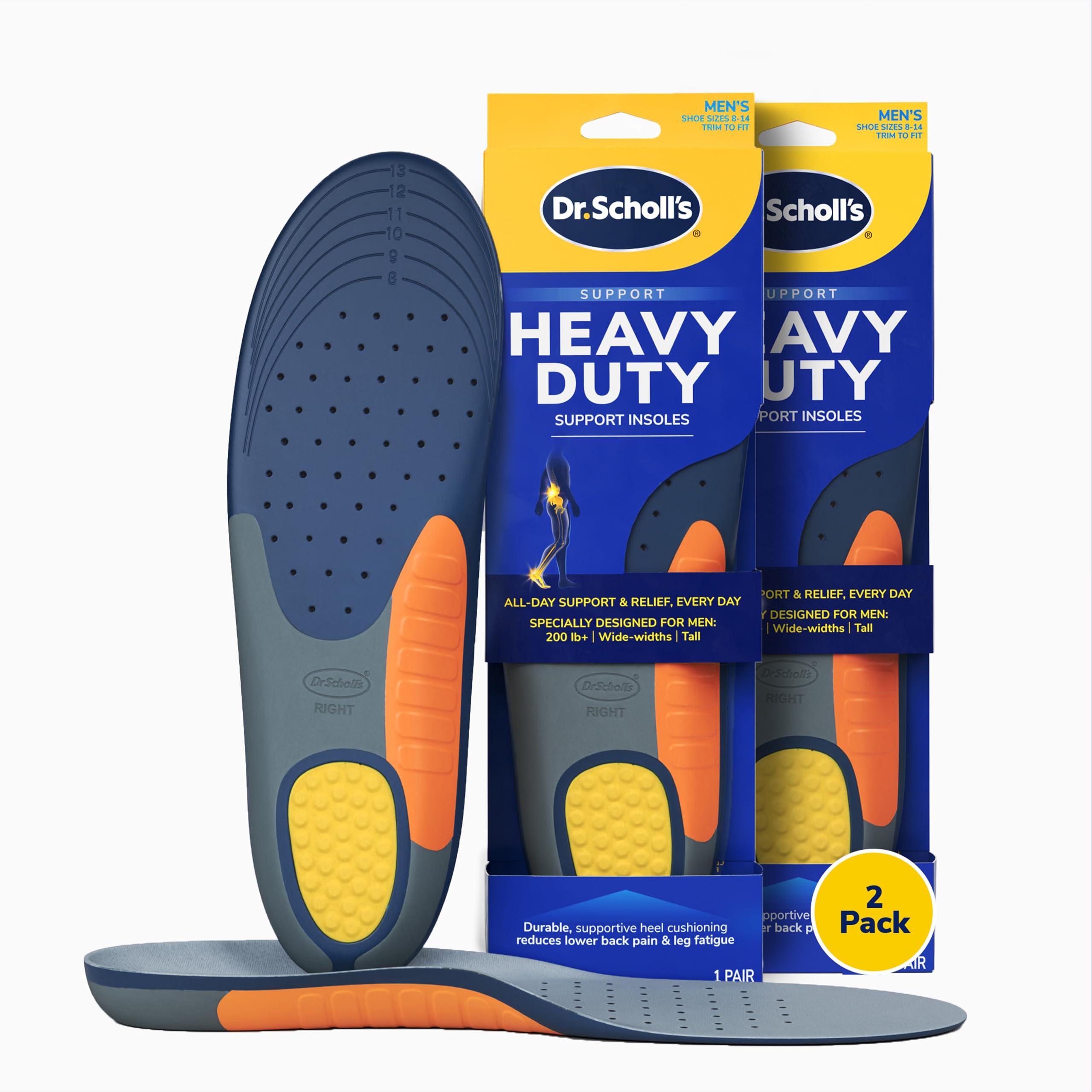
Engineered for individuals over 200 pounds, Dr. Scholl’s Heavy Duty Support insoles are built with extra-thick, shock-absorbing foam that stands up to prolonged standing on hard surfaces. The extra supportive heel cushioning targets lower back pain and leg fatigue, while the arch support distributes foot pressure evenly to reduce the strain on sensitive metatarsal heads. For diabetic feet that also carry more body weight, this insole provides the requisite structural integrity to prevent the foam from collapsing under pressure.
The trim-to-fit design works well in wide work boots and athletic shoes, accommodating wide foot shapes without pinching. The foam formulation is dense but not hard, hitting a sweet spot between cushioning and support that reduces impact on the spine. Users with heel and lower back pain report significant relief, finding that the insoles improve the fit of their work boots and prevent end-of-day foot fatigue.
The main practical downside is the trimming process—the reinforced foam is tough to cut, requiring heavy-duty shears for a clean edge. Also, the high arch support can feel aggressive for the first few days, particularly for those with low arches. But for the intended user—big and tall individuals needing robust, wide-foot support—it’s a cost-effective solution that delivers on its promise of durable, all-day relief.
Why it’s great
- Extra thick foam supports users over 200 lbs without bottoming out
- Heel cushioning relieves lower back and leg fatigue
- Wide design fits work boots and roomy footwear well
Good to know
- Foam is very tough to trim—heavy-duty shears required
- High arch may feel too aggressive for low-arched feet
6. VALSOLE Heavy Duty Support Pain Relief Orthotics

VALSOLE’s design focuses on a reinforced high arch frame that doesn’t collapse, making it a strong candidate for those with high arches or plantar fasciitis combined with diabetic foot concerns. The insole uses a structured base that provides firm corrective support, while the top layer offers enough cushioning to prevent hard points from digging into sensitive soles. It strikes a balance between a custom orthotic feel and an over-the-counter price point.
The arch profile is pronounced, which is excellent for offloading the heel and forefoot—taking pressure off the metatarsal heads and the heel spur area. The insoles are thick, requiring users to loosen laces for a proper fit, but they stay put once inside the shoe. Workers on their feet for 12-16 hour shifts on concrete report that these insoles eliminated sharp heel pain immediately, noting that the support feels “spongy yet firm” without flattening over time.
The primary limitation is that the high arch does not suit low-arched or flat feet—it will feel like a golf ball under the arch, causing discomfort instead of relief. Also, the thick build may not fit in low-profile shoes like dress sneakers. For warehouse workers, walkers, and anyone with a distinct arch who fights heel pain daily, the VALSOLE offers a near-instant fix that bypasses a long break-in period.
Why it’s great
- High arch support instantly offloads heel and forefoot pressure
- Spongy-firm foam resists flattening during long shifts
- No break-in period—immediate relief for many users
Good to know
- Not suitable for low-arched or flat feet
- Thick profile requires shoes with removable insoles and extra volume
7. Men’s Diabetic Shoes Large Size with Double Insole
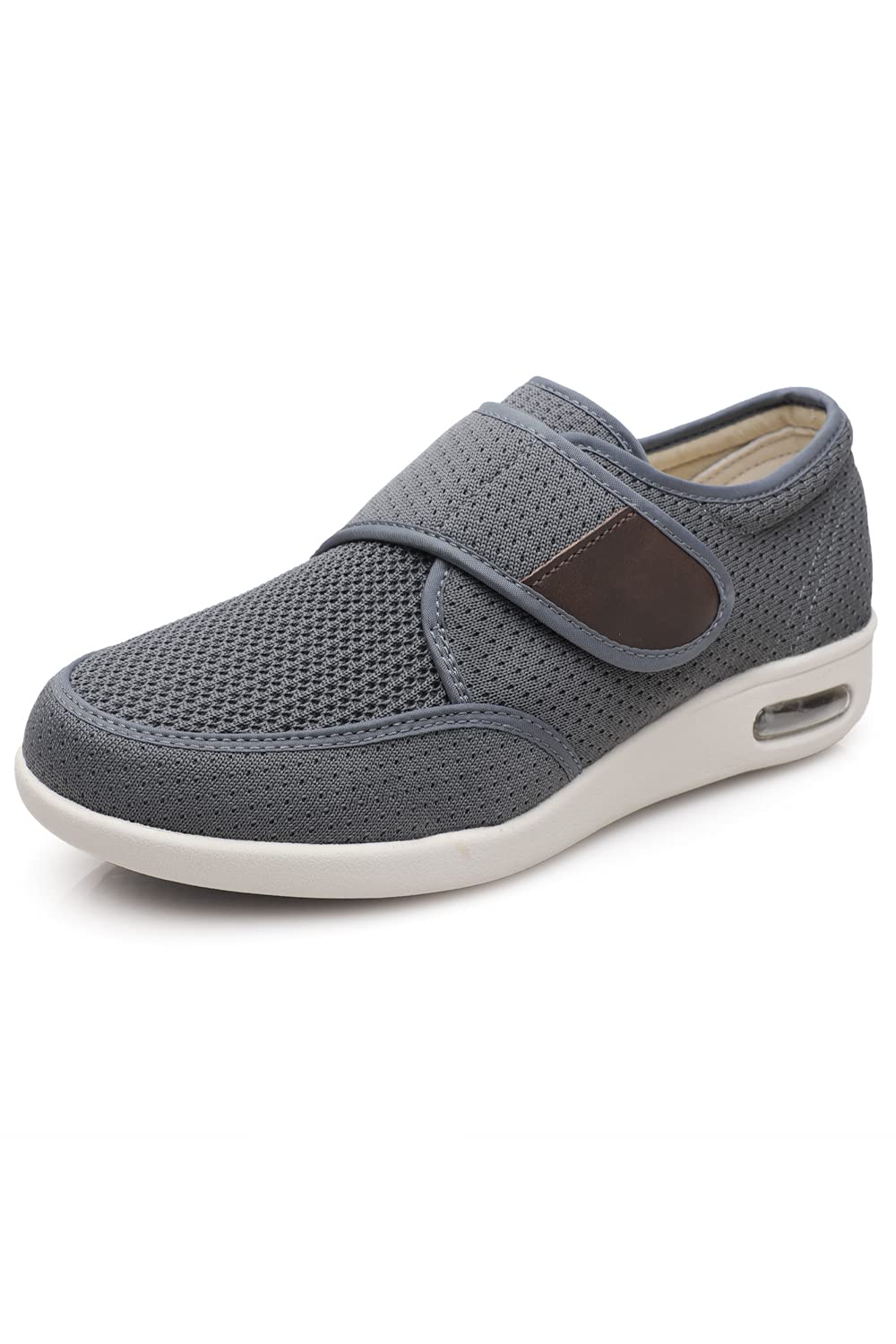
This product is unique on the list because it’s not just an insole—it’s a full diabetic shoe that comes with a triple-insoles system, allowing for two layers of cushioning plus a base layer. The shoe itself features a wide opening, a fold-back lip for easy entry, and hook-and-loop closure for a fully adjustable fit—critical for managing edema or swelling that fluctuates throughout the day. The outsole has an air cushion pod for added shock absorption.
The insoles included are of noteworthy quality; stacking two of the cushioning insoles provides a soft, cloud-like platform that reduces pressure on the forefoot and heel. For those who need extra volume for custom orthotics, the three-insole system lets you swap out the base layer. The breathable, non-stiff upper material keeps feet cool, and the slip-resistant outsole adds safety for indoor and outdoor use.
Users report that the shoes are a godsend for elderly individuals or those with severe edema, as the velcro strap accommodates changing foot volumes without compression. The primary drawbacks are the lack of narrow sizing and half-sizes—if you need a precise fit, the wide-only sizing may be too roomy. Overall, this is a smart choice for those who need a complete footwear solution rather than just an insert.
Why it’s great
- Triple insole system lets you customize cushioning levels
- Hook-and-loop closure adjusts for edema and swelling
- Wide opening and fold-back lip make for easy on/off
Good to know
- No narrow sizing or half-sizes available
- Wide fit may be too roomy for standard-width feet
FAQ
How often should you replace insoles for diabetic feet?
Can diabetic insoles help with neuropathy pain?
Should I buy insoles with a metatarsal pad?
Final Thoughts: The Verdict
For most users, the insoles for diabetic feet winner is the Prothotic Pressure Relief Insole because its 25 Durometer Plastazote top cover and Vy-Gel pads provide the best balance of friction reduction and targeted shock absorption for sensitive feet. If you want a dedicated metatarsal pad for forefoot relief, grab the 10 Seconds Pressure Relief 3030. And for an all-in-one footwear solution that accommodates swelling, nothing beats the Men’s Diabetic Shoes with Triple Insole System.