Concrete doesn’t give, which means every step you take on a warehouse floor, retail tile, or garage slab sends a shockwave straight through your heels, knees, and lower back. After eight hours, that solid surface turns your feet into throbbing anchors, dragging your energy down and making the walk to the car feel like a marathon. The right insole doesn’t just pad the shoe—it changes the physics of every single stride.
I’m Emma — the founder and writer behind Baby Bangs. I’ve spent years digging through material science reports on PORON, Plastazote, and TPU support frames to separate high-performance footbeds from glorified foam pancakes.
This guide is built for anyone who logs their days on unforgiving flatwork. If you want to finish your shift with spring in your legs instead of gravel in your joints, you have found the definitive rundown of the insoles for concrete that actually hold up under pressure.
How To Choose The Best Insoles For Concrete
Concrete is uniquely punishing because it absorbs zero impact. Every force from a heel strike bounces back into your skeleton rather than into the ground. To counteract that, you need an insole built around three pillars: rigid arch structure, multi-layer shock zoning, and a deep heel cradle. Skipping any one of these leaves a gap that concrete will exploit over a long shift.
Arch Support Structure — Flexible Is the Enemy
A flat or soft arch insole lets your foot collapse inward under load, which rolls your ankle bones out of alignment and sends stress up your shin and knee. Look for a rigid TPU (thermoplastic polyurethane) frame or a reinforced shell built into the mid-foot. The material should resist twisting when you press it. A strong arch bridge keeps your foot’s skeleton stacked correctly, turning your leg into a stable column rather than a wobbly hinge.
Cushion Material — PORON vs. Memory Foam vs. Gel
Memory foam molds to your foot when warm, but it lacks the rebound energy to protect you on repeated high-force impacts across ten-hour days. Gel feels plush initially but bottoms out under heavy weight and loses shape in cold weather. PORON is a micro-cellular urethane that compresses rapidly to absorb shock then springs back instantly with minimal degradation—it is the standard for concrete-floor durability. A top-tier insole will pair a firm base layer (PORON or similar polyurethane) with a softer top layer (Plastazote or foam) for pressure distribution.
Heel Cup Depth and Stability
Concrete does not forgive a wobbling heel. A shallow heel cup allows the fat pad under your calcaneus to splay sideways, reducing its natural shock-absorbing ability. A deep U-shaped cup—15mm or taller—locks the heel in place, stabilizes the subtalar joint, and prevents the micro-jarring that leads to plantar fasciitis. On concrete, a deep cup is not a comfort feature; it is structural armor for your rear foot.
Quick Comparison
On smaller screens, swipe sideways to see the full table.
| Model | Category | Best For | Key Spec | Amazon |
|---|---|---|---|---|
| 10 Seconds 3020 | Premium | All-day cushioned comfort | Plastazote memory foam topper | Amazon |
| Psveb Heavy Duty | Mid-Range | 230+ lbs & plantar fasciitis | Dual PORON cushioning layers | Amazon |
| Cloudflo DB-XL | Mid-Range | 220+ lbs standing all day | Rigid TPU support frame | Amazon |
| ROCKROOSTER RC930 | Mid-Range | 200+ lbs construction work | Poron XRD heel composite | Amazon |
| GVIIPK 3.1 CM | Premium | 280+ lbs & overpronation | Dual-layer PORON + TPU plate | Amazon |
In‑Depth Reviews
1. GVIIPK Multi-Height Orthotic Insole 3.1 CM
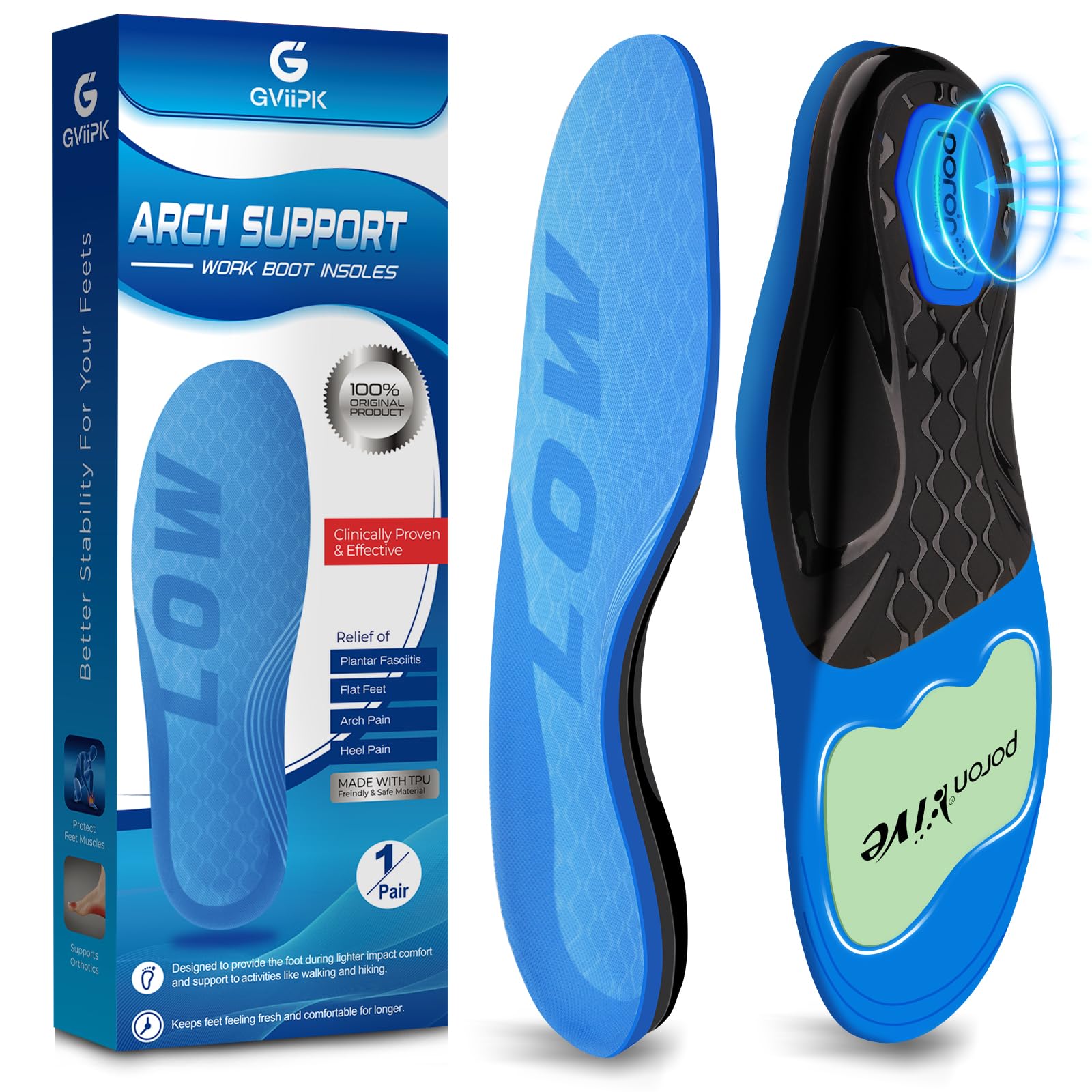
This is the one that concrete workers and heavy-lift athletes keep coming back to. The graded arch system gives you a high-support 3.5 cm option for initial correction and a 3.1 cm medium for maintenance, which means you can dial in your foot’s recovery over weeks rather than guessing. The TPU support plate runs deep into the core of the arch and resists collapse even under 280+ pounds of sustained load—on concrete, that rigidity is the difference between walking straight and rolling inward all day.
The dual-layer PORON cushioning handles the ground impact from below while the TPU frame controls motion from above. Users report significant reductions in knee fatigue and heel pain after long walks on pavement or full shifts on industrial floors. The breathable fabric stays dry, and the trim lines allow a precise fit into work boots without slipping.
At this price point, the construction quality is exceptional. The multi-layered structure does not delaminate after months of use, and the shock absorption rate—claiming 78 percent higher layering capacity than competitors—is backed by real feedback from podiatry-minded users. For anyone who treats concrete as a daily surface, this is the benchmark unit.
Why it’s great
- Graded arch heights let you progress from correction to maintenance without buying a second pair.
- TPU support frame resists twisting under extreme weight for planted stability.
- Dual-layer PORON delivers measurable reduction in heel shock and lower-back fatigue.
Good to know
- Initial break-in feels firm for feet used to soft foam—give it a few full shifts.
- High-support 3.5 cm option may raise your heel too much for low-back shoes.
2. Psveb Heavy Duty Support Pain Relief Orthotics
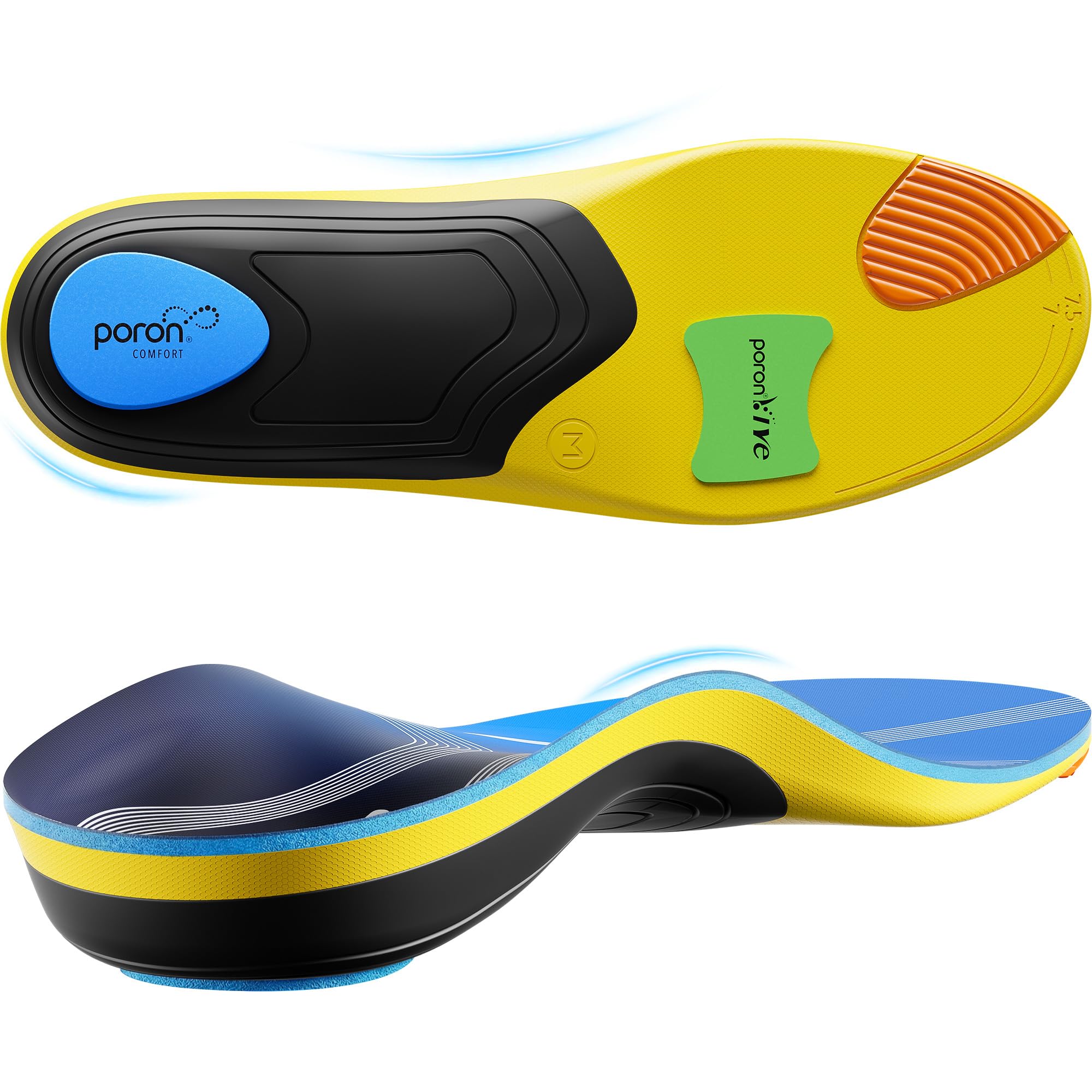
The Psveb unit punches well above its tier. The double PORON cushioning stack provides the same core shock-absorption material found in premium orthotics, but the real trick is the Golden Triangle design—three points of support under the forefoot, arch, and heel that distribute weight evenly across the foot. On concrete, that triangulation prevents any single zone from taking the full brunt of a floor strike.
The deep U-shaped heel cup locks the calcaneus in place and prevents the sideways splaying that leads to arch strain and Achilles irritation. Users weighing over 230 pounds report immediate relief from plantar fasciitis symptoms and noticeably less lower-back fatigue by the end of a 9-to-10-hour shift standing on hard tile or warehouse flooring. The fabric is breathable and sweat-wicking, and the insoles hold their shape without flattening after three weeks of daily wear.
They fit true to size in work boots—size 10 required minor toe-trimming but zero bunching around the heel—and they also slide into sneakers without crowding the toe box. Durability looks strong for this price band; the foam does not compact prematurely, and the PORON layers retain their rebound. For a concrete-floor worker who needs professional-grade support on a mid-range budget, this is the safest bet.
Why it’s great
- Golden Triangle weight distribution prevents pressure hotspots on long concrete shifts.
- Deep heel cup locks the foot in place and cuts micro-jarring that triggers fasciitis.
- PORON cushioning absorbs repeated high-force impact without flattening out.
Good to know
- Thick build may require loosening laces for low-volume shoes like dress oxfords.
- One reviewer noted a snug fit in size 10 that needed a slight toe trim.
3. 10 Seconds Pressure Relief 3020

This is the insole your podiatrist recommends when you need maximum cushion with zero break-in. The Plastazote memory foam topper is the standout feature—it molds to the exact contours of your foot after about ten steps, distributing pressure evenly across the entire plantar surface rather than concentrating it at high-point areas. Underneath that, the PORON strike pads absorb the specific impact zones at the heel and forefoot, which is where concrete does the most damage over time.
It runs as a medium arch height with a cushioned firmness, making it an excellent fit for people with normal arches who want squish without losing support. Users with diabetic foot concerns and previous plantar fasciitis flare-ups report that these insoles make a noticeable difference in end-of-day pain levels. The trim-to-fit design works with sneakers, work boots, and casual shoes alike, though the overall thickness of the unit makes low-profile loafers feel snug.
At this price point—the premium end of this list—you are paying for material longevity and the heat-moldable fit that cheaper foam cannot replicate. The Plastazote does not pack out as quickly as standard EVA, and the PORON strike pads maintain their rebound beyond six months of daily wear. If your concrete exposure is paired with a pre-existing condition like diabetes or neuropathy, the 3020 is the safest and most comfortable option here.
Why it’s great
- Plastazote topper molds to your foot for a truly customized pressure map.
- PORON strike pads at heel and forefoot absorb concrete’s ground-shock directly.
- Podiatrist-recommended and widely used for diabetic foot protection.
Good to know
- Premium price does not include a rigid TPU frame—more cushion than correction.
- Thicker profile may force you to size up in low-cut shoes or tight sneakers.
4. Cloudflo Plantar Fasciitis Insoles DB-XL
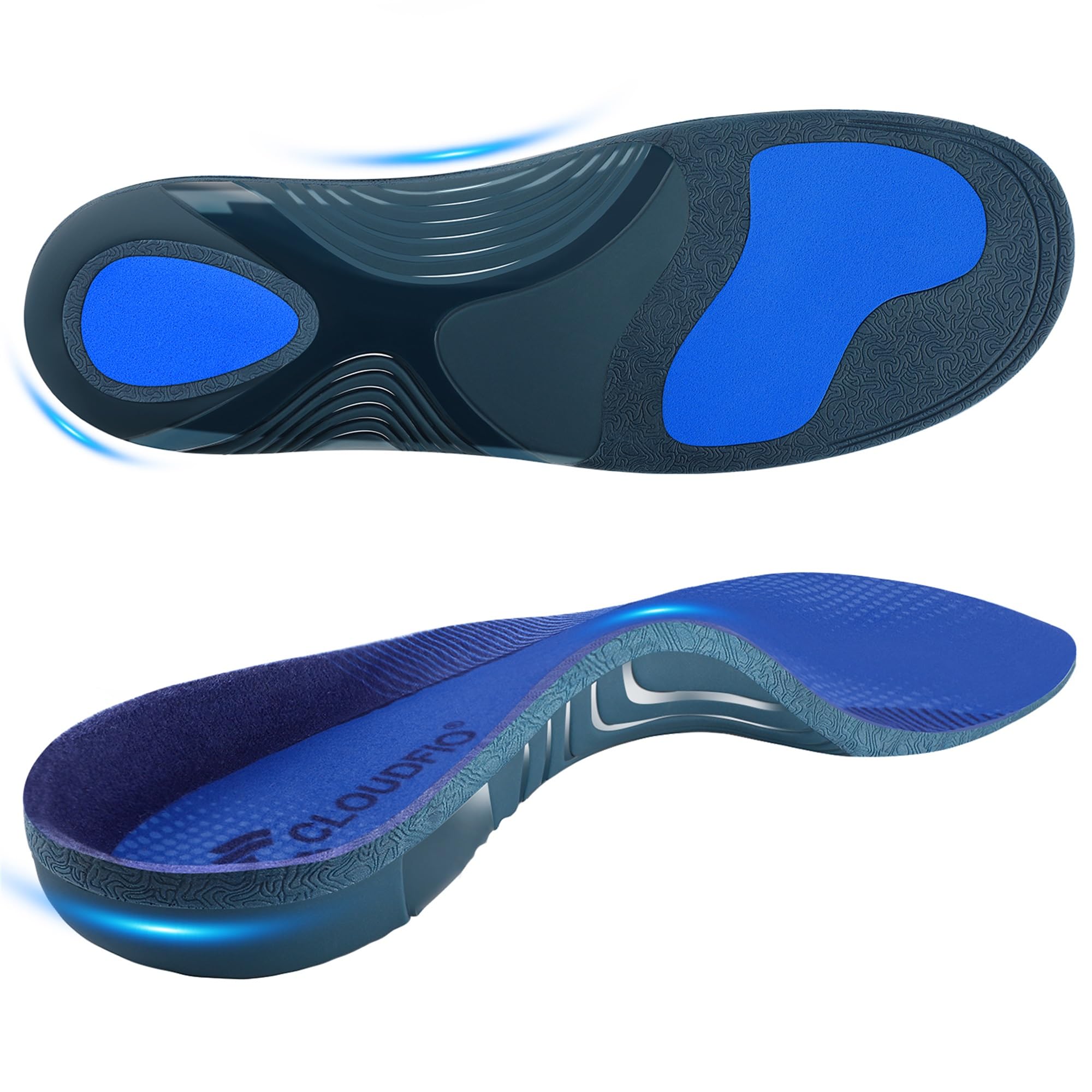
The DB-XL is engineered specifically for the 10-hour standing shift on concrete, and its construction reflects that purpose. The rigid TPU material runs the full length of the arch, creating a hard frame that resists flexion even when you shift your weight from one foot to the other repeatedly throughout the day. That rigidity is paired with a thick Ortholite cushioning layer in the forefoot and a PU heel pad that absorbs the initial impact of every heel strike.
Users who fit the 220-plus-pound profile report that the arch support feels firm without being painful—it cradles the medial arch without jabbing into the midfoot. Several reviews mention that the insoles eliminated severe heel pain and plantar fasciitis symptoms after just a few days of use, allowing a return to walking distances that were previously impossible. The velvet top layer is breathable and controls odor, which matters when you are locked into boots for back-to-back shifts.
The trim-to-fit sizing is straightforward, and the insoles fit well into work boots without bunching at the toe or lifting at the heel. The TPU frame is noticeably harder than foam-only competitors, which makes it less comfortable for standing still on tile for short periods but vastly superior for active walking and load-bearing on unyielding concrete.
Why it’s great
- Rigid TPU frame prevents arch collapse during weight shifts on hard floors.
- PU heel pad absorbs concentrated heel-strike impact better than standard foam.
- Breathable velvet top layer resists odor buildup across multi-day use.
Good to know
- Firm arch may feel aggressive for low-arched feet during the first two shifts.
- Frame stiffness makes them less comfortable for casual walking outside work boots.
5. ROCKROOSTER Memory Foam Anti-Fatigue RC930
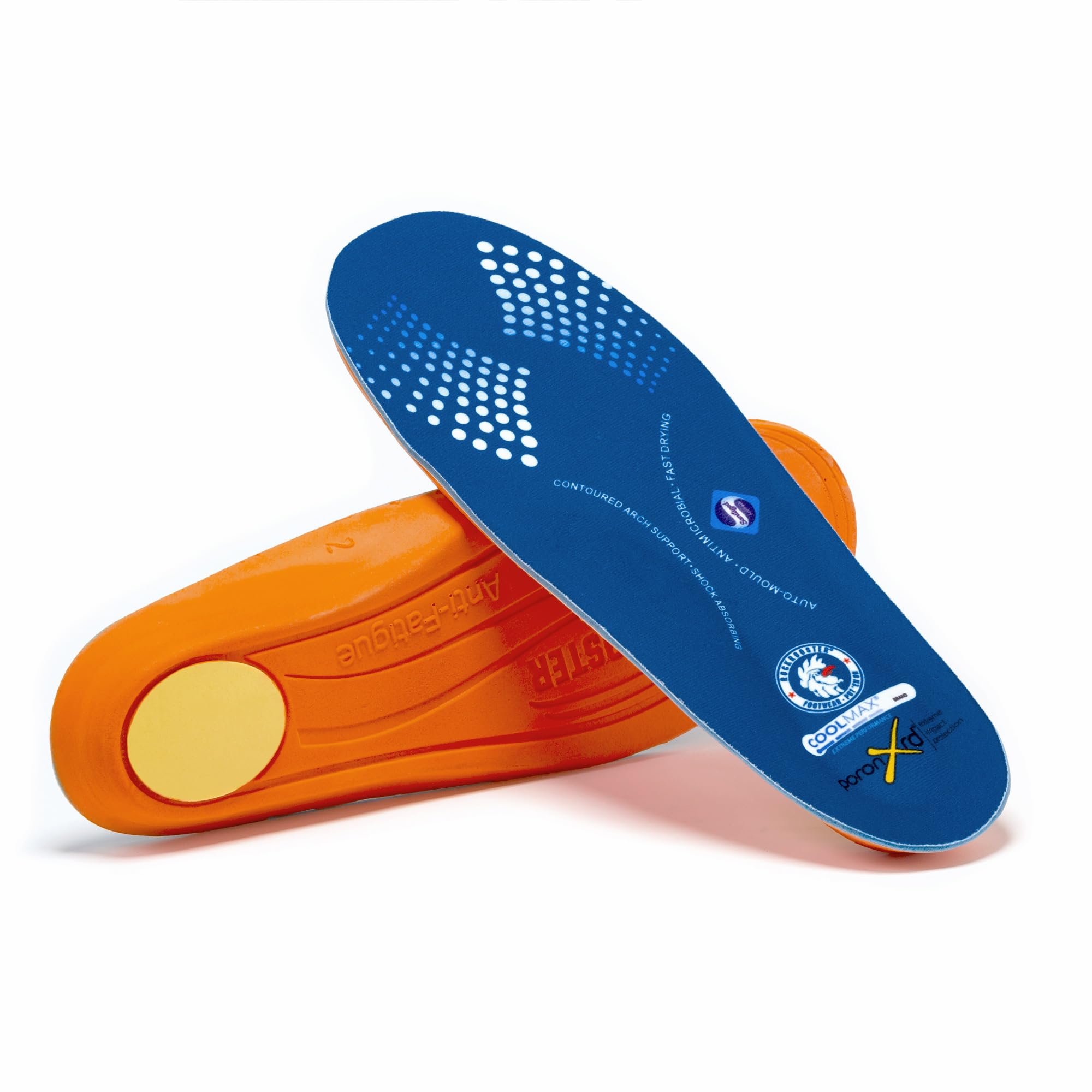
The RC930 is the upgrade from RockRooster’s base RC920 model, and the extra layer of memory foam makes a real difference on concrete. The slow-rebound foam contours to the unique shape of your foot’s sole, while the Poron XRD composite material in the heel and forefoot absorbs instantaneous energy from every step. For construction workers and tradespeople who spend their days on poured slabs, the combination of custom-fit memory foam and high-impact Poron is a reliable pairing.
The COOLMAX surface fabric is a functional bonus—it wicks moisture away from the foot to keep the skin dry during hot days in insulated boots, and the fiber structure provides enough insulation to keep feet warmer in cold weather. Users consistently report that the RC930 stays comfortable from the first bell to quitting time, and many return to buy the same model again after a year of daily abuse. One reviewer noted a defective air pocket in the foam, but the company replaced the pair immediately with strong customer service follow-up.
These are best suited for people who weigh over 200 pounds and need a medium-to-firm arch that will not collapse under load. The slow-rebound foam does not bottom out the way cheaper polyurethane does, but it is worth noting that the RC930 leans toward plush comfort rather than hard structural correction. For concrete work where you want a balance of shock absorption and contour fit, this is a solid choice.
Why it’s great
- Memory foam topper molds to foot shape for a personalized fit across long shifts.
- Poron XRD composite absorbs instantaneous impact at heel and forefoot.
- COOLMAX fabric keeps feet dry inside insulated work boots.
Good to know
- Memory foam is softer than TPU frames—less motion control for severe overpronators.
- One user reported a defective foam pocket, though replacement was handled quickly.
FAQ
Can I use running insoles on concrete flooring all day?
How often should I replace insoles used on concrete daily?
Do I need a higher arch support for standing still vs. walking on concrete?
Final Thoughts: The Verdict
For most users, the insoles for concrete winner is the GVIIPK Multi-Height Orthotic 3.1 CM because it combines a graded arch system with a deep TPU frame and dual-layer PORON cushioning—giving you correction and impact protection in one unit. If you want the most comfortable all-day cushion without a rigid frame, grab the 10 Seconds Pressure Relief 3020. And for a budget-friendly option that still uses real PORON and a locked heel cup, nothing beats the Psveb Heavy Duty Support Orthotics.