Enduring long hours on hard floors, dealing with that familiar ache in the arch after a shift, or wincing with that first step out of bed in the morning — your feet are telling you they need more than just a thicker shoe sole. The right insole doesn’t just fill space; it actively supports your foot’s natural structure, redistributes impact, and can dramatically reduce strain traveling up through your knees and lower back. The choice between foam, gel, or a rigid orthotic shell isn’t about preference — it’s about what your specific foot type and daily demands require.
I’m Emma — the founder and writer behind Baby Bangs. I’ve spent years analyzing the engineering behind foot biomechanics and dissecting how material density, arch height, and heel cup depth translate into real-world relief for people who spend their days on their feet.
Whether you’re managing a nagging case of plantar fasciitis, need heavy-duty support for a larger frame, or simply want to upgrade the cheap factory inserts in your work boots, this guide cuts through the noise to find the insoles for comfort that deliver structural support without sacrificing day-long wearability.
How To Choose The Best Insoles For Comfort
Not all “comfort” insoles are built the same. A plush gel insole might feel amazing when you first slip it on, but it can compress within weeks and offer no real structural support. To find a pair that genuinely reduces fatigue and prevents pain, you need to look past the marketing and focus on three critical factors: your arch type, the material composition, and your body weight.
Match the Arch Support to Your Foot Type
Your arch determines how your weight is distributed with every step. If you have high arches, you need a rigid, pronounced support to lift the foot and prevent the plantar fascia from overstretching. Flat feet or fallen arches benefit from a lower, more gradual support that re-trains the foot’s natural position. Using an insole with the wrong arch height can cause more discomfort than using no insole at all — pay close attention to products that specify “high arch” or “neutral arch” in their specs.
Material Density vs. Pillow Softness
There’s a trade-off between immediate “sink-in” comfort and long-term support. Memory foam and standard EVA (Ethylene Vinyl Acetate) offer soft cushion but lack the rigidity needed for structural correction. Premium options use dual-layer PORON or specialized foams paired with a TPU (Thermoplastic Polyurethane) shell or plate. This combo provides the shock absorption to protect your joints while maintaining the arch support your foot needs throughout a full 8-hour shift.
Weight Capacity and Durability
Many standard insoles are designed for an average weight range and will collapse or flatten within weeks under heavier loads. Products explicitly built for “220lbs+” or “heavy-duty support” use higher-density foams and reinforced TPU plates that resist compression. If you fall into that category, a budget-friendly foam option is almost certainly going to leave you disappointed — investing in a structurally reinforced insole is the smarter choice for consistent comfort and longevity.
Quick Comparison
On smaller screens, swipe sideways to see the full table.
| Model | Category | Best For | Key Spec | Amazon |
|---|---|---|---|---|
| MOVE All Day Comfort Insole | Premium | All-day cushion & stability | X-Frame Torsional Support + Recharge Foam | Amazon |
| PowerStep Pinnacle | Premium | Podiatrist-recommended relief | Dual-layer cushioning + Moderate Pronation control | Amazon |
| Fit Geno Arch Support | Mid-Range | Heavy-duty support for 220lbs+ | Rigid high arch + PORON heel cushion | Amazon |
| GVIIPK Heavy Duty Orthotic | Mid-Range | High arch correction (3.5cm) | Graded Arch Support + TPU support plate | Amazon |
| Dr. Scholl’s Plantar Fasciitis | Budget | Value-focused plantar fasciitis relief | Arch support + heel cushion | Amazon |
In‑Depth Reviews
1. MOVE All Day Comfort Insole
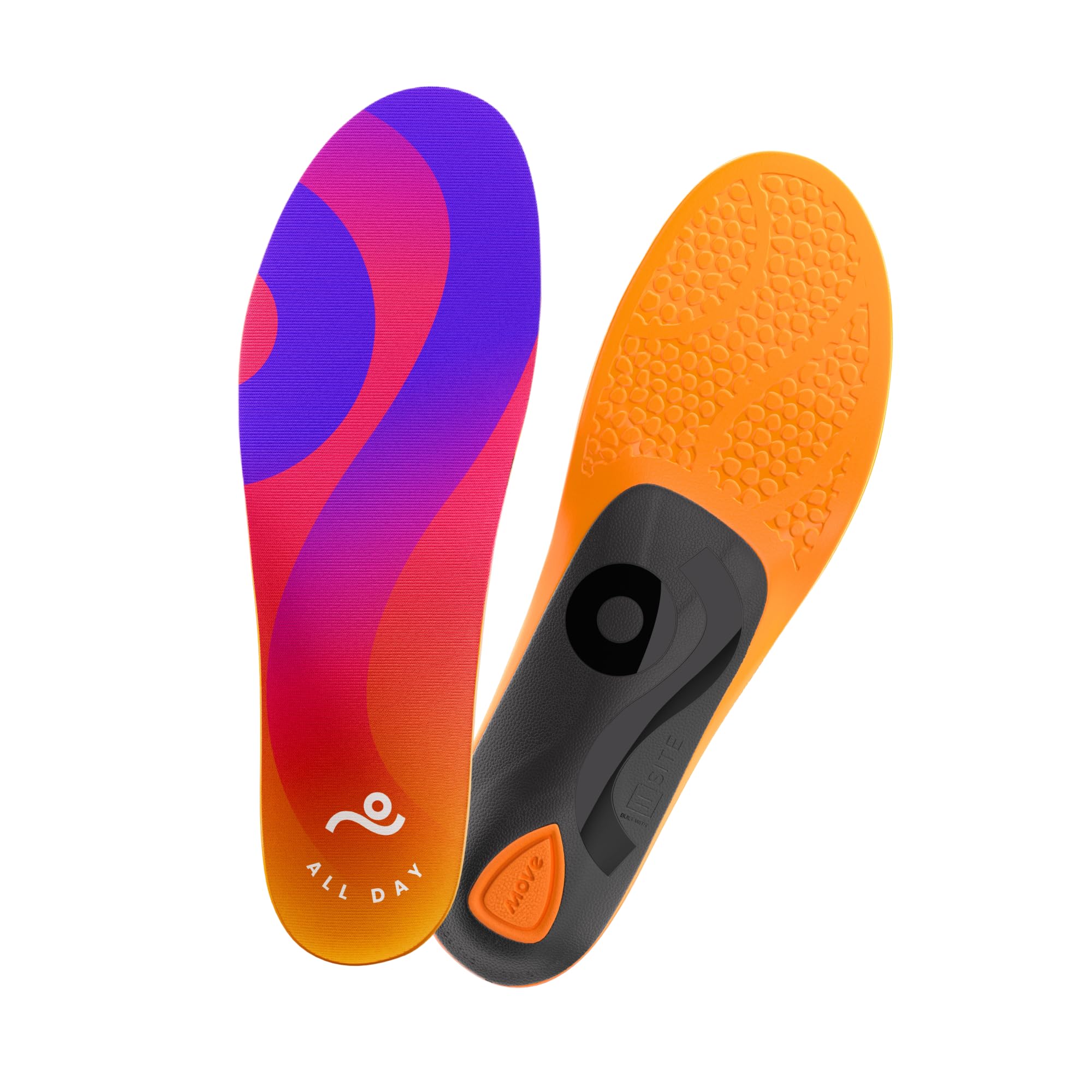
The MOVE All Day Comfort Insole is engineered with a sophisticated X-Frame Torsional Support system that bridges the gap between a soft, energy-returning foam and a rigid structural plate. This design provides heel and midfoot stability while still allowing natural movement — a rare combination that makes it exceptionally versatile for walking, work boots, or even upgrading the comfort of lifestyle sneakers like Air Jordans or Dunks. The “Active Heel Technology” actively minimizes pressure on sensitive areas, targeting pain at the source rather than just masking it with a generic pad.
What sets this premium option apart is its ability to transform shoes with poor factory insoles into genuine all-day comfort platforms. Users report that it completely eliminates foot fatigue, even during long standing shifts, and the plush but supportive foam doesn’t bottom out quickly. The build quality is noticeably higher than standard drugstore insoles, justifying its position as a top-tier choice for anyone serious about foot health and comfort.
One trade-off: the thicker profile is not ideal for low-profile shoes like Adidas Samba or Gazelles, as it can crowd the toe box. For most everyday footwear, however, the fit is perfect right out of the box, with the option to trim if needed. If your priority is a balanced combination of premium cushioning and real structural support, this is the most well-rounded pick on the list.
Why it’s great
- X-Frame system delivers both stability and flex.
- Active Heel Technology targets pressure points.
- High-density foam provides lasting cushion without quick collapse.
Good to know
- Too thick for very low-profile or minimalist shoes.
- Premium build comes at a higher entry point.
2. PowerStep Pinnacle Insoles

The PowerStep Pinnacle holds the distinct advantage of being a #1 podiatrist-recommended orthotic, a claim backed by real clinical trust. It is designed with moderate pronation control, meaning it’s calibrated for the vast majority of feet that don’t have extreme high or flat arches but still need stability. The dual-layer cushioning is specifically engineered to reduce stress and fatigue over long days, making it a top performer for anyone logging 10,000+ steps daily on concrete or hard flooring.
Users switching from custom orthotics find the PowerStep Pinnacle to be a remarkably close match, often providing superior pain relief for plantar fasciitis and heel spurs without the high custom cost. The full-length design fits easily into athletic shoes, work boots, and casual sneakers without needing trimming — the sizing is by shoe size, which eliminates guesswork. The inclusion of a 30-day money-back guarantee further underscores the confidence in its fit and performance.
The initial feel can be stiffer compared to a purely foam insole; a short break-in period of a few days is typical. However, once adapted, it offers a level of consistent, clinical-grade support that cheaper alternatives simply cannot replicate. If you prefer a product with medical credentials and a proven track record for managing chronic foot conditions, this is the most trustworthy option.
Why it’s great
- Podiatrist recommended with a proven track record for PF relief.
- Dual-layer cushioning for all-day fatigue reduction.
- No trimming needed; fits shoe sizes directly.
Good to know
- Feels stiff initially and requires a break-in period.
- Moderate pronation control may not suit extreme arch types.
3. Fit Geno Arch Support Plantar Fasciitis Insoles
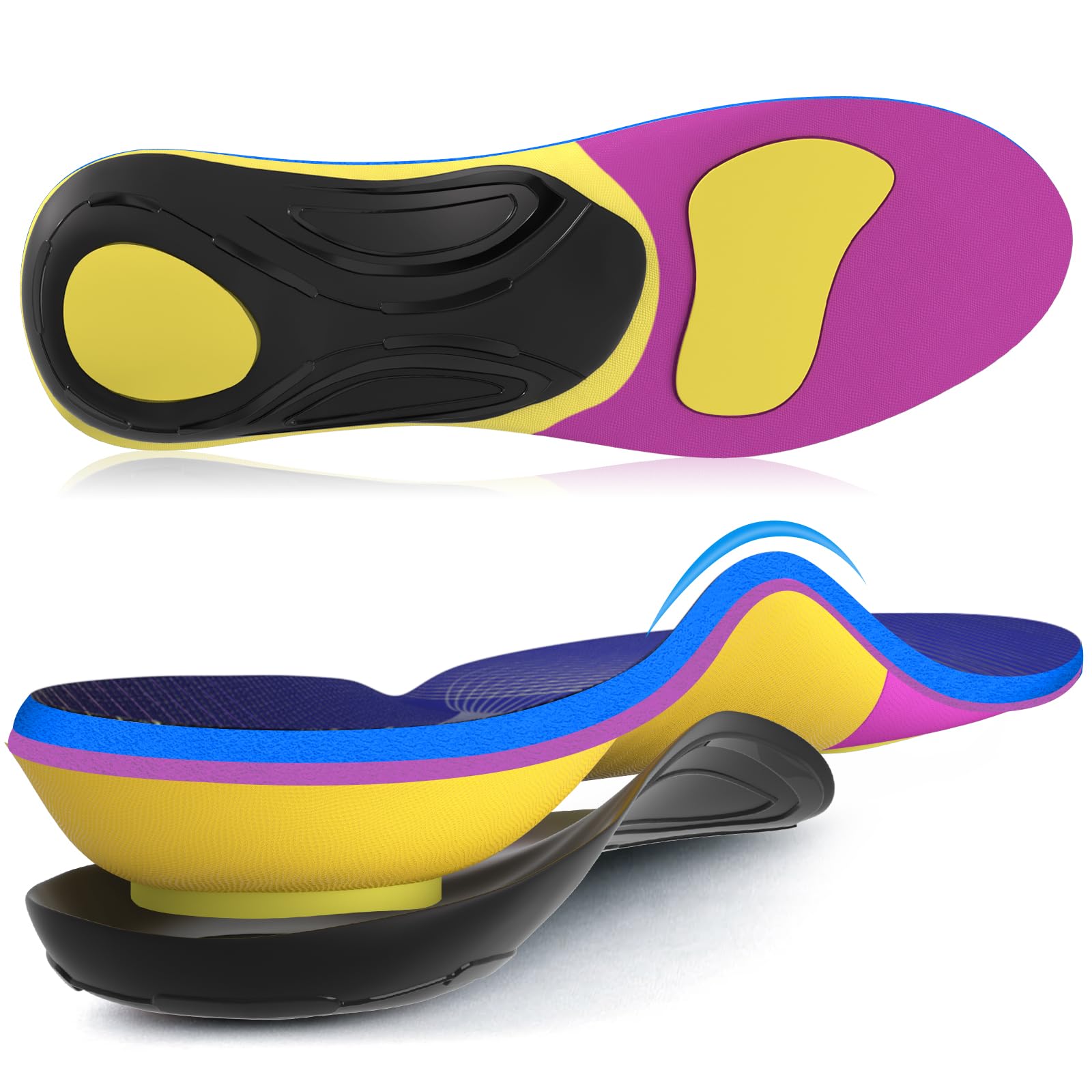
The Fit Geno insole is specifically built for heavier frames (rated for 220lbs+), a critical distinction in the comfort insole category. Where standard insoles would collapse under sustained weight, this one uses a dense, rigid high arch and a deep heel cup to hold the foot in correct alignment, offloading stress from the knees, hips, and lower back. The inclusion of a removable TPU arch plate adds versatility — you can start with full correction and remove it for a slightly lower profile once your foot adapts.
It also incorporates PORON foam, a premium cushioning material found in professional medical orthotics, in the heel and ball of foot zones. This provides meaningful impact protection without that “walking on a marshmallow” instability that plagues soft insoles. The breathable, anti-odor fabric is a practical feature for workers spending 8+ hours in boots, keeping feet drier and reducing bacterial buildup.
The “trim to fit” design works well across work boots and sneakers, though be aware that trimming the rigid TPU plate requires a pair of strong scissors. It’s a specialized tool for a specific job: if you carry extra weight or spend long hours on your feet, this provides a level of structural integrity that budget foam insoles cannot touch. For standard-weight users, it might feel overly firm and corrective.
Why it’s great
- Engineered for heavy-duty support (220lbs+).
- Removable TPU arch plate for customizable rigidity.
- PORON foam cushioning for professional-grade shock absorption.
Good to know
- Very firm feel may be too stiff for lighter users.
- Cutting the TPU plate requires strong scissors.
4. GVIIPK Heavy Duty High Arch Support Insole
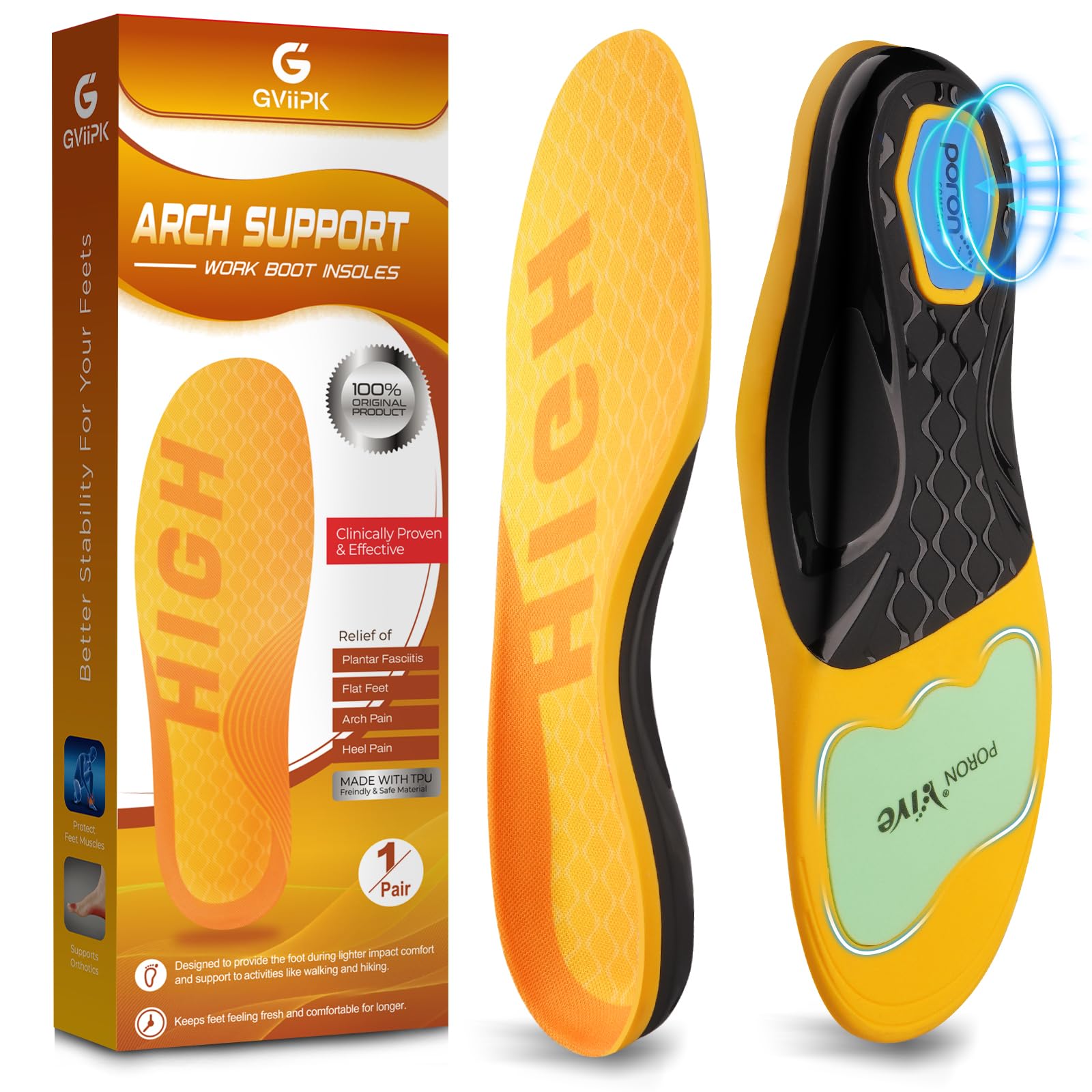
The GVIIPK insole introduces a “Graded Arch Support System” that offers two distinct heights (3.5cm for initial correction, 3.1cm for maintenance), allowing users to progress from aggressive rebuilding of the arch structure to a more comfortable daily support level. This is a unique feature rarely seen in this price tier, providing a one-pair solution for ongoing foot health management. The high-strength TPU support plate is specifically designed for heavier loads (280lbs+), penetrating deep to stabilize the foot and combat overpronation.
The dual-layer PORON cushioning system claims 78% higher layered shock absorption than typical competitors, a spec that translates to noticeably reduced impact on heels, knees, and lower back during extended standing or activity. Users with high arches report that the 3.5cm option offers immediate, palpable lift that corrects their walking gait and alleviates the deep heel pain associated with plantar fasciitis. The breathable, sweat-wicking fabric keeps the foot dry, which is a welcome feature for all-day or athletic use.
The main consideration is volume: the 3.5cm high support version is substantial and may feel too tall in low-cut sneakers. It performs best in work boots, hiking shoes, or sneakers with a removable sock liner. For those needing maximum arch correction and a structured approach to foot health, this is a powerful mid-range option that outperforms many premium competitors in sheer corrective capability.
Why it’s great
- Graded arch heights for progression from correction to maintenance.
- High-strength TPU plate for 280lbs+ load capacity.
- 78% higher shock absorption with dual PORON layers.
Good to know
- 3.5cm version is thick and may crowd low-profile footwear.
- Firm support may feel aggressive during initial wear.
5. Dr. Scholl’s Plantar Fasciitis Sized to Fit Insoles

Dr. Scholl’s Plantar Fasciitis insole is the most accessible entry point on this list, and it punches well above its weight for value-focused buyers. The “Sized to Fit” design means the insole is specific to shoe size, so you don’t have to guess cutting lines or trim a universal template. The combination of arch support (for both high and medium arches) and targeted heel cushion provides effective relief for common foot pain, particularly for those standing on concrete for 8-12 hour shifts.
Users consistently report that it delivers comfort that rivals or even exceeds expensive custom orthotics. The arch support stabilizes the heel and reduces the morning-first-step pain characteristic of plantar fasciitis. For a non-prescription, over-the-counter option, the material quality is respectable — it holds its shape for 2-3 months of daily wear before needing replacement, which is a reasonable lifespan at this price point.
The confirmed downsides are its thickness: it can create upward pressure on the top of the foot, requiring you to loosen your laces. It’s also not a heavy-duty option for 220lbs+ users — the foam will compress more quickly under sustained heavier loads. For anyone looking for a reliable, budget-friendly starting point to address plantar fasciitis or general foot fatigue, this is a proven classic that works.
Why it’s great
- Effective relief from plantar fasciitis pain at a budget-friendly price.
- Sized to fit — no messy trimming.
- Stable arch support for high and medium arches.
Good to know
- Thick build may cause top-of-foot pressure in tight shoes.
- Foam compresses faster under heavier body weight (not for 220lbs+).
FAQ
How often should I replace my comfort insoles?
Can I use high arch support insoles with flat feet?
Do I need heavy-duty insoles if I weigh over 220lbs?
Will these insoles fit in my work boots or dress shoes?
Final Thoughts: The Verdict
For most users, the insoles for comfort winner is the MOVE All Day Comfort Insole because it delivers the most versatile balance of premium cushioning, structural stability, and broad shoe compatibility without needing a break-in period. If you want a medically trusted option backed by podiatrists for managing plantar fasciitis, grab the PowerStep Pinnacle. And for heavy-duty support designed for 220lbs+ frames and long work shifts, nothing beats the structural integrity of the Fit Geno Arch Support Insole.