Boots are built tough, but the insoles they ship with are usually thin, flat, and forgettable. After a full shift or a long hike, that lack of support hits your arches, heels, and lower back hard. Swapping in the right insole changes everything — it turns a punishing day on concrete or trail into something your feet can actually recover from.
I’m Emma — the founder and writer behind Baby Bangs. I’ve spent years digging into boot-specific insoles, comparing arch profiles, foam densities, and moisture-wicking liners to find what actually holds up under a heavy load.
This guide breaks down five proven options so you can find the best insoles for boots that match your arch, your workday, and the specific pain you’re trying to eliminate.
How To Choose The Best Insoles For Boots
Boots are a different environment than running shoes. They’re taller, stiffer, and often less forgiving around the toe box. The wrong insole can crowd your toes or lift your heel too high, while the right one locks your foot in place and absorbs the repetitive shock of every step. Focus on three things before you buy.
Arch Height and Your Foot Type
Flat feet need a low-profile insole that adds mild support without forcing the arch up. Medium arches need a balanced cradle that prevents the foot from rolling inward. High arches require a steeper, more rigid bump to distribute pressure evenly. Most boot insoles come in one or two profiles — pick the one that matches your natural arch, not the one that feels dramatic.
Heel Cup Depth and Boot Shaft Fit
A deep heel cup wraps the calcaneus bone and controls heel slip inside the boot. That matters because boots already have more internal volume than sneakers, and a slippery heel causes blisters after just a few miles. Look for a U-shaped or deep decoupled heel cup that locks the foot down without squeezing the sides.
Thickness and Boot Volume
Boots designed for cold weather or steel toes already have thick liners. Adding a high-volume insole on top can compress your toes against the front of the boot. Measure the current insole’s thickness before you buy — if your boots fit snug, go with a trim-to-fit option around 6–8 millimeters at the ball.
Quick Comparison
On smaller screens, swipe sideways to see the full table.
| Model | Category | Best For | Key Spec | Amazon |
|---|---|---|---|---|
| Ariat Energy Max | Mid-Range | All-day work comfort | Agion antimicrobial liner | Amazon |
| Superfeet Hike Cushion | Premium | Hiking and heavy rucking | Adaptive Comfort flex technology | Amazon |
| Move All Day Comfort | Premium | Shock absorption and recovery | X-Frame torsional support | Amazon |
| Welnove Work Orthotic | Entry-Level | Budget plantar fasciitis relief | Gel cushion pads at heel and ball | Amazon |
| CURREX SupportSTP | Premium | Customized arch profiles | Active air vent technology | Amazon |
In‑Depth Reviews
1. Superfeet Hike Cushion Insoles

The Superfeet Hike Cushion uses Adaptive Comfort Technology — a flexible polymer layer that moves with your foot during heel-to-toe turnover instead of fighting your stride. The midsole thickness sits around 6mm at the ball, which fills the dead space inside lace-up hiking boots without compressing your toes against the front cap.
Ruckers carrying 30 to 60 pounds reported that these insoles fixed knee issues that had been aggravated by collapsed factory liners after just 40 miles of loaded walking. The moisture-wicking top cover also helps control the foot sweat that builds up during steep climbs and humid summer hikes.
The foam is plush but not marshmallowy — it has a distinct rebound that pushes back against hard-packed trail impacts. The trim-to-fit sizing means you’ll need scissors and a steady hand, but the payoff is a locked-in fit that doesn’t slide sideways inside a loose boot shaft.
Why it’s great
- Adaptive flex plate improves stride efficiency on uneven surfaces
- Plush heel and ball padding absorbs trail shock without instability
- Moisture-wicking cover reduces odor in long wet hikes
Good to know
- About 6mm thick at the ball — may feel tight in low-volume boots like Merrell Jungle Mocs
- Trim-to-fit requires careful scissor work for a clean edge
2. Move All Day Comfort Insole
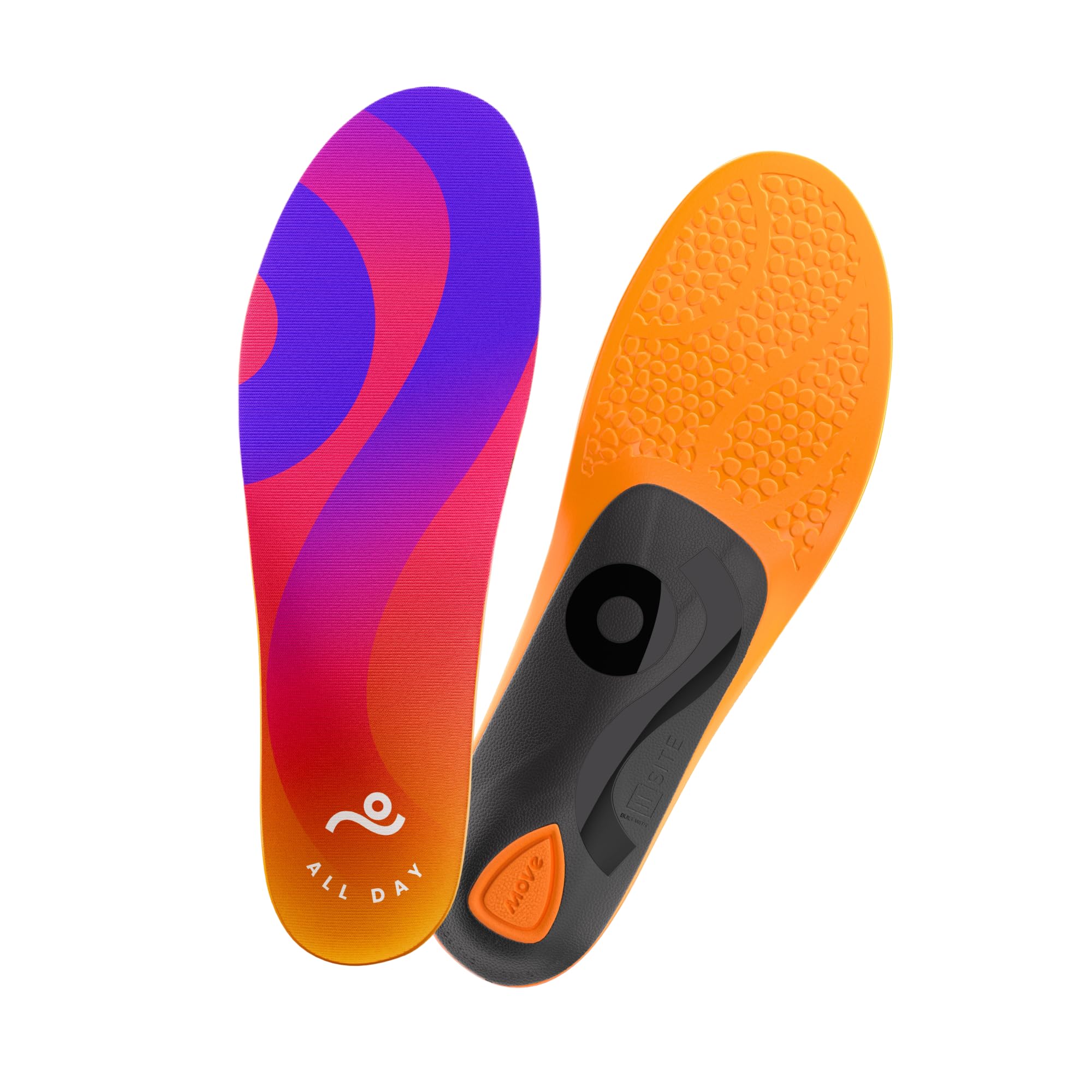
The Move All Day Comfort Insole packs an X-Frame torsional support plate that runs from the heel through the midfoot, providing rigid stability that prevents your boot from twisting under load. This is especially important for work boots on sloped, wet, or gravel-covered surfaces where lateral control matters.
The Recharge foam layer is significantly thicker than standard insoles — you’ll notice a bounce-back feel that reduces impact on your knees and lower back during standing shifts. One user reported it transformed their old basketball shoes into “new performance models,” and the same principle applies to heavy-duty work boots that have lost their liner density.
Active Heel Technology carves out pressure-free zones around the calcaneus, so sensitive heel spurs don’t get irritated during the midday grind. The thickness does mean this insole works best in boots with generous internal volume — models like Adidas Sambas or low-profile sneakers will feel cramped.
Why it’s great
- X-Frame plate provides unmatched torsional stability for heavy boots
- Extra plush foam reduces knee and back stress on concrete floors
- Active Heel Technology eliminates pressure from heel spurs
Good to know
- Too thick for low-profile sneakers or snug boots
- Premium tier — expect a higher investment per pair
3. Ariat Men’s Energy Max Work Insole

The Ariat Energy Max is built for the working professional who needs a drop-in replacement that matches their boot size exactly — no trimming required. The rebound foam layer cradles the foot and dissipates pressure evenly across the sole, which translates to less heel dig and forefoot burn after nine-hour shifts on concrete.
Agion antimicrobial technology is integrated directly into the moisture-wicking liner, actively suppressing odor-causing bacteria. For anyone wearing steel-toe or composite-toe boots in hot environments, this feature alone saves you from the sour-smelling liner that develops after two weeks of warehouse work.
Open-cell foam regulates temperature by allowing air to circulate through the insole, which keeps your feet cooler during summer months and reduces the condensation that leads to blisters. Multiple verified buyers described these as “game changers” for work boots and noted they outlasted the factory insoles by a wide margin.
Why it’s great
- True-to-size fit means zero scissor work before use
- Agion liner kills odor at the source in steel-toe environments
- Open-cell foam keeps feet cool during all-day standing
Good to know
- Less dramatic arch relief than dedicated orthotic designs
- Best as a factory replacement rather than a corrective device
4. CURREX SupportSTP Insole

CURREX SupportSTP stands out because it offers three distinct arch profiles — low, medium, and high — so you aren’t stuck with a one-height-fits-all solution. Each profile has a different shape, flex point, and arch height that adapts to your foot’s natural geometry rather than forcing a generic curve.
The deep decoupled heel cup wraps and locks the calcaneus in place, which reduces heel slip inside boots during lateral movement. That lock-in effect matters for warehouse workers and hikers who change direction frequently. The mesh top layer and vent channels actively move moisture out, keeping the insole surface dry even during humid conditions.
Users with arthritic toes reported noticeable relief because the forefoot cushion absorbs shock that would otherwise travel directly into delicate toe joints. The composite shell adds a semi-rigid platform that stabilizes the stride without making the insole feel like a board. CURREX recommends replacing after 500 miles or 12 months, which aligns with the lifespan of most high-mileage work boots.
Why it’s great
- Three arch profiles let you match your exact foot shape
- Deep heel cup eliminates slip inside loose boot shafts
- Vent channel technology keeps liners dry in sweaty environments
Good to know
- Heel cushion is thinner than plush-foam competitors
- Best suited for users who identify their arch type first
5. Welnove Work Orthotic Insole
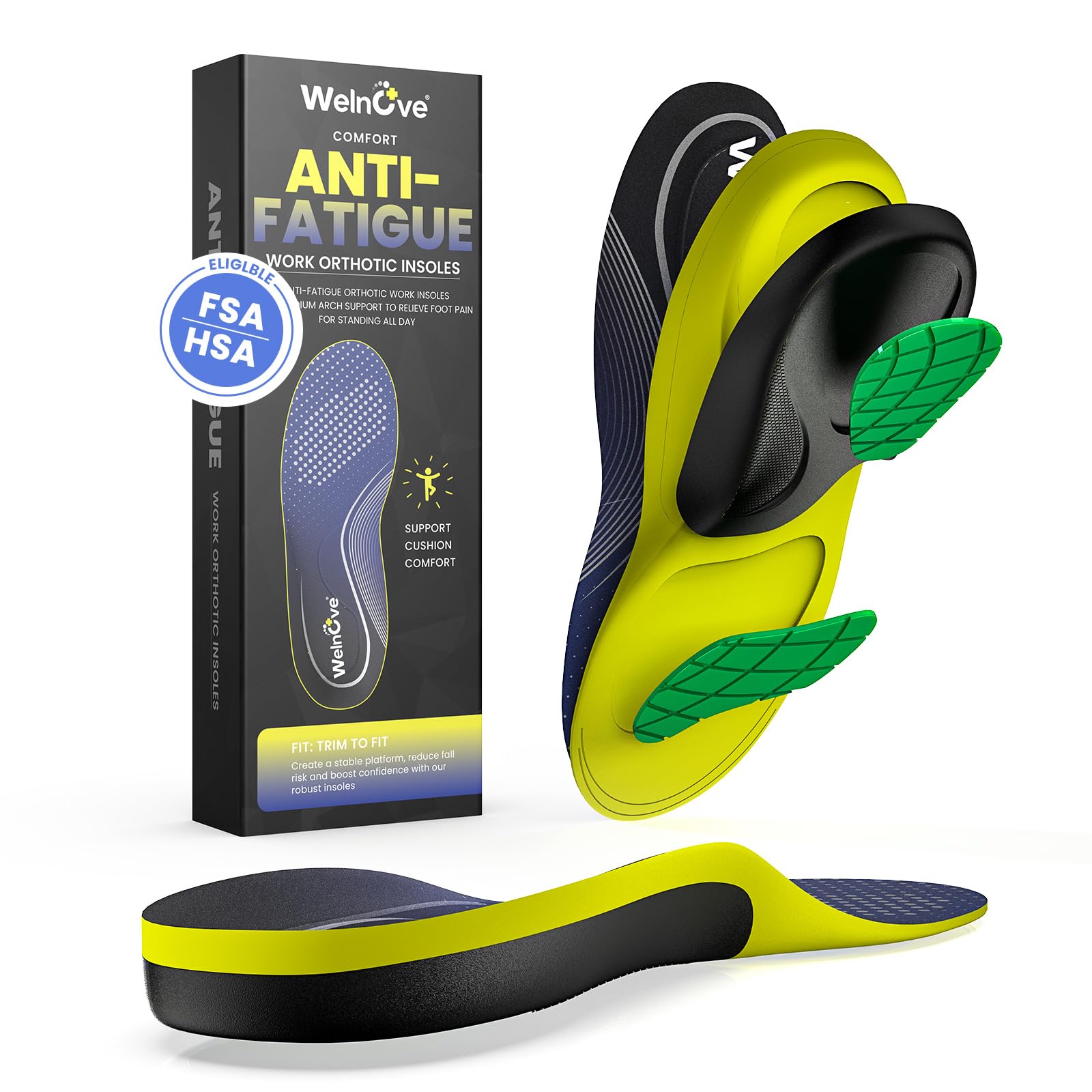
The Welnove Work Orthotic combines a PU foam cushioning base with a 3D dynamic TPU arch support layer and gel pads at both the heel and ball of the foot. That gel absorbs high-impact zones without adding excessive thickness, making it a decent fit for boots that don’t have abundant internal space.
One important caveat — the listing says “2 pack,” which actually means one pair of insoles (left and right), not two pairs. Several buyers noted this confusion, though most rated the comfort itself as competitive with name-brand orthotics that cost double the price. Users on concrete floors for 10-hour shifts reported that these allowed them to finish the day without the burning foot sensation they’d felt with factory liners.
A minority of users experienced increased fatigue and recurring plantar fasciitis after a month of use, suggesting the arch profile doesn’t suit every foot shape — especially for heavy-activity jobs involving lifting and walking. The trim-to-fit design works, but the material cuts less cleanly than denser premium insoles, so edges may fray slightly over time.
Why it’s great
- Gel heel pad absorbs concrete slab impact effectively
- Budget-friendly entry point for exploring orthotic support
- PU foam base offers noticeable cushion upgrade over factory liners
Good to know
- Some users report worse arch pain after extended use
- Misleading “2 pack” language — one pair only
FAQ
How thick should an insole be for work boots without making them feel tight?
Can I use hiking insoles in everyday work boots?
How do I know if I need a low, medium, or high arch insole?
Final Thoughts: The Verdict
For most users, the best insoles for boots winner is the Superfeet Hike Cushion because it balances plush impact absorption with a supportive flex plate that works on both trail and concrete. If you need a drop-in replacement with odor control for steel-toe environments, grab the Ariat Energy Max. And for precise arch matching and a locked-down heel fit, nothing beats the CURREX SupportSTP.