Your feet take the brunt of every sidewalk, concrete floor, and hiking trail you cover. Without the right insole, that daily mileage turns into heel pain, arch strain, and lower back tension that no amount of stretching fixes. A proper walking insole doesn’t just pad your step—it re-aligns your gait, absorbs ground shock, and keeps you on your feet long after your factory insoles have flattened out.
I’m Emma — the founder and writer behind Baby Bangs. I’ve spent years analyzing foot support biomechanics and reviewing over-the-counter orthotic designs to separate the real stabilizers from the glorified foam slabs.
This guide breaks down the five most effective, durability-focused options to help you find the right pair of insoles for all day walking without wasting money on inserts that collapse after a week.
How To Choose The Best Insoles For All Day Walking
Walking insoles are not one-size-fits-all. Your foot’s arch profile, your body weight, and the surface you walk on (concrete vs. asphalt vs. trail) dictate whether a budget-friendly foam insert or a multi-layer orthotic is the right call. Here’s what actually matters.
Arch Support Type & Rigidity
Low arches need a soft, adaptive support that cradles the foot without digging in. High arches require a firm, rigid shell that prevents excessive pronation. Mid-range insoles with a medium arch shape work for most neutral gaits but may lack the aggressive correction some users need. Check your foot’s wet test or current shoe wear pattern before picking a profile.
Weight Rating & Multi-Layer Construction
If you weigh over 200 lbs, a single layer of memory foam will bottom out in weeks. Look for a build that combines a stiff TPU arch frame, a shock-absorbing PU heel pad, and a resilient EVA base. This stack prevents your weight from compressing the insole flat and maintains biomechanical support through 10+ hour days on hard surfaces.
Heel Cup Depth & Stability
A shallow heel cup allows your heel to slosh side to side, aggravating plantar fasciitis and shin splints. A deep, contoured heel cup cradles the calcaneus, locks your foot in neutral alignment, and distributes impact across the entire heel pad rather than concentrating pressure on the spur attachment point.
Break-In Period & Gradual Adaptation
Firm orthotics—especially those with a rigid arch shell—require a break-in window of 3 to 7 days. Jumping into a full-day walk immediately can cause arch fatigue and temporary discomfort. Start with one hour of wear the first day, then increase by an hour daily. Soft gel or foam insoles typically need zero break-in but provide less long-term support.
Quick Comparison
On smaller screens, swipe sideways to see the full table.
| Model | Category | Best For | Key Spec | Amazon |
|---|---|---|---|---|
| VALSOLE Heavy Duty Support | Orthotic | Heavy users & concrete floors | 5-layer EVA/TPU/PU/Ortholite | Amazon |
| MOVE All Day Comfort | Comfort Foam | Maximum plush cushioning | X-Frame torsional support plate | Amazon |
| VALSOLE Plantar Fasciitis Relief | Orthotic | Pain relief & endurance | 5-layer structure, 220+ lb rated | Amazon |
| Cloudflo Plantar Fasciitis | Semi-Rigid | Budget all-day standing | TPU frame + ortholite cushion | Amazon |
| Welnove Walking Insoles | Gel/Foam | High-arch + budget pick | Multi-point gel heel system | Amazon |
In‑Depth Reviews
1. VALSOLE Heavy Duty Support Pain Relief Orthotics
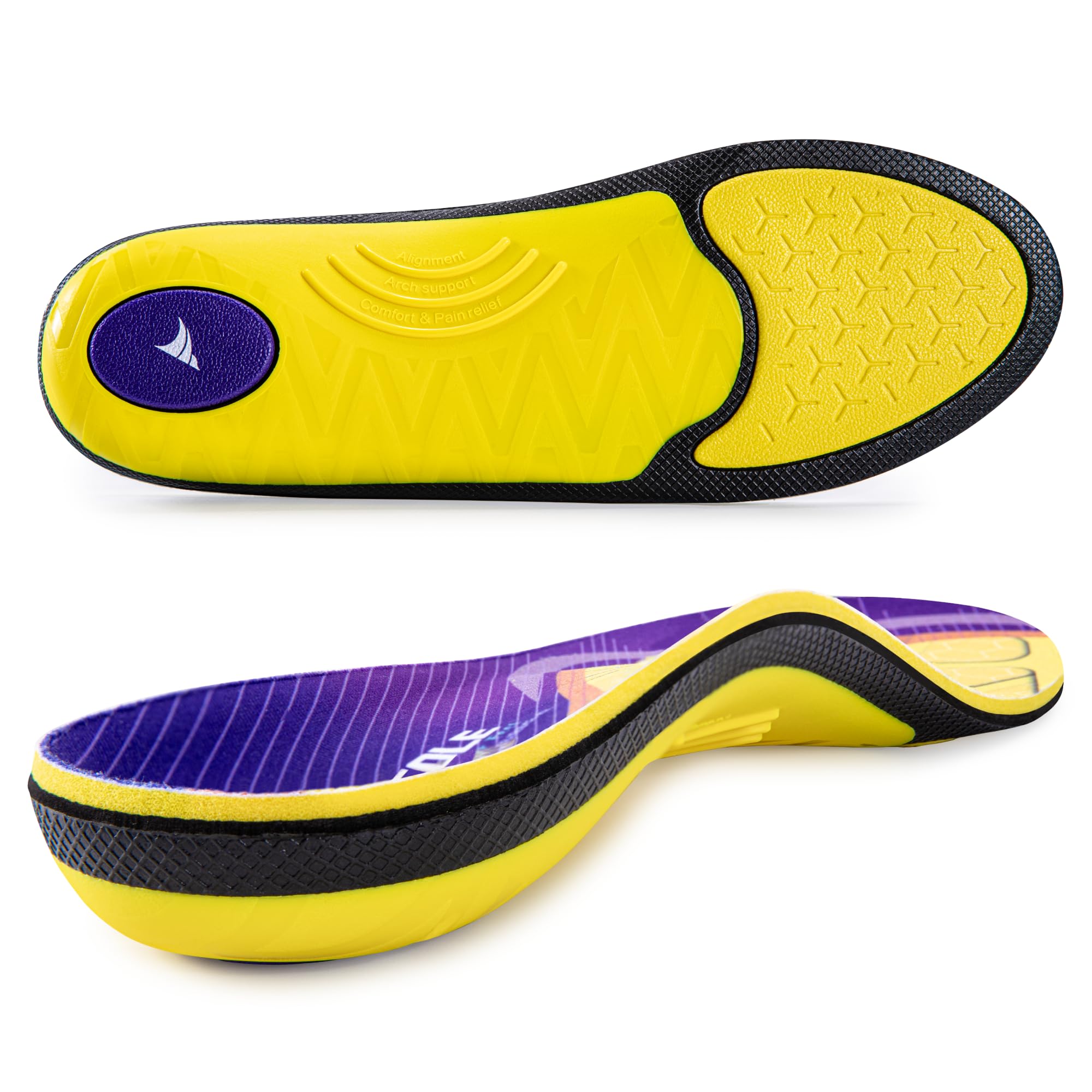
This is the insole that warehouse workers, 12-hour shift nurses, and heavy outdoor walkers call the holy grail. The architecture uses a dense EVA base, a rigid TPU arch frame that locks the midfoot, a PU heel pad for impact dispersion, and an Ortholite top layer that resists compression. Users weighing over 200 lbs report zero flattening after months of daily use—the stiffness of the TPU shell prevents the midfoot from collapsing under load. The deep heel cup cradles the calcaneus securely, which is critical for anyone with plantar fasciitis who feels that sharp morning heel pain return by noon in standard insoles.
Out of the box, the arch feels aggressive. If you have a neutral or low arch, the rise may cause initial discomfort—but high-arch users describe immediate relief. The thickness adds about 5–6 mm of stack height, so you may need to loosen laces a quarter turn to avoid pressure across the instep. Customer feedback is overwhelmingly positive, with users noting that back pain from standing on cement was significantly reduced after the first shift. One 6’5″ user weighing 235 lbs reported zero foot pain after a full day at Disney parks, a feat that many softer insoles cannot match.
The downsides are classic for rigid orthotics: a 3-to-5-day break-in period where your arches may feel fatigued, and a slight clicking sound when walking on hard floors if the insole shifts inside the shoe. The sizing chart is accurate, but you should measure your foot length against the insole’s stated mm length to avoid buying too small. For anyone whose daily routine involves long walks on unforgiving surfaces, this is the most durable option on the list.
Why it’s great
- Multi-layer TPU/EVA/PU/Ortholite frame handles 235+ lbs without flattening
- Deep heel cup locks calcaneus for plantar fasciitis relief
- No break-in needed for high-arch users
- Eliminates lower back pain from concrete shift work
Good to know
- Aggressive arch height uncomfortable for flat feet without adaptation
- Thick build may require loosening laces in snug shoes
- Slight clicking noise reported on hard floors
2. MOVE All Day Comfort Insole
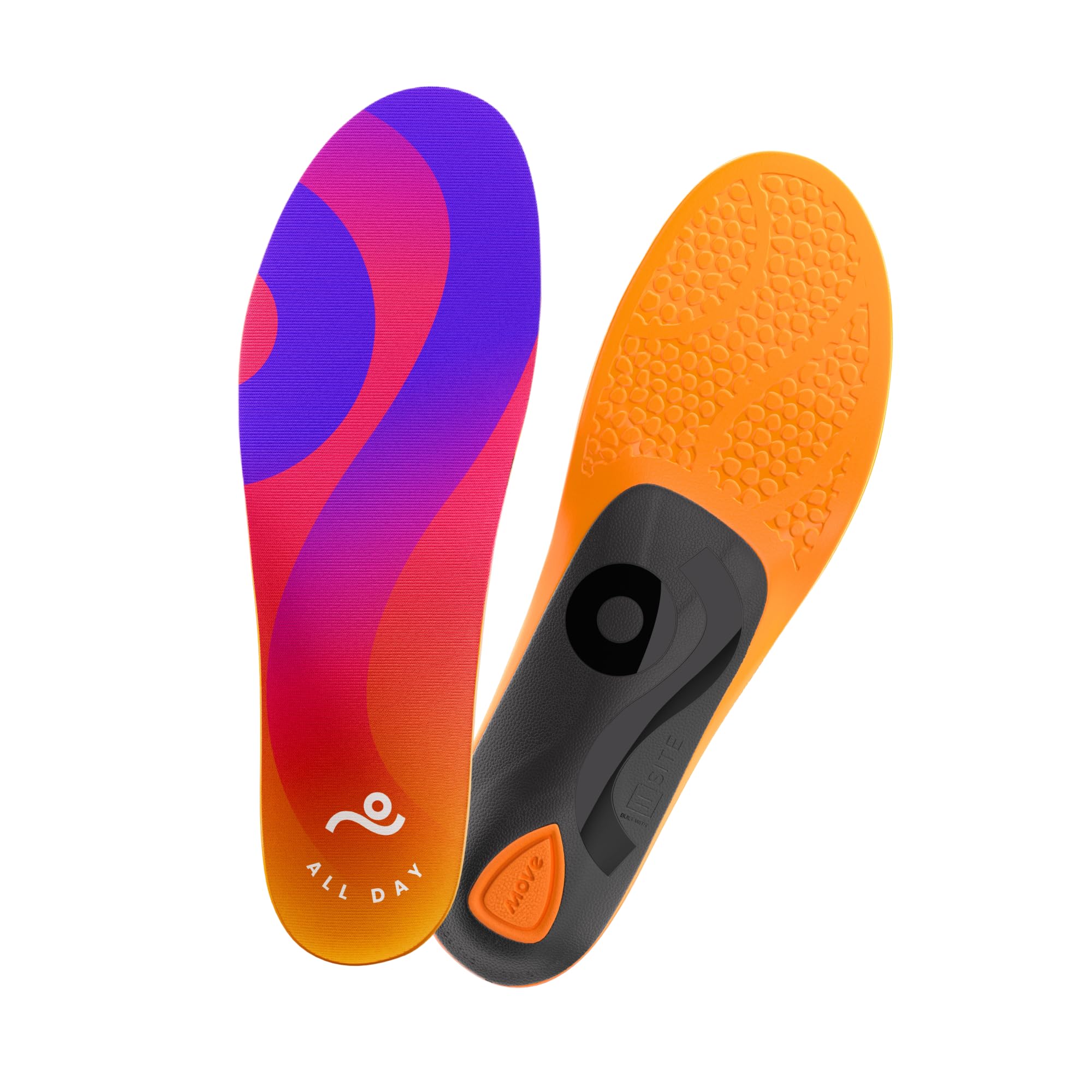
Designed by a former professional basketball player, the MOVE insole prioritizes plush, immediate comfort without sacrificing structural support. The core feature is the X-Frame Torsional Support system—a rigid plastic spine embedded in the midfoot that provides heel and arch stability while allowing natural forefoot flexion. This is a rare combination. Most soft insoles flex entirely, which collapses the arch under load, while rigid orthotics restrict toe-off freedom. MOVE splits the difference: your arch stays locked, but your toes can splay naturally during push-off. The Move Recharge Foam used throughout is a proprietary formulation that feels bouncy rather than dead soft, returning energy with each step rather than just absorbing it.
The Active Heel Technology creates a pressure-free zone under the heel’s sensitive fat pad. Users who have tried dozens of inserts note that this is the first one that does not cause a burning sensation in the ball of the foot after 6 hours of wear. The foam is thick—about 8 mm at the heel—so it adds noticeable volume to shoes. Testers found it fits perfectly in roomy sneakers like Jordan 1s and Dunks but is too tall for low-profile shoes like Adidas Sambas. Trimming is possible but the material cuts cleanly with sharp scissors along the marked lines.
The trade-off for this plushness is that the MOVE insole is not weight-rated for heavy loads. Users over 220 lbs report that the foam compresses noticeably by the end of a 10-hour workday, though it still provides more comfort than a factory insole. It also lacks the aggressive arch support that severe overpronators need—it is a medium arch design. If you weigh under 200 lbs and want an insole that makes every step feel like a soft landing without turning your shoe into a rigid cast, this is the premium choice.
Why it’s great
- X-Frame plate locks arch while allowing natural toe flexion
- Active Heel Technology eliminates pressure points in the heel pad
- Bouncy Recharge Foam returns energy, not just absorbs shock
- Fits perfectly in basketball shoes, Dunks, and sneakers with toe room
Good to know
- Too thick for low-profile shoes like Adidas Sambas
- Foam compresses under 220+ lb users by end of day
- Medium arch only—insufficient for severe overpronation
- Higher price compared to mid-range orthotics
3. VALSOLE Plantar Fasciitis Relief Insoles
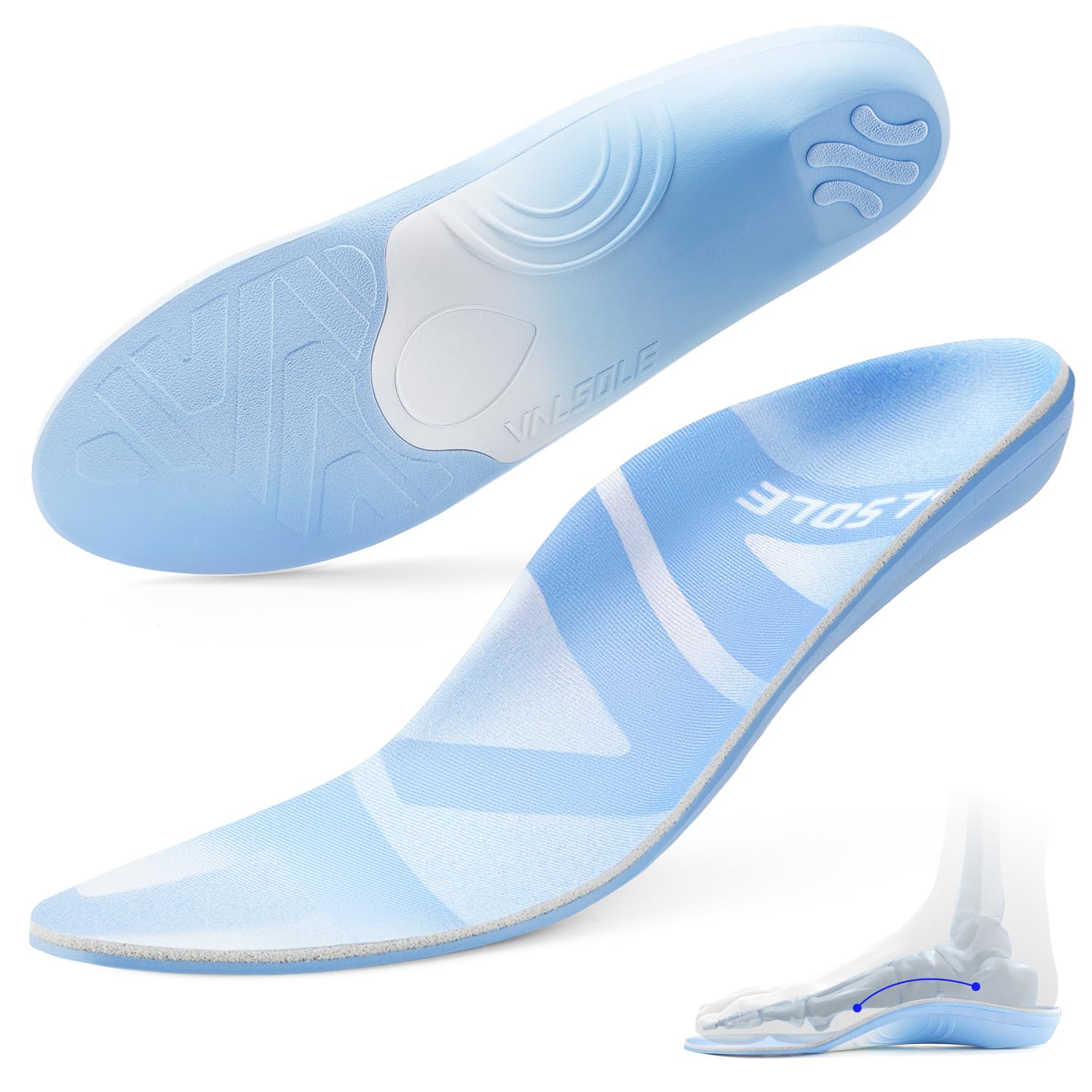
The mid-range VALSOLE offers a 5-layer construction—EVA base, TPU arch shell, PU heel pad, Ortholite cushion, and moisture-wicking polyester top—that mirrors the Heavy Duty version’s philosophy but at a more accessible build cost. The key differentiator from its premium sibling is a slightly less aggressive arch profile. While still firm, the arch support is less pronounced, making this a better fit for medium-arch users who found the Heavy Duty version too pronounced. The deep heel cup remains present, cradling the calcaneus to prevent the heel shift that triggers plantar fasciitis flare-ups during long walks on cobblestone or concrete.
Customer feedback highlights this insole’s performance on hard urban terrain. One user specifically purchased them before a trip to Rome and reported that the insoles made walking on ancient cobblestones manageable—a high-stress test that exposes soft insoles quickly. The breathable top fabric keeps feet drier than the typical fabric used on budget insoles, which reduces the moisture build-up that leads to blisters during 8+ mile walks. The insole fits well in work boots and sneakers without requiring a shoe size up, although the thick heel stack may feel snug initially in low-cut athletic shoes.
The main complaints center on the break-in period. First-time orthotic users who jump straight into a full day of walking report arch fatigue and even increased heel pain for the first 48 hours. Gradual wear is essential. Additionally, some users with extremely high arches found the support insufficient—the arch is high but not as rigid as the HD version’s TPU shell. One user reported no improvement for their specific heel spur situation. Overall, this is the best value option for anyone who needs genuine orthotic support but does not require the maximum rigidity of the heavy duty tier.
Why it’s great
- 5-layer EVA/TPU/PU/Ortholite build for long-term durability
- Deep heel cup effective for cobblestone and concrete walking
- Moisture-wicking top layer reduces blister risk on long walks
- Good balance of support and affordability
Good to know
- Requires gradual break-in over 3-5 days for orthotic newbies
- Arch not rigid enough for extremely high arches or severe pronation
- Some users with heel spurs report no improvement
4. Cloudflo Plantar Fasciitis Insoles
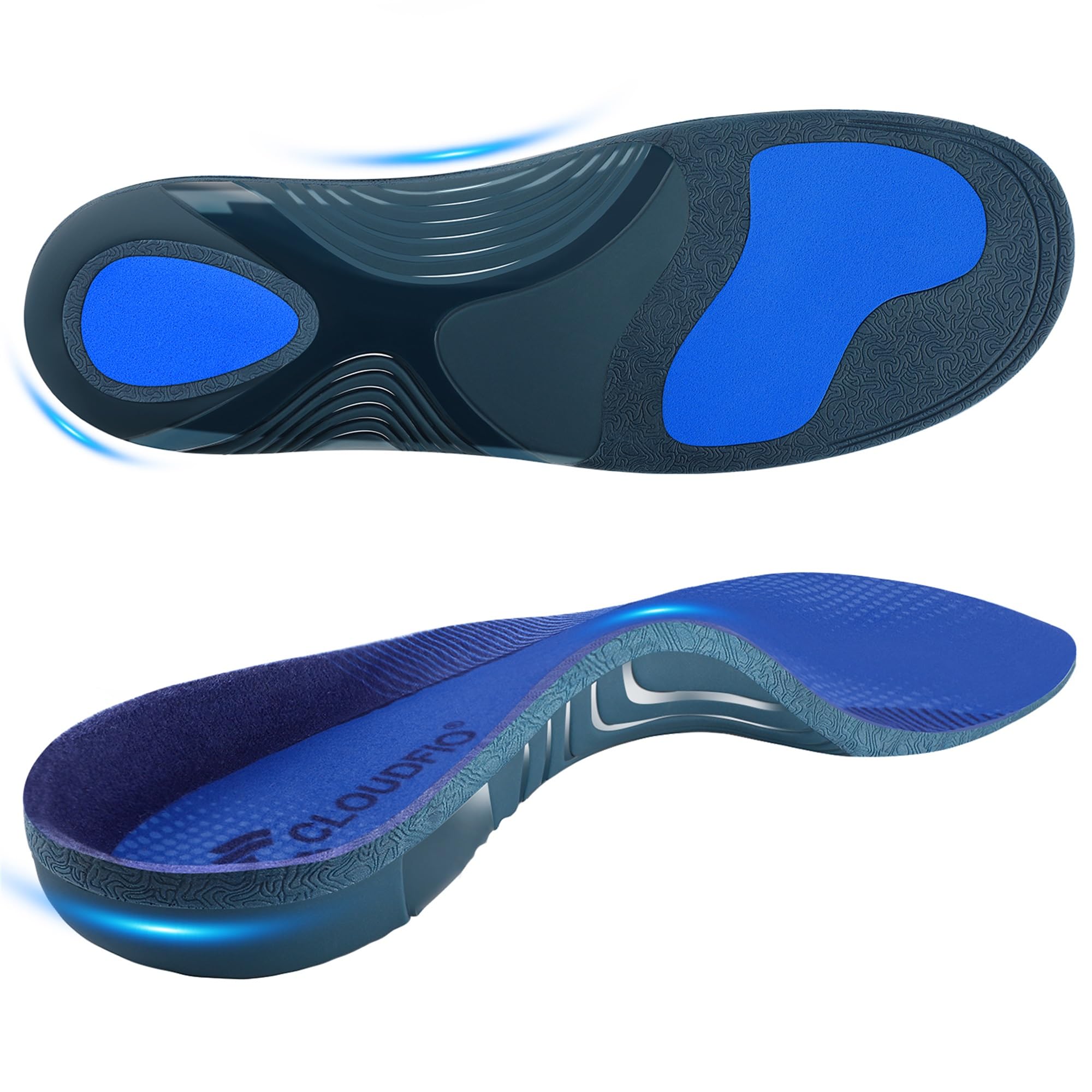
Cloudflo enters the budget-conscious segment with a surprisingly well-built TPU arch frame combined with a PU heel pad and an Ortholite cushion top. The TPU material is rigid but not brittle—it holds your arch in a neutral position without digging into the midfoot. The heel cushion uses a PU pad rather than a gel pad, which provides a firmer, more stable crash pad than the squishy gel alternatives that bottom out quickly. Users weighing over 200 lbs report that the structure holds up well through 6-8 hour shifts, though the EVA base layer shows visible compression after three months of daily use. The breathable velvet top layer is a nice touch—it wicks moisture and can be hand-washed, which extends the insole’s life for active walkers.
Customer reviews consistently mention that the Cloudflo resolved severe heel pain that had persisted for months, with one user reporting that their plantar fasciitis “cured” after a few days of wear. The arch support is noticeable but not aggressive, making this a good transitional insole for someone moving from flat factory insoles to orthotic support for the first time. The sizing chart is accurate, and the insoles fit well in work boots, running shoes, and casual sneakers without requiring significant trimming. The TPU frame does keep its shape well even after being removed and reinserted multiple times.
The limitations are clear at this price point. The insole lacks the multi-layer sophistication of the VALSOLE options—there’s no separate TPU shell for the midfoot, just a single TPU frame piece. Users with very high arches may find the support insufficient, and the cushioning, while adequate, does not provide the same energy return as the MOVE insole’s proprietary foam. The break-in period is minimal, around 1-2 days, which is a trade-off for the softer support. For the budget buyer who needs immediate relief without a lengthy adaptation phase, this is a solid performer.
Why it’s great
- TPU arch frame provides genuine orthotic support at a budget price
- Washable velvet top layer keeps feet dry and reduces odor
- Short 1-2 day break-in for immediate comfort
- Fits work boots and sneakers without major trimming
Good to know
- EVA base compresses after 3 months of heavy daily use
- Arch support too mild for severe overpronation
- Lacks the multi-layer midfoot shell of premium orthotics
5. Welnove Walking Insoles with Arch Support
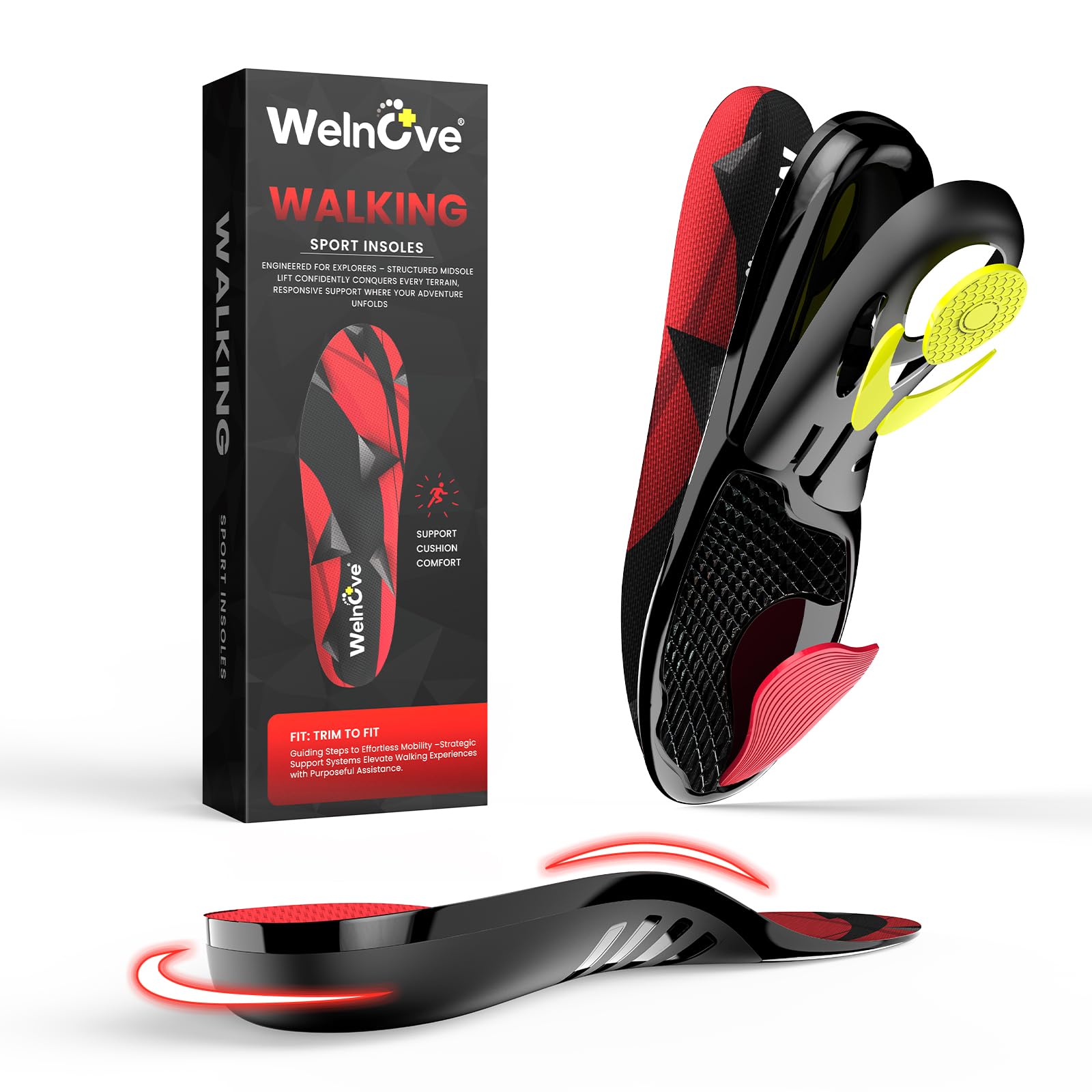
Welnove positions these insoles as engineered specifically for all-day walking and impact absorption, featuring a multi-point gel cushioning system in the heel. The gel pads are strategically placed to dissipate shock at heel strike, while flexible foam strips under the arch adapt to different foot shapes rather than forcing a fixed arch profile. This makes the Welnove ideal for walkers with low to medium arches who do not need aggressive correction but want a noticeable improvement over flat factory inserts. The red color is visually distinctive but irrelevant to performance.
The breathable airflow fabric and ventilation vents are functional—users standing on concrete for 10-hour shifts report that their feet stay drier compared to standard insoles. The uncut forefoot design allows for custom trimming, and the sticky heel adhesive keeps the insole from sliding inside the shoe. Customer feedback is split: users with high arches found the support stiff and effective, while those with flat feet complained that the arch contour felt like it was tipping them forward. This suggests the arch profile is moderately high—good for arch support seekers but problematic for flat-footed users who need a lower, more adaptive shape.
The main issues: the insole lacks front-foot cushioning, leaving the ball of the foot unsupported during longer walks. Runners specifically flagged this as a problem for forward-rolling motion. At its current price point, it sits above entry-level but below the premium-tier orthotics in terms of material complexity. The gel heel inserts add comfort but do not provide the same stability as a rigid TPU heel cup. If you have high arches and want a supportive foam-based insole with good heel shock absorption, this is a decent pick. If you have flat feet or need full-foot correction, look elsewhere.
Why it’s great
- Multi-point gel heel cushions impact effectively on concrete
- Flexible foam strips adapt to moderate arch shapes
- Breathable airflow fabric keeps feet dry during long shifts
- Adhesive heel prevents insole sliding inside shoes
Good to know
- No forefoot padding—ball of foot unsupported during running
- Arch shape unsuitable for flat feet, causes forward tipping sensation
- Foam compresses faster than multi-layer orthotic builds
- Slightly higher price compared to similar foam-based options
FAQ
How do I know if I need a low, medium, or high arch insole?
Can I use walking insoles in work boots or only in sneakers?
How often should I replace insoles for all day walking?
Final Thoughts: The Verdict
For most users, the insoles for all day walking winner is the VALSOLE Heavy Duty Support Orthotics because the 5-layer TPU/PU/EVA build handles heavy loads, aggressive arch support, and deep heel stabilization without flattening over months. If you want maximum plush cushioning with midfoot stability, grab the MOVE All Day Comfort Insole. And for a budget-friendly orthotic with a TPU frame and short break-in, nothing beats the Cloudflo Plantar Fasciitis Insoles.