The sharp, stabbing sensation in the ball of your foot that radiates into your toes isn’t just uncomfortable—it stops your day. For anyone living with Morton’s neuroma, every step can feel like walking on a pebble. The right insole can offload that forefoot pressure and create space around the irritated nerve bundle, turning painful strides into manageable movement.
I’m Emma — the founder and writer behind Baby Bangs. I spend my weeks buried in clinical studies, podiatry forums, and customer wear-test reports to separate the inserts that actually redistribute metatarsal head pressure from those that just add a squishy layer.
After combing through real-world feedback and material specs, I’ve narrowed the field to five contenders that genuinely change the walking experience. This guide to the best inserts for morton’s neuroma focuses on the specific supports—met pads, rigid toe plates, and arch contours—that reduce nerve compression where it matters most.
How To Choose The Best Inserts For Morton’s Neuroma
Morton’s neuroma is a thickening of the tissue around a nerve between the third and fourth toes. The right insole doesn’t just soften the step—it changes the biomechanics of your forefoot to prevent the nerve from being pinched against the metatarsal bones.
Metatarsal Pad Placement
This is the single most critical feature. A met pad sits just behind the metatarsal heads, gently lifting the transverse arch and spreading the bones apart. This creates a wider space for the nerve, reducing friction. Look for a pad that is firm enough to maintain its shape but positioned precisely—too far forward and it presses directly on the neuroma, worsening symptoms.
Arch Support vs. Rigid Toe Extension
For moderate neuroma pain with some arch collapse, a full-length orthotic with medium arch support and a built-in met pad can realign the foot and reduce forefoot overload. For advanced cases where the big toe joint also stiffens or the nerve pain is severe, a rigid Morton’s extension (usually carbon fiber) limits toe bending and prevents the foot from rolling forward onto the nerve. Know which camp your pain falls into before buying.
Quick Comparison
On smaller screens, swipe sideways to see the full table.
| Model | Category | Best For | Key Spec | Amazon |
|---|---|---|---|---|
| Kelaide Metatarsal Insoles | Foam Orthotic | Daily walking with moderate neuroma pain | Built-in metatarsal pad + medium arch support | Amazon |
| EstCarbon Carbon Fiber Insole | Rigid Insert | Immobilizing the big toe for advanced neuroma | 1.6mm 3K twill carbon fiber Morton’s extension | Amazon |
| Cushwork Metatarsalgia Insole | Foam Orthotic | Wide feet and immediate neuroma relief | Met pad lifts neuroma, neutral arch | Amazon |
| UBARONY Carbon Fiber Insole | Rigid Insert | Hallux rigidus with concurrent neuroma | 1.5mm aircraft-grade carbon fiber plate | Amazon |
| Psveb Heavy Duty Support Insoles | Foam Orthotic | Heavy users needing firm foam structure | Double PORON cushion + deep U-shaped heel cup | Amazon |
In‑Depth Reviews
2. Kelaide Metatarsalgia Insoles

This full-length orthotic builds three critical elements into one package: a raised metatarsal pad sits precisely behind the ball of the foot to splay the metatarsal heads, while the medium arch profile realigns the foot’s natural midfoot curve. The foam core uses a premium layer that absorbs shock without bottoming out, making it ideal for daily standing or walking on hard floors. The heel cup wraps securely but stays low enough to fit most athletic and casual shoes without forcing the foot out.
Buyers report noticeable reduction in the burning sensation associated with neuroma within the first week of wear. The red fabric top layer is breathable and resists friction, which matters when the met pad creates a new pressure point that the foot needs time to accommodate. A short break-in period is expected—wearing them for increasing intervals each day helps the foot adjust to the raised metatarsal contour.
The flat foot and pronation support adds stability for those whose neuroma stems from excessive foot rolling. For a mid-range foam orthotic, the build quality holds up well over months of daily use without significant compression in the met pad area. It strikes the best balance between targeted nerve relief and everyday walkability.
Why it’s great
- Integrated met pad targets the neuroma site without adding height
- Medium arch support corrects pronation that exacerbates nerve pinch
- Breathable fabric reduces moisture and friction during long wear
Good to know
- Requires a short break-in period for the met pad feel
- Thicker than a standard insole, may crowd low-volume shoes
4. EstCarbon Carbon Fiber Insole

When foam cushioning isn’t enough to stop the nerve compression, a rigid carbon fiber plate changes the biomechanics entirely. This EstCarbon insole uses 3K twill carbon fiber at 1.6mm thickness—thin enough to slide under your existing insole but stiff enough to prevent the big toe from bending upward. By locking the toe joint in a neutral position, it stops the foot from rolling forward onto the neuroma with every step.
The insert is sold as a single piece and is reversible for left or right foot, which makes it practical for testing in one shoe before buying a second pair. It works best when placed underneath the shoe’s natural insole, creating a rigid sub-layer that stiffens the entire forefoot. Users with hallux rigidus or advanced neuroma pain report being able to walk several miles without the usual sharp sensation.
The flat design has no arch contour, which is intentional—this is not a corrective orthotic but a motion-limiting tool. It pairs well with a supportive shoe and an additional cushioned insole on top. Some users note a slight squeaking sound from the carbon fiber rubbing against foam, which can be minimized with double-sided tape. For severe, chronic cases, this is the most effective non-custom option.
Why it’s great
- Eliminates toe bending that drives nerve compression
- Ultra-thin profile fits under most existing insoles
- Reversible design works for either foot
Good to know
- Flat shape may not sit flush in shoes with curved footbeds
- Requires larger shoe size or wide toe box for comfort
5. Cushwork Metatarsalgia Insoles

Built with a firm metatarsal pad that lifts the nerve bundle and a neutral arch support that doesn’t force the foot into an aggressive correction, this insole from Cushwork prioritizes immediate offloading of the forefoot. The design is notably friendly to wide feet and bunions, with a shape that doesn’t crowd the toe box. Users report that the 270mm version fits a women’s 9.5 wide sneaker without any trimming required.
The material strikes a careful balance between firmness and give—the met pad maintains its profile under pressure rather than compressing flat, which is essential for sustained neuroma relief. One reviewer who compared them to custom orthotics costing ten times as much found the level of forefoot relief comparable, especially during longer walks. The heel is firm and supportive, improving gait mechanics by reducing the tendency to roll onto the painful forefoot.
A short adjustment period is common as the foot adapts to the raised metatarsal bump. The insole is not overly thick, so it fits well in most sneakers and work boots without making the shoe feel excessively tight. For someone with moderate neuroma pain, wide feet, or concurrent plantar fasciitis, this is a strong all-day solution that rivals more expensive alternatives.
Why it’s great
- Firm met pad stays effective under sustained pressure
- Fits wide feet and bunions without crowding the toe box
- Neutral arch suitable for most foot types
Good to know
- Met pad requires a brief break-in period
- Too bulky for most dress shoes or loafers
1. Psveb Heavy Duty Support Insoles
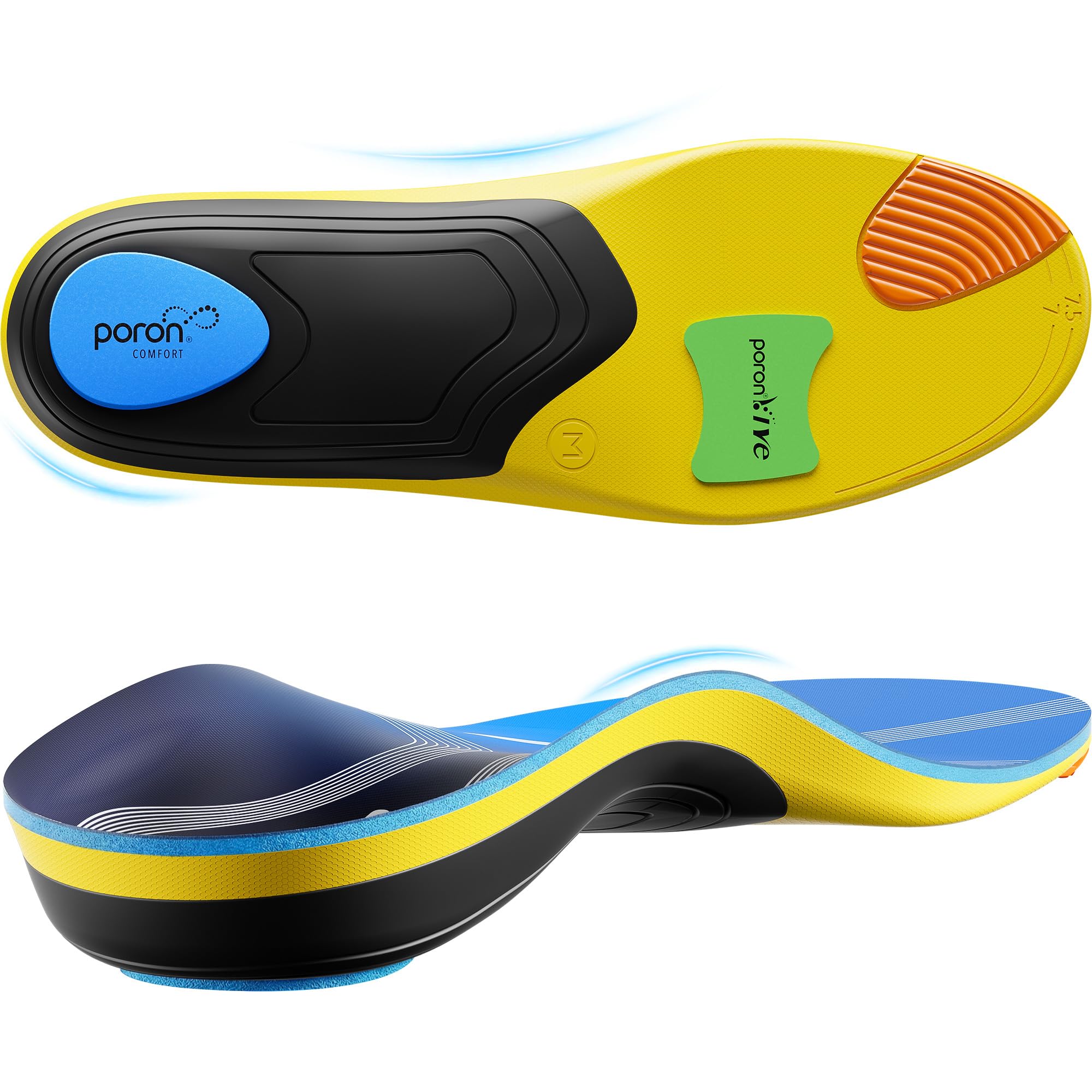
These insoles from Psveb focus on heavy-duty shock absorption and structural stability, making them a solid entry-level option for neuroma management. The double PORON foam layer absorbs impact across the forefoot, reducing the jolt that travels through the metatarsal heads with each step. The Golden Triangle design creates three-point support at the forefoot, arch, and heel, which helps distribute body weight more evenly and takes pressure off the central nerve.
The deep U-shaped heel cup locks the foot in place, preventing the heel from sliding and the forefoot from shifting into a position that aggravates the neuroma. Users weighing over 230 pounds report that the foam does not flatten significantly after weeks of use, and the medium arch profile provides a noticeable improvement in foot fatigue by the end of a workday on hard flooring. The skin-friendly fabric top layer manages sweat and reduces the risk of friction blisters.
These are not specifically designed for neuroma—they lack a dedicated metatarsal pad. However, for those whose nerve pain is secondary to arch collapse or heavy impact, the weight distribution and cushioning may provide enough indirect relief to make daily steps bearable. Best suited for larger shoes or work boots where the thickness is welcome.
Why it’s great
- Triple-point support offloads forefoot pressure indirectly
- Deep heel cup stabilizes gait and reduces nerve irritation
- Excellent durability under heavy body weight
Good to know
- No dedicated metatarsal pad for direct neuroma relief
- Thick build may not fit low-profile shoes
3. UBARONY Carbon Fiber Insole

This carbon fiber insole is sold as a full pair, unlike single-piece options, making it immediately convenient for both shoes. At 1.5mm thick, it’s slightly thinner than the EstCarbon version, which helps it fit into a wider range of footwear without raising the heel too high. The aircraft-grade material is rigid and corrosion-free, designed to prevent the big toe from bending upward and to stiffen the entire forefoot against forward roll.
Users with hallux rigidus or turf toe in addition to neuroma find the double benefit valuable: the plate limits two separate sources of forefoot pain simultaneously. It works best when placed under the shoe’s existing insole, and the manufacturer recommends leaving a quarter to half inch of space between the end of the plate and the shoe’s toe to avoid jamming. The flat, non-contoured shape means it relies on the shoe’s natural footbed for arch support, so pairing it with a supportive shoe is essential.
Some users report squeaking or sliding inside dress shoes, which can be solved with adhesive tape. The stiffness is genuine and effective, but it demands that the shoe have a relatively flat internal footbed—curved sport shoes may cause the plate to rock or not lie flush. For those who need rigid toe control in multiple pairs of shoes, the two-pack format adds practical value.
Why it’s great
- Sold as a pair for immediate use in both shoes
- Thin profile fits a wider range of footwear
- Effectively immobilizes the big toe for advanced pain
Good to know
- Flat design may not conform to curved shoe footbeds
- Can squeak or shift without adhesive tape
FAQ
Can a metatarsal pad alone cure Morton’s neuroma?
How do I know if I need a rigid carbon fiber insert or a cushioned foam orthotic?
Final Thoughts: The Verdict
For most users, the best inserts for morton’s neuroma winner is the Kelaide Metatarsalgia Insoles because they combine a precisely placed met pad with medium arch support in a durable foam package suitable for all-day wear. If you need to stop toe bending to control severe nerve compression, grab the EstCarbon Carbon Fiber Insole. And for wide feet that need immediate forefoot offloading without breaking the bank on a foam orthotic, nothing beats the Cushwork Metatarsalgia Insole.