The first time you push into down dog on a standard mat during a hot class, your hands slide two inches forward. That split-second of lost grip breaks your flow, strains your wrists, and turns a meditative practice into a battle for stability. Hot yoga mats solve this specific failure — they are engineered to become stickier, not slicker, as moisture hits the surface.
I’m Emma — the founder and writer behind Baby Bangs. I’ve spent the past several years analyzing market trends and dissecting the material science behind yoga gear, from natural rubber density to polyurethane top-layer absorption rates, to separate genuine performance from marketing fluff.
Whether you practice in a 105°F studio or a humid home setup, finding the right hot yoga mat means choosing between open-cell surfaces that absorb sweat or closed-cell designs that you can wipe clean between sequences.
How To Choose The Best Hot Yoga Mat
Hot yoga mats are not simply standard mats repainted. The heat and moisture change the rules entirely — you need a surface that gains traction when wet, a base that stays planted on a slippery floor, and a material that won’t degrade or smell after repeated soaking. Here are the three factors that separate a mat you can rely on from one you will eventually replace.
Surface Material: Open-Cell vs Closed-Cell
Open-cell surfaces, like raw natural rubber or polyurethane top layers, absorb moisture directly into the material. This creates a microscopic suction effect — the wetter your hands and feet get, the more the mat grips back. This is ideal for hot yoga where sweat pools quickly. Closed-cell surfaces, found on standard PVC or TPE mats, repel water. Sweat sits on top, turning the mat into a slip hazard. If you practice hot yoga more than once a week, an open-cell or moisture-absorbing top layer is non-negotiable.
Thickness and Rubber Density
A hot yoga mat needs to cushion your knees and wrists during long holds without being so soft that it compromises stability in balancing poses like tree or warrior III. Look for a thickness between 4mm and 6mm in a dense natural rubber base. Mats that are 8mm or thicker often feel unstable underfoot because the foam compresses unevenly when you shift weight. A dense 5mm rubber base offers the best trade-off: it absorbs impact on hard floors while keeping a firm, grounded feel during standing sequences.
Size and Portability
Standard 68″ x 24″ mats force taller practitioners to step off the mat in lunges or extended stretches. For hot yoga, a minimum of 72″ in length and 26″ in width ensures your hands and feet stay on the grippy surface during wide-legged poses. However, larger mats weigh more — cork mats can push 10 lbs, while travel-oriented designs stay under 4 lbs. If you carry your mat to a studio, consider a lighter model with a carrying strap or a dedicated travel topper that fits inside a bag.
Quick Comparison
On smaller screens, swipe sideways to see the full table.
| Model | Category | Best For | Key Spec | Amazon |
|---|---|---|---|---|
| Manduka GRP Adapt | Premium | No-towel hot yoga | 5mm / 5 lbs | Amazon |
| Body By Yoga Cork | Premium | Extra length & natural grip | 80″ x 26″ / 10 lbs | Amazon |
| Plyopic Ultra-Grip Pro | Mid-Range | Dry & wet grip hybrid | 0.17″ / 5.3 lbs | Amazon |
| Plyopic All In One | Mid-Range | Integrated mat/towel combo | 3.5mm rubber base | Amazon |
| Manduka Yogitoes Towel | Mid-Range | Topper for existing mats | 71″ / 1 lb | Amazon |
| Gogokiwi Extra Wide | Budget | Budget wide mat | 36″ wide / 2.7 lbs | Amazon |
| Liforme Travel | Premium | Ultra-light travel with alignment | 0.08″ / 3.5 lbs | Amazon |
In‑Depth Reviews
1. Manduka GRP Adapt Yoga Mat 71″ – 5mm

The Manduka GRP Adapt uses a polyurethane Satin Grip top layer paired with a moisture-absorbing scrim that pulls sweat away from the surface and into the mat. This dual-action system means your hands stay dry even during a full 90-minute Bikram session, and the grip actually improves as the room heats up. At 5mm thick with a dense natural rubber base, it provides enough cushion for knees in low lunge without the instability you get from softer foams.
The mat measures 71″ x 26″, giving you a full 26 inches of width — enough space for wide-legged forward folds without your hands sliding off the edge. The satin-like top texture feels smooth rather than tacky, which takes a session or two to get used to if you come from a sticky PVC mat. After that break-in period, the grip becomes consistent and reliable even during fast-paced vinyasa transitions.
Care is simple: spray with a yoga mat wash and wipe with a damp cloth. Avoid soaps or salt, which degrade the polyurethane layer over time. The 5-pound weight is manageable for carrying to a studio, though it is not ultralight for travel. For anyone practicing hot yoga three or more times a week who wants a single mat that eliminates the need for a towel, the GRP Adapt is the most complete option on this list.
Why it’s great
- Grip improves with sweat — no towel needed even in 105°F rooms.
- Moisture Flow scrim absorbs 2x more sweat than typical hot yoga mats.
- Dense 5mm rubber base provides stable cushioning without wobble in balance poses.
Good to know
- Surface feels slippery initially — requires a 2-session break-in period.
- Not compatible with soaps or salts; care requires specialty spray.
- At 5 lbs, it is heavier than dedicated travel mats.
2. Body By Yoga Luxury Cork Yoga Mat
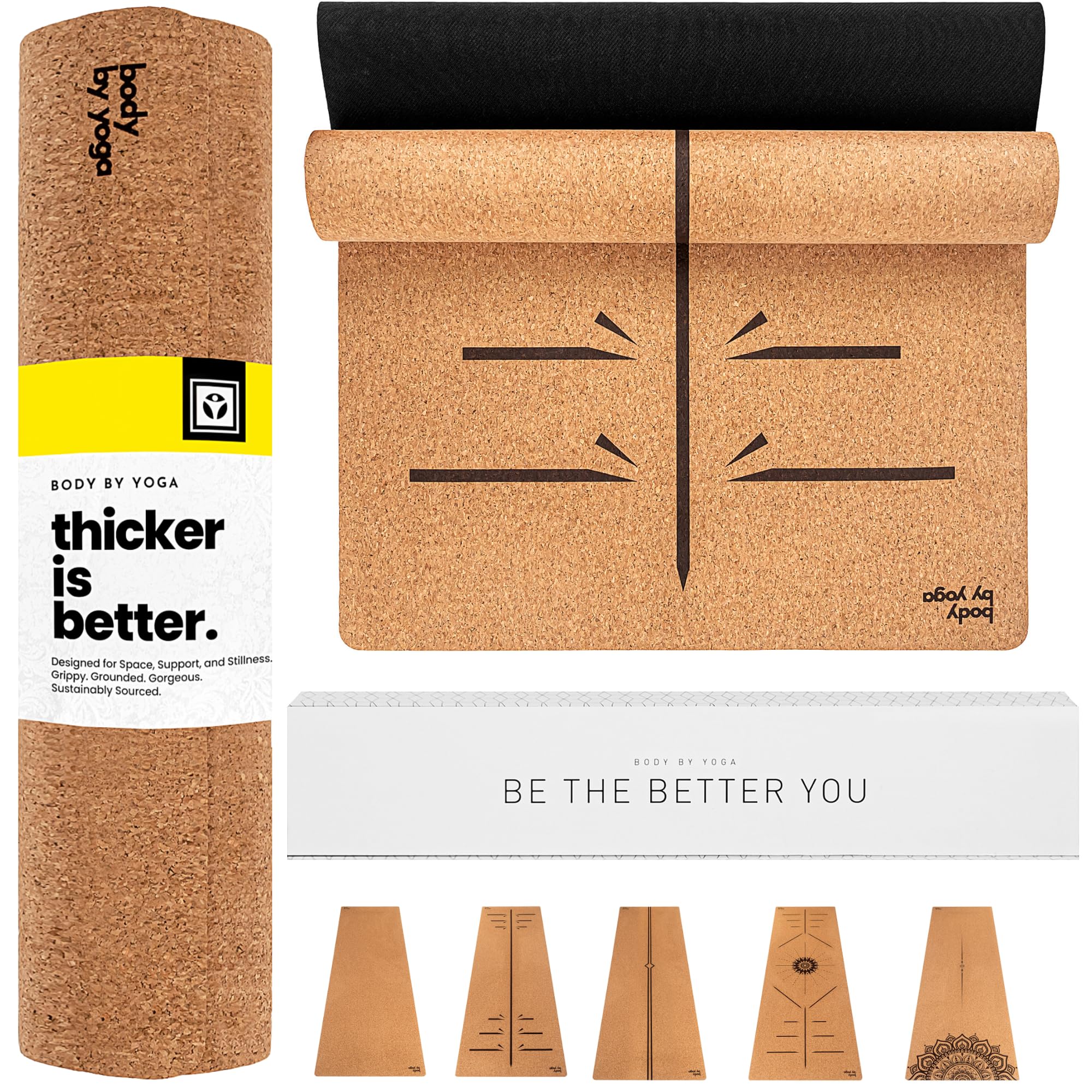
The Body By Yoga cork mat offers a distinctly different experience for hot yoga: the natural cork surface becomes more grippy as it absorbs moisture from your palms and feet, creating a textured, almost sandpaper-like traction that works exceptionally well for sweaty hands. Unlike rubber mats that feel tacky, cork provides a dry, non-glossy surface that stays comfortable even during extended holds.
At 80 inches long and 26 inches wide, this is the longest mat in the lineup, designed specifically for taller practitioners or those who want extra room during reacher poses. The cork layer is noticeably thicker than budget cork mats, which often have a paper-thin surface that wears off within months. The natural rubber base adds stability and helps the mat stay flat on hardwood or studio floors without curling.
The cork composition resists bacterial growth and is easy to clean — a simple wipe with water removes sweat residue, unlike porous rubber that can trap odors. The main trade-off is weight: the mat comes in at roughly 10 pounds, making it a dedicated home or destination-studio mat rather than one you hike across town daily. For yogis prioritizing natural materials, joint protection, and a non-slip surface that works better the sweatier you get, this cork mat delivers consistently.
Why it’s great
- Cork surface becomes grippier when wet — ideal for hot yoga moisture.
- Longest option at 80″ x 26″ for tall practitioners and wide poses.
- Natural, anti-microbial material resists odors and cleans easily.
Good to know
- Heaviest mat at 10 lbs — not portable for frequent travel.
- Cork texture may feel rough for those used to smooth polyurethane surfaces.
- Thicker cork layer is still only 0.26″ total — less cushioned than foam-based mats.
3. Plyopic Ultra-Grip Pro Yoga Mat
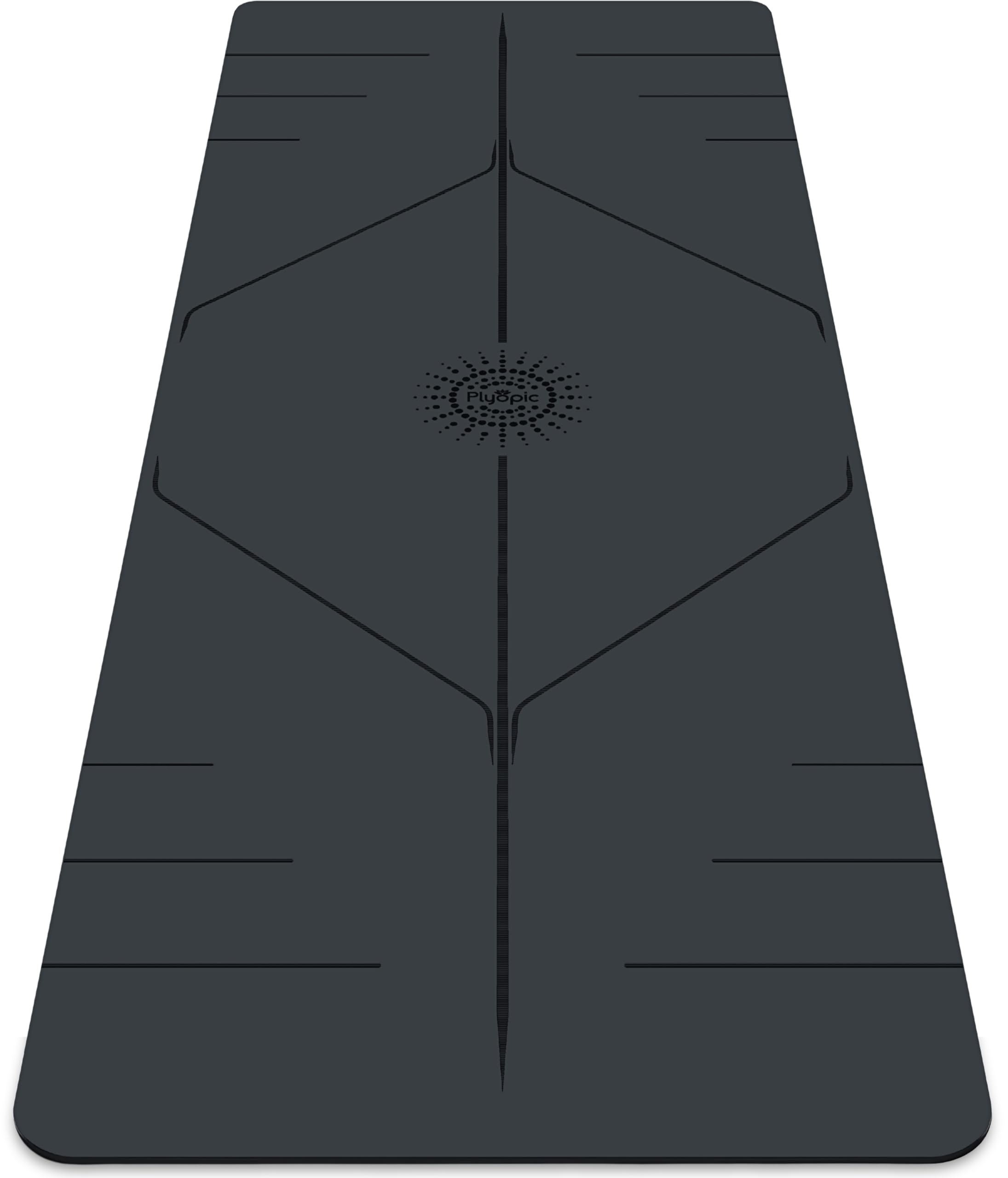
The Plyopic Ultra-Grip Pro uses a hybrid construction: a top layer of eco-friendly polyurethane bonded to a natural tree rubber base. This combination delivers grip that works consistently from the first pose — no break-in period required — whether your hands are bone-dry during warmup or soaked by the final savasana. The 0.17-inch thickness sits firmly on the floor, offering solid ground feel while providing enough give for wrist comfort in tabletop poses.
At 72″ x 26″, the mat offers generous real estate, and the subtle alignment lines running along the top surface help with hand and foot placement during transitions. Users report that the Ultra-Grip Pro outperforms premium mats costing nearly twice as much, especially in hot Pilates and Bikram classes where rapid movement combined with high sweat usually leads to sliding.
The material is PVC-free and vegan-friendly, which matters if you prefer non-toxic surfaces. One nuance to note: the high-friction surface can feel slightly abrasive during fast-paced moves like mountain climbers, where you shift weight quickly on your hands. For standard vinyasa and hot yoga flows, the grip is outstanding. The mat weighs just over 5 pounds, striking a good balance between studio portability and stable floor adhesion.
Why it’s great
- No break-in needed — grip works immediately in dry and wet conditions.
- Dense natural rubber base stays planted on hard floors without slipping.
- Alignment lines provide useful visual cues for hand and foot placement.
Good to know
- High-friction surface can cause skin burn during fast floor exercises.
- Hand wash only — machine washing will damage the PU layer.
- At 0.17″, thinner than typical cushioning mats for prone resting poses.
4. Plyopic All In One Yoga Mat
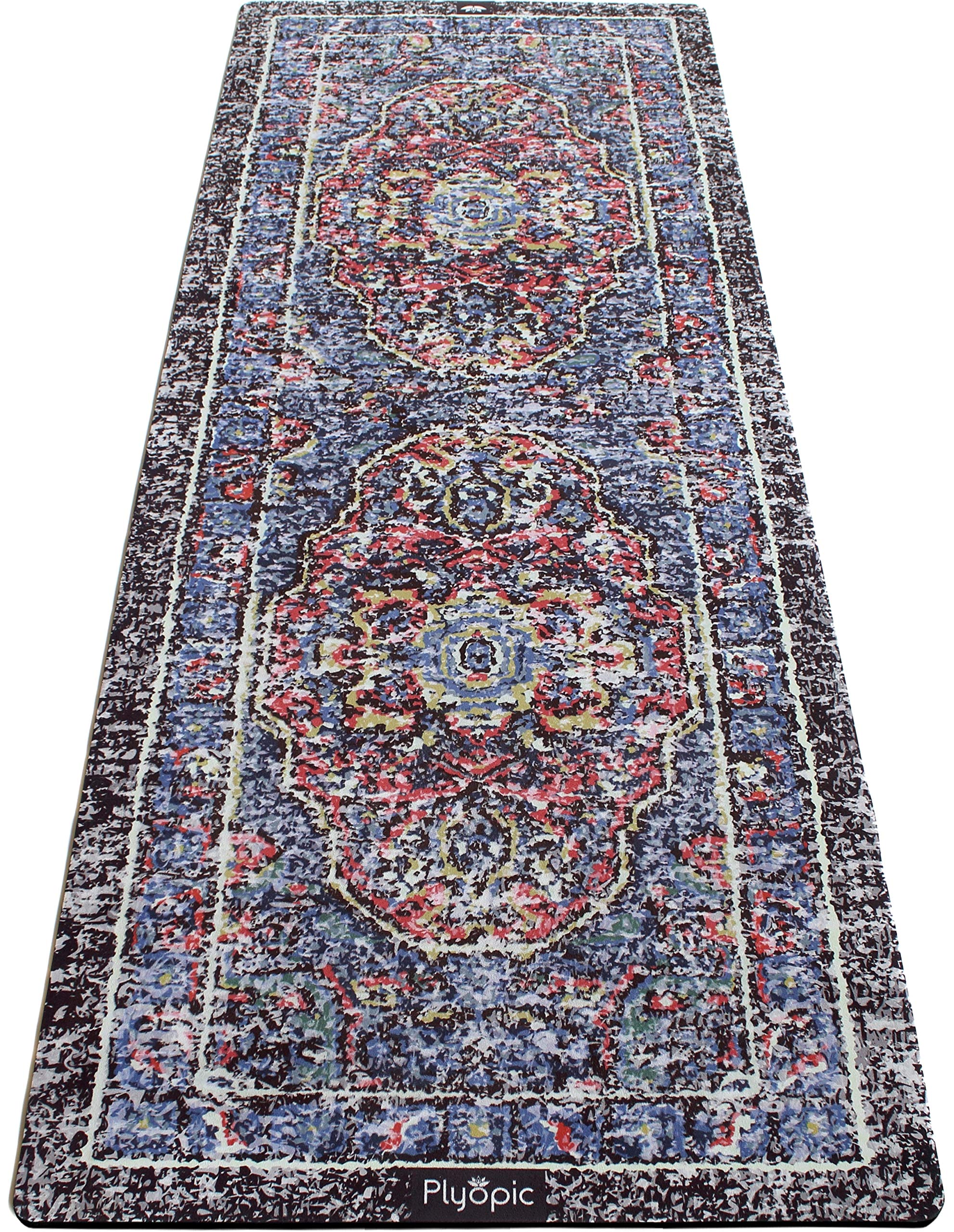
The Plyopic All In One mat eliminates the need for a separate towel by integrating a moisture-absorbing top surface directly into the mat. This is a unique approach for hot yoga: instead of laying a towel over a standard mat that can bunch or shift, the top layer is bonded to a 3.5mm natural rubber base so the entire unit stays flat and aligned through your full practice.
The 71″ x 25.5″ surface uses a proprietary textile that wicks sweat away from your skin and dries quickly between uses. Yogis who sweat heavily often appreciate that the top layer feels more like a towel than a rubber mat — it provides texture without stickiness. The dense rubber base at 3.5mm is on the thinner side, which provides excellent ground feel for balance poses but offers less cushion for knees and elbows in floor postures.
This mat is best suited for yogis who already use a towel over their mat and want a unified solution that won’t slip or bunch. The integrated design keeps the towel aligned with the mat edges, unlike loose towels that shift during inversions. At 5.1 pounds, it is relatively easy to carry to class. The main consideration is that the thin base means you need a padded floor or an extra layer under sensitive joints.
Why it’s great
- Integrated towel surface eliminates bunching and shifting during practice.
- Moisture-wicking top layer keeps hands and feet dry even in heavy sweat.
- Dense 3.5mm rubber base provides stable grounding for balance poses.
Good to know
- Thin base offers minimal cushioning for knees and prone postures.
- Hand wash only — top layer is not machine-washable.
- Towel surface may feel less familiar for those used to smooth rubber mats.
5. Manduka Yogitoes Hot Yoga Mat Towel

The Manduka Yogitoes is not a standalone mat but a high-performance towel topper designed to sit on top of your existing yoga mat. Its patented Skidless Technology uses 100% silicone nubs on the underside that grip the mat surface and prevent the towel from bunching or sliding during inversions and standing poses. For yogis who already own a favorite mat and want to adapt it for hot yoga, this is a practical solution.
The 71″ x 24″ towel is made from a blend of 30% recycled polyester, 60% polyester, and 10% nylon. It is designed to absorb heavy sweat and keep the top surface dry — the moisture gets pulled into the towel fabric rather than pooling on the mat. You wash it separately before first use, then lay it dot-side down on your mat. Dampening key areas before practice helps activate the silicone grip.
The main advantage is that you can transform any existing mat into a hot-ready setup without replacing the entire mat. It weighs about 1 pound, making it easy to carry alongside your mat. The trade-off is that the towel adds an extra layer to manage — you must wash it regularly, it occupies bag space, and some users find the silicone nubs leave temporary marks on softer PVC mats. For yogis who prefer not to commit to a dedicated hot yoga mat, the Yogitoes offers modular flexibility.
Why it’s great
- Silicone nubs grip the mat securely — no bunching or shifting during flow.
- Absorbs heavy sweat and keeps the practice surface dry.
- Lightweight at 1 lb and easy to carry alongside a standard mat.
Good to know
- Requires washing after each use to prevent odor buildup.
- Silicone nubs may leave temporary marks on softer PVC mats.
- 24″ width is narrower than many modern mats, limiting coverage.
6. Gogokiwi Extra Wide Yoga Mat
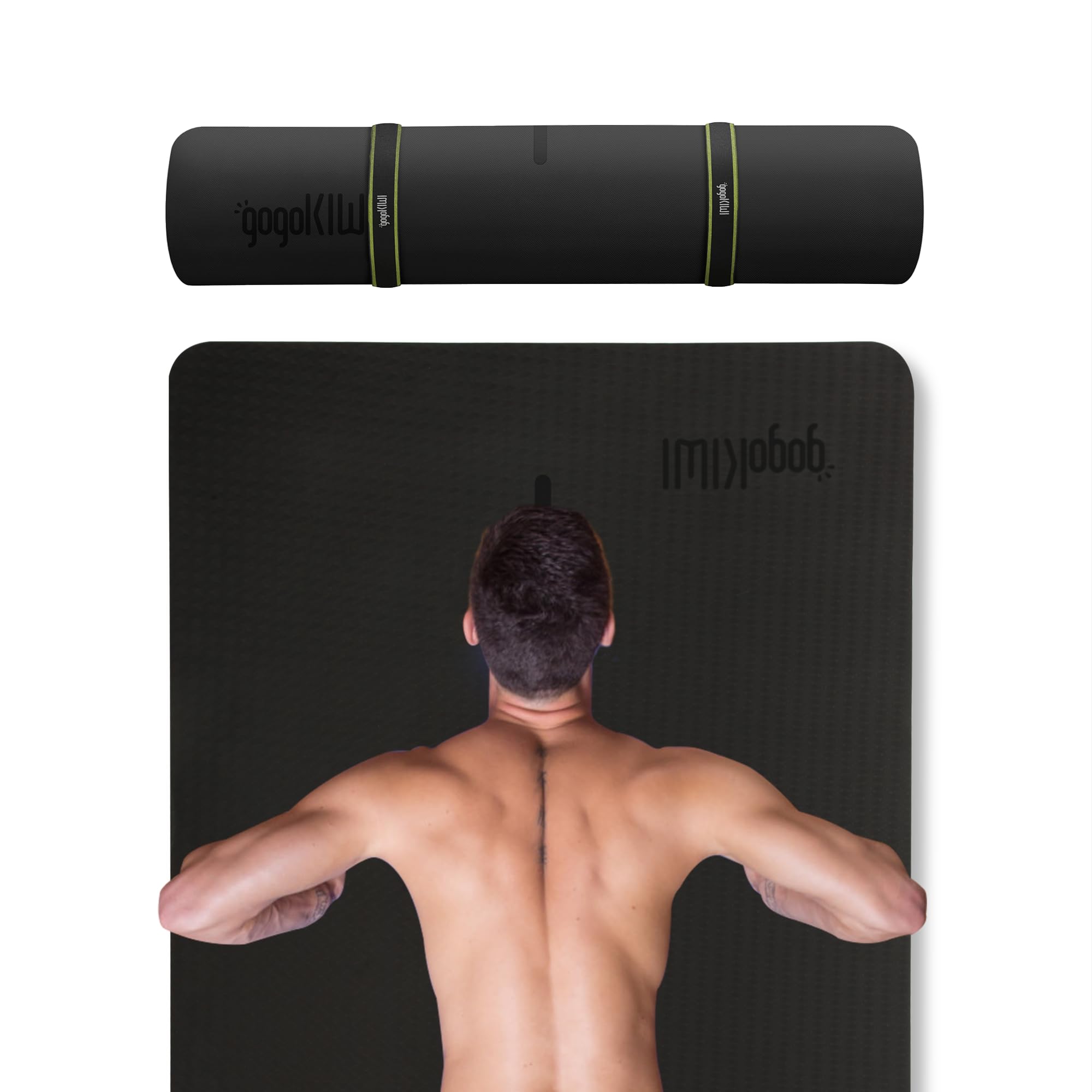
The Gogokiwi Extra Wide Mat is built for yogis who prioritize surface area above all else. At 72″ x 36″, this mat is 50% wider than standard options, providing ample room for men and plus-size practitioners to move through wide-legged poses without stepping off the mat. The 0.25-inch thickness offers generous cushioning for sensitive knees and wrists, making it comfortable for floor-based sequences.
The mat is made from 100% recyclable Recfoam, an eco-friendly foam that is both lightweight at 2.7 pounds and durable enough for regular use. The dual-sided non-slip design features different colors and patterns on each side, allowing you to flip the mat based on your mood or to distribute wear evenly. A center alignment line helps with hand and foot placement, which is useful for newer practitioners working on symmetry.
For hot yoga specifically, the foam surface has limitations. Recfoam is a closed-cell material, meaning it repels moisture rather than absorbing it — sweat pools on top of the mat, and the non-slip pattern helps some, but the grip is not comparable to open-cell rubber or PU surfaces in wet conditions. The best fit for this mat is cooler-temperature yoga, Pilates, or floor workouts where the extra width and cushioning matter more than sweat-activated grip.
Why it’s great
- 36-inch width provides unmatched surface area for wide poses and larger frames.
- Lightweight at 2.7 lbs with included carrying strap for portability.
- Recyclable Recfoam is eco-friendly and free of harsh chemicals.
Good to know
- Closed-cell foam does not absorb sweat — can become slippery in hot classes.
- Visible marks and indentations can form from zippers or sharp pressure.
- 0.25″ foam is cushioned but less stable for precise standing balance work.
7. Liforme Travel Yoga Mat

The Liforme Travel Mat is a specialized tool for the mobile yogi: at 72″ x 26″ with a thickness of only 0.08 inches, it weighs roughly 3.5 pounds and folds compactly into its included bag. The signature Liforme “GripForMe” material — an eco-polyurethane top layer bonded to a natural rubber base — provides the same warrior-like grip the brand is known for, even in hot and humid conditions.
The patented “AlignForMe” system uses a printed grid on the mat surface to guide hand and foot placement, helping practitioners of all levels maintain proper alignment in standing poses, transitions, and inversions. This system is particularly useful for hot yoga, where sweat and fatigue can cause postural drift. The ultra-thin profile means you feel every nuance of the floor beneath you, which improves balance awareness but offers minimal cushioning.
The Liforme Travel is designed to be used as a standalone mat or as a topper over studio mats for added grip and alignment guidance. The PVC-free, non-toxic construction appeals to eco-conscious practitioners. The primary limitation is the thin profile: if you have sensitive knees or practice on hard floors, you will need extra padding underneath. For yogis who travel frequently and refuse to compromise on grip, this is the most portable high-performance hot yoga mat available.
Why it’s great
- Ultra-thin and lightweight — ideal for travel and carrying to multiple studios.
- AlignForMe grid provides precise visual feedback for body positioning.
- GripForMe material performs consistently in hot, sweaty conditions.
Good to know
- 0.08″ thickness offers minimal cushioning — needs padding for hard floors.
- Premium price point compared to other travel options.
- Thin rubber base may not stay as flat on uneven or carpeted surfaces.
FAQ
Why does my yoga mat get slippery when I sweat during hot yoga?
Can I use a regular towel on my yoga mat instead of buying a hot yoga mat?
How do I clean a hot yoga mat without damaging the grip?
How much should I spend on a quality hot yoga mat?
Will a natural rubber mat smell bad in a hot room?
Final Thoughts: The Verdict
For most users, the hot yoga mat winner is the Manduka GRP Adapt because it delivers consistent, sweat-activated grip without requiring a towel, provides a stable 5mm rubber base for balance, and holds up to daily high-heat practice. If you want a natural material that resists odor and gives you extra length, grab the Body By Yoga Cork Mat. And for a travel-friendly option that fits in a carry-on without sacrificing grip, nothing beats the Liforme Travel Mat.