Finding a fitness mat that actually cushions your joints during floor work without turning into a slipping hazard is harder than it should be. The wrong thickness leaves your knees and hips aching on hard floors, while the wrong material can break down after a few months of regular use. This guide breaks down the key material differences—NBR, TPE, and foam density—so you can pick a mat built for your specific workout style and body.
I’m Emma — the founder and writer behind Baby Bangs. I’ve spent over a thousand hours cross-referencing material composition, density ratings, thickness tolerances, and real user wear patterns to separate durable fitness mats from those that will delaminate or develop pressure holes within weeks.
Whether you practice yoga, Pilates, HIIT, or simple stretching, finding the right surface matters for both safety and long-term comfort. This guide reviews the top contenders to help you find the best fitness mat for your home gym or studio routine.
How To Choose The Best Fitness Mat
Choosing the right fitness mat boils down to three factors: material composition, thickness, and surface area. Each element directly affects joint comfort, stability during dynamic movements, and how long the mat lasts before it begins to break down. Buyers often overlook material density in favor of raw thickness, which leads to mats that feel plush initially but compress permanently after a few months of bodyweight training.
Material Matters: NBR vs. TPE vs. Foam
NBR (nitrile butadiene rubber) is the most common material for thick, budget-friendly mats. It offers excellent cushioning but is heavier, less dense, and can absorb moisture over time, leading to surface breakdown. TPE (thermoplastic elastomer) is denser, lighter, more resistant to moisture, and fully recyclable—making it the superior choice for durability and eco-conscious buyers. Straight foam mats (like the Fitvids) offer extreme thickness but lack the closed-cell structure of TPE, meaning they dent and tear more easily under pressure from shoed workouts or pet claws.
Thickness and Your Workout Type
For floor-based stretching, Pilates, and yoga, a thickness between 10mm and 13mm provides the best balance of cushioning and stability. Mats thinner than 6mm compress noticeably on hard floors, leading to knee and hip discomfort. Mats thicker than 15mm can feel unstable during balance poses or standing sequences, as the foam sinks unevenly under your weight. For high-intensity interval training (HIIT) or weightlifting, a firmer 6mm to 10mm mat is preferable to prevent foot roll and provide a stable base.
Width and Length for Real Body Sizes
Standard fitness mats measure 24 inches wide and 72 inches long, which works for most users but leaves taller individuals or those with broader shoulders hanging off the sides during lateral lunges or star stretches. Wider mats—32 inches or 36 inches—eliminate that problem. If you’re over 5’10” or do dynamic moves that involve stepping sideways, prioritize a mat with at least 30 inches of width.
Quick Comparison
On smaller screens, swipe sideways to see the full table.
| Model | Category | Best For | Key Spec | Amazon |
|---|---|---|---|---|
| Karma Fitness Large Mat | Premium TPE | Wide body, HIIT, & yoga | 10mm TPE, 72″x32″ | Amazon |
| Gogokiwi Extra Wide Mat | Premium Recycled | Extra-wide, tall users | 6.35mm Recfoam, 72″x36″ | Amazon |
| Fitvids 1-Inch Thick Mat | Premium Foam | Max cushion, light use | 25mm foam, 72″x24″ | Amazon |
| YOTTOY TPE Mat | Mid-Range TPE | Eco-conscious, yoga | 12mm TPE, 72″x24″ | Amazon |
| ProsourceFit 1/2” Mat | Mid-Range NBR | Joint comfort, Pilates | 13mm NBR, 71″x24″ | Amazon |
| Gaiam Essentials 10mm | Budget NBR | Beginner, low-impact | 10mm NBR, 72″x24″ | Amazon |
| Amazon Basics TPE Mat | Budget TPE | Stable, firm surface | 6mm TPE, 73.6″x24″ | Amazon |
In‑Depth Reviews
1. Karma Fitness Large Exercise Mat

This mat hits the sweet spot for most home gym users. At 10mm thick with a double-layered TPE construction, it provides enough cushion to protect your spine and knees during floor work without the instability that plagues thicker foam mats during standing poses. The 32-inch width is 33 percent wider than standard mats, giving you room for lateral lunges, sumo squats, and wide-leg stretches without stepping off the edge.
The diamond-textured grip on both sides is a standout feature—it grabs the floor and your hands equally well, even during sweaty HIIT sessions. TPE material is denser than NBR, so it resists moisture absorption and cleans up easily with a damp cloth. The included carry bag with a shoulder strap makes transport gym-to-home genuinely convenient, though the bag is a snug fit.
Customer reviews consistently note the mat’s durability after months of daily use, with no peeling or permanent compression visible in high-traffic areas. The 10mm thickness is widely considered the “sweet spot” for balancing comfort and stability—thick enough for joint protection, thin enough for balance awareness.
Why it’s great
- Diamond-texture non-slip grip on both sides handles sweaty workouts
- Double-layered TPE resists moisture and cleans easily
- Extra width accommodates broader movements without crowding
Good to know
- Carry bag fits the mat but leaves little room for accessories
- TPE surface can show scuff marks from shoed workouts over time
2. Gogokiwi Extra Wide Yoga Mat
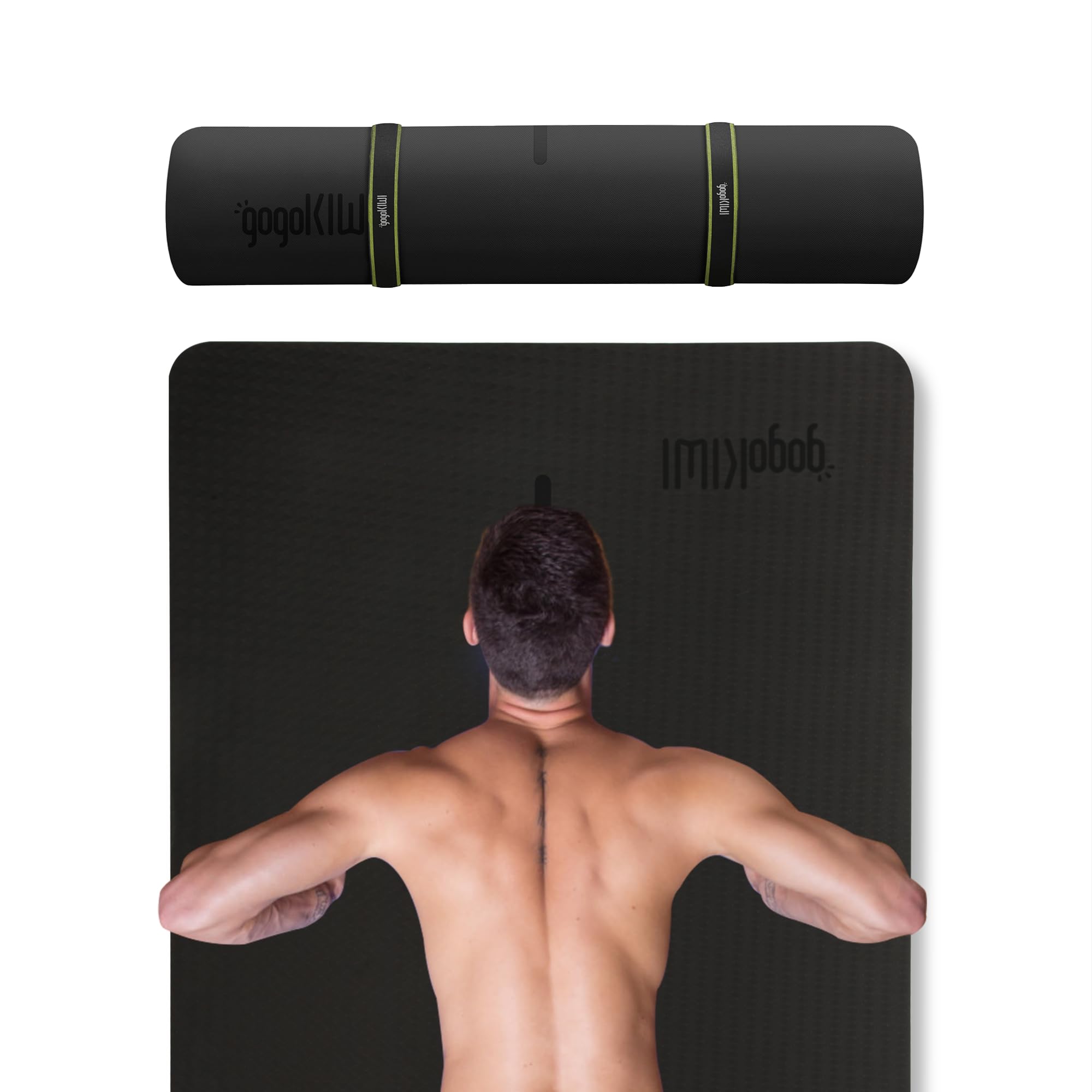
At 36 inches wide, this mat offers the most horizontal real estate in this lineup—ideal for taller men and plus-size women who constantly fight to stay centered on standard 24-inch mats. The 6.35mm thickness is thinner than most cushion-focused mats, but the dense Recfoam material (100 percent recyclable) provides surprising floor protection without sacrificing stability for standing balances.
The dual-sided non-slip design features different colors and patterns on each side, so you can flip based on mood or workout type. The center alignment line is a thoughtful addition for yoga practitioners who need visual feedback for symmetrical poses. At just 2.7 pounds, it’s the lightest premium option here, making it the easiest to carry to classes or pack for travel.
Customer feedback highlights that the thin profile works best for yoga, Pilates, and bodyweight floor work—not for heavy HIIT or weightlifting that requires deeper impact absorption. Some users noted that the foam can retain marks from zippers or shoe soles if pressure is applied.
Why it’s great
- Generous 36-inch width accommodates plus-size and tall users comfortably
- Ultra-light 2.7 lb design with included strap is travel-friendly
- Center alignment line aids balance and symmetry in yoga
Good to know
- 6.35mm thickness lacks deep cushion for high-impact floor work
- Recfoam surface can develop permanent marks from sharp pressure
3. Fitvids 1-Inch Thick Exercise Mat
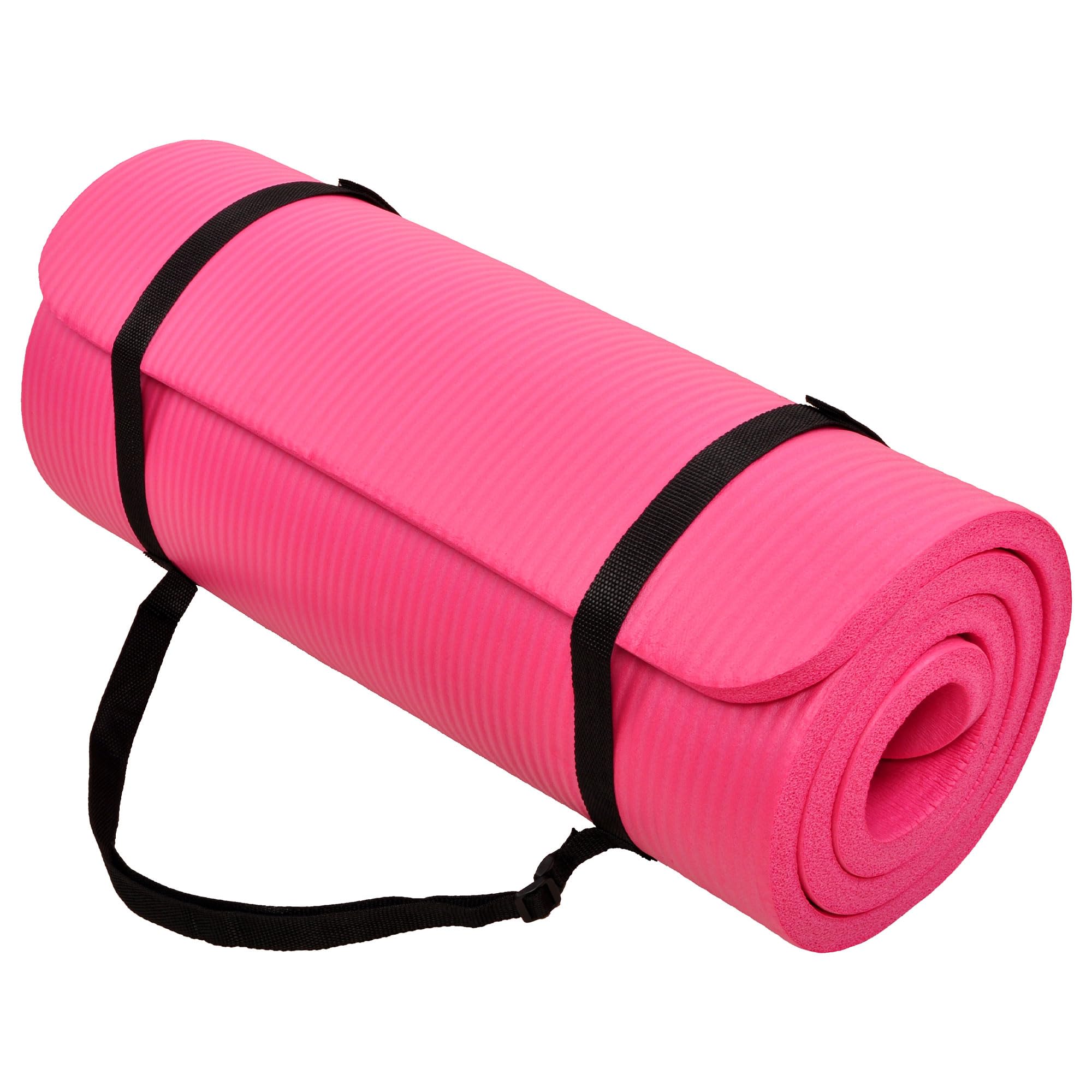
If your primary goal is maximum cushioning for knee-sensitive floor work, this 1-inch (25mm) thick foam mat is the plushiest option available. The high-density foam provides substantial shock absorption for the spine, hips, and elbows during crunches, planks, and stretching on concrete or tile floors. The double-sided non-slip surface helps keep the mat in place, though users report some slippage on very smooth tile.
The trade-off for extreme thickness is stability—standing poses and balance-focused yoga postures feel less secure because the foam compresses unevenly under bodyweight. Several customer reviews mention that the mat surface tears easily if used with shoes or exposed to pet claws, so this is best suited for barefoot, low-impact routines. The integrated carry strap is basic but functional for home-to-car transport.
Customer feedback strongly reflects that this mat excels for recovery stretching, physical therapy, and gentle Pilates, but struggles under the demands of dynamic HIIT or weighted workouts. Buyers seeking a durable all-rounder should prioritize denser materials like TPE over this foam construction.
Why it’s great
- 25mm thickness provides exceptional joint relief on hard floors
- Double-sided non-slip surface keeps the mat stationary
- High-density foam supports sensitive knees and elbows well
Good to know
- Foam surface is vulnerable to tears from shoes or pet claws
- Extreme thickness compromises stability for standing balance poses
4. YOTTOY TPE Yoga Mat

The YOTTOY offers a dense 12mm TPE construction that strikes a strong balance between cushioning and stability. TPE’s closed-cell structure means this mat resists sweat and moisture better than NBR foam, and the material is SGS and TUV certified free of heavy metals and ten harmful phthalates—making it a solid choice for eco-aware buyers. The granular protrusions on the top surface increase friction for hand and foot grip during yoga flows.
The reverse side features a water ripple texture that grips hardwood, tile, and concrete floors well. The mat rolls up easily and includes a strap for transport, though it’s a standard 24-inch width, so taller users may find themselves stepping off during lateral movements. The 4-pound weight makes it slightly heavier than TPE mats from other brands, but the density contributes to durability.
Customer reviews note that the mat has minimal odor straight out of the box and holds up well under daily yoga practice. Some users mention that the textured surface can feel slightly abrasive on bare knees during extended kneeling poses, so a towel layer may be needed for sensitive skin.
Why it’s great
- TPE material is free of heavy metals and phthalates
- Granular texture provides confident hand and foot grip
- 12mm thickness offers excellent joint support without instability
Good to know
- 24-inch width feels narrow for broader body frames
- Textured surface can feel rough on bare knees during long holds
5. ProsourceFit Extra Thick Yoga and Pilates Mat

The ProsourceFit uses a 13mm NBR foam construction—the thickest NBR option in this list—designed specifically for joint-sensitive users who need maximum cushioning for Pilates and stretching. The ribbed bottom surface adheres to most floors, though it may require a short break-in period before achieving optimal grip. The 71-inch length is slightly shorter than the standard 72-inch, which may matter for very tall users.
NBR material is inherently water-resistant, which makes cleaning straightforward—wipe with a damp cloth and air dry. The included sling-style carrying strap is functional but less refined than the strap or bag options from competitors. At 2.5 pounds, it’s reasonably portable for a thick NBR mat.
Customer feedback is generally positive on comfort, but several long-term users note that the foam can begin to show compression marks or surface peeling after several months of consistent use, particularly in the knee and elbow zones. This is a common limitation of NBR foam vs. denser TPE materials.
Why it’s great
- 13mm NBR thickness is among the most cushioned options available
- Water-resistant foam cleans easily with a damp cloth
- Ribbed bottom design helps keep the mat stable on hard floors
Good to know
- NBR foam may compress permanently in high-use areas over several months
- 71-inch length is slightly shorter than standard, less ideal for tall users
6. Gaiam Essentials 2/5″ Thick Yoga Mat

The Gaiam Essentials is the most popular budget NBR mat on Amazon, and for good reason—the 10mm thickness provides genuine joint relief for beginners and those doing low-impact floor work. The textured foam surface reduces slipping during dry yoga and stretching, though it does not perform as well in sweaty conditions. The easy-cinch carrier strap is a thoughtful addition that makes rolling and carrying straightforward.
NBR foam at this price point has inherent limitations. Multiple customer reviews report small holes or surface tears developing after just a handful of uses, particularly in areas where hands or knees apply repeated pressure. The foam also emits a noticeable odor when first unrolled, which typically fades after 24 to 48 hours of airing out. This mat is best viewed as an entry-level solution for occasional use.
At 24 inches wide and 72 inches long, it matches standard dimensions, so taller or broader users should budget for a wider mat. The purple color is a popular choice, but the real selling point is the price-to-cushion ratio for someone who isn’t yet ready to invest in a higher-end TPE mat.
Why it’s great
- 10mm thickness provides meaningful joint comfort for beginners
- Easy-cinch strap makes rolling and carrying simple
- Textured surface helps reduce slipping on dry floors
Good to know
- NBR foam can develop small holes or tears with regular use
- Initial foam odor requires airing out for 24–48 hours
7. Amazon Basics 1/4 Inch Thick TPE Exercise Mat
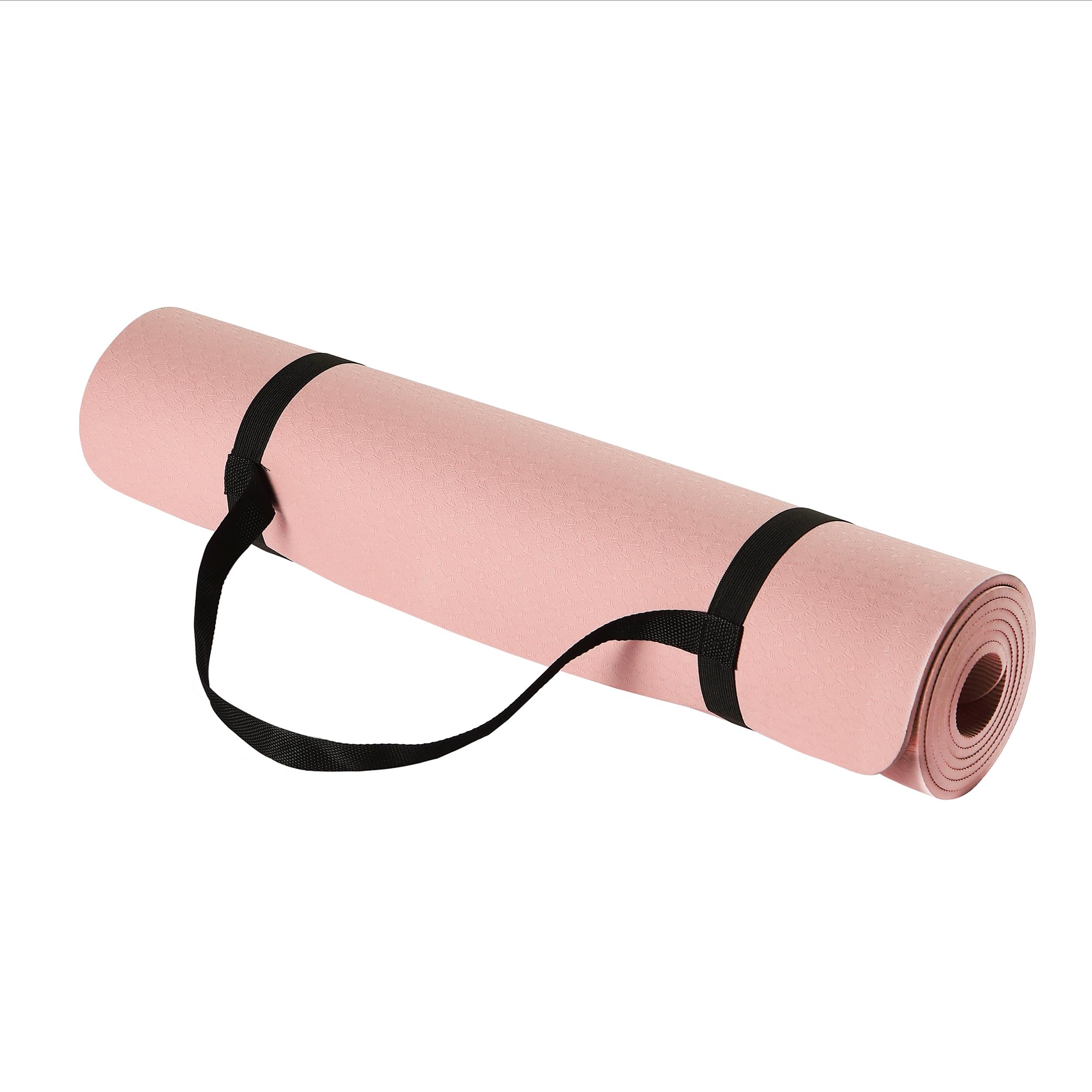
The Amazon Basics TPE mat is the thinnest option here at 6mm, but its dense TPE construction offers a stability advantage that thicker foam mats cannot match. The spring-back elasticity of the material helps maintain balance during standing yoga poses and bodyweight exercises. The non-slip surface provides a secure grip on hardwood and tile, and the material resists moisture better than NBR alternatives.
This mat is best suited for users who prioritize stability over cushioning—those doing standing flows, barre, or strength training rather than prolonged floor work. At 73.6 inches long, it offers extra length that accommodates taller users better than many competitors. The 0.91-kilogram weight makes it one of the lightest options available, appealing for frequent transport.
The trade-off is clear: at 6mm, the mat provides minimal shock absorption for knees, elbows, and the spine during floor-based exercises. Users with joint sensitivity or those exercising on concrete should consider a thicker option. The rose color is a nice touch, but the real draw here is the low cost of entry into a TPE material that outperforms cheap NBR alternatives in durability.
Why it’s great
- Dense TPE material provides excellent stability for standing poses
- Extra length (73.6 inches) accommodates taller users well
- Lightweight design is convenient for transport and storage
Good to know
- 6mm thickness offers minimal cushioning for floor-based exercises
- Not suitable for users with sensitive joints or hard floors
FAQ
What thickness should I choose for Pilates versus yoga?
How do I prevent my fitness mat from slipping on hardwood floors?
Why do some fitness mats develop holes or tears quickly?
Can I put my fitness mat in the washing machine?
Final Thoughts: The Verdict
For most users, the best fitness mat winner is the Karma Fitness Large Exercise Mat because its double-layered TPE construction delivers the optimal balance of joint cushioning, floor grip, and durability for both yoga and HIIT workouts. If you need extra width for a taller frame, grab the Gogokiwi Extra Wide Mat for its generous 36-inch surface and lightweight portability. And for max cushioning on a tight budget, nothing beats the Gaiam Essentials 10mm Mat for low-impact floor work.