For asthma, every breath counts. Excess humidity above 60% triggers dust mites and mold spores, two of the most common airborne triggers found indoors. A dedicated dehumidifier directly addresses this by pulling moisture from the air, starving those allergens and creating a breathing environment your lungs can actually handle without constant irritation.
I’m Emma — the founder and writer behind Baby Bangs. I’ve spent years analyzing air quality hardware, focusing on how compressor efficiency, filtration, and sustained humidity control directly affect respiratory health in real homes.
This guide breaks down the top-performing models available now, with a clear focus on the quiet operation, energy efficiency, and sustained moisture removal that matter most. After thorough research, I’m confident my findings will help you choose the dehumidifier for asthma that fits your living space and health needs.
How To Choose The Best Dehumidifier For Asthma
Selecting a dehumidifier for asthma requires more than just picking the cheapest unit. You need a machine that can maintain humidity levels consistently between 30% and 50%, operate quietly enough for a bedroom, and run efficiently without driving up your electric bill. Here’s what to look for.
Pint Capacity and Room Size
The pint rating tells you how much moisture the unit removes in 24 hours. For a 1,500-square-foot basement, a 21-pint unit works fine. For a 4,500-square-foot whole-home setup, you want at least 80 pints. Always match the capacity to the square footage — an undersized unit will run constantly and never hit the target humidity, while an oversized one may short-cycle and waste energy.
Noise Level for Bedroom Use
Asthma is often worse at night, so the dehumidifier you run in a bedroom must be quiet. Look for models rated at or below 40 dB. Anything above 50 dB will likely disturb sleep. The quietest compressor-based units use rotary compressors and insulated air ducts to keep sound levels low.
Continuous Drainage Capability
If you’re running the unit for days or weeks at a time, emptying a water tank becomes a chore. A gravity drain hose lets you route water directly to a floor drain or sump pump. Models with an internal pump can push water upward into a sink or laundry tub, giving you more placement flexibility in basements without floor drains.
Energy Efficiency and Certification
A dehumidifier runs for hours every day. An Energy Star certified model uses significantly less electricity than a non-certified one. The “Most Efficient” designation from Energy Star 2024/2025 represents the top tier — these units are the best balance of power draw and moisture removal. Over a year, the difference can add up to serious savings.
Filter Quality and Maintenance
Washable and removable filters are the standard, but some units also include pre-filters that catch larger particles before they reach the coil. For asthma, a clean filter directly affects air quality — a dirty filter reduces airflow and can harbor mold. Quick-access filters that slide out without tools make routine cleaning much easier.
Quick Comparison
On smaller screens, swipe sideways to see the full table.
| Model | Category | Best For | Key Spec | Amazon |
|---|---|---|---|---|
| DREO 110-Pint | Smart | Whole-home automation | 4.0 pints/kWh efficiency | Amazon |
| AEOCKY LEO-001 | Premium | Basements with pump drain | Built-in internal pump | Amazon |
| DECIUU 100-Pint | High Capacity | Large garages or crawl spaces | 100 pints/day removal | Amazon |
| hOmeLabs Wi-Fi | Smart | Remote control and scheduling | Alexa/Google compatible | Amazon |
| Kesnos 80-Pint | Self-Drying | Low-maintenance operation | Self-drying cycle | Amazon |
| Waykar 34-Pint | Mid-Range | Bedrooms and small apartments | 33 dB quiet operation | Amazon |
| AEOCKY LEO-Lite | Entry Flagship | Large open floor plans | 74 pints/day, Energy Star 6.0 | Amazon |
| GoGuess 21-Pint | Compact | RVs and small bathrooms | 40 dB noise level | Amazon |
| PLUSCENT 21-Pint | Budget | Entry-level moisture control | 1.5L tank capacity | Amazon |
In‑Depth Reviews
1. DREO 110-Pint Smart Dehumidifier

The DREO 110-Pint is the most efficient unit in this lineup, pulling 4.0 pints per kilowatt-hour — beating the Energy Star 2024 standard. That translates to lower electricity bills when you run it around the clock, which is exactly what asthma management demands. The 2-gallon tank lets it run over eight hours without emptying, and the built-in pump can push water upward into a sink if you don’t have a floor drain.
Noise is moderate, described as white noise by most users. The DREO app monitors real-time humidity, lets you set schedules, and works with Alexa and Google Assistant. The auto-defrost kicks in at 41°F, so it stays operational in a cool basement. ETL certification with tilt and thermal protection adds peace of mind.
The only downsides are the app requiring a 2.4GHz network and the tank being tricky to empty without spilling when completely full. For a whole-home solution that hits the efficiency sweet spot, this is the top pick.
Why it’s great
- Class-leading energy efficiency (4.0 pints/kWh)
- Smart app control with scheduling
- Internal pump for flexible drainage
- Huge 2-gallon tank runs 8+ hours
Good to know
- App requires 2.4GHz Wi-Fi only
- Tank can be messy to empty when full
2. AEOCKY LEO-001 80-Pint Dehumidifier with Pump
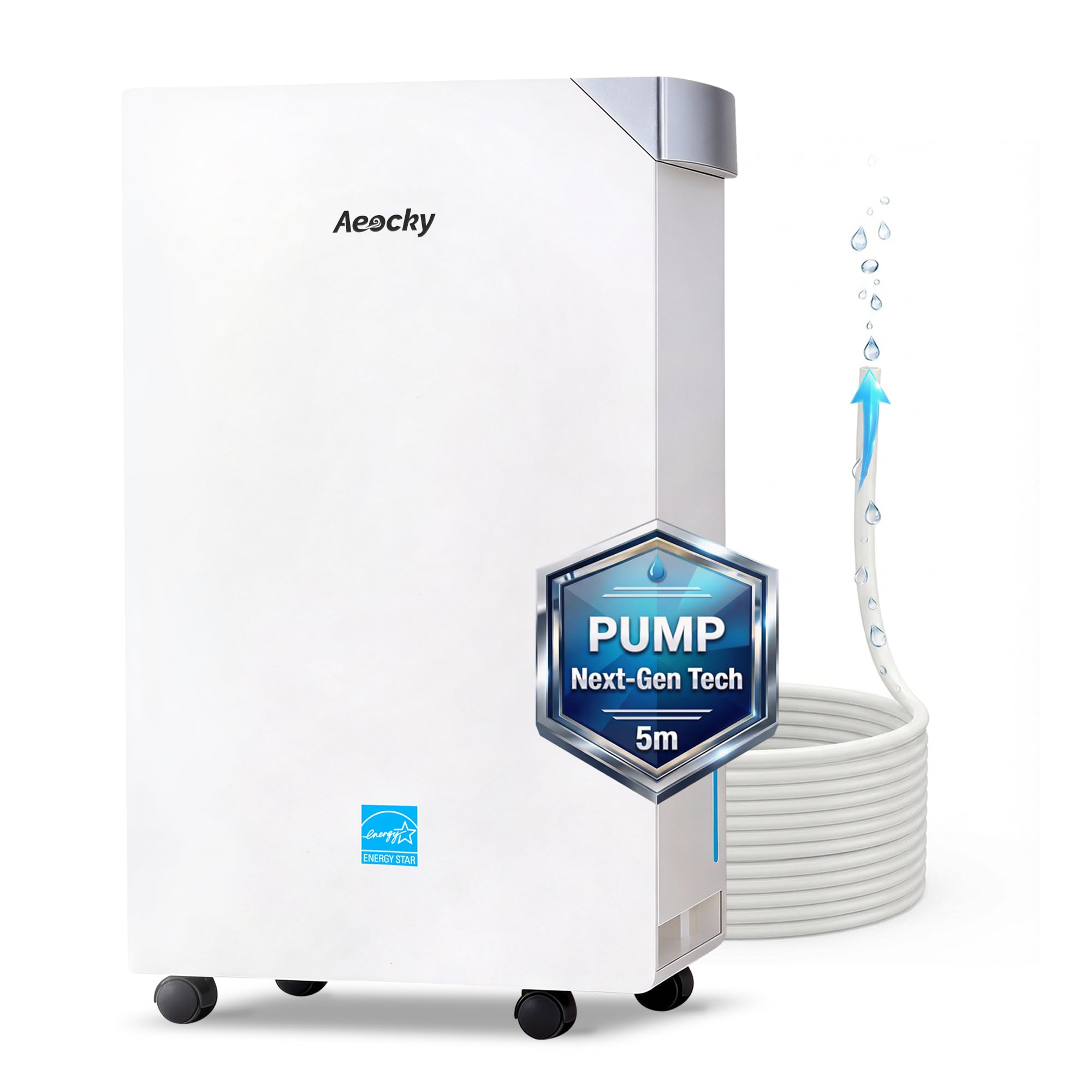
The AEOCKY LEO-001 is one of the few models to earn the true Energy Star Most Efficient 2025 badge — only 2.6% of all dehumidifiers meet that standard. Its integrated pump can push water up to 16 feet vertically, which completely removes the need to empty the tank by hand. That’s a massive convenience for basement asthma sufferers who want 24/7 operation without checking the bucket.
Noise is exceptionally low thanks to a custom low-vibration pump and optimized air duct design. The compressor uses 7mm pure copper coils with a “3+3” core structure for superior heat exchange. The humidity sensor updates in milliseconds and stays within a 5% tolerance of your set point. Three-speed fan and child lock complete the package.
Some users note that the 1.45-gallon tank is small for the 80-pint capacity, but that’s by design — the pump handles continuous drainage. The unit is also 23 inches tall, so measure your under-sink space first. Excellent three-year warranty.
Why it’s great
- True Energy Star Most Efficient 2025
- Internal pump enables vertical drainage
- Very quiet operation
- 3-year warranty and responsive support
Good to know
- Small water tank for the capacity
- Tall design may not fit low shelves
3. DECIUU 100-Pint Dehumidifier
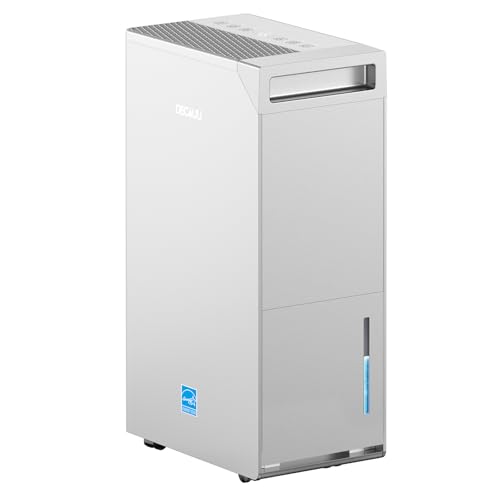
If you need to dry out a 5,000-square-foot basement or garage, the DECIUU 100-Pint is the brute-force option. It removes up to 100 pints per day under high-humidity conditions, which is more than enough to keep an entire lower level bone-dry. The Energy Star Most Efficient 2024 certification means it does this without punishing your utility bill.
Three drainage options give flexibility: the 1.45-gallon bucket, the included 6.56-foot hose for gravity drain, or a standard garden hose for permanent setup. The intelligent humidistat lets you set between 35% and 80% RH, and the auto-defrost keeps it running in cooler spaces. The unit is 17 inches wide and 26 inches tall — it’s big, but the 360-degree casters make moving it manageable.
Reviews consistently praise the build quality and quiet operation. The main complaint is the 32-pound weight — you’ll want the casters engaged before moving it up stairs.
Why it’s great
- Massive 100-pint daily capacity
- Energy Star Most Efficient 2024
- Three drainage options
- Runs well in cool basements
Good to know
- Heavy at 32.8 pounds
- Large footprint requires floor space
4. hOmeLabs 80-Pint Wi-Fi Dehumidifier
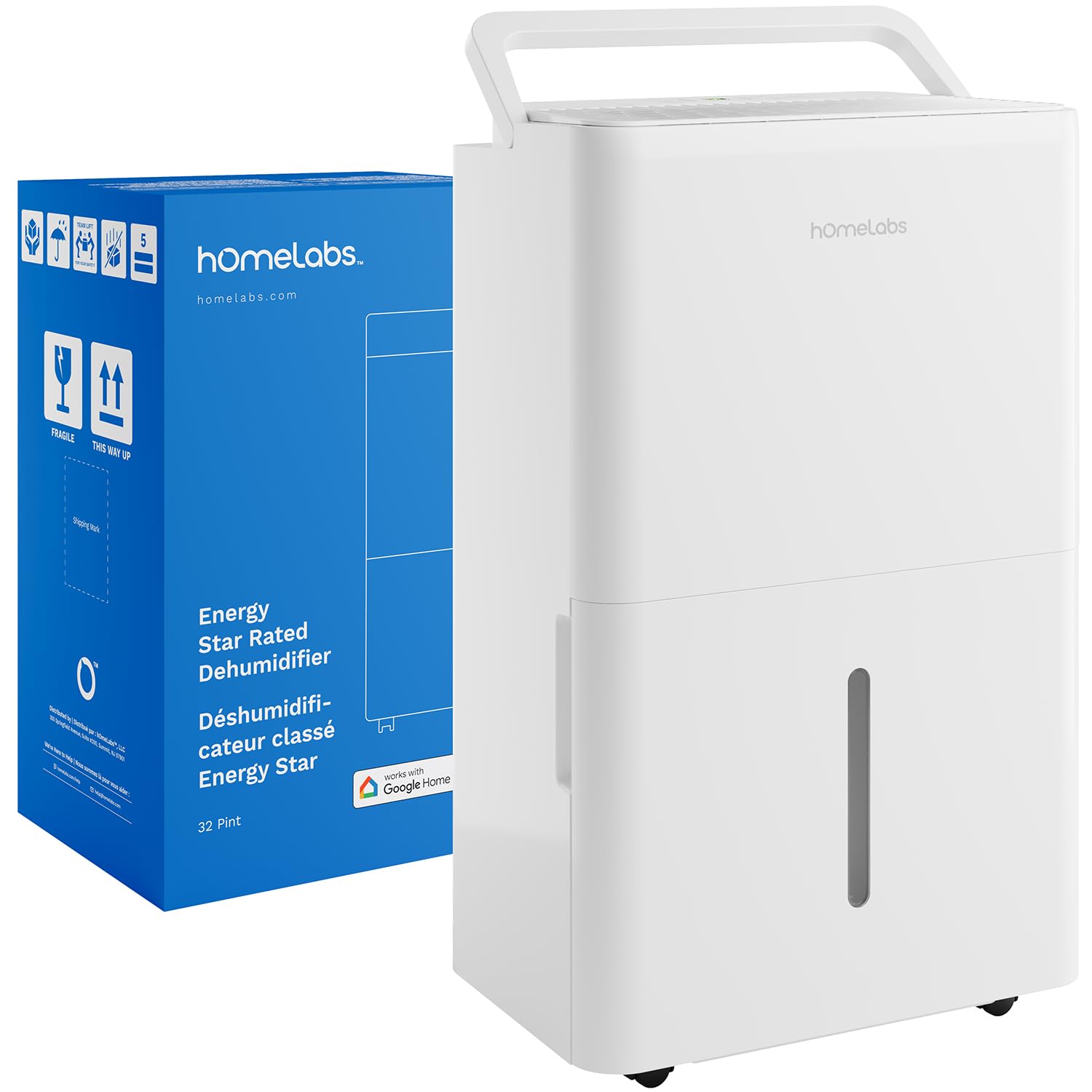
The hOmeLabs 80-Pint brings smart home integration to the dehumidifier category. You can adjust settings, set timers, and monitor humidity through the app or via voice commands with Alexa and Google Assistant. That’s a major convenience for asthma management — you can check the humidity from bed or while at work without walking to the basement.
It covers up to 4,500 square feet and removes 32 pints at 80°F/60% RH (80 pints max at 95°F/90% RH). The compact footprint of 8.2 by 12.2 inches makes it one of the slimmest large-capacity units available. The 1-gallon tank includes auto shut-off, and the gravity drain hose kit is included for continuous operation.
User reviews note the unit has excellent longevity — several owners report over five years of reliable service. The noise level is acceptable, though the fan is more noticeable than the compressor. The bucket is considered small by some users, requiring emptying once or twice daily in very humid conditions without the hose connected.
Why it’s great
- Full Wi-Fi and voice control
- Compact size for large coverage
- Proven long-term reliability
- Easy-gravity drain setup
Good to know
- Bucket fills quickly without drain
- Fan noise slightly noticeable
5. Kesnos 80-Point Dehumidifier
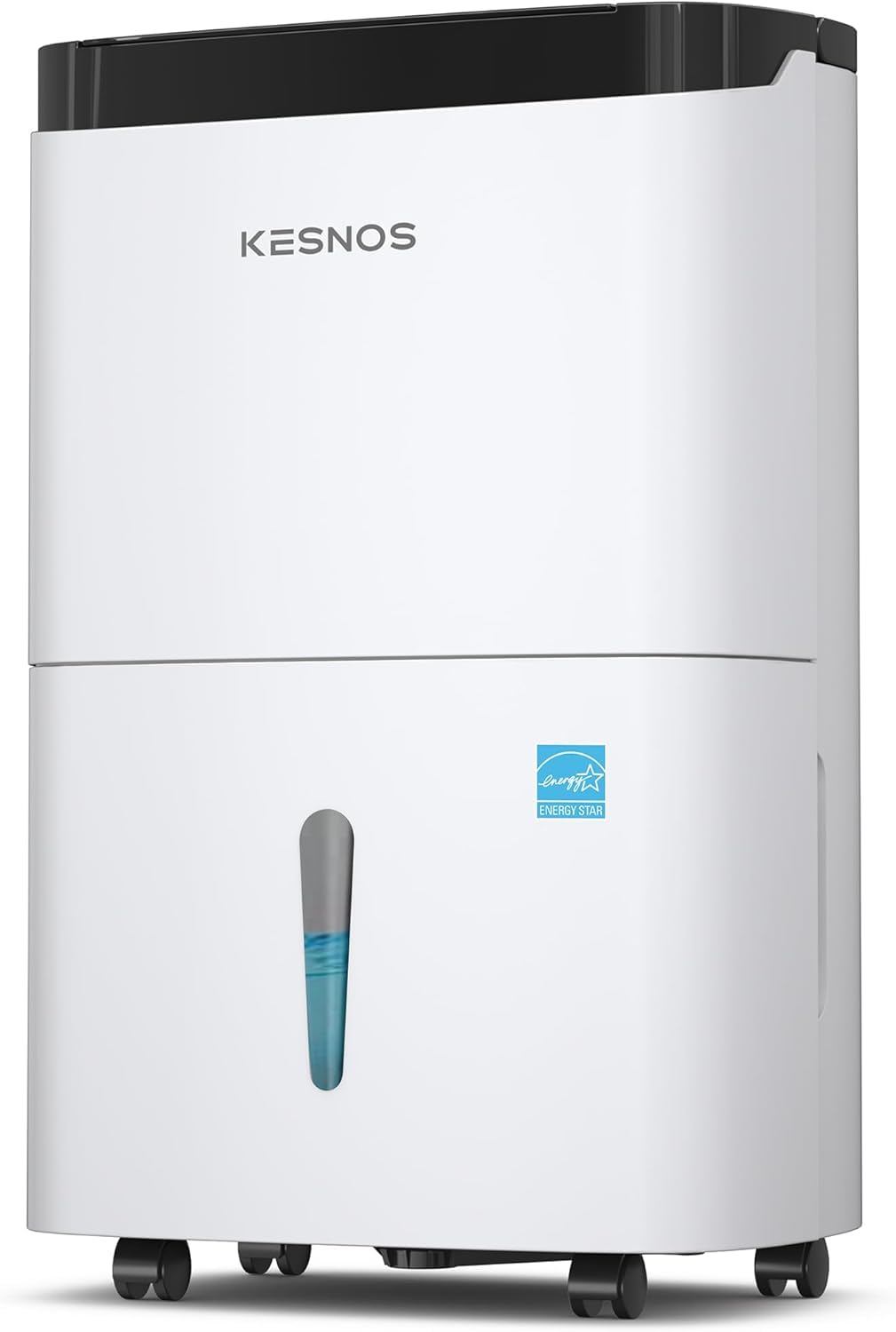
The Kesnos 80-Pint is unique in this category because of its self-drying function. After the compressor shuts off, the unit continues to run the fan to dry out internal components. This prevents mold and mildew from growing inside the machine — a critical feature for an asthma-focused device, because a moldy dehumidifier becomes a source of allergens instead of a solution.
It covers up to 5,500 square feet and removes 80 pints per day. Energy Star certification cuts energy use by 25.68% compared to non-certified units. The 0.93-gallon water tank is smaller than most competitors, but the included 3.3-foot hose or a garden hose connection makes continuous drainage easy. The unit has 360-degree casters and a hidden handle for portability.
Reviews highlight the effective humidity reduction in basements and the quiet low-fan setting. The LED hygrometer always stays on, which some users find bright at night. Customer service is responsive, with quick replacements for any unit that develops issues.
Why it’s great
- Self-drying cycle prevents internal mold
- Energy Star certified with good savings
- Quiet low fan speed
- Good customer service track record
Good to know
- Tank smaller than capacity suggests
- LED display cannot be turned off
6. Waykar 34-Pint Dehumidifier

The Waykar 34-Pint is the quietest unit in this lineup at just 33 dB. That’s quieter than a library whisper, making it ideal for a bedroom where a sleeping asthmatic needs uninterrupted rest. It covers up to 2,000 square feet, which is enough for a large master bedroom plus an attached nursery or home office.
The upgraded rotary compressor removes 34 pints per day and is Energy Star Most Efficient certified, pulling just 111 to 119 watts under load. The 0.62-gallon tank is small, but the included 3.3-foot drain hose handles continuous drainage. The unit offers dehumidifying, drying, and continuous modes, plus a child lock. At 22 pounds with a compact 8.4-by-10.9-inch footprint, it’s easy to move from room to room.
Some users report a high-pitch noise from the compressor in certain modes, and the drain hose adapter needs to be tightened securely to prevent leaks. Overall, for a small to medium space where noise matters most, this is the top contender.
Why it’s great
- Ultra-quiet 33 dB operation
- Very low power draw (111-119W)
- Energy Star Most Efficient
- Compact and portable
Good to know
- Small tank requires drain hose for overnight use
- Occasional high-pitch compressor noise reported
7. AEOCKY LEO-Lite 74-Pint Dehumidifier
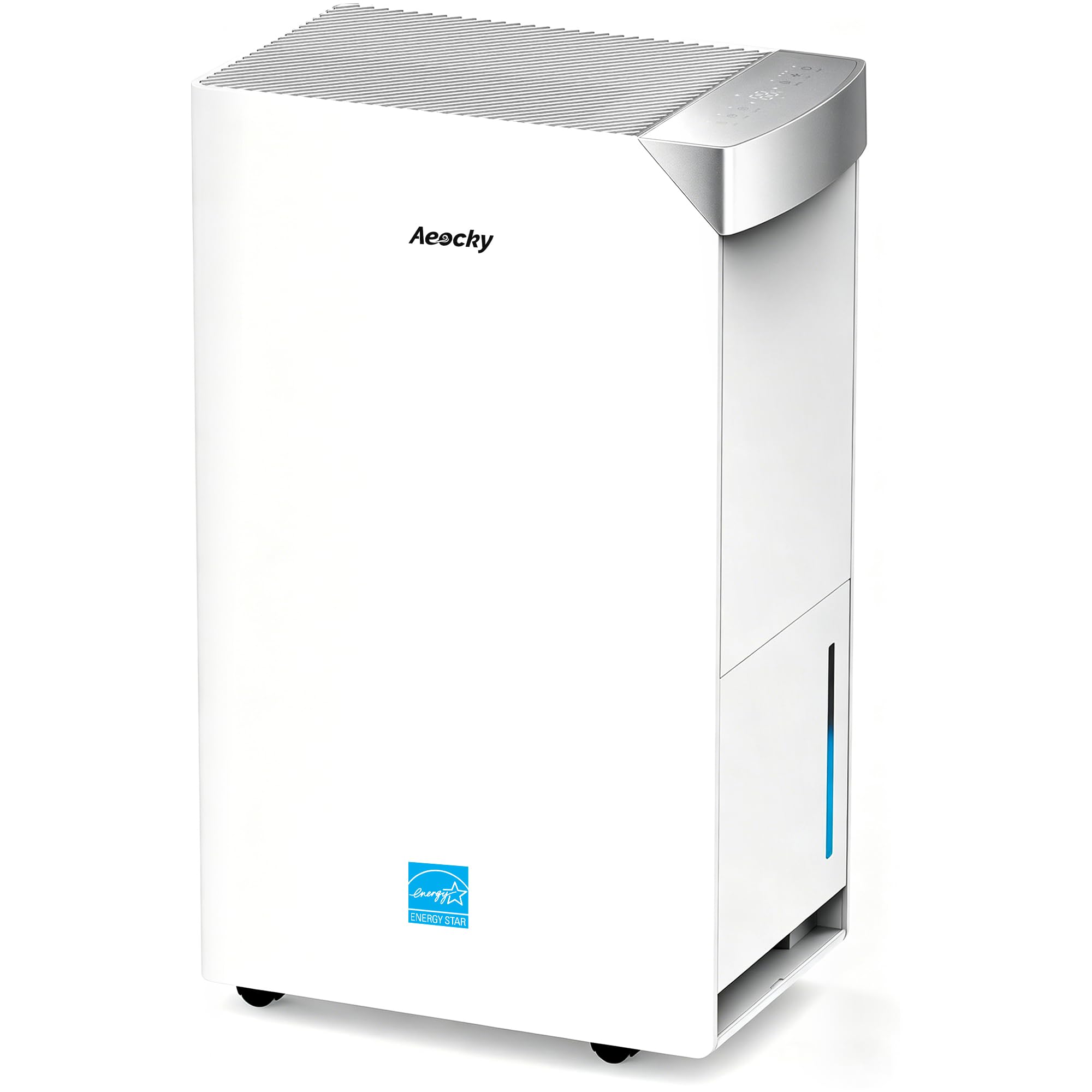
The AEOCKY LEO-Lite is the entry flagship from a top-rated brand, and it delivers genuine Energy Star Version 6.0 certification — not a marketing label. It removes 74 pints per day at 95°F/95% RH and covers 4,500 square feet. The 7mm pure copper coils and blue hydrophilic aluminum foil ensure better heat exchange than units using aluminum tubing.
Noise is low — the lowest fan speed registers around 44 dB. The 1.45-gallon tank works with the included drain hose for continuous operation. The humidity sensor updates in milliseconds with a proprietary compensation algorithm that keeps the room within tight tolerance of your set point. Power-off memory means it resumes operation after a power outage.
Reviews praise the build quality and effectiveness, noting it eliminates musty basement odors completely. The unit is 23 inches tall and 31 pounds, so it’s not the most portable. Some users report it’s larger than expected, so measure your space first.
Why it’s great
- Genuine Energy Star 6.0 certification
- Pure copper coils for durability
- Precise humidity control algorithm
- Power-off memory function
Good to know
- Larger and heavier than some competitors
- No built-in pump
8. GoGuess 21-Pint Dehumidifier
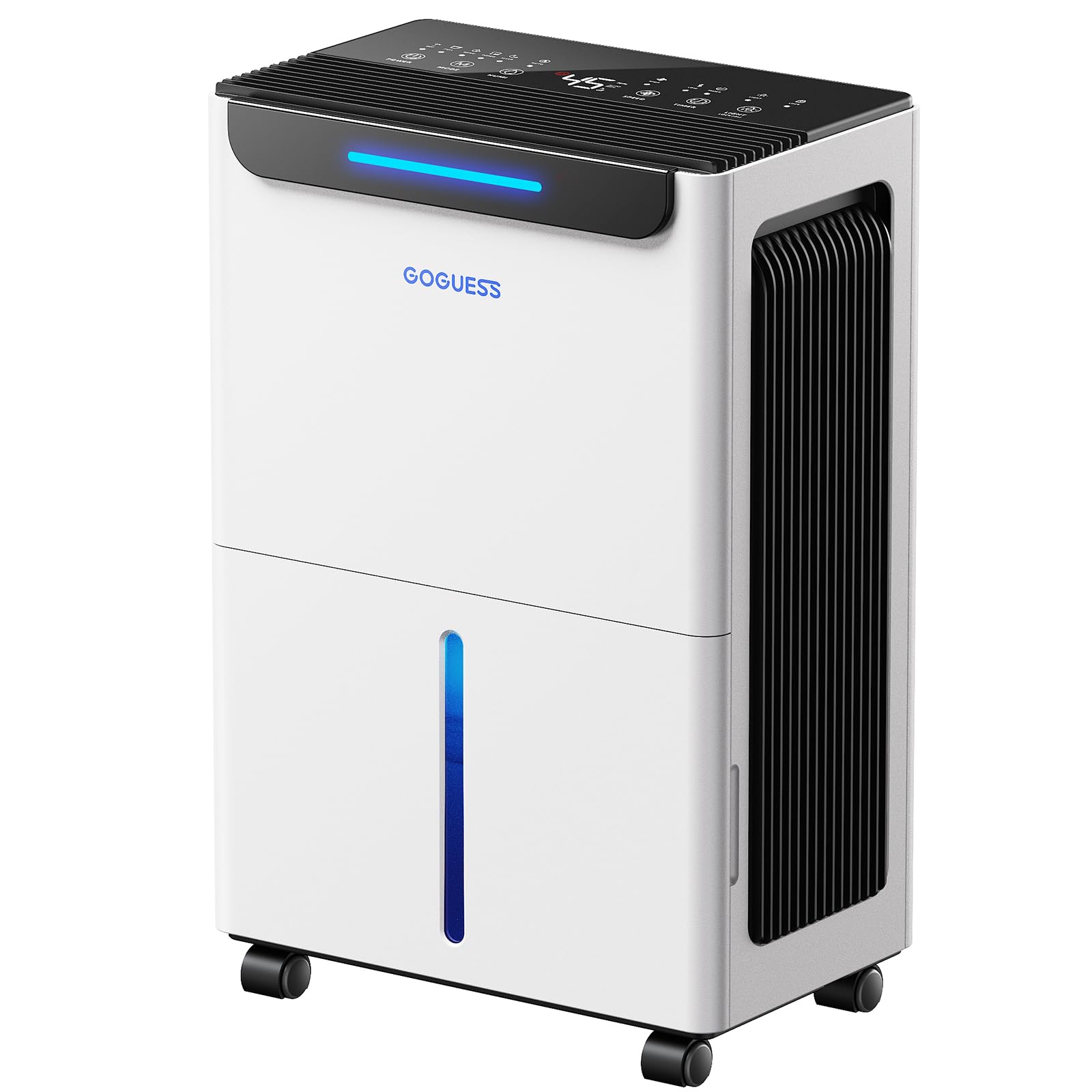
The GoGuess 21-Pint is a compact, no-fuss option for RVs, bathrooms, or small bedrooms. It covers up to 1,600 square feet and runs at 40 dB, which is quiet enough for sleep mode. The unit has three modes — DEHU, TURBO, and SLEEP — plus a color-changing LED that shows real-time humidity even when the unit is off.
The 2.3-liter tank is small but has an auto shut-off when full. The included 3.28-foot hose allows continuous drainage. The controls are straightforward with a digital display that shows both current humidity and target level. The child lock and overload protection add safety.
Users appreciate the compact size and how it makes small spaces feel fresher. The main downside is the noise — several reviews note it’s noticeable during sleep, despite the SLEEP mode. The reservoir fills quickly in high humidity, so the drain hose is almost required for overnight use.
Why it’s great
- Compact footprint for small spaces
- Color-changing humidity indicator
- Three modes including Sleep mode
- Affordable entry point
Good to know
- Noticeable noise in Sleep mode
- Small tank requires frequent emptying without hose
9. PLUSCENT 21-Pint Dehumidifier
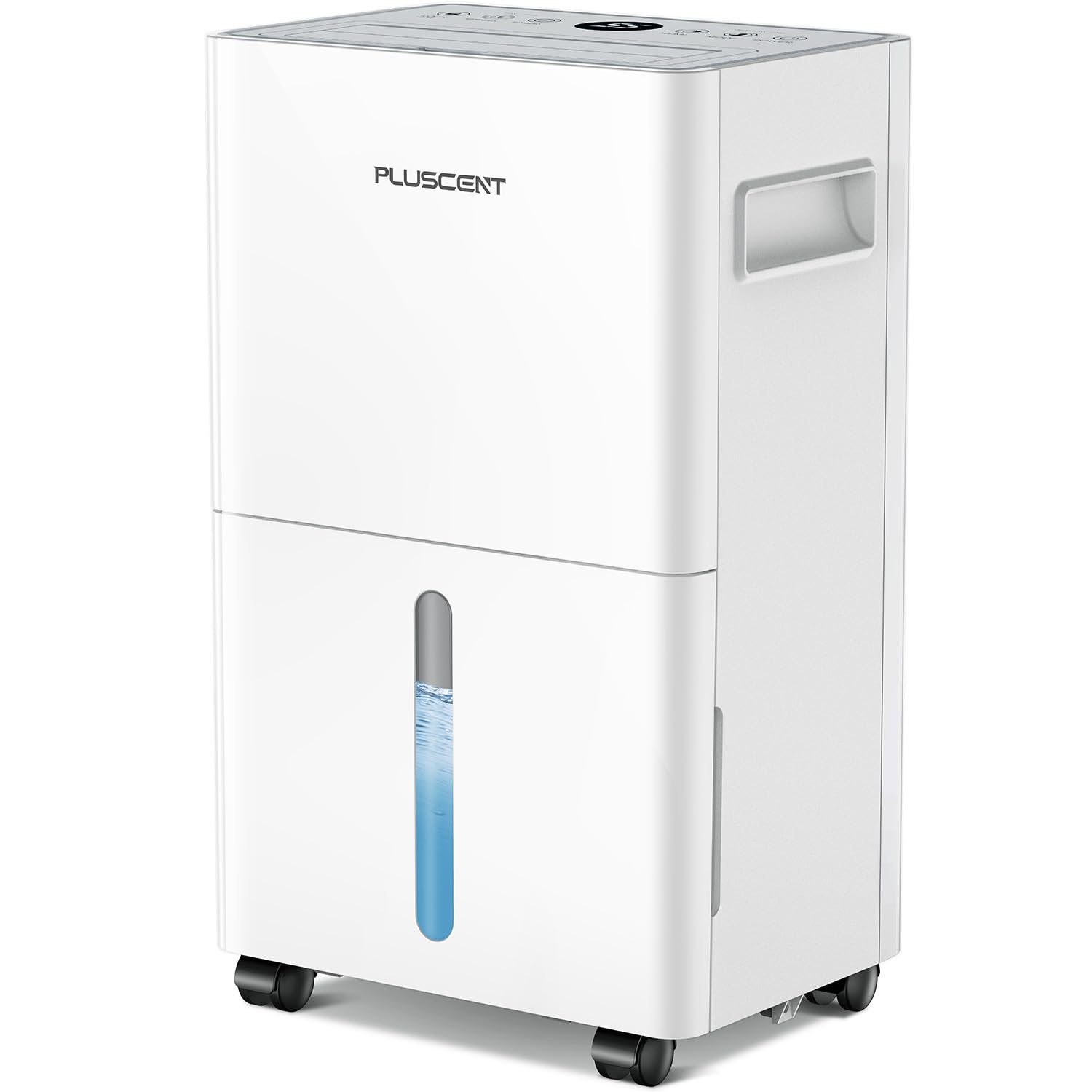
The PLUSCENT 21-Pint is the most budget-friendly option in this guide, but it still delivers solid performance for small spaces like a single bedroom or bathroom. It removes 21 pints per day and covers up to 1,500 square feet. The three modes include a dedicated Laundry Mode that speeds up indoor clothes drying, which is helpful if you’re trying to reduce indoor moisture sources.
The 1.5-liter tank is the smallest in this lineup, so you’ll need to use the included 39.4-inch gravity drain hose for any extended operation. The unit features 360-degree wheels, a washable filter, and a child lock. Noise is rated as quiet enough for bedroom use, with several reviewers confirming it doesn’t disturb sleep.
Some users note the drain line placement on the back limits wall placement. The 1.5L tank fills quickly in high-humidity environments, so continuous drainage is almost required for asthma management. For the price, it’s a capable starter unit.
Why it’s great
- Very affordable entry price
- Laundry Mode speeds clothes drying
- Quiet operation suitable for sleep
- Easy-roll 360-degree wheels
Good to know
- Small 1.5L tank drains quickly
- Drain line limits placement against walls
FAQ
What humidity level should I set for asthma relief?
Can a dehumidifier replace an air purifier for asthma?
Should I get a model with a built-in pump or gravity drain?
How often should I clean the filter on my dehumidifier?
Final Thoughts: The Verdict
For most users, the dehumidifier for asthma winner is the DREO 110-Pint because it combines top-tier energy efficiency, smart controls, and a built-in pump for hassle-free continuous operation. If you want whisper-quiet performance for a bedroom, grab the Waykar 34-Pint. And for a budget-friendly option that still controls humidity well in a small space, nothing beats the GoGuess 21-Pint.