Dropping 405 pounds onto a concrete floor in a garage gym isn’t just loud — it’s a structural risk. Cracks in the slab, drywall rattling in the next room, and that thud that travels through the entire house are all signs of inadequate floor protection. A purpose-built platform absorbs the impact, isolates the vibration, and gives you the confidence to lift heavy without worrying about the damage each drop causes.
I’m Emma — the founder and writer behind Baby Bangs. I’ve spent years analyzing how different materials, foam densities, and steel frames handle the repeated abuse of heavy deadlifts, from 6-inch crash pads to full steel wagon wheels.
This guide breaks down the critical specs behind a deadlift platform — from impact foam thickness to steel gauge construction — so you can match the right setup to your specific training space.
How To Choose The Best Deadlift Platform
Not all deadlift platforms are created equal. Some use thick foam pads that absorb every pound of a drop, while others rely on steel frames and rubber tiles to spread the load. Your choice depends on where you train, how heavy you lift, and whether noise is a concern for neighbors or family members.
Foam Density & Thickness
The most important spec on any drop pad is the foam density. High-density impact foam resists permanent compression better than soft foam, meaning your pads will still absorb shock after hundreds of drops. Six inches of thickness is the standard for heavy deadlifts, while two stacked 6-inch pads (12 inches total) are common for Olympic lifts like snatches and cleans where the bar drops from overhead.
Cover Material & Zipper Quality
Vinyl and 600-denier polyester are the two dominant cover materials. Vinyl is easier to wipe down but can tear if the underlying foam compresses unevenly. Polyester with reinforced stitching and heavy-duty zippers lasts longer under repeated abuse, especially if you train with chalk and sweat. Look for Velcro strips on the top and bottom if you plan to stack multiple pads.
Portability vs. Permanent Installation
If your gym is in a shared garage or apartment, portable pads with integrated handles let you move them between workouts. If you have a dedicated training room, rubber floor tiles glued in place or a steel-framed platform provides a more permanent solution that doesn’t shift during dynamic lifts.
Quick Comparison
On smaller screens, swipe sideways to see the full table.
| Model | Category | Best For | Key Spec | Amazon |
|---|---|---|---|---|
| Meister Crash Pad (Pair) | Premium Drop Pads | Heavy deadlift noise reduction | 30x24x6 in, 20 lb each | Amazon |
| Bells of Steel Deadlift Pads | Stackable Drop Pads | Stackable Olympic lifting | 30x23x6 in, 600D polyester | Amazon |
| Genaflex Pro Rubber Tiles (10 pack) | Modular Flooring | Permanent gym floor protection | 1 in thick, 20×20 in tiles | Amazon |
| leikefitness Exercise Platform | Multi-purpose Deck | Aerobic steps & light deadlifts | 330 lb capacity, 44x9x14 in | Amazon |
| Power Systems Step Bench | Adjustable Deck | Versatile home gym stepping | 48x13x34 in, 13 positions | Amazon |
| Titan Fitness Wagon Wheels (Pair) | Steel Pulling Blocks | Partial range-of-motion deadlifts | 26 in diameter, 45 lb each | Amazon |
| Bells of Steel Trap Bar | Hex Bar | Lower back friendly deadlifts | 700 lb capacity, 59×22 in | Amazon |
| REP Fitness AB-3000 FID Bench | Adjustable Bench | Flat/incline/decline support | 1000 lb capacity, 55×25 in | Amazon |
| MAJOR FITNESS F22 Power Rack | All-in-One Cage | Full home gym replacement | 1600 lb capacity, cable system | Amazon |
In‑Depth Reviews
1. Meister Crash Pad (Pair)

The Meister Crash Pads are the benchmark for home gym deadlift platforms. Each pad measures 30 inches by 24 inches with a full 6-inch thickness of high-density impact foam, and they come as a pair. The premium-grade vinyl cover resists tearing from sharp bar knurling and chalk residue, and the integrated handles make repositioning effortless between sets. Users consistently report zero noise and no floor vibration when dropping over 200 pounds from waist height — the foam compresses just enough to absorb the impact without letting the barbell bottom out against the floor.
The real standout is how firm the foam stays after repeated use. Unlike softer pads that develop permanent indentations over time, the Meister pads maintain their shape even after hundreds of deadlift drops and clean cycles. The two-tone color design improves depth perception when you’re fatigued, and the vinyl surface wipes clean quickly. For apartment gyms or garages with a finished floor underneath, these pads eliminate the thud that travels through the slab.
One detail that matters for Olympic lifting: the 24-inch width gives enough room for a loaded barbell to land squarely without tipping off the edge. At 20 pounds per pad, they’re heavy enough to stay put during drop lifts but light enough to stack against a wall when you need the floor space back.
Why it’s great
- High-density foam eliminates floor vibration even at 225+ pound drops
- Vinyl cover resists tearing and is easy to wipe down after chalk use
- Large 30×24 surface keeps the barbell centered during drops
Good to know
- Not stackable — no Velcro strips for pairing multiple sets
- Vinyl can feel slightly slick under heavy chalk buildup
2. Bells of Steel Deadlift Pads

Bells of Steel addresses the stacking limitation found in many drop pads by adding Velcro strips on both the top and bottom surfaces. This allows you to securely stack two sets to reach 12 inches of drop height — essential for overhead lifts like snatches where the bar travels well above the collar bone. The 600-denier polyester cover is noticeably tougher than standard vinyl, with heavy-duty zippers that don’t snag or split under pressure. Each pad measures 30 by 23 inches and weighs 20 pounds.
During testing with deadlifts in the 300- to 400-pound range, the foam thickness did an excellent job muffling the impact. One user noted that 405 pounds sank into the pads enough to make loading a second plate without a deadlift jack tricky — you may need to lift the bar slightly to slide plates on. The polyester cover also handles chalk and sweat better than vinyl, though it does require occasional spot cleaning to prevent odor buildup.
The handle design is functional but not overbuilt — it works for carrying from storage to the lifting area but won’t survive being used as a pulling strap. For lifters who need both deadlift and Olympic drop protection without dedicating permanent floor space, these pads are the most versatile option on the market.
Why it’s great
- Velcro stacking system lets you double up to 12 inches for overhead drops
- 600D polyester cover is more durable than standard vinyl options
- Heavy-duty zippers handle repeated opening without failure
Good to know
- Foam compression can make heavy plate loading difficult without a jack
- Polyester cover needs regular cleaning to manage chalk and sweat residue
3. Genaflex Pro Rubber Tiles (10 Pack)
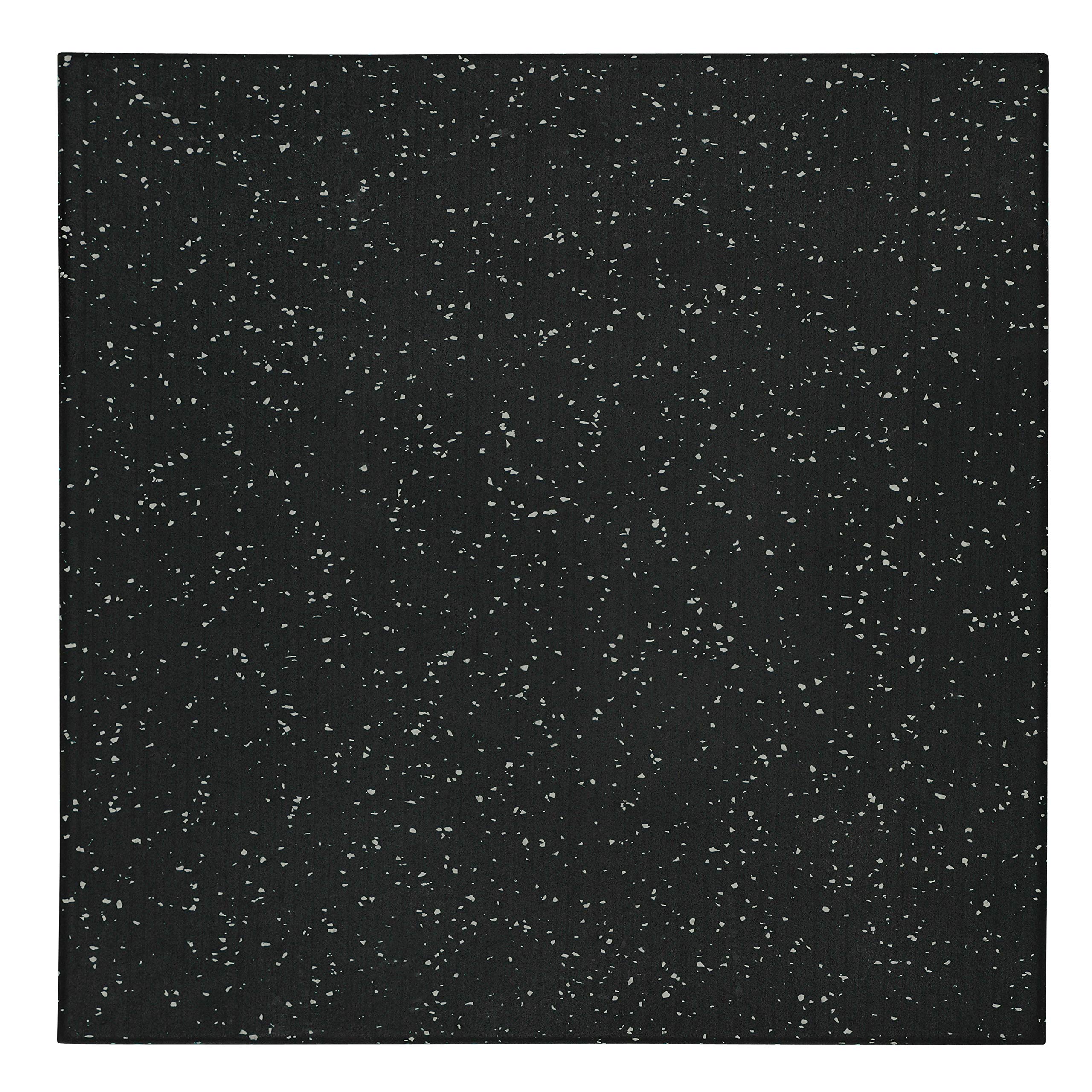
When your deadlift setup is permanent and you don’t want to deal with moving pads in and out of storage, the Genaflex Pro tiles offer a floor-down solution that stays put. Each tile is a dense 1-inch-thick slab of high-impact rubber measuring 20 by 20 inches, and the 10-tile pack covers 27 square feet — enough for a dedicated deadlift area or a small training zone. The laminated coating on the top surface provides a smooth, cleanable finish without sacrificing grip, and the tiles interlock for a seamless installation that won’t shift during heavy lifts.
The real advantage here is shock absorption without sacrificing floor feel. Unlike thin stall mats that transmit vibration directly to the concrete, the full inch of rubber mass dampens the impact of dropped weights. Users have successfully used these tiles under 3D printers for vibration isolation, under gym equipment racks, and directly beneath deadlift platforms. The tiles are heavy enough at 12 pounds each that they don’t slide around even during dynamic movements like box jumps.
Installation is tool-free drop-in placement, though gluing is recommended for a truly permanent gym floor. The main tradeoff: rubber smell is noticeable for the first few days, and the tiles arrived in a tightly packed bundle that needs time to flatten. For lifters with a dedicated garage or basement gym, these tiles create a professional-grade training surface that handles deadlifts without permanent damage to the underlying floor.
Why it’s great
- Full 1-inch rubber thickness provides serious impact dampening for heavy deadlifts
- Laminated top resists odor and is easier to clean than uncoated rubber
- Drop-in installation requires no glue or tools for initial setup
Good to know
- Initial rubber smell can be strong for the first few days after unboxing
- Tiles may need time to flatten after being packed tightly for shipping
4. leikefitness Exercise Step Platform

The leikefitness platform is not a traditional deadlift crash pad — it’s a multi-purpose aerobic deck that doubles as a lightweight platform for step-ups, box jumps, and light deadlifts. The alloy steel frame supports up to 330 pounds, which covers moderate deadlift loads but is not rated for repeated drops from standing height. The top surface is textured rubber with an anti-slip finish, and the two-level height adjustment lets you train at 8 or 14 inches for plyometric work.
Where this platform shines is versatility. The foldable legs collapse for storage under a bed, and the interior cavity holds resistance bands and small dumbbells. For lifters who want one piece of equipment that handles deadlift floor protection, step aerobics, and incline bench movements, this is the most space-efficient option. The rubber grip feet keep the platform from sliding on smooth floors, and the textured rubber top provides good traction for chalked hands.
The limitation is clear: this is not a drop pad. If you routinely drop 315-pound deadlifts from lockout, the plastic components and internal foam won’t withstand that abuse long-term. But for lifters in the beginning to intermediate range who want a platform for controlled deadlifts and general fitness, it’s a cost-effective solution that doesn’t eat up floor space.
Why it’s great
- Multifunctional design replaces a step deck, bench, and light deadlift platform
- Foldable frame stores under a bed — ideal for small apartments
- Textured rubber top provides solid grip during dynamic movements
Good to know
- 330-pound capacity limits use for heavy deadlift training
- Plastic components may wear faster than all-steel drop pads
5. Power Systems Step Bench
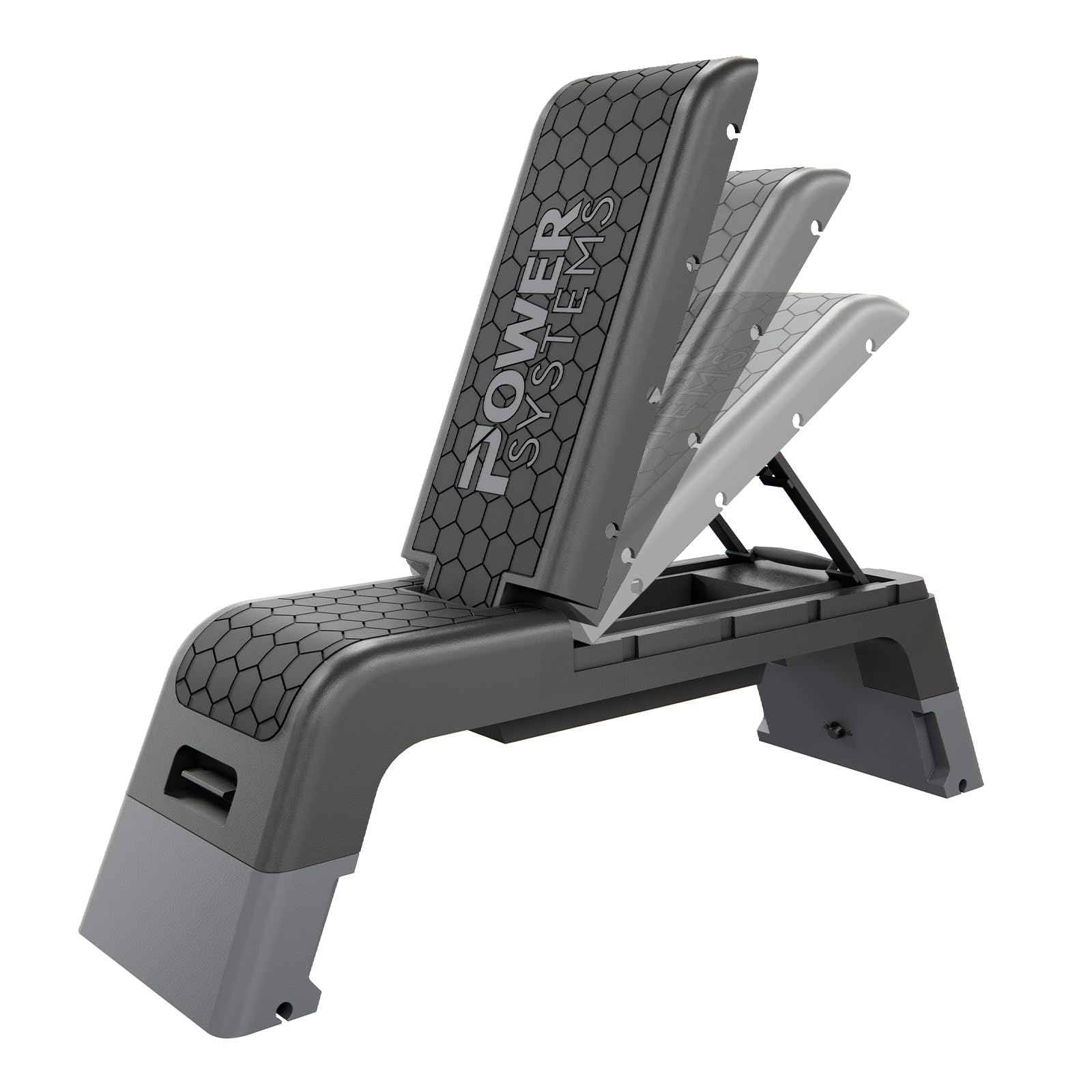
Power Systems designed this deck for the lifter who needs a single platform that transitions between aerobic stepping, plyometric jumping, and strength training. With 13 different height and angle positions, you can set it as a flat 8-inch step, raise it to 14 inches for box jumps, or angle the top as an inclined weight bench. The dense plastic frame supports 330 pounds, and the rubber feet grip the floor firmly even at the highest configuration.
The non-slip textured rubber top surface provides consistent traction, and the rounded cord slots prevent band abrasion during resistance training. One detail worth noting: the deck is only 48 inches long, which is shorter than a standard barbell. This means it works best for dumbbell deadlifts, kettlebell swings, or barbell work set up on a separate rack. Taller users over 6 feet found the deck too short for lying flat bench presses.
Storage is a strong suit here — the legs fold flat and the compact deck slides under a bed or sofa. The interior storage area keeps bands, clips, and small accessories organized. For a home gym where space is the primary constraint, this deck delivers a surprising range of functionality without requiring a dedicated deadlift platform.
Why it’s great
- 13 height/angle positions offer exceptional versatility for different exercises
- Rubber feet keep the platform stable even at maximum height
- Folds flat for under-bed storage in tight spaces
Good to know
- 48-inch length is too short for barbell deadlifts and tall users
- Plastic frame is rated for 330 pounds — not for heavy Olympic drops
6. Titan Fitness Wagon Wheels (Pair)

Wagon wheels aren’t a deadlift platform in the traditional sense — they’re oversized steel plates that elevate the barbell off the floor, reducing the range of motion for partial deadlifts and rack pulls. At 26 inches in diameter and weighing 45 pounds each, the Titan wagon wheels effectively replace standard 45-pound bumper plates while adding an extra 10 inches of height under the barbell. This is a game-changer for taller athletes who struggle with conventional deadlift depth or lifters recovering from lower back strain.
The alloy steel construction is robust enough to handle 600-to 800-pound loads during controlled deadlifts. Users consistently report that the laser-cut logo face and black powder coat finish match the build quality of premium plate offerings at a better price point. Loading and unloading other plates is noticeably easier because the larger diameter gives you clearance to slide additional weight onto the sleeve without a deadlift jack.
The main consideration: these are not drop-safe in the same way foam crash pads are. Dropping a loaded barbell from lockout onto these steel plates will transmit shock directly to the floor. They work best for controlled, partial-range deadlift training or as a loading aid. For lifters who want to reduce spinal compression without investing in a full deficit deadlift setup, wagon wheels deliver practical utility.
Why it’s great
- 26-inch diameter reduces deadlift range of motion for taller athletes
- Alloy steel construction handles 600+ pounds without deformation
- Eliminates the need for a deadlift jack when loading additional plates
Good to know
- Not designed for repeated heavy drops — transmits shock to the floor
- Noisy during use compared to rubber bumper plates
7. Bells of Steel Trap Bar

A trap bar isn’t a deadlift platform, but it changes how you approach deadlifts entirely — and it deserves consideration if your goal is to train heavy without stressing your lower back. The Bells of Steel open-frame hex bar features rotating Olympic-grade sleeves that reduce wrist torque during the pull, and the built-in jack mechanism makes plate changes fast without bending over. The 700-pound capacity covers all but the heaviest powerlifters.
The open frame design unlocks exercises beyond deadlifts — split squats, lunges, farmers walks, and hex squats all benefit from the centered load position. The light knurling provides enough grip for heavy pulls without tearing calluses, and the 47-pound bar weight gives a solid feel even with light plates. Users who have used both closed and open trap bars consistently prefer the open version for step-through movements and reduced lateral plate interference.
The tradeoff: at 59 inches long, the bar requires floor space similar to a standard barbell. It also ships ready to use with no assembly required, which is a welcome change from most home gym equipment. If you’re building a home gym around deadlift training and want to reduce back strain without sacrificing load, this hex bar is a smart complement to any platform setup.
Why it’s great
- Open frame design allows for split squats, lunges, and farmers walks
- Built-in jack simplifies plate changes without bending over
- Rotating sleeves reduce wrist torque during heavy pulls
Good to know
- 47-pound bar weight feels light compared to standard deadlift bars
- Bar can tip when loading a single 45-pound plate on one end
8. REP Fitness AB-3000 FID Bench

The REP AB-3000 FID bench is not a deadlift platform — it’s an adjustable bench that supports flat, incline, and decline pressing. But in the context of a complete deadlift station, it earns a place because it integrates with the major fitness rack and provides the pressing support you need between deadlift sets. The 1000-pound weight capacity is overkill for most home gyms, but that overbuild translates to zero wobble during heavy dumbbell work.
The foldable frame includes integrated wheels for moving the bench out of the way when you pull the deadlift platform out, and the multiple back/seat angle combinations give you enough positions to hit every pressing angle. The high-density padding stays firm even during long sessions, and the steel frame doesn’t flex under 300-pound bench presses. Assembly requires about 45 minutes and a socket wrench set, though the instructions are minimal.
The main drawback is the gap between the seat and back pad when the bench is in the flat position — it’s not perfectly flush. This is a common issue with FID benches due to the hinge mechanism, but it can be noticeable during barbell bench press. For a home gym that rotates between deadlifts, squats, and presses, this bench complements the platform setup better than most alternatives at this price tier.
Why it’s great
- 1000-pound capacity provides zero wobble under heavy pressing loads
- Foldable design with wheels makes it easy to move when deadlifting
- Multiple incline/decline positions cover every pressing angle
Good to know
- Gap between seat and back pad is visible when the bench is flat
- Assembly instructions are minimal — expect to use your own mechanical judgement
9. MAJOR FITNESS F22 Power Rack
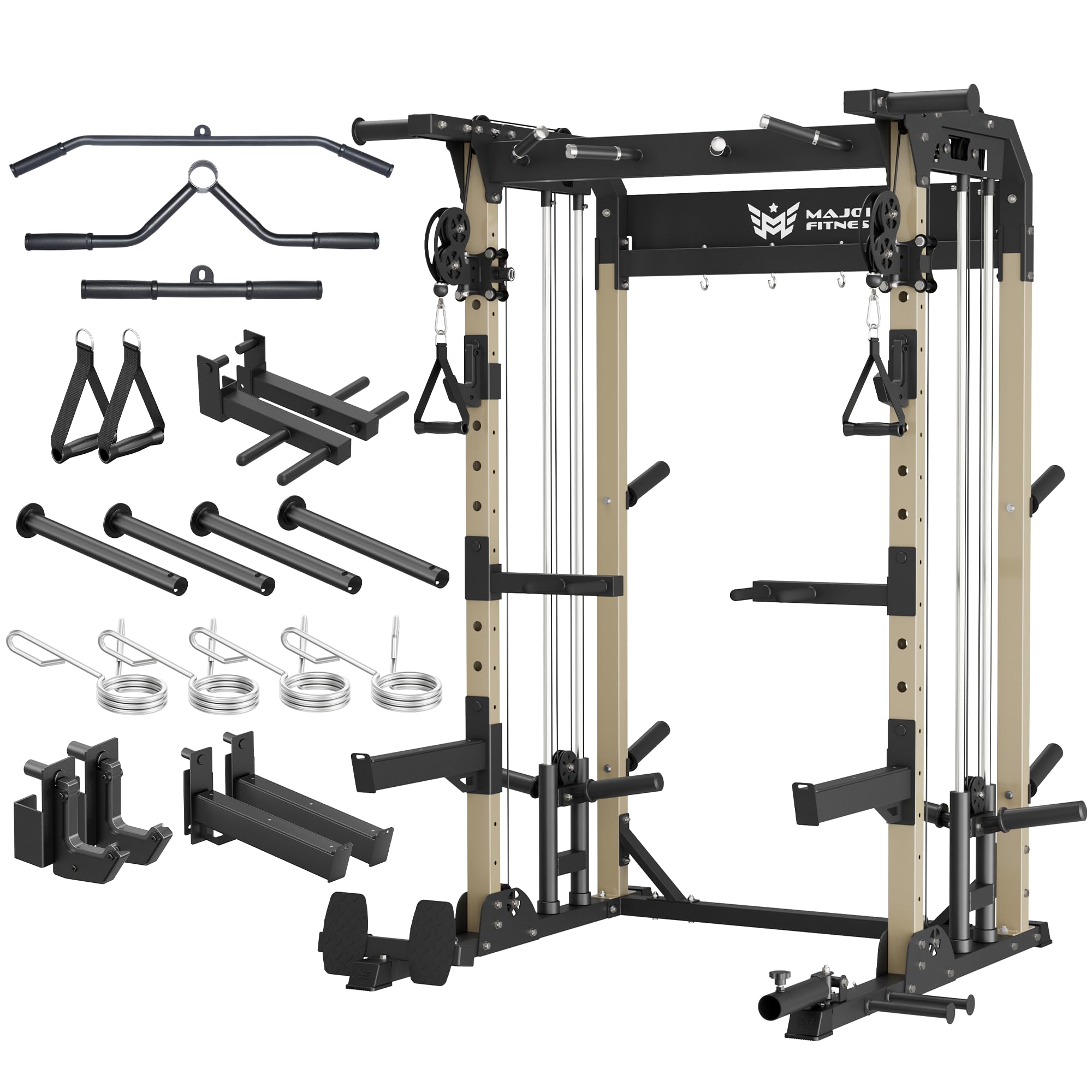
The MAJOR FITNESS F22 is the ultimate home gym centerpiece that every deadlift platform setup needs to be paired with. It combines a 1600-pound capacity squat rack, a dual cable crossover system, and a full attachment suite — J-hooks, safety arms, dip bars, landmine, T-bar, and lat pulldown — in a single 82.5-inch-tall frame. The 2-inch by 3-inch 14-gauge steel frame doesn’t flex during heavy lifts, and the dual-triangle base design eliminates the need for bolting to the floor.
For deadlift training, the F22’s integrated pull-up bar and cable system allow you to transition directly from heavy pulls to lat work and rows without leaving the rack. The landmine attachment is particularly useful for landmine deadlift variations that reduce spinal compression. Two users can train simultaneously thanks to the independent dual-pulley system, and the pull-up bar at the top provides a stable anchor for banded deadlift work.
Assembly takes between 3 to 4 hours with basic tools, and the rack is heavy enough at several hundred pounds that you’ll want to assemble it in its final location. The included dip handles are functional but narrow — some users add PVC pipe over the handles for comfort. For the lifter who wants to build a complete training environment around a deadlift platform, the F22 provides a stable, feature-packed foundation that doesn’t require separate machines.
Why it’s great
- 1600-pound static capacity provides a rock-solid base for any deadlift setup
- Dual pulley system allows two users to train simultaneously
- Includes landmine, dip bars, and cable attachments for deadlift variations
Good to know
- Assembly takes 3-4 hours with a socket wrench set
- Dip bar handles are narrow — may need padding for comfortable grip
FAQ
Can I use 6-inch drop pads for Olympic weightlifting snatches and cleans?
What is the difference between a deadlift platform and a deadlift pad?
Will rubber stall mats work as a deadlift platform?
How do I clean and maintain my deadlift pads?
Final Thoughts: The Verdict
For most users, the deadlift platform winner is the Meister Crash Pad Pair because the high-density foam and durable vinyl cover provide the best balance of impact absorption and longevity for heavy deadlifts without permanent installation. If you need stackable pads for Olympic lifting, grab the Bells of Steel Deadlift Pads. And for a permanent garage gym floor that handles deadlifts and general training, nothing beats the Genaflex Pro Rubber Tiles.