Foot fatigue on a long walk usually comes down to one thing: the insole you’re standing on. Thin factory foam bottoms out fast, turning every mile into a lesson in joint strain and sore arches. The right cushioned insole adds a layer of recovery to each step, protecting your knees, hips, and lower back from the repetitive impact of pavement and hard floors.
I’m Emma — the founder and writer behind Baby Bangs. I spend my time analyzing the foam densities, arch profiles, and heel-cup geometries that separate a good walking insole from a mediocre one, looking past marketing claims to the materials that actually hold up mile after mile.
After sifting through dozens of pairs, testing them against real-world walking conditions, and reading hundreds of verified reviews, I narrowed the field to five standouts. This guide breaks down what separates each option so you can find the cushioned insoles for walking that match your specific foot shape and daily routine.
How To Choose The Best Cushioned Insoles For Walking
Every foot is a different landscape. The best insole for a flat-arched warehouse worker is not the same as the best insole for a neutral-arched casual walker. Matching your foot type, shoe style, and activity level to the right foam and frame is the trick.
Foam Type and Density
EVA foam is lightweight and bouncy, good for all-day wear without deadening the feel of the ground. PU foam is denser and more durable, compressing less over time but feeling firmer from the first step. Proprietary blends like MOVE’s Recharge Foam aim to split the difference, offering a plush landing with better energy return than standard EVA.
Arch Support and Heel Cup Depth
High arches need more contour to avoid strain; flat feet need a stable platform to prevent over-pronation. A deep heel cup (15–20mm walls) locks the heel in place, reducing side-to-side wobble on uneven ground. The insoles for heavy-duty walking or standing should include a structured arch shell, while casual walking insoles can get away with gentle molded support.
Profile Thickness and Shoe Fit
A thick insole (8–12mm in the heel) provides maximum cushion but can crowd the toe box or raise the heel above the shoe’s collar. Low-profile walking shoes and casual sneakers require a thinner design (4–6mm at the forefoot) to keep the foot seated properly. Always check whether the insole is meant to replace the factory insole or sit on top of it.
Quick Comparison
On smaller screens, swipe sideways to see the full table.
| Model | Category | Best For | Key Spec | Amazon |
|---|---|---|---|---|
| PowerStep Pinnacle | Premium Orthotic | Podiatrist-approved arch support | Dual-layer cushioning with moderate pronation control | Amazon |
| MOVE All Day Comfort | Premium Foam | Plush shock absorption for recovery | X-Frame torsional support with Active Heel Technology | Amazon |
| Professional Heavy Duty | Mid-Range Support | Heavy users over 230 lbs | Double PORON cushioning with Golden Triangle support | Amazon |
| Walkhero Arch Support | Mid-Range Orthotic | All-day standing in work boots | Rigid arch shell with multi-layer EVA and foam | Amazon |
| riemot Sports Insoles | Budget Value | Two-pair rotation for casual use | High-elasticity PU cushion with gentle arch support | Amazon |
In‑Depth Reviews
1. PowerStep Pinnacle Insoles

The PowerStep Pinnacle is the benchmark for a reason. It uses a semi-rigid arch support shell that doesn’t collapse under pressure, combined with dual-layer cushioning that reduces stress on the plantar fascia without feeling mushy. The moderate pronation control is ideal for walkers with a neutral to slightly over-pronating gait — it stabilizes the foot through the entire stride cycle without forcing the arch into an unnatural position.
The heel cup is deep enough to lock the calcaneus in place, which matters on long walks where fatigue can cause the foot to roll inward. Users reported that plantar fasciitis symptoms improved noticeably after ten days of daily walking at around 8,000 steps. The insole fits best in shoes where the factory insole is removable; it runs true to size and requires no trimming.
The one trade-off is the break-in period. The rigid arch shell can feel firm for the first few days, especially if you’re transitioning from a flat, unsupportive insole. Gradual wear — two to three hours at a time — makes the adjustment comfortable. Made in the USA and backed by a 30-day guarantee, this is the most reliable option for walkers who prioritize biomechanical alignment over pure plushness.
Why it’s great
- Podiatrist-recommended design with proven plantar fasciitis relief
- Dual-layer cushioning that doesn’t bottom out over long distances
- Deep heel cup provides excellent stability on uneven terrain
Good to know
- Break-in period required for feet accustomed to flat insoles
- May feel too firm for those seeking cloud-like softness
2. MOVE All Day Comfort Insole
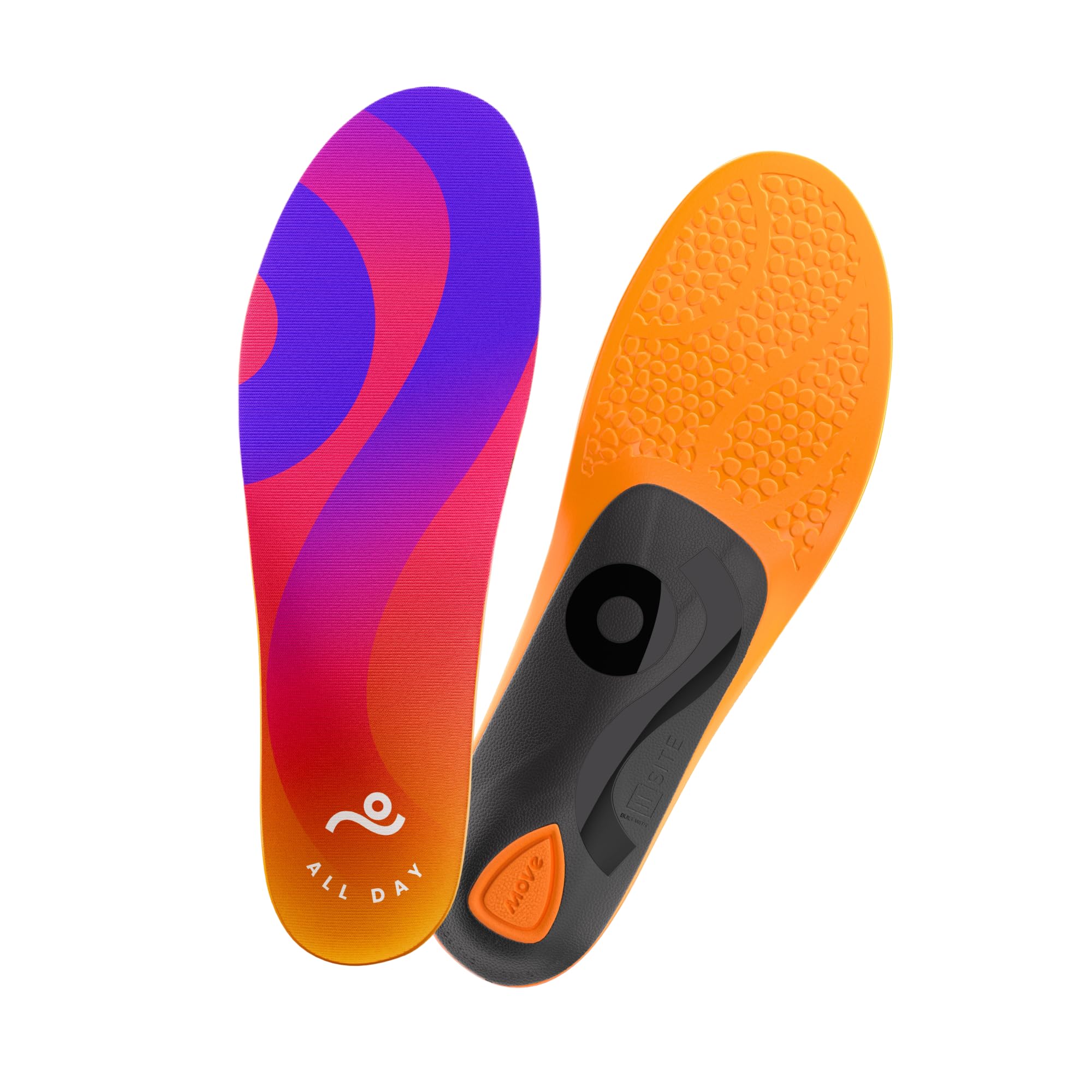
The MOVE All Day Comfort insole takes a different approach than the PowerStep: it leads with foam density and shock absorption rather than rigid correction. The proprietary Recharge Foam is thick under the heel — about 10mm of compressible material — and tapers gradually toward the forefoot, creating a soft landing that reduces stress on the knees and lower back. The Active Heel Technology specifically targets the fat pad under the heel, minimizing the pressure spike at initial contact.
Where the MOVE insole differentiates itself is the X-Frame torsional support system, a rigid plastic insert embedded in the midfoot that prevents the insole from folding under load. This gives the foot a stable platform — similar to a motion-control shoe — while the foam above stays plush. Walkers with a history of metatarsalgia or stress fractures will appreciate the forefoot cushioning, which is noticeably thicker than most orthotic-grade insoles.
The potential issue is fit. The MOVE insole is on the thicker side, and several users noted that it crowds low-profile shoes like Adidas Samba or casual slip-ons. It works best in sneakers, hiking boots, or work boots with removable factory insoles. It’s expensive compared to mid-range options, but the combination of high-rebound foam and structural support justifies the premium for walkers logging high daily mileage.
Why it’s great
- Extra-thick heel cushion reduces knee and back impact
- X-Frame adds torsional stability without sacrificing flexibility
- Works well for walkers with metatarsal or forefoot sensitivity
Good to know
- May be too thick for low-profile or tight-fitting shoes
- Premium price point compared to standard EVA insoles
3. Professional Heavy Duty Support Pain Relief Orthotics
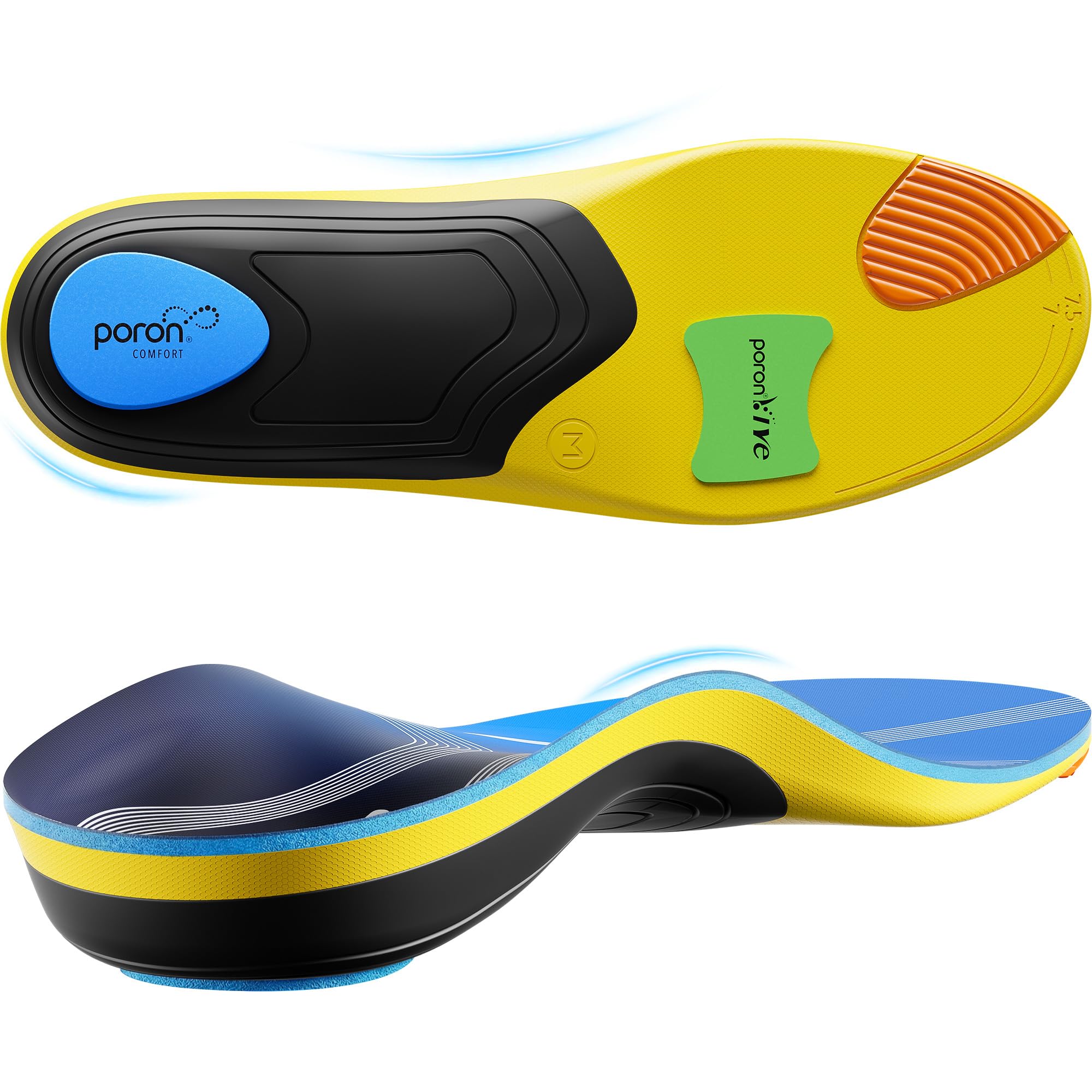
This insole is engineered for a specific demographic: walkers and workers over 230 pounds who need support that doesn’t flatten under load. The key is the double PORON cushioning layer — a microcellular urethane that absorbs shock more efficiently than standard EVA and returns to shape after each step. The “Golden Triangle” design distributes force across three points — forefoot, arch, and heel — which prevents any single area from bearing the full impact of a heavy stride.
The arch support is medium-height and firm, not aggressive. It works well for flat feet and moderate pronation, holding the medial arch without poking into it. The deep U-shaped heel cup extends up the back of the heel, preventing the insole from shifting inside the shoe during side-to-side movement. This is especially valuable in work boots or hiking shoes where a stable base matters on uneven ground.
One thing to note: this is a thick insole. Users with low-volume feet or shoes with a tight toe box may find the forefoot too elevated. The top fabric is sweatproof and breathable, which reduces odor during long shifts. At a mid-range price point, it offers durability that rivals more expensive orthotics, making it a smart pick for anyone whose walking involves hours of standing on concrete floors.
Why it’s great
- Double PORON cushioning resists compression under heavy loads
- Deep heel cup locks the foot in place during lateral movement
- Ideal for flat feet and moderate over-pronation
Good to know
- Thicker profile may not fit low-volume or tight shoes
- Arch support is firm — expect a short adjustment period
4. Walkhero Arch Support Inserts
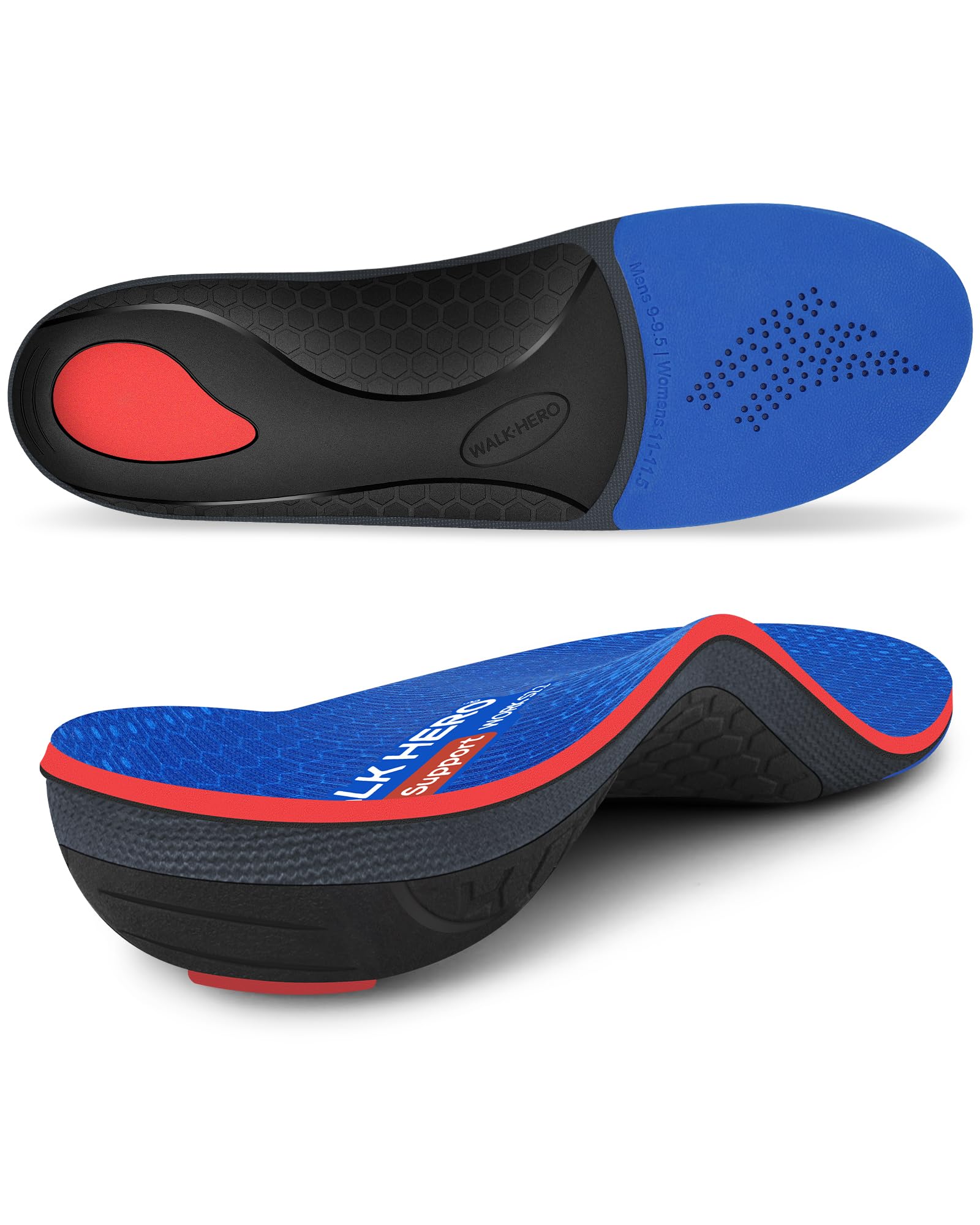
The Walkhero insole targets the working professional who stands or walks for eight-plus hours a day. The defining feature is the rigid arch support shell — a hard plastic frame that doesn’t flex under the weight of a 200-pound person standing on concrete. This shell is wrapped in a multi-layer EVA and foam footbed that provides surface-level comfort without compromising the underlying structure. The forefoot includes a separate EVA pad that boosts energy return, making each push-off feel less effortful.
The fit is generous. Walkhero offers 12 size options, and the insoles are designed to work in roomier shoes — work boots, leather boots, sneakers, and casual shoes with a wide toe box. The deep heel cup adapts to different foot shapes, cradling the heel without pinching the sides. Users reported that the insoles eliminated foot pain during hour-long walks and held up well in hiking shoes that came with poor factory insoles.
The trade-off is the break-in protocol. Walkhero recommends wearing these for two to three hours a day for the first one to two weeks, gradually increasing wear time. The rigid shell can feel intrusive if you’re not used to structured support. Some users found the insoles worked well for a month or two but then stopped making a difference — an edge case that may reflect individual foot fatigue rather than a product flaw. For the price, it competes well with options that cost twice as much.
Why it’s great
- Rigid arch shell provides stable support for all-day standing
- Multi-layer cushioning absorbs impact without losing structure
- Fits wide work boots and roomier footwear well
Good to know
- Requires gradual break-in period for best comfort
- May not suit users looking for soft, pliable foam
5. riemot 2 Pairs Sports Insoles
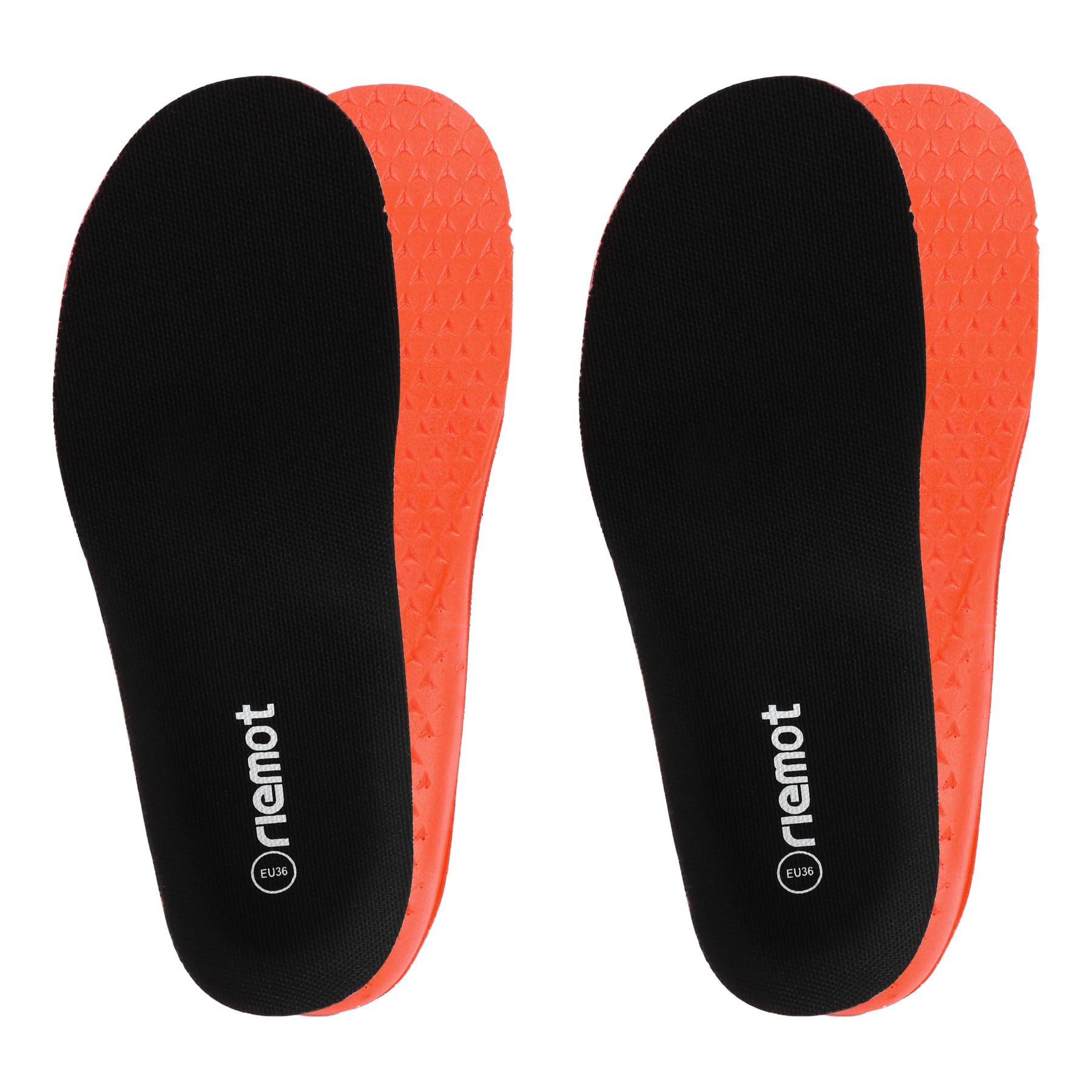
The riemot sports insole offers the most immediate value: two pairs for a price that undercuts most single-pair competitors. The construction uses high-elasticity PU foam rather than standard EVA, which gives it a denser, more durable feel under the heel and forefoot. The arch support is gentle — this is not a corrective orthotic — but it provides enough contour to reduce fatigue during casual walking, light jogging, or gym sessions.
The heel cup is present but shallow, which trades some stability for flexibility. The insoles are trim-to-fit, meaning you can cut them down to match narrower or smaller shoes. Users reported they fit well in standard sneakers and running shoes, and the two-pair format lets you rotate between a walking shoe and a gym shoe without buying twice. For walkers with low arches or neutral gaits who just want a soft, consistent landing, this is a practical upgrade over factory insoles.
The limitations are clear at this tier. The arch support is not sufficient for plantar fasciitis or high-intensity walking. Some users noted the insoles ran slightly narrow and felt warmer than traditional foam, which could be a factor in hot weather. The PU material also took a few wears to soften fully. But for the price, the riemot delivers dependable cushioning and a decent lifespan, especially if you’re outfitting multiple shoes on a budget.
Why it’s great
- Two pairs included for the price of one
- Durable PU foam resists flattening better than cheap EVA
- Trim-to-fit design allows customization for different shoe sizes
Good to know
- Gentle arch support — not designed for plantar fasciitis
- Heel cup is shallow, offering less lateral stability
- Insoles run slightly narrow for some users
FAQ
How long does it take to break in a cushioned walking insole?
Can I use thick cushioned insoles in low-profile walking shoes?
Do cushioned insoles help with plantar fasciitis while walking?
Final Thoughts: The Verdict
For most users, the cushioned insoles for walking winner is the PowerStep Pinnacle because it combines podiatrist-approved arch support with reliable dual-layer cushioning that holds up over long distances. If you want maximum plushness and knee protection, grab the MOVE All Day Comfort. And for heavy walkers and workers who need durable support without the premium price, nothing beats the Professional Heavy Duty insole.