That dull ache radiating from your heel into your arch by mid-afternoon isn’t just fatigue — it’s your body signaling that the thin foam slab inside your shoes has given up. Whether you’re logging miles on concrete warehouse floors, chasing toddlers, or simply standing at a counter, the one variable you can fix instantly is the interface between your foot and the ground. A high-quality cushion insole doesn’t just pad; it re-engineers how force travels through your foot, turning every step back into an energy return rather than a pounding.
I’m Emma — the founder and writer behind Baby Bangs. I’ve spent the last five years dissecting footwear component data, comparing foam densities, arch profiles, and heel-cup depths across hundreds of insoles to separate legitimate foot relief from marketing fluff.
After weeks of cross-referencing materials, real user outcomes, and biomechanical principles, I’ve filtered the market down to the five most effective models. Use this research-backed guide to find the absolute best cushion insoles that match your foot shape, work environment, and pain points without wasting money on guesses.
How To Choose The Best Cushion Insoles
The insoles market is flooded with vague promises of “all-day comfort.” A smart buyer navigates by specific material science and support geometry. Here are the three factors that separate a foot-saving insole from a glorified felt pad.
Foam Layering vs. Simple Density
Single-density foam collapses under sustained pressure. The best cushion insoles use a dual or multi-layer approach — a resilient base layer (usually EVA or PU) that resists flattening, topped with a softer memory foam layer that conforms to your foot’s unique contours. If a product only lists one foam type without describing its structure, expect it to compress within weeks.
The Arch Support-Cushion Balance
Pure cushioning without arch support allows your foot to pronate inward, straining the plantar fascia. Conversely, a rigid orthotic shell without forefoot padding transfers shock to the knees. Look for insoles that combine a structured mid-foot contour with ample padding under the heel and ball of the foot. This combo reduces both impact and muscular strain over a full work shift.
Heel Cup Depth and Stabilization
A shallow heel cup lets your heel slide, forcing micro-adjustments that accumulate into fatigue. A deep U-shaped cup (at least 5mm deep) locks the fat pad in place, absorbing the initial shock of each step and maintaining proper alignment. Check reviews specifically for “heel slip” mentions — that’s a sign the cup geometry fails for the intended use case.
Quick Comparison
On smaller screens, swipe sideways to see the full table.
| Model | Category | Best For | Key Spec | Amazon |
|---|---|---|---|---|
| WalkHero Arch Support (Starry Blue) | Orthotic Cushion | Long shifts on hard floors | Dual-layer EVA + rigid shell | Amazon |
| WalkHERO Plantar Fasciitis (Blue) | Active Recovery | Plantar fasciitis & flat feet | Premium EVA + deep heel cup | Amazon |
| Uvaluefeet Work Boot | Memory Foam | All-day standing relief | Memory foam + PU base | Amazon |
| Psveb Heavy Duty Support | High-Weight Orthotic | Heavy duty pain relief (230+ lbs) | PORON cushion + PU layer | Amazon |
| Sof Sole Memory Plus (Women’s) | Everyday Fit | Reviving worn shoes with plushness | Full-length memory foam | Amazon |
In‑Depth Reviews
1. WalkHero Arch Support Inserts for Men & Women – Starry Blue
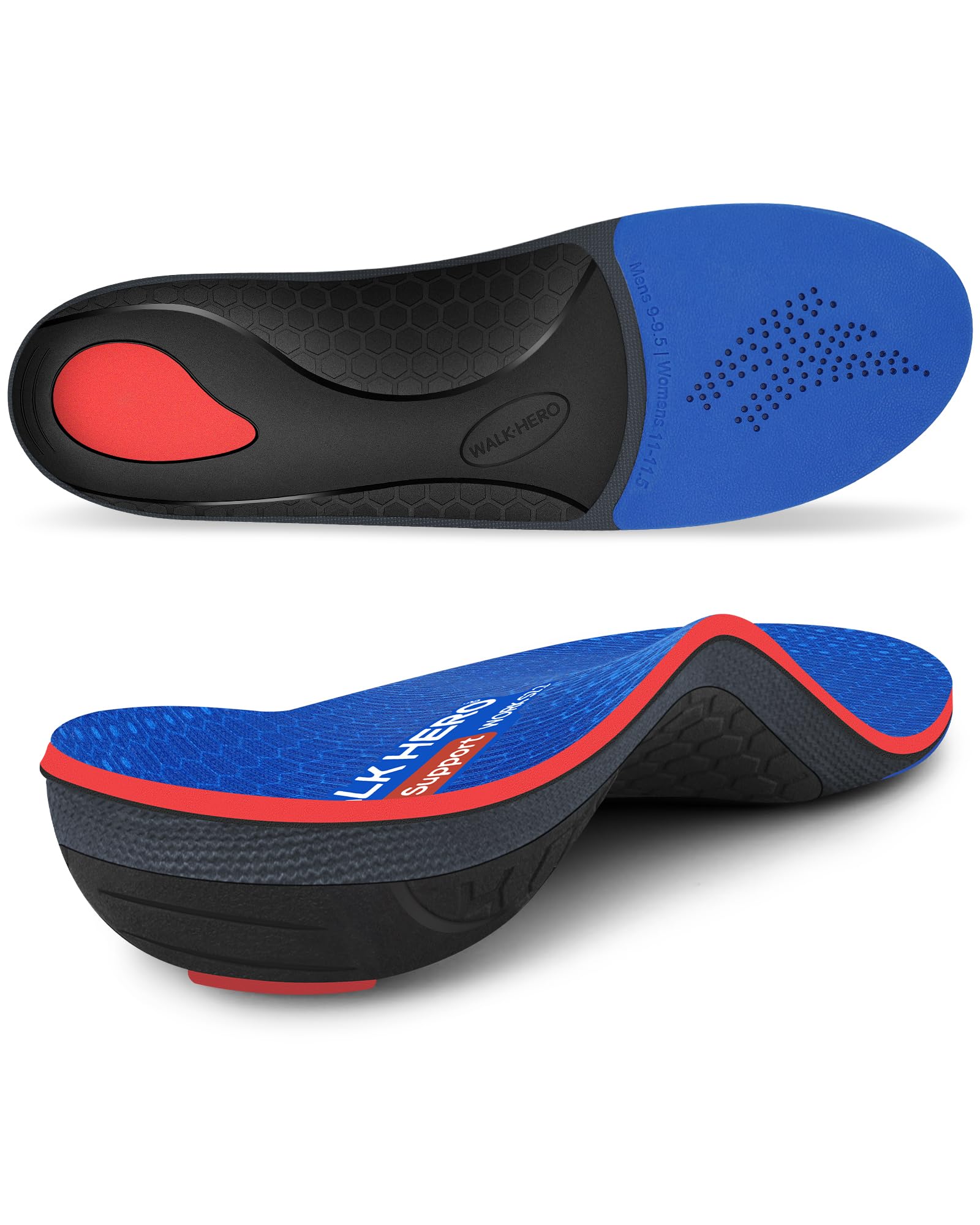
WalkHero engineered these specifically for the standing-all-day crowd — teachers, nurses, and warehouse workers who measure their shifts in hours, not steps. The dual-layer architecture pairs a full-length EVA base with a thicker forefoot pad and a separate heel cushion, creating a zoned impact absorption system that doesn’t sacrifice structural support.
The rigid arch shell is the standout component here. It maintains its contour under heavy pressure, preventing the arch collapse that typically triggers plantar fascia inflammation. Testers report noticeable stability improvement in the first week, with a gradual break-in period of one to two weeks recommended for full adaptation. The deep heel cup also addresses lateral slippage common in looser work boots.
Available in twelve size options that require no trimming, these fit neatly into sneakers, casual shoes, leather boots, and wider footwear. The only adjustment is mental — users accustomed to soft flat insoles may find the initial rigidity surprising, but the trade-off is long-term relief rather than temporary squish.
Why it’s great
- Zoned dual-layer cushioning absorbs impact without flattening
- Rigid arch shell maintains support through long shifts
- Deep heel cup prevents side-slip and stabilizes stride
Good to know
- Requires a 1-2 week break-in period for best comfort
- May feel too firm for users seeking ultra-soft plushness
2. WalkHERO Plantar Fasciitis Insoles – Blue

This model from WalkHERO refines the formula for active foot conditions. Built around a premium EVA core, the insole delivers shock absorption that holds up through walking, running, and pickleball — as one 64-year-old active reviewer confirmed after eight weeks of rehabilitation. The material density strikes a careful balance: firm enough to support a heavy person, pliable enough to avoid hot spots.
The deep heel cup is specifically shaped to cradle the calcaneus during high-impact landings, reducing the micro-tearing forces that exacerbate plantar fasciitis and Achilles tendonitis. Multiple reviewers noted that these insoles matched the performance of podiatrist-prescribed orthotics at roughly one-tenth the investment, with no squeaking during movement — a subtle but annoying failure in lesser inserts.
These are designed for wider, high-volume shoes — work boots, basketball sneakers, and casual lace-ups. The fabric top sheet wicks moisture and resists odor, a practical detail for all-day wear. Some users with narrower feet may need to trim the toe slightly, but the core support zone remains unaffected by trimming.
Why it’s great
- Matches podiatrist-level orthotic support at a fraction of the cost
- Deep U-shaped cup stabilizes heel during running and walking
- Breathable fabric top reduces moisture buildup and odor
Good to know
- Best suited for wider, high-volume shoe designs
- May need toe trimming for a perfect fit in some footwear
3. Uvaluefeet Work Boot Insoles for Men and Women

Uvaluefeet takes a different route: prioritize initial plushness and let the memory foam conform dynamically over time. The full-length memory foam layer extends from heel to forefoot, paired with a PU bottom sheet that adds a secondary shock-absorbing barrier against hard concrete. This combination shines for workers who feel the biggest impact in their heels during the first hours of a shift.
The anti-fatigue technology built into the design distributes weight across the entire footbed, reducing localized pressure points. One reviewer at 6’3″ and 305 pounds reported that these outlasted multiple other brands in terms of cushion retention — a strong indicator that the PU layer prevents the memory foam from bottoming out prematurely. For users who sink rather than stand, this is the most forgiving option in the set.
The upper fabric is treated for odor resistance, and the insoles are designed to be trimmed to fit. Note that the memory foam is thick; shoes with low toe boxes may require half a size up for comfort. These are ideal for workers who prioritize soft, adaptive cushioning over rigid orthotic correction.
Why it’s great
- Memory foam conforms dynamically to foot pressure for plush feel
- PU bottom layer adds durable shock absorption that resists flattening
- Proven to hold up under heavy body weight over extended use
Good to know
- Thick build may require half-size-up footwear
- Less rigid arch support than shell-based orthotics
4. Psveb Professional Heavy Duty Support Pain Relief Orthotics – Blue

Psveb designed these specifically for users over 230 pounds and those with established foot conditions like plantar fasciitis and heel spurs. The core innovation is double PORON cushioning — a high-rebound urethane foam used in premium athletic footwear — combined with a full PU layer for structural integrity. This material stack offers noticeably better energy return than standard EVA, reducing the percussive load on knees and hips.
The “Golden Triangle” ergonomic design provides three-point support at the forefoot, arch, and heel, distributing walking stress more evenly than bilateral support alone. The deep U-shaped heel cup prevents the heel pad from splaying outward during stride, which is a common issue for heavier walkers. Early testers reported immediate improvement in heel pain on the first day, with continued gains over three weeks.
Sizing runs up to men’s 12.5, and users found they fit into work boots and sneakers without trimming. The firmness is intentional — these are corrective orthotics first, comfort pads second. If you need structural correction for flat feet or chronic heel pain, the Psveb offers the densest material composition in this lineup.
Why it’s great
- Double PORON cushioning provides superior energy return and durability
- Three-point Golden Triangle design distributes weight evenly
- Proven immediate relief for heavy users with chronic heel pain
Good to know
- Firm, corrective feel may not suit those wanting plush softness
- Thick build can be tight in low-volume or snug footwear
5. Sof Sole Women’s Memory Plus Comfort Full-Length Insole

Sof Sole’s Memory Plus is the straightforward entry-level champion in this list. A single thick slab of memory foam runs the full length of the insole, delivering a sink-in softness that revives shoes with worn-out midsoles. Users regularly report that this pad transforms tired loafers, flats, and tennis shoes into wearable-again footwear, which makes it a practical buy for shoe rotation rather than hardcore orthotic correction.
The cushioning is notably soft — arthritic-foot reviewers specifically praised the pain relief it provided during walking. However, that softness comes with a durability trade-off. Some users experienced compression and loss of thickness after two to three months of daily use. The insoles are trim-to-fit, and sizing runs slightly small, so ordering up and trimming down is the recommended strategy.
There is no rigid arch support structure or deep heel cup here. This is pure cushioning for users whose primary concern is pressure relief on the bottom of the foot, not alignment correction. For office days, casual walks, or adding comfort to fashion shoes, the Sof Sole is the most accessible, lowest-commitment option.
Why it’s great
- Thick memory foam delivers immediate deep cushion for sensitive feet
- Revives the comfort of worn-out dress shoes and flats
- Trim-to-fit design adapts easily to various shoe shapes
Good to know
- No rigid arch support for users needing structural correction
- Memory foam may compress and lose cushioning after several months
FAQ
How long should a quality cushion insole last before flattening?
Can I use thick cushion insoles in dress shoes or loafers?
Is more foam always better for shock absorption?
Final Thoughts: The Verdict
For most users, the best cushion insoles winner is the WalkHero Arch Support (Starry Blue) because it combines zoned dual-layer cushioning with a rigid arch shell that holds up through entire work shifts, making it the most versatile choice for standing-all-day professionals. If you want deep memory foam plushness for arthritic feet, grab the Sof Sole Memory Plus. And for heavy-duty structural correction and heel pain relief under high body weight, nothing beats the Psveb Heavy Duty Orthotics.