That sharp, catching pain when a sock snags on a cracked heel is enough to make anyone wince. Dry, split skin on the feet isn’t just uncomfortable—it’s a sign the moisture barrier has failed, leaving deep fissures vulnerable to irritation. The right formula needs to do more than smooth; it must repair, fill, and protect the cracks so they can actually close.
I’m Emma — the founder and writer behind Baby Bangs. I’ve spent years analyzing the chemistry behind occlusives, humectants, and keratolytic agents to separate marketing fluff from real results in foot repair regimens.
A true repair cream balances high-concentration active ingredients (like urea or petrolatum) with a texture that won’t slide off overnight. After dozens of comparisons, I’ve sorted the market to find the single most effective cream for dry cracked feet that actually seals and heals.
How To Choose The Best Cream For Dry Cracked Feet
Not all foot creams are created equal. A standard body lotion contains too much water and too little lipid content to fill a deep heel crack. You need a formula built on either occlusives (petrolatum, shea butter) or keratolytics (urea, salicylic acid) that tackles the two specific issues: softening the hard callus edge that causes the crack and then sealing the fissure so it can heal from the inside out.
Urea Concentration Is the Real Spec
Urea is a natural humectant and mild exfoliant. Low concentrations (around 10%) hydrate surface skin. Mid-range concentrations (20–30%) start breaking down the keratin protein that forms calluses. High concentrations (40% and above) act as a chemical file, dissolving thick dead tissue. If your cracks are deep and painful, skip the 10% lotions and go straight for a 40%+ stick or cream—but never apply high-urea formulas to open, bleeding wounds or between the toes without a doctor’s guidance.
Texture and Application Method
Cracked foot creams come in three delivery forms: standard jar/tube creams, solid sticks, and ointments. Solid sticks (like the 60% urea version in this list) are ideal for targeted application on the heel without getting residue on your hands. Ointments (like Aquaphor) are water-free and create an impermeable seal—perfect for overnight sock therapy. Creams (like O’Keeffe’s) strike a balance between occlusion and spreadability for daytime use.
Quick Comparison
On smaller screens, swipe sideways to see the full table.
| Model | Category | Best For | Key Spec | Amazon |
|---|---|---|---|---|
| O’Keeffe’s Healthy Feet (2 Pack) | Premium Cream | Overnight crack sealing | Concentrated solid cream, 3 oz tube | Amazon |
| 60% Urea Cream Stick (2 Pack) | Mid-Range Stick | Targeted callus softening | 60% Urea + 2% Salicylic Acid | Amazon |
| Aquaphor Healing Ointment | Mid-Range Ointment | Multi-use barrier protection | Petrolatum-based, 7 oz tube | Amazon |
| Eucerin Intensive Repair Lotion | Budget Lotion | All-over body and foot hydration | 10% Urea + AHA, 16.9 oz pump | Amazon |
| Organic Tea Tree Foot Balm | Premium Balm | Odor control + softness | Tea tree oil + shea butter | Amazon |
In‑Depth Reviews
1. O’Keeffe’s for Healthy Feet Foot Cream (2 Pack)

O’Keeffe’s dominates the foot cream category because it uses a proprietary concentrated formula that sits at an interface between a cream and a balm—solid enough to stay put on a vertical heel but thin enough to spread over calloused edges. The 2-pack gives you a generous supply for roughly two months of nightly applications on severely cracked feet. Reviewers consistently mention that deep, bleeding fissures close within one or two overnight sock treatments.
This cream is unscented and hypoallergenic, which is critical for diabetics or anyone with sensitive skin who cannot tolerate fragrances or dyes. It creates a protective layer that locks in moisture but does not feel greasy or slippery on the bottom of the foot. Users report that a pea-sized amount is sufficient for both heels, making the value-to-dose ratio exceptionally high compared to watery lotions.
What sets O’Keeffe’s apart is its ability to retain moisture levels long after the initial application. It is not an exfoliant—it relies on sealing rather than peeling. If your primary issue is hard calluses rather than open cracks, you may need to pair this with a urea-based product first. But for pure crack repair, this is the gold standard.
Why it’s great
- Heals deep, bleeding cracks overnight in most cases
- Non-greasy texture that doesn’t stain sheets
- Unscented and safe for diabetic skin
Good to know
- Does not exfoliate thick calluses on its own
- Tube can be stiff to squeeze in colder bathrooms
2. 60% Urea Cream Stick plus 2% Salicylic Acid (2 Pack)

This stick format delivers the highest urea concentration in this roundup—60% urea paired with 2% salicylic acid creates a potent keratolytic that chemically dissolves the dead keratin of thick calluses. The stick design is a game-changer for hygiene and precision: you swipe directly onto the dry crack without dipping fingers into a jar. It melts on contact like a warm wax treatment, penetrating deep into the fissure.
User reports indicate that stubborn calluses that required repeated pumice-stone sessions begin to flake off naturally after three to four nightly uses. The coconut oil and aloe base help offset the drying potential of high-concentration active ingredients, so the surrounding skin does not become red or irritated. Because it is solid, there is zero drip, making it ideal for morning application before slipping on socks and shoes.
The one catch is that the high urea content can sting on open skin or very deep cracks. If your feet are actively bleeding, start with a healing ointment like Aquaphor first, then switch to this stick once the skin has closed. Also, the yellow balm does leave a slight stain on white socks—something to note if you are a barefoot or white-sock household.
Why it’s great
- 60% urea chemically files thick calluses without a pumice stone
- Solid stick is mess-free and travel-friendly
- Visible softening of elbow, knee, and heel roughness within days
Good to know
- Can sting if applied to open, bleeding cracks
- Yellow residue may stain light-colored socks
3. Aquaphor Healing Ointment Advanced Therapy
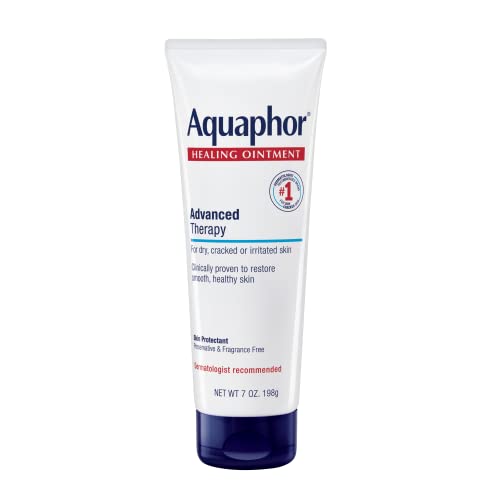
Aquaphor is not a cream in the traditional sense—it is a water-free ointment composed primarily of petrolatum, mineral oil, and lanolin alcohol. This composition makes it the most effective occlusive barrier on this list. When applied to cracked heels and covered with cotton socks, it creates a semi-occlusive environment that traps the skin’s own moisture and allows the lipid barrier to repair overnight. Licensed cosmetologists in the reviews specifically recommend it for a nightly sock routine.
The 7-ounce tube is massive for the price point, and a little goes a very long way because the ointment spreads across the skin rather than absorbing into it. Users praise it for multipurpose use: cracked cuticles, chapped lips, dry elbows, and even diaper-rash-level irritation in sensitive areas. It is the safest option for open cracks because it contains no exfoliating acids or high-concentration actives that could sting.
The main tradeoff is texture. Aquaphor stays greasy all night—it does not dry down. You will need socks to keep it off your sheets. If you dislike the sensation of a thick, slippery film on your skin, this is not a daytime option. However, for pure overnight healing power, no other product creates a more effective moisture seal than straight petrolatum.
Why it’s great
- Clinically proven to restore compromised skin barrier overnight
- Convenient squeeze tube is more hygienic than a jar
- Safe on open cracks, cuts, and sensitive areas
Good to know
- Very greasy—requires socks to prevent sheet stains
- Does not exfoliate or soften thick callus buildup
4. Organic Tea Tree Foot Balm for Dry Cracked Feet & Heels
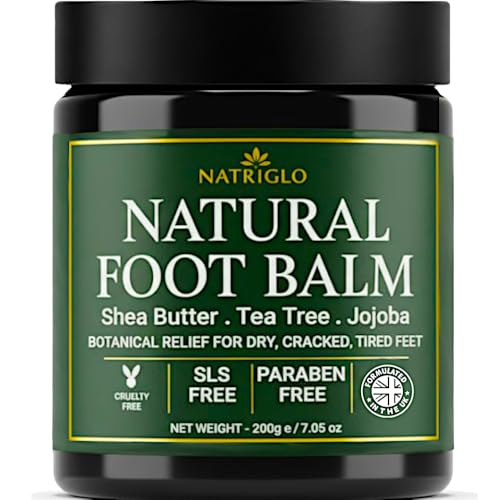
This balm takes a botanical approach, using organic tea tree oil for its antifungal and antimicrobial properties alongside shea butter and jojoba oil for deep conditioning. It targets a specific subset of foot issues: dry cracked feet that also deal with odor, athlete’s foot concerns, or fungal-prone skin. Tea tree oil is a known antimicrobial that addresses the bacterial load in moist, cracked environments, helping prevent secondary infections while the emollients soften the skin.
User feedback highlights that the balm dramatically softens rough heels within one to three applications, with one reviewer describing a transformation from hard and sharp to baby-smooth by the third night. It does have a noticeable tea tree scent—pleasant to most but strong enough that users sensitive to essential oils should test a small patch first. The formula is oil-heavy, so it feels greasy upon application, but the shea butter helps it absorb more thoroughly than straight petrolatum.
This is a multi-purpose balm that also works as a cuticle conditioner and callus softener for elbows and knees. The 7-ounce jar is generous, but note that jar packaging requires dipping fingers in, which can introduce bacteria if you are not careful about hand hygiene. For the price, it is a solid pick if you want organic ingredients and odor management alongside crack repair.
Why it’s great
- Organic tea tree oil fights odor and fungal concerns
- Shea butter and jojoba condition skin without harsh chemicals
- Softens even hard, sharp calluses in 2–3 nights
Good to know
- Oily texture takes time to fully absorb
- Jar packaging requires scooping with fingers
5. Eucerin Intensive Repair Body Lotion with 10% Urea
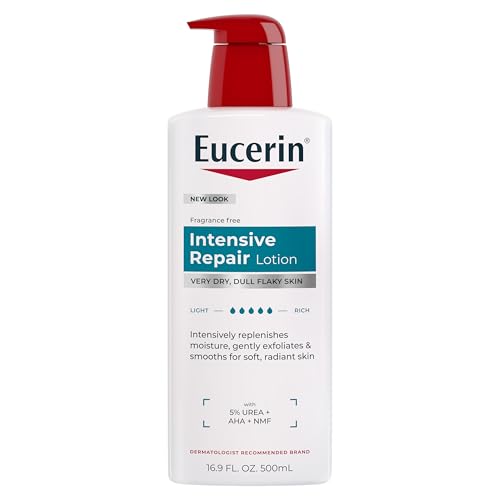
Eucerin’s Intensive Repair Lotion is the only pump-bottle format in this list, and it serves a different purpose than the specialized sticks and ointments above. With 10% urea and alpha hydroxy acid, it functions as a mild exfoliating moisturizer designed for large surface areas—it works great on shins, elbows, and the entire foot, but it lacks the occlusive power to seal a deep individual crack. It is best used as a maintenance lotion to prevent cracks from forming in the first place.
The texture is thick for a lotion but significantly thinner than a cream or ointment. It absorbs in about 30 to 60 seconds with a slightly tacky finish, making it suitable for daytime wear under socks. Users with keratosis pilaris on the legs or general dry flaky skin report superior results because the urea gently exfoliates while the natural moisturizing factors hydrate. The 16.9-ounce pump bottle provides months of full-body use, making it the most economical choice for routine care.
Where this product falls short for cracked feet specifically is its inability to stay in a deep fissure overnight—the lotion is too thin to create a lasting seal. If your cracks are mild and superficial, this lotion will maintain them. If you have deep, painful cracks, you should still use a dedicated foot cream or ointment on the heels and use this lotion as your daily whole-foot maintenance layer.
Why it’s great
- Large 16.9 oz pump is economical for full-body use
- 10% urea gently exfoliates flaky skin without harsh scrubbing
- Fragrance-free and dye-free for allergy-prone skin
Good to know
- Too thin to seal deep, open cracks overnight
- Leaves a slightly shiny, tacky finish on the skin
FAQ
Can I use a 60% urea stick on bleeding cracks?
How do I get the cream to actually stay on my heels at night?
Should I file my calluses before or after applying foot cream?
Final Thoughts: The Verdict
For most users, the cream for dry cracked feet winner is the O’Keeffe’s Healthy Feet 2 Pack because it delivers concentrated crack-sealing power in a non-greasy format that works overnight without staining. If you want to chemically dissolve thick calluses before they crack, grab the 60% Urea Cream Stick. And for the most versatile and safe overnight barrier protection, nothing beats the Aquaphor Healing Ointment.