Finding a cordless phone that actually delivers conversation-level clarity when your hearing needs a lift is harder than it looks. Most standard models cap their volume at a level that forces you to ask “what?” on every call, and the keypads are often too small to dial confidently without reading glasses. The right unit solves both problems — it amplifies the caller’s voice without distortion and puts large, backlit buttons under your thumb so you never misdial.
I’m Emma — the founder and writer behind Baby Bangs. I’ve spent the last decade analyzing the hardware that supports better living, from amplified audio circuits to TIA-1083 hearing aid compatibility, so my recommendations are rooted in the measurable specs that matter most for this specific need.
Whether you’re shopping for yourself or a loved one, this guide breaks down seven of the most reliable cordless phones engineered for hearing assistance. After testing the key specs — amplification levels, tone controls, keypad size, and compatibility with hearing aids — I’ve built a clear ranking of the best cordless phones for hard of hearing users on the market right now.
How To Choose The Best Cordless Phone For Hard Of Hearing
Not every “amplified” phone on the shelf is built to serve real hearing loss. Many just turn up the volume without adjusting the tonal balance, which can turn speech into a muddy, distorted mess. To pick a unit that genuinely helps, you need to look past the marketing and check four specific areas: pure gain in decibels, the presence of tone-shaping controls, physical button design, and how well the phone plays with hearing aids.
Amplification Ceiling & Tone Customization
The industry standard for a true hearing-aid-grade phone is 40dB of amplification, but raw gain isn’t the whole story. A phone that boosts all frequencies equally will sound harsh and unclear. Look for models with at least two or three tone settings — these let you shift the audio emphasis toward mid-range frequencies where human speech lives, so conversations sound natural rather than artificially loud.
Physical Dialing & Visual Alerts
Large, well-spaced, backlit buttons are non-negotiable. If you struggle to see a standard keypad in dim light or need reading glasses to dial, the phone will frustrate you every time you use it. Additionally, a loud ringer above 85dB and a bright flashing red LED that signals incoming calls are critical features for those who may not hear the phone ring from another room.
Hearing Aid Compatibility (TIA-1083)
A phone that causes a high-pitched squeal or static when held near a hearing aid is useless. The TIA-1083 standard ensures the handset’s speaker is shielded so it works cleanly with a hearing aid in T-coil mode. If you or the intended user wears a hearing aid, prioritize phones that explicitly list TIA-1083 compliance — it eliminates that feedback loop entirely.
Quick Comparison
On smaller screens, swipe sideways to see the full table.
| Model | Category | Best For | Key Spec | Amazon |
|---|---|---|---|---|
| Clarity D704 | Premium | Pure 40dB volume boost | 40dB amplification + tone control | Amazon |
| Panasonic KX-TGMA44B | Premium | Hearing aid T-coil users | TIA-1083 hearing aid compliant | Amazon |
| Clarity E814CC | Premium | Corded backup + cordless reach | 40dB boosted corded/cordless combo | Amazon |
| Clarity D714 | Mid-Range | Entry-level amplified cordless | 40dB boost + 4 tone settings | Amazon |
| AT&T DL72219 | Mid-Range | Robocall blocking + cell sync | Bluetooth cell pairing + 1.8″ screen | Amazon |
| AT&T EL52113 | Mid-Range | Extra-large keypad for dialing ease | Extra-large backlit keys + answering system | Amazon |
| VTech CS6719-2 | Budget | Affordable two-handset starter set | Full-duplex speakerphone + backlit keypad | Amazon |
In‑Depth Reviews
1. Clarity D704 40dB Amplified Cordless Phone
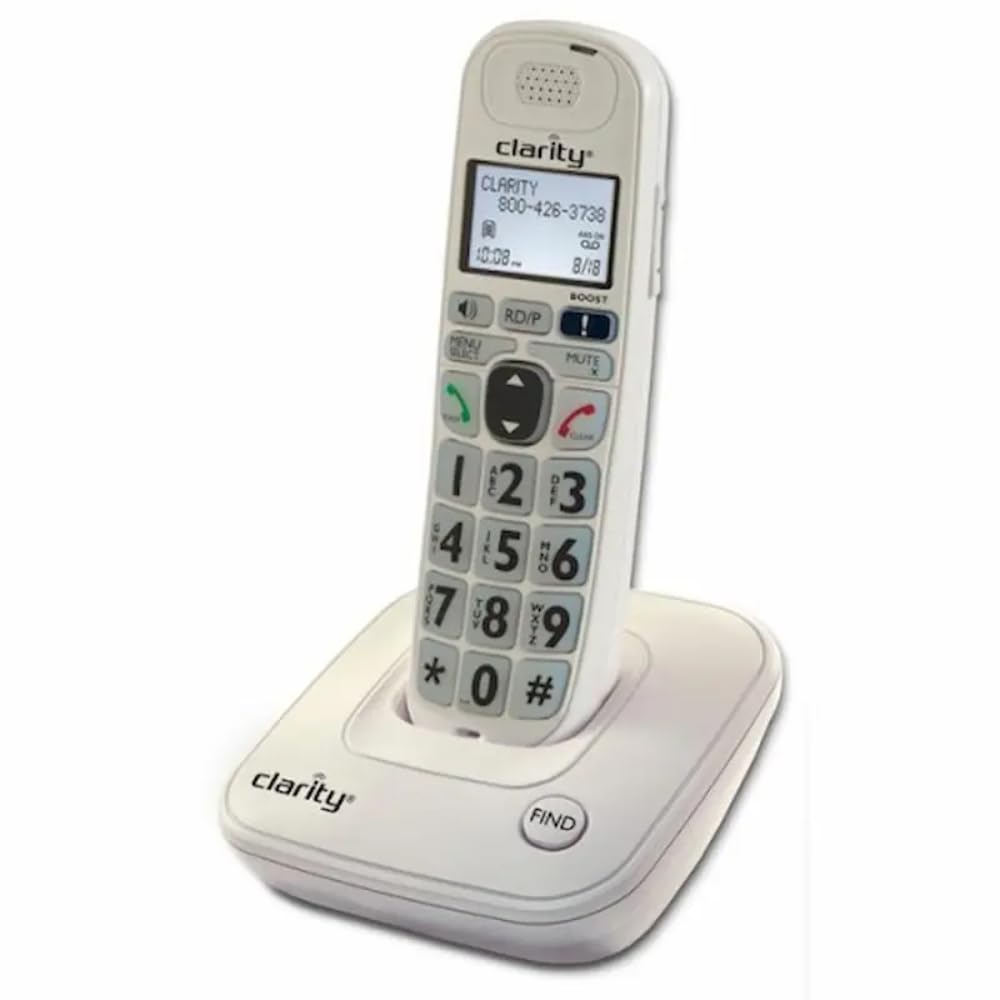
The Clarity D704 sits at the top because it delivers exactly what the name promises: 40dB of real, clean amplification without the digital artifacts that plague cheaper units. Its patented Clarity Power circuit doesn’t just crank a generic volume knob — it boosts the incoming audio while maintaining a natural tonal balance, so your mother-in-law sounds like herself, not a robot. The DECT 6.0 platform ensures zero interference from Wi-Fi or other household devices, and the range easily covers a two-story home.
Beyond volume, the D704 includes adjustable tone control that lets you dial in the clarity you need. If you struggle with high-frequency loss, boosting the treble helps separate consonants from vowels. The handset also features a loud speakerphone mode, which is a real benefit for hands-free calls or when you need the whole room to hear. The Caller ID display is large and easy to scan, even from a few feet away.
One quirk some users report: the phone defaults to low volume after a hang-up, requiring you to re-adjust the side rocker switch on each new call. It’s a minor annoyance, not a dealbreaker, especially given the excellent amplification. If you’re looking for the most reliable single-handset solution for moderate to significant hearing loss, this is the one to beat.
Why it’s great
- True 40dB boost with minimal distortion and natural voice quality
- Adjustable treble/bass tone control for custom listening
- Loud, clear speakerphone and large Caller ID display
Good to know
- Volume resets to low between calls, requiring re-adjustment
- No integrated answering machine on this model
2. Panasonic KX-TGMA44B Handset Accessory

The Panasonic KX-TGMA44B is a handset accessory designed to work with the KX-TGM430 series base, but its real claim to fame is TIA-1083 compliance. That technical standard means it produces minimal radio-frequency interference when held up to a hearing aid in T-coil mode — no buzzing, no squealing feedback, just clean audio. This is the single most important spec for anyone who relies on a hearing aid with a telecoil.
The handset itself is loaded with user-friendly touches. It offers a volume boost up to 40dB and six different tone settings, making it easy to find the sweet spot for your specific hearing profile. The LCD screen is large, white-backlit, and easy to read, and the touch-dial keys are generously sized to prevent misdials. A bright red LED on the handset flashes when calls come in, bridging the gap for those who can’t rely on the ringer alone.
Because this is an accessory handset, you need the compatible Panasonic base to use it — it’s not a standalone phone. That adds an upfront barrier if you’re starting from scratch. However, for existing Panasonic KX-TGM430B owners or those willing to invest in the base, the audio clarity and hearing aid compatibility are second to none in this category.
Why it’s great
- TIA-1083 certified for clean T-coil hearing aid use with zero buzz
- 40dB boost with six tone settings for fine-tuned audio
- Glowing red visual ringer and large backlit display
Good to know
- Requires a compatible Panasonic base system — not stand-alone
- Speakerphone is quieter without the boost engaged
3. Clarity E814CC Amplified Corded/Cordless Combo

The Clarity E814CC takes a hybrid approach: a corded base with a massive 40dB amplifier and a full-size handset, plus a cordless companion that roams the house. This is ideal for users who want the guaranteed reliability of a wired connection at their main station — the corded base never needs charging and always delivers maximum volume — while keeping a cordless handset nearby for kitchen or bedroom use. The dual keypads mean both stations have large, easy-to-press buttons.
The 40dB audio boost applies to both the corded and cordless handsets, which is unusual for a combo unit. The digital answering machine records up to 14 minutes of messages and allows remote retrieval, making it a full-home communication hub. Many users, especially caretakers for elderly relatives, appreciate the inclusion of speed-dial buttons, which can be programmed for emergency contacts.
On the downside, the instruction manual is dense and the programming process can be unintuitive — some users have resorted to tapping buttons over the labels to prevent accidental settings changes. The message waiting indicator is an audible beep rather than a silent visual light, which is odd for a phone built for hearing-impaired users. Still, for raw loudness and the convenience of a corded anchor point, this combo delivers.
Why it’s great
- 40dB amplification on both corded base and cordless handset
- Digital answering machine with remote playback capability
- Large, tactile keypads for easy dialing in low light
Good to know
- Programming can be confusing; user guide is overly complex
- Message waiting uses auditory beep instead of visual light
4. Clarity D714 DECT 6.0 Amplified Cordless Phone

The Clarity D714 is the entry-level sibling in the Clarity amplified line, and it brings the same 40dB ceiling and DECT 6.0 performance at a lower investment. It offers four tone settings to customize how the boosted audio sounds, which makes a tangible difference when you’re trying to separate a caller’s voice from background noise. The belt clip is a nice plus — you can carry the handset room to room without juggling it.
Setup is straightforward, and the handset’s large, raised buttons are easy to feel and press for those with reduced dexterity or vision. The Caller ID display is basic but clear, and the integrated digital answering machine works reliably. Several customer reviews note that this phone was the loudest and clearest they found for elderly parents after trying multiple models from other brands.
Long-term durability is a mixed bag — some units have seen button failures after a couple of years, specifically the 1, 2, and answer keys. It’s not a pattern across all units, but it’s worth noting if you need a phone for daily heavy use. For a secondary bedroom handset or a first-time amplified phone buyer, the D714 represents solid value and genuine hearing assistance.
Why it’s great
- Full 40dB amplification with four tone presets for clarity
- DECT 6.0 provides interference-free, long-range signal
- Affordable entry point with answering machine included
Good to know
- Some users report individual keypad buttons failing after 1-2 years
- No TIA-1083 rating for hearing aid T-coil use
5. AT&T DL72219 DECT 6.0 Cordless Phone

The AT&T DL72219 is a smart-home cordless phone that goes beyond basic amplification. Its headline feature is Bluetooth pairing with up to two smartphones, which lets you take mobile calls through the cordless handsets without keeping your phone in your pocket. For a hard-of-hearing user, this is transformational — you can answer a cell call on the handset that has the volume and clarity you need, rather than holding a tiny smartphone speaker to your ear.
The 1.8-inch backlit display is among the largest in this category, and the big lighted keypad makes dialing effortless. AT&T’s Smart Call Blocker automatically stops robocalls on the first ring without any configuration, which matters when an unwanted call is harder to shut down because it requires navigating a small screen. The ringer itself is loud enough to be classified as “obnoxious” by more than one reviewer — which is actually a high compliment for this use case.
There are a couple of compromises. The phone lacks the dedicated 40dB volume booster found on Clarity and Panasonic units — it has standard amplified levels but not hearing-aid-grade gain. The time and date also reset after a power outage, which is a nuisance. If your hearing loss is mild to moderate and you prioritize smart features and cell connectivity over extreme amplification, this is a well-rounded choice.
Why it’s great
- Bluetooth sync lets you answer cell calls on the cordless handset
- Auto-block robocalls before they ring — huge quality-of-life win
- Very loud ringer and large 1.8-inch backlit display and keys
Good to know
- No dedicated 40dB hearing-aid-grade amplification
- Clock resets after power loss; no backup battery
6. AT&T EL52113 Cordless Phone with Answering System

The AT&T EL52113 is a straightforward, no-frills cordless phone that puts its emphasis on physical accessibility. The oversized, backlit keys are significantly larger than standard phone buttons, and the font on the display is bold enough to read without glasses. This is the perfect choice when the main challenge isn’t hearing the caller, but seeing the number you’re dialing and pressing the right button the first time.
The digital answering system records up to 14 minutes of messages and supports remote access, which is handy for checking voicemail from a different handset. DECT 6.0 technology ensures the audio is clear and the call doesn’t drop when you walk to the far end of the house. The handset is lightweight and easy to handle, with a comfortable grip that works well for arthritic hands.
Volume levels are good for standard landline use but not in the amplified range — there is no 40dB boost or tone control for serious hearing loss. The ringer volume adjustment is also less intuitive than it should be, requiring a bit of trial and error. For users with moderate vision needs who just want a reliable, easy-to-dial cordless with a clear speaker, this gets the job done without complication.
Why it’s great
- Extra-large backlit keys and bold, high-contrast font
- Lightweight handset with an intuitive, easy-to-navigate menu
- Includes a digital answering machine with remote playback
Good to know
- Not a hearing-aid-grade amplified phone; standard volume only
- Ringer volume setup is not clearly indicated in the manual
7. VTech CS6719-2 2-Handset Cordless Phone

The VTech CS6719-2 is the budget anchor of this list and it earns its place through sheer reliability and clarity at a baseline level. It’s not an amplified phone — there is no 40dB boost or tone control — but multiple long-term owners report that the ringer is loud and the speaker/microphone pair is exceptionally clear, making it a viable entry-level option for mild hearing loss. The full-duplex speakerphone allows both parties to speak and be heard simultaneously, which feels more natural than half-duplex alternatives.
Both handsets feature a backlit keypad and display, so you can dial in dimly lit rooms without straining. The Caller ID display is clear and stores a log of incoming calls. For a two-handset system at this price point, it covers the basics competently: it’s easy to set up, the range is adequate for an average home, and the battery life stretches comfortably past a week on standby.
The plastic build is light which makes it feel less premium than the Clarity or Panasonic units, and the buttons are slightly sluggish compared to higher-end models. There is no answering machine included, so you’ll need voicemail from your phone provider. If your hearing loss is minor and you just want an affordable, clear-sounding cordless pair for the whole house, this set punches above its weight.
Why it’s great
- Clear audio with a loud ringer suitable for mild hearing loss
- Full-duplex speakerphone enables natural two-way conversation
- Includes two handsets for full-home coverage out of the box
Good to know
- No dedicated hearing-aid-grade volume amplification
- Plastic build feels light; buttons can be sluggish to respond
FAQ
What does TIA-1083 compliance mean for a cordless phone?
Is a 40dB boost always better than a standard phone?
Can I use an amplified cordless phone with VoIP services like Ooma or Vonage?
Final Thoughts: The Verdict
For most users, the best cordless phones for hard of hearing winner is the Clarity D704 because it delivers a clean, distortion-free 40dB boost with user-adjustable tone settings in a simple, focused package. If you wear hearing aids and need T-coil compatibility, grab the Panasonic KX-TGMA44B. And for those who want the security of a corded base station plus the flexibility of a cordless handset, nothing beats the Clarity E814CC.