The 8-15 mmHg range sits at the lowest end of medical compression. It is the category for people who want relief from mild leg fatigue, minor swelling after a long day on their feet, or comfortable support during air travel—without feeling like they wrestled a medical-grade stocking onto their calf. At this pressure level, the material and fit decide everything.
I’m Emma — the founder and writer behind Baby Bangs. I analyze the material blends, stitch patterns, and sizing charts of dozens of compression sock models each month so you don’t have to guess which ones actually hold up after a wash cycle.
Below you will find the five pairs that deliver on the promise of gentle, graduated support. For anyone serious about leg health without the squeeze of higher mmHg garments, this is the definitive guide to choosing among the best compression socks 8-15 mmhg.
How To Choose The Best Compression Socks 8-15 mmHg
The 8-15 mmHg range occupies a specific sweet spot: enough compression to stimulate blood flow and reduce minor edema, but low enough that you can wear the socks for hours without discomfort. Not every pair in this category is built the same. Focus on three factors that separate a daily-wear sock from one that ends up in the back of a drawer.
Fabric composition and temperature regulation
At light compression levels, the material dominates the wearing experience. A blend heavy in acrylic or polyester can trap heat and cause sweating, especially in warmer climates. Bamboo viscose offers natural moisture management and a soft hand feel. Nylon and spandex provide stretch recovery but can feel slick. Look for a fabric balance that matches your environment and how long you plan to wear the socks.
Fit consistency across the calf
The graduated compression design works only if the sock stays in place. Many 8-15 mmHg models use a lower top-band tension compared to medical-grade stockings, which means poorly sized pairs can bunch at the ankle or slide down toward the heel. Measure your calf circumference at the widest point before ordering. A sock that is too short in the calf will not stay up; one that is too tight at the top band will cause discomfort regardless of the low mmHg rating.
Toe construction and seam design
For all-day wear, the toe area matters more than most buyers realize. A seamless toe or smooth toe seam reduces friction and prevents irritation, especially for people with diabetes or sensitive skin. Cushioned soles add comfort for long walks or standing shifts, but they also add bulk inside shoes. Decide whether you prioritize tactile smoothness or impact absorption when choosing between a lightweight sock and a cushioned model.
Quick Comparison
On smaller screens, swipe sideways to see the full table.
| Model | Category | Best For | Key Spec | Amazon |
|---|---|---|---|---|
| Doctor’s Select Bamboo Viscose | Premium 3-Pack | All-day wear and travel | 54% bamboo viscose blend | Amazon |
| JOBST SensiFoot | Diabetic Care | Sensitive feet and diabetes | Smooth seamless toe | Amazon |
| Celeste Stein Therapeutic Graduated | Budget Single | Novelty style and light use | Patterned star design | Amazon |
| Truform Diabetic Compression | Full-Cushion | Orthopedic recovery support | Full-cushion knit foot | Amazon |
| Doc Miller TED Hose | Hospital Style | Post-surgery recovery | 15-20 mmHg range | Amazon |
In‑Depth Reviews
1. Doctor’s Select Bamboo Viscose Light Compression Socks – 3 Pairs
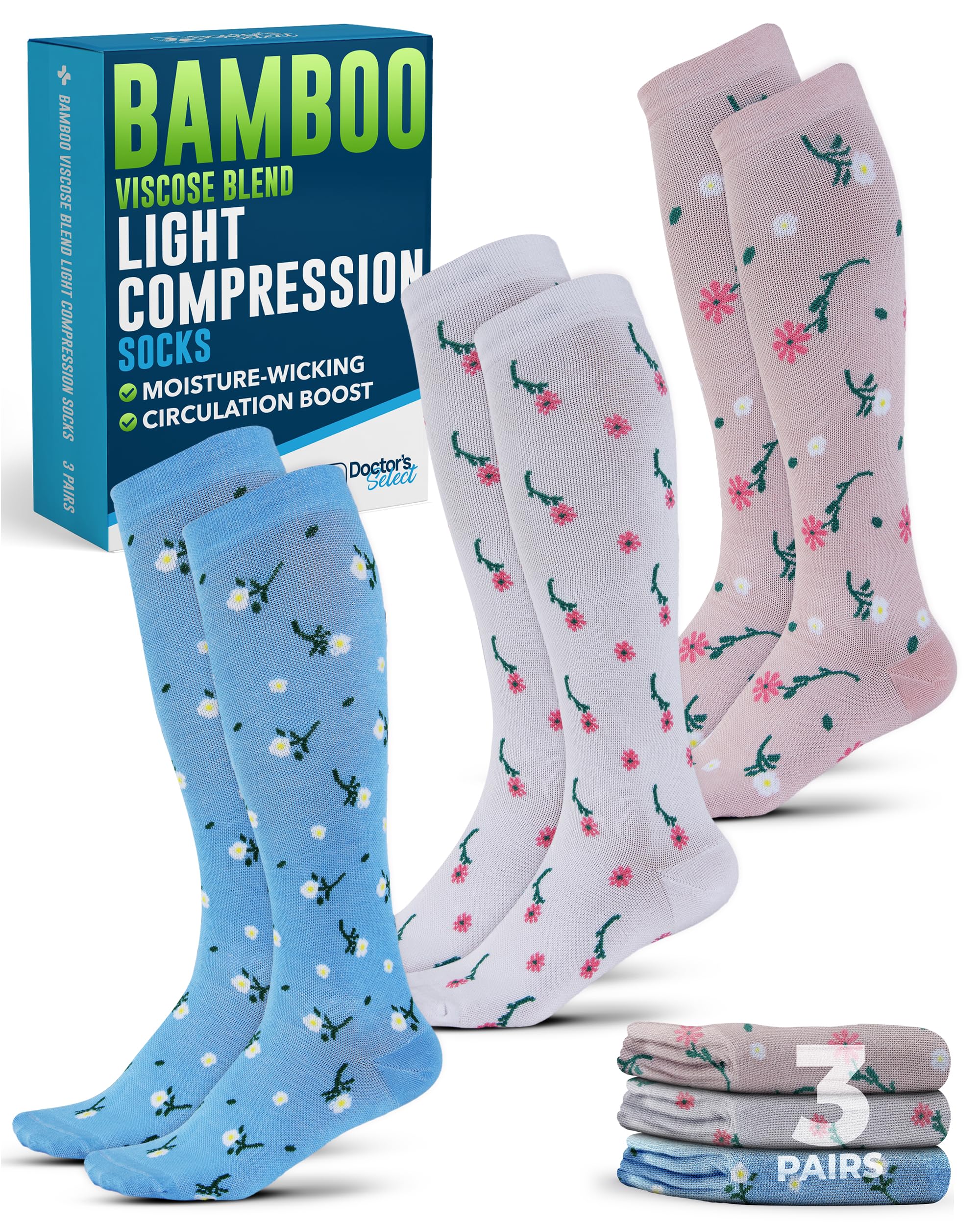
This 3-pair set from Doctor’s Select is built around a 54% bamboo viscose blend, which gives the fabric a noticeably soft hand feel that is cooler against the skin than standard medical nylon. The 8-15 mmHg gradient holds the lower leg gently without the strangling sensation that some tighter socks cause, and reviewers consistently mention that these are the easiest light-compression socks to pull on over the heel. The material composition makes them suitable for warm-weather wear and long-haul flights where temperature regulation matters.
Multiple users report wearing these socks for nine-hour flights and seven-mile walks without swelling or pain, which speaks to the effectiveness of the graduated design despite the low pressure level. The knee-high length stays in place throughout the day, and the socks machine-wash without shrinkage. The 3-pair configuration gives you a rotation for daily use, which is practical given that the price per pair undercuts many single-pack competitors.
One caveat: the socks run warm for some users in hot, humid climates like southern Florida. If you live in a tropical environment, you may prefer a lighter, toeless compression option. The rubber content in the elastic band can also cause the top edge to feel slightly snug if you have larger calves, so consulting the size chart is recommended before purchase.
Why it’s great
- Bamboo viscose fabric stays soft after multiple machine washes
- Gentle compression that holds without cutting into the leg
- Three pairs included at a competitive per-pair cost
Good to know
- Fabric can feel warm in very hot climates
- Rubber content in the band may not suit all calf shapes
2. JOBST SensiFoot Diabetic Compression Socks 8-15 mmHg

JOBST is a legacy brand in medical compression, and the SensiFoot model comes with features specifically engineered for diabetic foot care. The toe area uses a non-irritating smooth seam rather than a traditional bulky seam, which reduces pressure and friction on the toes. Extra padding in the heel and foot area adds a layer of cushioning that is helpful for people who experience neuropathy or sensitive skin. The 8-15 mmHg range here is mild enough that a retired physician reviewer describes wearing the socks to bed safely, which is a rare endorsement for any compression garment.
Moisture management is handled through multi-fiber yarns that wick sweat away from the skin, keeping feet dry during extended wear. The pull-on closure is straightforward, and the knee-high length stays in place without leaving deep marks on the leg. Users note that the material feels thin at the ankle, so care is needed when pulling the sock over the heel to avoid tearing.
The main trade-off is that this is a single-pair product, which makes the price per pair higher than the Doctor’s Select option. Hand washing is recommended to prolong the life of the delicate fibers. If you prioritize medical-grade features like a seamless toe and targeted cushioning over a multi-pack value, the SensiFoot is the most thoughtful design in this group for sensitive feet.
Why it’s great
- Smooth toe seam eliminates friction irritation
- Extra padding protects heel and foot area
- JOBST brand quality with consistent manufacturing
Good to know
- Single-pair purchase only
- Thin ankle fabric can rip during first-time application
3. Celeste Stein Therapeutic Graduated Women Compression Socks 8-15 mmHg
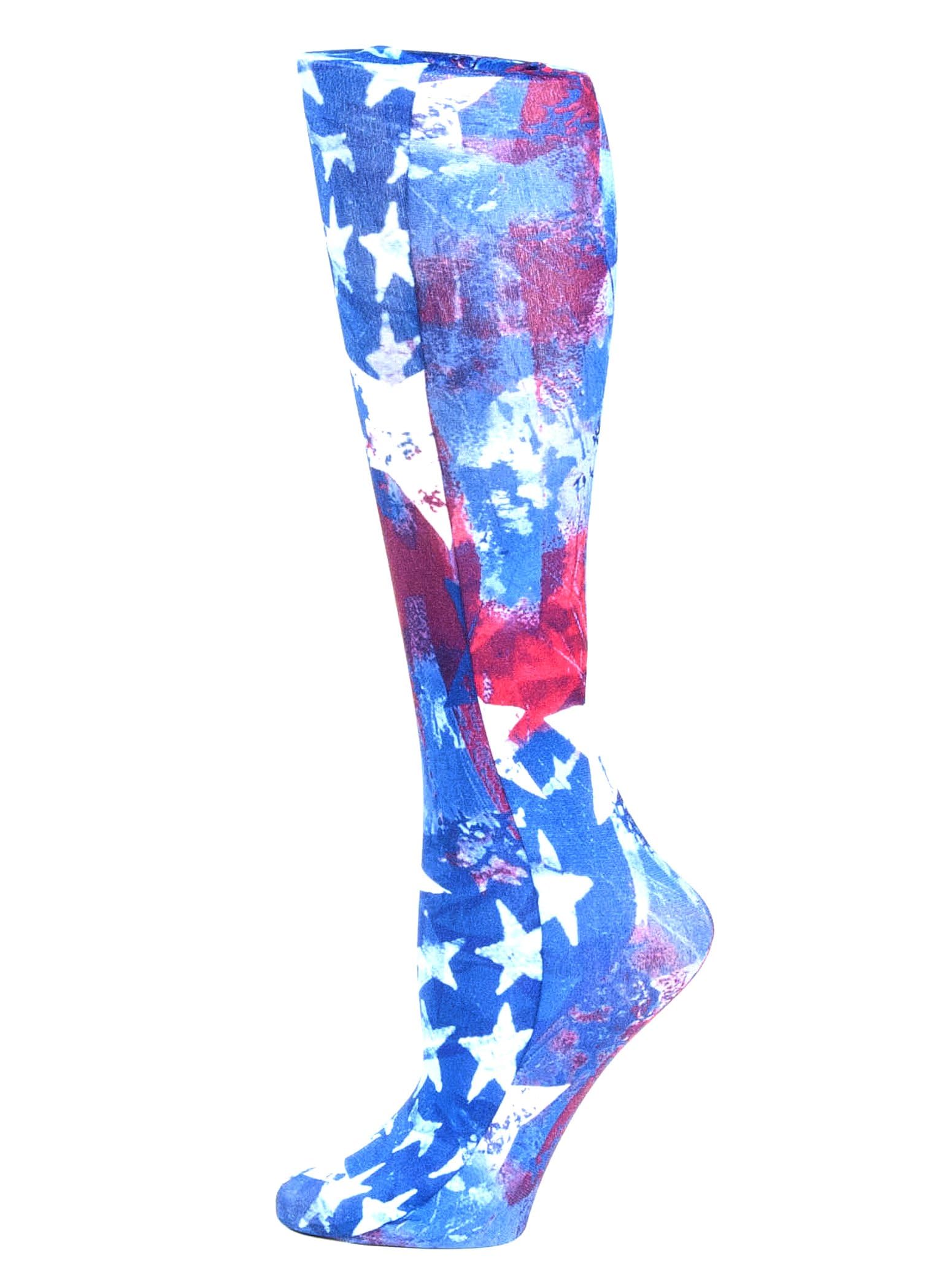
Celeste Stein positions its therapeutic socks as a lifestyle product first, with fun patterns like the “Star Gazer” design that stands out compared to the clinical look of most medical compression socks. The 8-15 mmHg compression level is light enough that the sock feels more like a supportive daily crew sock than a medical device. The fabric is stretchy and non-constricting, and multiple users report that it reduces leg swelling and improves circulation during regular wear.
The durability holds up well through machine washing without noticeable shrinkage, though the patterned print can fade slightly when the fabric is stretched over the calf. A recurring note in reviews is that quality consistency varies between individual pairs, with some users receiving socks from different production runs that feel slightly different in length or top-band tension. This suggests that quality control may not be as tight as with medical-focused brands.
For buyers who want compression socks that look like regular fashion socks and do not mind a bit of sizing inconsistency, this pair delivers on comfort and circulation support. It is best suited for light daily use such as office work, casual walking, or wearing under pants where the pattern peeks out.
Why it’s great
- Fun patterned designs that do not look clinical
- Stretchy and comfortable for all-day wear
- Washes well with minimal shrinkage
Good to know
- Inconsistent quality between different production batches
- Pattern may fade when stretched over larger calves
4. Truform Diabetic Compression Socks 8-15 mmHg

Truform uses a 64% acrylic, 29% nylon, and 7% spandex construction to create a full-cushion knit sock that protects sensitive tissue on the ankle and foot. This is a good choice for people who need extra padding because of neuropathy, post-surgical sensitivity, or long hours on hard floors. The over-calf length reaches higher than many knee-high models, and the 8-15 mmHg compression is delivered through a graduated design made in the USA. The construction is latex-free, which is important for anyone with latex allergies.
Users praise the fit for muscular calves when ordering the XL size, and the socks avoid the crushing sensation that can come with higher-pressure medical stockings. The full-cushion knit does add bulk inside shoes, so you may need to size up your footwear if you plan to wear these with dress shoes or tight sneakers. Some reviewers found the calf band too tight despite ordering the correct size based on the chart, so measuring accurately before purchase is essential.
The sock is better suited for recovery scenarios—post-operative recovery, diabetic foot care, or evening wear after standing all day—than for athletic use. The acrylic-dominant blend does not breathe as well as bamboo or cotton alternatives, which can cause sweaty feet in warm conditions.
Why it’s great
- Full-cushion knit offers genuine impact protection
- Made in the USA with consistent quality
- Latex-free construction for allergy safety
Good to know
- Acrylic fabric runs warm and less breathable
- Calf band fit may be tight for some leg shapes
5. Doc Miller TED Hose Knee High Anti Embolism Stockings 15-20 mmHg
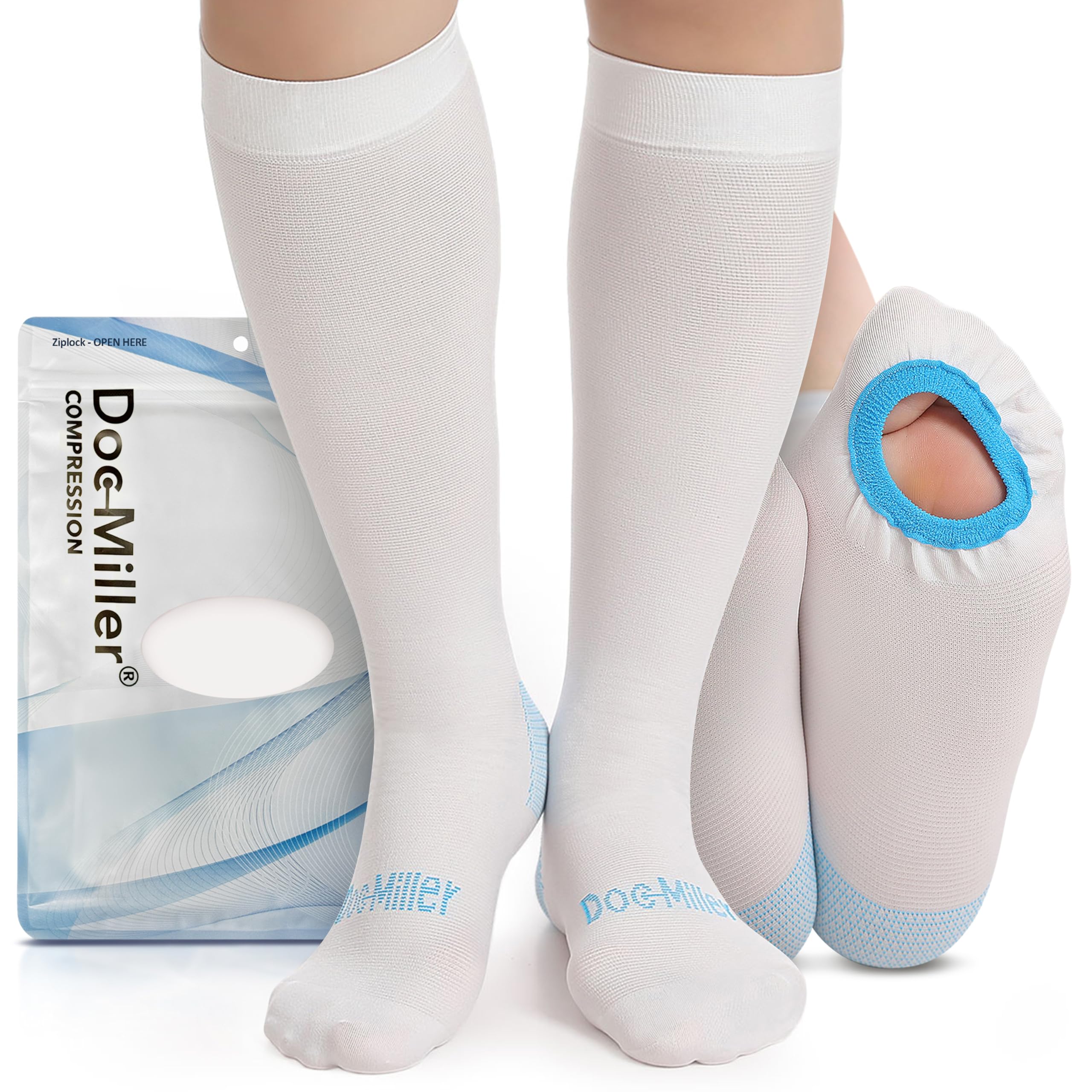
Doc Miller’s TED-style hose is designed to mimic the anti-embolism stockings used in hospital settings, with a 15-20 mmHg compression range that sits slightly above the primary 8-15 mmHg focus of this guide but is frequently bought by the same audience looking for mild post-surgical support. The nylon and spandex material feels similar to what hospitals issue after knee replacement or hip replacement surgeries. A built-in inspection hole at the toe allows medical staff to check circulation without fully removing the stocking.
The heel section is color-coded, making it easy to position the sock correctly during application, which is genuinely helpful when you are recovering from surgery and have limited mobility. The stockings come in a 2-pack, which gives a spare pair for rotation during a hospital stay or recovery period at home. Users confirm that the material closely matches hospital quality and that the stockings machine-wash clean easily.
The main issue is sizing: multiple reviewers mention that the same size worn in the hospital felt too tight when ordered from this brand, suggesting you should size up if you are currently swollen from surgery or fluid retention. The top-band tension can also feel restrictive, which is a common complaint with TED-style hose regardless of brand. This model is best viewed as a recovery tool rather than a daily comfort sock.
Why it’s great
- Hospital-grade design with inspection hole for medical monitoring
- Color-coded heel simplifies positioning during recovery
- Two pairs included for rotation during post-surgery stays
Good to know
- 15-20 mmHg range is tighter than standard 8-15 mmHg models
- Top band can feel restrictive, especially with post-surgical swelling
FAQ
Is 8-15 mmHg compression strong enough to prevent deep vein thrombosis during a flight?
How do I measure my calf to ensure the right size at 8-15 mmHg?
Final Thoughts: The Verdict
For most users, the best compression socks 8-15 mmhg winner is the Doctor’s Select Bamboo Viscose 3-Pack because it combines a soft, breathable fabric with consistent graduated compression at a cost per pair that makes daily rotation practical. If you need a seamless toe and extra foot padding for sensitive skin or diabetes management, grab the JOBST SensiFoot. And for post-surgical recovery where a hospital-style stocking is required, nothing beats the Doc Miller TED Hose 2-Pack.