Those stubborn little white or flesh-colored bumps that never turn into full pimples, yet always feel gritty on the surface — sebaceous filaments are not blackheads, but standard clay masks often miss them entirely. A formula designed for this specific pore issue needs the right balance of absorbent clays, gentle exfoliating particles, and non-stripping hydration to dissolve the waxy buildup without provoking more oil production.
I’m Emma — the founder and writer behind Baby Bangs. I’ve spent years analyzing ingredient decks, customer review patterns, and formulation science for niche pore-clogging concerns, mapping which clay types consistently reduce filament visibility without triggering rebound oiliness.
After filtering dozens of masks through real-world feedback and ingredient logic, I landed on five strong options for what I consider the honest best clay mask for sebaceous filaments — options that actually target the structural difference between a filament and a blackhead.
How To Choose The Best Clay Mask For Sebaceous Filaments
Sebaceous filaments are soft, waxy plugs of oil and skin cells that sit inside pores. Unlike blackheads, they don’t oxidize and turn dark. The wrong mask — typically a high-pH bentonite formula left on too long — strips the skin surface, making pores look larger and encouraging the glands to overproduce oil. The goal is gentle, consistent dissolution, not aggressive suction.
Look for gentle physical exfoliation inside the clay
Filaments respond best to a clay mask that contains fine-grained particles or encapsulated beads that burst with gentle pressure. PHA capsules, mung bean granules, or rice powder lightly sand the filament’s waxy structure during the rinse-off step. Straight clay with no grit can absorb surface oil but leaves the plug intact below the pore opening.
Avoid high-drying clays as the sole base
Bentonite alone contracts hard and can cause stinging and rebound oiliness in filament-prone skin. Seek formulas that combine kaolin, Canadian colloidal green clay, or Australian clay with hydrating ingredients like beta-glucan or avocado extract. A mask that leaves the skin feeling tight is working against filament reduction.
Check for enzymes or mild acids that break down sebum
Ingredients like green tea extract, salicylic acid, and PHA (polyhydroxy acid) help dissolve the fatty structure of a filament without stripping the skin barrier. If a mask contains only clay plus water, it’s a high-risk choice for this specific concern. The ideal formula pairs absorbent clay with a gentle sebum-dissolving partner.
Quick Comparison
On smaller screens, swipe sideways to see the full table.
| Model | Category | Best For | Key Spec | Amazon |
|---|---|---|---|---|
| BANILA CO Charcoal Capsule Pore Polish Mask | Mid-Range | Burstable PHA capsules + green clay | Charcoal PHA capsules | Amazon |
| beplain Mung Bean Pore Clay mask | Premium | Gentle enzymatic mung bean exfoliation | Whole mung bean complex | Amazon |
| PLANTIFIQUE Superfood Clay Mask | Premium | Hydrating clay mask with superfoods | Avocado & aloe base | Amazon |
| ANAI RUI 3 Pcs Face Mask Set | Budget | Multi-mask variety for T-zone focus | Three 2.5-oz jars | Amazon |
| LAPCOS Charcoal Sheet Mask | Budget | Quick 10-minute pore refining | Charcoal + salicylic acid | Amazon |
In‑Depth Reviews
1. BANILA CO Clean It Zero Charcoal Capsule Pore Polish Mask
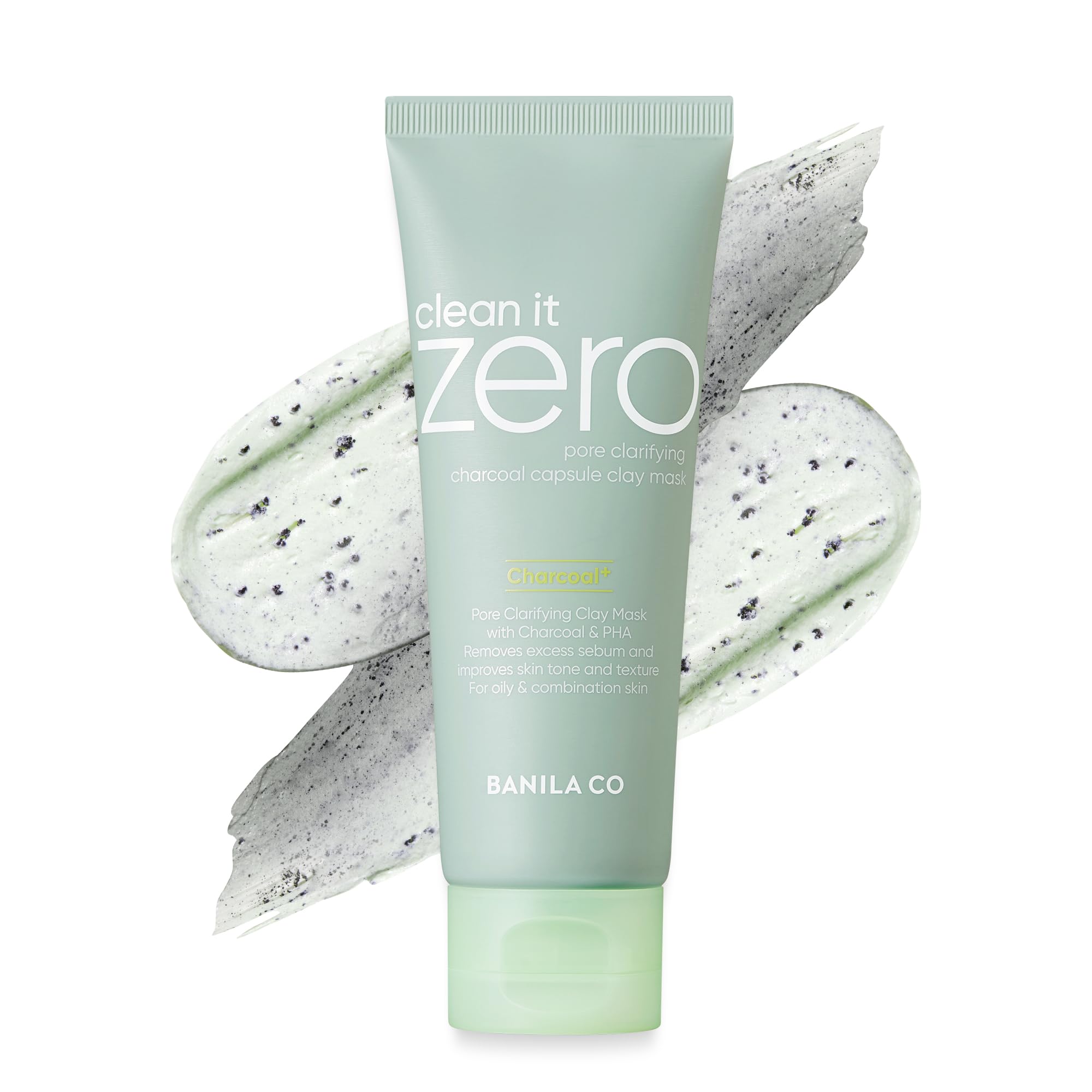
The core insight behind this mask is that sebaceous filaments need mechanical disruption more than deep absorption. The formula uses tiny black charcoal PHA capsules embedded in a creamy green clay base. When you massage the product on dry skin for about a minute, the capsules burst open and release PHA, which gently breaks down the waxy structure of the filament. The Canadian green clay absorbs surface oil without the aggressive tightening of bentonite.
Customer reports describe a strange sensation the first few uses — their pores seemed to “sweat” — which aligns with the capsules physically displacing the filament plug. Beta-glucan and tea tree extract keep the skin calm post-rinse, so you don’t get that rebound slickness by midday. The formula is V-Label certified vegan and passed non-comedogenic testing, which matters for filament-prone faces that react to comedogenic waxes or silicones.
Skin irritation tests confirm safety for sensitive and acne-prone types. The physical exfoliation level is gentle, not scrubby — you control the intensity by how long you massage. One to two uses per week are enough to see visible reduction in the nose and chin filament grit within two to three weeks.
Why it’s great
- PHA capsules physically disrupt the filament plug without stripping
- Green clay absorbs excess oil without post-use tightness
- Certified non-comedogenic and vegan
Good to know
- Must be applied to dry skin for the capsules to burst properly
- Sensitive skin users report slight dryness if left on past 5 minutes
2. beplain Mung Bean Pore Clay Mask

This Korean mud mask takes a different approach to filaments: instead of heavy clay or capsules, it uses whole mung bean complex — a combination of mung bean enzyme and fine mung bean powder. When rinsed with a gentle circular motion on the T-zone, the powder physically sloughs the filament’s surface while the enzyme dissolves the sebum-lipid bond. The wear time is only three to five minutes, which reduces the risk of over-drying.
Customer feedback highlights that the mask is completely scentless and applies smoothly. Users with red, large-pore skin note visible pore size reduction after consistent use. The formulation is particularly effective for those whose filaments sit in a thin oil layer — the mung bean texture grabs that film during rinsing without requiring the aggressive rubbing that can irritate filament-prone noses. It is less effective for very oily skin that needs deep clay absorbance.
The manufacturer, Kolmar, keeps the ingredient list simple with no essential oils or drying alcohols. One jar lasts around four to nine months at weekly use, making it a cost-effective maintenance mask. The lack of fragrance means zero irritation risk for sensitive filament-prone faces.
Why it’s great
- Mung bean enzyme gently dissolves sebum structure
- Fine powder exfoliates without micro-tears
- No fragrance, no drying alcohols, simple ingredient list
Good to know
- Less effective for extremely oily or very thick filament plugs
- Short wear time means you need to be near a sink
3. PLANTIFIQUE Korean Skincare Clay Mask – Hydrating Mud Mask with Avocado & Superfoods
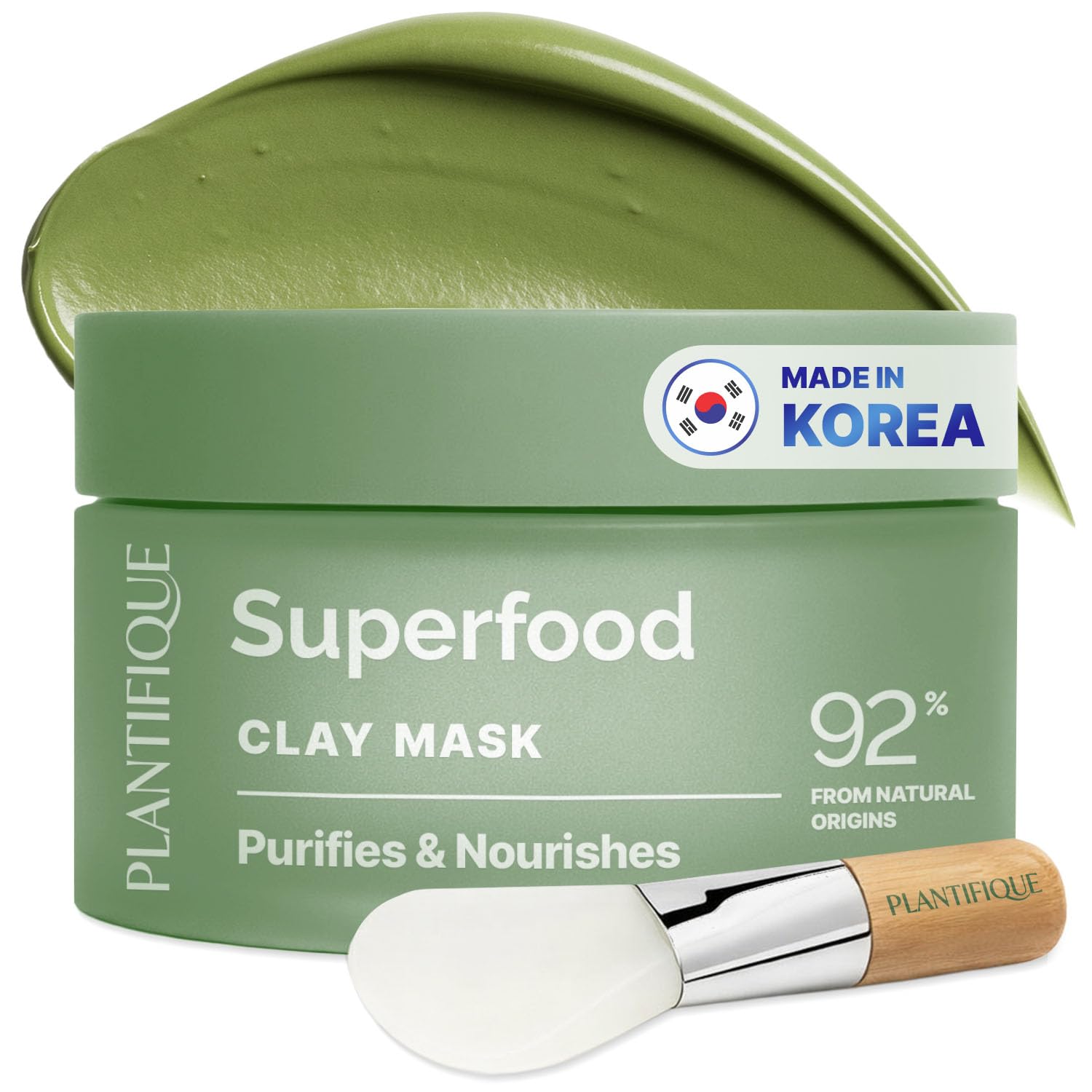
Most clay masks leave the face feeling like a ceramic bowl — tight, dry, and stiff. This one is different. The formula uses a clarifying clay base that is infused with avocado extract, aloe vera, and superfoods like spinach and blueberry. When applied, it stays creamy and does not crack hard, meaning you can talk, blink, and move your face during the wait time. For filament-prone skin, this non-drying quality is critical: when the clay cannot shrink too tightly, it does not stimulate the glands to overcompensate after removal.
Users with combination and acne-prone skin report that the mask removed almost all stubborn nose blackheads (often mistaken for filaments) after three weeks of twice-weekly use. The fine clay particles provide a polish sensation during rinsing that helps sweep away the grit. It also includes tea tree oil, which adds a mild antibacterial effect without being irritating.
The dermatological testing rating of “excellent” from an independent German lab adds confidence for sensitive skin types. Some users note that the green-pigmented clay can leave a tint if not rinsed thoroughly, requiring a couple of sweeps with toner afterward. The included applicator brush allows even application, which helps target the nose and chin filament zones precisely.
Why it’s great
- Non-drying, non-cracking formula safe for daily hydration
- Avocado and aloe prevent rebound oil overproduction
- Dermatologist-tested with “excellent” rating
Good to know
- Green tint can leave residue; needs thorough rinsing
- Tea tree scent may be noticeable for fragrance-sensitive users
4. ANAI RUI 3 Pcs Face Mask Set
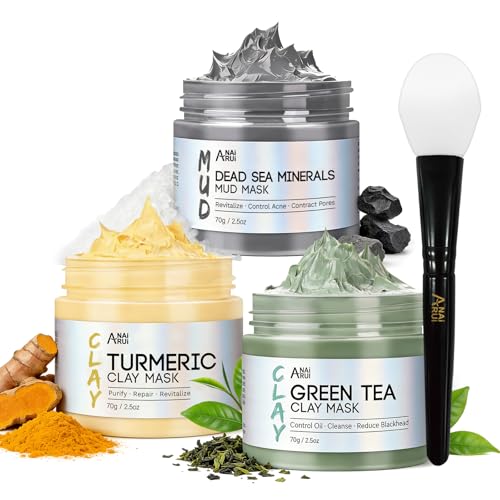
This three-jar set is designed for skin that needs different treatments on different zones. The Turmeric Clay Mask targets radiance and uneven tone, the Green Tea Clay Mask focuses on antioxidant protection and pore refining, and the Dead Sea Mud Mask provides mineral-rich exfoliation. For filament-prone skin, the Green Tea mask is the standout: green tea’s tannins help tighten pores and regulate oil without the harshness of pure bentonite clay. The set allows you to apply different masks to different facial areas — a method that helps avoid over-treating dry cheeks while hitting the oily T-zone hard.
Customer reviews highlight that all three masks rinse off cleanly without leaving a waxy film. Users with sensitive skin reported no irritation even after back-to-back use on different days. The included applicator brush minimizes waste and helps spread a thin, even layer that does not pull at the skin when drying. Each jar contains 2.5 ounces, which is small but lasts for about 8-10 applications per jar when used correctly.
The masks are made with natural, clean ingredients and are suitable for all skin types when used as directed. For filaments, the optimal routine is to apply the Green Tea mask to the nose and chin twice per week and use the Dead Sea Mud on areas with thicker buildup. The Turmeric mask works better for overall brightness and texture rather than filament dissolution.
Why it’s great
- Three specialized masks allow zone-based filament targeting
- Green tea variant provides antioxidant-driven pore refining
- Patch-test friendly for sensitive skin
Good to know
- Jars are small at 2.5 ounces each
- Dead Sea Mud variant can feel tight on dry skin areas
5. LAPCOS Charcoal Sheet Mask – Pore Refining & Gently Exfoliating Face Masks

This is not a wash-off clay mask — it is a charcoal-infused sheet mask. It earns a spot on this list because the ultra-fine charcoal layer combined with salicylic acid and tea tree oil creates a “pull-out” effect on surface-level sebaceous filaments. The sheet mask format is different: it does not require rinsing, and the 10-minute wear time is far shorter than a traditional clay treatment. This makes it a convenient weekly maintenance tool for people whose filaments are mild and do not need the deeper dissolution of a capsule mask.
Customer reviews consistently note that the mask helps draw out daily grime and refines the look of pores without drying. The addition of glycolic acid (AHA) provides gentle surface exfoliation that sweeps away the top layer of dead skin cells that can cap filaments. Users with teenage skin — a common demographic for filament concerns — report that the mask helps manage occasional breakouts and blackheads without breaking the skin barrier or leaving it oily.
One caveat: the mask is soaked in liquid, so application can be slightly messy. Some users with oily skin felt the mask left a slick residue rather than a matte finish. It is best suited as a pre-cleanse step or used on clean skin before bed, not as a standalone filament treatment.
Why it’s great
- Short 10-minute wear time fits busy routines
- Salicylic acid and glycolic acid gently dissolve filament sebum
- Charcoal sheet provides physical adsorption
Good to know
- Not a deep treatment for thick filament plugs
- Can leave an oily feel on very oily skin
FAQ
Can I use a clay mask daily for sebaceous filaments?
Do I need to double-cleanse before using a clay mask for filaments?
Should I steam my face before applying a clay mask?
Why did my filaments look bigger after using a clay mask?
Final Thoughts: The Verdict
For most people, the best clay mask for sebaceous filaments is the BANILA CO Charcoal Capsule Pore Polish Mask because its PHA capsules physically break up the waxy filament structure during massage without stripping the barrier. If you want a gentle enzymatic approach that polishes pores without any chemical actives, grab the beplain Mung Bean Pore Clay Mask. And for a hydrating, non-cracking clay treatment that avoids rebound oiliness, nothing beats the PLANTIFIQUE Superfood Clay Mask.