A chin-up bar that wobbles, mars your door frame, or simply doesn’t fit is worse than no bar at all. You want a solid anchor that lets you pull your own weight—literally—without leaving a trace behind. The difference between a smart buy and a regret often comes down to how the bar grips the frame and what it’s made of.
I’m Emma — the founder and writer behind Baby Bangs. I’ve spent years dissecting home fitness hardware, comparing steel gauges, mounting mechanisms, and real-world user reports to separate the bars that deliver from those that disappoint.
The market offers several designs, and understanding each one is critical before you invest. This guide helps you sort through the options to find the best chin up bar for your specific setup and strength goals.
How To Choose The Best Chin Up Bar
Picking a chin-up bar isn’t complicated, but skipping the fundamentals leads to a bar that slips, bends, or damages your home. Focus on these three factors to narrow the field fast.
Mounting Type Determines Everything
Doorway bars are the most common and require no drilling. They use tension (screw or lever) or friction pads to stay in place. Ceiling- or joist-mount bars offer maximum stability but require screws and a solid beam overhead. Wall-mount bars attach to studs and give a permanent, wobble-free station. Your living situation and willingness to drill dictate which type works.
Steel Thickness and Weight Capacity
Thin-walled bars bend under dynamic load. Look for 1.5mm to 2mm steel tubing on doorway models. The weight rating matters less than the actual rigidity—a 300-pound bar that uses 1.2mm steel will flex more than a 250-pound bar built from 2mm steel. Focus on construction quality, not just the big number on the box.
Grip Comfort and Frame Protection
Foam grips vary widely. High-density, closed-cell foam resists sweat and holds shape. Cheap foam compresses and slides. For frame protection, look for thick silicone or rubber pads that span the full contact area, not thin foam strips that tear. Bars that rely on small plastic caps to protect the frame will eventually leave marks.
Quick Comparison
On smaller screens, swipe sideways to see the full table.
| Model | Category | Best For | Key Spec | Amazon |
|---|---|---|---|---|
| Ally Peaks Pull Up Bar | Mid-Range | Doorway stability | 1.7mm steel; 440lb limit | Amazon |
| AmStaff Fitness Joist Mount | Premium | Ceiling/rafter mount | 42″ wide; 400lb limit | Amazon |
| Sportneer Pull Up Bar | Mid-Range | No-screw doorway grip | 2mm outer steel; 440lb limit | Amazon |
| Shnlie Joist Mounted Bar | Mid-Range | Ceiling mount value | 42″ wide; 440lb limit | Amazon |
| SELEWARE Heavy Duty Bar | Premium | Wall mount security | 4mm alloy steel; 500lb limit | Amazon |
| ONETWOFIT Pull Up Bar | Mid-Range | Wall mount versatility | Fits 23″-36″ doors | Amazon |
| Duonamic Eleviia | Budget | Travel/portability | Aerospace composite; 3.5lb | Amazon |
In‑Depth Reviews
1. SELEWARE Heavy Duty Welded Pull Up Bar

The SELEWARE bar is built from 4mm thick alloy steel with clean, laser-like welds that give it an industrial-grade feel. The triangular support base eliminates any sway, and the powder-coated finish resists rust even in humid garages. With a 500-pound capacity, this bar handles dynamic movement and weighted pulls without a hint of flex.
The mounting plates use heavy-duty hardware, but installation is best done with an impact driver and a helper to hold the bar level. The grip texture is smooth from the factory; some users apply hockey tape for a tackier feel, which is a simple fix. The bar ships with two carabiners for attaching resistance bands or suspension trainers.
This is a permanent solution for anyone with access to solid studs or a beam. It does require drilling, but for those willing to commit, the SELEWARE delivers a rock-solid base that will outlast standard doorway bars.
Why it’s great
- Extremely rigid 4mm steel frame with zero flex at high loads
- Clean, professional welds and durable powder coating
- Built-in carabiners for bands and suspension training
Good to know
- Requires drilling into studs; not renter-friendly
- Grip surface is smooth and may need tape for wet hands
2. Ally Peaks Pull Up Bar for Doorway

The Ally Peaks bar stands out for its practical design details. The 1.7mm thickened steel frame uses Grade 8.8 bolts that have passed a 2,200-pound load test, and the two-level adjustable holes let you match the bar to different door frame thicknesses. The double silicone protection pads prevent scuffing and handle the upward friction of pull-ups well.
Users report no damage to door frames even after months of daily use, and the high-fiber foam grips hold up to sweat without breaking down. The bar includes two resistance bands, handles, and a door anchor, making it a complete starter kit. A small percentage of units arrive with misaligned holes, but the manufacturer’s customer service is responsive and sends replacements quickly.
For the balance of stability, fit, and included accessories, the Ally Peaks bar is the strongest all-around option for most home setups.
Why it’s great
- Two-level adjustable design fits varying door frame depths securely
- Excellent silicone door frame protection that leaves no marks
- Includes resistance bands and handles for full upper body workouts
Good to know
- Occasional quality control issues with hole alignment
- Included stretch rope is low quality
3. Sportneer Pull Up Bar for Doorway
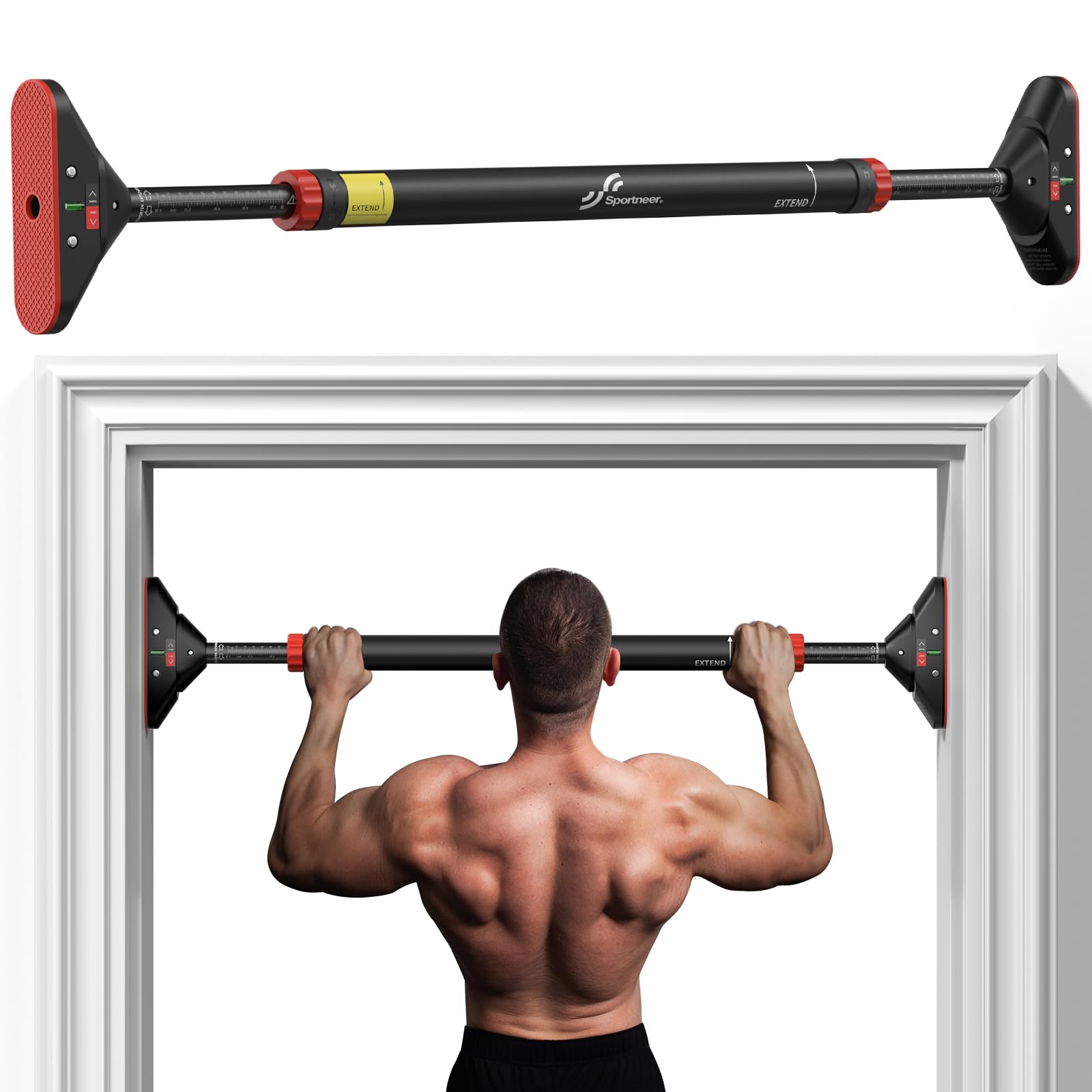
The Sportneer bar uses a 360-degree rotatable dual gear lock on both ends, which clamps the bar tightly without screws. The steel construction uses a 2mm outer pipe and 1.5mm inner pipe, giving it noticeable rigidity. Large 6.5 x 1.8-inch PVC pads provide friction, and the bar includes built-in spirit levels on both ends for accurate installation.
The mechanical lock system is simple to engage, but you must follow the directional arrows—reversing the rotation prevents it from locking properly. The bar is designed for solid wood door frames only; painted or plastered walls may experience paint peeling where the pads grip. The high-density foam runs the full length of the center bar, allowing smooth hand transitions during sets.
For users with standard wooden door frames who want a no-screw system that stays put during explosive movements, this is a reliable, well-engineered option.
Why it’s great
- Dual gear lock mechanism provides a very secure, no-screw fit
- Thick 2mm outer steel pipe minimizes flex during use
- Full-length high-density foam grip allows easy hand repositioning
Good to know
- Only for solid wood door frames; can peel paint on weaker surfaces
- Directional lock requires careful attention during setup
4. ONETWOFIT Pull Up Bar for Doorway
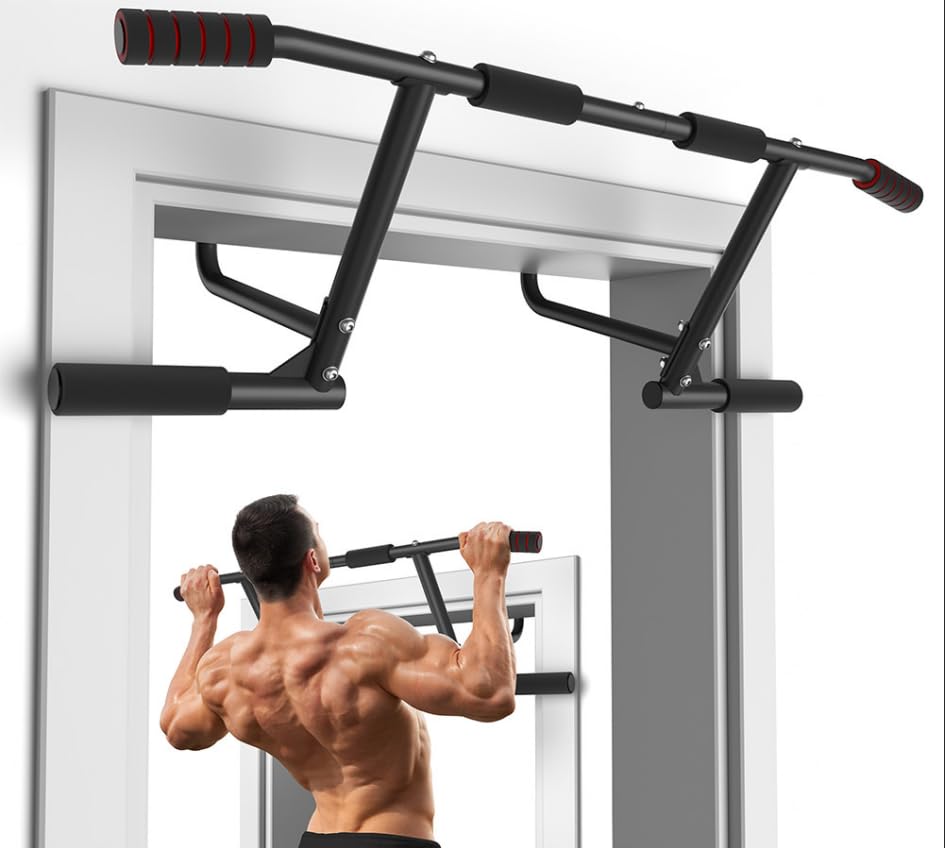
The ONETWOFIT bar is a wall-mount design that fits over the door frame rather than inside it. The angled ends are ergonomically shaped to reduce wrist strain, and the thick foam grips provide a secure hold even with sweaty hands. The steel construction supports up to 440 pounds, and users report zero flex at 200-pound loads when mounted to studs.
Installation requires planning—mounting to studs via 2x4s is recommended for maximum stability, as the included screws are not suitable for all wall types. The full-coverage foam protector prevents frame damage, and the open center space allows normal door use without hitting your head. Some users note that the rubber grips on the middle bar can slip and misalign over time.
This bar is ideal for those who want a permanent upper-body station that doesn’t block the door completely and offers a more natural wrist angle than straight bars.
Why it’s great
- Ergonomic angled grips reduce wrist strain during pull-ups
- Allows normal door use with open center bar design
- Very sturdy when properly mounted to wall studs
Good to know
- Rubber grips on the middle section can slip out of place
- Included hardware may be insufficient for some wall types
5. AmStaff Fitness Joist Mount Pull Up Bar

The AmStaff bar is a dedicated ceiling-mount design with a full 42-inch wide grip bar and 12-inch vertical supports for maximum head clearance. The supports are made from 1″ x 1.75″ heavy-duty steel, and the bar itself has a 1 1/4-inch padded diameter that feels substantial in the hands. It includes 5-inch parallel grips for neutral-grip exercises.
Installation requires lag bolts and predrilling into a solid beam or joist. The included hardware is adequate, but adding washers improves stability. After 1.5 years of use, one reviewer reported the bar still looks and performs like new with no bending or twisting. The foam on the parallel grips can slide after the first use, but this is a minor gripe.
This bar is a great choice for anyone with exposed ceiling joists or a dedicated workout space who wants a wide, versatile grip station.
Why it’s great
- Extra-wide 42″ bar provides multiple grip positions
- 12″ vertical supports offer excellent head clearance for full range of motion
- Very durable construction that maintains rigidity over years of use
Good to know
- Requires drilling into joists with lag bolts for secure installation
- Foam on parallel grips tends to slide after repeated use
6. Shnlie Joist Mounted Pull Up Bar
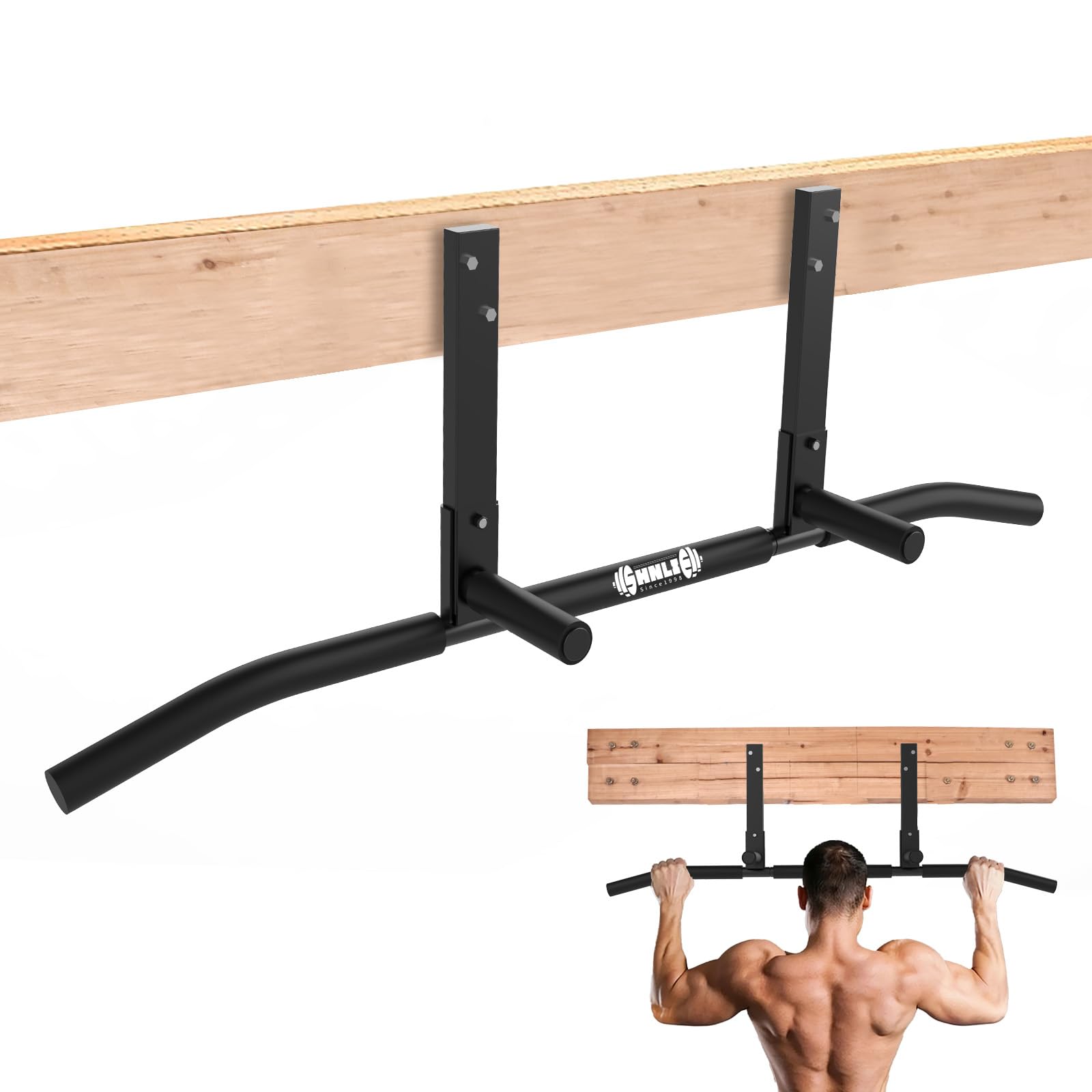
The Shnlie bar offers a similar ceiling-mount design to the AmStaff but at a more accessible price point. It uses heavy-duty steel construction with a sprayed protective coating to resist rust and corrosion. The six foam pads on the handle provide a comfortable, anti-slip grip that also adds wear resistance.
The improved design allows for installation on wood joists, and the included hardware is complete, though some users recommend upgrading the screws for a more secure fit. Assembly is straightforward, but the joint can feel slightly loose until fully tightened. At 440 pounds capacity, it handles weighted pull-ups and swinging movements without issue.
For those on a tighter budget who still want a stable ceiling-mounted bar, the Shnlie delivers reliable performance without major compromises.
Why it’s great
- Sturdy steel construction with a protective rust-resistant coating
- Six foam pads provide good grip comfort and anti-slip performance
- Easy to set up with detailed instructions and video guidance
Good to know
- Included screws and hardware may be weaker than the bar itself
- Joint feels slightly loose until fully tightened during installation
7. Duonamic Eleviia: Portable Doorway Pull-Up Bar

The Duonamic Eleviia breaks the mold by using an aerospace-grade composite material instead of steel, making it extremely lightweight at just 3.5 pounds. It comes fully assembled and can be installed on a doorframe in under 10 seconds. The specialized spiral spring clamp keeps it secure, and the soft thermoplastic coating prevents damage to the door frame.
The trade-off for portability is a lower weight capacity—220 pounds compared to the 400+ of steel bars. The handles are well-made but require a brief adjustment period to get used to the hinge design. Users have reported using it with TRX bands and adding extra weight successfully, but this bar is best suited for bodyweight training and travel.
If you frequently stay in hotels or need a bar that fits in a carry-on, the Eleviia is the only bar that makes sense. For heavy daily training, a steel doorframe bar offers more stability.
Why it’s great
- Ultra-portable at 3.5 pounds; fits in carry-on luggage
- Installs in seconds with no tools and leaves no marks
- Hinge design grips tighter under load for added security
Good to know
- 220-pound weight capacity limits weighted pull-up use
- Handles feel different from a traditional bar and require adjustment
FAQ
Will a doorway chin-up bar damage my door frame?
What is the difference between a chin-up bar and a pull-up bar?
Can I install a chin-up bar on a door frame that is not made of solid wood?
Final Thoughts: The Verdict
For most users, the best chin up bar is the Ally Peaks Pull Up Bar because it balances a sturdy 1.7mm steel frame with practical silicone protection and included accessories at a reasonable price. If you want a no-screw system that locks securely on solid wooden frames, grab the Sportneer Pull Up Bar. And for permanent, heavy-duty training with room to grow, nothing beats the SELEWARE Heavy Duty Welded Pull Up Bar.