Finding a chair that supports a curved spine without forcing a rigid position is the central challenge of scoliosis seating. Standard office chairs often push the shoulders unevenly or leave the lower back unsupported, which can increase pain over an eight-hour workday. The right chair works with your spine’s natural lateral curve, not against it.
I’m Emma — the founder and writer behind Baby Bangs. I’ve spent years researching ergonomic seating solutions, analyzing how specific lumbar systems, adjustable backrests, and seat depths interact with spinal asymmetries to either relieve or aggravate discomfort.
After evaluating dozens of models, I’ve focused on the nine that offer meaningful support for scoliosis. This guide breaks down the specific adjustments and build factors that define the best chairs for scoliosis.
How To Choose The Best Chairs For Scoliosis
A chair suited for scoliosis must allow you to customize the contact points that affect your spinal alignment. Generic one-size-fits-all foam will not cut it. You need independent control over lumbar position, seat depth, armrest height and angle, and backrest recline tension to accommodate the unique shape of your ribcage and pelvis.
Lumbar Support That Moves With You
Static lumbar pads often push against the wrong spot when you lean forward or recline. For scoliosis, look for a chair that offers height-adjustable lumbar support or a self-adjusting mechanism that tracks the spine’s natural S-curve. Models with a separate firmness dial allow you to dial in the exact pressure needed for the convex side of your curve.
Adjustable Seat Depth and Pelvic Tilt
A seat that is too deep forces your pelvis to tilt backward, flattening the lower back and worsening sciatic tension common in scoliosis. Chairs with a sliding seat pan let you shorten the depth so your thighs are fully supported without pressing into the back of your knees. This keeps the pelvis in a neutral, stable position.
Armrests That Handle Asymmetry
Uneven shoulder heights are a hallmark of scoliosis. Four-dimensional armrests — adjustable for height, width, depth, and rotation — let you raise one side higher to support the dominant arm without tilting the shoulders. Fixed armrests or those that only adjust vertically often force one shoulder to hike up, creating neck strain.
Quick Comparison
On smaller screens, swipe sideways to see the full table.
| Model | Category | Best For | Key Spec | Amazon |
|---|---|---|---|---|
| Newtral High Back Desk Chair | Mid-Range | Adaptive lumbar tracking | Auto-following lumbar with strength dial | Amazon |
| FLEXISPOT ErgoX-PRO | Premium | Full adjustability & footrest | 5D lumbar, 7D armrests, 4D headrest | Amazon |
| Steelcase Leap | Premium | Clinical lumbar customization | Lower back firmness dial, 3D LiveBack | Amazon |
| Hbada X7 Smart | Premium | Automated support & massage | Auto lumbar tracking, 4D headrest | Amazon |
| Vari CoreChair | Premium | Active sitting for core strength | Patented tilting mechanism, armless | Amazon |
| BESTFAIR Executive Chair | Premium | Inflatable lumbar & wide seat | Built-in air cushion lumbar system | Amazon |
| LarkLeaves L10 | Mid-Range | Budget adjustability with footrest | 2D adaptive lumbar, 3D headrest | Amazon |
| BOLISS Drafting Chair | Mid-Range | Standing desk use | Built-in lumbar, adjustable foot ring | Amazon |
| Sleekform Kneeling Chair | Budget-Friendly | Open hip angle posture | Solid birch wood frame, foam cushions | Amazon |
In‑Depth Reviews
1. Newtral High Back Desk Chair

The Newtral chair stands out for scoliosis because of its lockable auto-following lumbar support. Instead of a fixed pad, the backrest uses a spring-loaded mechanism that tracks the lower spine’s movement as you shift from upright to reclined. The lumbar strength dial lets you increase pressure exactly where your curve requires it, which is critical for the convex side of a lumbar or thoracolumbar curve.
Beyond the lumbar system, the seat depth slides forward and backward by roughly two inches, allowing shorter users to avoid pressure behind the knees and taller users to get full thigh support. The backrest itself has three height positions, so the lumbar curve hits at the right spot regardless of torso length. The headrest adjusts in height and angle to keep the cervical spine aligned without forcing the chin forward.
The 3D armrests adjust in height, forward-back, and rotation, which helps accommodate uneven shoulder heights. The cushion uses high-density foam that holds up without sagging, and the Korean-made Class 4 gas lift feels solid. Assembly takes about twenty minutes with clear instructions. The recline tension is adjustable and can be locked at any angle up to 126 degrees.
Why it’s great
- Lumbar support tracks spinal movement and has a firmness dial for precise curve support.
- Seat depth adjustment prevents pelvic tilt and sciatic tension.
- Three-position backrest height works for different torso lengths.
Good to know
- Armrests have some lateral play; they move with a light touch.
- Cushion may feel firm for users over 220 pounds over long sessions.
2. FLEXISPOT ErgoX-PRO
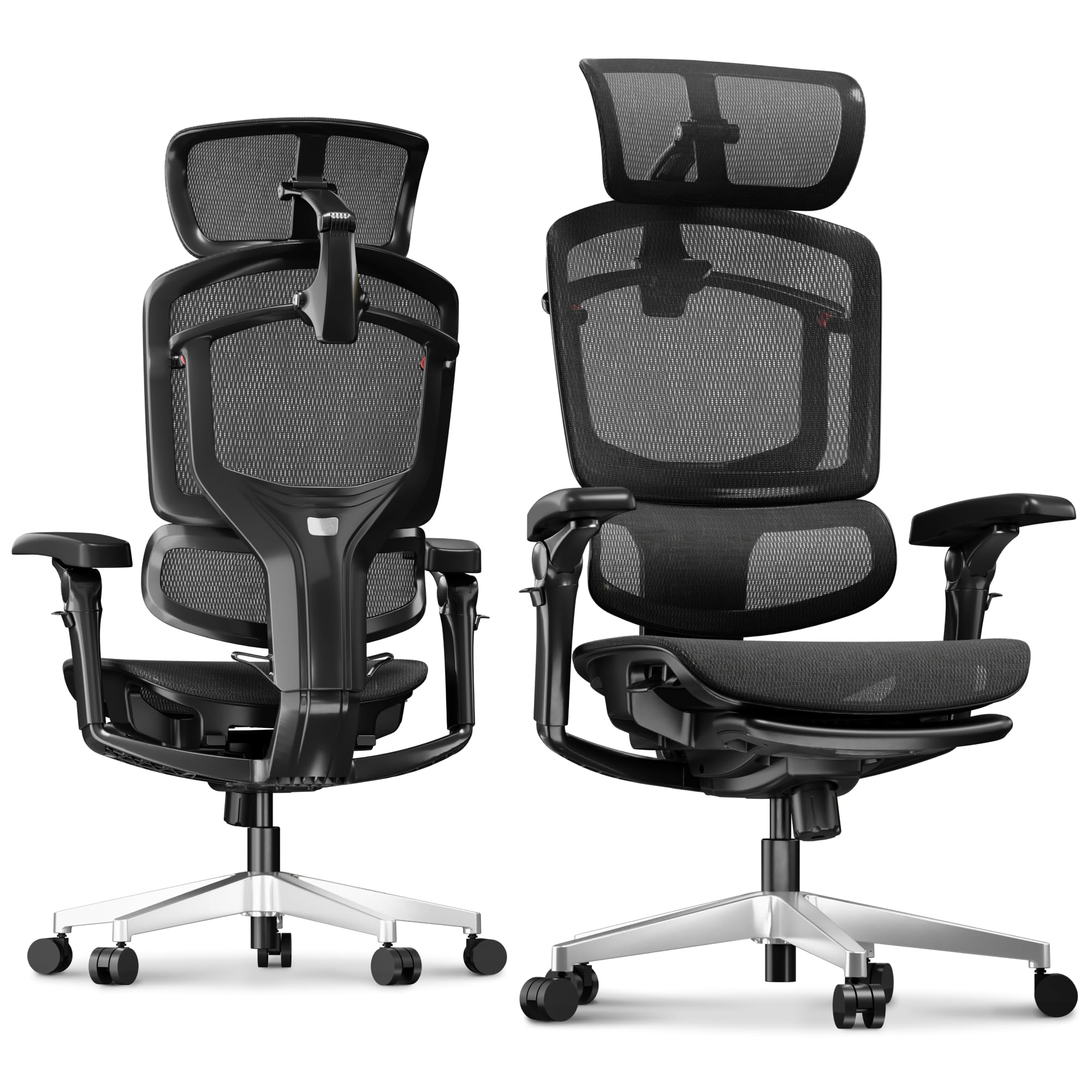
The FLEXISPOT ErgoX-PRO offers an extraordinary range of adjustability that directly addresses scoliosis asymmetry. Its 5D lumbar support extends outward and articulates up and down, allowing you to target the exact height and depth needed for your curve. The 7D armrests move in virtually every direction — height, width, depth, rotation, and pivot — so one arm can sit higher to match an elevated shoulder without twisting the torso.
The chair comes with two seat options: a plush Cloudtech cushion and an AeroWeave 5.0 mesh seat. For scoliosis, the mesh version is generally better because it allows the pelvis to settle neutrally without pressure points. The 4D headrest rotates and slides, accommodating both taller users and compact setups where the headrest doubles as a back cushion for the cervical spine during reclining.
The 12-level fine-tuned backrest with spring cushioning provides natural movement as you shift weight, which helps avoid the rigid feeling that can aggravate spinal stiffness. A three-position tilt base locks at 90, 115, or 135 degrees. The reinforced nylon and fiberglass frame supports up to 551 pounds, and the optional footrest adds relaxation for breaks. Assembly takes around an hour with clear instructions.
Why it’s great
- 5D lumbar and 7D armrests offer unmatched customization for uneven body alignment.
- Breathable mesh seat prevents pressure points and keeps the pelvis neutral.
- High weight capacity and durable frame for long-term use.
Good to know
- Seat height is not independently adjustable; the chair is best for users around 5’8″.
- Overabundant packaging makes setup slightly laborious.
3. Steelcase Leap

The Steelcase Leap is widely recognized in ergonomic clinical settings for its 3D LiveBack technology, which mimics the natural movement of the spine by allowing the backrest to flex independently of the seat. For scoliosis, this is useful because a rigid backrest can force the ribs into an uncomfortable angle, whereas the Leap’s segmented back contours to the spine’s actual shape in real time.
The lower back firmness dial is a standout feature. It lets you increase or decrease lumbar tension without changing the height of the support point. This means you can apply more pressure to the convex side of a lumbar curve while keeping the concave side unobstructed. The seat depth adjustment is smooth and substantial, ranging from about 15.5 to 18 inches, which covers most torso lengths.
The 4D armrests adjust in height, width, depth, and pivot angle. The Natural Glide System moves the seat forward as you recline, keeping your posture aligned and preventing the “slouch” that compresses the lower spine. The fabric is 100 percent polyester with a waterfall-edge cushion that reduces pressure behind the thighs. The chair arrives fully assembled, though it is heavy at over 40 pounds.
Why it’s great
- LiveBack technology flexes with the spine’s actual curve, avoiding rigid pressure points.
- Lumbar firmness dial enables precise tension control for asymmetric support needs.
- Natural Glide System maintains posture during recline.
Good to know
- Some users report the seat padding can feel thin over very long shifts.
- Higher price point, though used/refurbished units are available in good condition.
4. Hbada X7 Smart Ergonomic Chair
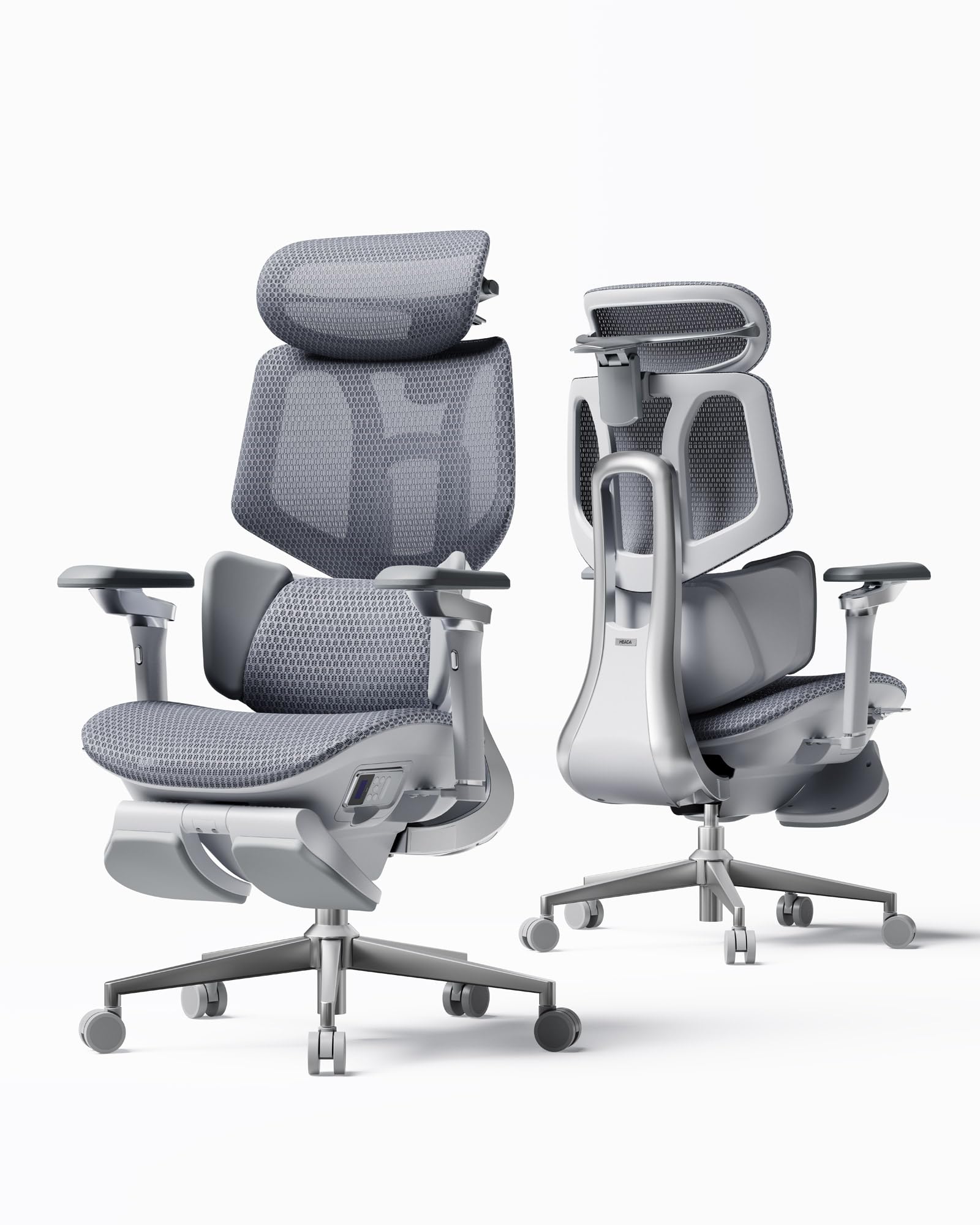
The Hbada X7 introduces automated lumbar tracking that uses a gravity-sensing base to adjust support intensity as you shift posture. This is valuable for scoliosis because the spine’s curve changes angle throughout the day — leaning forward to type places different demands on the lumbar than reclining to read. The 6D adjustable waist pillow further fine-tunes the contact point.
An 8D massage roller with three-level heating (40-50°C) targets paraspinal muscles that often tighten asymmetrically in scoliosis patients. The 4D headrest rotates 70 degrees, slides 55 mm, and adjusts height by 45 mm, accommodating various cervical alignments. The 720-degree omnidirectional armrests rotate on dual axes and extend and lift independently, making it possible to set one armrest higher than the other without the chair tilting.
The ventilated seat cushion features a dual-fan cooling system with three speed settings, which prevents heat buildup during long sitting sessions. The aircraft-grade aluminum frame feels premium and supports up to 330 pounds. Assembly is straightforward because the chair arrives mostly pre-assembled. The recline reaches 140 degrees for extended leaning back.
Why it’s great
- Automated lumbar tracking adjusts support as your posture changes throughout the day.
- Massage and heating functions relieve muscle tension on the tight side of the curve.
- Extremely wide range of armrest, headrest, and lumbar adjustability.
Good to know
- Not ideal for users over 6 feet tall — seat height and backrest length may be insufficient.
- Cushion leather shows wrinkles and may be prone to wear over time.
5. Vari CoreChair
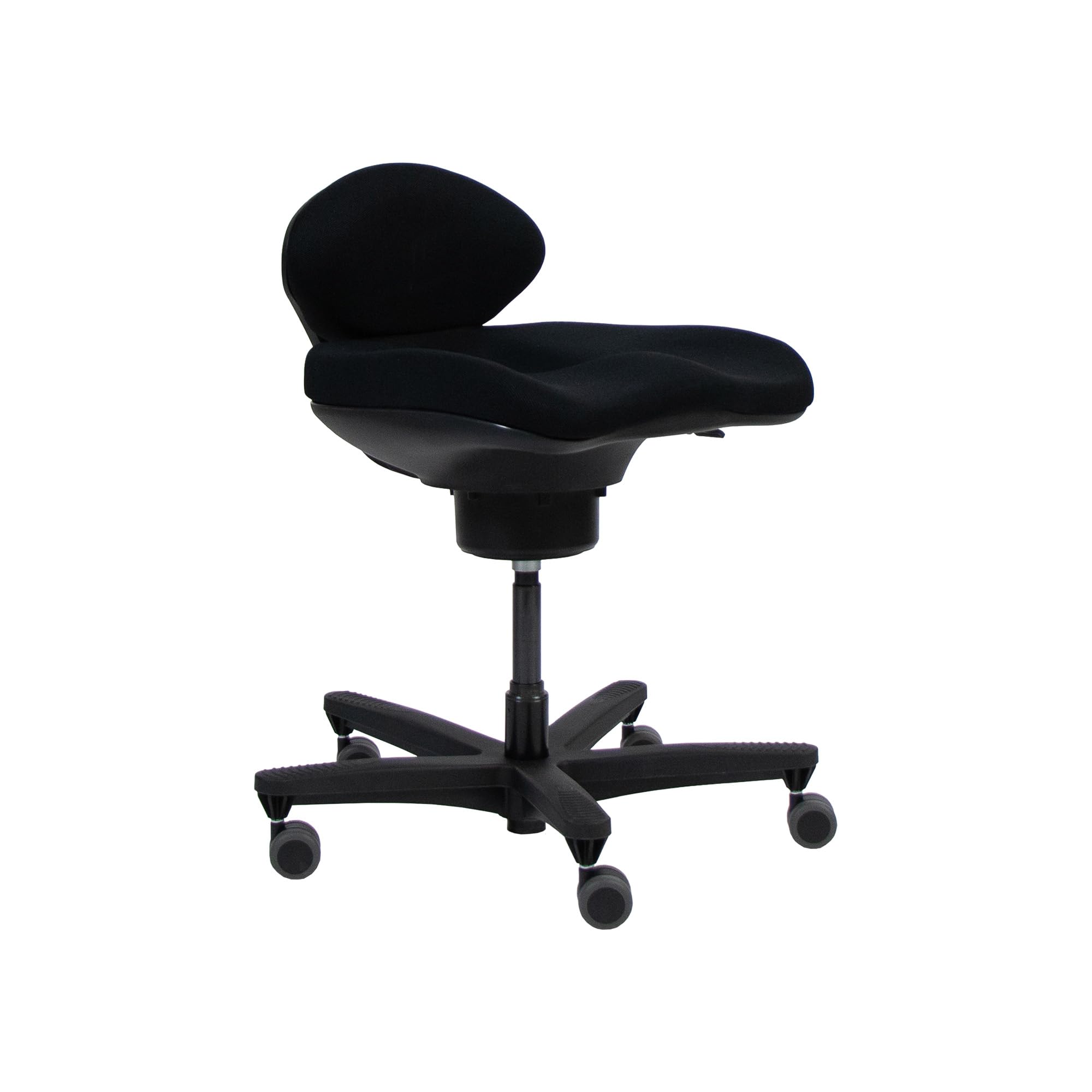
The Vari CoreChair is a different approach. Instead of providing static lumbar support, its patented tilting mechanism encourages micro-movements that engage the core muscles. For scoliosis, strengthening the core can help stabilize the spine and reduce the load on the curvature itself. The chair’s movement range includes forward-back and left-right tilt, which mimics the natural sway of standing.
The sculpted seat and contoured backrest stabilize the pelvis by providing a firm base that discourages slouching. The seat height adjusts from 17 to 21.5 inches, and the seat depth adjusts from 16.75 to 18.33 inches. Because it is armless, it slides easily under a standing desk and forces the user to rely on their own postural muscles rather than leaning on armrests.
The 3D knit upholstery is breathable, and the treaded base rolls smoothly on hardwood, carpet, and concrete. It arrives fully assembled, which eliminates setup time. However, the seat is intentionally firm — users describe it as “uncomfortable by design” because it prompts you to change position frequently. This is a specific tool for active sitters, not for someone who needs deep cushioning for an entire shift without moving.
Why it’s great
- Active tilting strengthens core muscles that support the scoliotic spine.
- Firm, sculpted seat keeps the pelvis stable and aligned.
- Armless and compact design fits under standing desks and small spaces.
Good to know
- Not a chair for complete back support — requires the user to engage postural muscles actively.
- Firm seat may be uncomfortable for those with very low body weight or pre-existing hip pain.
6. BESTFAIR Executive Chair
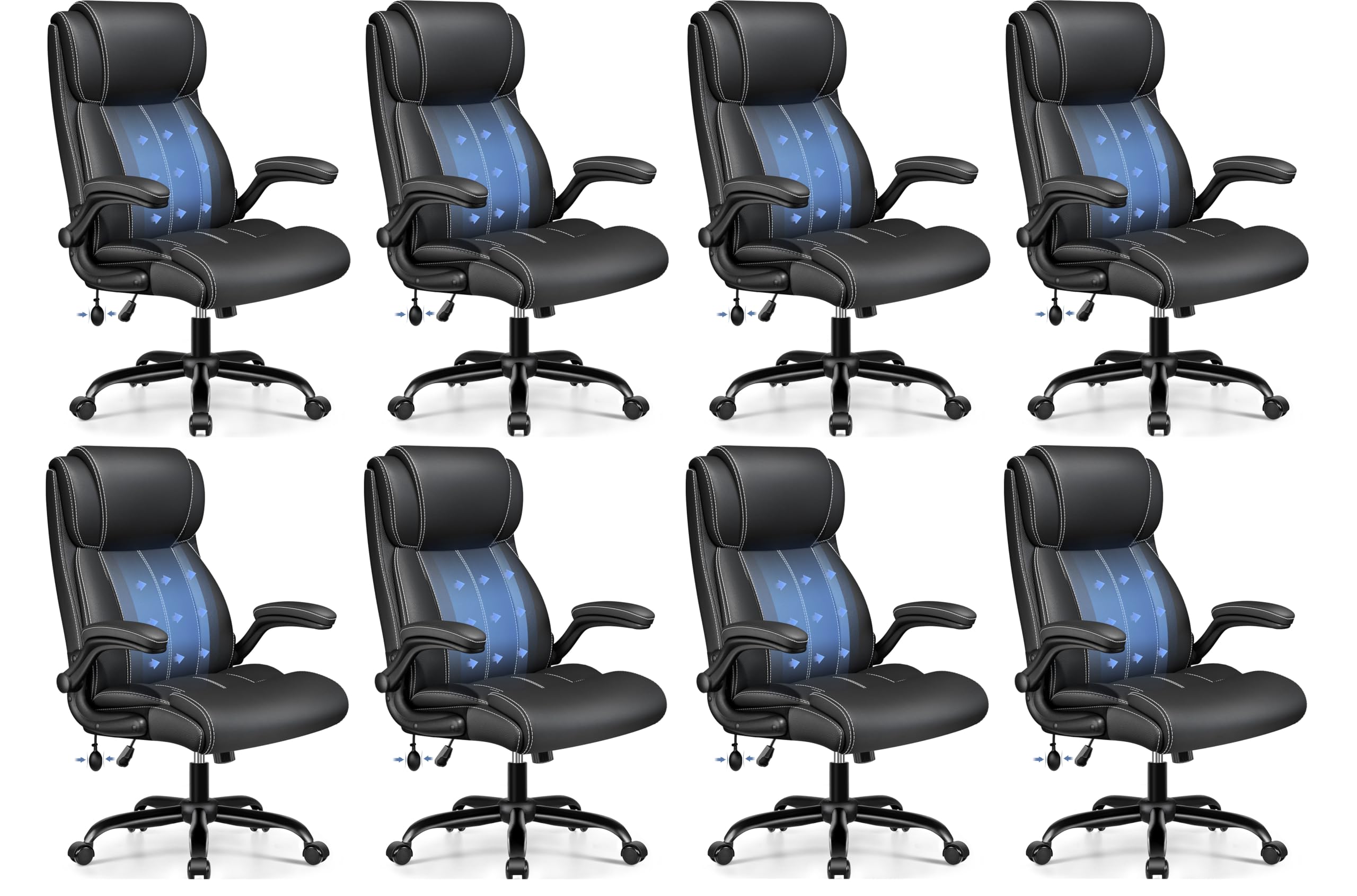
The BESTFAIR chair uses an inflatable air cushion built into the lumbar area, which you pump or deflate to match the depth of your spine’s curve. This is a novel approach for scoliosis because it allows you to create a firmer support on one side of the curve by adjusting the cushion’s overall inflation level, though it does not provide independent left-right control.
The flip-up armrests are a practical feature. When raised, they allow for cross-legged sitting, which some people with scoliosis find relieves pressure on the lower back. The wide seat — about 22 inches across — gives enough room to shift position without feeling constrained. The bonded leather is scratch-resistant and wipes clean easily.
The tilt tension knob lets you adjust how much resistance you feel when leaning back, and the rocking function works with a smooth 360-degree swivel. The reinforced steel frame supports long-term reliability, and the company offers a lifetime warranty. Assembly takes about 30 minutes. The quiet casters do not mark hardwood floors.
Why it’s great
- Inflatable lumbar cushion provides customizable depth support for the spine’s curve.
- Flip-up arms and wide seat allow flexible sitting positions.
- Lifetime warranty on the frame and mechanism.
Good to know
- The air lumbar inflates uniformly, not left-right independently.
- Bonded leather may not breathe as well as mesh for all-day use.
7. LarkLeaves L10 Office Chair with Footrest

The LarkLeaves L10 offers a surprising amount of adjustability for its price tier. The 2D adaptive lumbar support moves up and down and adjusts in depth, providing targeted pressure for the lower spine. The 3D headrest moves forward, backward, up, down, and rotates, which helps align the cervical spine without tilting the head.
The backrest has five height levels, accommodating different torso lengths. The 3D armrests adjust in height, forward-back, and rotation, giving enough freedom to balance uneven shoulder heights. The breathable mesh back keeps the spine cool during extended sitting, and the integrated footrest adds a relaxation option for short breaks.
Users report that assembly is straightforward and that the chair feels sturdy after a month of use. The metal and nylon base supports smooth rolling on hard floors. The seat cushion uses high-density foam that holds its shape. While the lumbar support is not as dynamic as the Newtral or FLEXISPOT, it provides a solid foundation for users who need budget-friendly adjustability.
Why it’s great
- Height and depth adjustable lumbar support for targeted lower back relief.
- 3D headrest and 3D armrests accommodate uneven alignment.
- Includes footrest and breathable mesh back at a competitive price.
Good to know
- Assembly instructions could be clearer for some users.
- Lumbar support is manually adjusted, not self-tracking.
8. BOLISS Drafting Chair

The BOLISS drafting chair is built for standing desks, with a seat height ranging from 23.6 to 31.5 inches. For scoliosis users who alternate between sitting and standing, this allows you to maintain a neutral spine angle without dropping your hips too low. The wide seat — roughly 20 inches across — distributes weight evenly and reduces pressure on the hips.
The built-in lumbar support is fixed but provides continuous contact, and the high-density molded foam cushion offers a firm but plush surface. The adjustable foot ring, at 24 inches wide, lets you rest your feet at a comfortable height, which prevents the legs from dangling and pulling on the pelvis. The mesh back keeps airflow steady.
The 5-height adjustable armrests allow some customization for shoulder height differences. The swivel base moves smoothly on carpet. Some users note that the foot ring’s position can drift downward over time, but a simple spacer or hose clamp fixes this. Assembly is straightforward, and the chair supports up to 400 pounds.
Why it’s great
- Tall seat height range works perfectly with standing desks and maintains spinal alignment.
- Wide seat and large foot ring reduce pelvic and leg strain.
- High-density foam cushion provides consistent support without sagging.
Good to know
- Foot ring may loosen over time and require a simple DIY fix.
- Lumbar support is fixed and not independently height-adjustable.
9. Sleekform Ergonomic Kneeling Chair

The Sleekform kneeling chair shifts your sitting position to a 20-degree open hip angle, which tilts the pelvis forward and naturally straightens the lower back. For scoliosis, this reduces the compressive load on the lumbar spine that often happens in a standard 90-degree seated position. The rocking motion encourages micro-movements that keep the spine and hips from stiffening.
The solid birch wood frame is sturdy and supports up to 250 pounds. The high-density foam cushions on the knee pads and seat are thick enough to prevent pressure points on the shins and sit bones. The chair is armless, which forces the user to rely on core muscles rather than leaning, similar to the Vari CoreChair but with a different posture angle.
Users report instant relief from lower back pressure and forearm strain, especially when paired with a low desk and a high monitor riser. Assembly takes about 20 minutes. The compact footprint fits small spaces. Some users note that the knee pad screws may loosen over time and that the cushion fabric can feel scratchy on bare legs in shorts.
Why it’s great
- Open hip angle reduces lumbar compression and encourages a neutral spine.
- Rocking motion promotes movement and prevents stiffness in the scoliotic spine.
- Solid wood frame with thick foam cushions for comfort and durability.
Good to know
- Not suitable for users who need armrest support or a backrest.
- Knee pad screws may require periodic tightening.
FAQ
What chair adjustments matter most for scoliosis?
Can a kneeling chair help with scoliosis?
Should I choose mesh or padded seat for scoliosis?
Is a chair with inflatable lumbar support good for scoliosis?
Final Thoughts: The Verdict
For most users, the chairs for scoliosis winner is the Newtral High Back Desk Chair because its auto-following lumbar support with strength dial provides the most adaptable contact for spinal curves at a reasonable price. If you want the absolute maximum adjustability for uneven shoulders and hips, grab the FLEXISPOT ErgoX-PRO. And for a clinical-grade lumbar system that contours to your spine’s exact shape, nothing beats the Steelcase Leap.