The skin barrier is a brick wall of lipid mortar—ceramides are the mortar. When that structure weakens, moisture escapes, irritants flood in, and no amount of water-based hydration will fix the problem. The wrong ceramide cream leaves your face feeling either suffocated under wax or stripped by harsh delivery systems. The right one restores the lipid matrix without triggering a single breakout.
I’m Emma — the founder and writer behind Baby Bangs. I’ve spent years breaking down clinical ingredient data, cross-referencing dermatologist consensus, and stress-testing barrier repair formulations across dry, oily, and sensitized skin types to find what actually works.
The key is matching the ceramide ratio, delivery base, and occlusive weight to your unique barrier deficit. This guide cuts through the marketing nonsense to deliver the definitive list of options for the best ceramide cream available today, ranked by real-world performance and formula integrity.
How To Choose The Best Ceramide Cream
A ceramide cream is only as effective as its lipid delivery system. If the formula lacks the proper ratio of ceramides to fatty acids and cholesterol, you’re just applying expensive emollients that won’t rebuild the barrier. Focus on the three elements below before comparing textures or brand prestige.
Ceramide Profile and Ratio
The human stratum corneum contains nine types of ceramides, but the three most clinically relevant for repair are ceramide 1 (EOS), ceramide 3 (NP), and ceramide 6-II (AP). A cream that lists only one of these is incomplete. You want a formula that includes at least two of these three, ideally with ceramide 1 as the backbone for lamellar structure. Products that boast “5 ceramides” often dilute the key performers with lesser forms—check the ingredient order to see if the heavy hitters appear early.
Lipid Base: Cholesterol and Fatty Acids
Ceramides alone cannot reassemble the barrier. They require cholesterol and free fatty acids in a roughly 3:1:1 molar ratio (ceramide:cholesterol:fatty acid) to form a stable lamellar matrix. A cream that contains ceramides but skips cholesterol is a marketing gimmick, not a repair tool. Look for cholesterol, stearic acid, or palmitic acid near the top of the ingredient deck to confirm a true biomimetic base.
Texture and Occlusivity for Your Skin Type
Dry, compromised barriers need a heavier occlusive layer—look for shea butter or squalane in the first five ingredients. Oily or acne-prone skin needs a lightweight, non-comedogenic emulsion that uses glycerin and hyaluronic acid as humectants while keeping the lipid load moderate. The best ceramide cream for you balances barrier repair against your skin’s natural sebum production. If it clogs your pores, it’s working against your barrier regardless of ceramide content.
Quick Comparison
On smaller screens, swipe sideways to see the full table.
| Model | Category | Best For | Key Spec | Amazon |
|---|---|---|---|---|
| Innisfree Green Tea Seed Hyaluronic Acid Cream | Premium | Barrier strength boost | 113% barrier strength improvement after 1 use | Amazon |
| AESTURA ATOBARRIER365 Lightweight Face Moisturizer | Mid-Range | Damaged/sensitized skin repair | 86% barrier repair after one use | Amazon |
| Vanicream Daily Facial Moisturizer | Mid-Range | Ultra-sensitive, eczema-prone skin | 5 key ceramides + hyaluronic acid | Amazon |
| DIME Beauty Dewy Day Cream | Premium | Anti-aging with barrier support | Ceramide 3 + rosehip seed oil | Amazon |
| CeraVe Daily Moisturizing Lotion | Budget-Friendly | Full-body daily hydration | 3 essential ceramides (1, 3, 6-II) | Amazon |
In‑Depth Reviews
1. Innisfree Green Tea Seed Hyaluronic Acid Cream

This Korean cult-favorite delivers a complete barrier package: green tea seed oil provides the lipid backbone, plant-derived squalane acts as the cholesterol analog, and the formula includes a dedicated ceramide complex. The clinical data is rare for a non-prescription cream—a 113% improvement in barrier strength after a single week of use, measured in a controlled study on 31 women. For a premium option, this is the one that actually proves its claims.
The texture is a medium-weight cream that absorbs without the tacky film common to many barrier creams. Users with combination and oily skin report zero clogging, while those in dry climates or on retinol found it eliminated flaking within three days. The 1.69 oz jar lasts roughly three months with twice-daily use, which puts its per-use cost below many drugstore options that require reapplication. The subtle green tea scent is entirely natural and fades within seconds.
Where this excels is in its delivery system: five types of hyaluronic acid create a moisture gradient that pulls water into the deeper layers while the ceramide-squalane matrix seals the surface. This dual-action approach means you get both immediate hydration and long-term barrier reinforcement. Users transitioning from lightweight gels to a ceramide cream will find this the smoothest upgrade path.
Why it’s great
- Clinically proven barrier strength improvement in 1 week
- Non-comedogenic yet deeply hydrating for dry skin types
- Natural green tea barrier complex with squalane
Good to know
- Jar packaging exposes formula to air and fingers each use
- Premium price point requires commitment to see barrier results
2. AESTURA ATOBARRIER365 Lightweight Face Moisturizer
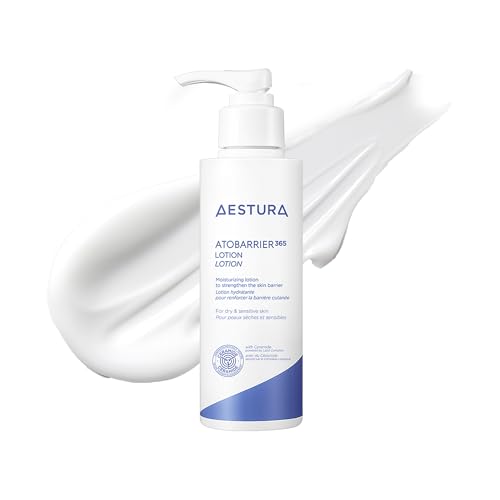
If your barrier is already in a damaged state—red, flaky, stinging from basic cleansers—AESTURA’s patented high-density ceramide capsule technology delivers repair where standard creams fail. The triple lipid complex (ceramides + fatty acids + cholesterol) mirrors the exact 3:1:1 ratio the stratum corneum needs to rebuild its lamellar structure. Clinical tape-stripping tests showed an 86% reduction in transepidermal water loss after a single application, which is exceptional for an over-the-counter moisturizer.
The texture is a K-beauty innovation: lightweight enough for oily and combination skin but concentrated enough that a single pump equals two to four pumps of standard lotions. Users on retinol and tretinoin report complete elimination of flakes and redness within one week. It is fragrance-free, colorant-free, and mineral oil-free, with National Eczema Association approval backing its safety for compromised skin. The 3.04 oz tube is a generous size for the mid-range price point.
What sets this apart from competitors is the delivery mechanism. The ceramides are encapsulated in lipid spheres that fuse with the skin’s own barrier rather than just sitting on top. This means you get deeper penetration and longer-lasting effects without the greasy residue that heavier barrier creams leave. For anyone whose skin rejects standard ceramide creams due to texture or sensitivity, this is the most elegant solution available.
Why it’s great
- Patent-pending capsule ceramide technology for deep delivery
- Clinically validated 86% barrier repair after one use
- NEA approved and fragrance-free for reactive skin
Good to know
- May feel slightly oily on very oily skin after several hours
- Limited retail availability compared to drugstore brands
3. Vanicream Daily Facial Moisturizer

Vanicream is the number one dermatologist-recommended brand for sensitive skin, and this formula justifies that status by stripping away every potential irritant while packing five key ceramides into a single lightweight emulsion. Unlike brands that pile on botanical extracts and essential oils, Vanicream focuses on the essentials: ceramides, hyaluronic acid, squalane, and glycerin. No dyes, no fragrance, no lanolin, no parabens, no formaldehyde releasers. Each ingredient is screened for its likelihood to cause delayed hypersensitivity.
The texture is a thick creamy lotion that absorbs completely within sixty seconds, leaving a soft, glowy finish that works equally well under makeup or alone. Users with acne-prone and combination skin report zero breakouts, while those with eczema find it calms flare-ups without the sting that many barrier creams cause. The two-pack format offers excellent value for a formula that competes directly with brands priced much higher per ounce. Each 3 oz tube lasts about two months with twice-daily use.
Where Vanicream truly wins is in its formulation philosophy: it includes five ceramides—more than most competitors—but avoids the heavy emollients that trigger congestion. This makes it the safest bet for anyone who has reactive skin and needs a ceramide cream that won’t complicate their routine. If you have ever reacted to a “clean” beauty moisturizer, this is likely the answer.
Why it’s great
- Dermatologist-recommended with 5 ceramides for complete coverage
- Free from 10+ common irritants including dyes and fragrance
- Non-comedogenic with lightweight absorption
Good to know
- Thicker texture may feel heavy under sunscreen
- Contains no cholesterol for true biomimetic barrier repair
4. DIME Beauty Dewy Day Cream

DIME Beauty targeted the anti-aging crowd who also need barrier support, combining ceramide 3 with rosehip seed oil—a source of linoleic acid and vitamin A precursors—to tackle fine lines while reinforcing the lipid matrix. The formula also includes tremella snow mushroom, a humectant that holds up to 500 times its weight in water, and squalane for surface occlusion. Every ingredient carries a safe EWG rating, which means no questionable preservatives or hidden irritants.
The texture is a lightweight cream that spreads easily and absorbs to a dewy finish without feeling greasy. Users over 40 with dry skin report that it provides all-day moisture without the midday tightness that cheaper creams allow. It layers well under makeup and doesn’t pill, even when applied over a hyaluronic acid serum. The 1.7 oz jar lasts around three months, and the pump packaging—rather than a jar—protects the ceramides from oxidation.
Where this cream distinguishes itself is in the clean beauty commitment without sacrificing performance. Many fragrance-free “natural” creams are either too watery or too thick. DIME balances the texture perfectly while delivering clinically relevant levels of ceramide 3. For anyone building an anti-aging routine who wants their moisturizer to also repair barrier damage, this is the most targeted option.
Why it’s great
- Rosehip oil provides vitamin A precursors for anti-aging benefits
- EWG-verified ingredients with no sulfates or parabens
- Lightweight texture that works well under makeup
Good to know
- Single ceramide type (3) rather than a full spectrum
- Premium price for a 1.7 oz jar
5. CeraVe Daily Moisturizing Lotion
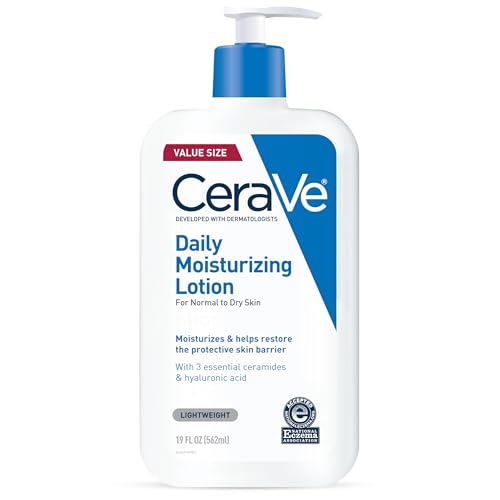
CeraVe’s formula is the baseline standard for ceramide creams: it contains the three essential ceramides (1, 3, and 6-II) that dermatologists reference as the minimum for barrier repair, and it uses MVE (Multivesicular Emulsion) technology to release hydration gradually over 24 hours. The inclusion of hyaluronic acid as a humectant and a completely fragrance-free, non-comedogenic base makes it safe for face, body, and hands. It holds the National Eczema Association Seal of Acceptance.
The texture is thinner than typical barrier creams—more of a light lotion than a thick cream. This makes it ideal for full-body use and for oily or combination skin that finds heavy creams clogging, but it may be too light for severely dry or compromised skin that needs a richer occlusive layer. Users report that a single 19 oz bottle lasts over a year with daily use, making it the most economical option by volume. The pump bottle is convenient for fast application after showering.
Where CeraVe falls short compared to the higher-tier options is the delivery depth. The MVE system is good for sustained release but does not replicate the lamellar structure of the skin’s own barrier the way that cholesterol-enriched formulas do. It’s an excellent maintenance moisturizer for a healthy barrier, but for active repair of damaged skin, the AESTURA or Innisfree options are more effective. Still, as a daily workhorse that covers face and body, nothing beats the value.
Why it’s great
- Contains the three essential ceramides at a budget-friendly price
- MVE technology provides 24-hour sustained hydration
- NEA approved for eczema-prone skin
Good to know
- Lightweight texture may not be enough for very dry skin
- Lacks cholesterol for true biomimetic barrier repair
FAQ
Can I use a ceramide cream if I have oily skin and acne?
Should I apply ceramide cream before or after hyaluronic acid serum?
How long does it take for a ceramide cream to repair a damaged barrier?
Final Thoughts: The Verdict
For most users, the best ceramide cream is the Innisfree Green Tea Seed Hyaluronic Acid Cream because it combines clinically proven barrier improvement with a lightweight texture suitable for all skin types. If you have severely damaged or sensitized skin, grab the AESTURA ATOBARRIER365 for its encapsulated ceramide delivery that penetrates deeper. And for the budget-conscious user who wants full-body coverage without compromising on ceramide variety, nothing beats the CeraVe Daily Moisturizing Lotion.