A newborn’s head weighs about a quarter of their total body weight, and their neck muscles have zero endurance. That’s the mechanical reality every baby carrier must solve: you need a supportive cradle that locks the head in alignment with the spine while distributing that shifting load across your shoulders and hips without digging in. Most carriers fail here within the first two weeks.
I’m Emma — the founder and writer behind Baby Bangs. I’ve dissected the tensile strength of wrap fabrics, measured the lumbar pad density on structured carriers, and cross-referenced each model against the International Hip Dysplasia Institute’s guidelines to build a filtering system that parents in the newborn trenches can actually trust.
The seven carriers below hold the line on one non-negotiable: a deep, ergonomic seat that keeps baby’s hips in the froggy “M” position while you navigate the steep learning curve of early parenthood. This is the definitive guide to choosing your carrier for newborn.
How To Choose The Best Carrier For Newborn
Newborn carriers split into two engineering camps: stretchy fabric wraps that rely on tension and friction, and structured buckle carriers with defined panels and waist belts. Neither is inherently better — but each demands different geometry from the parent’s torso and the baby’s age. The wrong choice leads to a slouched baby, a sore back, and a carrier that sits in a drawer by week six.
Seat Depth and the M-Position
An ergonomic newborn carrier must create a seat that runs from the back of the baby’s knee pit to the fold of their bum, supporting the full thigh. If the seat is too shallow, the baby’s legs dangle straight down, which loads the hip joints incorrectly. Look for carriers that explicitly state a “knee-to-knee” support panel or show the baby’s thighs forming a 90- to 120-degree angle relative to their torso.
Fabric Breathability and Tensile Recovery
Newborns cannot regulate their body temperature effectively. A polyester-spandex wrap may feel soft, but if the weft lacks air channels, heat builds up against the baby’s back within minutes. Cotton is the safer default because it wicks moisture and holds its shape through repeated stretch cycles. The critical spec is tensile recovery — how quickly the fabric returns to its original dimensions after bearing weight. Wraps with poor recovery sag progressively, dropping the baby’s head lower over a thirty-minute carry.
Adjustability Across Caregiver Body Types
A carrier that fits a 5’2″ parent but digs into the shoulders of a 6’0″ partner is a single-user item. Newborn carriers should have independently adjustable shoulder straps and waist belts that span at least 24 inches to 41 inches of waist circumference. Look for models with a crossable chest strap and a buckle that clicks audibly — you want to know it’s secure before you lean forward to pick up a dropped pacifier.
Quick Comparison
On smaller screens, swipe sideways to see the full table.
| Model | Category | Best For | Key Spec | Amazon |
|---|---|---|---|---|
| Mabē Monarch | Structured Buckle | Long daily wear | Cotton-Linen blend, 7-35 lbs | Amazon |
| BabyBjörn Free | Structured Mesh | Hot-weather carrying | 3D mesh, 7-26.5 lbs | Amazon |
| Boppy ComfyFit | Hybrid Wrap | Ease of use | Adjustable arm straps, 8-35 lbs | Amazon |
| WildBird Aerial Buckle | Wrap-Buckle Hybrid | Buttery-soft newborn phase | CloudBlend lyocell, 7-15 lbs | Amazon |
| Baby Tula Lite | Ultralight Structured | Travel and errands | Ripstop nylon, 12-30 lbs | Amazon |
| BabbleRoo 6-in-1 | All-in-One with Seat | Versatile positioning | Detachable hip seat, 7-50 lbs | Amazon |
| Moby Element Wrap | Stretch Wrap | Contact naps at home | Featherknit cotton, 8-33 lbs | Amazon |
In‑Depth Reviews
1. Mabē Monarch Ergonomic Baby Carrier
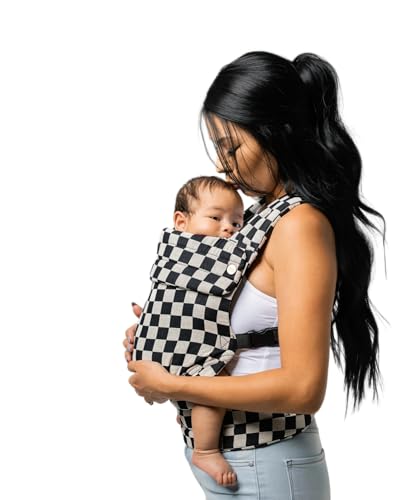
The Mabē Monarch uses a cotton-linen blend that feels dense enough to hold a 7-pound newborn securely yet breathes noticeably better than polyester wraps. The seat panel is cut wide — roughly 11 inches across — which creates the deep “M” position without needing an infant insert. The shoulder straps are padded with a substantial foam core that distributes the tension arc across the trapezius rather than digging into the acromion bone.
Three carrying positions (inward, outward, and back) are built into the same structured frame, and the crossover chest strap lets you dial in tension without pulling the entire harness off-center. The fabric is machine washable on cold gentle cycle, and the weave resists pilling after repeated cycles — important because newborns generate a steady stream of spit-up and drool.
At around 1.2 pounds, it is not the lightest carrier, but the heft correlates directly with the lumbar support panel that prevents the seat from collapsing after prolonged wear. Users consistently report zero back pain even after 90-minute carries, a claim few stretch-only wraps can match.
Why it’s great
- Wide seat panel supports the full thigh from knee to bum, creating a proper M-position without an insert
- The linen-cotton blend resists sagging through multiple wash cycles
- Crossable chest strap allows precise tension adjustment for different torso lengths
Good to know
- Heavier than ultralight nylon carriers; best for extended at-home or day-trip wear
- Outward-facing position is limited to babies with solid head control, typically 6+ months
2. BabyBjörn Baby Carrier Free (3D Mesh)
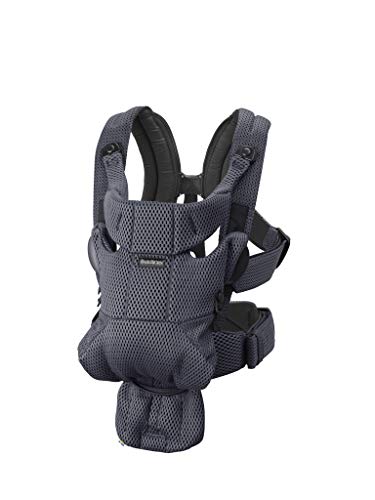
The BabyBjörn Free uses a 3D mesh structure that creates a 2-3mm air gap between the baby’s body and the carrier’s outer shell, which measurably reduces heat buildup compared to solid cotton panels. The waist belt is integrated with a rigid lumbar brace that locks the carrier’s center of gravity against your pelvis rather than your lower back muscles, which is why parents report significantly less fatigue during longer carries.
The harness system has four adjustment points — two at the shoulders and two at the side release buckles — and the entire unit clicks on and off in under ten seconds. That speed matters when you’re juggling a crying baby and a diaper bag. The internal seat width adjusts via a sliding mechanism that shortens the panel for newborns and extends it for toddlers, all without removing the baby.
The mesh dries in about an hour after a machine wash, which is faster than any cotton-based carrier. The weight limit peaks at 26.5 pounds, which means most babies outgrow it before their second birthday, but for the first twelve months the ergonomics are among the best available in a buckle form factor.
Why it’s great
- Rigid lumbar brace prevents the carrier from tilting forward, reducing lower-back strain
- 3D mesh construction keeps both baby and parent cooler than cotton wraps in warm weather
- Adjustable seat width slides to accommodate newborns without a separate infant insert
Good to know
- The harness plastic buckles can press against the collarbone of shorter wearers
- Upper weight limit of 26.5 pounds means a shorter usable lifespan than carriers rated to 35+ pounds
3. Boppy ComfyFit Adjustable Baby Carrier

The Boppy ComfyFit bridges the gap between a stretchy wrap and a structured buckle carrier by using a stretchy polyester-spandex body panel with adjustable shoulder straps that you cinch tight rather than tie. This eliminates the steep learning curve of traditional wrap knots — you pull one strap end to tighten the panel around your chest, then buckle the waist belt. The total setup time is roughly twenty seconds once you’ve adjusted the straps to your torso length.
The JPMA certification is a concrete safety flag: the carrier passed drop testing and strap strength checks that some unbranded wraps skip. The padded waist belt is 4 inches wide and distributes the baby’s weight sideways across the iliac crest rather than pulling forward on the spine. The fabric composition is 88% polyester and 12% spandex, which gives it excellent four-way stretch recovery — it bounces back to its original dimensions after each wear instead of bagging out.
Three carrying positions are built in, including a forward-facing position that becomes usable around six months. The carrier packs into its own pouch, which is roughly the size of a small water bottle, making it the most portable option among structured models on this list.
Why it’s great
- Adjustable strap system eliminates the complex wrapping sequence of traditional stretch wraps
- JPMA certified to meet ASTM safety standards for strap integrity and drop testing
- Packs into an integrated pouch smaller than most water bottles
Good to know
- The stretchy fabric panel can feel less secure than a structured seat when baby is in the upper weight range
- Not suitable for back carries — limited to front-facing positions only
4. WildBird Aerial Buckle Baby Wrap
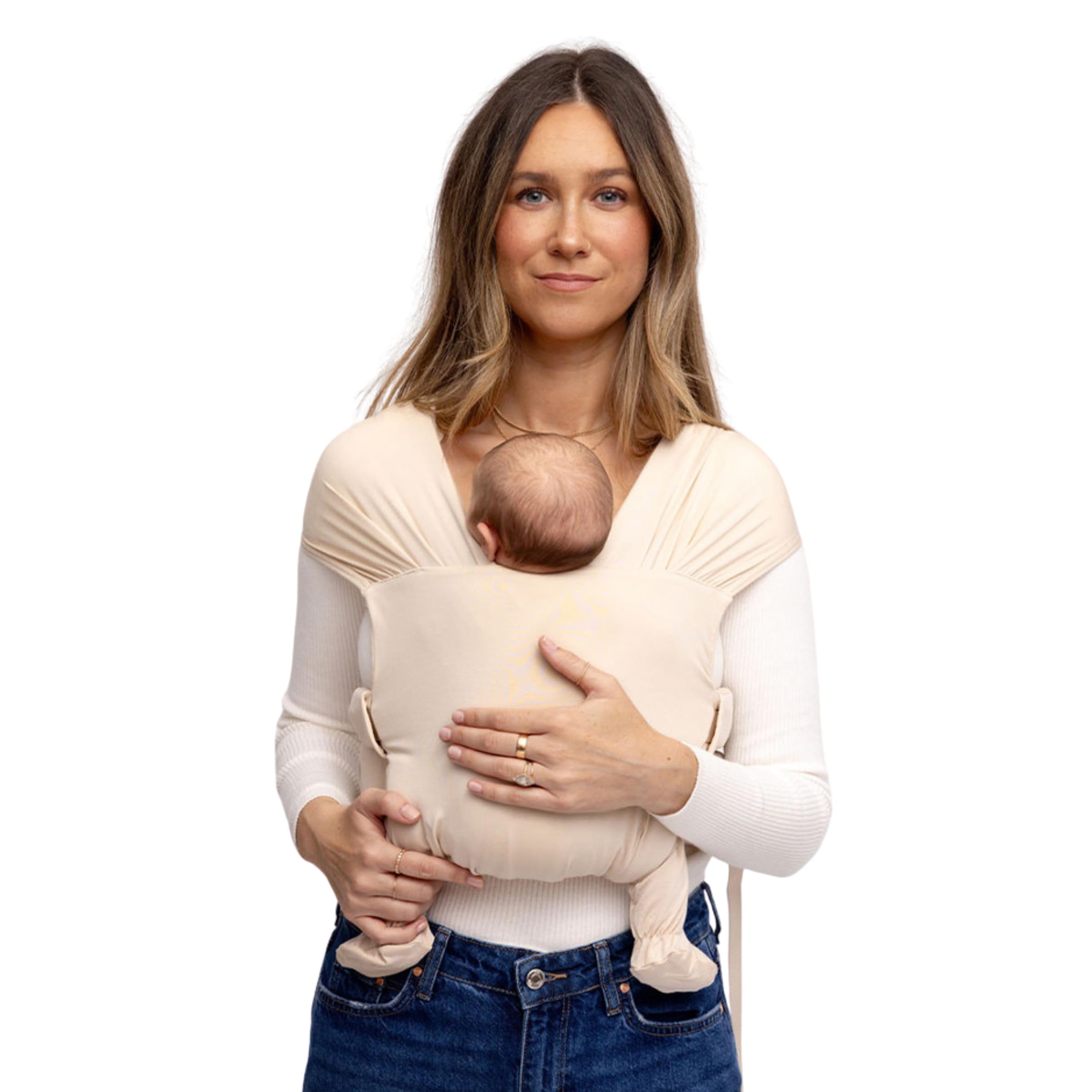
The WildBird Aerial uses a lyocell-rayon-elastane fabric called CloudBlend that feels noticeably softer than any cotton wrap we tested — it has a hand-feel closer to modal bedsheets than to typical carrier nylon. The construction is a hybrid: the body panel wraps around the baby like a traditional stretch wrap, but the waist belt and shoulder straps use buckle hardware for quick on-off access. This means you get the enveloping snugness of a wrap without the ten-foot tail of fabric that drags on the floor while you tie it.
The weight window is intentionally narrow — 7 to 15 pounds — which maps precisely to the 0-to-6-month window. The carrier is OEKO-TEX certified, which guarantees the lyocell base contains no formaldehyde or heavy-metal residues that could leach onto newborn skin. The Standard size fits waist circumferences from 24 to 41 inches, and the Large size extends to 53.5 inches, so plus-size caregivers are explicitly accommodated.
Some users report that the fabric’s softness compromises structural support for heavier newborns — babies around 13 pounds may sag forward slightly even with the straps fully tightened. This makes the Aerial best suited for the early months when your baby is still under ten pounds and sleeping most of the time.
Why it’s great
- CloudBlend lyocell fabric is the softest material in this comparison against newborn skin
- Buckle waist belt combined with wrap-style body panel offers the best of both categories
- OEKO-TEX certification ensures zero harmful chemical residues in the fabric
Good to know
- Capped at 15 pounds max — usable lifespan is roughly six months for most babies
- Soft fabric can allow sagging when baby approaches the upper weight limit
5. Baby Tula Lite Ripstop Nylon Carrier

The Baby Tula Lite is built from ripstop nylon traditionally used in outdoor sportswear, which gives it two distinct advantages: it weighs only 1.1 pounds, and the fabric dries in roughly fifteen minutes if you rinse it in a sink. The entire carrier folds into an integrated waist pouch that doubles as a small hip belt, reducing its packed volume to about the size of a rolled-up t-shirt. This makes it the strongest option for parents who want a carrier that lives permanently in a diaper bag or car trunk.
The minimum weight threshold is 12 pounds, which means the Lite is not a newborn-first-day carrier — it is designed for babies who have achieved basic head and neck control, typically around three months. The padded mesh shoulder straps and supportive waistband distribute weight effectively, and the hip seat is recognized by the International Hip Dysplasia Institute as supporting healthy hip positioning. The detachable UPF 50+ hood adds sun protection during outdoor carries.
The built-in front pocket holds a phone, a diaper, and a small pack of wipes, which reduces the need to carry a secondary bag for quick trips. The ripstop fabric is inherently less breathable than cotton, but the open mesh shoulder straps mitigate overheating in the parent’s upper body.
Why it’s great
- Folds into its own integrated waist pouch, making it the most packable carrier here
- Ripstop nylon dries extremely fast and resists tears and abrasion from daily use
- IHD recognition confirms the seat geometry supports proper hip development
Good to know
- 12-pound minimum weight means it is not suitable for the first weeks after birth
- Nylon panel is less breathable than cotton for the baby’s back in direct sun
6. BabbleRoo 6-in-1 Baby Carrier with Hip Seat
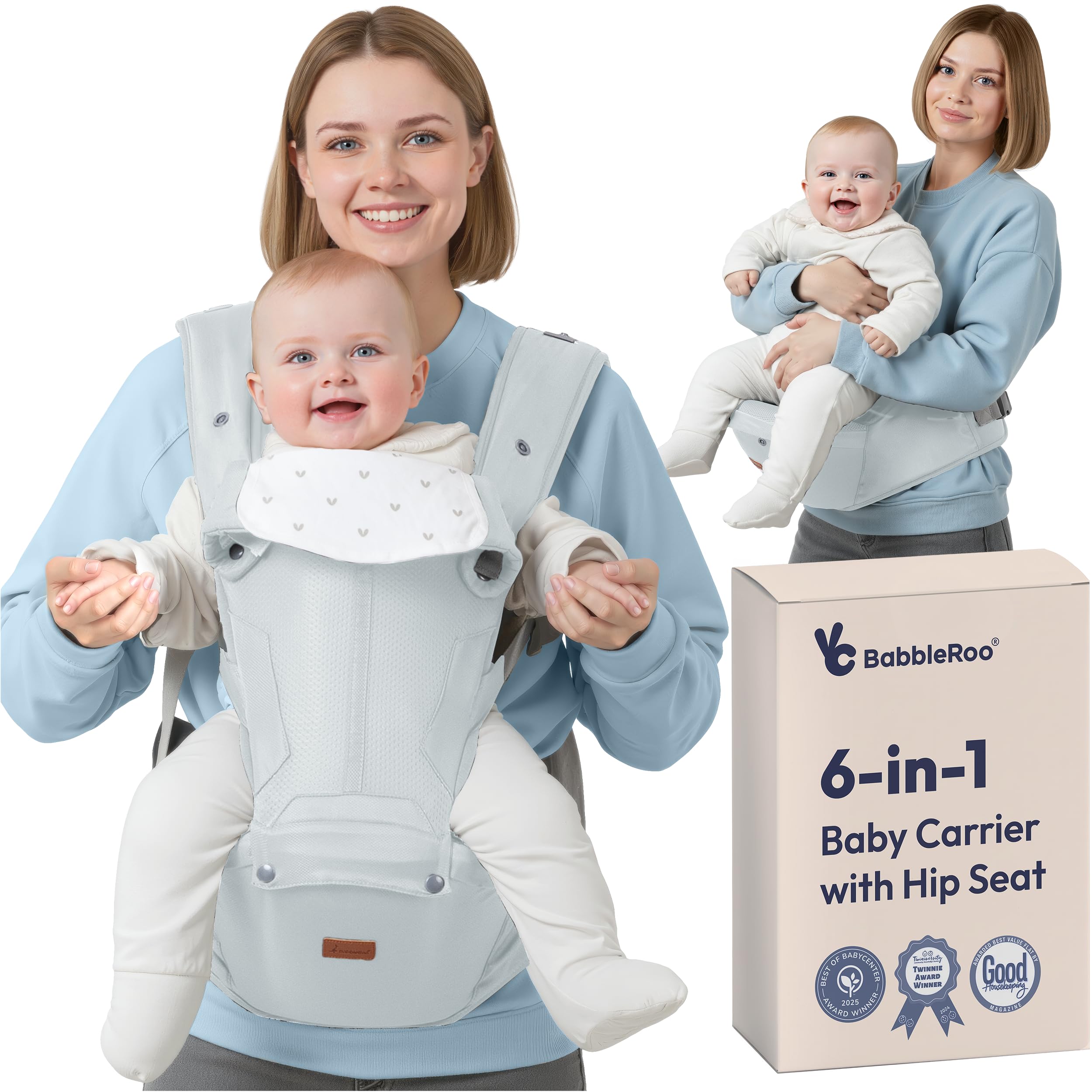
The BabbleRoo 6-in-1 is the only carrier on this list that includes a detachable hip seat — a rigid foam platform that snaps onto the waist belt and supports the baby when you are standing still or carrying them on your hip without the full harness engaged. This reduces arm fatigue during quick grocery runs or when you’re cooking dinner in the kitchen. The seat is dense enough to hold a 20-pound baby without collapsing, and it clicks off to convert the unit into a standard soft-structured carrier.
The weight range is the widest in this comparison — 7 to 50 pounds — meaning this single carrier can theoretically last from the newborn phase through the toddler years. The shoulder straps and waist belt are padded with thick foam that extends around the lumbar region, and the leg openings include a padded flap that prevents chafing. The included sun hood is hidden inside a zippered pocket at the top of the panel, and there is a removable bib for teething babies that unclips for machine washing.
The polyester construction is durable and holds its shape through repeated wash cycles, but the fabric does not breathe as freely as cotton or mesh. Parents who run warm should monitor the baby’s temperature during prolonged summer carries. The hip seat’s Velcro adjustment can be fiddly to tighten one-handed while holding a squirming baby.
Why it’s great
- Detachable hip seat reduces arm strain during short, frequent carries around the house
- Covers 7 to 50 pounds, which can eliminate the need for a separate toddler carrier
- Removable teething bib and hidden sun hood add practical long-term convenience
Good to know
- Hip seat Velcro is difficult to tighten one-handed with a baby in the carrier
- Polyester panel runs warmer than cotton or mesh options for hot-weather use
7. Moby Baby Wrap Carrier Element

The Moby Element Wrap is a 16.5-foot continuous cotton panel that you tie around your body using a specific wrapping sequence (the “Newborn Hug” or the “Hug Hold”). The fabric is a featherknit cotton with a slight four-way stretch that allows you to tension the wrap so the baby is held flush against your chest with no gaps. The weight distribution is purely tensile — the load spreads across your back and shoulders through the fabric’s tension lines rather than through a padded waist belt.
Its support window is 8 to 33 pounds, but the practical sweet spot is 8 to 18 pounds, because heavier babies cause the stretchy cotton to sag and require re-tensioning after 20-30 minutes of wear. The wrap is machine washable and the cotton softens with each wash, which actually improves the fit over time. The breathability is excellent — cotton is a natural hydroscopic fiber that wicks moisture away from both parent and baby.
The learning curve is real: first-time users will need two or three practice sessions with a doll or a stuffed animal before attempting to wrap a live baby. Moby provides a “Let Us Help You” program on their website where you can video-call a babywearing educator, which is a valuable resource for avoiding the common mistake of wrapping too loosely around the baby’s back.
Why it’s great
- Continuous cotton wrap creates a fully custom tension map across the baby’s entire back
- Featherknit fabric is highly breathable and softens over time for an improved fit
- Moby offers free one-on-one video consultations to help parents master the tying process
Good to know
- Requires dedicated practice to learn the wrapping sequence safely and effectively
- Stretchy cotton sags over time with babies above 18 pounds, requiring re-tensioning mid-wear
FAQ
Can I use a carrier that is not specifically labeled for newborns?
How tight should a newborn carrier fit?
Is it safe to use a carrier for a baby under 7 pounds?
What does OEKO-TEX certification matter for a carrier?
Can I breastfeed while wearing my newborn in a carrier?
Final Thoughts: The Verdict
For most users, the carrier for newborn winner is the Mabē Monarch because its wide cotton-linen seat panel creates a safe M-position without an infant insert and its lumbar support prevents back fatigue during extended daily carries. If you want the quickest on-off interaction with no tying required, grab the BabyBjörn Free. And for the deepest, most custom contact-nap experience at home during the first three months, nothing beats the Moby Element Wrap.