When your milk supply consistently outpaces your baby’s demand, every pumping session becomes a race against time and clogs. A standard pump that doesn’t fully empty the breast leaves behind residual milk, increasing the risk of plugged ducts and mastitis while making you sit for double the time. The correct tool for high producers isn’t just strong suction — it is a pump that alternates patterns, maintains efficient letdown cycles, and matches the specific vacuum curve your body needs to drain completely without causing nipple trauma.
I’m Emma — the founder and writer behind Baby Bangs. I have analyzed over nine hundred breast pump listings and cross-referenced real-user suction metrics with clinical lactation guidelines to isolate the models that actually perform under the physiological demands of hyperlactation.
After mapping flange compatibility, motor durability, and backflow protection across the full price spectrum, I have narrowed the field to the nine most capable units. This is the definitive guide to choosing a truly effective breast pump for oversupply that clears the breast completely on every session.
How To Choose The Best Breast Pump For Oversupply
Mothers producing more than 35 to 40 ounces per day face a unique mechanical problem: most pumps are engineered for average production volumes. When your letdown releases three or four ounces per side in the first five minutes, the pump must handle that flow rate without flooding the diaphragm, losing vacuum seal, or causing hyperstimulation that leads to nipple blanching. Three specifications separate an adequate pump from one built for high-volume output.
Vacuum Range and Cycle Pattern
Look for a maximum vacuum between 250 mmHg and 300 mmHg, but pay closer attention to the cycle pattern. Oversupply responders need a pump that offers both a fast stimulation phase (roughly 100 to 120 cycles per minute) and a slower expression phase (40 to 60 cycles per minute) with the ability to switch back to stimulation mid-session. This “bounce-back” trigger is what produces a second letdown in heavy producers. If the pump only runs at one fixed cycle speed after the first transition, you will likely need to stop and restart the session to fully drain.
Flange Sizing and Inserts
The flange tunnel must match your nipple diameter within one to two millimeters. A tunnel that is two sizes too large pulls in areolar tissue, reducing the effective vacuum on the lactiferous sinuses and leaving milk pooled in the ducts. The best oversupply pumps include at least three flange sizes or compatible inserts down to 17 mm. Units that only ship with 24 mm and 28 mm flanges force you to buy third-party inserts before you can achieve proper fit, which delays effective emptying.
Closed System and Backflow Membrane
When you pump above six ounces per session, the risk of milk reaching the motor housing increases. A closed system with a physical backflow membrane — a silicone barrier that separates the collection path from the tubing — prevents moisture ingress that degrades suction consistency over time. Without this barrier, the pump loses vacuum strength within the first month of heavy use. Look for explicit “closed system” or “anti-backflow” language in the product specifications.
Quick Comparison
On smaller screens, swipe sideways to see the full table.
| Model | Category | Best For | Key Spec | Amazon |
|---|---|---|---|---|
| BabyBuddha 2.0 | Hospital-Grade Portable | Deep drainage with wearability | 21 suction combos, 300+ mmHg | Amazon |
| Eufy S1 Heated | Smart Wearable | Clog prevention with warmth | 300 mmHg, built-in heating | Amazon |
| Spectra S1 Plus | Rechargeable Primary | Benchmark emptying reliability | Cycle adjustment, nightlight | Amazon |
| Medela Sonata Smart | Hospital-Strength Smart | Hospital-grade on battery | 270 mmHg, Flex shields | Amazon |
| Momcozy M6 | Wearable Premium | All-day portability | 295 mmHg, DoubleFit flange | Amazon |
| Zomee Z2 | Alternating Dual | Alternating expression cycle | Alternate-mode, 2-hour battery | Amazon |
| Lansinoh Discreet Duo | Wearable Value | Budget-friendly wearable | 9 levels, 100-minute runtime | Amazon |
| MomMed S21 | Entry-Level Wearable | Starter wearable with inserts | 12 levels, <45 dB | Amazon |
| Philips Avent Double | Corded Hospital | Gentle but powerful outlet use | 270 mmHg, 24 levels | Amazon |
In‑Depth Reviews
1. BabyBuddha Breast Pump 2.0
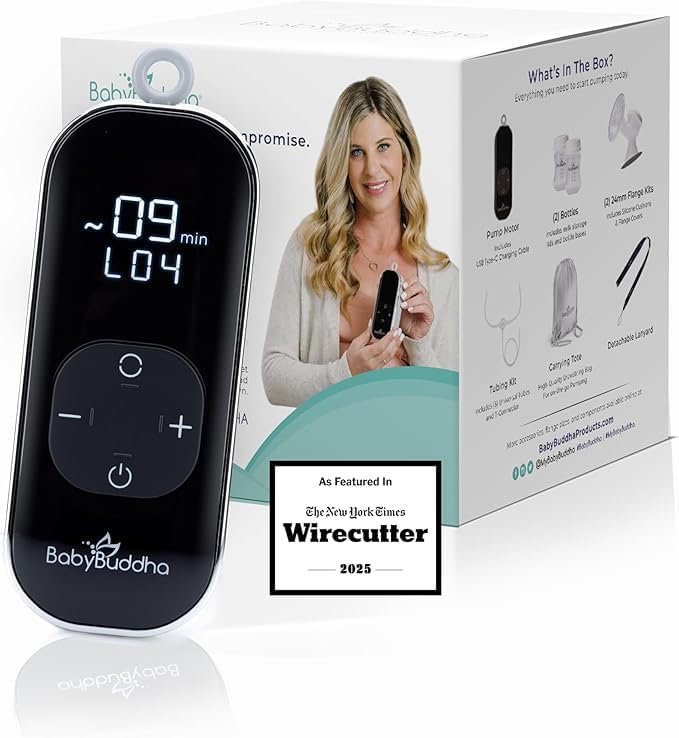
The BabyBuddha 2.0 is the unit that rewrites the wearable-versus-primary debate. Its motor delivers a maximum vacuum exceeding 300 mmHg, which places it in the same raw suction tier as plug-in hospital pumps, yet the entire pump body fits in the palm of your hand. For oversupply mothers who need to clear six or more ounces per side, this depth of suction reduces session time by roughly 30 percent compared to mid-range wearables. The 21 total suction combinations — three modes multiplied by seven intensity levels each — let you dial in a cycle that triggers a second letdown without causing nipple blanching.
The closed-system design with a dedicated diaphragm physically separates milk from the motor. This matters for high-volume pumping because residual moisture is the primary cause of vacuum degradation over time. The kit includes multiple flange sizes and soft massage inserts, so you can fit tunnels down to 17 mm without buying third-party adapters. A two-year warranty backs the build, and the pump works with standard Medela-compatible bottles and collection cups if you prefer a wearable cup setup.
User reports confirm that the motor is louder than the Spectra S1 — the sound is a distinct pulsing rather than a whisper — and the buttons require moderate finger pressure. The battery supports roughly four full sessions per charge, and the included lanyard lets you clip the unit to a waistband while you move. For mothers pumping five or more times daily, the BabyBuddha holds vacuum consistency across consecutive sessions better than any other portable unit in this class.
Why it’s great
- Hospital-grade vacuum in a palm-sized body
- 21 suction combinations for fine-tuning letdown
- Includes multiple flange sizes and soft touch inserts
- Two-year warranty and closed-system protection
Good to know
- Audible motor pulsing, not library-quiet
- Stiff physical buttons during first weeks of use
- Battery life moderate at roughly four sessions
2. eufy Security Heated Breast Pump S1
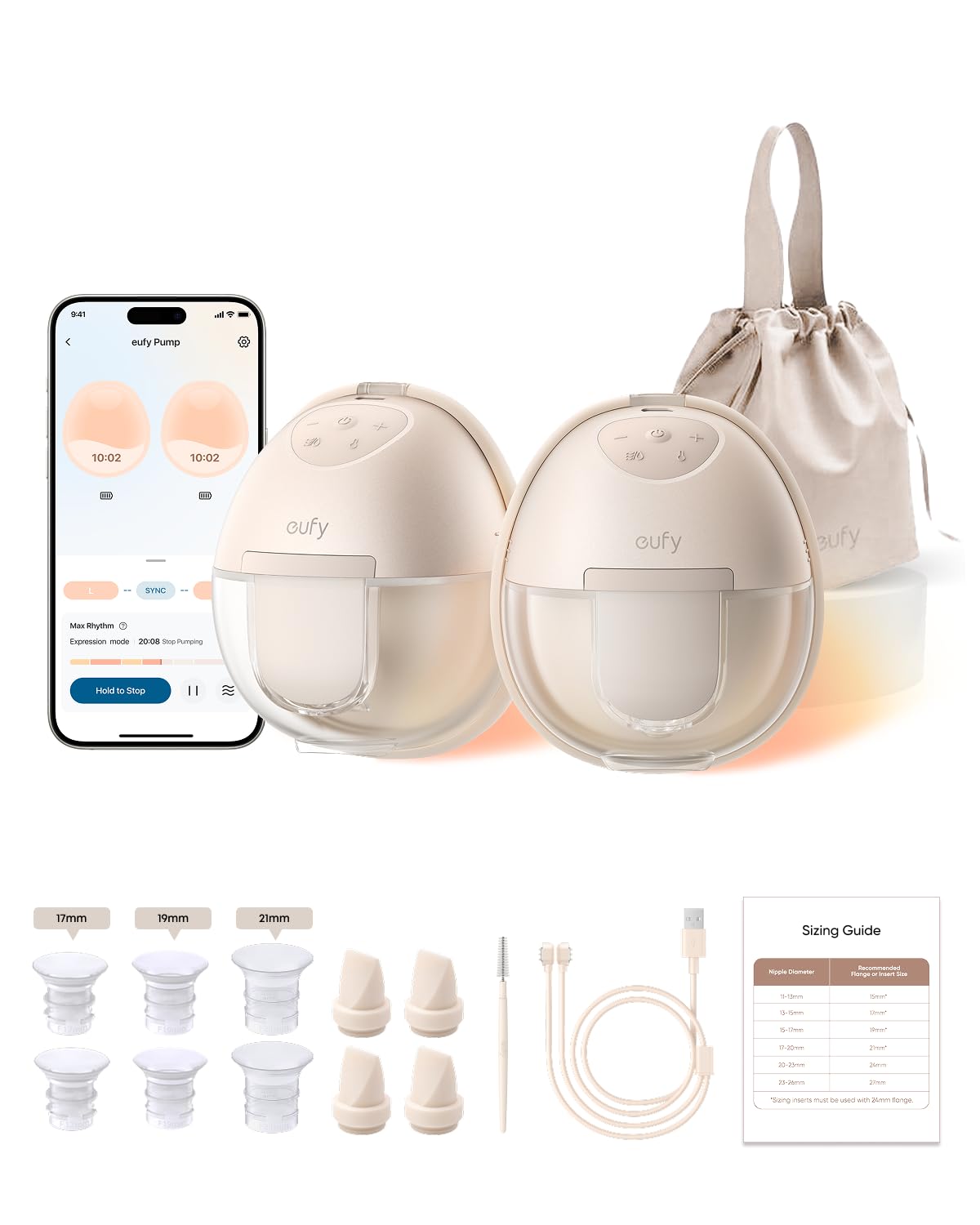
The eufy S1 is the only wearable pump on this list that integrates thermal technology. A heating element in the flange maintains gentle warmth against the breast tissue, which helps keep milk flowing freely and reduces the likelihood of fatty milk congealing inside the tunnel during long sessions. For oversupply mothers who struggle with recurring plugged ducts, this thermal feature can make the difference between a complete drain and a session that leaves a stubborn pocket of milk in the upper ducts. The maximum suction hits 300 mmHg, and the pump offers adjustable cycle speed through the companion app.
The app-based controls are where the S1 truly differentiates itself. You can select from four preset pumping rhythms, including a “gentle mode” designed for sensitive nipples, or build a custom rhythm by setting individual suction and cycle parameters. The app also tracks total output per session, which helps high producers confirm they are clearing the breast symmetrically. All skin-contact components are BPA-free food-grade silicone, and the motor operates at 46 dB — quiet enough for office use without drawing attention.
The heating function consumes battery faster than standard operation, reducing runtime to roughly three sessions (20 minutes each) with heat active. The flange kit includes sizes from 17 mm to 24 mm, covering the narrow tunnels that many oversupply mothers require. A few users reported that the heating element caused lymphatic fluid retention rather than preventing it; if you are prone to lymphatic congestion, test the heat setting on low for the first several sessions before increasing temperature intensity.
Why it’s great
- Heated flange reduces duct clogging risk
- App-adjustable rhythm and cycle speed
- Three flange sizes down to 17 mm included
- Quiet 46 dB motor for public use
Good to know
- Heat mode reduces battery life significantly
- App requires initial pairing and free trial
- Not all users tolerate heat well long-term
3. Spectra Baby S1 Plus Premier Rechargeable

The Spectra S1 Plus remains the most referenced benchmark in lactation consulting circles for a reason: its separate vacuum and cycle-speed dials give you independent control over the two most critical variables in oversupply management. Most pumps lock cycle speed to suction level, meaning you cannot run a fast, shallow stimulation cycle at the beginning of a session without also increasing vacuum pressure. The S1 lets you set 38 to 54 cycles per minute independently of vacuum level, which means you can pulse the nipple at gentle suction to trigger the second letdown without causing nipple trauma.
The S1 is a traditional tabletop pump — it does not fit inside a bra — but the rechargeable battery provides roughly three hours of cordless operation, and the overall unit weighs just over two pounds. The included grey tote manages the tubing, bottles, and flanges in one organized bag with a separate laptop compartment. For high-volume producers who pump four or more times per day, the S1 motor holds consistent suction across the pump’s lifespan with no measurable degradation reported in the first year of use. A built-in nightlight with soft amber glow is a welcome detail for early-morning sessions.
The main drawback is flange sizing: the standard kit includes only 24 mm and 28 mm tunnels. Mothers producing excess milk often have smaller nipple diameters due to elastic tissue, so you will likely need to purchase 20 mm or smaller flanges separately. The backflow protector is a removable membrane that must be washed after every session, but the design keeps milk out of the tubing reliably even when pumping eight-ounce bottles.
Why it’s great
- Independent vacuum and cycle-speed adjustment
- Consistent motor performance over years of use
- Rechargeable battery for cordless portability
- Built-in nightlight for dark-room sessions
Good to know
- Only ships with 24 mm and 28 mm flanges
- Tabletop form factor, not wearable
- Carrying case is functional but not stylish
4. Medela Sonata Smart Breast Pump
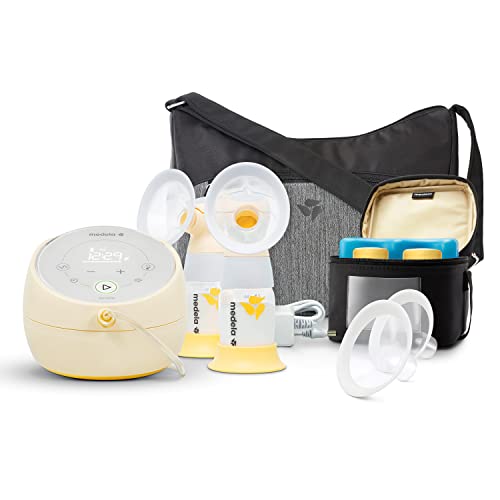
The Medela Sonata is the closest you can get to the Medela Symphony hospital pump in a home-friendly, rechargeable format. The vacuum reaches 270 mmHg with responsive technology that self-adjusts based on the milk flow rate — if your letdown surges, the pump gently matches the increased flow rather than holding a fixed suction that could cause pain. This responsiveness is especially useful for oversupply mothers who experience a heavy first letdown within 60 seconds; the pump rides the wave instead of fighting it.
The Flex shields are Medela’s standout hardware feature. The silicone rim is softer and more pliable than standard hard-plastic flanges, which reduces the pinching sensation that often accompanies high-vacuum pumping. The shields come in two sizes, and the soft rim allows a slightly wider fit tolerance, so you may not need to buy extra inserts as long as you fall within the 21 mm to 28 mm range. The Sonata connects to the Medela Family app for session tracking, though the app’s user interface is basic and some users skip it entirely.
The rechargeable battery lasts roughly 1.5 hours — enough for two full double-pumping sessions before needing a charge. The motor is whisper-quiet, quieter than the Spectra S1, and the closed system prevents milk from entering the tubing even when bottles are filled to the 150 mL mark. The primary limitation is the lack of true portability: the Sonata is not wearable, and the battery runtime is shorter than the Spectra S1. It also has a known glitch where a “CALL” error appears intermittently, though most users report it clears on its own after a minute.
Why it’s great
- Self-adjusting vacuum matches letdown flow rate
- Soft Flex shields reduce nipple pinching
- Very quiet motor, baby-safe during sleep
- Closed-system prevents tubing contamination
Good to know
- Battery lasts only 1.5 hours per charge
- Sporadic “CALL” error code on some units
- App interface is basic and sometimes unreliable
5. Momcozy M6 Hands Free

The Momcozy M6 hits a suction ceiling of 295 mmHg, which places it among the strongest wearable pumps available outside the premium tier. The motor uses a second-generation architecture that reduces vibration transfer to the breast, so the pumping sensation stays focused on the nipple rather than rattling the entire areola. For oversupply mothers who need to pump while holding a baby or working at a desk, this wearable format removes the tubing tether without sacrificing the vacuum strength required to drain fully in under 20 minutes.
The DoubleFit flange uses a dual-layer silicone seal — a firm outer ring that holds the shape inside your bra and a soft inner ring that conforms to the breast contour. This reduces the air gap that causes wearable pumps to lose suction when you lean forward or pick up a toddler. The stand-up milk bowl design means you can pour directly into a storage bag without transferring through a separate container, which cuts cleanup time significantly when you are pumping six or more ounces per session.
Battery life supports roughly four 20-minute sessions before charging, and the included charging case adds an extra charge cycle for all-day pumping away from home. The main concern reported by high-volume users is moisture ingress into the motor unit if the pump is assembled incorrectly or tilted beyond a 45-degree angle. The seal is reliable in upright use, but bending over at the waist can cause leakage into the electronics. The warranty replacement process is responsive, but preventive care is your best defense.
Why it’s great
- 295 mmHg suction in a self-contained wearable
- Dual-layer flange seal maintains suction during motion
- Stand-up bowl pours directly into storage bags
- Charging case extends all-day battery capacity
Good to know
- Moisture can reach motor if assembled incorrectly
- Requires a tight-fitting pumping bra
- Not safe to bend over while wearing
6. Zomee Z2 Double Electric

The Zomee Z2 is distinguished by its alternate-mode technology, which rhythmically alternates expression between the left and right breast during double pumping. Instead of pulling vacuum on both sides simultaneously — the standard approach — the Z2 pulses one side while the other rests, cycling at a natural suckling cadence. For oversupply mothers who find that simultaneous expression creates a vacuum tug that overstimulates the nipple, this alternating pattern reduces sensitivity and often results in a higher total yield per session.
The motor provides three pumping styles — Stimulation, Expression, and a combined 2-Phase mode — each with nine adjustable suction levels. The LCD screen includes a built-in nightlight that illuminates the controls without waking a sleeping baby, a practical detail for the middle-of-night sessions that hyper-producers cannot skip. The internal rechargeable battery runs for roughly two hours of continuous use, and the USB-C port means you can top off the charge from a laptop or car adapter.
The kit includes 140 mL bottles which can feel small if you routinely pump five or more ounces per side; you will need larger third-party bottles or adapters for Medela containers. The flange diameter only goes down to 19 mm, so mothers with smaller nipples will need to purchase inserts separately. The food-grade silicone parts are BPA-free, and the anti-backflow system keeps milk out of the tubing effectively, but the diaphragm itself contacts milk and requires thorough washing after each session.
Why it’s great
- Alternating expression reduces nipple overstimulation
- Three distinctive pumping styles with 9 levels each
- LCD nightlight for dark-room sessions
- USB-C charging from any standard power source
Good to know
- Included bottles hold only 140 mL per side
- Smallest flange size is 19 mm, inserts needed for smaller
- Diaphragm contacts milk, requires full disassembly cleaning
7. Lansinoh Discreet Duo Wearable
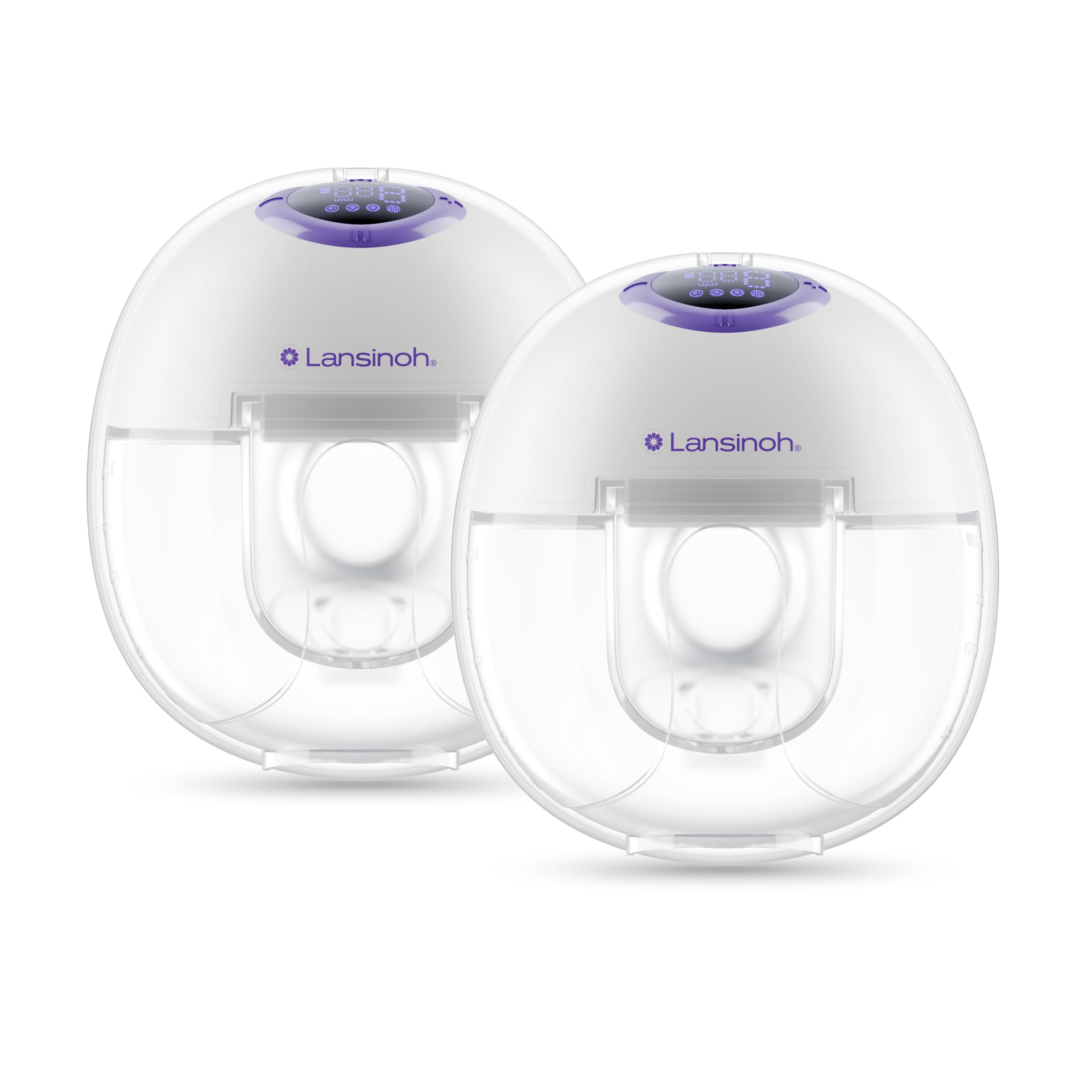
The Lansinoh Discreet Duo delivers hospital-strength suction in a fully wearable body at a price point that undercuts most premium wearables by a wide margin. The motor produces four pumping modes — including a deep-expression cycle that mimics the natural pause-and-pull pattern of a nursing infant — with nine intensity levels that cover the full range from gentle massage to firm extraction. For an oversupply mother on a budget, this pump clears the breast effectively enough that some users report matching or exceeding output from the Willow and Elvie pumps they used previously.
The closed-system design prevents milk from reaching the motor, and the flanges and inserts are made without BPS and BPA, which matters when you are pumping high volumes and the plastic components spend extended time in contact with breast milk. The battery provides up to 100 minutes of pumping time per full charge, and the automatic shut-off after 20 minutes prevents accidental over-pumping that can aggravate nipple sensitivity. The kit includes 24 mm and 21 mm flanges, so it accommodates medium-to-smaller nipple sizes out of the box.
The motor is audible — it is not discreet enough for a silent office meeting — and the seal can be finicky if you do not wear a supportive pumping bra that holds the cups flush against the breast. Some users report that the seal breaks if you lean forward, causing a spill inside the bra. The charging port is located on the bottom of the unit, which prevents you from pumping while connected to a power bank. Despite these trade-offs, the suction quality per dollar spent is among the best in the wearable category.
Why it’s great
- Hospital-strength suction at a budget-friendly price
- Closed-system with BPA/BPS-free components
- Includes 21 mm and 24 mm flanges for smaller sizes
- 100-minute battery with auto shut-off protection
Good to know
- Motor is audible, not truly discreet in quiet rooms
- Seal can break during forward-leaning movements
- Bottom charging port prevents mid-session charging
8. MomMed Wearable S21
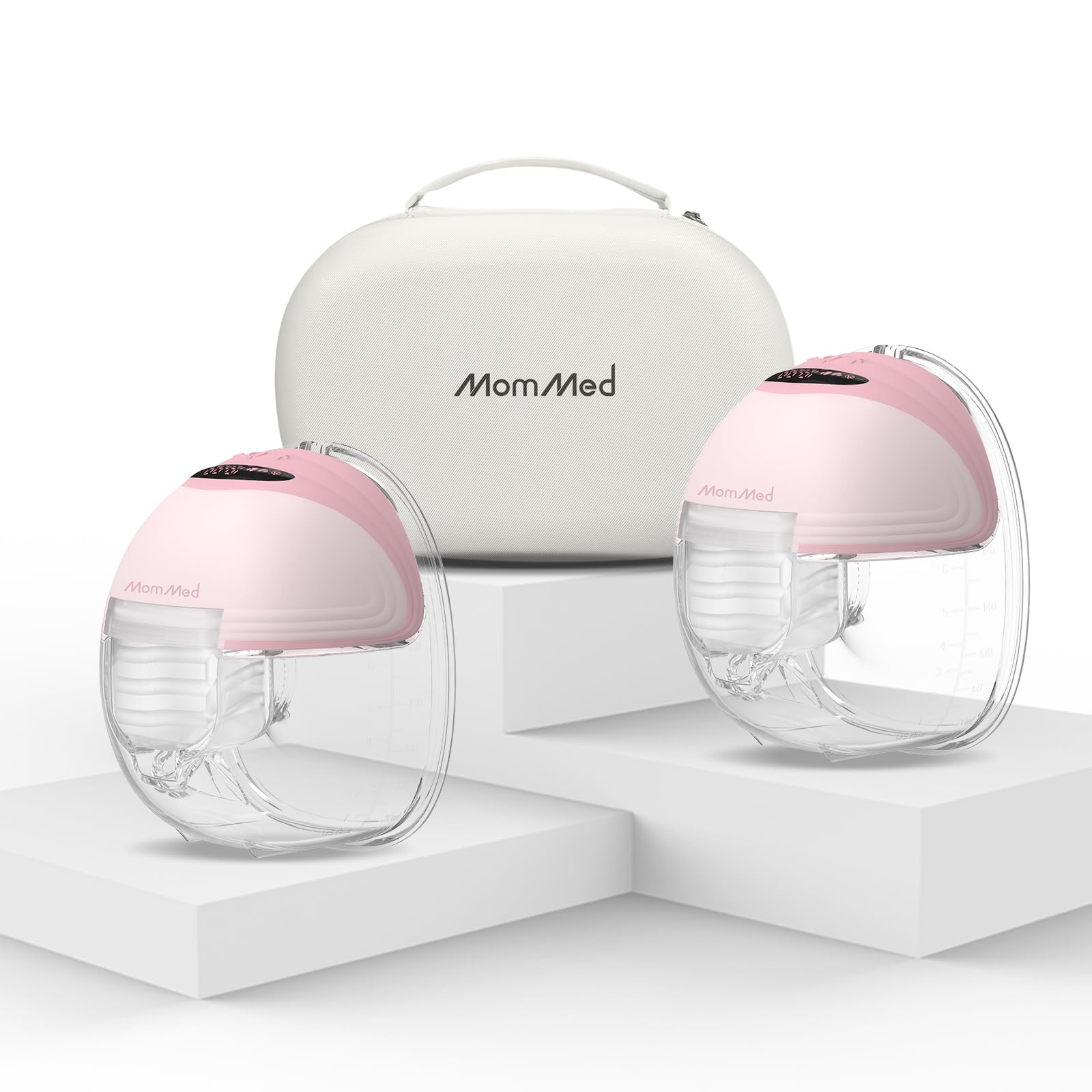
The MomMed S21 is the most complete entry-level wearable kit for oversupply mothers who need flange variety without buying extra parts. The box includes six flange inserts (17 mm, 19 mm, and 21 mm in pairs), which covers the narrow tunnel sizes that many high-volume producers require but that premium pumps often omit. The motor provides three pumping modes — Stimulation, Expression, and Auto — with 12 vacuum levels, giving you enough granularity to find a comfortable yet effective extraction point without overwhelming the nipple.
The backflow prevention membrane is a physical silicone separator that keeps breast milk isolated from the vacuum system. For mothers pumping four or more ounces per side, this barrier is critical because the higher volume increases the probability of milk reaching the motor chamber through condensation or splash. The S21 also ships with a hard-shell carrying case, two cleaning brushes, ten storage bags, and four extra silicone diaphragms — a spare-parts bundle that reduces long-term consumable costs compared to brands that sell replacement parts individually.
The pump operates below 45 dB, which is quieter than many wearable units at this price tier, and the LED screen with physical buttons provides reliable control without a phone app. The primary limitation for oversupply mothers is the collection capacity: the internal cup holds roughly 5 ounces per side, so if your per-side output exceeds 5 ounces, you will need to stop mid-session to empty the cup and resume pumping. The duckbill valves must be replaced every few weeks with heavy use, but the kit includes six extras to cover the first two months.
Why it’s great
- Includes six flange inserts down to 17 mm
- Physical backflow membrane prevents motor damage
- Complete kit with cleaning brushes and storage bags
- Quiet operation below 45 dB
Good to know
- Maximum cup capacity roughly 5 ounces per side
- Duckbill valves require regular replacement
- Inserts suction into flange tightly, hard to remove
9. Philips Avent Double Electric SCF393/82

The Philips Avent Double Electric uses Natural Motion technology that combines suction with massage via a soft silicone flange shield. The shield is contoured to flex with the breast shape, which distributes the vacuum pressure across a wider surface area rather than concentrating it on the nipple tip. For oversupply mothers whose nipples become tender from prolonged high-suction pumping, this gentle distribution reduces pain while maintaining a maximum vacuum of 270 mmHg — strong enough to clear engorged ducts without bruising the tissue.
The pump offers 8 stimulation levels and 16 expression levels, providing a total of 24 possible combinations that let you fine-tune the transition from fast, shallow pulses to deep, slow draws. The design allows you to pump without leaning forward, which means milk flows naturally downward into the bottle rather than pooling in the flange tunnel. This is a genuine ergonomic benefit for heavy producers: leaning forward during a 20-minute session strains the lower back, and the Avent’s upright design eliminates that posture entirely.
The unit does not have a rechargeable battery — it must remain plugged into an AC outlet during use — which limits mobility to wherever an electrical socket is within reach. The closed system prevents milk from entering the tubing, and the few-part assembly makes it one of the easiest pumps to clean after a high-volume session. The soft shield is the standout feature here, making this a strong backup or secondary pump for mothers who already own a primary wearable but want a gentler option for home use when nipples are sore.
Why it’s great
- Soft silicone flange shield reduces nipple trauma
- 24 suction-level combinations for precise tuning
- No-lean-forward design protects lower back
- Very few parts, simple to clean and reassemble
Good to know
- Requires wall outlet, no battery operation
- Not a wearable, limited to home or office desk use
- Flange sizing less flexible than insert-based systems
FAQ
How often should I replace duckbill valves when pumping high volumes?
Can a wearable pump fully empty an oversupply breast?
What is the ideal session length for a mother with oversupply?
Final Thoughts: The Verdict
For most oversupply mothers, the breast pump for oversupply winner is the BabyBuddha 2.0 because it combines hospital-grade suction above 300 mmHg with true portability and 21 adjustable combinations, making it the only pump that clears high-volume breasts quickly while fitting in your palm. If you want the thermal clog-prevention feature, grab the eufy S1 Heated. And for unmatched cycle-adjustment precision at home, nothing beats the Spectra S1 Plus.