That sharp, localized pain just below your kneecap every time you push off for a jump, cut hard on the court, or sink into a squat is the signature of patellar tendonitis—and it does not fix itself with rest alone. The right strap changes the tendon’s angle of pull, reducing strain at the insertion point so you can keep training without the ache.
I’m Emma — the founder and writer behind Baby Bangs. I’ve spent years studying biomechanics, reading the peer-reviewed literature on patellar taping versus bracing, and cross-referencing thousands of user experiences to isolate the hardware that actually changes load distribution on the patellar tendon.
This guide breaks down the five best contenders you can buy right now. After testing the specs and sorting through real-world feedback from runners, lifters, and court-sport athletes, I’ve built a clear hierarchy of what actually works. Read on to find your ideal brace for jumper’s knee that lets you move without the wince.
How To Choose The Best Brace For Jumper’s Knee
Every strap on this list applies a focused load to the patellar tendon just below the kneecap, but the details of the pad, the strap material, and the adjustability determine whether it stays put during a 5K or slips after your first set of lunges. Here are the three specs that separate the winners from the also-rans.
Pad Design: Silicone Web vs. Foam Tube
A silicone web pad (like the DonJoy Webtech uses) distributes pressure across a wider surface without a bulky lump behind the knee. Traditional foam-padded tubes (like the Pro-Tec and THX4COPPER use) rely on a cylindrical gel or rubber piece that presses directly on the tendon. The web design is preferred for high-movement sports because it breathes better and resists rolling, but the tube style offers a more aggressive, pinpoint compression that some users with stubborn tendonitis prefer.
Strap Adjustability & Retention
Velcro straps inevitably loosen over months of use. Look for a double-strap system (the THX4COPPER) or a cinch mechanism (the Fit Geno silicone band) that lets you micro-adjust without fighting the hook-and-loop. A strap that requires constant re-tightening mid-workout is a non-starter for basketball or volleyball where you can’t stop to fiddle with your gear.
Material Breathability & Skin Contact
You will sweat directly under the pad. Copper-infused nylon (THX4COPPER) is marketed for antimicrobial properties, but the real test is whether the pad’s backing wicks moisture or traps it. The Pro-Tec and DonJoy use a mesh-backed construction; the Fit Geno uses solid silicone, which is waterproof but can feel clammy on long runs. If you train in heat, prioritize breathability over durability.
Quick Comparison
On smaller screens, swipe sideways to see the full table.
| Model | Category | Best For | Key Spec | Amazon |
|---|---|---|---|---|
| DonJoy Webtech | Premium Strap | Runners & court sports | Silicone web pad, 2-pack | Amazon |
| Modvel Compression Sleeve | Premium Sleeve | All-day wear & recovery | Full sleeve, 6 sizes XS–3XL | Amazon |
| Fit Geno Patella Strap | Mid-Range Strap | Gym & multi-sport use | Silicone band, 2-pack | Amazon |
| Pro-Tec Athletics Strap | Mid-Range Strap | Targeted tendon pressure | One-hand adjustment, foam tube | Amazon |
| THX4COPPER Dual Strap | Budget Strap | Budget-friendly dual strap | Copper-nylon, rubber tube pad | Amazon |
In‑Depth Reviews
1. DonJoy Performance Webtech Patella Knee Strap
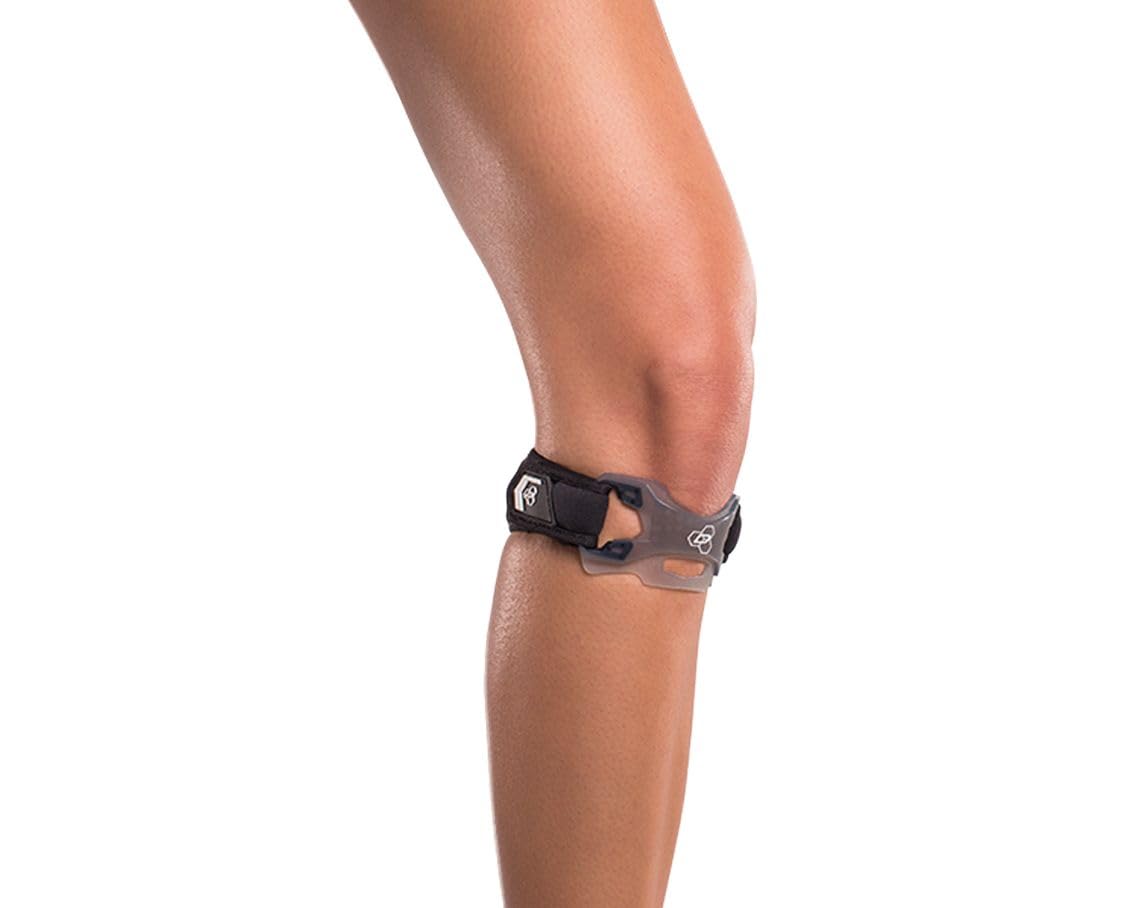
The DonJoy Webtech is the category leader for a simple reason: the silicone web structure applies even, non-slip pressure across the patellar tendon without the bulk of a foam tube. The molded back pad uses a mesh layer that breathes well, and the contoured top and bottom edges track the natural shape of the knee — it doesn’t dig in or roll when you bend past 90 degrees.
Runners and warehouse workers alike report that this strap stays locked in place for 10-hour shifts and long runs. The low-profile design fits easily under pants, and the reflective tabs add a safety layer for evening jogs. Users note that the Velcro loop begins to lose grip after eight to twelve months of daily use, but the two-pack doubles your lifespan. It’s the strap that solves the most common complaint: “it feels great during warmup, then slides.”
The tradeoff is that the silicone web applies a wider, less aggressive point of contact than a rubber tube. If you need extreme, direct pressure right on the tendon insertion, a foam tube design might feel more targeted. For the vast majority of active users, though, the Webtech’s balance of security, breathability, and low weight makes it the top pick.
Why it’s great
- Silicone web pad distributes pressure evenly without rolling
- Mesh-backed molding stays cool and comfortable during sweat
- Two-pack provides long-term value as Velcro ages
Good to know
- Less pinpoint pressure than a foam tube for severe cases
- Velcro loop loses grip after extended daily use
- Must be pulled very tight for full effect; some users need time to adjust
2. Modvel Compression Knee Brace (2-Pack)

The Modvel sleeve takes a different approach from the patellar straps above — it wraps the entire knee in graduated compression rather than concentrating force on the tendon. This makes it better suited for users who have generalized knee pain, arthritis, or post-surgery swelling alongside their jumper’s knee symptoms. The nylon-latex blend holds its shape wash after wash without losing compression.
With six sizes from XS to 3XL, the Modvel fits smaller and larger builds that standard one-size straps can’t accommodate. Users with Baker’s cysts and meniscus tears report that the sleeve stabilizes the joint enough to eliminate stair-descending pain. The moisture-wicking fabric prevents sweat buildup under the sleeve during gym sessions, though some users note slight bunching behind the knee during high-exertion movements like deep squats.
The sleeve does not provide the same targeted patellar tendon relief that a focused strap delivers. If your pain is a sharp, localized point directly below the kneecap, a strap is more effective. If your knee feels generally achy, unstable, or swollen, the sleeve’s broader support is the better call.
Why it’s great
- Full sleeve provides stable compression for general knee pain
- Six size options ensure a precise fit for most body types
- Durable nylon-latex material resists stretching and shrinking
Good to know
- Can bunch behind the knee during deep flexion
- Targeted tendon pressure is weaker than a dedicated strap
- Latex content may irritate those with allergies
3. Fit Geno Knee Strap Patella Support (2-Pack)

The Fit Geno strap is a silicone band with no Velcro or padded tube — just a continuous stretch loop that sits below the kneecap. This design eliminates the two biggest failure points of traditional straps: the hook-and-loop wearing out and the pad shifting out of position. It also means no pressure points from a rigid buckle or toggle, making it one of the most comfortable options for prolonged wear.
The one-size-fits-most silicone is stretch-rated for circumferences of 11.4 to 16.5 inches, so it works for most adults but may not cinch tight enough for very large legs. Users report that it stays put during 30-to-45-minute steady runs and general gym work, but it can slip during high-intensity interval training or distance runs over 10 miles. The 2-pack gives you a spare to rotate through laundry, and the waterproof material cleans easily under a tap.
A lack of adjustability means you cannot fine-tune the tension mid-workout. The band either fits or it doesn’t. For cyclists, the silicone strap can slide due to the repetitive knee extension motion. Still, for gym-goers and recreational runners who want a simple, low-profile solution that won’t break down, this is a strong buy.
Why it’s great
- No Velcro means no wear-and-tear failure points
- Silicone material is waterproof and easy to clean
- Low profile fits under clothing without bulk
Good to know
- No tension adjustment — one continuous stretch band
- May slip during long-distance or high-intensity runs
- Not ideal for cyclists due to knee extension movement
4. Pro-Tec Athletics Patellar Tendon Strap

The Pro-Tec is a classic patellar tendon strap — a foam-rubber tube encased in a woven strap with a unique one-hand pull-tab adjustment. That mechanism is its standout feature: you can cinch it down without breaking your workout rhythm, which matters when the tendon starts barking mid-set. The moderate compression reduces strain on the femoral groove, improving patellar tracking for those with chondromalacia or patello-femoral discomfort.
Users consistently note that this strap eliminates knee pain during activities like circuit training, hiking, and running — but sizing is an issue. The Extra Large size runs small, and multiple reviewers warn that it may not fit larger legs even at maximum extension. The strap also stretches about half an inch to an inch during the first month, so the initial fit should be snug with room for that creep.
The foam tube provides excellent, direct pressure right on the tendon insertion point, which is exactly what severe jumper’s knee needs. However, some users find the material less breathable than a silicone web, and the rough stitching on the back of the knee can irritate bare skin. For targeted, tendon-specific relief, it is effective — but only if the sizing works for you.
Why it’s great
- One-hand pull-tab adjustment for mid-workout cinching
- Foam tube delivers direct, aggressive tendon pressure
- Lightweight and stays put during sweaty sessions
Good to know
- Sizing runs small — measure before buying
- Strap stretches up to an inch over the first month
- Back-of-knee stitching can irritate bare skin
5. THX4COPPER Compression Dual Adjustable Patella Knee Brace

The THX4COPPER stands out at its price point by offering an adjustable dual-strap system with a copper-infused nylon fabric and a resilient rubber tube pad. The dual straps give you independent control over upper and lower tension, which is rare at this level. The copper ions (5000 PPM) are claimed to have antimicrobial properties, but the real benefit is breathability: the ventilated fabric keeps the area under the strap drier than a solid silicone band.
Users playing basketball, tennis, and pickleball report that the brace stays firmly in place and provides great support, though some note that the top strap can slip below the knee during walking. The wider back-of-knee design improves comfort for larger users, but the stitching can feel rough against bare skin for some. It is a Large/X-Large size, and there is no smaller alternative, which limits fit options.
The rubber tube pad is less durable than the silicone web on the DonJoy, but for a user who wants a traditional dual-strap design with adjustable compression at a low investment, the THX4COPPER delivers. It is best for budget-conscious athletes who are willing to compromise on long-term material longevity for immediate pain relief during outdoor sports.
Why it’s great
- Dual adjustable straps offer customizable compression levels
- Ventilated copper-nylon fabric promotes airflow
- Wider back design improves fit for larger builds
Good to know
- Top strap may slip below the knee during walking
- Stitching can feel rough against bare skin
- Rubber tube pad may lose shape with heavy use
FAQ
Should I use a patellar strap or a full compression sleeve for jumper’s knee?
How tight should I wear my patellar tendon strap?
Will a patellar strap cure my jumper’s knee or just mask the pain?
Final Thoughts: The Verdict
For most users, the brace for jumper’s knee winner is the DonJoy Performance Webtech because the silicone web design balances targeted tendon relief with stay-put security and breathability. If you want a comfortable, adjustable sleeve that supports the whole knee while managing general soreness, grab the Modvel Compression Knee Brace. And for a low-profile, no-Velcro option that works for gym-goers and steady runners at a strong value, nothing beats the Fit Geno Knee Strap 2-Pack.