High ankle sprains damage the syndesmosis ligaments connecting your tibia and fibula, creating instability that makes every pivot, cut, or landing a gamble. A standard sleeve won’t cut it — you need a brace that locks down the fibula and prevents the talus from shifting.
I’m Emma — the founder and writer behind Baby Bangs. I’ve spent years tracking rehabilitation hardware, analyzing how closure systems, stay rigidity, and strap geometry affect syndesmosis recovery outcomes.
This guide evaluates the five braces athletes and clinicians trust most, cutting through the marketing noise to find the true brace for high ankle sprain that stops re-injury without sacrificing your stride.
How To Choose The Best Brace For High Ankle Sprain
Syndesmosis injuries don’t heal like routine lateral sprains. You need a brace that addresses two specific forces: preventing fibular rotation and limiting talar shift during weight-bearing. Here are the critical factors that separate effective braces from glorified socks.
Rigid Stabilizers vs. Flexible Support
For a high ankle sprain, the brace must include either removable polyethylene splints or articulated medial/lateral stays. These rigid elements prevent the fibula from separating from the tibia under load—something a neoprene sleeve cannot accomplish. Look for stabilizers that extend at least halfway up the shin for proper syndesmotic control.
Strap Configuration and Compression
Figure-8 straps that cross over the anterior talofibular region and wrap around the calcaneus provide the basket-weave effect that athletic trainers use with tape. A quality brace will include both a circumferential strap and dedicated heel-lock or figure-8 straps to limit dorsiflexion and inversion simultaneously.
Low-Profile Design for Shoe Fit
High ankle braces are frequently worn during sport-specific training or daily walking. A bulky brace that forces you into clown shoes changes your gait and undermines rehab. Prioritize models with open-heel designs and thin ballistic nylon or Oxford fabric that lets you wear standard basketball shoes, hiking boots, or sneakers.
Quick Comparison
On smaller screens, swipe sideways to see the full table.
| Model | Category | Best For | Key Spec | Amazon |
|---|---|---|---|---|
| DonJoy Stabilizing PRO | Premium | Articulated syndesmosis protection | 800D ballistic nylon, dual removable stays | Amazon |
| Active Ankle AS1 Pro | Premium | Sport-specific tape simulation | Non-stretch vertical straps, speed lacing | Amazon |
| Fitomo Triple-Lock | Mid-Range | Recovery with stabilizer flexibility | Removable side splints, figure-8 strap | Amazon |
| AGPTEK Lace-Up | Mid-Range | Quick on/off for active daily wear | Reinforced dual side stabilizers, quick-lace | Amazon |
| Vive Lace Up | Budetary | Affordable medium-support stabilizer | Dual figure-8 straps, open heel | Amazon |
In‑Depth Reviews
1. DonJoy Stabilizing PRO Ankle Brace

The DonJoy Stabilizing PRO uses 800-denier ballistic nylon with a reinforced eyelet area, making it the most durable option here—users report year-long daily use without fraying. Its removable, articulated medial and lateral stays are designed to enhance proprioception and prevent the fibular separation that characterizes chronic high ankle instability. The full circumferential elastic strap wraps the proximal end, compressing the tibia and fibula together to mimic the function of a syndesmosis screw without surgical invasiveness.
Customers with posterior tibial tendon dysfunction and peroneal tendon tears confirm that this brace prevents foot rolling during walking and low-impact sports. The lace-up system combined with the figure-8 strap allows fine tension adjustments, though some users note that the heel binding can press into the Achilles if overtightened. At 5.6 ounces, it’s heavier than a sleeve but still low-profile enough for most sneakers with a thin sock.
Decades of clinical use and high reorder rates from athletes recovering from syndesmosis sprains make this the benchmark. Its rigidity level is ideal for grade II high ankle injuries returning to sport, though the figure-8 strap may cause mild forefoot discomfort during prolonged standing—a minor trade-off for the best syndesmotic control in this lineup.
Why it’s great
- Articulated removable stays provide true syndesmotic stabilization
- 800D ballistic nylon outlasts most competitors by years
- Circumferential elastic strap adds proximal tib/fib compression
Good to know
- Figure-8 strap can cause foot pain with prolonged wear
- Heel binding may dig in for some users
- Requires periodic lace readjustment as swelling changes
2. Active Ankle AS1 Pro Lace Up Ankle Brace
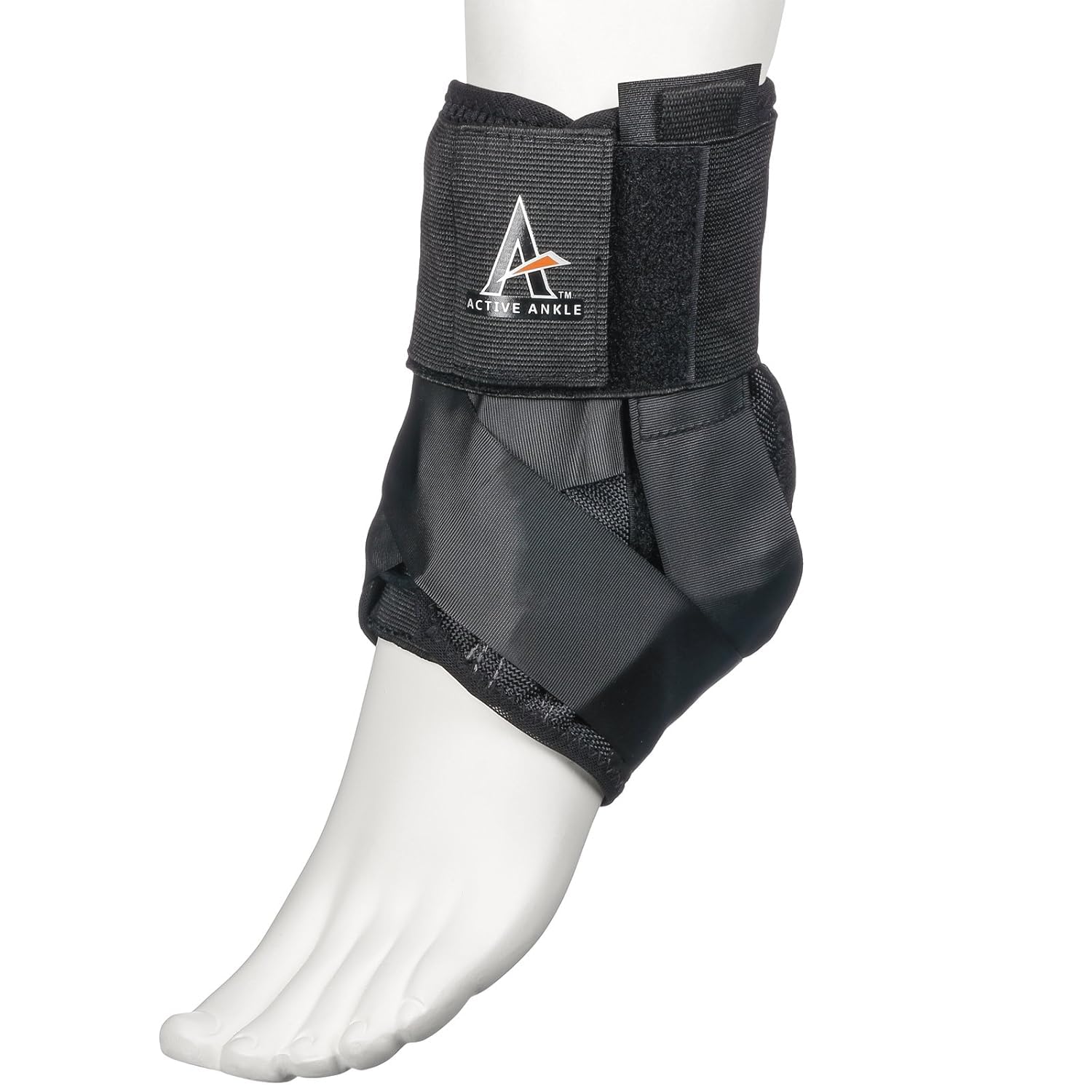
The Active Ankle AS1 Pro is engineered to replicate the basket-weave and heel-lock techniques athletic trainers use with tape. Its non-stretch vertical straps are fully adjustable and mimic the mechanical effect of traditional taping—limiting talar tilt without completely restricting plantarflexion. The speed lacing eyelets reduce application time and eliminate hot spots that standard eyelets create during lateral movements in volleyball or basketball.
A key differentiator is the non-slip silicone printing on the sole, which keeps both the figure-8 and circumferential straps anchored during explosive cuts. The low-profile design removes excess forefoot material and widens the heel hole, reducing the irritation that plagues many lace-up braces. One longtime basketball player noted that the criss-cross straps loosen over several hours of play, requiring occasional re-tightening.
For high ankle sprain recovery, the combination of non-stretch vertical straps and a secure heel pocket replicates the functionality of a rigid brace while maintaining more mobility. It’s the preferred choice for return-to-sport protocols because it allows functional testing without sacrificing protection against inversion. The only downside is that the silicone print wears down after a season of hard court use.
Why it’s great
- Non-stretch straps emulate athletic tape basket-weave effect
- Speed lacing reduces application time and pressure points
- Non-slip silicone sole keeps straps secure during play
Good to know
- Criss-cross straps loosen over extended wear sessions
- Silicone grip may wear down on abrasive court surfaces
- Not as rigid as articulated stay braces for grade III sprains
3. Fitomo Triple-Lock Ankle Brace
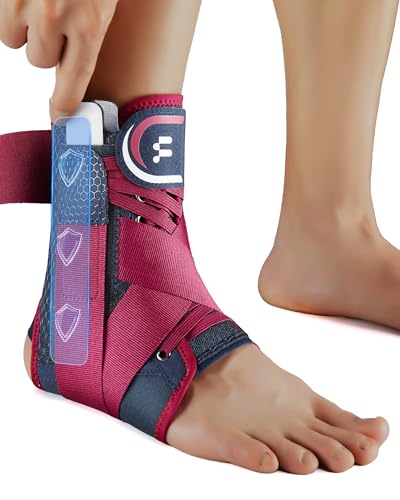
The Fitomo Triple-Lock uses a three-layer system: a top compression strap, dual removable side stabilizers, and cross straps that together limit talar glide and fibular rotation. The removable splints are a smart feature for high ankle sprain recovery—keep them inserted during early rehab for rigid support, then remove them as the syndesmosis heals to restore natural gait mechanics. The polyester and nylon blend fabric is lightweight at 0.19 kilograms and breathable for all-day wear.
Customer feedback highlights its durability beyond six months of daily use, with strong Velcro that stays engaged without peeling. Users with stroke-related foot drop and inversion also report that the brace restores normal walking alignment. The figure-8 strap design allows independent adjustment of forefoot and ankle compression, which is critical when swelling fluctuates during recovery. A minor complaint is that the splints can press into the skin if the brace is cinched too tightly over the lateral malleolus.
For the price point, the Fitomo offers a rare combination of rigid stabilization and configurability that usually only exists in premium-tier braces. It fits inside most sneakers without needing a size up, and the color options (including rose) reduce the clinical look. It’s the best mid-range pick for someone transitioning from a CAM boot back to daily walking.
Why it’s great
- Removable splints allow progressive de-escalation of support
- Strong Velcro engagement lasts 6+ months of daily use
- Fits in standard sneakers without heel lift
Good to know
- Splints can press into lateral malleolus if overtightened
- Single brace per pack, no pair option
- Not suitable for high-impact rotational sports at max support
4. AGPTEK Ankle Brace with Quick Lace-Up
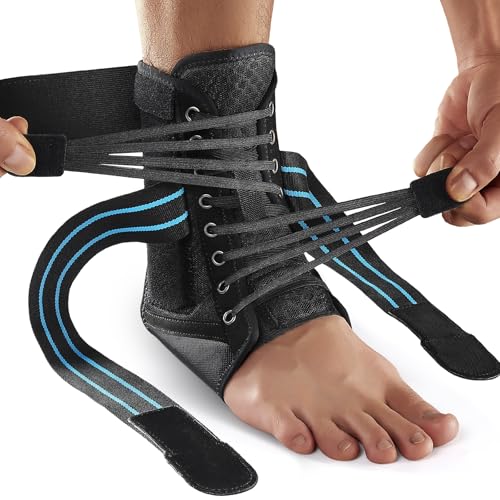
The AGPTEK brace prioritizes speed of application with its quick-lace system that cinches down in about one second using dual-direction hook-and-loop fasteners—a major advantage for athletes who need to gear up between warm-ups. Its reinforced dual side stabilizers made from polyethylene provide rigid medial/lateral support that directly addresses syndesmotic instability. The honeycomb ventilation zones in the nylon Oxford fabric prevent sweat buildup during high-intensity basketball or volleyball sessions.
Multiple users recovering from ankle fractures rated this brace higher than orthopedic-issued alternatives, specifically noting that the straps reach the Velcro fully without gaps. The open-heel design allows natural Achilles movement and prevents the chafing common in fully enclosed braces. However, some users with wide feet found the medium size restricts forefoot splay, and the quick-lace system lacks the micro-adjustability of traditional laces for very swollen ankles.
At just 0.18 kilograms, it’s one of the lightest lace-up braces with stabilizers, making it ideal for runners and hikers who need protection without bulk. The X-cross compression straps add a third layer of support beyond typical lace-ups, effectively limiting the talar glide associated with high ankle sprains. It’s the best entry-level pick for someone who wants hospital-grade features in a consumer-friendly form factor.
Why it’s great
- Quick-lace system enables 1-second application
- Reinforced polyethylene stabilizers match orthopedic quality
- Honeycomb ventilation prevents overheating during sports
Good to know
- Quick-lace lacks fine-tune adjustment for variable swelling
- Medium size may feel restrictive for wider forefeet
- Single stabilizer thickness may flex under heavy rotational load
5. Vive Lace Up Ankle Brace

The Vive Lace Up provides medium-grade stabilization through its dual figure-8 straps that wrap the ankle medially and laterally, reducing the need for athletic tape. The bilateral design fits either foot, and the open-heel construction allows the brace to sit low inside shoes without heel lift. It’s constructed from breathable nylon and weighs nearly nothing at 0.01 ounces, making it the most discreet option for everyday wear under work boots or casual shoes.
User reviews show that this brace works well for arthritis-related stiffness and mild sprains, but several customers note that the medium size runs large—requiring a size down for a snug fit. The lace-up system and Velcro straps are straightforward, but the boot-style design adds bulk around the ankle that can make fitting into narrow shoes impossible without going up a full size. Some users reported that the brace shifted during workouts, limiting its usefulness for high-intensity training.
For a high ankle sprain specifically, the Vive lacks rigid stabilizers, so it relies entirely on strap tension to prevent fibular separation. This makes it suitable for grade I sprains or as a secondary support during the final phase of rehab when soft tissue is healing. It’s the most affordable option in this guide, but for genuine syndesmotic injuries, the absence of splints or articulated stays means it cannot match the mechanical protection of the premium models.
Why it’s great
- Bilateral design fits both left and right feet
- Extremely low weight for all-day wear
- Figure-8 straps reduce need for tape application
Good to know
- No rigid stabilizers limits syndesmosis control
- Sizing runs large—requires trial to find correct fit
- Bulky profile makes narrow shoe fit difficult
FAQ
Can I wear a high ankle sprain brace inside my basketball shoes?
How long should I wear a brace for a high ankle sprain each day?
Are removable splints better than fixed stays for syndesmosis injuries?
Will a brace prevent all re-injury during sports?
Final Thoughts: The Verdict
For most users, the brace for high ankle sprain winner is the DonJoy Stabilizing PRO because its articulated stays and ballistic nylon construction provide the most reliable syndesmotic control for both daily rehab and return-to-sport. If you want athletic tape simulation with greater mobility, grab the Active Ankle AS1 Pro. And for a budget-friendly recovery option with removable splints, nothing beats the Fitomo Triple-Lock.