When it comes to your baby’s first sips, the water you choose matters more than you think. Tap water can contain fluoride, minerals, and trace contaminants that tiny digestive systems aren’t ready to process, making a dedicated nursery water a non-negotiable for many parents.
I’m Emma — the founder and writer behind Baby Bangs. I’ve spent years analyzing the chemical profiles, distillation processes, and safety certifications behind baby-safe hydration products to help parents cut through the marketing noise.
Whether you’re mixing formula, preparing cereal, or offering a first drink, you need water that is purified, distilled, and free from additives. After combing through the specs and real-world feedback, I’ve identified the safest and most reliable bottled water for babies to drink on the market today.
How To Choose The Best Bottled Water For Babies To Drink
Not all bottled water is created equal when a developing infant is involved. The wrong choice — water with added minerals, fluoride, or insufficient purification — can lead to stomach upset, fluorosis, or even mineral overload. Here’s what to check before you buy.
Distillation Level
Vapor distillation is the most thorough purification method. It boils water into steam, leaving behind metals, minerals, fluoride, chlorine, and bacteria. Look for “steam distilled” or “vapor distilled” on the label. Multi-step processes that also include UV treatment and Ozonation add an extra layer of safety.
Absence of Fluoride and Minerals
Infant formula already contains the minerals a baby needs. Adding water with extra minerals can overload their kidneys. Fluoride, while fine for older children and adults, can cause dental fluorosis (white streaks) on developing teeth before they even emerge. The safest waters are explicitly labeled “fluoride-free” and “mineral-free.”
BPA-Free Packaging
BPA is a chemical used in some plastics that can leach into water, especially when bottles are stored in warm conditions. Babies are more sensitive to endocrine disruptors. Every bottle on this list uses BPA-free plastic, but always confirm this detail on the product page before ordering.
Bottle Size and Portability
8 oz bottles are ideal for diaper bags and single-serve formula mixing. 16.9 oz bottles offer more versatility — they work for formula, cereal, and even CPAP machines if you travel. Consider how you’ll use the water: quick trips favor smaller bottles, while home mixing favors larger cases.
Quick Comparison
On smaller screens, swipe sideways to see the full table.
| Model | Category | Best For | Key Spec | Amazon |
|---|---|---|---|---|
| Aquawawa Nursery Water | Distilled | Diaper bag & travel | 8 oz BPA-free single-serve | Amazon |
| Bay Bay Water | Distilled | Mineral-free formula mixing | Multi-step distillation (7 steps) | Amazon |
| ABC Baby Water | Distilled + Purified | Colic-sensitive babies | 9-step, 11-hour distillation | Amazon |
| Snugell Distilled Water | Distilled | Multi-use household + baby | Mountain spring, UV + Ozone | Amazon |
| Resway American Red Cross | Distilled | Budget-friendly family pack | Vapor distilled, 12-pack | Amazon |
In‑Depth Reviews
1. Aquawawa Nursery Water
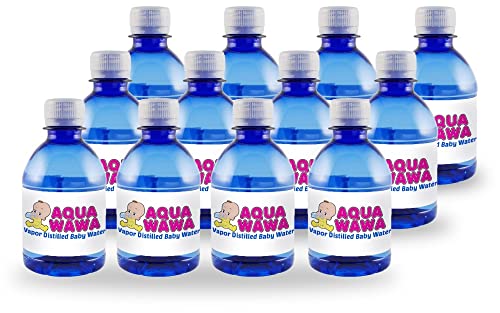
Aquawawa Nursery Water is the most pediatrician-recommended option in this lineup, and for good reason. The 8 oz bottles are perfectly sized for a single formula feed — no waste, no storing half-empty bottles in the diaper bag. The water is 100% purified vapor distilled, which means every impurity, mineral, and fluoride particle is removed before bottling. Parents report that their babies take to it immediately, with no digestive upset or refusal.
Chemically, this water is explicitly labeled as fluoride-free, phosphate-free, and mineral-free. The small 8 oz format also keeps the total weight at just under 6 pounds per case, making it the lightest travel option on this list. If you’re a parent who is constantly on the move, this is the water that slips into a side pocket of the diaper bag without a second thought.
The manufacturer recommends it from birth (0 months and up), which aligns with AAP guidelines for using distilled water in infant formula. The bottles are BPA-free, and the water is made in the USA under strict quality standards. For a no-compromise, grab-and-go solution, this is the water that earns the top spot.
Why it’s great
- Doctor recommended and 100% vapor distilled
- Compact 8 oz bottles fit any diaper bag
- Free from fluoride, minerals, and BPA
Good to know
- Only 8 oz per bottle — may need two for older babies
- Total volume (96 oz) is less than some 12-packs
2. Bay Bay Water

Bay Bay Water takes a broad-spectrum approach to safety with a 7-step purification process that includes multiple distillation cycles. The result is a water that is 100% free from fluoride, mold, chlorine, fungi, pesticides, viruses, minerals, parasites, lead, and bacteria. That is an exhaustive list that gives peace of mind to parents of newborns with sensitive systems.
The 16.9 oz bottles offer more volume per bottle than the Aquawawa option, making them more practical for mixing larger batches of formula or preparing cereal. They are still compact enough to fit in a standard diaper bag. The manufacturer specifically calls out that the water helps prevent stomach discomfort and diarrhea caused by mineral overload — a real concern for babies whose kidneys are still maturing.
Parents in the reviews consistently mention using this water for CPAP machines as well, which speaks to its purity. The facility is CGMP-certified and FDA-registered, meeting the quality standard 21CFR Section 165.110(b). For a mid-range option that doesn’t compromise on purification rigor, Bay Bay Water delivers excellent value.
Why it’s great
- Multi-step 7-stage distillation for extreme purity
- Larger 16.9 oz bottles reduce per-use waste
- FDA-registered facility with third-party lab testing
Good to know
- Bottles are heavier than 8 oz options
- Some parents find the price per ounce higher than gallon alternatives
3. ABC Baby Water
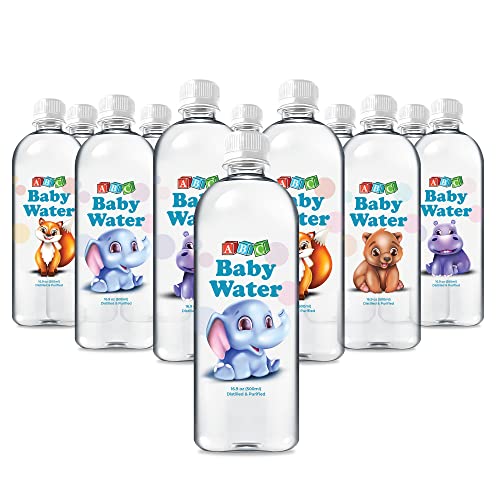
ABC Baby Water stands apart because of its production timeline: an 11-hour, 9-step distillation and purification process. That is longer than any other product in this review, and it reflects a commitment to removing every possible trace of contaminants. The water is sourced from fresh mountain spring water, then run through steam distillation, multilayer filtration, and UV and Ozonation treatment.
This water is specifically marketed as colic-friendly. The complete absence of minerals means it reduces the likelihood of stomach discomfort, gas, and diarrhea in newborns whose digestive tracts are still developing. Additionally, ABC Baby Water explicitly addresses fluorosis — the white streaking on baby teeth caused by too much fluoride before the age of two. This is a detail most parents don’t know to look for, but it matters.
The packaging is also notably thoughtful: each case includes four unique animal-themed labels that babies love looking at during feeding. The bottles are BPA-free, and the water is produced in a state-inspected facility that meets full FDA guidelines. For parents who want the most thorough purification process on the market, ABC Baby Water is the right call.
Why it’s great
- Longest 9-step, 11-hour distillation cycle for maximum purity
- Specifically formulated to reduce colic and fluorosis risk
- Cute animal-themed labels engage babies during feeding
Good to know
- Price per ounce is higher than some competitors
- Heavier case (13.76 lbs) for storage and transport
4. Snugell Bottled Distilled Water
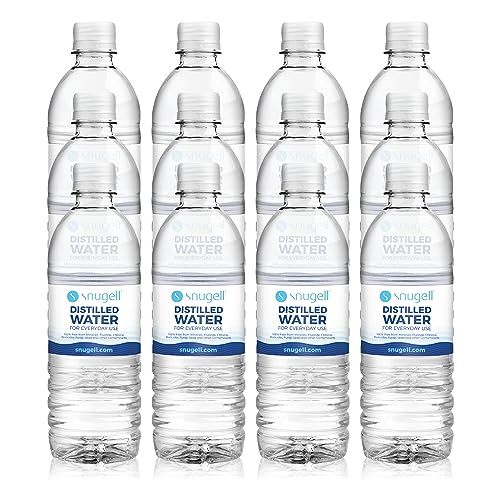
Snugell offers a distilled water that is formulated for both baby use and household devices like CPAP machines, humidifiers, and facial steamers. The water is sourced from fresh mountain spring water, then processed through steam distillation, multilayer filtration, and a thorough UV and Ozonation process. This triple-layer purification ensures the water is free from fluoride, chloride, pesticides, fungi, lead, and other contaminants.
The resealable cap is a small but meaningful feature. Unlike single-serve formula bottles where you use the entire volume at once, Snugell’s 16.9 oz bottles let you pour what you need and store the rest. The bottles are BPA-free and made in the USA. Parents who need one water supply for their baby’s formula, their own CPAP machine, and the household humidifier will appreciate not having to juggle multiple brands.
Customer feedback highlights the convenience of the 16.9 oz size for travel and the reliability of the water for sensitive medical equipment. The only trade-off is that Snugell does not specifically market itself as a “baby water” in the same way that Aquawawa or ABC Baby Water does, so the labeling is more general. For purity, however, it matches the same standards.
Why it’s great
- Triple purification: steam distillation, UV, and Ozonation
- Resealable bottles reduce waste and allow portion control
- Safe for baby formula, CPAP, and household devices
Good to know
- Not specifically labeled as “baby water”
- Some users report the taste is less sharp than tap
5. Resway American Red Cross Distilled Water

Resway’s American Red Cross branded distilled water is the entry-level option in this lineup, but “budget-friendly” does not mean it cuts corners on the fundamentals. Each bottle is vapor distilled in a CGMP-certified and FDA-registered facility, and the water is packaged in BPA-free, recyclable bottles. The 16.9 oz size is the standard travel-friendly format that fits in diaper bags, backpacks, and luggage.
The water is suitable for baby formula, cereals, and nutrition mixes. It is also TSA-approved for carry-on travel, which makes it a good choice for families who fly frequently. The manufacturer specifically highlights compatibility with humidifiers, aquarium care, and steam devices, making this a true multipurpose water that parents can also use around the house.
The trade-off is that this is a general distilled water, not a specially formulated baby water. There are no pediatrician endorsements on the label, and the branding is more generic. The purification process is vapor distillation, but the specific parameters (number of steps, hours of processing) are not advertised as transparently as the premium options. It works, but it lacks the margin-of-error confidence that some parents prefer for a newborn.
Why it’s great
- Most affordable distilled option in the review
- TSA-approved and convenient for travel
- CGMP-certified, FDA-registered facility
Good to know
- General distilled water, not specifically marketed for infants
- Less transparent about distillation steps and timing
FAQ
Can I use any bottled water for my baby’s formula?
What is the difference between nursery water and regular distilled water?
How much water does my baby need each day?
Final Thoughts: The Verdict
For most parents, the bottled water for babies to drink winner is the Aquawawa Nursery Water because its single-serve 8 oz format is perfectly matched to a newborn’s feed size and it carries the strongest pediatrician-recommended backing. If you want larger bottles for mixing bigger batches, grab the Bay Bay Water. And for parents who prioritize the most exhaustive purification cycle on the market, nothing beats the ABC Baby Water with its 11-hour, multi-step distillation.