The moment rain hits pavement, most footwear turns into a sponge. Wet socks, cold feet, and the squelch of soaked insoles define the wrong boot choice. The right pair seals water out, grips slick surfaces, and keeps your feet dry through downpours, puddles, and muddy terrain.
I’m Emma — the founder and writer behind Baby Bangs. I’ve spent years researching outdoor gear, analyzing rubber compounds, neoprene thicknesses, and sole patterns to identify which boots truly lock out moisture without sacrificing comfort.
This guide cuts through the marketing to deliver the highest-performing boots for rain, tested by real users across farm work, fishing trips, and everyday commutes.
How To Choose The Best Boots For Rain
Rain boots live in puddles, mud, and wet grass — their job is to keep water out while your feet stay comfortable for hours. Three factors separate a good pair from a regretful purchase: the waterproofing method, the sole’s grip on wet surfaces, and the neoprene-or-rubber debate for warmth and flexibility.
Waterproofing vs Water Resistance
Genuine rain boots use vulcanized rubber or neoprene-bonded rubber to create a permanent barrier. Water-resistant coatings wear off after a few uses. Look for seams that are molded, not stitched — stitched seams create tiny holes that leak under pressure. The best boots for rain are fully vulcanized or sealed with bonded layers, not sprayed with a repellent.
Neoprene Thickness and Insulation
Neoprene lining adds warmth and flexibility. A 5mm to 6mm neoprene layer provides enough insulation for cold rain and light snow, while still allowing your foot to bend naturally. Thinner neoprene (2-3mm) works for warmer wet weather. Pure rubber shells without neoprene are stiffer, less breathable, and can cause sweaty feet after an hour of walking.
Sole Traction on Wet Surfaces
Deep, multidirectional lugs are non-negotiable for mud and loose dirt. For wet concrete and boat decks, look for a siped rubber compound — small slits in the tread that grip smooth, slick surfaces. A flat or shallow tread pattern is dangerous on rain-slicked pavement. Steel shanks help distribute pressure and reduce foot fatigue when walking on hard, wet ground all day.
Quick Comparison
On smaller screens, swipe sideways to see the full table.
| Model | Category | Best For | Key Spec | Amazon |
|---|---|---|---|---|
| MUCK Edgewater Tall | Unisex | All-day wet terrain | Neoprene upper, rubber shell | Amazon |
| Timberland White Ledge Mid | Men’s Hiking | Wet trail hikes | Full-grain leather, waterproof membrane | Amazon |
| HUK Rogue Wave | Men’s Deck | Wet boat/fishing use | Non-slip siped outsole | Amazon |
| Trudave Women’s Steel Shank | Women’s Work | Yard work and snow | 6mm neoprene, steel shank | Amazon |
| Trudave Men’s Steel Shank | Men’s Work | Outdoor labor in mud | 5mm neoprene, steel shank | Amazon |
| HISEA Women’s Tall Mud | Women’s Garden | Deep mud and farm chores | Extra-wide calf, rollable top | Amazon |
| XTRATUF 6 in Ankle Deck | Women’s Low | Light rain and errands | Low-cut deck design | Amazon |
In‑Depth Reviews
1. MUCK Men’s Edgewater Tall Boot

The MUCK Edgewater Tall is the benchmark for all-day wet-weather performance. Its neoprene upper wraps your calf comfortably while the rubber outer shell shrugs off standing water and mud. Users report wearing these for full workdays in snow, rain, and heat without leakage or cold feet. The calf-hugging design also blocks high splashes that typically get inside looser boots.
The outsole uses deep chevron lugs that bite into loose soil and wet grass, making it reliable on uneven farm ground and slick forest trails. The boot is lightweight compared to pure rubber wellies, and the slip-on entry is genuinely easy — no laces to soak through. Multiple long-term reviews confirm the waterproofing holds up after a full year of hard use, which is rare for this price tier.
One consideration — the taller shaft may feel snug for larger calves. The boot runs true to size, and the lack of insulation layers means it breathes better in warmer rain, though it still retains heat well for cold-weather wear. For anyone needing a one-boot solution for rain, mud, and light snow, this is the default recommendation.
Why it’s great
- Neoprene upper provides flexibility and warmth without bulk
- Deep tread lugs grip mud and wet grass effectively
- Slip-on design with no laces to soak up water
Good to know
- Calf fit may be snug for those with wider legs
- Not insulated for extreme winter temperatures
2. Timberland Men’s White Ledge Mid Waterproof Hiking Boot

The Timberland White Ledge Mid is a leather hiking boot built with a waterproof membrane, making it a hybrid option for rain that involves actual trail miles. Unlike rubber wellies, this boot provides genuine ankle support on rocky terrain, while the full-grain leather upper repels light to moderate rain. Users consistently report dry feet after stream crossings and muddy hikes.
The outsole uses multidirectional lugs that grip wet rocks and damp soil better than standard rain boots. The boot runs slightly oversized, so thick wool socks fill the space comfortably without pinching. The leather requires regular conditioning with mink oil to maintain its water resistance — it is not a set-and-forget boot like a rubber shell. The toe box is roomy, which benefits hikers with wider feet.
For rain that involves actual hiking — hills, loose rocks, uneven descents — this boot outperforms every tall rubber option on ankle stability and overall traction. However, it is not meant for submersion deeper than the mid-height collar. Treat the leather promptly after exposure to salt and standing water to prevent premature wear. A solid choice for the hiker who wants one boot for wet trails and casual wear.
Why it’s great
- Ankle support for uneven, wet terrain
- Roomier toe box accommodates thick socks
- Versatile look for hiking and casual wear
Good to know
- Requires regular leather conditioning for waterproofing
- Not suitable for deep puddles or full submersion
3. HUK Men’s Rogue Wave Shoe

The HUK Rogue Wave is purpose-built for wet boat decks and fishing trips. Its siped rubber outsole delivers exceptional grip on slick fiberglass, aluminum, and wet concrete — surfaces where traditional deep-lug boots slide. The boot is lightweight enough to wear for 10-hour fishing days without back fatigue, and the waterproof construction keeps feet dry during spray and light rain.
The upper is a flexible rubber compound that slides on easily without laces, though the initial fit runs tight until it breaks in. There are no half sizes, so sizing up is recommended if you land between full sizes. The boot does not provide much ankle support and is not intended for hiking or uneven terrain — it is strictly a flat-surface wet-weather shoe. Users who pressure wash, hose down decks, or work on wet floors will appreciate the non-slip grip.
The Rogue Wave lacks neoprene insulation, so it is a warmer-weather rain boot or an option for mild climates. The design is clean and low-profile, so it passes for casual wear after the rain stops. For anyone who spends hours on wet concrete, boat decks, or driveways, this is the most secure footing option in this lineup.
Why it’s great
- Superb grip on wet smooth surfaces like boat decks
- Very lightweight for all-day wear
- Easy slip-on design
Good to know
- No half sizes — may need to size up
- No insulation for cold rain or snow
4. Trudave Rubber Boots for Women with Steel Shank
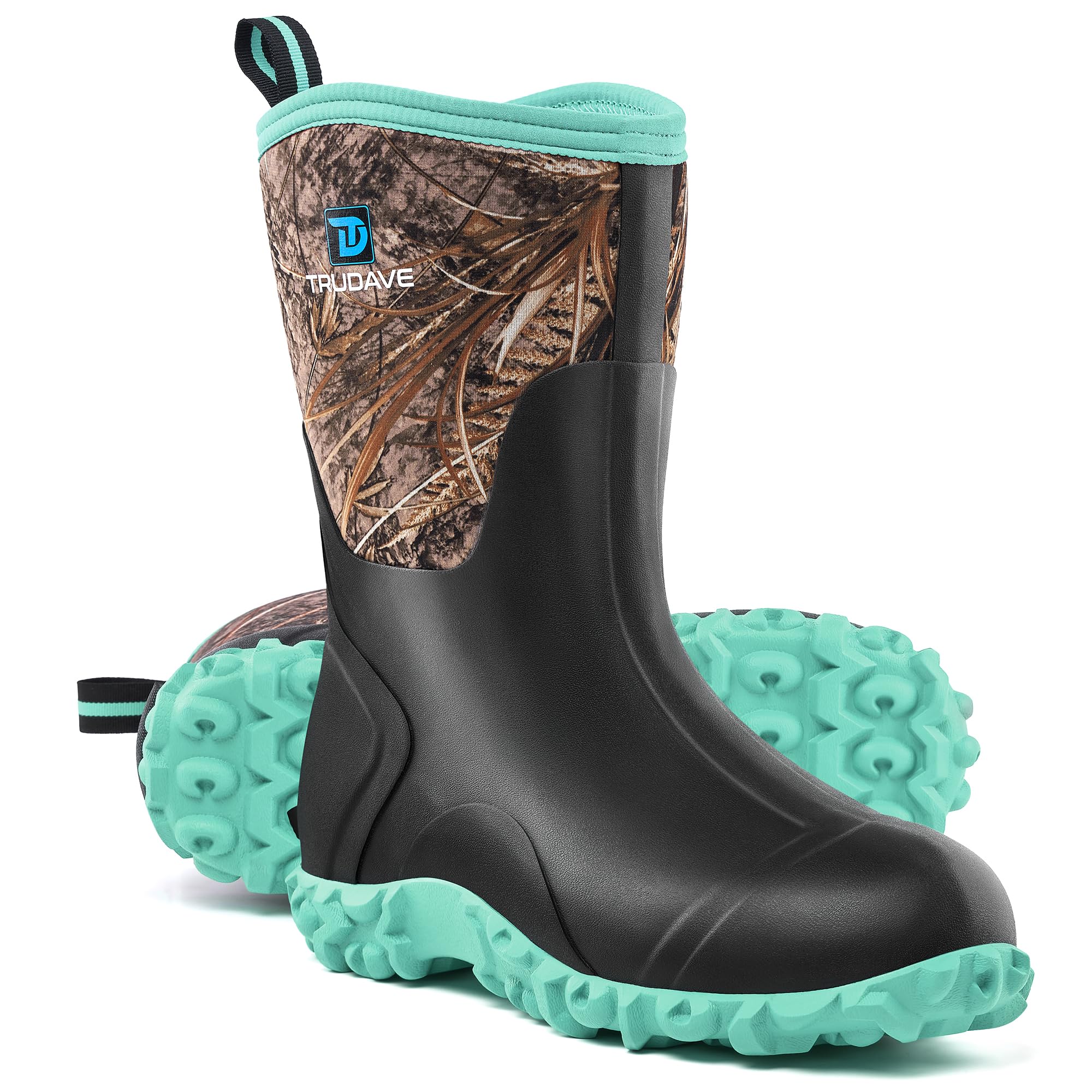
The Trudave Women’s boot packs features typically found at higher price points: 6mm neoprene lining for warmth, a steel shank for arch support, and a steel shank that prevents foot fatigue on hard wet ground. Women who work barns, shovel snow, or stand on concrete in the rain report that these boots stay comfortable for hours — no bottom-of-foot pain by midday.
The neoprene lining wraps the foot in warmth without restricting movement. Users note that the boot is easy to pull on and off, thanks to a back loop and a heel step-on tab. The sole provides solid traction in snow and mud, though it is not as aggressive as some farm boots. The fit is true to size, with several women reporting that a size down from their usual 9.5 worked perfectly for snugness without pinching.
The boot is mid-calf height, which covers deep puddles but not thigh-deep mud. The neoprene-backed upper breathes better than pure rubber, reducing sweat during active yard work. A small downside — the boot’s appearance leans utilitarian rather than stylish. For function-focused use like gardening, dog walks, and farm chores, this is a highly capable rain boot.
Why it’s great
- Steel shank provides arch support for all-day standing
- 6mm neoprene offers warmth without stiffness
- Easy pull-on with back loop and step-tab
Good to know
- Mid-calf height may not cover very deep mud
- Aesthetic is purely functional, not fashion-forward
5. Trudave Rubber Boots for Men with Steel Shank

The men’s Trudave boot mirrors the women’s version with a 5mm neoprene lining and a steel shank, but tuned for larger frames. Reviewers have tested these in Alaska’s Zodiac boats, hiking wet terrain, and mucking horse stalls — and every account confirms complete waterproofing. The boot rolls up for packing, making it a favorite for travelers who need a rain boot that fits in a duffel.
The sole provides excellent traction in mud, and the boot washes clean in a sink without damage. Several users note that the boot runs large, which allows for two pairs of wool socks in cold conditions. The comfort level is described as superior to well-known brands like Bogs, especially for lighter weight and easier movement. The design is simple and purely work-oriented.
Like the women’s version, the height is mid-calf, so deep standing water will test the limits. The neoprene layer is thick enough for freezing rain and light snow, but not for submersion in icy water. For the price, the steel shank and neoprene lining make this an excellent value for men who need a reliable, warm rain boot for outdoor labor.
Why it’s great
- Rolls up for compact travel storage
- Steel shank reduces foot fatigue on hard ground
- Runs large to accommodate thick sock layers
Good to know
- Mid-calf height limits deep puddle coverage
- Plain design may not appeal to style-conscious users
6. HISEA Women’s Mud Rain Boots
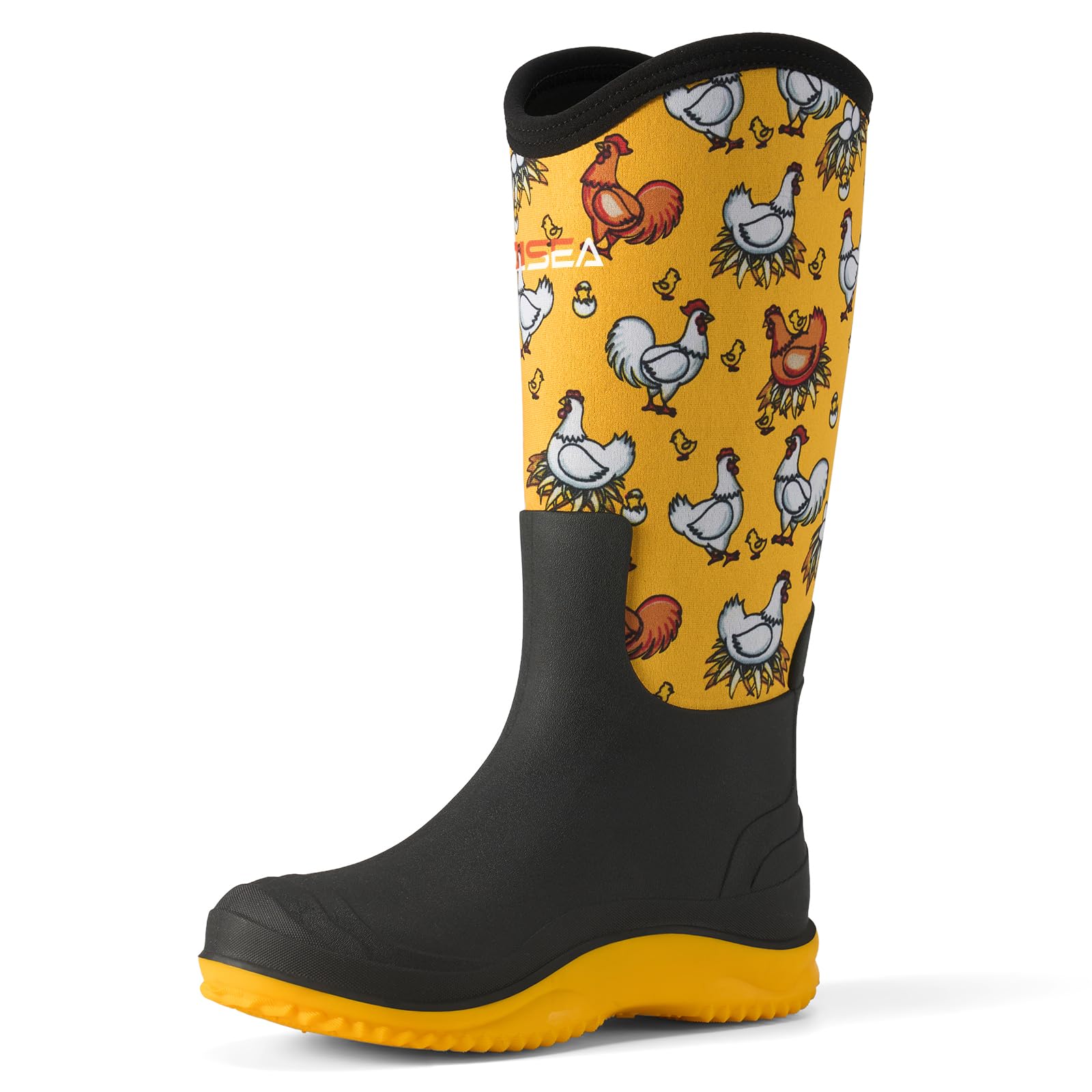
The HISEA Mud Rain Boot is designed for gardeners and farm workers who need a wide calf opening. The extra-wide fit accommodates pants tucked in or thicker calves, while the rollable top lets you adjust the height from tall to mid-calf. Users report that the boot is easy to pull on and off, even with muddy hands, and the thick rubber base seals out water completely.
The outsole provides reliable grip on wet grass and packed soil, though it is not as aggressive as the Trudave or MUCK for deep mud. The interior is lined with neoprene for warmth and comfort, and the material thickness makes the boot feel sturdy without being overly heavy. Cleaning is straightforward — a hose spray removes dirt without leaving residue.
Some users note the sole runs slightly stiff during the first few wears, but it softens with use. The boot is not insulated for freezing temperatures, so it works best in mild to cool rainy weather. For the price, the wide-calf fit and rollable design make this a practical choice for anyone who found standard rain boots too tight at the calf.
Why it’s great
- Extra-wide calf accommodates larger legs and layered pants
- Rollable top allows height adjustment
- Neoprene lining adds warmth and comfort
Good to know
- Sole may feel stiff during initial break-in
- Not suitable for sub-freezing temperatures
7. XTRATUF Women’s 6 in Ankle Deck Boot
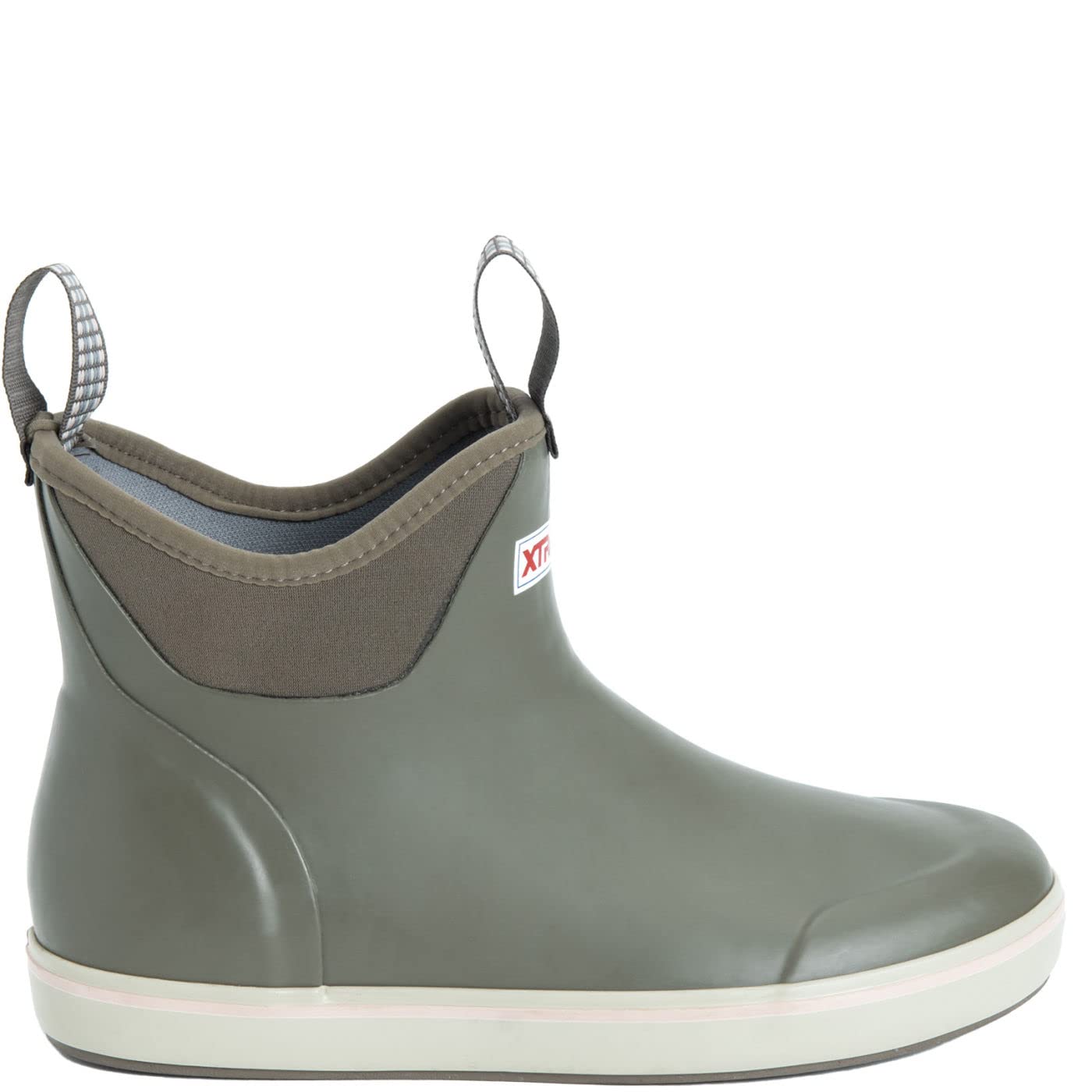
The XTRATUF 6 in Ankle Deck Boot is a low-cut rain shoe designed for light rain and quick errands, not deep puddles. Its ankle-height silhouette slips on easily, making it ideal for taking the dog out, running to the grocery store, or walking on wet sidewalks. The rubber construction is fully waterproof, and the outsole uses XTRATUF’s slip-resistant pattern for grip on wet pavement.
Users consistently praise the comfort for 8-9 hour shifts on concrete floors — the shoe is lightweight and requires minimal break-in. The back tab makes entry easy, and the boot runs true to size. However, the low cut offers zero ankle support and will not keep water out if you step into a puddle deeper than about 4 inches. It is a rain shoe, not a rain boot for mud or standing water.
A few users note that the ankle opening can rub during the first few wears, requiring socks to prevent irritation. The shoe is warm enough for rainy days above freezing but lacks insulation for cold weather. For the best rain shoes for casual, low-stakes wet conditions, the XTRATUF delivers dependable waterproofing in an easy-wearing package.
Why it’s great
- Very lightweight and comfortable for long standing shifts
- Easy slip-on with back tab
- Good grip on wet pavement
Good to know
- Ankle height offers no protection for deep puddles
- May rub ankles raw without socks during initial wear
FAQ
How tall should my rain boots be for everyday use?
Can I wear rain boots all day without my feet hurting?
Should I size up or down for rain boots?
Final Thoughts: The Verdict
For most users, the boots for rain winner is the MUCK Edgewater Tall because it combines neoprene flexibility, a robust waterproof shell, and reliable traction for the widest range of wet conditions. If you want a hiking boot that handles rain on trails, grab the Timberland White Ledge Mid. And for wet boat decks and concrete, nothing beats the non-slip grip of the HUK Rogue Wave.