A mechanic’s boot lives in a daily war zone — motor oil pools, dropped transmission housings, slick concrete, and unforgiving 12-hour shifts that punish the arches, knees, and lower back. The wrong boot doesn’t just wear out; it wears you down, turning every shift into a recovery battle.
I’m Emma — the founder and writer behind Baby Bangs. I’ve spent years combing through safety certifications, outsole compounds, and midsole construction to separate boots that merely cover your feet from boots that actively support a mechanic’s specific demands.
After sorting through hundreds of user reports and technical specs, the results narrowed to these nine models that define the current best boots for mechanics.
How To Choose The Best Boots For Mechanics
Mechanics face a distinct set of threats: hot brake rotors, dropped engine blocks, oily floors, and constant kneeling or squatting. A boot that excels in a construction trench may fail your first week in a shop. Here’s what to filter for.
Safety Toe Type: Steel vs. Composite vs. Alloy
Steel toe offers the highest impact resistance but conducts cold and heat, which matters near exhaust work. Composite toe is lighter and non-conductive, ideal if you work near electrical systems, but can be bulkier in the toe box. Alloy toes split the difference — lighter than steel, thinner than composite — but cost more.
Outsole and Slip Resistance
Look for ASTM F2913 slip-rated outsoles (the SATRA test). A wedge sole maximizes surface contact for stability on flat concrete, while a lugged heel suits uneven terrain. Neither helps if the rubber compound hardens in oil — a nitrile or oil-resistant compound is non-negotiable when walking through power steering fluid puddles.
Underfoot Support and Shank Material
A steel shank under the midsole protects against puncture and prevents fatigue over long standing shifts. Nylon or fiberglass shanks cut weight but flex more under loads over 200 pounds. Mechanics who stand all day on concrete benefit from a thick EVA or polyurethane midsole that absorbs shock rather than transferring it to the heel.
Quick Comparison
On smaller screens, swipe sideways to see the full table.
| Model | Category | Best For | Key Spec | Amazon |
|---|---|---|---|---|
| Thorogood 1957 8″ Waterproof Moc Toe | Premium | Ultimate comfort & resoleable construction | Full-grain leather, wedge sole | Amazon |
| Timberland PRO Endurance 8″ Steel Toe | Premium | Heavy-duty puncture resistance | Steel toe, 6.4 lbs per pair | Amazon |
| Ariat Workhog 8″ H2O Composite Toe | Premium | Extreme temperature versatility | Composite toe, waterproof | Amazon |
| New Balance Calibre Composite Toe | Mid-Range | Lightweight & easy on/off with side zip | Composite toe, side zipper | Amazon |
| Wolverine I-90 EPX BOA CarbonMax | Mid-Range | Quick lacing & composite toe protection | BOA closure, CarbonMax toe | Amazon |
| SUREWAY Logger 8″ Waterproof Steel Toe | Mid-Range | Goodyear welt construction at a lower cost | 8″ shaft, Goodyear welt | Amazon |
| SAFETOE Welding Boot Composite Toe | Budget | Heat/flame resistance for fabrication work | Heat resistant up to 300°F | Amazon |
| Iron Age Groundbreaker 6″ Steel Toe | Budget | Zero break-in period at a low entry price | Steel toe, 4.21 lbs | Amazon |
| Cat Footwear Striver Steel Toe | Budget | Proven durability for daily shop work | Steel toe, 3 lbs | Amazon |
In‑Depth Reviews
1. Thorogood 1957 Series 8” Waterproof Moc Toe

The Thorogood 1957 series represents the gold standard for mechanics who demand a boot that molds to the foot rather than fighting it. The full-grain leather upper, Goodyear welt construction, and wedge outsole deliver a platform that sits flat against the shop floor, maximizing stability when you’re leaning into an engine bay. Multiple users report the boot breaks in within a single week, not a month, which is rare for a premium work boot at this price tier.
From a material standpoint, the waterproof membrane keeps feet dry during fluid-intensive jobs without trapping excessive heat, and the slip-resistant wedge sole performs reliably on oil-slicked concrete. The soft toe design means no steel cap to get cold near a winter lift pit, but it also means you sacrifice impact protection — this boot is best for diagnostic and light-fabrication roles rather than heavy demolition. The attention-grabbing style earns unsolicited compliments from other tradesmen.
The downsides center on quality control at this price point — a small but notable number of buyers received pairs with sole separation fresh out of the box, and the standard lacing system lacks the convenience of a zipper or BOA dial. If you prefer hands-free entry for quick changes between shop floor and office, this isn’t your boot.
Why it’s great
- Full-grain leather and Goodyear welt allow resoling
- Comfortable within a week for most users
- Wedge outsole provides a broad contact patch for oil-slick floors
Good to know
- Inconsistent build quality; some pairs have sole separation
- Soft toe provides no impact protection for heavy parts
- Traditional laces slow down on/off during a busy shift
2. Timberland PRO Endurance 8″ Steel Safety Toe

Timberland PRO’s Endurance boot is built for the mechanic who drops things. The steel toe and puncture-resistant plate have documented saves — buyers report that the boot prevented serious injury when a sharp metal shard or a falling component hit squarely on the cap. The 8-inch shaft provides better ankle support when crouching under a raised vehicle compared to shorter counterparts.
What sets it apart is the all-day comfort on concrete. Multiple long-term reviews note zero foot pain or blistering after 65-plus-hour weeks on cement floors, which speaks to the cushioning and arch support in the midsole. The boot runs true to size, breaks in quickly, and manages to feel lighter than its 6.4-pound actual weight due to balanced weight distribution.
The downsides are that the steel toe can restrict how tightly you can lace the forefoot, and the leather finish looks cheaper than the price suggests. Some users also noted that grip on pure grease puddles could be better — the outsole shines on wet surfaces but slides on thick lubricants.
Why it’s great
- Proven puncture and impact protection in real shop incidents
- Stays comfortable through 65-hour work weeks on concrete
- Short break-in period with true-to-size fit
Good to know
- Steel toe limits lace tightening across the forefoot
- Leather appearance looks cheaper than comparable boots
- Not ideal for pure grease-slick surfaces
3. Ariat Workhog 8″ H2O Composite Toe
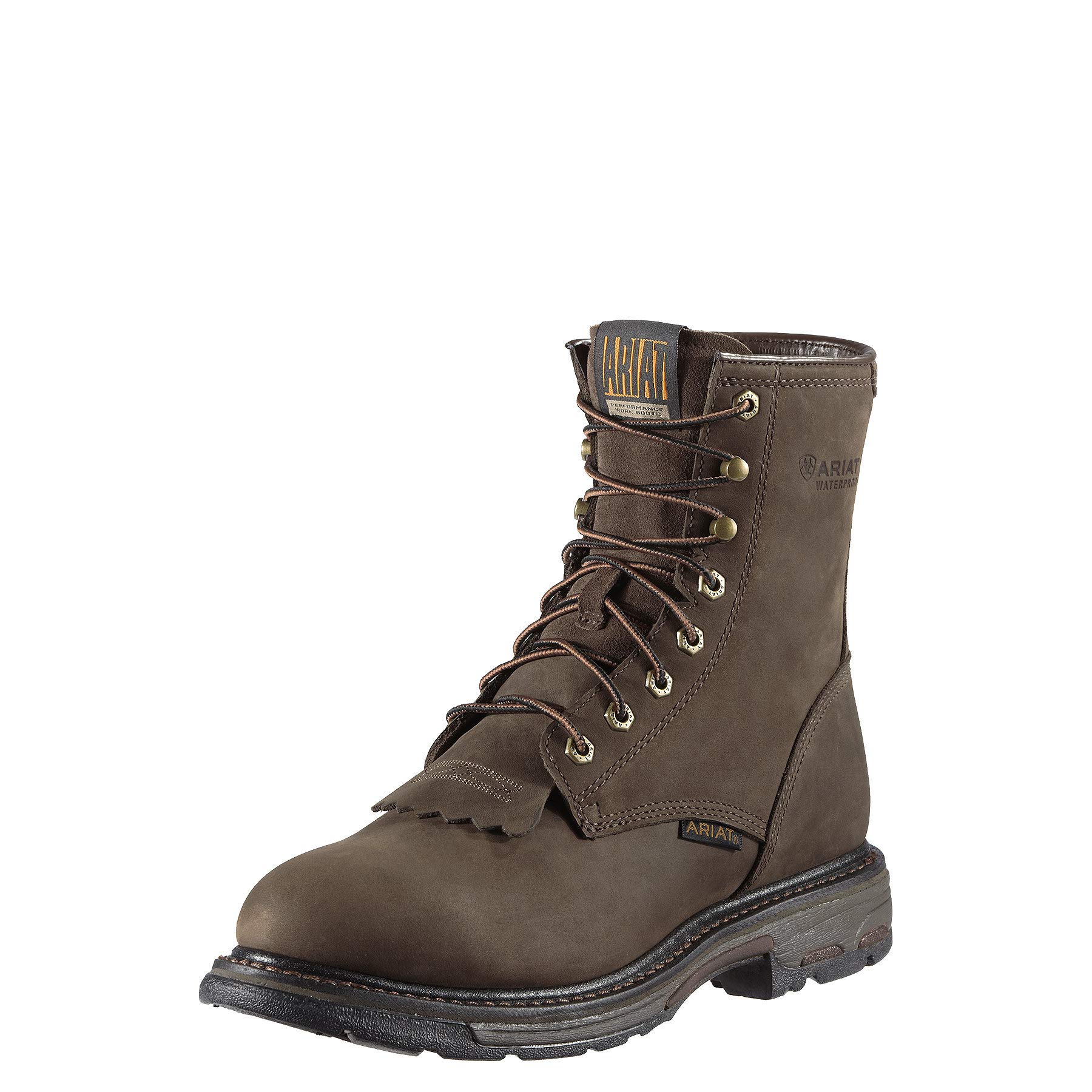
Ariat’s Workhog is the temperature chameleon of the list. The composite toe and waterproof liner handle subzero conditions down to -21°F while still breathing enough to avoid swamp foot during a summer oil change marathon. The block heel provides a secure fit for mechanics who prefer a western-style toe profile without sacrificing safety ratings.
The boot shines for mechanics with flat feet or back issues — multiple users with prior back surgery report zero pain after switching to this model. The slip-resistant outsole holds on wet surfaces, and the overall build quality holds up through daily abuse in both indoor shops and outdoor field service. The interior lining regulates temperature impressively for a boot that isn’t advertised as insulated.
On the downside, the tongue can shift during aggressive side-to-side movement, and the pull loops feel less durable than the rest of the boot. Some buyers wish the sole was more rigid for standing on ladder rungs or uneven terrain.
Why it’s great
- Performs from -21°F to 85°F without overheating
- Flat-foot and back-pain friendly with proper arch support
- Slip-resistant outsole holds well on wet concrete
Good to know
- Tongue shifts during side-to-side movements
- Pull loops may wear out before the rest of the boot
- Mid-heel design may feel unstable on uneven ground
4. New Balance Calibre Composite Toe

New Balance enters the work boot market with a mechanic-specific advantage: a robust side zipper paired with a Velcro guard flap. This design allows you to kick the boot off between service bays without untying, a time-saver during a busy shift. The composite toe feels noticeably lighter than steel alternatives, reducing fatigue over a full day.
The boot runs slightly wide in the toe box, which is a blessing for mechanics with wider feet who normally have to size up. The waterproofing holds up under power washing, and the toe reinforcement resists scuffing from kneeling on concrete. Buyers using them in warehouse environments report they stay comfortable for heavy walking and lifting.
The main complaints involve the top lace eyelets — they aren’t hooks, making it tricky to get a secure upper fit for those with larger calves. Breathability is also below average, so these are best for cooler months or shops without heat. The leather scuffs easily and requires regular conditioning.
Why it’s great
- Side zipper allows easy removal without untying
- Wider toe box accommodates broader feet comfortably
- Waterproofing holds up to direct power washing
Good to know
- Top lace eyelets complicate upper fit for larger calves
- Poor breathability; better suited for cooler conditions
- Leather scuffs easily and needs frequent conditioning
5. Wolverine I-90 EPX Boa CarbonMax 6″ Boot
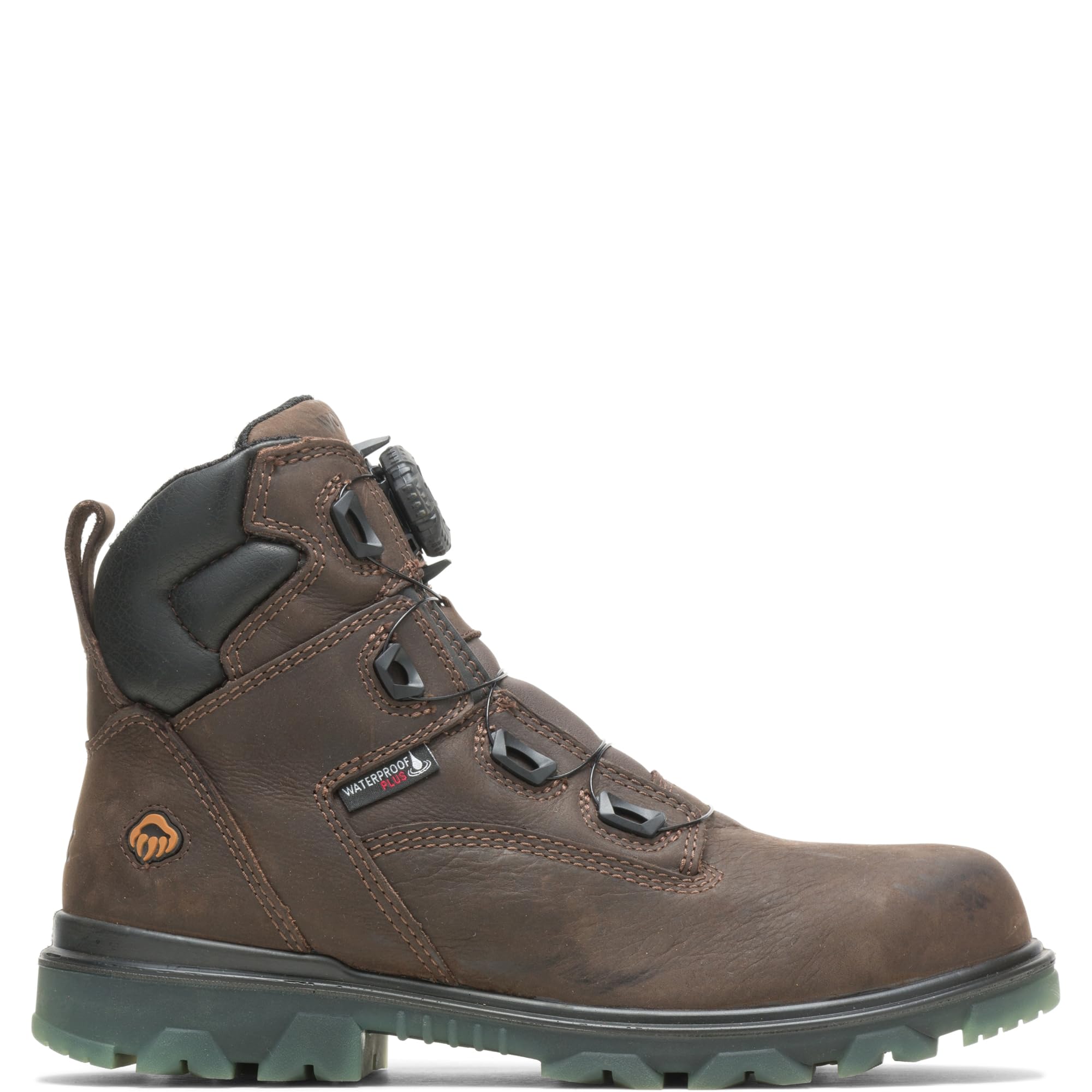
The BOA lacing system on the Wolverine I-90 EPX is the defining feature for mechanics who value precision fit over tradition. One twist of the dial tightens the boot evenly across the entire foot, eliminating the pressure points that conventional laces create. The CarbonMax composite toe meets safety standards while remaining non-metallic, a crucial detail for mechanics who pass through metal detectors.
Buyers consistently report the boot lasts three to four years in harsh industrial environments, including homestead and fabrication work. The puncture-resistant layer under the insole provides an extra safety margin when kneeling on sharp debris. The grip on greasy surfaces earns high marks, and the boot breathes well enough for warm-weather use.
The downsides include ankle irritation during the first two weeks — the collar sits high and stiff until the leather breaks in. The webbing inside the BOA system can bunch up and dig into the top of the foot over time, and some users found the toe leather prone to tearing without an added guard. Sizing runs narrow, so wide-footed mechanics should expect a snug fit.
Why it’s great
- BOA dial provides even, pressure-point-free tightening
- CarbonMax toe is non-metallic and safety rated
- Lasts 3-4 years in harsh industrial environments
Good to know
- Ankle collar causes irritation during initial break-in
- Interior webbing can bunch and dig into the foot
- Runs narrow; not ideal for wide feet without sizing up
6. SUREWAY Logger 8″ Waterproof Steel Toe
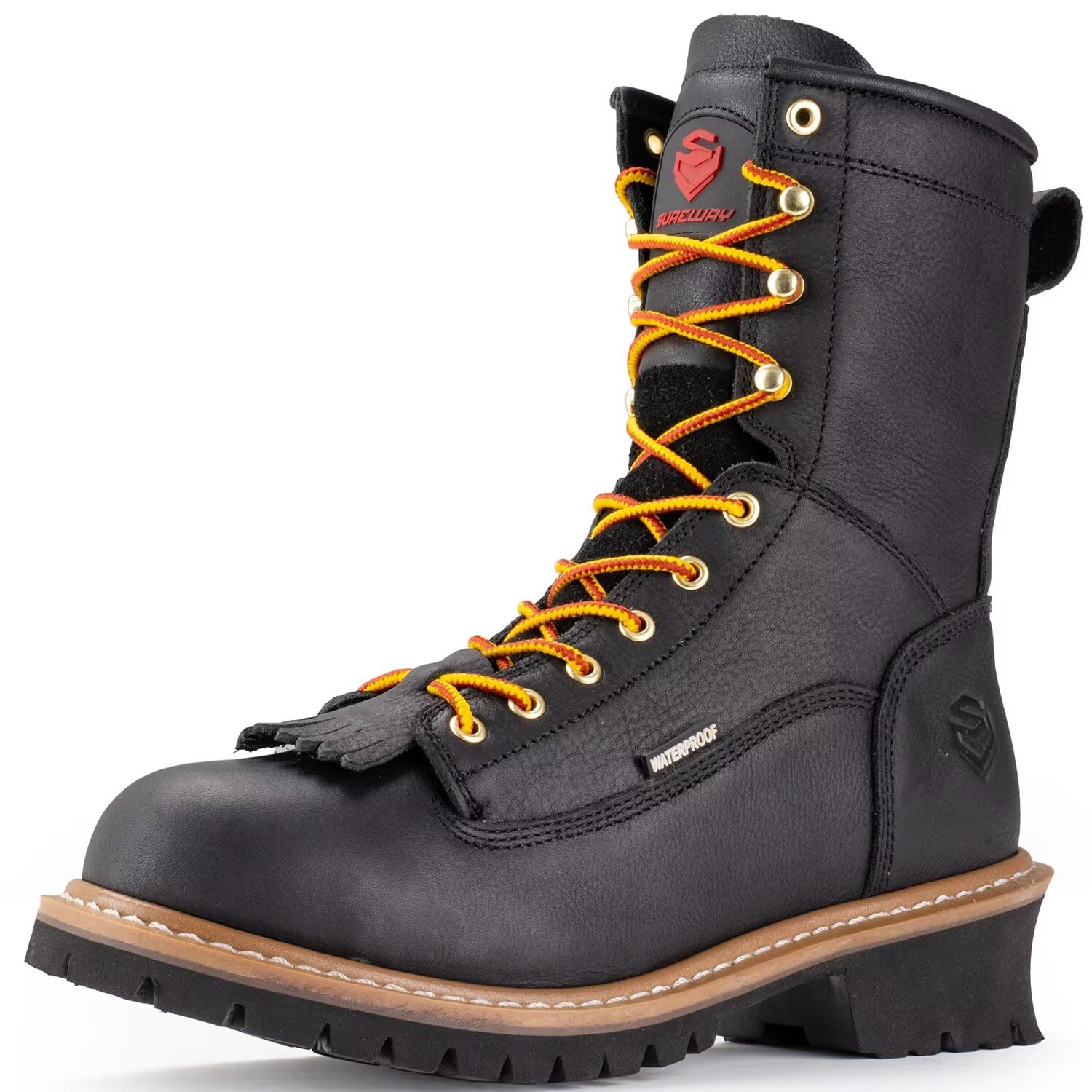
SUREWAY’s Logger boot punches well above its sticker price by using Goodyear welt construction — a feature usually reserved for boots costing two to three times as much. The thick full-grain leather and steel toe provide excellent protection for general shop work, while the 8-inch shaft offers substantial ankle coverage for those who squat or kneel frequently.
The boot includes two interchangeable insoles, allowing mechanics to dial in cushioning preference. Buyers report the boot holds up well against oil, chemicals, and mud, with many stating it outperforms Carhartt or Timberland PRO alternatives in durability per dollar. The waterproof membrane keeps feet dry during wet-weather jobs, and the wedge rubber sole provides a stable platform on flat surfaces.
Long-term durability is the main concern — some users experienced sole separation at the toe after seven months, allowing water ingress. The steel shank protects against debris but can feel stiff during the first few wears. Several buyers needed to add heel padding or custom insoles to get the perfect fit.
Why it’s great
- Goodyear welt construction at a mid-range price point
- Thick full-grain leather and steel toe offer robust protection
- Two interchangeable insoles for custom arch support
Good to know
- Some pairs develop sole separation after 6-7 months
- Stiff shank requires a short break-in period
- Fit may require additional padding or custom insoles
7. SAFETOE Welding Boot Composite Toe

For mechanics who also weld or work near heat sources, the SAFETOE boot brings heat resistance up to 300°F and a protective lace flap that prevents hot sparks from melting standard laces. The composite toe keeps the boot lightweight and non-conductive, which is relevant if you’re working near electrical systems or live wires in a fab shop.
The lightweight 2.7-pound build reduces fatigue compared to bulkier steel-toe alternatives, making it a practical choice for long shifts that involve both welding and general mechanics.
The biggest drawbacks are the narrow toe box — multiple users recommend sizing up by one full size — and the overall bulkiness of the design. The boot lacks a pull loop at the heel, making it harder to pull on without a shoehorn. Some buyers also note that the lace flap isn’t replaceable once worn out.
Why it’s great
- Heat-resistant construction up to 300°F for welding work
- Protective lace flap prevents spark melting
- Lightweight at 2.7 pounds; reduces fatigue
Good to know
- Narrow toe box requires sizing up by one full size
- No pull loop at the heel makes entry difficult
- Lace flap is not replaceable when it wears out
8. Iron Age Groundbreaker 6″ Steel Toe

Iron Age’s Groundbreaker is the value-tier boot that delivers on its core promise: zero break-in time. Buyers report wearing them straight out of the box for a full shift with no blistering, which is unusual for steel-toe footwear. The strong stitching and waterproofed leather keep feet dry in wet conditions, and the electrical hazard rating adds a layer of safety for shop environments.
The boot runs notoriously large — most users order 1 to 1.5 sizes down from their normal size. This quirk, while annoying during ordering, means the boot can accommodate thick wool socks for winter work. The low 6-inch shaft provides less ankle support than taller models but allows greater flexibility for bending and kneeling in tight spaces under a dashboard.
The Achilles’ heel is durability at the one-year mark. Multiple users note the boot lasts roughly 12 months before needing replacement, though the low entry cost makes this an acceptable trade-off for mechanics on a tight budget. The metatarsal guard area is thin, and arch support is minimal, requiring aftermarket insoles for all-day standing.
Why it’s great
- Requires zero break-in; comfortable from day one
- Runs large; accommodates thick socks for winter wear
- Low shaft allows full ankle flexibility for tight spaces
Good to know
- Durability caps out around 12 months of daily use
- Thin metatarsal guard offers limited side impact protection
- Minimal arch support requires upgraded insoles
9. Cat Footwear Striver Steel Toe

The Cat Striver Steel Toe has earned a loyal following among mechanics who need a boot that survives the daily grind without breaking the bank. Multiple users report logging four months of heavy shop use with no visible wear, and several buyers are on their third pair — the ultimate endorsement for durability in this price range. The steel toe provides solid impact protection, and the block heel offers a stable base for standing on concrete.
The break-in period is the toughest on this list — buyers recommend two pairs of wool socks, mink oil, and a hair dryer to accelerate the process. After the first two to three weeks, the leather softens into a comfortable shape that conforms to the foot. The boot runs true to size for standard feet, with some women mechanics successfully sizing down to a 7 for a women’s 9 wide fit.
The weight is noticeable at 3 pounds per boot, and some users add a shoemaker-installed pull loop to the heel for easier entry. The tongue can shift during wear, and the block heel may feel less stable on uneven surfaces compared to a wedge sole. But for pure value-per-dollar in a steel-toe boot that mechanics trust, the Cat Striver holds its own.
Why it’s great
- Proven durability with many buyers on third pair
- True-to-size fit for standard foot shapes
- Block heel provides stable platform for concrete floors
Good to know
- Toughest break-in period on this list; requires patience
- Noticeably heavy at 3 pounds per boot
- No pull loop makes entry difficult without modification
FAQ
Should a mechanic choose steel toe or soft toe boots?
How often should a mechanic replace work boots?
What does electrical hazard (EH) rating mean for mechanic boots?
Can a mechanic wear wedge sole boots on uneven terrain?
Does waterproofing affect breathability in mechanic work boots?
Final Thoughts: The Verdict
For most users, the boots for mechanics winner is the Thorogood 1957 8″ Waterproof Moc Toe because it combines full-grain leather, a wedge sole that grips oil-slick floors, and a break-in period measured in days, not weeks. If you want the heaviest puncture and impact protection for dropping transmission housings, grab the Timberland PRO Endurance 8″ Steel Toe. And for a blend of temperature versatility and flat-foot support in extreme conditions, nothing beats the Ariat Workhog 8″ H2O Composite Toe.