The moment your baby pulls up to stand, their world tilts. Every smooth floor becomes a skating rink, and every cold gust of wind turns a trip to the mailbox into a battle against frozen toes. The right boot for an infant isn’t just a tiny fashion statement; it’s a piece of safety gear that must stay on a foot that has no ankle definition, provide warmth without bulk, and let a beginning walker feel the ground beneath them. Buying the wrong pair means chasing lost boots, red crying toes, or slips that end the play session early.
I’m Emma — the founder and writer behind Baby Bangs. I’ve spent years analyzing baby footwear construction, cold-weather insulation weights, and the exact sole flexibility a new walker needs to build balance and confidence on unsteady legs.
Whether you’re bracing for a snowy daycare drop-off or just trying to keep tiny socks dry on a damp sidewalk, finding the absolute right boots for infants is the difference between a tantrum-free outing and a frozen meltdown before you reach the car.
How To Choose The Best Boots For Infants
Infant feet have no arch, no ankle strength, and roughly the grip of a marble on a waxed floor. The wrong boot either slides off in the car seat or restricts the natural flex of the foot that teaches a baby how to balance. Here’s what separates a useful boot from a closet-filler.
The Stay-On Test: Ankle Collar & Closure System
Babies kick. That reflex pulls loose boots straight off. Look for a design with a tall, padded ankle collar that wraps above the malleolus (the ankle bone) and a closure system—velcro, side zipper, or an elastic cinch—that lets you tighten the fit without choking the leg. The boot should require a deliberate adult action to remove, not a baby’s casual wiggle.
Sole Flexibility and Outsole Grip
The best infant boot sole lets you bend the toe up to a 45-degree angle with one hand. A board-stiff sole forces a beginner walker into a high-step march that increases fall risk. The outsole needs a visible tread pattern with enough rubber to grab a wet linoleum floor but not so aggressive that it catches on carpet and trips the child. Smooth “fashion” soles are a hard pass for any infant who is trying to walk.
Warmth Without Sweat: Lining Material Matters
Fleece and wool linings trap heat while wicking moisture away from the skin. Cheap synthetic “fur” linings look fluffy but hold sweat against the foot, leading to cold, clammy toes once the activity stops. For infants, who cannot communicate that their feet are wet, a moisture-wicking lining is a safety feature, not a luxury. A removable insole also lets you air the boot out between wears.
Quick Comparison
On smaller screens, swipe sideways to see the full table.
| Model | Category | Best For | Key Spec | Amazon |
|---|---|---|---|---|
| JAN & JUL Cozy Booties | Premium Soft Sole | Pre-walkers & early toddlers | Adjustable velcro strap + fleece lining | Amazon |
| Stride Rite Cheyenne | Premium Walker | First walkers needing stability | Rounded edge sole + removable insole | Amazon |
| Simple Joys Alexis | Mid-Range All-Weather | Snow, mud, and rugged play | Non-slip rubber outsole + padded tongue | Amazon |
| Fur Lined Snow Boots | Value Snow Boot | Budget-friendly warmth in snow | Anti-slip sole + plush lining | Amazon |
| Carter’s Roy Boot | Value Side-Zip | Quick on/off for daycare | Side zipper + wide toe box | Amazon |
In‑Depth Reviews
1. JAN & JUL Fleece Stay-Put Cozy Booties
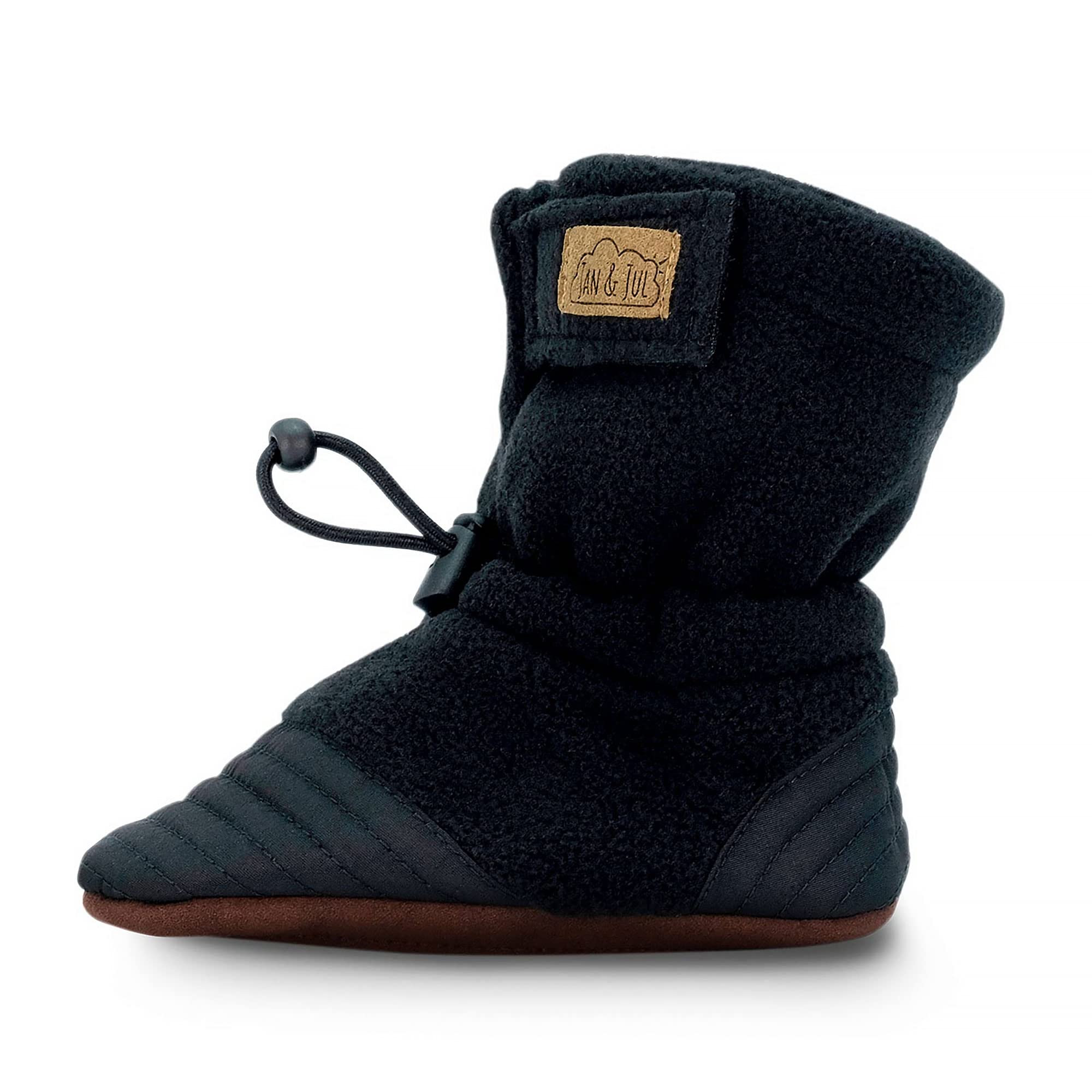
The JAN & JUL Cozy Booties solve the single hardest problem in infant footwear: keeping the boot on a foot that doesn’t have an ankle to hold it. A wide velcro strap wraps high over the instep and locks the heel down, while the fleece lining is thick enough for a 40-degree playdate but breathable enough to prevent that damp-sock feeling. The outsole uses a soft rubber with a cross-hatch pattern that grips wood floors and wet grass without adding stiffness.
Parents report these survive the washing machine after a month of mud and drool and come out looking new, which is a durability point most soft-soled booties fail. The sizing is forgiving—the velcro adjustment lets you tighten as a 9-month-old’s foot grows, stretching the usable window to roughly three months longer than a fixed-size boot. The only limit is deep snow, since the collar tops out below the calf.
For indoor daycare and quick outdoor errands in cold weather, this is the boot that stays put. The fleece interior also means you can skip thick socks, preserving the foot’s natural ability to grip and balance.
Why it’s great
- Velcro strap keeps boot secure on pre-walkers with no ankle definition
- Machine washable and dries flat without deforming the shape
- Fleece lining is warm without trapping sweat
Good to know
- Calf height is low; not suitable for deep snow or puddles
- Outsole is flexible but not waterproof for standing in wet slush
2. Stride Rite Baby Girls’ Cheyenne (Infant/Toddler)

The Stride Rite Cheyenne is built with an understanding of biomechanics that most infant boots ignore. The rounded sole edge—a bevel that curves up at the heel and toe—reduces the surface area that can catch on a throw rug or uneven sidewalk, letting a new walker recover from a stumble instead of tipping forward. The removable insole is a genius trick: pull it out as the foot grows and you squeeze another half-size of life out of the boot.
The velcro strap is child-resistant in the best way—a toddler can’t open it themselves, which prevents mid-stroll boot removal. The outer material is a wipe-clean leather-like upper that resists the usual stains from mulch and mud. Parents note the sole provides noticeable stability for babies who are still pivot-walking, with a subtle heel cup that keeps the foot from sliding forward inside the boot.
This is the boot for the infant who is pulling to stand and taking those first independent steps. The support is present without being restrictive, and the tread is just aggressive enough for indoor safety without chewing up carpet fibers.
Why it’s great
- Rounded sole bevel reduces tripping on surfaces
- Removable insole extends the boot’s usable life as foot grows
- Velcro is secure enough to resist toddler tampering
Good to know
- Upper is not fully waterproof; avoid deep puddles
- Some reports of mismatched sizes in the box—check both boots immediately
3. Simple Joys by Carter’s Kids’ Alexis Outdoor Boot
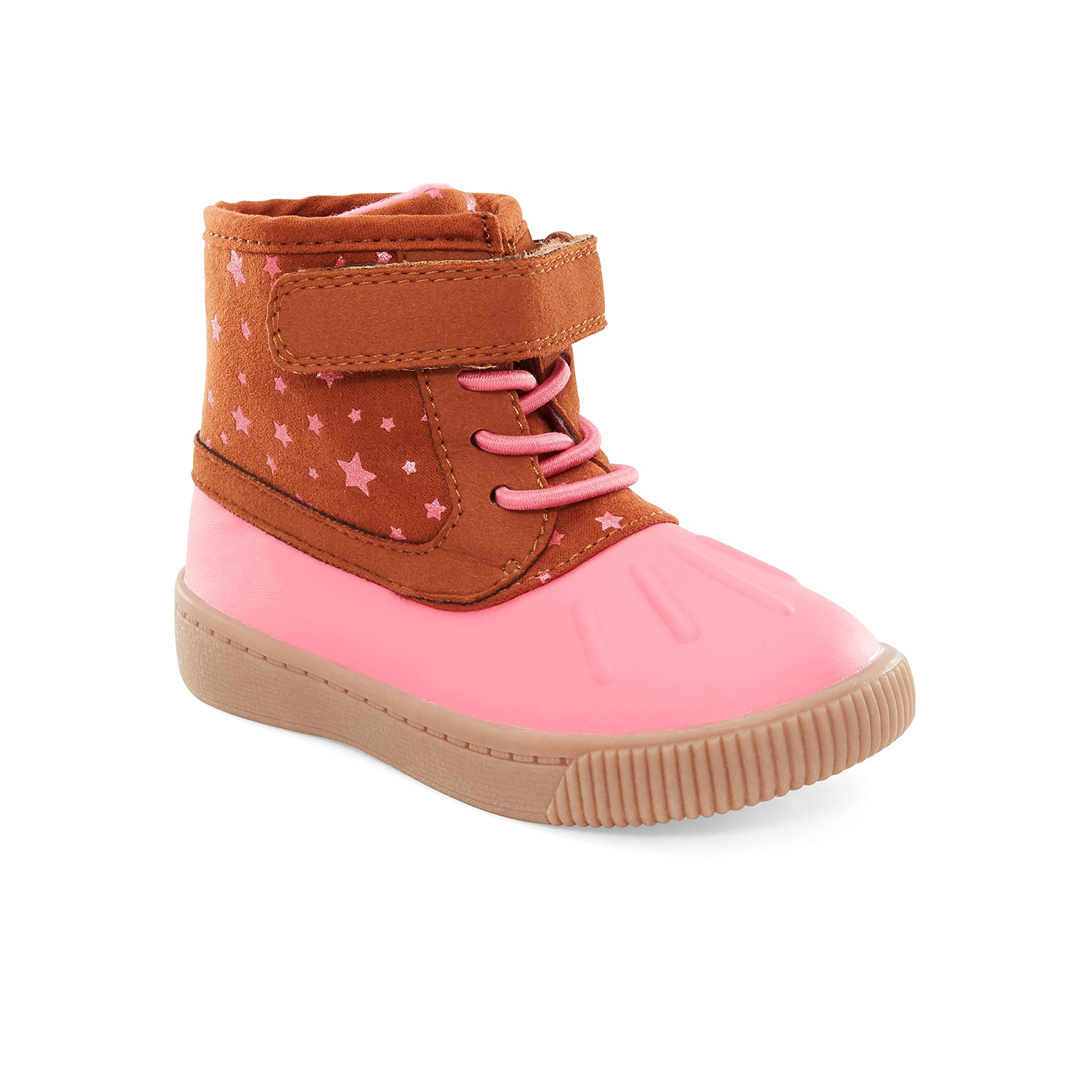
The Simple Joys Alexis boot has been tested in Colorado winters and off-trail camping, which means it understands real weather. The rubber outsole uses a lug pattern deep enough to hold on packed snow and slick mud, while the upper shell is a water-resistant material that keeps feet dry through a fifteen-minute walk in slush. The padded tongue adds a layer of comfort that prevents the boot’s eyelets from pressing into the top of the foot when the laces are snugged down.
The interior is lined with a soft fleece that reviewers describe as warm enough for freezing temps without bulk. The sizing includes a note: the smaller sizes (up to toddler 8) use only velcro, while the larger sizes add laces for a more custom fit. Parents report the boot is lightweight enough that a two-year-old can run without the heavy clomp of traditional snow boots.
If your infant is already walking and needs a boot that handles snow, mud, and concrete with equal grip, this is the mid-range workhorse. The flexible shaft lets the ankle move naturally while the cuff blocks wind from sneaking in through the top.
Why it’s great
- Deep lug pattern grips snow and mud without being stiff
- Water-resistant upper keeps feet dry in wet conditions
- Lightweight enough for running and climbing
Good to know
- No half sizes available; check fit carefully with thick socks
- Tongue must be pulled forward before putting on to avoid difficult entry
4. Girls Boys Snow Boots Kids Warm Winter Boots Toddler Plush Booties
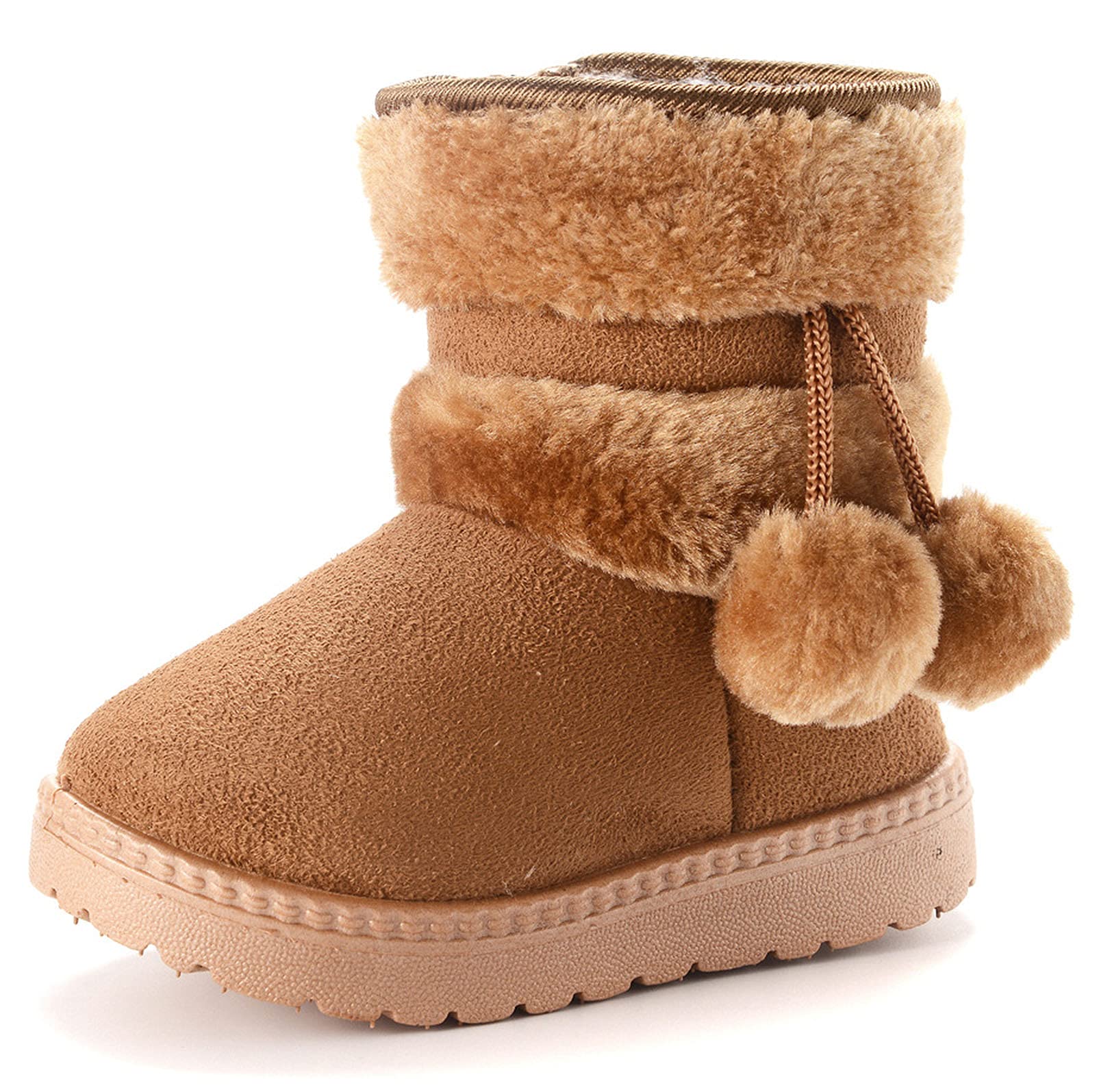
These unisex snow boots compete at a price point that makes them an easy backup pair, but the construction punches above the budget tag. The anti-slip outsole uses a textured pattern that gives a 15-month-old enough grip to walk on a frosty driveway without the sliding herringbone shuffle. The plush interior lining is thicker than most budget boots, covering the entire inner wall down to the footbed, which keeps the toe box from becoming a cold spot.
Multiple reviews note the boots run small—ordering a full size up is the move, and even then the fit is snug for wide feet. The upper material is a synthetic that resists surface moisture but isn’t waterproof for sitting in a slush puddle. The ankle support is minimal, so this is better for the toddler who already walks confidently than for the infant still finding their balance.
For the price, the warmth-to-dollar ratio is excellent. If you need a boot for occasional snow play or a winter daycare uniform that you won’t cry over when it gets lost, this is a solid option.
Why it’s great
- Plush lining covers the entire interior for full-foot warmth
- Anti-slip outsole provides grip on frosty or wet ground
- True-to-picture design gets compliments from other parents
Good to know
- Runs a full size small; size up immediately
- Not waterproof; suitable for dry snow, not slush puddles
5. Carter’s Kids’ Roy Boot

The Carter’s Roy Boot is the solution for the parent who has a toddler that hates sitting still for shoe time. The side zipper runs from the ankle collar nearly to the toe, letting you slide the foot in and zip up in under five seconds. The wide toe box respects the natural splay of an infant’s foot, which is crucial for balance development, and the upper material is a thick woven synthetic that feels durable enough to survive a season of floor sliding and playground dirt.
The boot is internally soft and plush, with a padded tongue that prevents the laces (which are mostly decorative on the smaller sizes) from pressing into the top of the foot. Some parents note the laces are absurdly long straight from the factory; a quick trim or lace swap fixes the tripping hazard. The outsole is flexible but not slippery, with a subtle tread that grips indoor floors well.
This is a strong entry-level boot for the infant who is new to walking and needs a shoe that gets on fast and stays comfortable. The durability at this price point is impressive, and the zipper alone saves minutes of struggle twice a day.
Why it’s great
- Side zipper makes on/off incredibly fast for wiggly toddlers
- Wide toe box allows natural foot splay for balance
- Thick, durable upper material holds up to daily wear
Good to know
- Factory laces are very long and may need trimming for safety
- Not designed for heavy snow; better for dry cold weather
FAQ
Should I size up for infant boots if my baby wears thick socks?
Are hard-soled boots bad for infants who are learning to walk?
How do I clean fleece-lined infant boots without ruining the lining?
Final Thoughts: The Verdict
For most users, the boots for infants winner is the JAN & JUL Fleece Stay-Put Cozy Booties because no other boot solves the stay-on problem for pre-walkers as effectively while remaining flexible and breathable. If you want a structured first-walking shoe with stability features, grab the Stride Rite Cheyenne. And for heavy outdoor use in snow and mud, nothing beats the Simple Joys Alexis for grip and durability.