Every step with Achilles tendonitis can feel like a sharp reminder that your footwear is working against you. The wrong boot creates tension at the heel, aggravates the tendon, and turns a simple walk into a painful chore. The fix lies in specific construction features — stable heel counters, supportive arch systems, and precise shock absorption — that offload the tendon while you move.
I’m Emma — the founder and writer behind Baby Bangs. I’ve spent years analyzing biomechanical footwear claims, cross-referencing orthopedic design principles with real user experience data, and mapping out which technical specs actually deliver relief for chronic heel conditions.
The search for the right pair ends here. This guide breaks down eight rigorously vetted models and explains exactly how to evaluate boots for achilles tendonitis based on arch engineering, heel support depth, and outsole flexibility.
How To Choose The Best Boots For Achilles Tendonitis
A boot that aggravates Achilles tendonitis usually fails in one of three ways: insufficient heel elevation, inadequate arch support that lets the foot collapse and tug the tendon, or a rigid sole that forces the tendon to overstretch. Understanding these failure points helps you read past marketing and evaluate the boot’s actual mechanical profile.
Heel Drop and Cushioning Depth
A moderate heel-to-toe drop — typically 8 to 12 millimeters — reduces the stretch on the Achilles at the start of the gait cycle. Look for boots with a raised heel profile and a dense, resilient midsole that doesn’t bottom out. Memory foam without structural density allows the heel to sink, increasing tendon tension.
Arch Support and Pronation Control
Flat feet or overpronation directly increase Achilles load. A boot with a firm medial post or integrated orthotic frame prevents the arch from collapsing. Removable insoles are a strong sign the boot can accommodate custom orthotics, but the underlying footbed must still offer its own supportive contour.
Heel Counter Rigidity and Ankle Stability
The heel counter — the stiff cup wrapping the back of the boot — must resist compression. A counter that deforms sideways under thumb pressure allows excessive heel motion, which translates to tendon irritation. Boots with a separate external heel stabilizer or a deep internal cradle score best here.
Outsole Flexibility and Rocker Geometry
A boot that bends too early near the toe forces the Achilles to stretch during push-off. Look for a stiffer forefoot with a slight rocker shape that rolls the step forward. This reduces the range of motion at the ankle joint and spares the tendon from repeated full-range loading.
Quick Comparison
On smaller screens, swipe sideways to see the full table.
| Model | Category | Best For | Key Spec | Amazon |
|---|---|---|---|---|
| Orthofeet Women’s Scarlett | Premium | Wide feet & all-day wear | Adjustable orthotic spacers | Amazon |
| Orthofeet Women’s Emma | Mid-Range | Heel pain relief | Multi-layer orthotic insoles | Amazon |
| Vionic Women’s Brighton | Premium | Arch support & style | Built-in podiatrist-designed orthotic | Amazon |
| REVITALIGN Women’s Kennedy | Premium | Post-surgery comfort | Genuine suede upper | Amazon |
| Dansko Celestine | Premium | Tall shaft stability | Memory foam + natural arch | Amazon |
| Orthofeet Men’s Ryder | Mid-Range | Men’s diabetic & arthritis | Slip-resistant dual-zip | Amazon |
| LifeStride Guest Comfort Bootie | Budget-Friendly | Lightweight daily wear | Stretch fabric + foam footbed | Amazon |
| Vionic Women’s Vienna Rhiannon | Budget-Friendly | Style with pronation control | Zip-up + orthotic footbed | Amazon |
In‑Depth Reviews
1. Orthofeet Women’s Orthopedic Scarlett
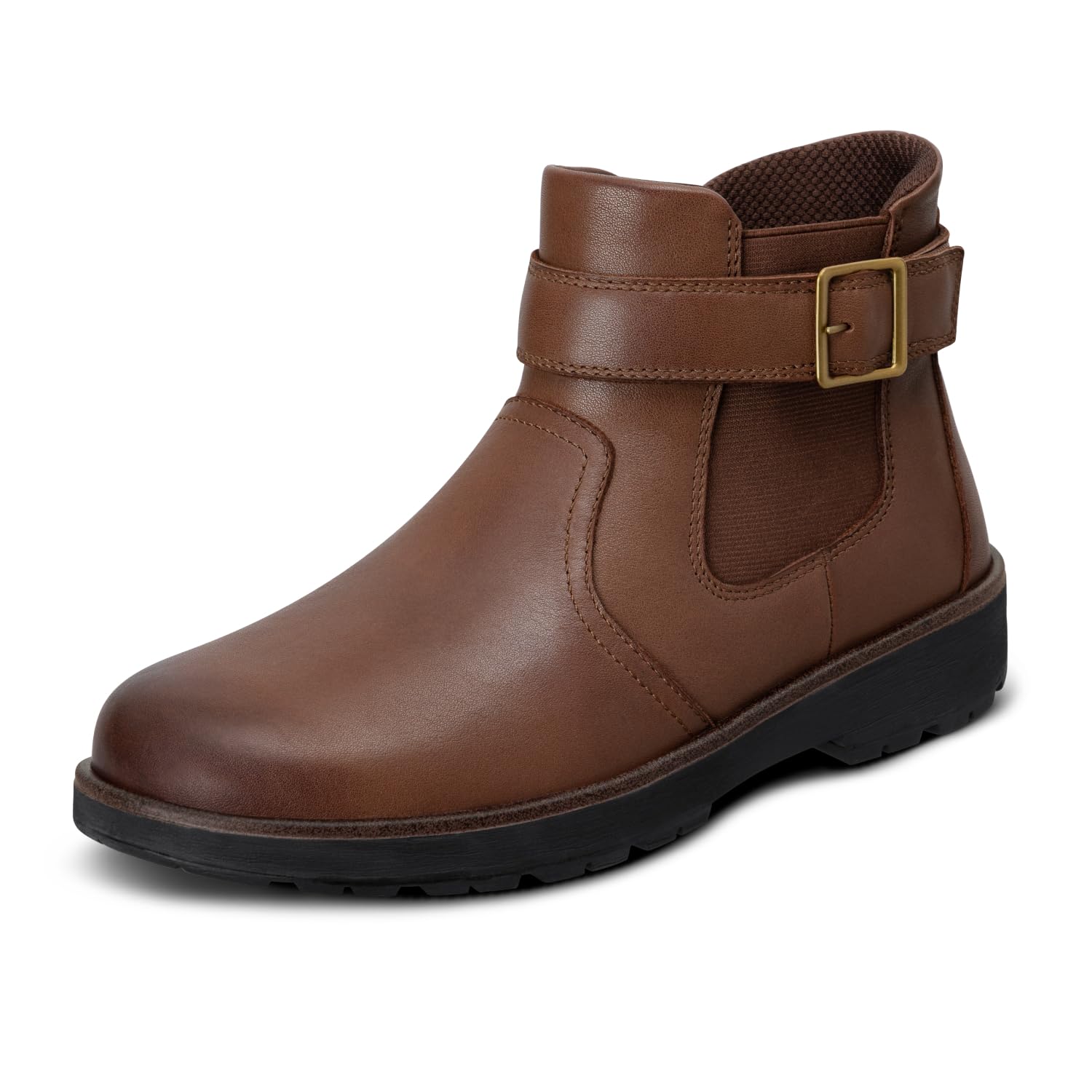
The Scarlett boot sits at the top because it checks every box for Achilles tendonitis without compromise. The wide toebox allows the foot to splay naturally, reducing compensatory supination that strains the tendon. Orthofeet includes adjustable spacer inserts that let you fine-tune the arch height — a rare feature that accommodates both medium and high arches within the same boot.
Reviewers with plantar fasciitis and sciatica report zero foot fatigue even after walking on cobblestone in the rain. The water-repellent upper keeps feet dry without sacrificing breathability, and the deep heel cradle stabilizes the calcaneus effectively. The boot also works with AFO braces, a strong sign that the heel counter is both rigid and generously proportioned.
The outsole provides reliable traction on wet pavement and carpeted floors alike. Some users note the black version runs slightly firmer in the forefoot compared to the olive, so order accordingly if you need a softer flex point. For most Achilles sufferers, this is the single most versatile option available.
Why it’s great
- Adjustable orthotic spacers for customized arch support
- Works with custom AFO braces due to spacious interior
- Excellent wet-weather traction and water repellency
Good to know
- Black version may feel tighter in forefoot than olive
- Premium tier pricing reflects advanced orthopedic engineering
2. Orthofeet Women’s Orthopedic Emma Heeled Leather Bootie
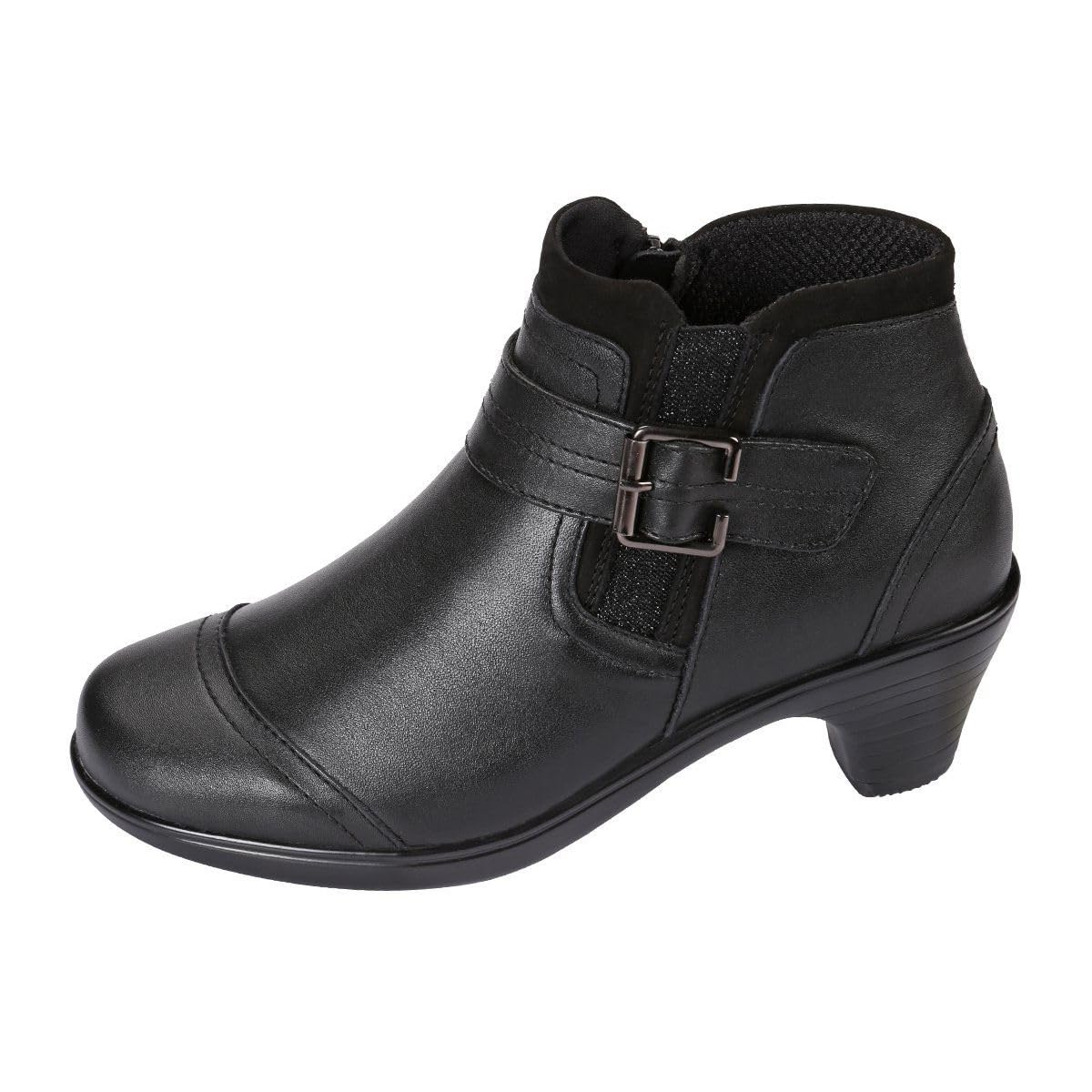
The Emma bootie directly targets Achilles tendon pain with a multi-layer orthotic system that includes a removable full-length insert. The low block heel provides an ideal 10-12 millimeter drop without raising the heel too high, reducing eccentric loading on the tendon. Arch support is pronounced enough to handle high arches without pressure points.
Multiple verified buyers with bone spurs and arthritis report complete resolution of severe heel pain after switching to these boots. The internal toe box offers generous room without making the boot appear bulky externally — a smart design compromise that keeps the profile sleek while accommodating swollen or sensitive toes.
Some users found the included cushioning insufficient for standing all day and added a Powerstep orthotic for extra stability, which the deep footbed accommodates easily. The leather upper feels substantial and the zipper closure makes entry smooth even for those with limited ankle mobility. This is a strong daily-wear solution for moderate tendonitis.
Why it’s great
- Multi-layer orthotic system reduces heel pain from bone spurs
- Low heel height provides ideal Achilles tendon relief
- Roomy toe box without external bulk
Good to know
- Insole may feel thin for all-day standing comfort
- Best paired with aftermarket orthotics for extended wear
3. Vionic Women’s Brighton
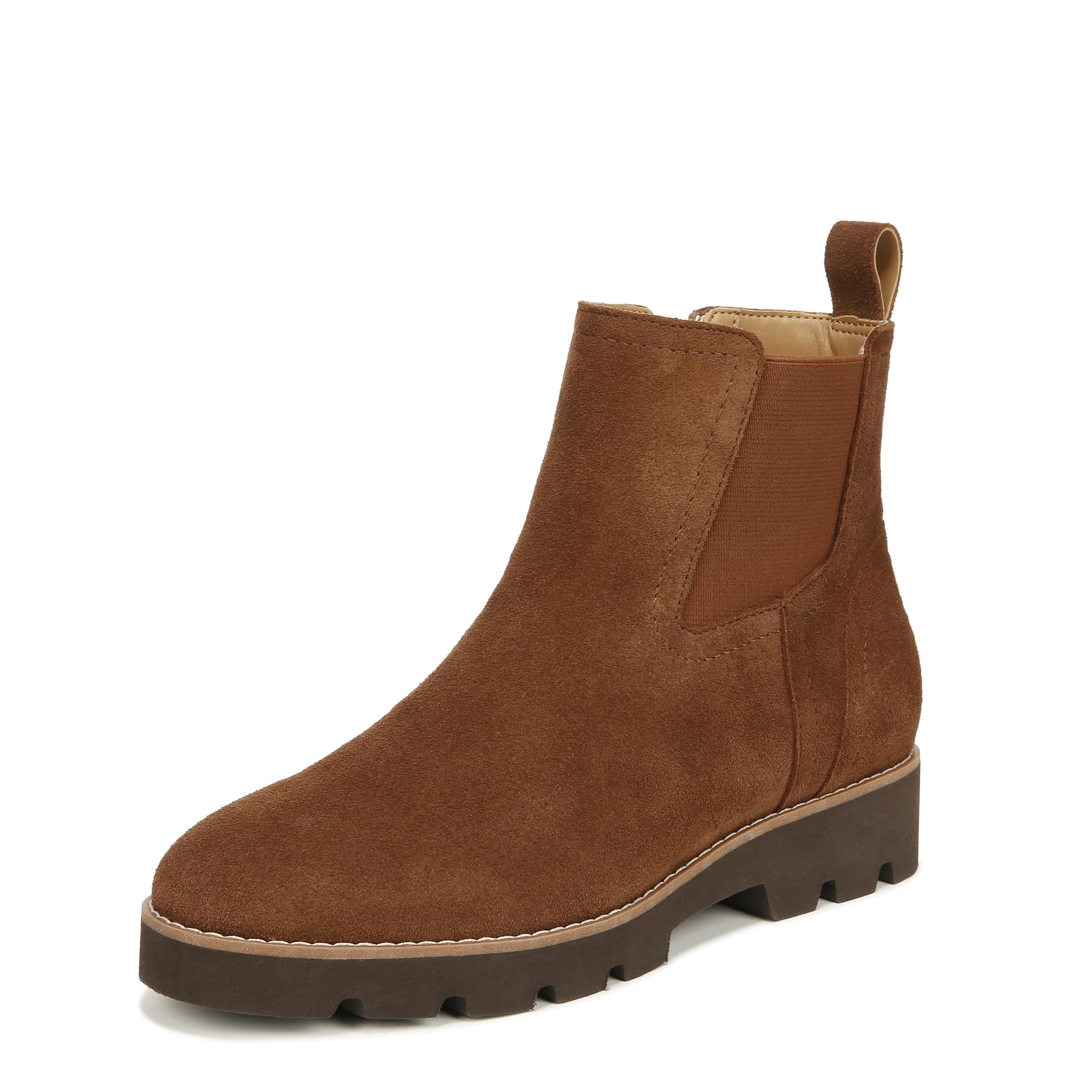
Vionic’s Brighton boot integrates a podiatrist-designed orthotic that provides firm rearfoot posting, which helps control overpronation — a common contributor to Achilles tendon overload. The suede upper feels premium and holds its shape, contributing to a stable heel counter that doesn’t collapse after hours of wear.
Users with plantar fasciitis and flat feet consistently praise the arch support, noting it’s high enough to shift pressure away from the heel and into the midfoot. The outsole has enough tread for Colorado winters and the boot keeps feet warm without overheating. Several buyers report receiving compliments on the sleek silhouette, proving that orthopedic boots can look sharp.
The sole thickness is the main trade-off. Some users with high daily step counts found the sole too thin for long walks on hard surfaces like cobblestone, leading to foot soreness by evening. The Brighton is best reserved for commute-level walking, social outings, and errands rather than all-day standing or hiking.
Why it’s great
- High-quality suede and stylish silhouette
- Firm arch support controls overpronation effectively
- Warm and water-resistant for winter wear
Good to know
- Sole may feel thin for extended walking on hard surfaces
- Regular width runs narrow; wide size recommended for medium feet
4. REVITALIGN Women’s Kennedy
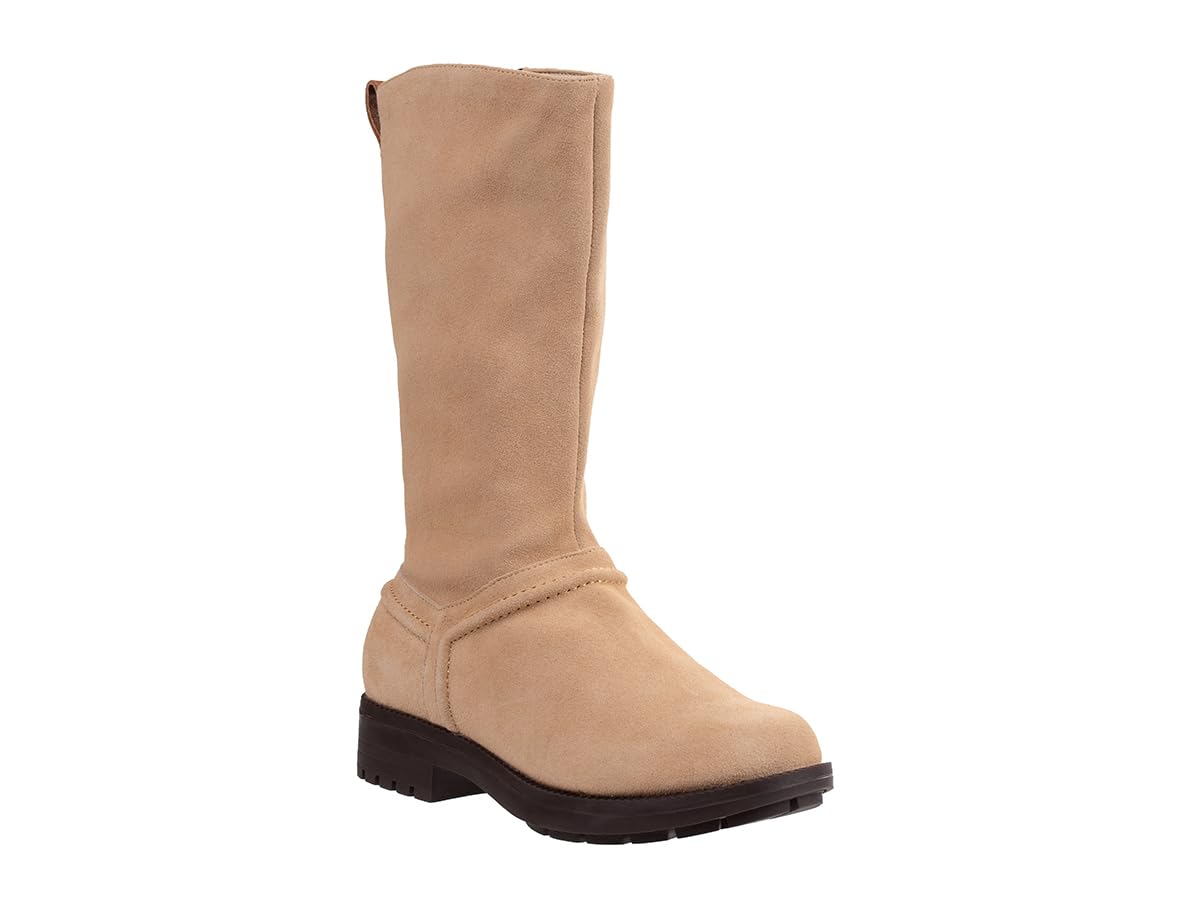
The Kennedy boot from REVITALIGN stands out for its genuine suede construction and careful anatomical fit. Reviewers with post-bunion surgery feet report exceptional toe room, which is critical for Achilles tendonitis sufferers whose gait compensates by clawing toes for stability. The padded collar provides slight ankle support without restricting dorsiflexion range of motion.
The boot is built with a moderately stiff outsole that doesn’t bend aggressively at the metatarsal heads, reducing the eccentric stretch at terminal stance. The midsole compresses just enough to absorb shock without creating instability. The average calf fit suits most leg profiles well.
The sizing tends to run small, and the width runs slightly narrow in the forefoot. Ordering a half size up is recommended especially if you plan to use thick socks or custom orthotics. The suede upper looks sophisticated and pairs well with both casual and business casual outfits.
Why it’s great
- Genuine suede offers soft flexibility that reduces pressure points
- Generous toe room for post-surgery or swollen feet
- Stable outsole limits excessive dorsiflexion
Good to know
- Runs small and slightly narrow in the forefoot
- Best ordered half a size up from usual
5. Dansko Celestine
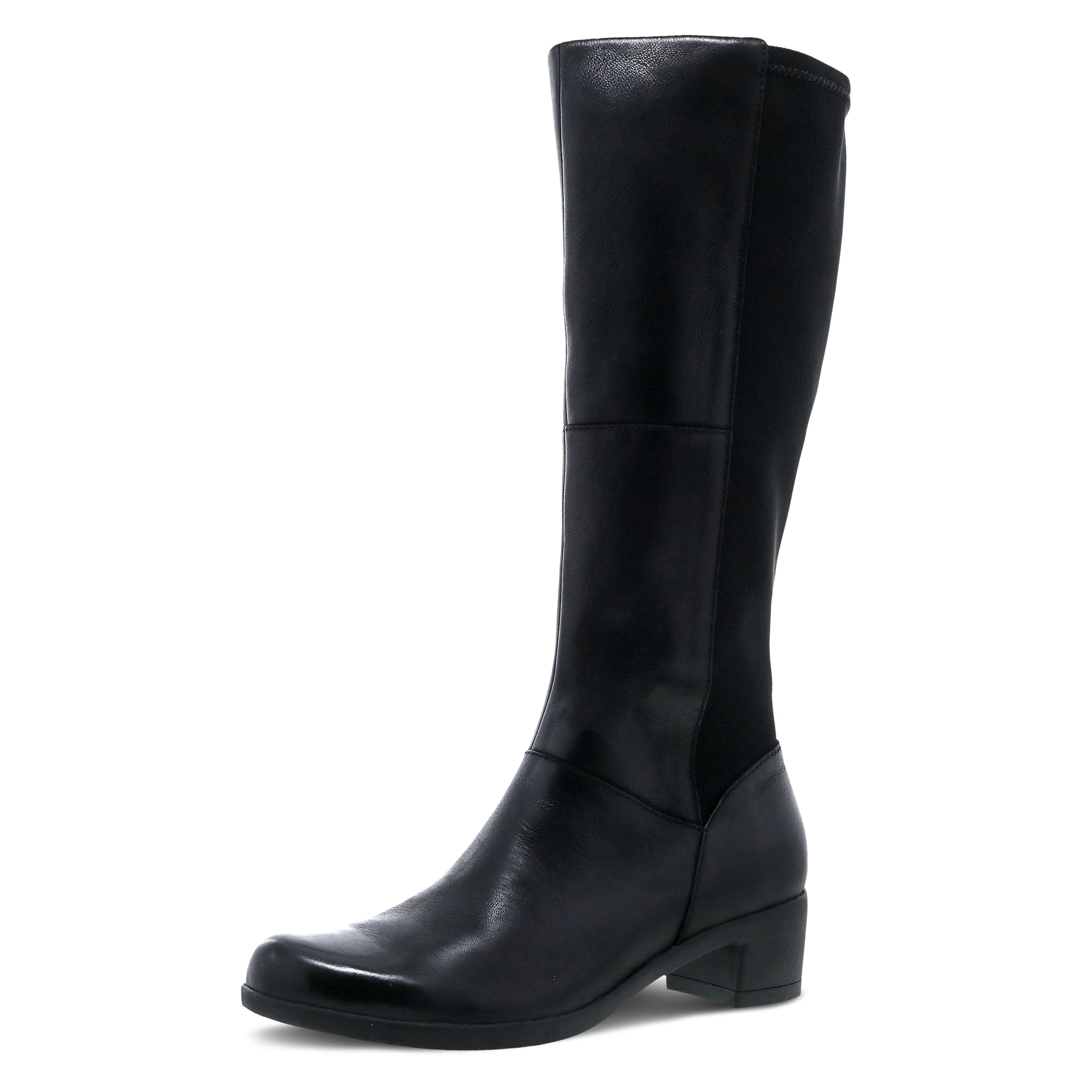
Dansko is known for stable footwear, and the Celestine boot delivers with a natural arch footbed and a wide low heel that distributes impact across a larger surface area. The memory foam footbed molds to the heel shape, reducing localized pressure on the Achilles insertion point. The elastic fabric shaft allows the boot to accommodate different calf sizes while maintaining a snug upper fit.
Reviewers who wore these throughout winter report excellent arch support and warm comfort without bulk. The tall shaft provides additional proprioceptive feedback to the ankle, which can help tendonitis sufferers maintain a more controlled gait pattern. The classic styling makes these versatile enough for professional dress codes.
The ankle shaft runs stiff initially and requires a break-in period that some users found too uncomfortable to complete. There is also a report of premature heel counter failure in one pair, suggesting the quality control may vary. The Celestine is best for users who prioritize a traditional Dansko fit and are willing to invest time breaking in the upper.
Why it’s great
- Wide low heel improves weight distribution on the Achilles
- Natural arch footbed offers consistent support
- Tall shaft provides ankle stability feedback
Good to know
- Ankle shaft is very stiff during initial wear
- Quality control concerns on heel counter durability
6. Orthofeet Men’s Orthopedic Ryder

The Orthofeet Ryder is the only men’s-specific boot in this guide and it justifies its place with diabetic-friendly construction that also serves Achilles tendonitis patients. The wide toe box accommodates misshapen or swollen toes, and the extra depth allows orthotics without crowding. The dual rear zippers let you open the boot wide for easy entry.
Users with neuropathy, foot drop, and arthritis report immediate relief thanks to the Orthofeet arch support system, which includes multiple spacers and a firm medial post. The outsole performs well on polished concrete and carpet, reducing the slip risk that can cause sudden tendon-straining movements. The boot lasts roughly two years with daily use, though the zippers tend to wear out before the leather upper.
The Ryder runs slightly large, which is intentional to provide room for extra insoles and thick socks. The break-in period is minimal, but the arch support stiffens over time and eventually hardens. For men seeking a durable, supportive boot that addresses both structural foot issues and tendonitis, this is the clear first choice.
Why it’s great
- Extra depth for custom orthotics and AFO braces
- Dual zippers provide easy on/off for limited mobility
- Slip-resistant outsole reduces fall risk
Good to know
- Zippers may fail after about 2 years of daily use
- Runs slightly large to accommodate thick socks
7. LifeStride Guest Comfort Bootie
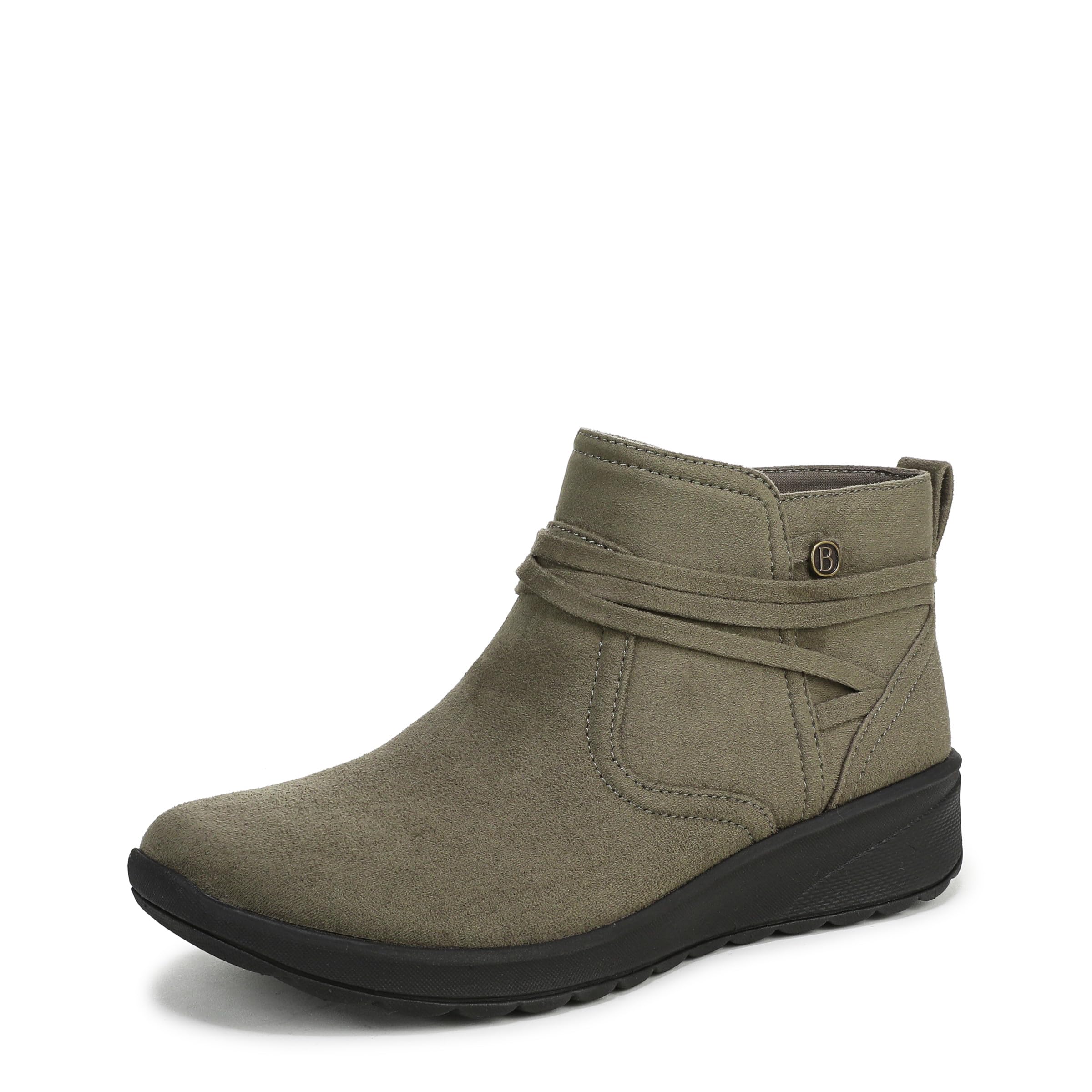
The Guest Comfort bootie is shockingly lightweight — a feature that matters for Achilles patients because less mass means less momentum pulling the heel into the ground with each stride. The stretch fabric upper adapts to the foot shape without pressure points, and the roomy toe box lets toes splay fully. Users with multiple foot surgeries report zero pain, which is remarkable for an entry-level price point.
The foam footbed provides decent arch support for daily wear, but it lacks the density of a true orthotic system. The flat sole keeps the heel-to-toe drop minimal, which may not be enough for acute tendonitis but works well for maintenance and mild symptoms. The zip-and-go design makes these easy to slip on when bending over is uncomfortable.
The stretch fabric is not water-resistant, so applying a waterproofing spray is advisable for wet climates. Some reviewers wished the styling was dressier, but with jeans, leggings, or slacks the boot looks intentionally casual. For a budget-friendly boot that doesn’t aggravate tendon pain, the Guest Comfort delivers excellent value.
Why it’s great
- Extremely lightweight reduces heel strike momentum
- Stretch fabric prevents pressure points on the tendon
- Roomier toe box than most flat booties
Good to know
- Not water-resistant without treatment
- Arch support is moderate, not suited for severe cases
8. Vionic Women’s Vienna Rhiannon
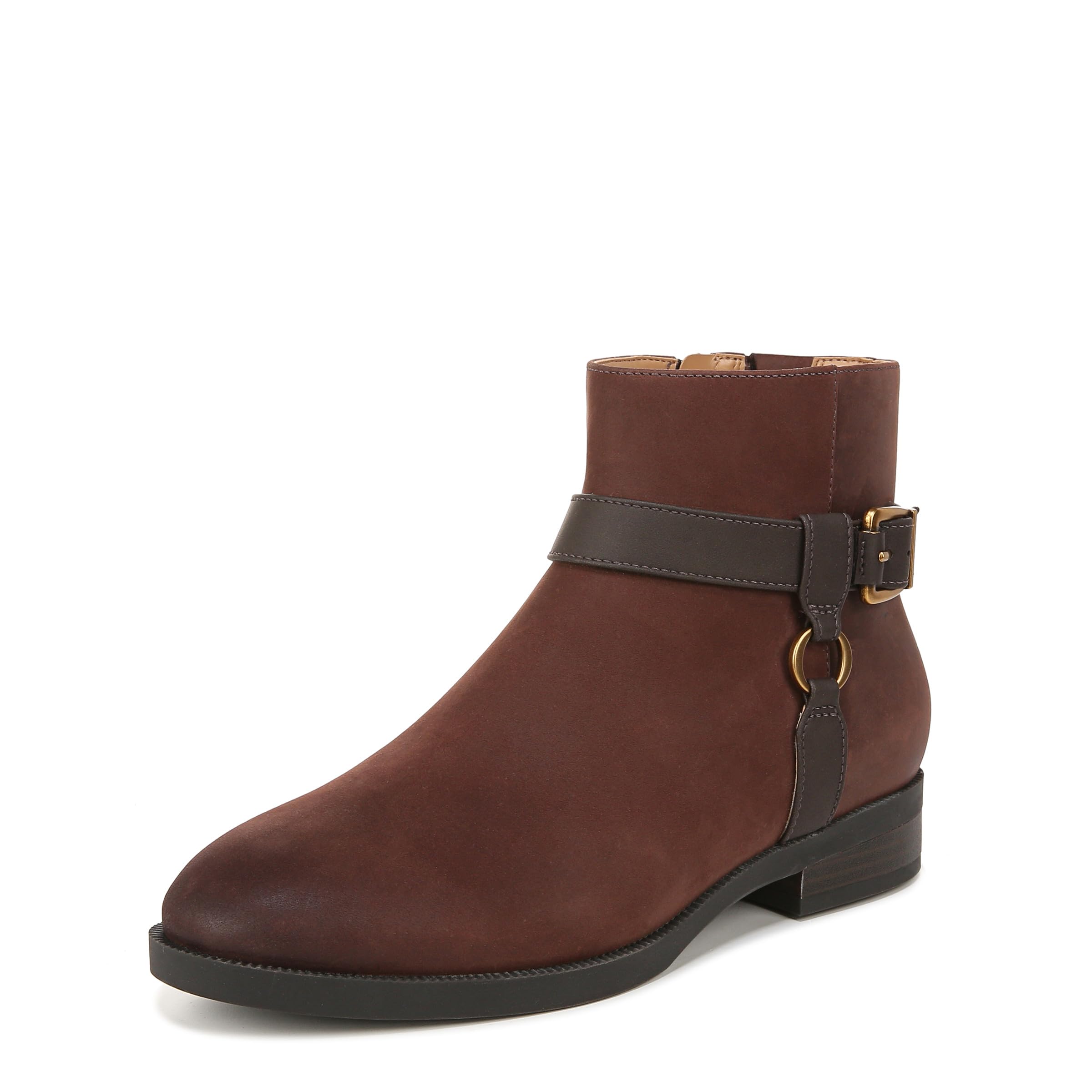
The Vienna Rhiannon combines the Vionic orthotic footbed — known for correcting overpronation — with a low-heel leather boot silhouette. The built-in arch support helps realign the foot, which reduces the internal rotation that pulls on the Achilles tendon. The adjustable front strap allows micro-adjustments to accommodate swelling throughout the day.
Users report wearing these all day without foot pain and walking long distances in comfort during European travel. The leather is soft but holds its shape, and the easy zip closure makes them practical. The low block heel provides just enough drop to slightly offload the Achilles without forcing the foot into an unnatural position.
The width is the main limitation. Multiple reviewers with medium-wide feet found the boot too narrow, and wide-width options are not available. The length also runs differently for some, requiring trial with two sizes. If the fit works for your foot shape, the Vienna Rhiannon offers reliable Vionic support at a more accessible price point.
Why it’s great
- Vionic orthotic footbed controls pronation effectively
- Low block heel offers ideal Achilles offloading
- Adjustable front strap for fit customization
Good to know
- Runs narrow; not available in wide widths
- Sizing is inconsistent between pairs
FAQ
Should I choose a boot with a heel or a flat sole for Achilles tendonitis?
Can I use my custom orthotics in boots made for Achilles tendonitis?
Are stiff boots better than flexible boots for Achilles tendon pain?
Final Thoughts: The Verdict
For most users, the boots for achilles tendonitis winner is the Orthofeet Women’s Orthopedic Scarlett because it combines adjustable arch spacers, a water-repellent upper, and enough interior volume for orthotics and AFO braces. If you want a lower-profile style with reliable pronation control, grab the Vionic Women’s Brighton. And for men seeking a durable, diabetic-friendly boot with slip resistance, nothing beats the Orthofeet Men’s Ryder.