Finding the right support inside a pair of work boots is about more than just comfort — it’s about avoiding that deep, aching fatigue in your arches that turns a long shift into a painful slog. With flat feet, a standard boot insole lets your arch collapse, pulling on the plantar fascia and sending stress up through your knees and lower back. The right insole changes that completely, locking your foot into a neutral position so every step feels stable and supported.
I’m Emma — the founder and writer behind Baby Bangs. I’ve spent hundreds of hours digging into the technical specs and real-world reviews of boot insoles, analyzing which materials, arch heights, and heel cup designs actually hold up during 12-hour workdays on concrete.
This guide walks through the top contenders with a sharp eye on flat-foot support, durability, and daily wear in boots. You’ll find the exact factors that separate a forgettable insole from one that genuinely transforms how your feet feel. Read on for a clear breakdown of the best boot insoles for flat feet and what makes each one worth your consideration.
How To Choose The Best Boot Insoles For Flat Feet
Flat feet mean your arch collapses inward when you stand, forcing your foot to overpronate and placing extra strain on your plantar fascia, ankles, and knees. A good boot insole for flat feet needs to do more than just pad the bottom — it needs to actively support the arch, stabilize the heel, and control motion inside the boot. Here’s what to look for.
Arch Profile and Heel Cup Design
For flat feet, medium to high arch support is usually ideal — enough to cradle the arch without jamming upward uncomfortably. A deep, U-shaped heel cup is equally important because it locks the fat pad under your heel in place, preventing side-to-side wobble and keeping your foot aligned with the boot shaft. Shallow heel cups allow overpronation to continue even with strong arch support.
Material Stack: TPU, PORON, and Foam Density
Look for a rigid base layer — typically thermoplastic polyurethane (TPU) or polypropylene — paired with a shock-absorbing top layer made from PORON foam or high-density polyurethane. The rigid shell resists twisting and maintains arch shape under the heavy loads and constant heel strikes of boot wear, while the cushion layer softens the impact on hard surfaces like concrete or tile.
Boot Volume and Trimming
Boots tend to have less vertical volume than athletic shoes, especially in the toe box. An insole that’s too thick can cramp your toes or lift your heel too high, causing blisters. Most orthotic insoles need to replace the factory insole entirely, not sit on top of it. A trim-to-fit design is essential for boots with irregular shapes or narrow lasts, but some premium options come in precise sizes that require no cutting.
Quick Comparison
On smaller screens, swipe sideways to see the full table.
| Model | Category | Best For | Key Spec | Amazon |
|---|---|---|---|---|
| PowerStep Pinnacle Maxx | Premium | Maximum stability & flat feet overpronation | Angled heel with firm, flexible PP shell | Amazon |
| PowerStep Pinnacle | Premium | Podiatrist-recommended moderate pronation | Neutral arch with dual-layer cushioning | Amazon |
| Timberland PRO Anti-Fatigue | Mid-Range | Long shifts in steel toe work boots | Low arch with hex-pillar shock dispersion | Amazon |
| Ailaka Work Boot Insoles | Mid-Range | All-day comfort & high arch support | High arch with PU foam + TPU support | Amazon |
| Welnove Work Orthotic Insoles | Mid-Range | Standing all day on concrete floors | Medium arch with GEL heel and ball pads | Amazon |
| Fit Geno Plantar Fasciitis Insoles | Budget | Heavier frames needing firm arch support | High arch with removable TPU plate | Amazon |
| Heavy Duty Support Orthotics | Budget | Weight distribution over 230 lbs | High arch with PORON heel pad | Amazon |
In‑Depth Reviews
1. PowerStep Pinnacle Maxx Orthotic Insoles

The PowerStep Pinnacle Maxx is built for the most demanding flat-foot cases, particularly those with overpronation and posterior tibial tendonitis. Its defining feature is a firm, angled heel that actively counters inward collapse — most insoles at this level use a neutral heel, but the Maxx tilts slightly outward to guide the foot into a straighter gait cycle. The shell is made from polypropylene, which provides a stiff but flexible base that resists twisting under heavy loads while still allowing some natural foot motion.
Users with severe flat feet report complete elimination of arch and ankle pain within days of switching from standard insoles. The medium arch profile sits comfortably high without feeling aggressive, and the deep heel cup adds a noticeable level of stability that prevents heel slippage inside boots. The anti-slip top fabric also helps keep the insole from shifting around inside the boot, which is a common issue with heavy-duty models.
One trade-off: the Maxx takes up more vertical space than most insoles, so it requires removing the factory insole entirely. Some users with narrow boots or low-volume footwear may need to size up half a size to avoid toe cramping. But for flat-footed workers who need maximum control and stability in their boots, this is the most effective option on the market.
Why it’s great
- Angled heel specifically designed to correct overpronation
- Deep, firm heel cup locks in rear-foot stability
- High-quality materials resist compression through full-year wear
Good to know
- Requires significant vertical space — may need larger boot size
- Initial stiffness takes a few days to break in
2. PowerStep Pinnacle Insoles

The original PowerStep Pinnacle is the brand’s most recommended model and the one most trusted by podiatrists for moderate pronation and flat feet. Its neutral arch profile sits in a middle ground — not as aggressive as the Maxx, but still providing strong corrective support for feet that don’t need extreme intervention. The dual-layer cushioning uses a soft top foam for comfort and a denser base layer for structure, so you get arch support without the “rock in the shoe” feeling.
Flat-footed users consistently report relief from heel bone spur pain and plantar fasciitis within a week or two of switching to these insoles. The no-trim sizing is a standout feature for boot wearers who don’t want to fuss with scissors — you order by exact shoe size and the insole drops in perfectly. The polypropylene shell gives enough rigidity to control overpronation, but the cushioning layer keeps it comfortable for walking and standing all day.
One limitation: the Pinnacle is designed for shoes where the factory insole can be removed, and it fits best in moderate-volume footwear. In very narrow or low-volume boots, the insole may feel slightly tall, though most users find it manageable. It also lacks the extreme heel angle of the Maxx, so severe overpronators may still need the more aggressive model.
Why it’s great
- Podiatrist-recommended for moderate flat feet and pronation
- No trimming required — exact size fit reduces hassle
- Dual-layer construction balances support with comfort
Good to know
- Not aggressive enough for severe overpronation cases
- May feel slightly tall in low-volume boots
3. Timberland PRO Men’s Anti-Fatigue Technology Replacement Insole

The Timberland PRO Anti-Fatigue insole takes a different approach than the arch-heavy orthotic contenders. Instead of using a rigid shell, it relies on a hex-pillar geometric design in the midsole that dynamically compresses and rebounds with each step. This provides excellent shock dispersion across the entire footbed, making it a top choice for 10-14 hour shifts on concrete floors where cumulative impact is the main enemy. The arch profile is low, which means it won’t aggressively lift a collapsed arch, but it does cradle the foot comfortably for mild to moderate flat feet.
Users working as drivers, warehouse workers, and construction trades report dramatic reductions in knee, hip, and back pain after switching to these insoles. The durability is solid — the hex pillars and top fabric typically hold up for 5-6 months of daily wear before showing signs of compression wear. They are also waterproof and easy to cut to size with scissors, which is a practical plus for boots with irregular shapes like steel toes.
It’s worth noting that the Timberland PRO is not a corrective orthotic — it won’t fix overpronation or provide aggressive arch support for severe flat feet. Users with advanced collapse or plantar fasciitis may need a firmer, higher-arch insole. But for anyone whose primary issue is foot and joint fatigue from long hours on hard surfaces, this insole delivers a level of energy return that few competitors match.
Why it’s great
- Hex-pillar technology actively rebounds to reduce fatigue
- Proven durability for 6+ months in heavy work boots
- Waterproof construction handles wet job site conditions
Good to know
- Low arch provides limited correction for severe flat feet
- Not ideal for plantar fasciitis or advanced overpronation
4. Ailaka Work Boot Insoles for Standing All Day
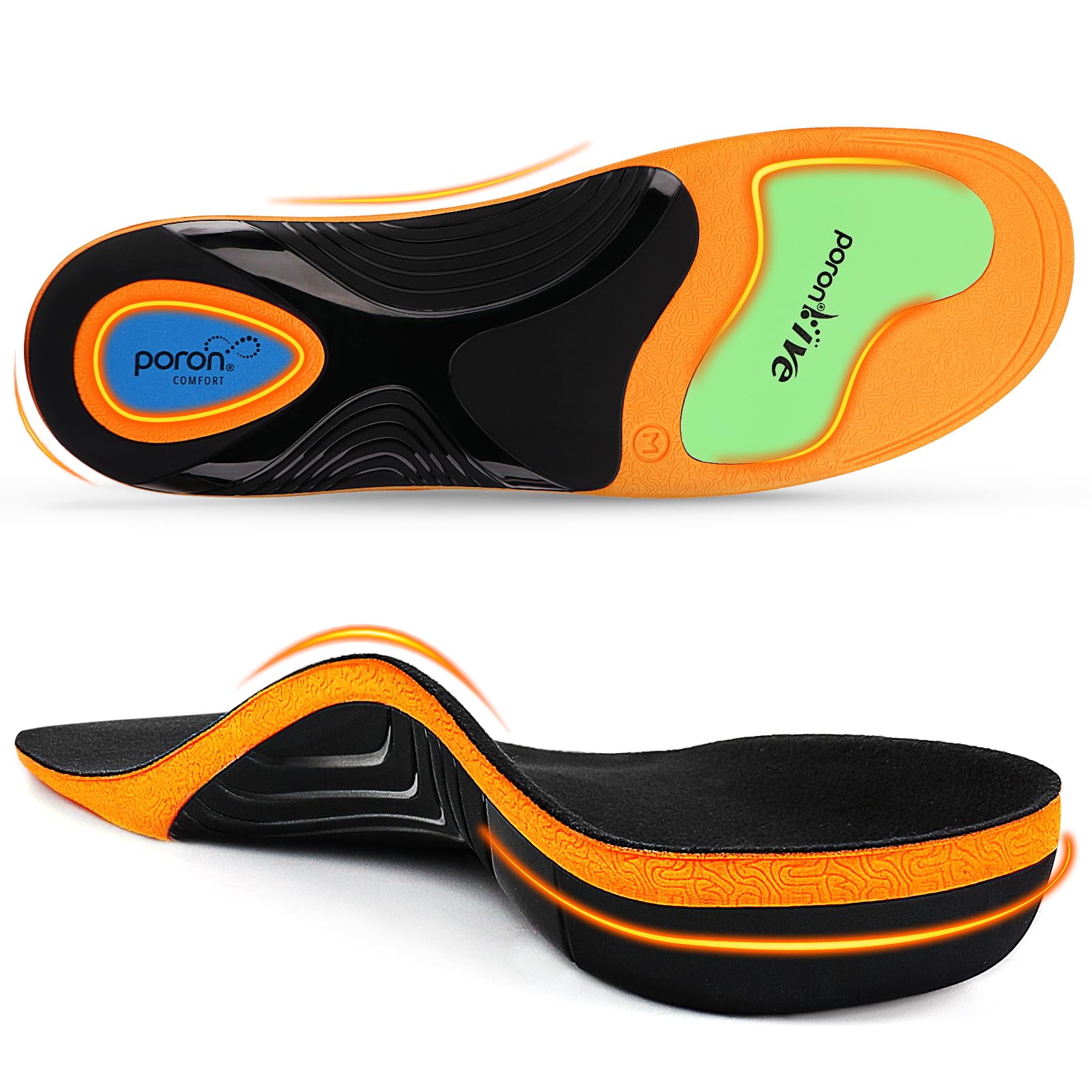
Ailaka’s work boot insoles offer a high arch profile combined with a soft PU foam top layer and a TPU support frame underneath — a combination that appeals to flat-footed users who need significant arch lift but don’t want the hard plastic feel of a full orthotic shell. The high arch is pronounced enough to stabilize fallen arches, while the GEL cushioning pads at the heel and ball of foot absorb the sharp impacts of walking on concrete or metal decking. The deep U-shaped heel cup further prevents foot slop inside the boot.
Real-world feedback from nurses, construction workers, and retail employees highlights the immediate reduction in foot and lower back pain after switching to Ailaka insoles. One user who had tried six other brands, including custom orthotics, reported that these eliminated heel and arch pain within a week. The breathable velvet top fabric also helps manage moisture and odor during long shifts, which is a practical benefit for boot wearers.
The trade-off is that the high arch may feel aggressive for some flat-footed users during the initial adjustment period. Ailaka recommends gradually building up wear time over 3-5 hours per day, which is standard for any firm arch support. Additionally, the insoles are best suited to medium-to-high volume boots — they may feel cramped in very low-profile or narrow footwear.
Why it’s great
- High arch effectively stabilizes collapsed flat feet
- GEL heel pad absorbs impacts from hard surfaces
- Breathable fabric top controls moisture and odor
Good to know
- High arch requires gradual break-in period
- Not suitable for low-volume or narrow boots
5. Welnove Work Orthotic Insoles
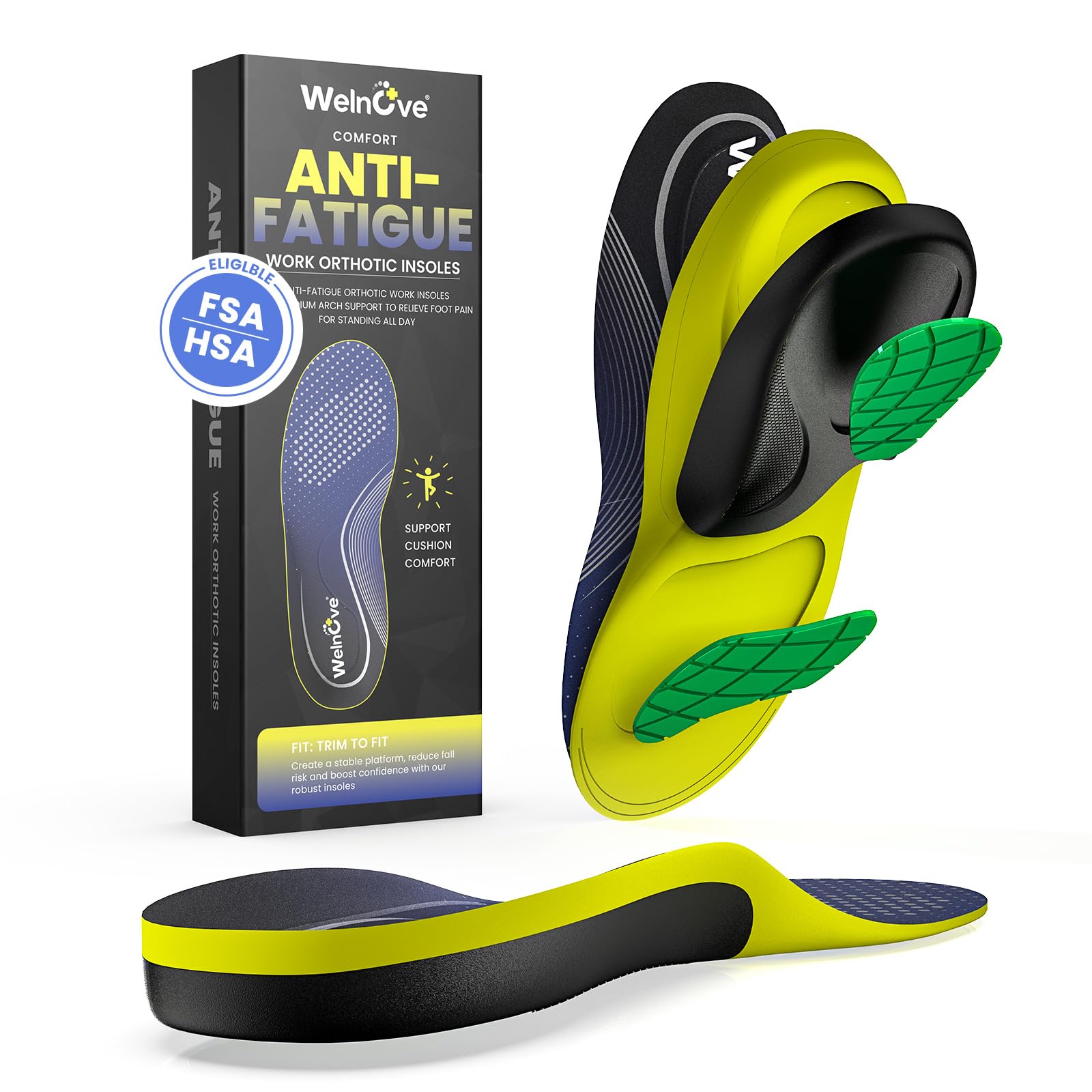
Welnove’s orthotic insoles use a tri-layer construction — PU foam base for shock absorption, a 3D dynamic TPU arch support layer, and GEL cushioning pads at the heel and ball of foot. The medium arch profile is a safe middle ground for flat feet: it lifts the arch enough to reduce strain on the plantar fascia without the aggressive feel of a high-arch orthotic. The deep U-cup heel design also provides solid rear-foot control, which helps limit overpronation during walking and standing.
Users who stand 10 hours a day on concrete floors report that these insoles noticeably reduce foot burning sensation and overall fatigue compared to factory insoles. The trim-to-fit design works well with most work boots, and the materials feel durable enough to last through several months of daily wear. The combination of cushioning and moderate arch support makes it a versatile option for both boot and shoe wearers.
There are some caveats. A small number of users with severe flat feet or advanced plantar fasciitis found that the medium arch wasn’t enough to resolve their symptoms, and one review noted that the insoles actually worsened fatigue after a month. This likely reflects individual variation in foot mechanics — flat-footed users with very low arch height may need a higher, firmer support. Also, the initial adjustment period is real, and jumping into full-day wear immediately can cause discomfort.
Why it’s great
- Tri-layer design balances cushioning with structural support
- Deep heel cup effectively controls rear-foot motion
- Trim-to-fit works well with most work boot shapes
Good to know
- Medium arch may not be enough for severe flat feet
- GEL pads can feel firm during initial break-in
6. Fit Geno Plantar Fasciitis Insoles
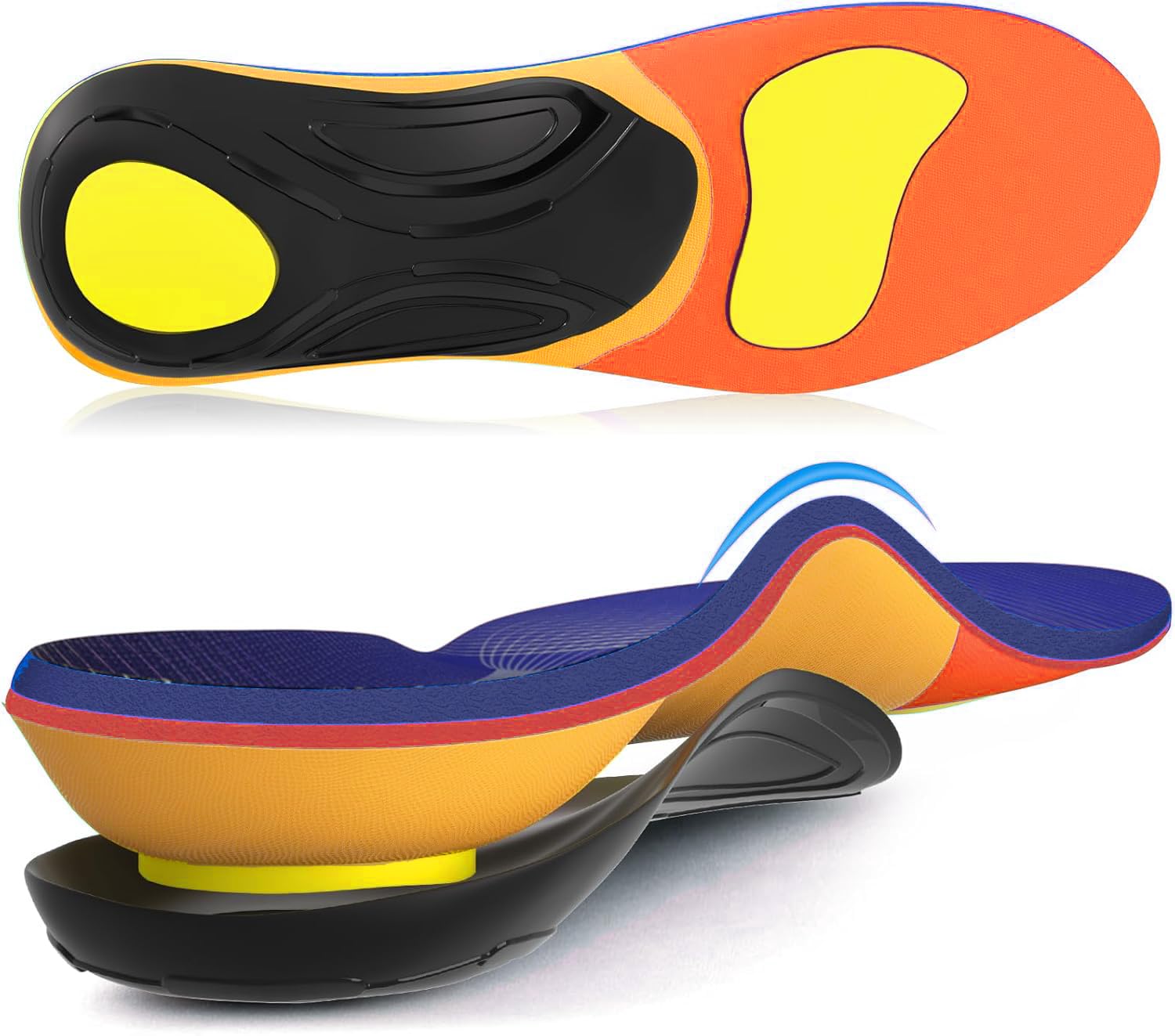
Fit Geno builds its insoles specifically for heavier frames — 220 pounds and above — where standard foam insoles compress quickly and lose their shape. The high arch profile is dense and firm, lifting the arch aggressively to counteract the collapse that occurs under higher body weight. The rigid TPU arch plate is removable, which gives users the flexibility to dial back the support if the high arch feels too aggressive. PORON foam lines the heel and ball of foot for impact protection, and the breathable fabric top reduces odor during long shifts.
Flat-footed users in retail, nursing, and trades consistently report immediate relief from arch pain and reduced lower back fatigue after switching to Fit Geno insoles. The firm support is especially effective for plantar fasciitis, as it prevents the arch from collapsing and pulling on the fascia during standing and walking. The trim-to-fit design works well in most work boots, though the high arch requires a boot with enough vertical clearance to avoid feeling cramped.
One drawback is that the high arch profile can be too aggressive for some users, causing discomfort in the arch or midfoot during the first week. The removable TPU plate helps, but even without the plate the arch support remains fairly firm. Additionally, delivery times vary significantly — some users report slow shipping, so ordering ahead of when you need them is wise.
Why it’s great
- Designed specifically for heavier body weights (220+ lbs)
- Removable TPU plate lets you adjust arch firmness
- PORON foam provides high-quality shock absorption
Good to know
- High arch can feel too aggressive during break-in
- Shipping times may be longer than standard Prime delivery
7. Heavy Duty Support Pain Relief Orthotics (KSGAERR)
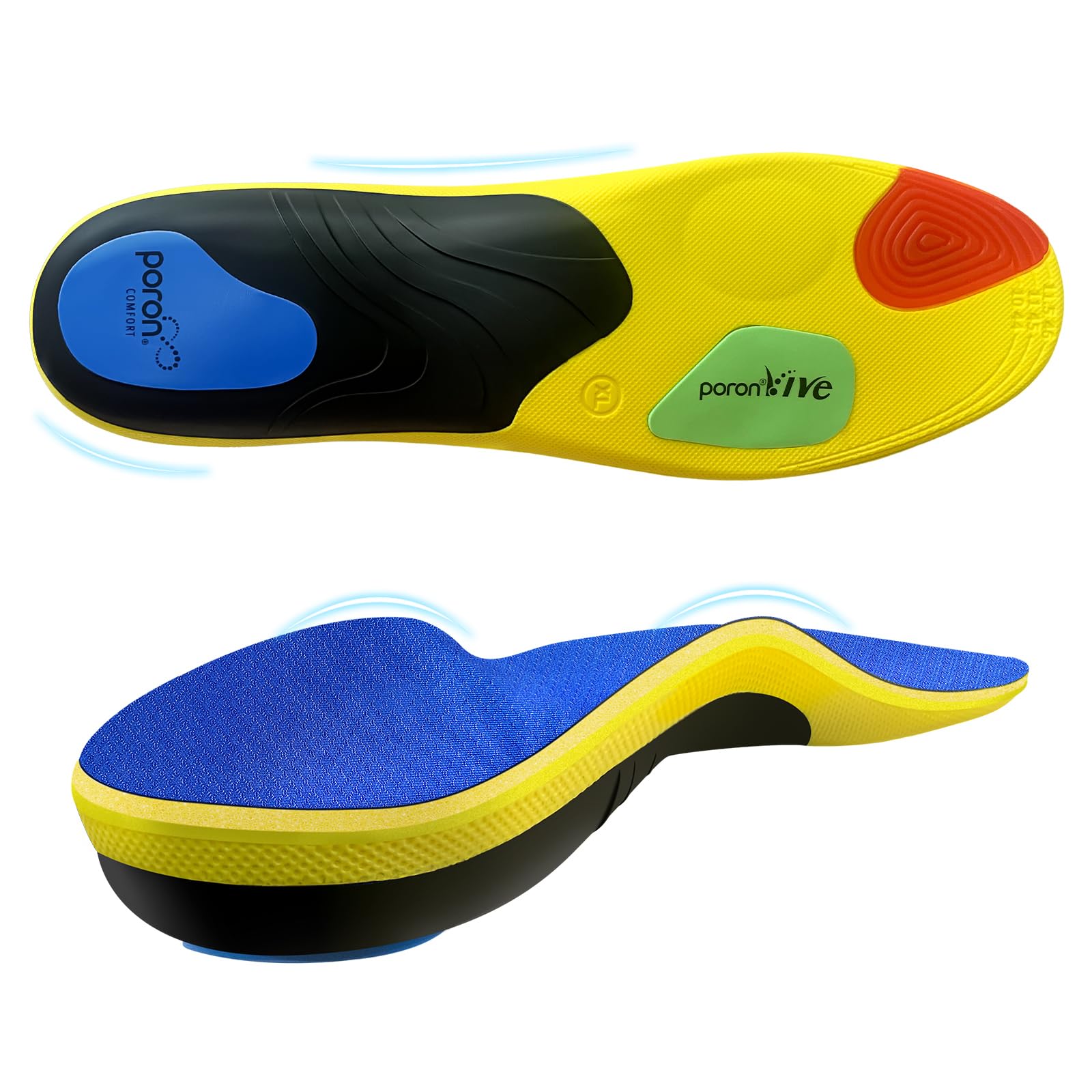
These heavy-duty orthotic insoles from KSGAERR are built around the same core idea as the Fit Geno: support for larger body frames (230 pounds and above) with a high arch and shock-absorbing materials. The dual-layer PORON cushioning at the heel provides excellent impact protection, while the rigid black TPU material locks in the arch support and secures the heel during movement. The “Golden Triangle” design uses three-point support across the forefoot, arch, and heel to evenly distribute weight and minimize pressure points.
Flat-footed users who work 8-hour shifts on their feet consistently report that these insoles provide a noticeable improvement in comfort and reduced lower back strain. The trim-to-fit sizing works well for most work boots, and the materials feel durable enough to hold up through several months of heavy use. The combination of high arch and deep heel cup offers strong motion control for flat feet that tend to overpronate.
The main limitation is that these insoles are still relatively new to the market (released in early 2026), so long-term durability data is limited. A few users have noted that the arch support feels very firm, which can take some getting used to. Also, the “Golden Triangle” design may feel noticeably different from traditional arch supports, so a break-in period is recommended.
Why it’s great
- PORON heel pad delivers top-tier shock absorption
- Three-point support design distributes weight well
- High arch provides strong correction for flat feet
Good to know
- Newer product — limited long-term durability reports
- Very firm arch requires gradual break-in period
FAQ
What arch height is best for flat feet in boots?
Can I use standard running shoe insoles in work boots?
How long do boot insoles for flat feet typically last?
Should I remove the factory insole before inserting an orthotic?
Final Thoughts: The Verdict
For most users, the best boot insoles for flat feet winner is the PowerStep Pinnacle Maxx because its angled heel and rigid shell provide unmatched overpronation control for flat-footed workers who need maximum stability. If you want a podiatrist-recommended balance of support and cushioning without the aggressive heel angle, grab the PowerStep Pinnacle. And for long shifts where shock absorption matters more than arch correction, nothing beats the Timberland PRO Anti-Fatigue Insole for reducing joint fatigue.