An 11-year-old boy on the wrong bike is a recipe for frustration — a frame that’s too tall, handlebars that don’t fit his reach, or a bike that weighs more than his dog. The right bike, on the other hand, turns pavement and dirt trails into an invitation he can’t resist. Matching the wheel size, brake type, and drivetrain to his height and riding style is the difference between a bike that gathers dust and one that gets ridden daily.
I’m Emma — the founder and writer behind Baby Bangs. I’ve spent years analyzing manufacturing specs, reading through hundreds of verified reviews, and sorting through the confusing size charts and component claims to find the bikes that honestly deliver for growing boys.
Whether he’s hitting the skate park for the first time, cruising the neighborhood with friends, or tackling a dirt trail after school, this guide gives you a focused look at the bike for 11 year old boy that checks every real-world box.
How To Choose The Best Bike For 11 Year Old Boy
Eleven-year-olds are in a limbo zone — often too big for a standard 20-inch kid’s bike, but not quite ready for a full-size 24-inch model. A bike that fits poorly will feel wobbly and unsafe, so matching the wheel size and frame geometry to his actual inseam and height is rule number one. His riding style, the terrain he’ll cover most, and the ease of shifting or braking are the next big filters.
Wheel Size: 20-Inch vs. 24-Inch
A 20-inch wheel is still the most common fit for a typical 11-year-old (roughly 4’5″ to 4’10” tall). Once he clears 4’10”, a 24-inch wheel becomes a smoother transition toward adult sizing. Going too large forces him to stretch uncomfortably; too small and he’ll look cramped and lose confidence on turns.
Brakes: Coaster vs. Hand
Coaster brakes (backpedal to stop) are intuitive for first-time riders, but by age 11, most boys benefit from learning hand brakes. Dual hand brakes offer faster, more controlled stops and are essential if he’s riding on hills or in traffic. Some bikes combine both systems, which can be a useful bridge.
Weight: Why It Matters
A heavy bike (over 30 pounds) turns every ride into a workout. For a young rider weighing 70–85 pounds, an extra 5 pounds of bike weight is noticeable — it tires him out faster and makes balancing harder. Aluminum frames are lighter than Hi-Ten steel, while steel offers durability at the cost of heft. Know your trade-off before you pick.
Drivetrain: Single-Speed, Gears, or Belt
Single-speed bikes are simple and low-maintenance — great for flat neighborhoods and skate parks. Multi-speed drivetrains (typically 6-speed on kid’s mountain bikes) help on hills and off-road trails but add complexity and potential maintenance. Belt drives dodge chain grease entirely and last longer, though they usually come at a higher cost.
Quick Comparison
On smaller screens, swipe sideways to see the full table.
| Model | Category | Best For | Key Spec | Amazon |
|---|---|---|---|---|
| RoyalBaby Formula | City Bike | Neighborhood cruising | Extra-wide 2.4-inch tires | Amazon |
| A11N SPORTS BELSIZE | Lightweight Belt-Drive | Long, easy rides | 14.82 lb aluminum frame | Amazon |
| Retrospec Sesh 20″ | BMX | Skate park & street riding | 3-piece CrMo tubular cranks | Amazon |
| Glerc Mars 20″ Fat Tire | Mountain Bike | Off-road trails & gravel | 2.8-inch fat tires | Amazon |
| cubsala Freestyle BMX | BMX | Entry-level freestyle | Aluminum U-brake | Amazon |
| Glerc Little Molly | Retro Cruiser | Leisurely pave rides | Wicker basket & fenders | Amazon |
| JOYSTAR Brockway BMX | BMX | Beginner BMX tricks | 2 removable pegs | Amazon |
| AVASTA Bilbo | Single-Speed | Casual paved paths | Retro high-carbon steel frame | Amazon |
| WinHope Kids Bike 20″ | Kids Bike | First-time riders | Coaster & hand brake combo | Amazon |
In‑Depth Reviews
1. RoyalBaby Formula Kids Bike 20″
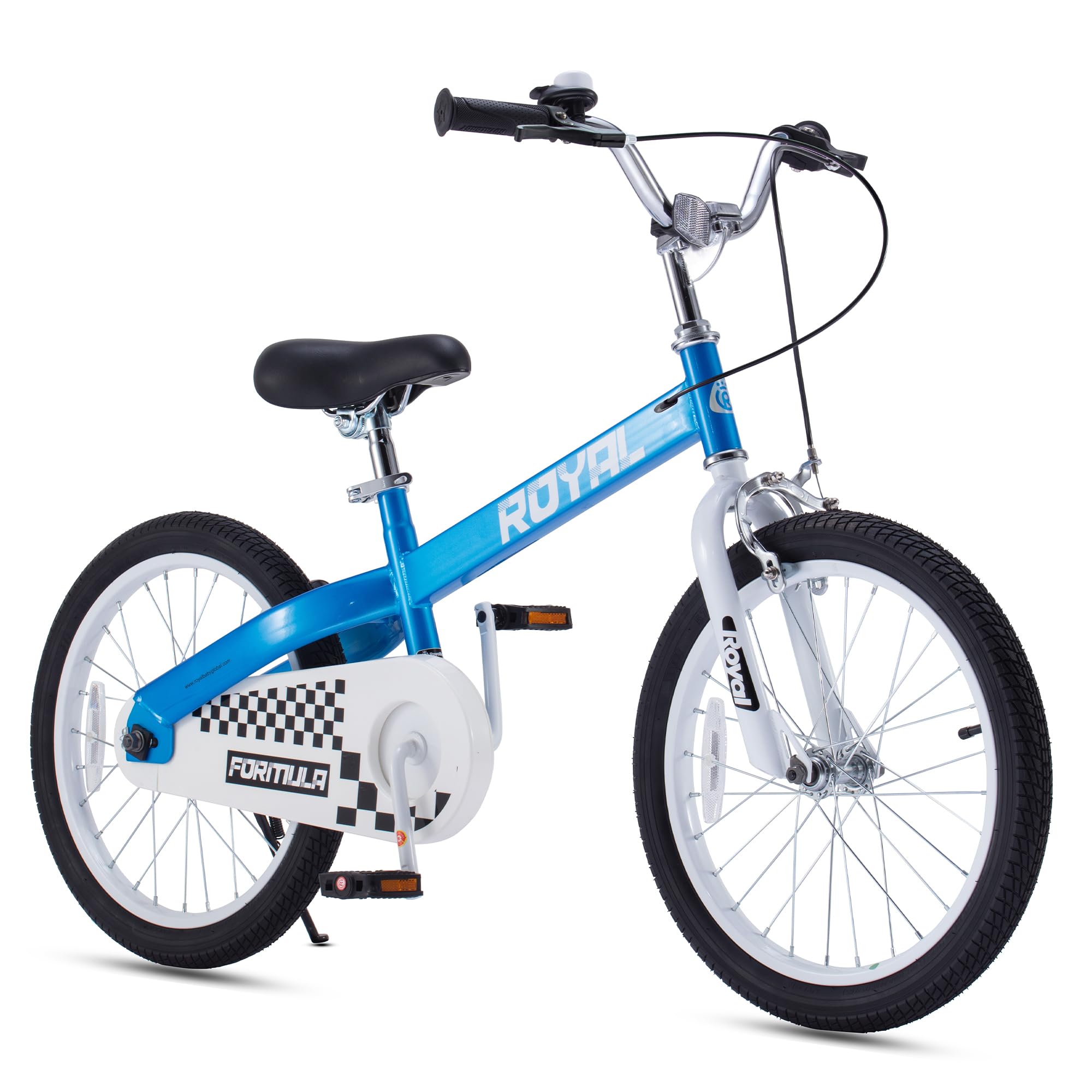
The RoyalBaby Formula lands at the sweet spot of value and quality for an 11-year-old rider. Its CUBETUBE frame geometry positions him in an upright riding posture that reduces strain on long cruises, while the extra-wide 2.4-inch tires provide a planted feel on pavement and packed dirt alike. That tire width is rare at this price tier — most budget bikes come with skinny 1.95-inch tires that feel skittish during turns.
The dual hand brake system is a standout safety feature for an 11-year-old transitioning off training wheels. Both levers are shorter than adult versions, sized for smaller hands, and they control front and rear wheels simultaneously to prevent fishtailing. Assembly is the easiest in this roundup: RoyalBaby ships the bike 95% pre-assembled with brakes already adjusted, so you’re parking it street-ready in about 10 minutes.
The one real drawback is cosmetic but worth noting. The large “ROYALBABY” decal on the frame drew comments from more than one child who felt the branding looked too young for them. If your son is self-conscious about riding a “baby bike,” this could be a small but real friction point.
Why it’s great
- Extra-wide 2.4-inch tires for stable cornering and balance
- Shorter-reach brake levers sized for a child’s hand span
- Comes almost fully assembled with brakes pre-set
Good to know
- Visible “ROYALBABY” branding might feel babyish for some 11-year-olds
- Single-speed drivetrain limits use on steep hills
2. A11N SPORTS BELSIZE 20-Inch Belt-Drive

At just 14.82 pounds, the BELSIZE is the lightest bike in this entire selection — a full 10 pounds lighter than most steel-frame competitors. For an 11-year-old who’s still building strength, that weight difference means he’ll pedal longer without tiring and find balancing far easier. The aluminum alloy frame is the core reason for the low weight, and it doesn’t sacrifice durability for lightness.
The belt drive is the defining mechanical feature here. Unlike a traditional metal chain, the Continental rubber belt requires zero lubrication, never rusts, and runs near-silently. No greasy hands, no oily pant cuffs, no chain tightening after a few rides. The TEKTRO V-pull hand brakes provide reliable stop power without the abrupt skid risk of coaster pedals, which is especially beneficial for a new rider learning speed modulation.
The main barrier is the cost, which sits at a premium tier for a single-speed kids bike. And while assembly is advertised as 5 minutes, several owners noted that front wheel bolt issues can crop up if the shipping has been rough, occasionally requiring a replacement from customer service. Still, for parents who prioritize lightweight construction and maintenance-free riding, this bike delivers a uniquely clean experience.
Why it’s great
- Extremely light aluminum frame — a 10-pound advantage over steel models
- Belt drive eliminates chain grease, rust, and tightening
- TEKTRO hand brakes offer controlled stops without skidding
Good to know
- Higher entry cost for a single-speed design
- Occasional front wheel bolt defect reported from shipping
3. Retrospec Sesh 20″ BMX Bike

The Retrospec Sesh is engineered for the boy who wants to learn bunny hops, ride up ramps, and grind on pegs. The 3-piece CrMo tubular cranks and optimized 25×9 gearing ratio are genuine step-ups from the one-piece cranks on budget BMX bikes — they transfer pedaling power more efficiently and resist bending under the force of landing jumps. The threadless steering provides a locked-in feel that flex-free handling on asphalt and park wood alike.
Safety details are smartly executed here. The snag-free U-brake sits tucked out of the way so it won’t catch on rails or during bar spins, and the extra-long handlebars give a wide grip that improves stability during aerial maneuvers. The removable axle pegs let him start with simple cruising pegs and mount them for front or rear tricks as his skills progress. The shock-absorbing 20×2.40 inch tires also do real work — they deaden pavement vibration and cushion flat landings.
The wheels are the one weak link. Several owners reported that after moderate jumps — even off a 3-foot table — the rear rim bent. This is a common limitation at this price point; full Chromoly rims would add significant cost. If your son is only starting with small drops and flat tricks, the Sesh is built well. If he’s already sending bigger air, budget for a rim upgrade.
Why it’s great
- 3-piece CrMo cranks handle heavier loads than one-piece steel
- Snag-free U-brake stays clear during bar spins and rail slides
- Removable pegs for progressive freestyle riding
Good to know
- Rear rim can bend under repeated big jumps
- Assembly requires cleaning paint from handlebar contact points
4. Glerc Mars 20″ Kids Mountain Bike
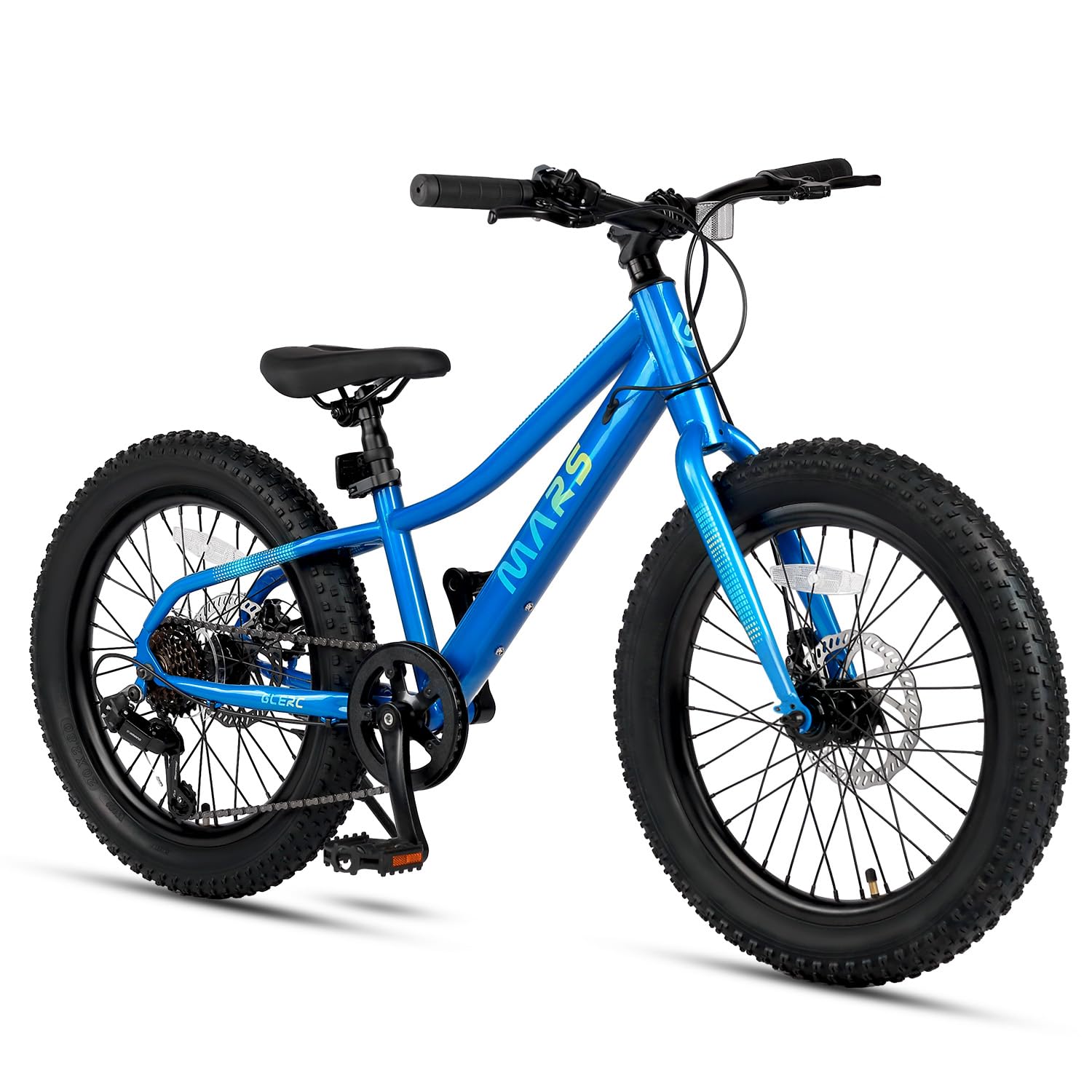
The Glerc Mars is the only bike in this selection that truly belongs on trails. The 2.8-inch wide fat tires balloon over gravel, sand, and grass with a confidence that narrow tires simply cannot match. For an 11-year-old who wants to follow dad on dirt paths or explore wooded park trails, those tires provide the grip and float that turn a bumpy ride into smooth progress. The rigid fork keeps weight down, but the tire volume absorbs enough chatter for most light off-road use.
The Shimano 6-speed drivetrain is the real reason to consider this model. A single speed works on flat pavement, but the moment the trail tilts upward, those lower gears make climbing possible without standing and mashing pedals. The front and rear mechanical disc brakes are another off-road necessity — they shed mud and water better than V-brakes, stopping reliably in wet conditions where rim brakes would slide. At 31 pounds, it’s heavy, but the fat tires and gear range justify the heft for boys who ride aggressively.
Quality control issues appear in a minority of units. A missing saddle ring, a kickstand that causes the bike to lean wrong, and a gear shifter cover that fell off after two rides were reported by separate buyers. The overall frame and drivetrain are solid, but individual components (shifters, kickstand, saddle hardware) benefit from a thorough one-over during assembly.
Why it’s great
- 2.8-inch fat tires deliver outstanding traction on loose terrain
- Shimano 6-speed gears make trail climbing feasible
- Disc brakes stop reliably even in wet, muddy conditions
Good to know
- Weighs 31 pounds — heavy for casual paved riding
- Inconsistent component quality on shifters and saddle hardware
5. cubsala Freestyle BMX Bike 20″

The cubsala Freestyle BMX hits the right price-performance balance for an 11-year-old entering the world of wheelies and manuals. The aluminum U-brake is a notable upgrade over the cheap steel calipers found on entry-level BMXs — it offers better modulation and doesn’t rust after a few rainy rides. The 32T chainring paired with a 16T cog rear gives a slightly easier gear ratio than most single-speed BMX bikes, which helps a lighter rider get rolling from a standstill without straining.
Hi-Ten steel frame construction is durable enough for bunny hops, basic pumping on pump tracks, and learning to roll off curbs. The 19.5-inch top tube length fits the typical 4’2″ to 4’8″ rider well, letting him comfortably reach the bars without being stretched out. The double-spoke wheels are a smart touch at this tier — they’re visibly tougher than single-wall rims and better resist the lateral forces of landing sideways.
For more advanced freestyle — bar spins, grinds, or 180 dismounts — the bike hits its ceiling. The sealed bearings are basic, the fork offset is welded rather than adjustable, and the brake pads are notoriously poor and should be replaced out of the box. It’s a capable foundation for a beginner, but expect to upgrade components as his skills grow.
Why it’s great
- Aluminum U-brake resists rust and provides smoother stops
- Easy gear ratio helps lighter riders accelerate without effort
- Double-spoke rims handle landing forces better than single-wall wheels
Good to know
- Stock brake pads are low quality and worth replacing
- Hi-Ten steel limits the bike for advanced freestyle tricks
6. Glerc Little Molly 20″ Retro Cruiser

The Glerc Little Molly is the only cruiser-style bike in this lineup, and it fills a specific niche: relaxed, upright riding on paved paths with no destination in mind. The vintage metal frame and brown faux leather saddle give it a classic look that stands out from the sea of neon BMX graphics. It comes with both coaster brakes and short-travel hand brake levers, which is a smart dual-system approach for a rider who’s learning to use hand brakes but still wants the safety net of a backpedal stop.
The included wicker basket and fenders are functional details that make this bike practical for real errands — carrying a water bottle, a small toy, or a jacket after the temperature drops. The lower standover height means he can plant both feet flat while seated, which builds confidence during stops. The bike weighs 26 pounds, which is middle-of-the-pack among 20-inch models, and the assembly is thorough but straightforward thanks to a clearly illustrated instruction guide.
This is not a bike for speed, hills, or off-road use. The single-speed drivetrain and carbon steel frame are built for comfort, not performance. If your 11-year-old wants to bomb down hills or chase friends through dirt trails, the cruiser geometry will feel sluggish. It’s best suited for casual neighborhood rides and kids who appreciate the aesthetic as much as the ride itself.
Why it’s great
- Dual brake system (coaster + hand) eases the transition to hand brakes
- Wicker basket and fenders add real utility for daily rides
- Low standover height for confident flat-footed stops
Good to know
- Single speed and cruiser geometry aren’t suited for hills or trails
- 26-pound weight is not the lightest option for casual riding
7. JOYSTAR Brockway Freestyle BMX 20″

The JOYSTAR Brockway is a credible entry-level BMX that keeps the cost low without cutting the two features a budding freestyler actually uses: pegs and a single-speed drivetrain. It comes with two removable axle pegs, so he can start grinding curbs and sliding rails right after assembly. The Hi-Ten steel frame and 165 mm one-piece crank are basic but durable enough for street riding and small park jumps from a beginner.
The rear caliper brake offers reasonably precise control for a budget bike, though several reviewers noted the pads themselves are weak and may need upgrading for consistent wheelie control. The 20×2.125-inch tires are standard for the class and roll smoothly on pavement and packed dirt. Assembly is manageable — about 85% pre-assembled — and the included decals let him personalize the look without buying aftermarket parts. Rider height recommendation is 4’0″ to 4’8″, which aligns well with the smaller side of the 11-year-old range.
Build inconsistencies are the main concern. A few buyers reported slightly bent rims out of the box (ride quality remained unaffected in most cases), and the front wheel occasionally arrived with a minor warp that required truing. For the price, the core frame and geometry are solid, but the wheel components are the budget compromise. If your son is hard on wheels, plan for a replacement sooner rather than later.
Why it’s great
- Comes with two removable pegs for freestyle tricks out of the box
- Single speed and 165 mm crank keep the bike simple and durable
- Includes DIY decals for customization
Good to know
- Stock brake pads are weak and may need upgrades
- Occasional wheel truing required out of the box
8. AVASTA Bilbo 20″ Kids Bike
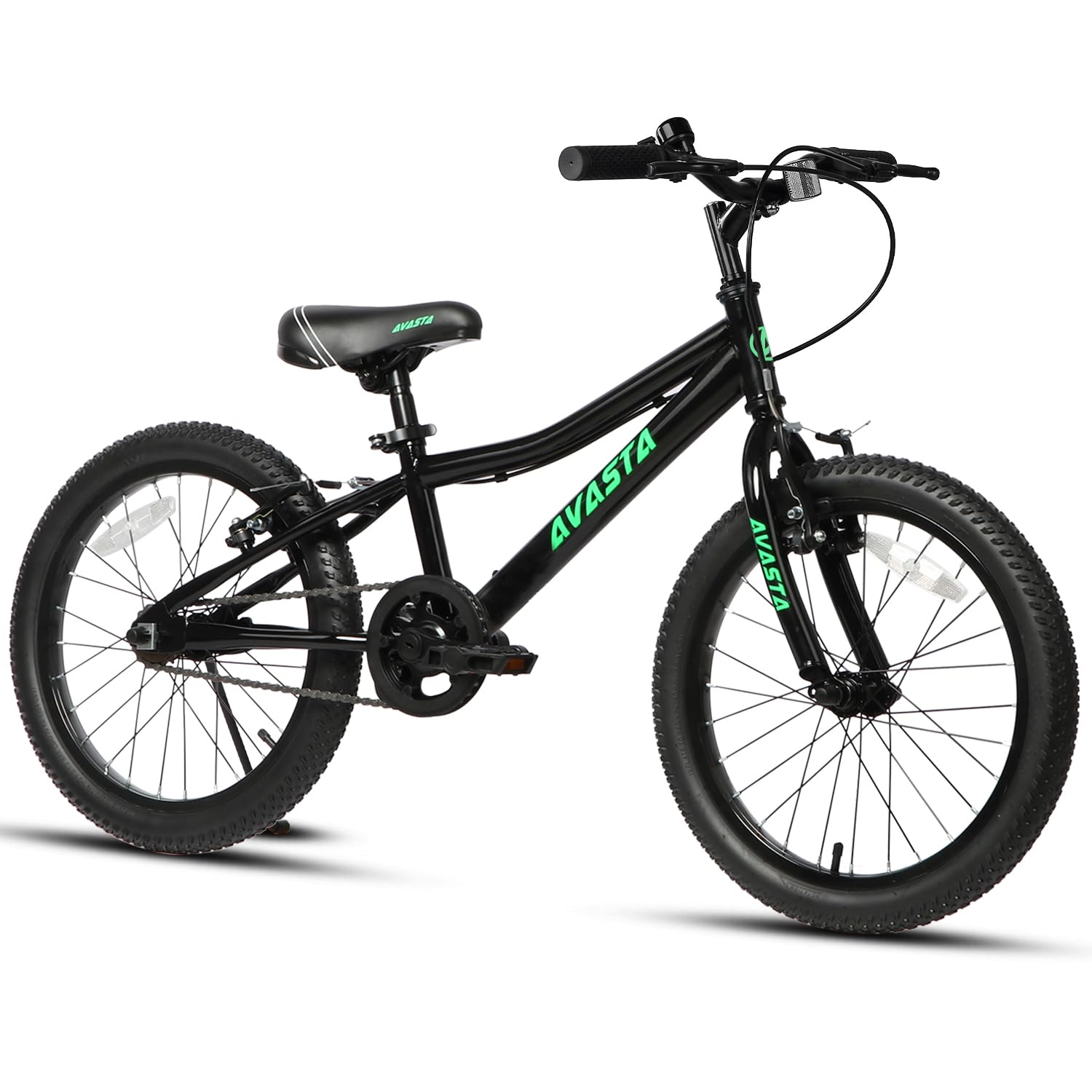
The AVASTA Bilbo is a straightforward, good-looking single-speed that doesn’t try to be anything it’s not. The high-carbon steel step-over frame is built to last, and the chunky 1.95-inch tires paired with the front fork are capable of handling rough pavement, packed paths, and even some light dirt without complaint. It comes with a bell, reflectors, and a kickstand in the box, meaning you aren’t chasing down accessories after assembly.
The V-brakes provide solid stopping power for the weight of the bike, and the dual adjustability of both the handlebars and seat means he can dial in a comfortable riding position as he grows. Customer feedback consistently praises the packaging — the bike arrives in a well-protected box that reduces the chances of shipping damage — and the manufacturer is responsive when issues (like a crooked front fork) do occur. The 20-inch size fits riders with a minimum 48-inch height, which is right at the lower edge of the 11-year-old height range.
This bike lacks any drivetrain complexity or off-road capability, so it’s not the right choice if he wants to ride trails or learn BMX tricks. It also isn’t especially lightweight at 19 pounds, which is noticeable on longer rides. It fills a very specific role: a durable, simple, and attractive bike for paved neighborhood cruising that prioritizes longevity over performance.
Why it’s great
- High-carbon steel frame is built for long-term durability
- Fully adjustable handlebars and seat accommodate growth
- Includes bell, reflectors, and kickstand for a complete setup
Good to know
- 19-pound weight is mid-range; not the lightest single-speed
- Single-speed drivetrain limits the bike to flat paved surfaces
9. WinHope Kids Bike 20″
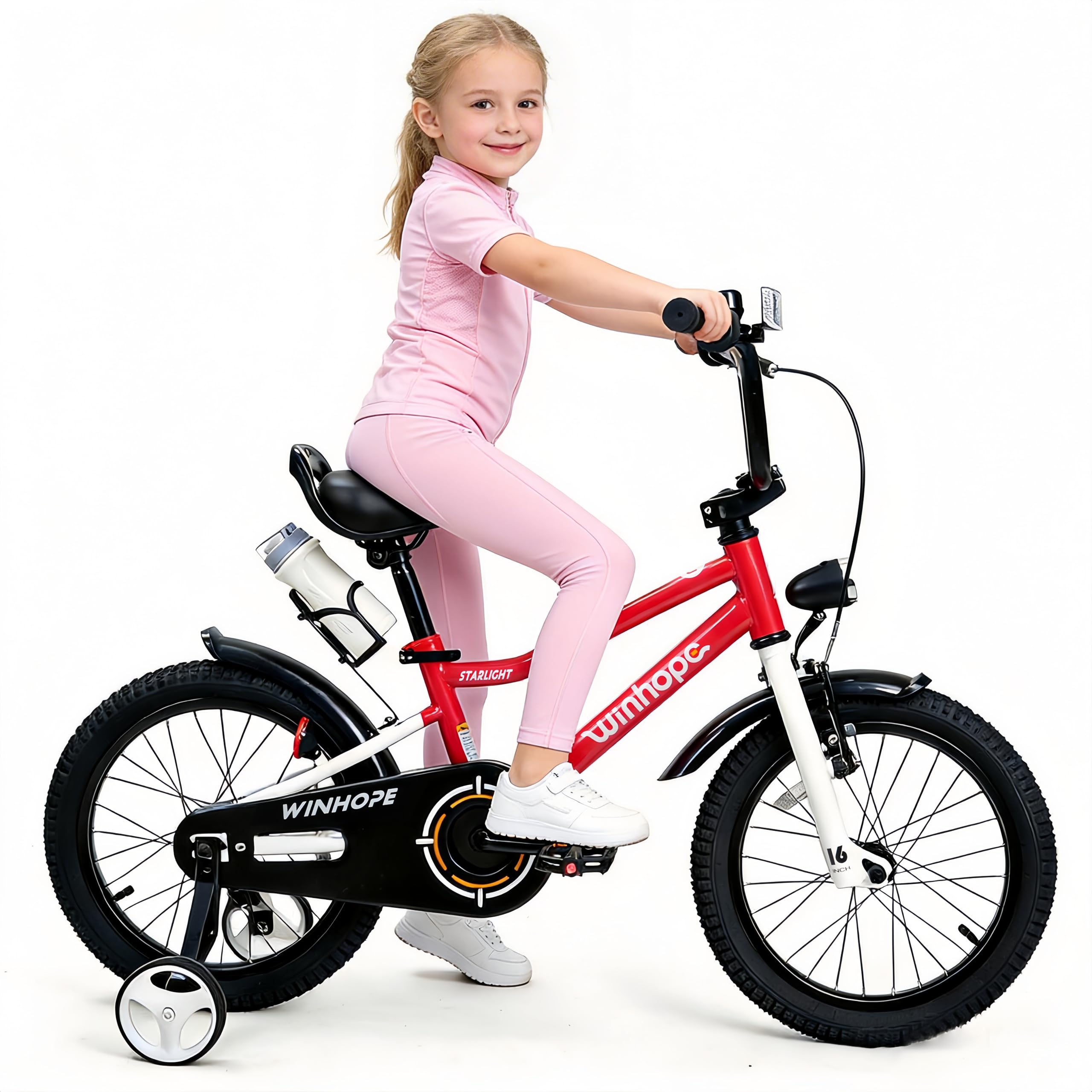
The WinHope 20-inch is a value-packed starter bike that’s particularly well-suited for an 11-year-old who is still learning to ride independently. It includes training wheels (removable once he’s ready), a front headlight for evening visibility, fenders to keep mud off his clothes, and a water bottle with a holder — all included in the box. That accessory bundle is generous at this price point and saves parents from buying add-ons separately.
The dual brake system (coaster pedal brake plus hand brakes) gives him two ways to stop, which builds confidence as he learns coordination. The enclosed chain guard is a meaningful safety detail — no risk of a pant leg or shoelace getting caught in the drivetrain. The alloy steel frame is sturdy enough for daily riding, and the adjustable seat allows the bike to fit a range of heights (6–12 years, 48–62 inches). Assembly is rated at 95% pre-assembled and takes most buyers about 10 to 15 minutes.
The trade-off for the low entry price is in component quality. The hand brake levers are less refined than those on premium bikes and require a stronger grip to engage fully. The coaster brake is the primary stopping mechanism, which is fine for paved riding but can cause skidding on loose gravel. For an 11-year-old who already rides confidently, this bike will feel basic. For a hesitant beginner, the training wheels and included extras make it a low-risk investment.
Why it’s great
- Comes with training wheels, headlight, fenders, and water bottle included
- Coaster brake + hand brake dual system for learning riders
- Enclosed chain guard prevents clothing from catching
Good to know
- Hand brake levers require a stronger grip than premium models
- Component quality feels basic — best suited for beginners
FAQ
What size bike does an 11-year-old boy need?
Should an 11-year-old get hand brakes or coaster brakes?
How much should a bike weigh for an 11-year-old boy?
Is a BMX bike or a mountain bike better for an 11-year-old?
What is the safest bike for an 11-year-old boy?
Final Thoughts: The Verdict
For most families, the bike for 11 year old boy winner is the RoyalBaby Formula because it combines a confidence-inspiring wide tire stance with child-specific brake reach and near-instant out-of-box assembly. If you want a bike that feels nearly weightless and eliminates chain maintenance, grab the A11N SPORTS BELSIZE. And for the kid who’s already riding ramps and dreaming of the skate park, nothing beats the Retrospec Sesh 20″ for its freestyle-ready geometry and CrMo cranks.